Alternative Data | Text Analysis | Sentiment Analysis
Alternative Data Trends: 5 Effects of the Failing Musk-Twitter Deal
August 17, 2022
•
5 mins read
On April 24, 2022, Elon Musk, CEO of Tesla, Space X, The Boring Company, and Neuralink—and one of the most popular people on Twitter with one of the largest followings—reached an agreement to buy Twitter for roughly 44 billion dollars. On July 8, 2022, the deal failed to materialize after Musk withdrew from the negotiations due to his concerns about the company's alleged overabundance of fake Twitter user accounts, aka bots. As a result, the Twitter stock price plummeted by 15% after the announcement.
Now that his deal to buy Twitter has failed and culminated in a legal battle, Musk's public sentiment has reached all-time lows. The public sentiment for Twitter has also taken a hit. In general, public sentiment surrounding this deal was largely negative from both sides:
Musk's fans were disappointed because they thought it would allow him to spread his message about sustainable energy sources further.
Twitter's users were happy because they believed his involvement would have led to changes that would have made the platform less accessible than ever before.
But how exactly was public sentiment affected by the fallout of Elon Musk's failed Twitter acquisition? Let's find out. Here are five effects of the failed Musk-Twitter deal.
1. Merger and acquisition sentiment dropped from the beginning
Figure 1: Twitter M&A sentiment took a hit at key events during Musk’s evaluation period.
Musk had been exploring the possibility of purchasing Twitter as early as January 2022 when he began increasing his positions in Twitter stock. By March 14, Musk became the largest shareholder in the company, according to a securities filing. And that's when the sentiment toward the acquisition began to drop.
M&A sentiment experienced a further drop when Musk officially announced his offer to purchase the Twitter company on April 14, 2022. On Reddit, for example, members of the r/Economics community posted and engaged with the following: Elon Musk Launches $43 Billion Hostile Takeover of Twitter, a post that since has been removed but represents one of many sources feeding sentiment toward the topic.
In May 2022, Musk announced a hold on the deal, pushing M&A sentiment even farther down. And more recently, in late June and early July when Twitter sued Musk for breaching the M&A agreement, M&A sentiment fell deeper into the negative space.
2. Sentiment for Elon Musk and Twitter declined likewise
Figure 2: Overall, Musk’s sentiment polarity suffers the most.
But how do Elon Musk's and Twitter's sentiments evolve with M&A mentions?
In measuring and analyzing M&A mentions in web data, we found that Twitter's brand suffered but not nearly as much as Musk's. Both of their sentiments dropped in April when Musk announced his offer. However, Musk's sentiment suffered more when he put the deal on hold in May and again in June when Twitter filed a lawsuit against him.
Figure 2 shows two additional drops in Musk's sentiment for July. These correspond to news events regarding the trial, including news about the trial's start date in October.
Unfortunately for Musk, his other brands also experienced a drop in sentiment. For example, Tesla's sentiment experienced corresponding declines compared to Musk's, but not nearly as much as SpaceX's (Figure 3). One reason for this disparity could be the open letter SpaceX's workers wrote. The workers voiced their concern about Musk's behavior in this letter, stating, "Elon's behavior in the public sphere is a frequent source of distraction and embarrassment for us."
Further, in Figure 3, we track Tesla's stock performance. Initial data shows a possible correlation between Tesla's stock price and sentiment. However, further analysis and backtesting are needed to confirm this correlation.
4. Musk's sentiment suffered more than Twitter's
Figure 4: Twitter’s sentiment polarity isn’t as affected as Musk’s.
Twitter's sentiment remained relatively stable, seeing only a minor drop when Musk became the largest shareholder. Even Twitter's stock price remained stable, experiencing a temporary increase when Musk purchased Twitter stock but settling after. It's worth noting that Twitter's stock price was declining before January 2022, which might have influenced Musk's decision to buy.
In contrast, Musk's sentiment took a huge hit when he became the largest shareholder.
5. It’s not only about Musk and Twitter
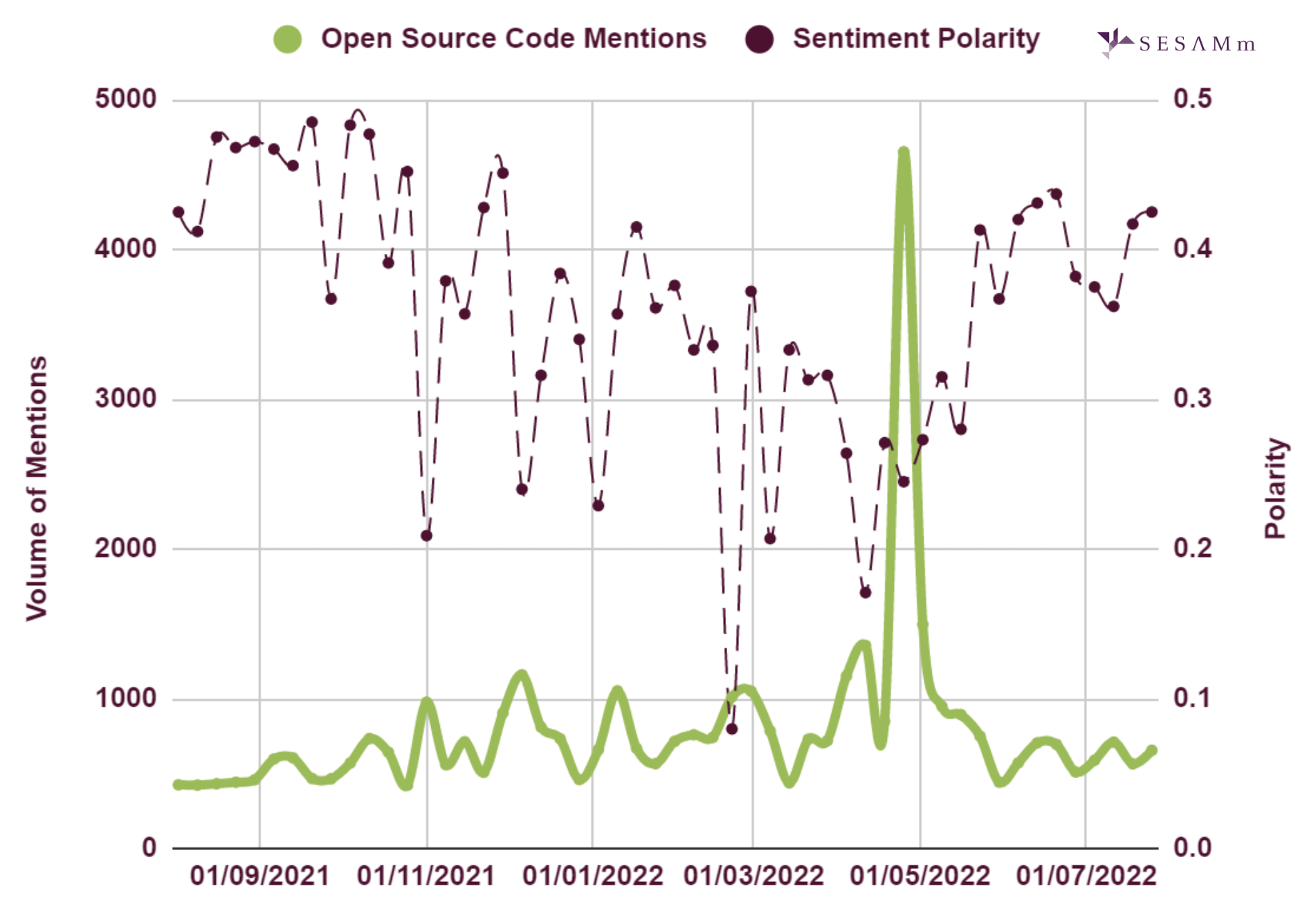
Figure 5: Musk possibly gained the open-source community’s favor, if the rise in polarity is an indication.
However, in April 2022, Musk said that one of the ways he wanted to improve Twitter was to make its algorithms open source to increase trust. How did the open-source community take the news? According to the chart (Figure 5), well. Open-source sentiment polarity jumped back up.
Analyzing the M&A sentiments
Overall, Elon Musk’s sentiment polarity reached lower levels than those of Twitter and his other brands—although SpaceX took a significant hit, too. Whether because of his brash public statements or his employees criticizing his focus and intentions, data shows that netizens were not supportive of his attempted acquisition. And with the Twitter v. Musk court battle scheduled and looming, his sentiment doesn’t seem like it will be improving anytime soon.
Reach out to SESAMm
To learn more about how we analyze web data or to request a demo, reach out to one of our representatives.
2018 proved to be an eventful year for SESAMm with multiple renowned customers acquired, our A series fundraising campaign, numerous prizes won and milestones reached. Here is a look back at our rewarding year 2018 followed by our next steps for 2019.
Successful market entry in the US and around the world
The rapid growth of the alternative data industry and of SESAMm
As a Fintech company specialized in alternative data for Asset Management, 2018 represented a thrilling year in our industry and 2019 already promises to be even more exciting.
During 2018, after our very first business trip in the United States, our international sales development beyond Europe began accelerating. In just one year, we already signed contracts with multiple clients. These include major hedge funds in the US and a major global trading company managing $100 billion in financial assets and part of the Top 10 in its market. The US market represents a powerful strategic growth driver and we are already preparing to open an office there soon!
SESAMm signed its first contract with a client in Africa: Ipro Investment, renown asset manager established for 25 years specialized in emerging markets. Finally, we also signed a contract with our first Japanese client, Nikko Global Wrap, one of the subsidiaries of Sumitomo Mitsui Asset Management which is a major asset manager in Japan managing JPY 1.7 trillion.
Strengthening and developing our position in Europe
At the European level, SESAMm has also extended its customer portfolio:
Groupama AM: new major clients and leading French Asset Management players managing €103 billion Asset under Management (AuM);
Société Générale: leading French bank present all over the world;
Raiffeisen Bank International: one of the leading banks in Europe with more than 50,000 employees servicing over 16.5 million customers and possessing around 2,400 business outlets;
GT Patrimoine : the largest consulting and private management firm in the Lorraine area and based in France for 12 years.
In addition, after our 1st successful collaboration, a new contract was signed with Candriam, leading Asset Management firm and members of the New York Life Group, managing more than $112 billion AuM worldwide.
We are very proud to see how much traction we gained in just a year. The growing use and interest in alternative data for the Asset Management industry, both for quantitative and fundamental funds and asset managers, lead us to prepare for new opportunities of growth & business development.
Cutting edge solutions to respond to market needs
Big Data & AI for Cryptocurrencies
Our first cryptocurrency project began in early 2018. Initially, we started tracking the evolution of the most popular cryptocurrencies, such as Bitcoin (BTC) and Ethereum (ETH) and we analyzed their social data to produce social sentiment & emotions indicators. These indicators have since been integrated into our visualization platform of market sentiment, L’Humeur des Marchés.
This led us to establish a unique partnership based on L’Humeur des Marchés with NapoleonX, a major player as the leading French cryptocurrency manager: the first sentiment and emotion cryptocurrencies analysis destined for the general public. Since then, ETH and BTC sentiment, emotions & opinion value from SESAMm has been available to individual investors and the general public on NapoleonX platform.
The evolution of L’Humeur des Marchés
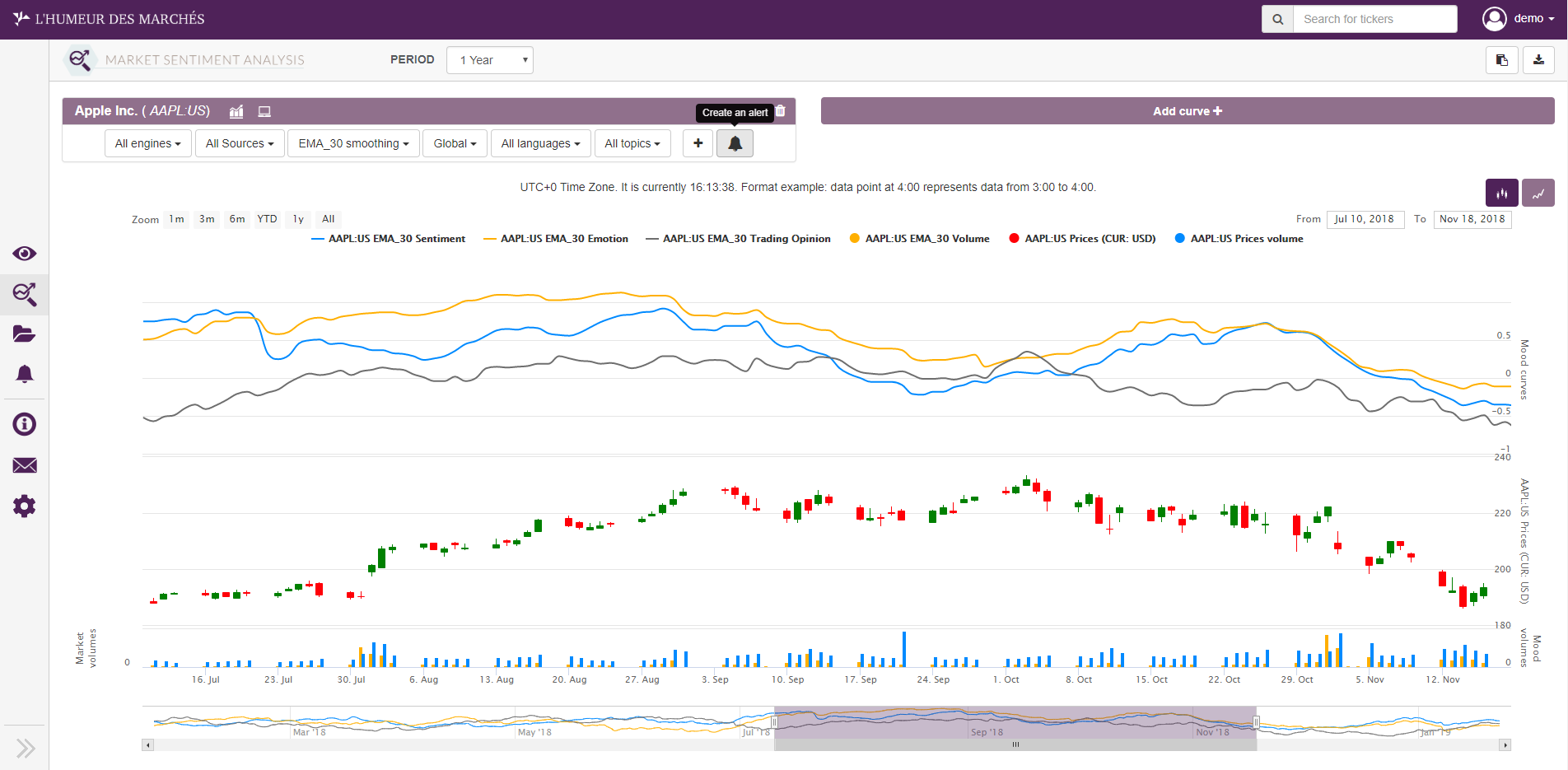
Our platform L’Humeur des Marchés is an essential tool to guide companies in their investments. During 2018, multiple improvements were added into L’Humeur des Marchés to further enhance its insights & analytics. For example, users have now the possibility to build automated strategies which can generate daily trading signals. Multiple new features were also added such as a strategic backtesting system, daily alerts with 3 years of history and day+1 signal to forecast market movements giving asset managers an edge over competitors.
"L'humeur des marchés" is SESAMm's data visualization platform to analyze market sentiment & emotion for asset management
L’Humeur des Marchés, our data visualization platform
Finally, additional filters have been added to better study & analyze market sentiment: there are now 6 different filters for data sources (sort by sources from web & press, news, blogs, discussions, social trading or all of them) and 9 languages covered (sort by English, French, Spanish, Chinese, Japanese, Portuguese, Italian, German or all of them). These new filters allow for a wider and more accurate coverage of assets, leading to improved tools & insights for investment decision.
Global recognition & awards for SESAMm
To accomplish our worldwide ambitions, we have started being more and more present abroad, especially at international events. They represent great occasions to promote SESAMm, demonstrate the unique benefits and advantages brought by our technologies & solutions and finally create business opportunities.
This year, we participated in many international events in the US and in Japan, including New York and Hong Kong for Eagle Alpha’s Alternative Data event, Canada, Africa and even London at the French Fintech Tour.
Having been selected for unique international awards reinforces our confidence in the benefits of our solutions for the Asset Management industry, for example with “Talk data to me” by Neudata, Elevator Lab Competition, and Groupama’s award “Créateur de confiance” (Trust Creator) among others.
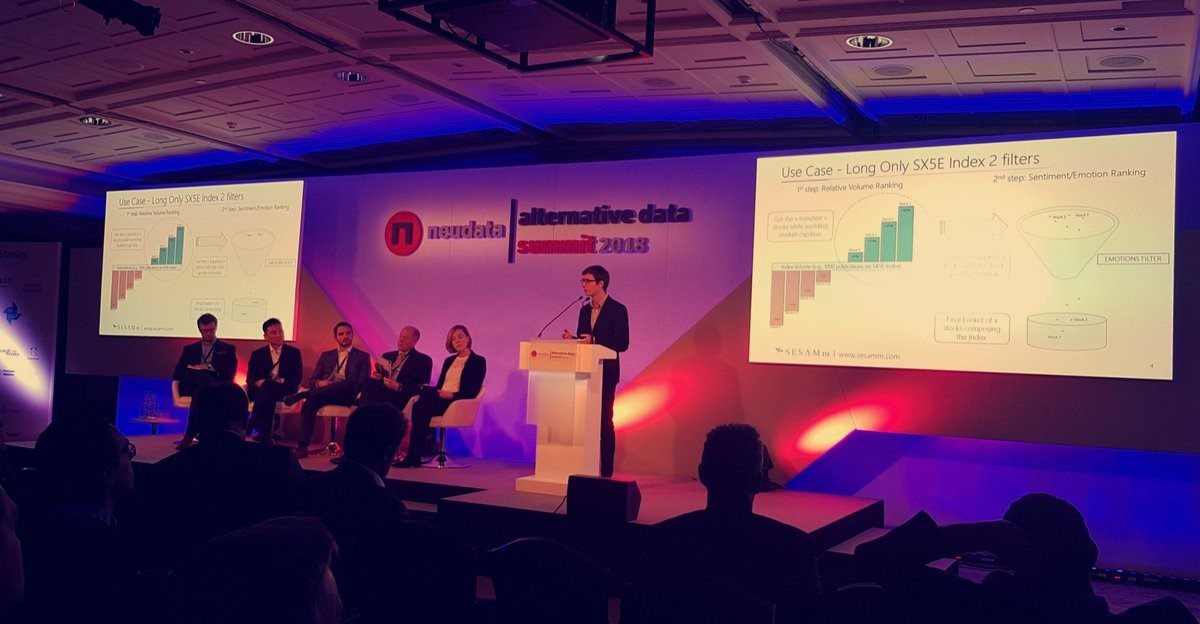
SESAMm won the pitch "Talk data to Me" of Alternative Data Summit event by Neudata
SESAMm pitch “Talk Data to Me” winner during Alternative Data Summit by Neudata
Moreover, SESAMm has competed in several acceleration programs, in which we were selected in the following ones:
Fintech Business Camp Tokyo, the Tokyo Metropolitan Government accelerator program by Invest Tokyo and powered by Accenture;
Elevator Lab, Acceleration program of Raiffeisen Bank International where SESAMm competed and was selected;
French Tech Tour America, IMPACT USA’s program to prepare and discover North America’s markets & opportunities;
Pass French Tech, La French Tech’s highly selective program for hyper-growth startups & companies.
SESAMm’s Demo Day Presentation during Fintech Business Camp Tokyo
SESAMm’s plans for 2019: recruitment, development and growth
This year, we are very proud to see our team grow so much in so little time: we had 16 collaborators at the beginning of January 2018 and we are now a team of 28 members! Talented profiles have joined SESAMm team with NLP, AI & Quant engineers & experts from world-renowned schools. New collaborators will join SESAMm in the first quarter of 2019 and we are still recruiting in various fields such as Data Science, Quantitative Analysis, IT and Natural Language Processing among others. You can find all our offers on our dedicated page SESAMm Career!
Following our international success, especially in the US and in Japan, we are now preparing to open an office in the US in the following months and are already considering this option for Japan. Next month’s promise to be exciting and we will be participating in multiple events such as AI & Data Science for trading in New York in March, Machine Learning in Quant Finance by GFMI in April, and many events & conferences on alternative data, data science, Artificial Intelligence and Big Data for Asset Management around the world.
As you can see, 2018 represented SESAMm an exceptional year for its growth with new customers, including global companies, technological improvements for our solutions & services and a bigger and even more motivated team! Our major event in 2018 was the accomplishment of a €2.6 million Series A fundraising campaign, which enabled us to continue our international development, mainly in America and Asia, and the recruitment of many profiles. 2019 will represent another step for SESAMm to become a leading company in the alternative data solutions in the world. Stay tuned: SESAMm news will arrive soon!
Globally, ethics and sustainability are important, but the retail industry faces intense scrutiny over supply chain integrity. This spotlight shines on SHEIN and TEMU, two giants in the fast fashion and e-commerce sectors, known for their vast reach yet marred by controversies around labor practices and environmental impacts. This article explores their supply chain strategies, examining how current and emerging legislation, like the CSDDD initiative, aims to tackle the ethical dilemmas plaguing global retail. Through a comparison of SHEIN and TEMU, we assess the effectiveness of regulatory frameworks in addressing these critical issues. By analyzing their ESG controversies and comparing their responses, we assess how well current and future legislation, particularly the CSDDD initiative, addresses ethical issues in global supply chains.
Specialized Retail: The Case of SHEIN and TEMU
SHEIN and TEMU are compelling use cases due to their past controversies and the focus on their supply chain practices. Both companies have come under scrutiny for their labor practices, environmental impacts, and ethical issues, making them ideal subjects for analysis. By studying their supply chain challenges, we aim to assess the effectiveness of current legislation and predict the potential impact of future regulatory frameworks, particularly in the context of the CSDDD initiative.
While both companies operate with a similar business model, SHEIN is an established player entangled in numerous supply chain controversies. On the other hand, TEMU, a newcomer since 2022, faces similar issues. Comparing them helps us evaluate the effectiveness of existing supply chain legislation and determine whether increased regulatory scrutiny has improved compliance or merely raised awareness of these controversies within the industry.
Note:
Size bias mitigation:
We normalized the data for both companies to ensure an equal basis of comparison, accommodating the difference in operational history—SHEIN since 2008 and TEMU since 2022— to eliminate discrepancies in web attention.
Risk analysis:
It’s worth noting that the figures presented here specifically relate to supply chain risks, as that is the primary focus of our analysis.
Examining Supply Chain Controversies
We analyzed ESG risks in the supply chains of SHEIN and TEMU over the past four years, adjusting data volumes for comparative analysis. SHEIN's supply chain risks have significantly increased since 2021, peaking in 2022 and continuing to rise in 2023, reflecting a growing online focus on its issues. Meanwhile, TEMU, despite only being established in 2022, has quickly come under intense scrutiny. The company faces frequent criticism for its supply chain practices, including condemnations for inaction and ongoing human rights violations.
Examining Social Sub-risks
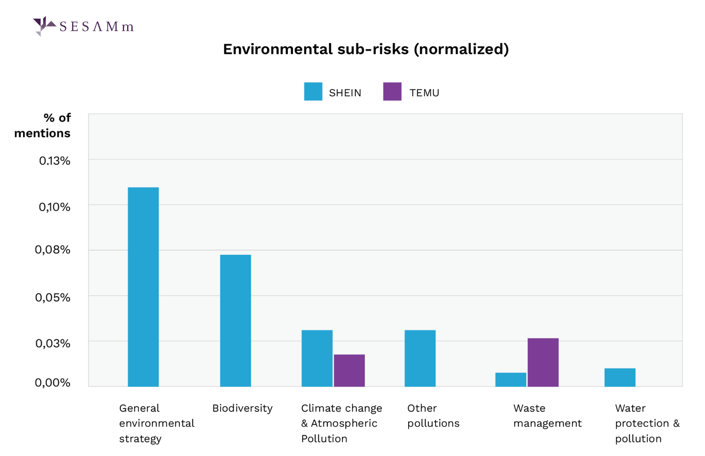
In our analysis of social risks within the supply chains of TEMU and SHEIN, we discovered that fundamental human rights and labor rights are the most and second most prevalent issues, respectively. Notably, despite TEMU's more recent establishment compared to SHEIN, its supply chain has a relatively higher proportion of human rights controversies.
Both companies have faced serious allegations related to their supply chain practices. TEMU and SHEIN are scrutinized for using Chinese cotton potentially linked to slave labor, with insufficient efforts to mitigate forced labor risks. Allegations include child slavery, privacy issues related to sharing user data, and environmental neglect, including the use of carcinogens in products. Despite their efforts to boost their public image through aggressive marketing and influencer engagements, both companies have been criticized for their approach to environmental responsibility and labor practices.
Political calls for investigations into the use of Uyghur slave labor in both companies underscore their ethical challenges. Neither company has shown rigorous compliance with anti-forced labor laws, lacking stringent programs to audit supplier compliance. This highlights significant gaps in their corporate responsibility efforts.
It's evident that social risks, particularly human rights breaches and labor rights controversies, have received significantly more attention than environmental risks. Despite the severity of environmental events, they represent a lower percentage in comparison. This highlights the prioritization of addressing social issues within these companies' operations.
SHEIN experiences extensive scrutiny, leading to a wealth of data on its practices. Conversely, TEMU, despite facing environmental controversies, has been less transparent about its environmental footprint, with Greenpeace reports highlighting this lack of clarity. This disparity underscores that SHEIN’s environmental impacts are more thoroughly documented than TEMU’s.
These environmental and health issues gained attention during SHEIN’s attempts to launch IPOs in the US and UK, spotlighting the company's ethical and environmental practices. Despite SHEIN's pledges to donate towards solving textile waste problems, critics label these actions as greenwashing, calling for significant alterations to its business model to address the underlying issues effectively.
Supply Chain Dynamics: SHEIN vs TEMU
While TEMU doesn't have its own brand like SHEIN, it operates under a comparable business model. It acts as an intermediary, managing shipments for products it doesn't manufacture. Despite their distinct approaches, both companies frequently engage in disputes, drawing attention to their supply chains. Additionally, policymakers often group them with similar firms, subjecting their fast fashion practices to heightened scrutiny.
These events highlight the growing scrutiny surrounding the supply chain practices of both SHEIN and TEMU. Senator Rubio's call for an investigation into allegations of Uyghur slave labor usage by both companies, additionally, mentions of Congressional attention has also focused on these companies, with reports exposing violations of U.S. tariff laws and evasion of human rights reviews on imports, shedding light on systemic issues within their operations.
Increasing Sustainability Awareness
We studied the mentions of both ESG initiatives associated with the brands and detected that over the analyzed time frame, SHEIN has been associated with significantly more initiatives than TEMU.
We analyzed the sustainability initiatives of these companies, finding that SHEIN's efforts outpace TEMU's significantly.
SHEIN focused on circular economy practices, exemplified by partnerships like that with Queen of Raw to reuse excess industry inventory and launches such as EvoluSHEIN and SHEIN Exchange, also boosting Product safety mentions, which promote recycled materials and resale of used products, respectively.
Throughout our analysis period, we noted that 2022 was a turning point for SHEIN's sustainability efforts, sparked by several mentions of breaches related to the Modern Slavery Act and child labor allegations in the previous year, which subsequently increased the company’s sustainability-related mentions. By 2023, as SHEIN prepared for potential IPOs in the US and UK and with the release of a controversial documentary, the company faced heightened scrutiny, with more allegations surfacing in its supply chain concerning various acts and legislations, such as the Modern Slavery Act, Uyghur Forced Labor Prevention Act, and others. Despite these challenges, mentions of SHEIN’s ESG initiatives also rose, although they remained less prominent than risk-related mentions due to controversies typically gaining more attention online. However, from 2024 to the present, we have observed more initiatives than risks, suggesting that, despite some acts and legislations being non-binding or not directly applicable to SHEIN, the potential reputational impacts drive the company toward positive change.
It's worth noting that we've observed discussions linking SHEIN with the recent EU Corporate Sustainability Due Diligence Directive, also referred to as CSDDD or CS3D. These discussions underscore the view that governments should refrain from incentivizing fast fashion companies like SHEIN. As the CSDDD is expected to bring about significant changes, forcing businesses to identify, prevent, or mitigate adverse impacts of their operations on human rights and the environment. Notably broader in scope compared to previous legislation, this directive will apply to all EU companies surpassing a certain revenue threshold. Consequently, fast-fashion retailers like SHEIN will face increased requirements to take action and ensure compliance.
The absence of enforceable regulations allows companies like TEMU to continue operating, but SHEIN's actions, particularly as it moves towards an IPO, raise questions about whether its efforts to improve practices are driven by the scrutiny associated with preparing for a public offering or by a sincere commitment to compliance with laws and regulations.
To conclude, our analysis underscores the dynamic landscape of supply chain regulations, ESG risks, and sustainability initiatives within the specialized retail sector, particularly in the fast-fashion industry. A focus on SHEIN and TEMU reveals a rise in both ESG initiatives and identified breaches. SHEIN's proactive initiatives suggest a response to regulatory pressures. Additionally, our findings suggest that even without binding legal requirements, companies may still choose to comply to enhance their reputation or respond to heightened scrutiny.
Reach out to SESAMm
TextReveal’s web data analysis of over five million public and private companies is essential for keeping tabs on ESG investment risks. To learn more about how you can analyze web data or to request a demo, reach out to one of our representatives.
Paris, France – 24 février 2026 – SESAMm, leader mondial des données de controverses ESG et réputationnelles, annonce le renouvellement de son partenariat avec le Crédit Mutuel Arkéa, initié en janvier 2023, pour le renforcement de l’évaluation et du suivi des risques ESG au sein de ses activités d’achats et d’investissement.
Depuis le début de cette collaboration, Crédit Mutuel Arkéa s’appuie sur la plateforme SESAMm pour analyser les risques environnementaux, sociaux et de gouvernance liés à ses fournisseurs, partenaires et participations. Grâce à des données de controverses ESG fondées sur l’intelligence artificielle, il est possible d’identifier notamment les manquements réglementaires, incidents environnementaux, risques sociaux, atteintes aux droits humains, cas de corruption et autres risques réputationnels.
Dans le cadre de ce partenariat renouvelé, SESAMm poursuit cet accompagnement, à la fois lors des appels d’offres et dans le suivi continu des tiers, ainsi que pour l’analyse des dossiers d’investissement et la surveillance quotidienne du portefeuille, complétées par des synthèses hebdomadaires des controverses ESG.
Ce renouvellement de confiance confirme la valeur ajoutée des analyses de SESAMm pour renforcer la cohérence, la réactivité et la robustesse des processus de due diligence et de gestion des risques ESG du Crédit Mutuel Arkéa.
Stay ahead with the latest in ESG and AI intelligence
Join our mailing list to receive new reports, event invites, and updates from SESAMm directly to your inbox.







.webp)

.png)
.png)
.png)




.png)