

Alternative Data | Text Analysis | Sentiment Analysis
Alternative Data Trends: 5 Effects of the Failing Musk-Twitter Deal
August 17, 2022
•
5 mins read
On April 24, 2022, Elon Musk, CEO of Tesla, Space X, The Boring Company, and Neuralink—and one of the most popular people on Twitter with one of the largest followings—reached an agreement to buy Twitter for roughly 44 billion dollars. On July 8, 2022, the deal failed to materialize after Musk withdrew from the negotiations due to his concerns about the company's alleged overabundance of fake Twitter user accounts, aka bots. As a result, the Twitter stock price plummeted by 15% after the announcement.
Now that his deal to buy Twitter has failed and culminated in a legal battle, Musk's public sentiment has reached all-time lows. The public sentiment for Twitter has also taken a hit. In general, public sentiment surrounding this deal was largely negative from both sides:
Musk's fans were disappointed because they thought it would allow him to spread his message about sustainable energy sources further.
Twitter's users were happy because they believed his involvement would have led to changes that would have made the platform less accessible than ever before.
But how exactly was public sentiment affected by the fallout of Elon Musk's failed Twitter acquisition? Let's find out. Here are five effects of the failed Musk-Twitter deal.
1. Merger and acquisition sentiment dropped from the beginning
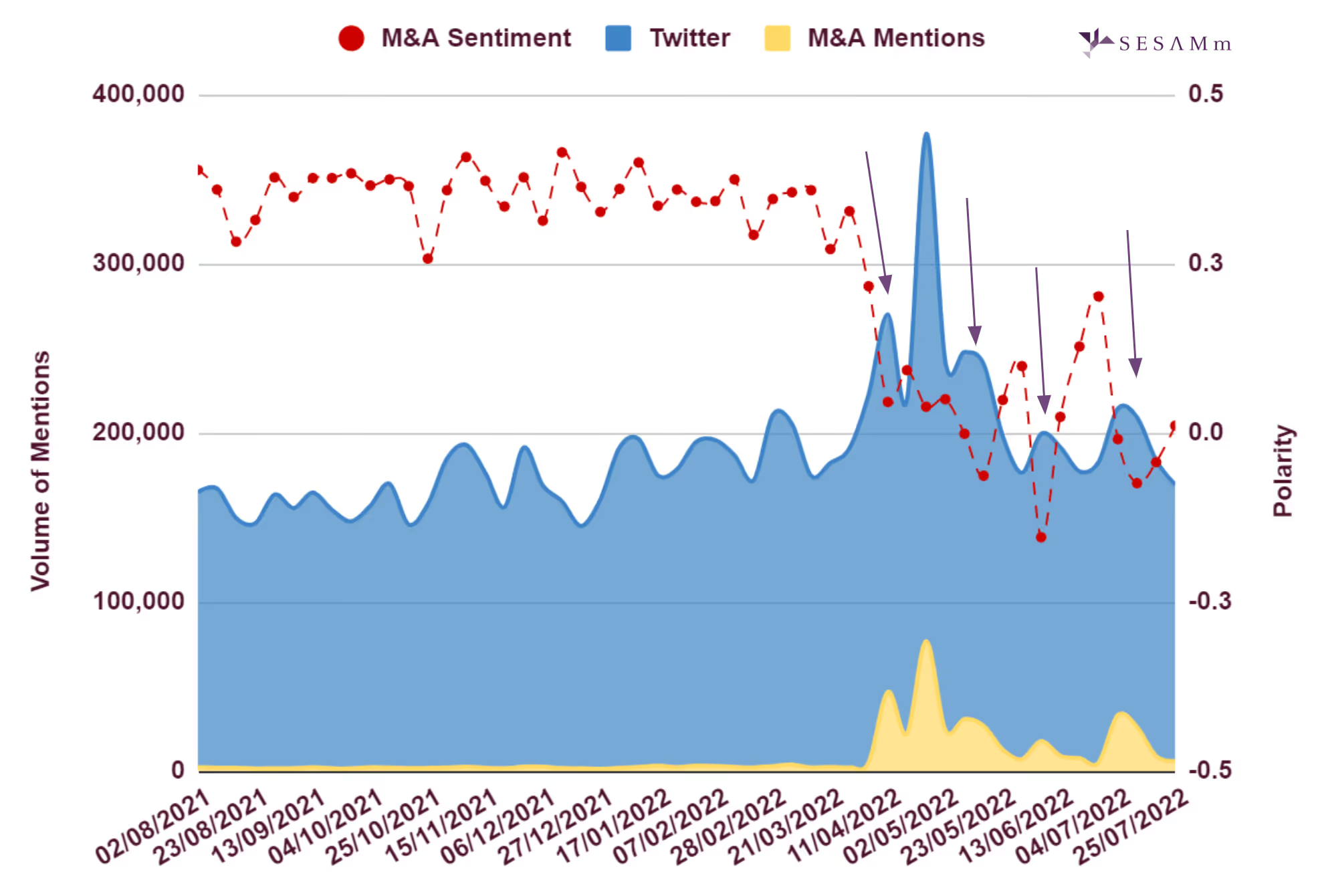
Figure 1: Twitter M&A sentiment took a hit at key events during Musk’s evaluation period.
Musk had been exploring the possibility of purchasing Twitter as early as January 2022 when he began increasing his positions in Twitter stock. By March 14, Musk became the largest shareholder in the company, according to a securities filing. And that's when the sentiment toward the acquisition began to drop.
M&A sentiment experienced a further drop when Musk officially announced his offer to purchase the Twitter company on April 14, 2022. On Reddit, for example, members of the r/Economics community posted and engaged with the following: Elon Musk Launches $43 Billion Hostile Takeover of Twitter, a post that since has been removed but represents one of many sources feeding sentiment toward the topic.
In May 2022, Musk announced a hold on the deal, pushing M&A sentiment even farther down. And more recently, in late June and early July when Twitter sued Musk for breaching the M&A agreement, M&A sentiment fell deeper into the negative space.
2. Sentiment for Elon Musk and Twitter declined likewise
Figure 2: Overall, Musk’s sentiment polarity suffers the most.
But how do Elon Musk's and Twitter's sentiments evolve with M&A mentions?
In measuring and analyzing M&A mentions in web data, we found that Twitter's brand suffered but not nearly as much as Musk's. Both of their sentiments dropped in April when Musk announced his offer. However, Musk's sentiment suffered more when he put the deal on hold in May and again in June when Twitter filed a lawsuit against him.
Figure 2 shows two additional drops in Musk's sentiment for July. These correspond to news events regarding the trial, including news about the trial's start date in October.
Unfortunately for Musk, his other brands also experienced a drop in sentiment. For example, Tesla's sentiment experienced corresponding declines compared to Musk's, but not nearly as much as SpaceX's (Figure 3). One reason for this disparity could be the open letter SpaceX's workers wrote. The workers voiced their concern about Musk's behavior in this letter, stating, "Elon's behavior in the public sphere is a frequent source of distraction and embarrassment for us."
Further, in Figure 3, we track Tesla's stock performance. Initial data shows a possible correlation between Tesla's stock price and sentiment. However, further analysis and backtesting are needed to confirm this correlation.
4. Musk's sentiment suffered more than Twitter's
Figure 4: Twitter’s sentiment polarity isn’t as affected as Musk’s.
Twitter's sentiment remained relatively stable, seeing only a minor drop when Musk became the largest shareholder. Even Twitter's stock price remained stable, experiencing a temporary increase when Musk purchased Twitter stock but settling after. It's worth noting that Twitter's stock price was declining before January 2022, which might have influenced Musk's decision to buy.
In contrast, Musk's sentiment took a huge hit when he became the largest shareholder.
5. It’s not only about Musk and Twitter
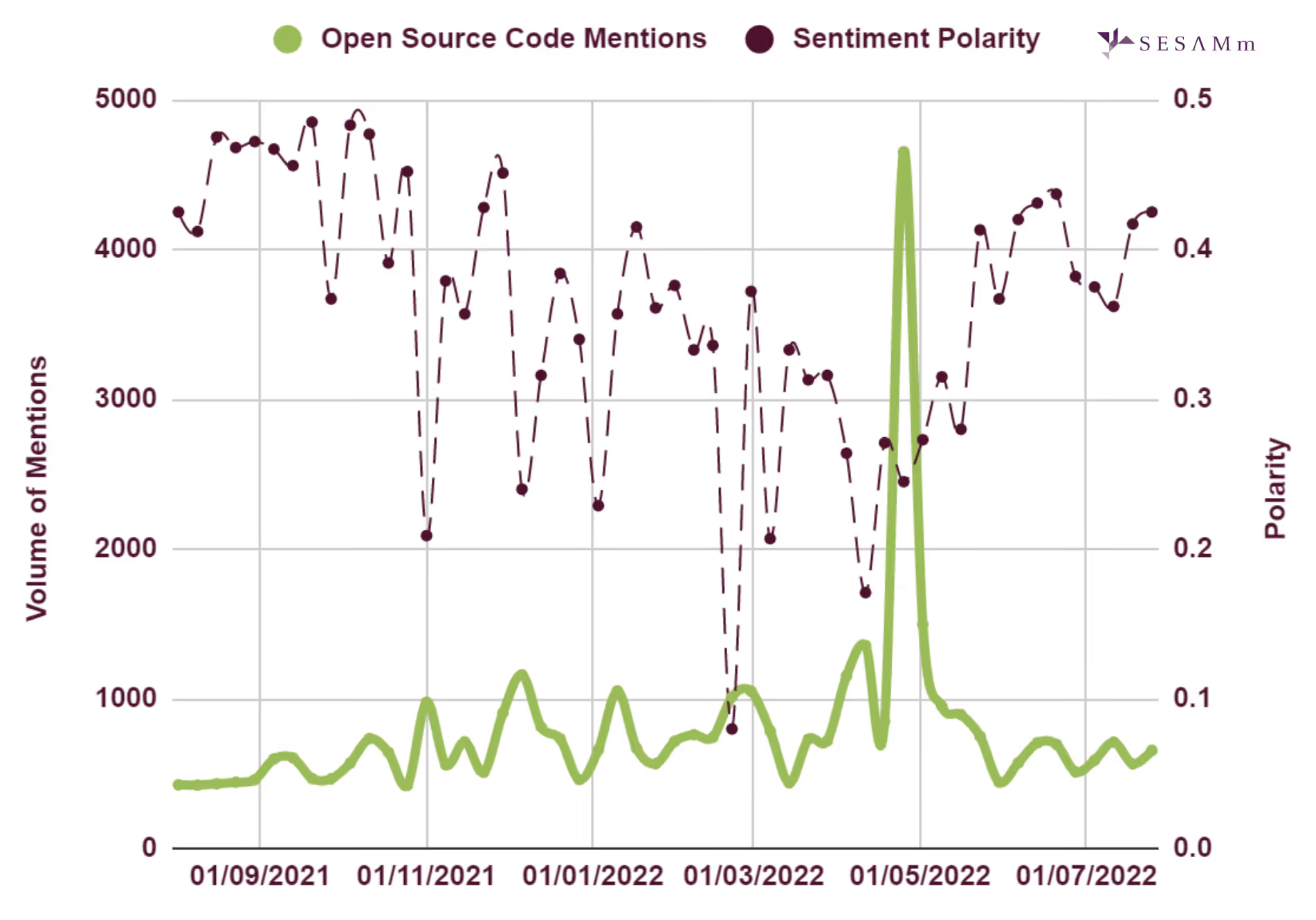
Figure 5: Musk possibly gained the open-source community’s favor, if the rise in polarity is an indication.
However, in April 2022, Musk said that one of the ways he wanted to improve Twitter was to make its algorithms open source to increase trust. How did the open-source community take the news? According to the chart (Figure 5), well. Open-source sentiment polarity jumped back up.
Analyzing the M&A sentiments
Overall, Elon Musk’s sentiment polarity reached lower levels than those of Twitter and his other brands—although SpaceX took a significant hit, too. Whether because of his brash public statements or his employees criticizing his focus and intentions, data shows that netizens were not supportive of his attempted acquisition. And with the Twitter v. Musk court battle scheduled and looming, his sentiment doesn’t seem like it will be improving anytime soon.
Reach out to SESAMm
To learn more about how we analyze web data or to request a demo, reach out to one of our representatives.

As regulatory scrutiny intensifies across industries, several major corporations faced significant legal challenges related to anti-competitive behavior in October 2025. Using SESAMm's AI-powered controversy data, we analyzed corporate activity to identify the companies most involved in anti-competitive practices during the month. The results reveal a pattern of regulatory action spanning tech giants, financial services, and food production sectors.
#1: Alphabet: Mounting Regulatory Pressure
Alphabet continues to face unprecedented legal challenges across multiple jurisdictions. The company is facing a substantial $8.3 billion lawsuit from Klarna, alleging anti-competitive practices in the Android market. The situation intensified when the U.S. Supreme Court denied Google's request to delay mandated changes that would open Google Play to rival app stores.
Visa continues to face legal and regulatory pressures across multiple jurisdictions. In the United States, the long-running merchant fee antitrust litigation (MDL 1720) remains active, with ongoing appeals and challenges to proposed settlements. Several merchant groups that opted out of earlier agreements have been permitted by the courts to continue pursuing their claims, extending Visa’s legal exposure.
The company's $5.3 billion acquisition of Plaid has drawn intense scrutiny from the U.S. Department of Justice, reflecting growing concern about consolidation in the fintech sector. Meanwhile, across the Atlantic, the UK Competition Appeal Tribunal delivered a landmark ruling against both Visa and Mastercard, determining that their Multilateral Interchange Fees violate competition laws; a significant victory for European merchants and a potential precedent for future cases.
Beyond beef, Tyson reached an even larger $85 million settlement in a separate antitrust case concerning pork price inflation, the largest settlement to date in ongoing litigation against major U.S. meat producers.
Conclusion
The findings from October 2025 underscore a critical moment in corporate regulation, as authorities worldwide demonstrate an increased willingness to challenge anti-competitive practices in sectors ranging from technology and finance to food production. The substantial fines, denied appeals, and ongoing investigations signal a regulatory environment that is actively reshaping market dynamics.
For investors and market observers, these cases highlight the material financial and operational risks associated with anti-competitive behavior. As enforcement mechanisms strengthen and legal precedents solidify, companies across all sectors should anticipate heightened scrutiny of market practices, particularly those involving platform dominance, merger activities, and pricing coordination.
Reach out to SESAMm
TextReveal’s web data analysis of over five million public and private companies is essential for keeping tabs on ESG investment risks. To learn more about how you can analyze web data or to request a demo, reach out to one of our representatives.
Happy new year! 2018 already holds many exciting news with various projects and clients already onboard. We begin the year with 2 recently signed contracts with top-ranked hedge funds, additional features and cryptocurrencies added to L’Humeur des Marchés and published plentiful of internships and job opportunities. Moreover, following our partnership with Eagle Alpha and the event in New York last month, we will be organizing a roadshow in London to meet high-ranked hedge funds on February 7th and 8th.
Collaboration with new major clients
Recently, we have signed 2 major contracts with top-ranked hedge funds.
The first contract is with Nikko Global Wrap (one of the subsidiaries of Sumitomo Mitsui Asset Management, a major asset manager in Japan) managing JPY 1.7 trillion.
Second contract has been signed with La Française Investment Solutions, a subsidiary of La Française Group, a top 10 French asset manager with more than €64bn assets under management.
This great news proves our technology is trusted by major financial institutions and gives us more confidence to continue looking for collaboration opportunities worldwide.
Future contracts and new distributor
We are currently in negotiation talks with another major French asset manager, a bank, two insurers and a US hedge fund. We hope to keep up at the same pace for the whole year and sign new contracts in the weeks ahead.
Also, we have recently started a new partnership with Neudata, a major UK alternative data distributor. We have signed an agreement, so they could support us and promote our solutions & services.
After New York, London
Last month, SESAMm made its very 1st trip to the USA for the BIG Alternative Data Showcase week organized by our partner Eagle Alpha. It proved to be a valuable experience from which multiple business opportunities arose and we launched many product trials with significant US funds.
Next month, we are planning a roadshow in London with Eagle Alpha. We already arranged multiple meetings with hedge funds and, thanks to Eagle Alpha’s support, we are given a unique opportunity to present and show our solutions to asset managers and C-level decision makers.
New additions to L’Humeur des Marchés
Concerning our platform L’Humeur des Marchés, we are glad to announce that we will soon be providing historical data concerning the assets. This update is planned to happen during next month and will give users more flexibility and options related to their investment and strategies.
In addition, an alert module is under development and we have begun to include cryptocurrencies into the platform. Most of the top-ranked cryptocurrencies are currently covered – such as Bitcoin, Ethereum or Ripple, among others as shown below.
Developments are planned to further extend our coverage of alt-coins with the objective to include every single major capitalization into L’Humeur des Marchés.
New job opportunities
Last but not least, we will be scaling our team during 2018. Multiple internships and job offers are currently available to further support SESAMm’s growth and ambition. We are looking for candidates in the fields of IT, finance and Data science but, most of all, highly motivated individuals seeking challenges! You can find all our offers by following this link. We would be very excited to receive your applications or recommendations for profiles seeking to work with us!
Thank you for your support and best wishes to you for 2018!
The European Union stands at the forefront of global efforts to promote environmental, social, and governance (ESG) accountability. As the world becomes increasingly ESG-aware, the EU has developed a comprehensive regulatory framework designed to ensure transparency and accountability across all sectors.
These regulations represent the EU's commitment to sustainable development and responsible business practices. However, the regulatory landscape is evolving, with the February 2025 EU Omnibus Proposal introducing potential modifications aimed at reducing the regulatory burden on businesses. However, these proposals come at the risk of substantially undercutting the impact of the regulations.
This article recaps the current ESG regulatory framework in the EU, explores the changes proposed by the Omnibus, analyzes the potential impacts of these modifications, and discusses how financial institutions can navigate this evolving landscape while maintaining compliance.
The ESG Regulatory Landscape in the EU
The EU is advancing sustainability through a framework of regulations that enhance corporate accountability and reporting on ESG impacts. These measures aim to promote genuine sustainable practices and address international trade and emissions challenges. Though comprehensive, these regulations are also, at times, confusing in the way they overlap and impact each other. To get started, let’s examine the EU Taxonomy, SFDR, and CSRD—a triad of interconnected regulations designed to streamline and strengthen sustainable investing practices.
EU Taxonomy
The EU Taxonomy provides a classification system for environmentally sustainable economic activities, offering clear criteria to determine whether an economic activity can be considered "green."
Key Aspects of the EU Taxonomy
Defines criteria for environmentally sustainable economic activities
Requires companies subject to CSRD to report on Taxonomy alignment
The Taxonomy helps channel investment toward genuinely sustainable projects and businesses by creating a common language for sustainable activities.
Status
The EU Taxonomy has been operational since January 2022 with phased implementation. As of March 2025, companies subject to CSRD must disclose their taxonomy alignment percentages.
Sustainable Finance Disclosure Regulation (SFDR)
The SFDR focuses specifically on the financial sector, requiring financial market participants to disclose how they integrate ESG risks into their investment decisions and the sustainability impact of their financial products.
Key Aspects of SFDR
Requires disclosure of ESG risks in investment processes
Classifies financial products based on their sustainability characteristics
Aligns with EU Taxonomy criteria for sustainable investments
Aims to prevent greenwashing in financial products
The SFDR plays a crucial role in bringing transparency to the rapidly growing sustainable investment market.
Status
Fully implemented since March 2021, with enhanced Level 2 requirements since January 2023. All EU financial market participants must classify products under Articles 6, 8, or 9. Current market data shows that 28% of EU funds are compliant with Article 8 and 5% with Article 9, with a significant trend of reclassification from Article 9 to 8 due to stricter interpretations.
The CSRD stands as a cornerstone of the EU's ESG regulatory framework, requiring companies to report comprehensively on their environmental, social, and governance impacts. This directive mandates alignment with the EU Taxonomy, ensuring standardized reporting of sustainability metrics.
Key Aspects of CSRD
Requires detailed reporting on ESG impacts
Aligns with EU Taxonomy criteria for sustainability
Currently applies to companies with 250+ employees
Enhances corporate transparency on sustainability issues
The CSRD represents a significant step forward in standardizing sustainability reporting across the EU, providing investors, consumers, and regulators with comparable information on corporate sustainability performance.
Status
The CSRD, adopted in November 2022, replaces the Non-Financial Reporting Directive (NFRD). The transition to CSRD reporting was originally slated to begin in 2025 and would expand the number of companies subject to reporting requirements to 49,000 (vs 11,700 under NFRD). However, as we’ll see later, the Omnibus may push back the timing of CSRD.
Outside of the EU Taxonomy, SFDR, and CSRD, the Omnibus Proposal highlights two other key ESG regulations: CSDDD and CBAM. These regulations relate to corporate accountability for supply chains and to limiting carbon leakage.
Corporate Sustainability Due Diligence Directive (CSDDD)
The CSDDD focuses on corporate accountability throughout global supply chains, requiring companies to identify, prevent, and mitigate human rights and environmental risks associated with their operations.
Key Aspects of CSDDD
Requires companies to identify and mitigate human rights and environmental risks
Applies to full supply chains, ensuring comprehensive oversight
Applies to EU companies with 1,000+ employees and €450 million+ global turnover and non-EU companies with over €450 million EU turnover
Mandates regular monitoring and reporting on due diligence efforts
Strengthens corporate accountability for sustainability across operations
This directive acknowledges that a company's sustainability impact extends beyond its direct operations, encompassing its entire value chain.
Status
CSDDD was adopted in April 2024. Its phased implementation is slated to start in June 2026 and be completed by June 2028. The timing and scope of CSDDD is subject to change following the Omnibus Proposal.
Carbon Border Adjustment Mechanism (CBAM)
The CBAM is an innovative approach to preventing carbon leakage. It levies a carbon tax on imports to ensure that the EU's ambitious climate policies do not simply shift carbon-intensive production outside its borders.
Key Aspects of CBAM
Imposes a carbon tax on imported goods
Requires importers to report emissions data
Ensures payment for embedded carbon costs in imported products
Aims to prevent carbon leakage to regions with weaker climate policies
This mechanism aims to create a level playing field for EU producers subject to carbon pricing while encouraging global partners to implement similar carbon pricing mechanisms.
Status
The transitional phase for CBAM began in October 2023, with full implementation scheduled for January 2026. It currently covers cement, iron and steel, aluminum, fertilizers, electricity, and hydrogen. The certificate requirements will phase in gradually from 30% in 2026 to 100% by 2034. It’s expected to apply to 1.8 million EU importers and generate €5-14 billion in annual revenue when fully implemented.
The February 2025 EU Omnibus Proposal
Purpose and Goals
The EU Omnibus Proposal represents a significant recalibration of the EU's regulatory approach, seeking to balance sustainability ambitions with business competitiveness concerns.
The primary objectives of the Omnibus focus on alleviating regulatory burdens faced by businesses, simplifying compliance requirements, and streamlining reporting obligations. These efforts aim to enhance business competitiveness while addressing regulatory complexity concerns. By minimizing these challenges, the goal is to create a more favorable environment for businesses to thrive. However, this push for simplification could come at the expense of transparency and accountability, especially in sectors where regulation plays a protective role.
Impact Analysis: How the Omnibus Changes ESG Compliance
Below, we’ll take a closer look at each regulation and the changes proposed by the Omnibus Proposal.
EU Taxonomy Modifications and Implications
The Omnibus Proposal suggests a Level 2 modification to the application of the EU Taxonomy, reducing the number of companies required to report taxonomy alignment.
Key Changes:
Taxonomy alignment reporting is limited to companies subject to CSDDD
Voluntary reporting option for companies not required to comply
Possible Implications:
Reduced availability of standardized sustainability data
Increased difficulty in verifying "green" business claims
Higher risk of greenwashing in financial markets
Less reliable information for sustainable investors
These modifications would potentially undermine the Taxonomy's role in creating a common language for sustainable activities.
CSRD Modifications and Implications
The Omnibus Proposal significantly narrows the scope of the CSRD, reducing the number of companies required to report on ESG impacts.
Key Changes:
Threshold increase from 250+ to 1,000+ employees
Optional reporting for SMEs
A two-year delay in reporting obligations for some companies
Possible Implications:
80% reduction in companies required to report
Decreased transparency in corporate sustainability performance
Fewer sustainability data available to investors and regulators
Potential challenges in tracking sustainability progress
These modifications would substantially reduce the regulatory burden on smaller companies but raise concerns about the availability of comprehensive sustainability data.
CSDDD Modifications and Implications
The Omnibus includes significant modifications to CSDDD, with a narrowed scope and reduced monitoring requirements.
Key Changes:
Due diligence is limited to direct suppliers with over 500 employees, not full supply chains
Monitoring frequency reduced from annual to every 5 years
Delayed enforcement for one year for the first batch (Companies with 1.5 billion in turnover and 5000 employees)
Possible Implications:
Weakened corporate accountability for supply chain sustainability
Increased risk of undetected human rights and environmental violations
Reduced monitoring of global supply chain impacts
Extended timeline before full implementation
These changes would significantly reduce companies' compliance burdens but come at the risk of removing the essence of the directive, which is eliminating child labor, forced labor, etc.
SFDR Modifications and Implications
While not directly modified, changes to other regulations, particularly the EU Taxonomy, indirectly affect the SFDR.
Indirect Impacts:
Reduced availability of reliable ESG data
Challenges in differentiating truly sustainable investments
Potential increase in greenwashing risk
These indirect effects could undermine the SFDR's effectiveness in bringing transparency to sustainable investment products.
CBAM Modifications and Implications
The Omnibus Proposal simplifies CBAM compliance, particularly for smaller importers.
Key Changes:
Small importers (under 50 metric tons/year) are exempted
Reduced reporting burden for over 182,000 businesses
Possible Implications:
Simplified compliance for small businesses
Potential loophole risk if companies split shipments to stay under the threshold
Maintained coverage of 99% of emissions despite exemptions
These modifications would maintain the CBAM's effectiveness while reducing the administrative burden on smaller importers.
The Debate: Perspectives on the Omnibus Proposal
Arguments in Favor
Proponents of the Omnibus Proposal emphasize its benefits for business competitiveness and regulatory efficiency. They highlight the reduced administrative burden, especially for small and medium-sized enterprises (SMEs), which often struggle with complex regulations. Additionally, the changes aim to simplify compliance requirements, making it easier for businesses to adhere to regulations. By aligning with global standards, the proposal helps maintain the EU's economic competitiveness while promoting a more efficient allocation of resources across industries. Together, these factors create a more streamlined and supportive environment for businesses to thrive.
As BusinessEurope Director General Markus J. Beyrer stated: "Doing better with fewer and clearer norms is what European companies of all sizes are asking for. By reducing unnecessary reporting and regulatory burdens, the first Omnibus will allow companies to contribute more effectively to the EU's sustainability objectives while also preserving the EU economy's competitiveness."
European Commission President Ursula von der Leyen also expressed support for the proposal, stating: "EU companies will benefit from streamlined rules. This will make life easier for our businesses while ensuring we stay firmly on course toward our decarbonization goals."
Criticisms and Concerns
Critics raise significant concerns about the potential undermining of the EU's sustainability ambitions. They argue that the Omnibus Proposal may lead to unintended consequences, including reduced transparency in corporate sustainability performance, weakened supply chain accountability, and regulatory uncertainty during transition periods. Additionally, it could undermine sustainability objectives and increase the risk of greenwashing. As Mariana Ferreira from WWF European Policy Office commented:
"The Commission's sudden urge to destroy laws that are crucial for the achievement of the EU Green Deal is a perilous approach that is forcing Europe into a time of regulatory uncertainty. Under the guise of 'simplification,' the Commission put forward a proposal that will hinder economic and business success."
"The Omnibus proposal erodes EU's corporate accountability commitments and slashes human rights and environmental protections."
While the European Parliament debates the Omnibus Proposal, the fact remains that even if the regulations are delayed or loosened, the need for risk management remains unchanged. Investors require transparency, and companies must manage supplier risk effectively.
Navigating ESG Risks with SESAMm
SESAMm’s cutting-edge AI solutions empower investors, financial institutions, and corporations to navigate the complexities of ESG compliance with confidence. Leveraging an industry-leading data lake and state-of-the-art AI, SESAMm uncovers hidden risks in supply chains and target companies, providing real-time insights that drive proactive decision-making. By transforming regulatory challenges into opportunities for responsible and sustainable growth, SESAMm helps businesses stay ahead of evolving ESG requirements while mitigating risk and enhancing transparency.
SESAMm’s AI Technology Reveals ESG Insights
Discover unparalleled insights into ESG controversies, risks, and opportunities across industries. Learn more about how SESAMm can help you analyze millions of private and public companies using AI-powered text analysis tools.
Stay ahead with the latest in ESG and AI intelligence
Join our mailing list to receive new reports, event invites, and updates from SESAMm directly to your inbox.