S&P 500 ESG Index Drops Tesla: This Analysis Supports the Decision
July 6, 2022
•
5 mins read
May 2, 2022. The S&P 500 ousts Tesla, Inc. from the S&P 500 ESG Index. Tesla is widely recognized as the firm that ushered electric vehicle making into the mainstream. So the index’s move seems unreasonable or possibly made in error to many, raising some interesting questions:
How does an environmentally-friendly corporation like Tesla get dropped from an ESG index?
Why does a potentially non-environment-friendly company like Exxon make the ESG index and remain on it?
What do these moves mean about the integrity and validity of ESG scores and ratings?
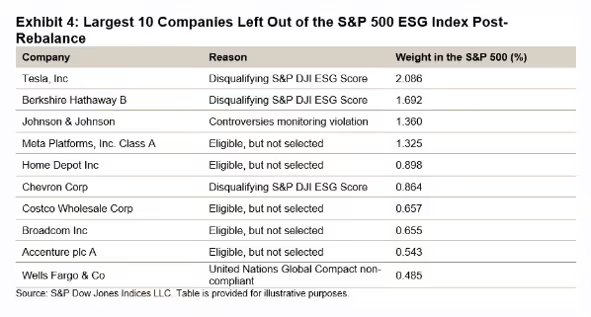
Global industry group peers pushed Tesla’s S&P DJI ESG Score further down the ranks in the GICS industry group: Automobiles & Components.
A decline in criteria level scores related to Tesla’s low carbon strategy and codes of business conduct contributed to its 2021 S&P DJI ESG Score.
A media and stakeholder analysis identified "two separate events centered around claims of racial discrimination and poor working conditions at Tesla’s Fremont factory."
The analysis also highlights "the handling of the NHTSA investigation after multiple deaths and injuries were linked to its autopilot vehicles, affecting the company’s S&P DJI ESG Score at the criteria level, and its overall score."
Companies, including Tesla, left out of the S&P 500 ESG Index post-rebalance. Image courtesy of Indexology Blog.
The S&P blog post summarizes their case about dropping Tesla, "While Tesla may be playing its part in taking fuel-powered cars off the road, it has fallen behind its peers when examined through a wider ESG lens." And in this statement lies the crux of why the index dropped Tesla and why others are still on.
Analyzing Tesla’s web data
SESAMm’s TextReveal® insights suggest that the S&P 500’s decision to remove Tesla could be justified based on increasing controversy levels concerning discrimination, ethical standards, and work health and safety. By analyzing text related to ESG topics across the web, we picked up trends for the following subtopics:
climate_change_atmospheric_pollution
ethical_standards
discrimination_racism_sexism
labor_standards
health_and_safety_at_work
general_environmental_impact
Tesla’s ESG scores (six subtopics)
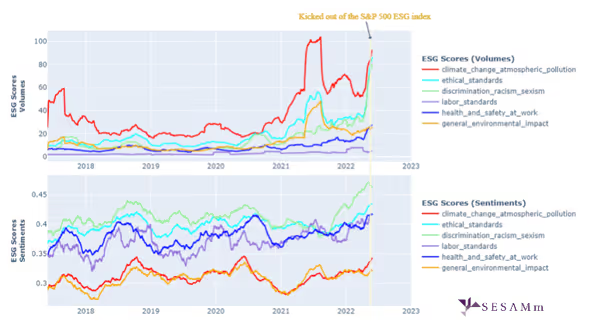
Figure 1: Tesla ESG scores for volumes and sentiments (1-year moving average), all source types.
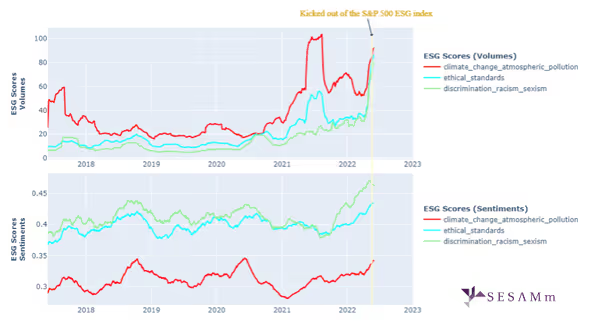
Regarding the volume features (Figure 1), we observed a significant increase in the scores related to ethical standards, discrimination, and atmospheric pollution for Tesla before the controversy. The conclusions are mostly the same for ESG sentiment (negative) scores. An interesting note is that the negative score of health and safety at work slightly increased in the months before the removal of Tesla from the index.
Figure 2: Tesla ESG scores for volumes and sentiments (1-year moving average), all source types, select subtopics.
Comparing Tesla’s sentiment with other S&P 500 ESG Index companies
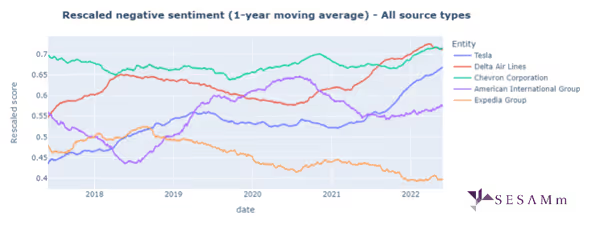
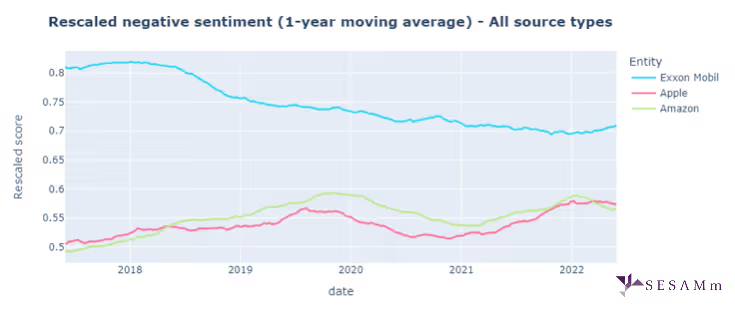
To see how Tesla’s ESG sentiment scores compared with other companies, we must rescale them with respect to a large universe of companies. This process means that for a given company, we use percentiles of the distribution of each subtopic’s ESG score to do a rescaling to the S&P 500 ESG constituents list after the 2022 rebalancing. Rescaling allows us to compare the companies with each other because the rescaled score indicates how bad the company is compared to the others, according to a specific ESG subtopic.
The following graphs show different sets of subtopics, plotting the mean of the respective rescaled scores if several topics are considered. Here are the companies considered.
Companies removed from the index:
Tesla
Delta Air Lines
Chevron Corporation
Companies that joined the index after the 2022 rebalancing:
American International Group
Expedia Group
Companies still part of the index:
Exxon Mobil
Apple
Amazon
Tesla, Delta, Chevron, AIG, and Expedia compared
Figure 3: Six-subtopic rescaled scores for Tesla, Delta, Chevron, AIG, and Expedia.
Apple, Amazon, and Exxon compared
Figure 4: Six-subtopic rescaled scores for Apple, Amazon, and Exxon.
The S&P 500’s choice is reasonable
Our analysis shows that the S&P 500’s decision to oust Tesla from the ESG index is reasonable. We found significant subtopic volumes and negative sentiment that support the S&P 500’s claims of racial discrimination, poor working conditions, and other controversies.
Thanks for reading this quick analysis. For a more detailed report, including Chevron’s and Delta’s ESG scores, reach out to a representative today.
SESAMm’s ready-to-use alternative data
Leverage our alternative data streams to incorporate systematic insights into your alpha signals or risk monitoring your entire portfolio. From tracking global sentiment to analyzing retail communities like WallStreetBets and integrating ESG alternative data into your systems, our solutions will make generating value from web insights easy.
Human rights concerns took center stage in November, with rising scrutiny on how digital platforms and luxury brands safeguard vulnerable users and workers. Across the market, allegations of child exploitation, extremist activity, and labor abuses exposed significant governance and oversight gaps. The month’s top three most controversial companies were Roblox Corporation, Snap Inc. (Snapchat), and Tod’s, each facing escalating legal and regulatory pressure.
#1: Roblox Corporation: Intensifying Allegations of Child Exploitation
Roblox, the video game developer, experienced a surge of human rights–related controversies, driven by lawsuits and criminal cases involving child exploitation and online extremism. Multiple families in the United States filed suits alleging that predators used the game to groom and coerce minors, in some cases leading to severe psychological harm.
At a broader level, new research from the Canadian Centre for Child Protection revealed widespread online sexual violence among youth, with Snapchat cited as one of the primary platforms involved. The company was also named in a major lawsuit filed by US school districts against Meta, Google, Snapchat, and TikTok, alleging that platforms suppressed internal research on youth harm and failed to implement meaningful protections.
In the luxury sector, Tod’s faced heightened scrutiny following new developments in an ongoing investigation into labor exploitation at its supplier factories. Italian prosecutors expanded their probe into three company executives, citing evidence of serious labor violations involving 53 workers employed by subcontractors. Issues raised included long working hours, low wages, inadequate safety standards, and poor living conditions.
Authorities also highlighted potential negligence and omissions by management, arguing that Tod’s failed to act on inspection findings that documented the abuses. Prosecutors have requested a six-month advertising ban and previously sought judicial administration over the company’s supply chain controls.
Conclusion
November’s top controversies underscore increasing pressure on companies to ensure robust human rights protections, both online and across global supply chains. As regulators, law enforcement, and civil society intensify oversight, firms in technology and consumer markets face rising expectations to demonstrate stronger safety systems, transparent governance, and proactive risk management.
Reach out to SESAMm
TextReveal’s web data analysis of over five million public and private companies is essential for keeping tabs on ESG investment risks. To learn more about how you can analyze web data or to request a demo, reach out to one of our representatives.
Sustainability trends have become ubiquitous in the business world, mainly due to the attention ESG is receiving. To state the obvious, this is a positive trend as it helps push companies to consider their impact on the environment, employees, and customers and ensure their governance practices are sound. However, it also incentivizes actors in the business world to try to game the system through marketing campaigns to improve their reputation.
Through the use of artificial intelligence and other technologies, we embarked on a mission to analyze the sentiment on the web and uncover to what extent companies are incurring reputational laundering techniques to deceive investors, customers, and other stakeholders but also to identify the ones that are actually performing actions to have a positive impact around them.
This analysis dives into the concept of greenwashing and reputational laundering. It reveals the nuanced interplay between genuine sustainability efforts and deceptive practices, offering a new lens to distinguish genuine from false corporate sustainability claims.
Beyond Greenwashing: Reputational Laundering
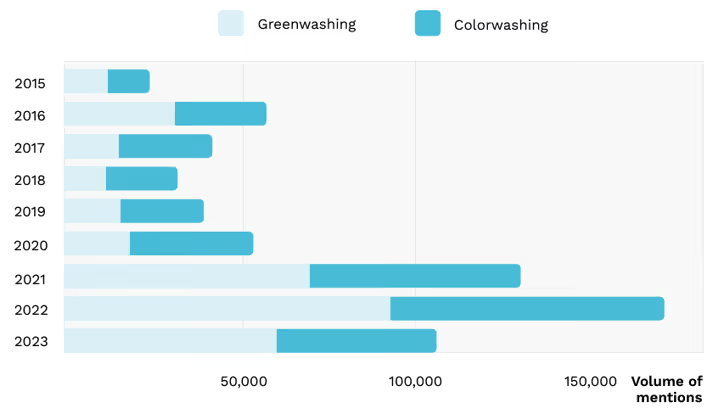
Let’s start with some definitions. Reputational laundering is deliberately hiding unethical behavior with highly visible positive actions. Greenwashing is just one component of reputational laundering. Another component is the social aspect of it, and it includes various forms of color washing such as purplewashing, pinkwashing, purpose washing, etc. So far, in 2023, greenwashing accounted for 55% of all the volume of reputational laundering mentions on the web. So, the remaining 45% represents color-washing.
TerraChoice defines greenwashing as “the act of misleading consumers regarding the environmental practices of a company or the environmental performance and positive communication about environmental performance."
Colorwashing, on the other hand, refers to a strategy used by organizations to create a positive public image by associating themselves with specific causes, ethics, or moral standpoints.
Beyond the conventional understanding of deliberate greenwashing, there’s a more nuanced concept and less discussed: unintentional greenwashing, where companies inadvertently convey misleading environmental claims. This can occur due to a lack of understanding of the true impact of their products or services, unverified claims, overlooking hidden consequences, unintentional confusion in marketing materials, or insufficient transparency. While these companies may not have malicious intent, their actions can inadvertently misrepresent their environmental efforts and mislead consumers about their commitment to sustainability.
Reputational laundering at a glance
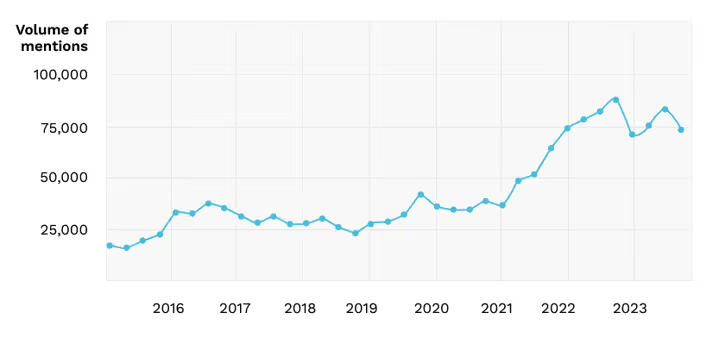
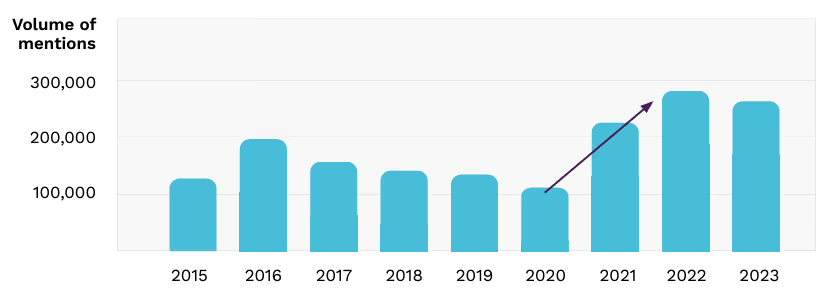
Figure 1: Reputation laundering mentions.
Over the past eight years, reputational laundering mentions have increased steadily. However, from 2021 onwards, they’ve grown a staggering 3.3x. The mentions of reputational laundering are coming from different topics, from false advertising, and misleading practices to lawsuits regarding greenwashing. Furthermore, we have observed a growing number of references regarding the declining trust of the public in corporate pledges, such as those related to 'net-zero' climate goals.
This increase can be attributed to two main reasons: the actual increase in reputational laundering and, more interestingly, the growing awareness from stakeholders (i.e., Investors and eco-conscious consumer base).
According to a report published by the UN Environment Programme (UNEP), climate change lawsuits have continuously surged over the past five years. Consequently, we analyze mentions of lawsuits related to environmental breaches and detect a significant increase in 2021 – which continues to the present day.
While greenwashing often dominates the conversation around reputational risks, it's crucial not to overlook the social dimension, which tends to receive less attention from the public. Since 2020, we've observed a significant uptick in mentions of greenwashing and its less-discussed counterpart, colorwashing.
Historically, up until 2020, the distribution of mentions leaned toward one-third greenwashing compared to two-thirds colorwashing. However, post-2021, this pattern has shifted. We've witnessed a rise in the frequency of greenwashing mentions, surpassing those of colorwashing and signaling an evolution in the focus of reputational laundering concerns.
Figure 3: Breakdown by type of washing.
During the COP27 conference at the end of 2022, a call was made to verify carbon and other environmental claims and show zero greenwashing tolerance. As a result, there has been a rise in scrutiny, and data now shows an increase in the number of allegations related to greenwashing. Here are a few examples:
In analyzing advertisements, we found instances of reputational laundering through various means. Some companies engaged in social washing, while others used sportwashing to bolster their reputation. The mining and energy industries were particularly guilty of this practice. Meanwhile, the communication industry, including companies such as Netflix and Disney, was associated with black and whitewashing.
Inspecting the Regulatory Landscape
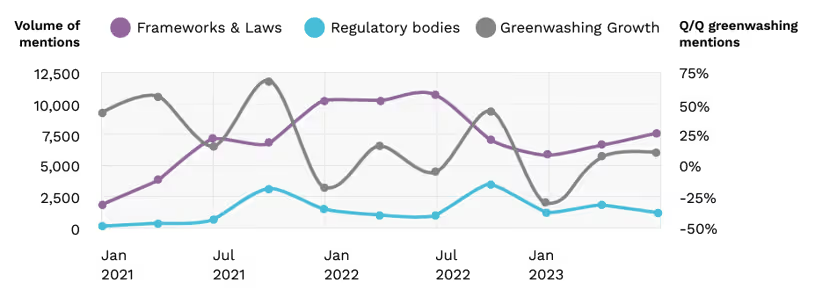
To analyze the regulatory environment of reputational laundering, we studied the effects of different legal frameworks and government organizations on greenwashing and other forms of reputational laundering. We measured the influence of legal frameworks and regulatory bodies on greenwashing by analyzing the quarterly growth of greenwashing mentions over the study period.
In this analysis, we define the concept of legal frameworks by capturing references related to the 'Green Claims' directive, Sustainable Finance Disclosure Regulation, EU Taxonomy, Green Product Certification, Fair Labeling and Advertising Act, Non-Financial Reporting Directive, FTC Act, FTC Green Guides, etc.
Concepts of Regulation bodies are defined by references to governments and Supranational entities (i.e., US government, FTC, SEC, Chinese government, Japanese government, etc.) or regulatory agencies established to safeguard the environment (United Nations Environment Programme (UNEP), Environmental Protection Agency (EPA), European Environment Agency (EAA), Intergovernmental Panel on Climate Change (IPCC), etc.)
Figure 4: Anti-greenwashing regulation vs greenwashing growth.
There has been a slight increase in the mentions of regulatory bodies over the years, mainly due to the growing interest in greenwashing, which has peaked during events like COP26 and COP27. Legal frameworks and regulatory bodies have played a significant role in the fight against greenwashing. Although there is no decrease in the mentions of this topic, the growth rate has reduced significantly. In fact, the quarter-on-quarter growth for greenwashing web mentions has been decreasing lately.
The trends reveal an interesting fact that there is a negative correlation between the growth in mentions of frameworks, laws, and regulatory bodies and the growth in mentions of greenwashing. Though the mentions of greenwashing are still increasing, the growth rate has significantly decreased from a 75% quarterly growth rate to 10% in the last year (except for spikes related to controversial events such as Greta Thunberg labeling COP26 as a “greenwash festival,” and not attending COP27).
Conclusion
As we navigate the landscape of corporate sustainability, it becomes evident that distinguishing genuine efforts from greenwashing is not just a matter of skepticism but a necessity. This exploration underscores the importance of vigilant analysis and the role of AI in unmasking deceptive practices. It calls for a collective commitment to transparency and accountability, empowering stakeholders to make informed decisions and advocating for a future where corporate responsibility aligns authentically with sustainable development.
At SESAMm, we used AI to study billions of articles and analyze greenwashing trends. Download this comprehensive ebook for an in-depth understanding of the evolving landscape of reputational laundering, notably greenwashing, and dive into its trends in the corporate world.
SESAMm’s AI Technology Reveals ESG Insights
Discover unparalleled insights into ESG controversies, risks, and opportunities across industries. Learn more about how SESAMm can help you analyze millions of private and public companies using AI-powered text analysis tools.
Globally, ethics and sustainability are important, but the retail industry faces intense scrutiny over supply chain integrity. This spotlight shines on SHEIN and TEMU, two giants in the fast fashion and e-commerce sectors, known for their vast reach yet marred by controversies around labor practices and environmental impacts. This article explores their supply chain strategies, examining how current and emerging legislation, like the CSDDD initiative, aims to tackle the ethical dilemmas plaguing global retail. Through a comparison of SHEIN and TEMU, we assess the effectiveness of regulatory frameworks in addressing these critical issues. By analyzing their ESG controversies and comparing their responses, we assess how well current and future legislation, particularly the CSDDD initiative, addresses ethical issues in global supply chains.
Specialized Retail: The Case of SHEIN and TEMU
SHEIN and TEMU are compelling use cases due to their past controversies and the focus on their supply chain practices. Both companies have come under scrutiny for their labor practices, environmental impacts, and ethical issues, making them ideal subjects for analysis. By studying their supply chain challenges, we aim to assess the effectiveness of current legislation and predict the potential impact of future regulatory frameworks, particularly in the context of the CSDDD initiative.
While both companies operate with a similar business model, SHEIN is an established player entangled in numerous supply chain controversies. On the other hand, TEMU, a newcomer since 2022, faces similar issues. Comparing them helps us evaluate the effectiveness of existing supply chain legislation and determine whether increased regulatory scrutiny has improved compliance or merely raised awareness of these controversies within the industry.
Note:
Size bias mitigation:
We normalized the data for both companies to ensure an equal basis of comparison, accommodating the difference in operational history—SHEIN since 2008 and TEMU since 2022— to eliminate discrepancies in web attention.
Risk analysis:
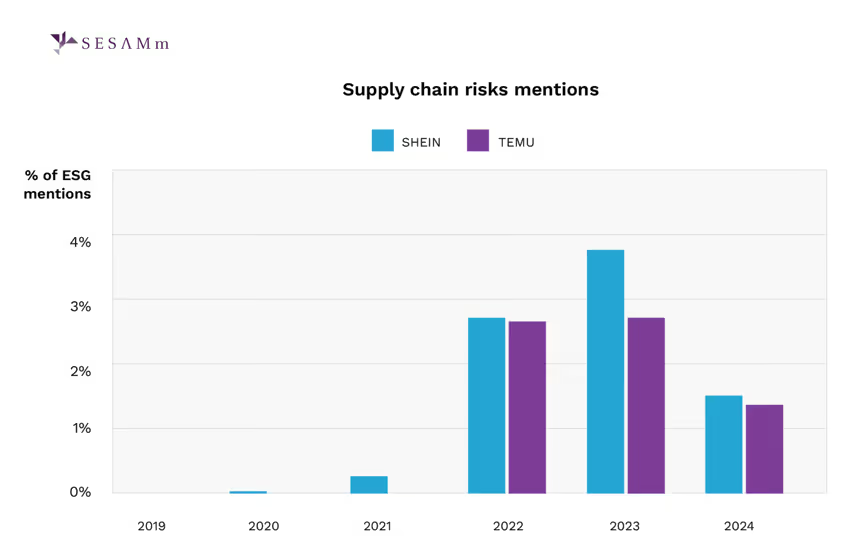
It’s worth noting that the figures presented here specifically relate to supply chain risks, as that is the primary focus of our analysis.
Examining Supply Chain Controversies
We analyzed ESG risks in the supply chains of SHEIN and TEMU over the past four years, adjusting data volumes for comparative analysis. SHEIN's supply chain risks have significantly increased since 2021, peaking in 2022 and continuing to rise in 2023, reflecting a growing online focus on its issues. Meanwhile, TEMU, despite only being established in 2022, has quickly come under intense scrutiny. The company faces frequent criticism for its supply chain practices, including condemnations for inaction and ongoing human rights violations.
Examining Social Sub-risks
In our analysis of social risks within the supply chains of TEMU and SHEIN, we discovered that fundamental human rights and labor rights are the most and second most prevalent issues, respectively. Notably, despite TEMU's more recent establishment compared to SHEIN, its supply chain has a relatively higher proportion of human rights controversies.
Both companies have faced serious allegations related to their supply chain practices. TEMU and SHEIN are scrutinized for using Chinese cotton potentially linked to slave labor, with insufficient efforts to mitigate forced labor risks. Allegations include child slavery, privacy issues related to sharing user data, and environmental neglect, including the use of carcinogens in products. Despite their efforts to boost their public image through aggressive marketing and influencer engagements, both companies have been criticized for their approach to environmental responsibility and labor practices.
Political calls for investigations into the use of Uyghur slave labor in both companies underscore their ethical challenges. Neither company has shown rigorous compliance with anti-forced labor laws, lacking stringent programs to audit supplier compliance. This highlights significant gaps in their corporate responsibility efforts.
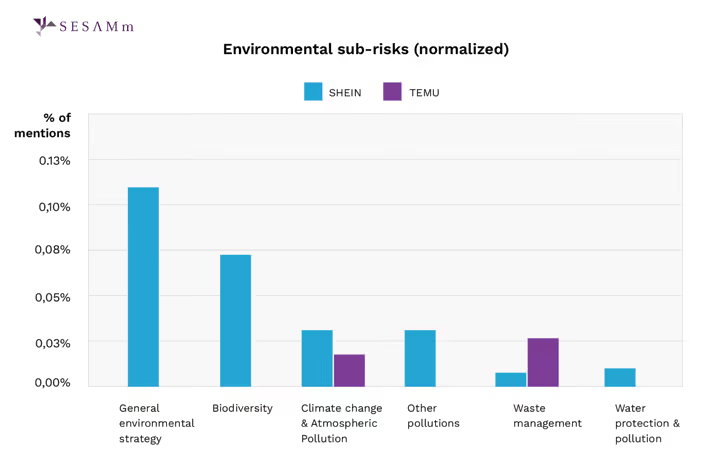
It's evident that social risks, particularly human rights breaches and labor rights controversies, have received significantly more attention than environmental risks. Despite the severity of environmental events, they represent a lower percentage in comparison. This highlights the prioritization of addressing social issues within these companies' operations.
SHEIN experiences extensive scrutiny, leading to a wealth of data on its practices. Conversely, TEMU, despite facing environmental controversies, has been less transparent about its environmental footprint, with Greenpeace reports highlighting this lack of clarity. This disparity underscores that SHEIN’s environmental impacts are more thoroughly documented than TEMU’s.
These environmental and health issues gained attention during SHEIN’s attempts to launch IPOs in the US and UK, spotlighting the company's ethical and environmental practices. Despite SHEIN's pledges to donate towards solving textile waste problems, critics label these actions as greenwashing, calling for significant alterations to its business model to address the underlying issues effectively.
Supply Chain Dynamics: SHEIN vs TEMU
While TEMU doesn't have its own brand like SHEIN, it operates under a comparable business model. It acts as an intermediary, managing shipments for products it doesn't manufacture. Despite their distinct approaches, both companies frequently engage in disputes, drawing attention to their supply chains. Additionally, policymakers often group them with similar firms, subjecting their fast fashion practices to heightened scrutiny.
These events highlight the growing scrutiny surrounding the supply chain practices of both SHEIN and TEMU. Senator Rubio's call for an investigation into allegations of Uyghur slave labor usage by both companies, additionally, mentions of Congressional attention has also focused on these companies, with reports exposing violations of U.S. tariff laws and evasion of human rights reviews on imports, shedding light on systemic issues within their operations.
Increasing Sustainability Awareness
We studied the mentions of both ESG initiatives associated with the brands and detected that over the analyzed time frame, SHEIN has been associated with significantly more initiatives than TEMU.
We analyzed the sustainability initiatives of these companies, finding that SHEIN's efforts outpace TEMU's significantly.
SHEIN focused on circular economy practices, exemplified by partnerships like that with Queen of Raw to reuse excess industry inventory and launches such as EvoluSHEIN and SHEIN Exchange, also boosting Product safety mentions, which promote recycled materials and resale of used products, respectively.
Throughout our analysis period, we noted that 2022 was a turning point for SHEIN's sustainability efforts, sparked by several mentions of breaches related to the Modern Slavery Act and child labor allegations in the previous year, which subsequently increased the company’s sustainability-related mentions. By 2023, as SHEIN prepared for potential IPOs in the US and UK and with the release of a controversial documentary, the company faced heightened scrutiny, with more allegations surfacing in its supply chain concerning various acts and legislations, such as the Modern Slavery Act, Uyghur Forced Labor Prevention Act, and others. Despite these challenges, mentions of SHEIN’s ESG initiatives also rose, although they remained less prominent than risk-related mentions due to controversies typically gaining more attention online. However, from 2024 to the present, we have observed more initiatives than risks, suggesting that, despite some acts and legislations being non-binding or not directly applicable to SHEIN, the potential reputational impacts drive the company toward positive change.
It's worth noting that we've observed discussions linking SHEIN with the recent EU Corporate Sustainability Due Diligence Directive, also referred to as CSDDD or CS3D. These discussions underscore the view that governments should refrain from incentivizing fast fashion companies like SHEIN. As the CSDDD is expected to bring about significant changes, forcing businesses to identify, prevent, or mitigate adverse impacts of their operations on human rights and the environment. Notably broader in scope compared to previous legislation, this directive will apply to all EU companies surpassing a certain revenue threshold. Consequently, fast-fashion retailers like SHEIN will face increased requirements to take action and ensure compliance.
The absence of enforceable regulations allows companies like TEMU to continue operating, but SHEIN's actions, particularly as it moves towards an IPO, raise questions about whether its efforts to improve practices are driven by the scrutiny associated with preparing for a public offering or by a sincere commitment to compliance with laws and regulations.
To conclude, our analysis underscores the dynamic landscape of supply chain regulations, ESG risks, and sustainability initiatives within the specialized retail sector, particularly in the fast-fashion industry. A focus on SHEIN and TEMU reveals a rise in both ESG initiatives and identified breaches. SHEIN's proactive initiatives suggest a response to regulatory pressures. Additionally, our findings suggest that even without binding legal requirements, companies may still choose to comply to enhance their reputation or respond to heightened scrutiny.
Reach out to SESAMm
TextReveal’s web data analysis of over five million public and private companies is essential for keeping tabs on ESG investment risks. To learn more about how you can analyze web data or to request a demo, reach out to one of our representatives.
Stay ahead with the latest in ESG and AI intelligence
Join our mailing list to receive new reports, event invites, and updates from SESAMm directly to your inbox.




.avif)
.avif)
.avif)
.avif)




.png)