Access Capital Partners choisit SESAMm pour renforcer son suivi des risques ESG et réputationnels
09/29/2026
•
5 mins read
Access Capital Partners, gestionnaire indépendant d'actifs privés européens, et SESAMm, leader mondial des données de controverses ESG et réputationnelles, annoncent la mise en place d'une collaboration destinée à enrichir le suivi des risques environnementaux, sociaux, de gouvernance et de réputation au sein des portefeuilles d'Access Capital Partners.
Dans le cadre de cette collaboration, les équipes d'Access Capital Partners s'appuieront sur les solutions de SESAMm pour identifier en amont d'éventuels signaux de risque et suivre leur évolution dans la durée. L'objectif est de disposer d'une vision continue et documentée, complémentaire aux travaux d'analyse déjà menés en interne, et de nourrir le dialogue avec les partenaires et les sociétés en portefeuille.
« Le suivi des enjeux ESG et réputationnels demande aujourd'hui une information à la fois large, actualisée et traçable », déclare Gaëlle Achdjian, Principal Responsible Investment chez Access Capital Partners. « L'intégration de la solution SESAMm renforce notre capacité à identifier précocement des signaux de risque potentiels et à adopter une approche plus proactive dans leur suivi. Cette source d'information complémentaire et continue contribue à renforcer la robustesse de notre dispositif de gestion des risques, à enrichir nos échanges avec les gérants et sociétés de notre portefeuille et à soutenir notre démarche d'investissement responsable sur le long terme »
La mise en place s'est faite progressivement au cours des derniers mois, en lien étroit entre les équipes des deux sociétés.
À propos d'Access Capital Partners
Fondée en 1998, Access Capital Partners est une société de gestion indépendante européenne de premier plan, gérant 15,8 milliards d'euros et spécialisée dans deux stratégies complémentaires : le Buy-Out Small Cap et l'Infrastructure. Investisseur de conviction, la société développe des partenariats de long terme avec des gérants parmi les plus performants du marché, dont les stratégies sont alignées avec la vision d'Access : accompagner des entreprises et des actifs résilients dans la réalisation d'une croissance durable et créatrice de valeur. L'investissement responsable constitue un pilier central de son approche, avec l'intégration systématique des enjeux ESG dans les processus de sélection, de suivi et de gestion des investissements. Pour plus d’informations sur Access Capital Partners : www.access-capital-partners.com
À propos de SESAMm propos de SESAMm
SESAMm est un leader mondial de la donnée sur les controverses. Sa plateforme, fondée sur les grands modèles de langage et l'IA générative, identifie en quelques secondes les risques ESG, réputationnels et fournisseurs sur des millions d'entreprises et de projets d'infrastructure, y compris sur les marchés peu couverts. La société a levé 50 millions de dollars et opère sur quatre continents.
ESG frameworks and regulations have developed due to rising awareness of sustainability and supply chain risks. They aim to enhance transparency, accountability, and ethics, encouraging environmental preservation, social improvement, and better governance. While fostering innovation and financial benefits, aligning with sustainable development goals, these measures might increase costs for businesses, especially smaller ones. Differences across regions and a focus on compliance could inhibit real change, promoting a superficial 'tick-box' approach rather than significant enhancements.
This article takes an in-depth view of some of the most relevant recent regulations and analyzes how effective they seem to be.
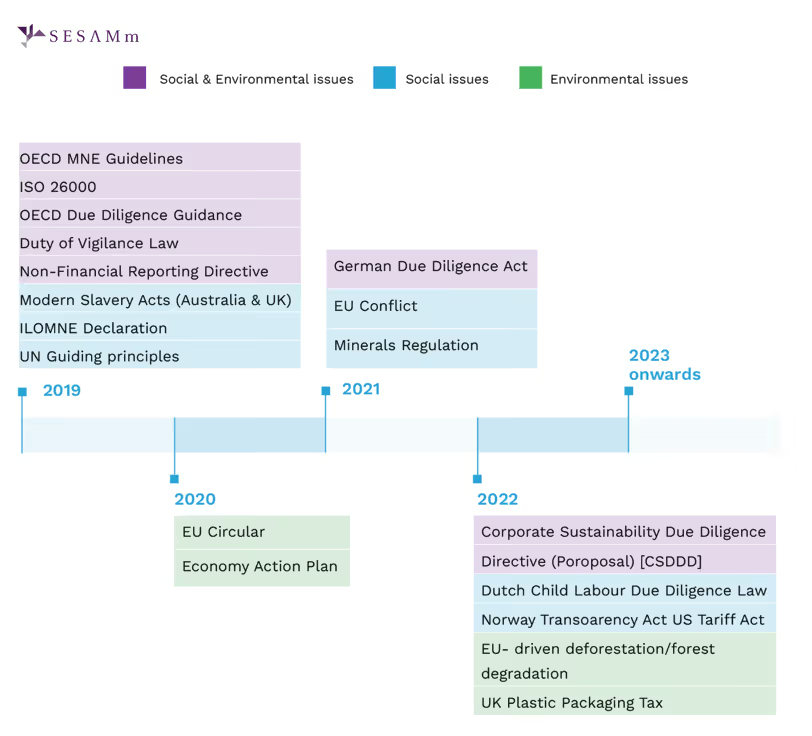
Unraveling Supply Chain Regulations: From Past to Present
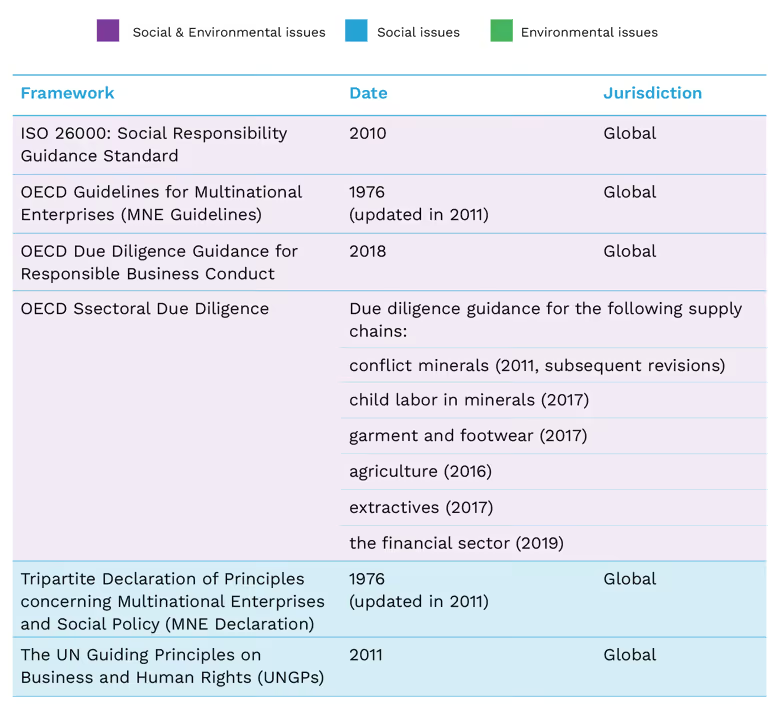
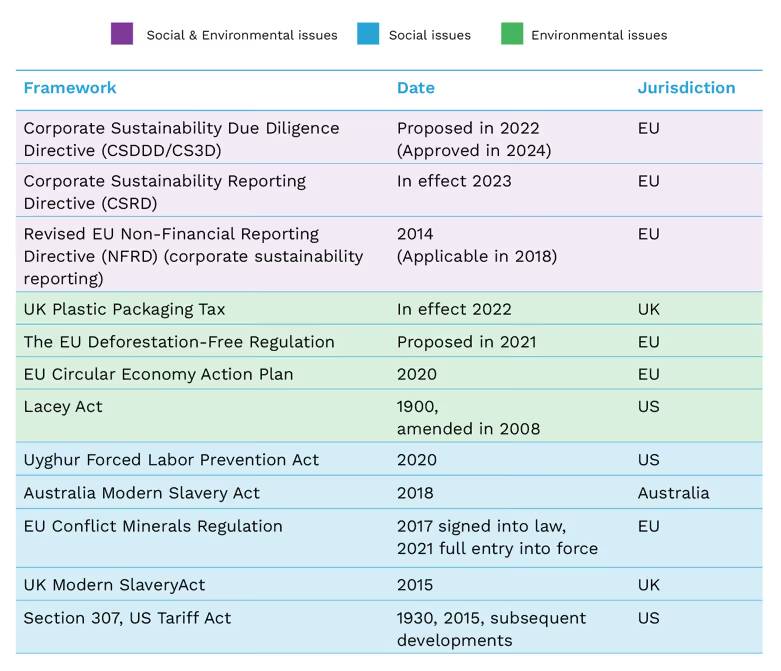
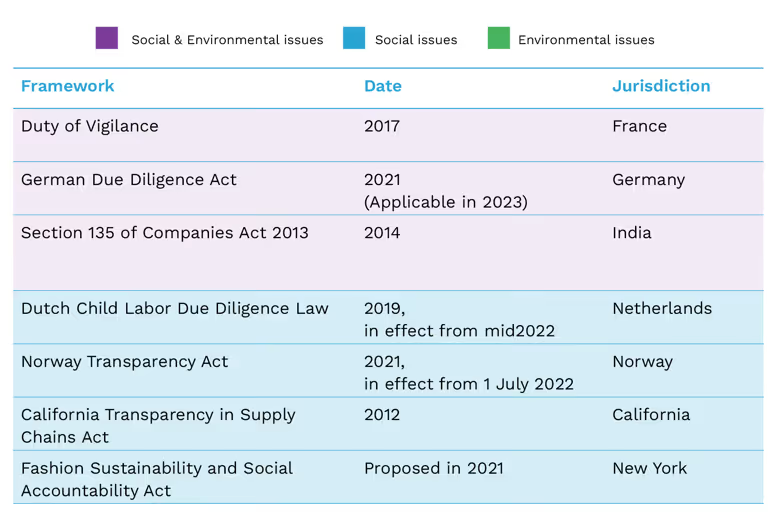
We traced the evolution of supply chain regulations from non-binding guidelines to binding laws, examining their impact on corporate sustainability. Along the way, we explored the challenges businesses face as they strive to comply with these constantly evolving standards.
Note: The list of regulations and frameworks mentioned is a high-level list of the most mentioned acts.
Global and Non-binding
When analyzing global and non-binding regulations, although they provide crucial frameworks for promoting corporate accountability by offering guidelines for responsible business conduct, they also have limitations. For instance, they lack legal enforceability due to their non-binding nature, potentially hindering compliance. Given the broad scope of the guidelines, implementation challenges arise, particularly in regions with weak governance.
Here are a few examples of recent sustainability regulations:
By Region and Binding
Binding legislation requires companies to meet specific standards in sustainability, environmental protection, and social responsibility. Non-compliance risks legal penalties and reputational damage. However, weak enforcement, insufficient penalties, and legal ambiguities often lead to criticism. Additionally, logistical and resource constraints, especially across borders, limit the effectiveness of regulatory bodies in monitoring and enforcing compliance. Furthermore, the penalties imposed are often disproportionately low. Moreover, these bodies depend on companies’ self-reporting without independent verification, leading to underreporting.
By Country/State and Binding
State or country legislation on supply chains encounters several challenges. These include jurisdictional limitations, enforcement difficulties due to resource constraints, and compliance burdens, especially for smaller businesses. Additionally, fragmented regulations across states or countries can complicate compliance for companies operating nationally. This underscores the importance of coordinated efforts between states and the federal government to address supply chain issues effectively. In addition, regulatory bodies contend with logistical and resource limitations, mainly when operating across borders, which can hinder their effectiveness in monitoring and enforcing compliance.
Unveiling Vulnerabilities Sector Screening for Supply Chain Controversies
In this section, we explore the evolving landscape of supply chain regulatory frameworks and ESG risks in supply chain management. We also dive into how future regulations will affect global trade, corporate responsibility, and sustainability efforts.
Supply Chain Controversies Over Time
We analyzed supply chain-related controversies from 2019 onwards and found a consistent increase each year, peaking in 2023. Concurrently, mentions of various frameworks, laws, and legislations [mentioned in Part I] related to these issues have also risen. Our analysis reveals a strong and positive correlation between the two trends (r=0.99), indicating a significant relationship. While the apparent increase in supply chain issues, breaches, and controversies may be concerning, it's largely caused by implementing more frameworks that increase visibility and accountability. Even without binding regulations, companies' reputations are affected. Thus, the proliferation of laws and frameworks contributes to the heightened online attention to these breaches.
Supply Chain Controversies: An ESG Analysis
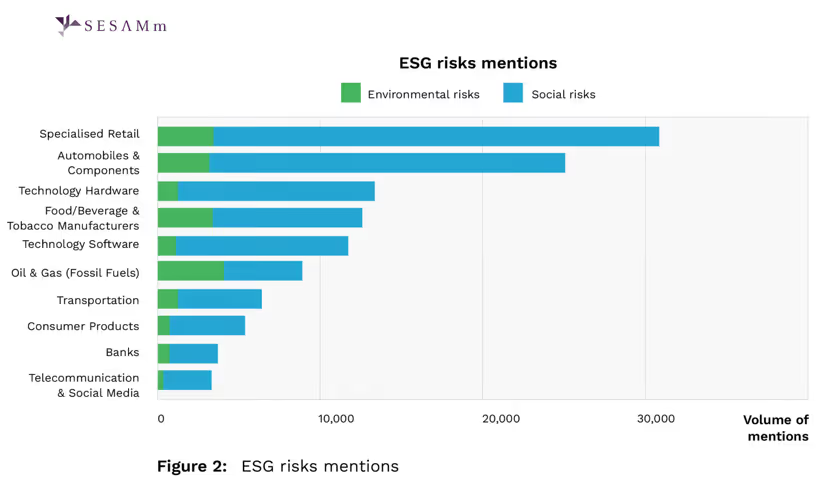
For this analysis, we primarily focused on environmental and social issues within the supply chain, as legislation often targets these areas due to their significant external impacts. Issues like environmental damage and labor violations are most likely to occur in the supply chain and can profoundly affect communities and ecosystems. Governance issues, on the other hand, are more internal and directly pertain to a company's operations and management practices. Therefore, we analyzed a sample of 31,011 entities across industries with frequent mentions of ESG-related supply chain risks, focusing on social and environmental risks.
Specialized Retail has the highest incidence of social and environmental controversies, followed by Technology Software and Automobile & Components, respectively. As shown in the graph above, many of the issues highlighted in the Social ESG supply chain pillar are driven by human and labor rights breaches, which significantly contribute to the ESG risks mentioned.
Social Risks in the Supply Chain
In specialized retail, many brands face scrutiny for alleged forced labor; some examples include Amazon, Hugo Boss, Diesel, and Costco. Additionally, Amazon garnered widespread attention when the company settled a $1.9 million human rights abuse claim. Consumer groups sued Starbucks over deceptive ethical sourcing claims linked to human rights issues. Walmart and Centric were also investigated for human rights violations. Moreover, reports tie Amazon and IKEA suppliers to forced labor. These controversies dominate ESG supply chain discussions in retail.
Regarding the other industries, we also see that technology hardware displays a significant proportion of mentions stemming from mentions of forced labor for Lenovo, Cisco, and Intel, and numerous controversies regarding Apple, among many other allegations.
Similarly, Companies from the food and beverage manufacturers industry were also linked with human rights violations and infringements on labor rights, with companies like Tyson Foods, McDonald's, Hershey, Pepsi, and Nestle having multiple supplier issues connected with child labor, discrimination, and exploitative work. While Technology Software companies mentions were primarily related to contractors and content moderators’ health & safety issues and labor rights infringements from companies like Meta, Microsoft, and Google.
In sum, the evolving supply chain regulations reflect a global commitment to sustainability and ethical business practices. Navigating these regulations presents challenges and opportunities for businesses to lead in corporate responsibility and advance principles of environmental stewardship and social equity. Embracing these regulations as a compass rather than a constraint can help chart a course toward a sustainable future.
Reach out to SESAMm
TextReveal’s web data analysis of over five million public and private companies is essential for keeping tabs on ESG investment risks. To learn more about how you can analyze web data or to request a demo, reach out to one of our representatives.
SESAMm Welcomes Industry Expert Stéphane Besson to Its Board of Directors
SESAMm is thrilled to welcome Stéphane Besson as the newest member of its board of directors. Stéphane is a seasoned expert in the finance industry with a rich background that includes BNPP and McKinsey. He has a notable track record, most prominently as the CEO of Coalition Greenwich for more than ten years. Under Stephane’s leadership, Coalition Greenwich, part of S&P, flourished to become the leader in providing strategic insights and analytics to the financial sector across Banks and Asset Managers.
“We are absolutely delighted to have Stéphane join our team. His remarkable journey in scaling Coalition Greenwich and advisory roles in several companies make him an ideal addition to SESAMm. His insights and strategic acumen will be incredibly valuable as we continue to expand our reach, especially in the European market where we have established a strong presence, and as we aim to increase our footprint in the US market,” commented Sylvain Forté, SESAMm’s CEO & Co-founder.
In his new role at SESAMm, Stéphane will not only be a board member but also an active strategic advisor. He currently also holds positions on Accelex and Acin boards and serves as chairman at Validis. His extensive experience guiding Coalition Greenwich's growth and advising various firms aligns perfectly with SESAMm’s mission. SESAMm, having recently secured $37MM in funding, is at a pivotal growth phase. The company specializes in leveraging AI to detect ESG controversies in public and private companies,
“I am very excited to join SESAMm. The quality of the team and their vision to bring more transparency to the ESG space convinced me immediately. I am looking forward to helping them deliver on their vision for their clients and the industry more broadly.” said Stéphane.
Stéphane's addition to the board is a testament to SESAMm's commitment to excellence and growth in AI-powered ESG insights. His strategic insights will contribute significantly to guiding SESAMm's growth in the global market.
November 11, 2022, FTX, a $32 billion cryptocurrency exchange company that many believed would “change the world,” filed for bankruptcy. This news shook the crypto and financial communities, compelling many to debate the future of the crypto market and its platforms.
How did FTX collapse?
You could say that FTX’s collapse began before the news broke, but here’s a summary of events as The New York Times and ABC News details:
Breaking news
In early November, CoinDesk, a crypto publication, broke the news on a leaked document from FTX. The balance sheet showed that the hedge fund run by Sam Bankman-Fried (SBF), Alameda Research, held a substantial amount of FTT tokens. In short, SBF had set up Alameda (his trading firm) and FTX (his exchange firm) in such a way that if one unit experienced trouble, such as dropping cryptocurrency prices, the other experienced it, too.
First domino falls
By the way, FTT is used for various functions, including traders’ payment of operation fees. Also, by the way, Changpeng Zhao, Binance’s Chief Executive, sold his stake in FTX to SBF in 2021, partially with FTT. So, “due to recent revelations,” Binance (Zhao) announced on November 6, 2022, that it would sell its FTT tokens.
Other dominos follow
Traders responded; they hurried to pull funds out of FTX out of fear, and FTT’s price fell. Meanwhile, FTX processed withdrawal requests over three days, amounting to an estimated $6 billion. The liquidity crunch was upon it.
Then, on November 8, Binance said it would bail out FTX. But on November 9, Binance backtracked and announced in a Tweet that it would not “as a result of corporate due diligence,” while also citing regulatory investigations and reports of mishandled funds.
Things get worse
The next day, November 10, the Securities Commission of the Bahamas froze FTX’s assets, citing the public statement about potentially “mishandled” and “mismanaged” customer funds. On November 11, FTX filed for Chapter 11 bankruptcy protections, and SBF resigned as CEO. John J. Ray III—famously known as the CEO who headed the infamously known energy company, Enron, through its collapse in the 2000s—replaced SBF on November 17.
Fallout
Today, FTX faces federal investigation for securities laws violations based on a report by The Wall Street Journal regarding FTX lending customer deposits to Alameda Research for liabilities, of which the company’s top executives were aware. Investors have suffered loss, traders have suffered loss, and the greater crypto community and regulators are asking questions.
FTX and SBF web data analysis
News about FTX’s collapse generated tons of web data for us to scour. With this data, here’s what we aimed to find out:
How did the public web react to FTX’s collapse?
Could we have seen red flags before the news broke?
What was FTX’s collapse’s effect on the cryptocurrency market’s sentiment?
Is it possible to evaluate cryptocurrency exchange companies’ ESG risks and opportunities?
Was FTX’s collapse unprecedented? If not, what does web data tell us about that?
FTX and Sam Bankman-Fried mentions analysis
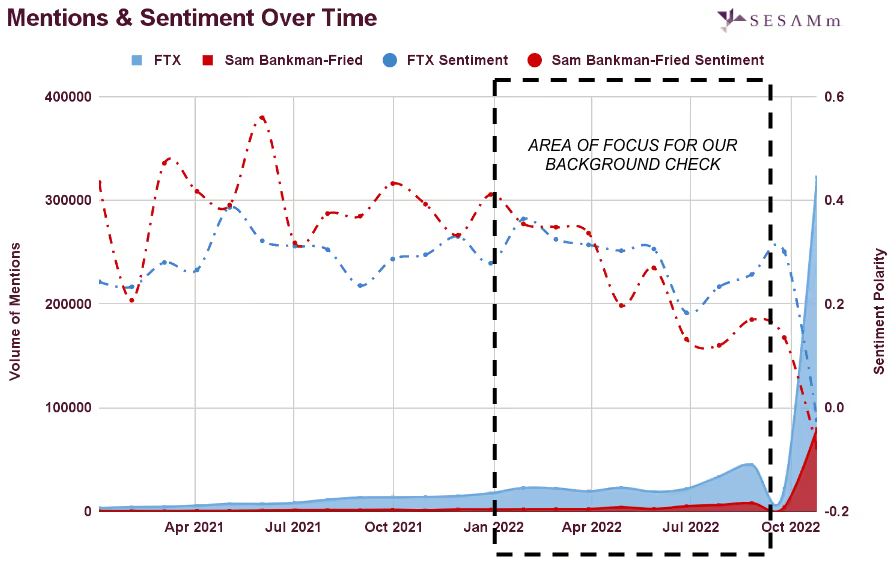
Web public sentiment for FTX and SBF was consistently positive until Q1 of 2022. As mentions volume increased, their sentiment polarity decreased (Figure 1). The mentions spike for both in November when CoinDesk broke the news. Likewise, polarity dips into the negative range for both.
Definition: Polarity represents the aggregate of positive and negative sentiments (opinions or reviews) on a company. A 0 score means there is as much positive as negative sentiment expressed. The dotted and dashed lines represent sentiment in the following charts.
Figure 1: FTX and SBF mentions and sentiment over time.
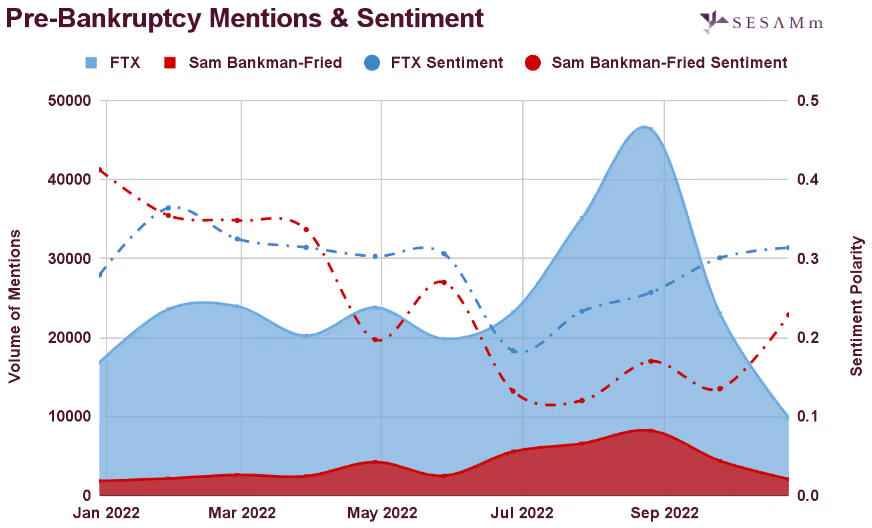
Looking closer at Q1 (Figure 2), we find that mentions affecting sentiment increased for FTX and SBF during this period. What are the mentions about, and why did they affect polarity negatively?
Figure 2: FTX and SBF pre-bankruptcy mentions and sentiment.
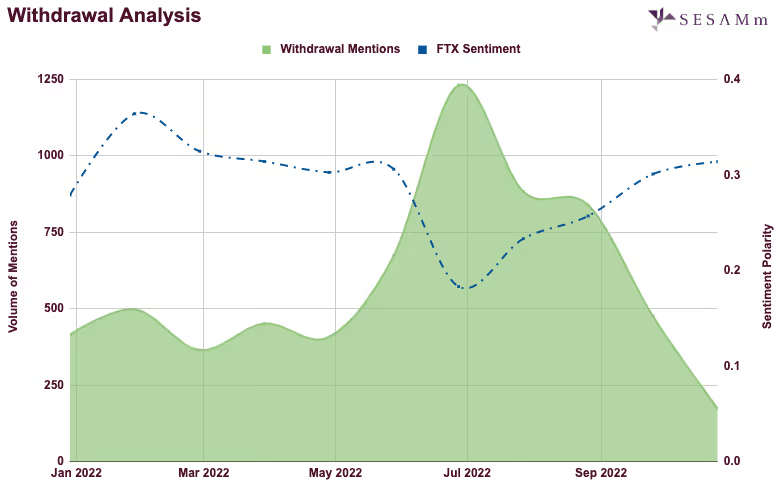
It turns out that SBF is linked to other keywords—we call these co-mentions—and between January 2022 and November 2022, SBF/withdrawal co-mentions (Figure 3) spiked in July when SBF defended Terra Luna’s founder, who was accused of peddling a Ponzi scheme.
Figure 3: FTX and SBF withdrawal co-mentions.
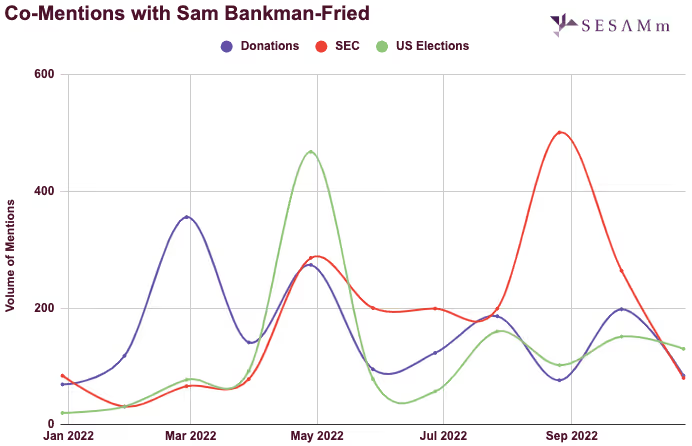
If withdrawal co-mentions brought up possible reasons why SBF and FTX experienced dips in sentiment, what other co-mentions could give us more insight? How about donations, SEC, and U.S. elections?
Figure 4: Donations, SEC, and U.S. elections co-mentions with SBF.
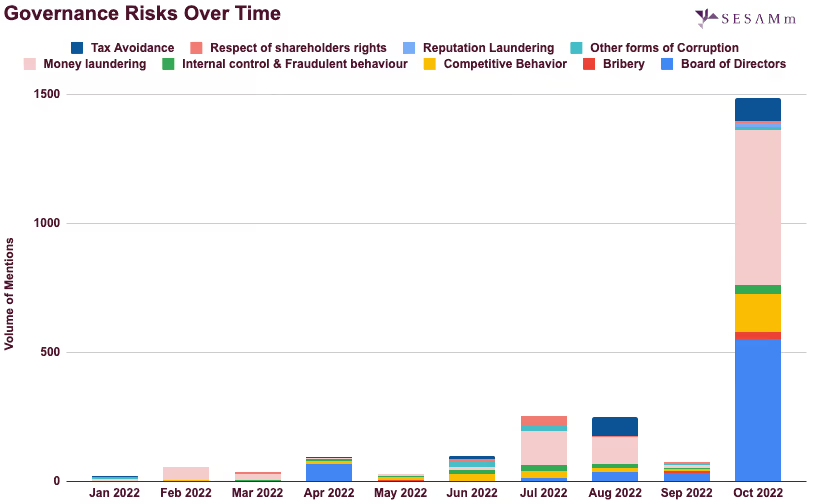
Corporate governance stands out when evaluating SBF’s ESG risks, but his social risks are nothing to ignore either.
Figure 5: SBF governance risks over time.
Two areas of governance risks to note are money laundering and board of directors (Figure 5). Money laundering as a co-mention has been an issue as early as February 2022, but it became a bigger issue in October. These risks may be popping up due to allegations of manipulating the price of the APT token and a securities violations probe.
If you’ve read this far, you by now get an impression of FTX and SBF, from mention volume to sentiment analysis and ESG risk. But how did FTX’s collapse affect the overall cryptocurrency market? Let’s find out.
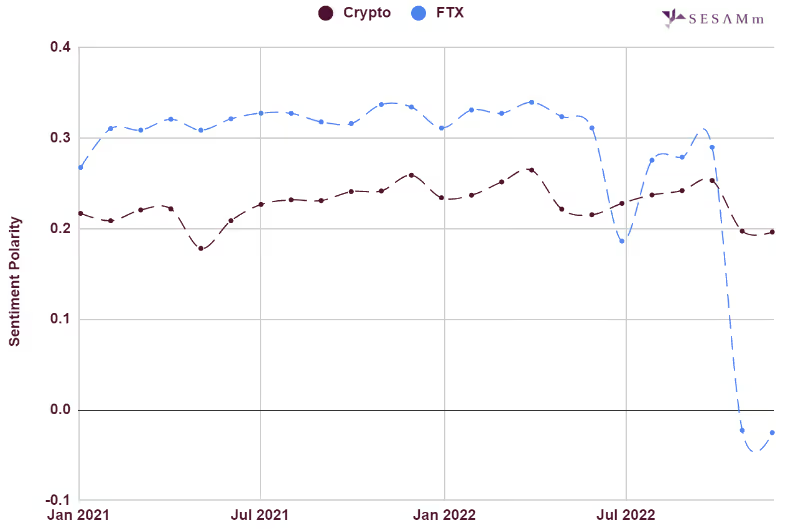
In comparing the sentiment polarities for FTX and the crypto market from January 2021 through November 2022 (Figure 6), the sentiment for crypto remains relatively steady despite FTX’s sentiment taking a hit.
Figure 6: Effect of FTX collapse on the crypto market.
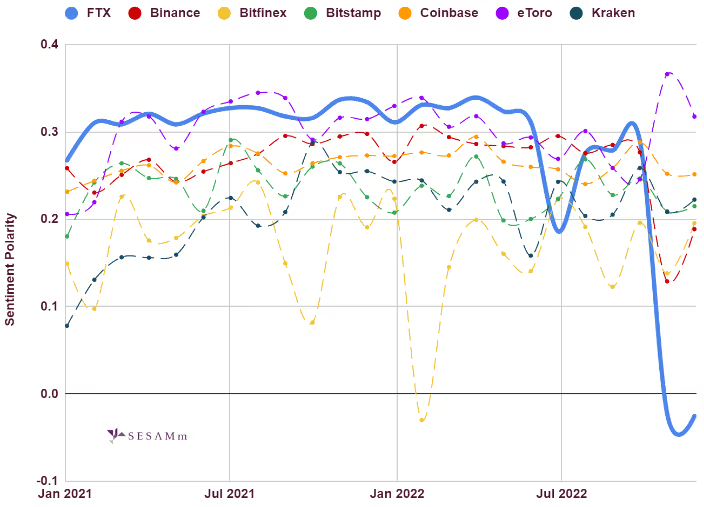
When comparing other cryptocurrency exchanges to FTX (Figure 7), sentiment polarity for them is hardly affected, except Binance, because of its connection with FTX. Oddly enough, eToro experienced a boost in sentiment, possibly because of its core values around openness and transparency, the fact that they’ve been around since 2007, its early compliance with regulations (i.e., AMF, FCA, ASIC, BaFin, and ACPR), and that it also proposes investing in stocks and ETFs, a contrast to most other crypto market exchanges. Bitfinex has its own issues, so its dip in sentiment might not be correlated.
Figure 7: FTX sentiment comparison across competitors.
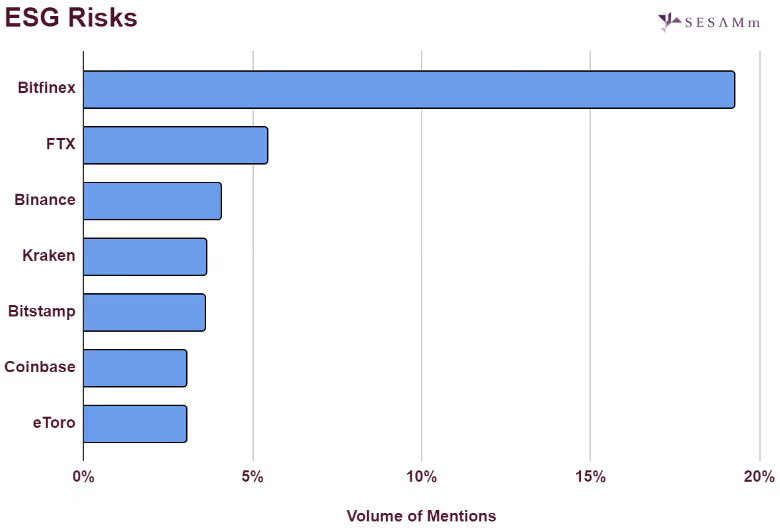
At this time, FTX’s ESG risks based on the mention volume are only surpassed by Bitfinex (Figure 8), which its risks are based on many other reasons we won’t get into in this article.
Figure 8: FTX and competitors ESG risks by mention volume.
Centralized vs. decentralized crypto exchange platforms
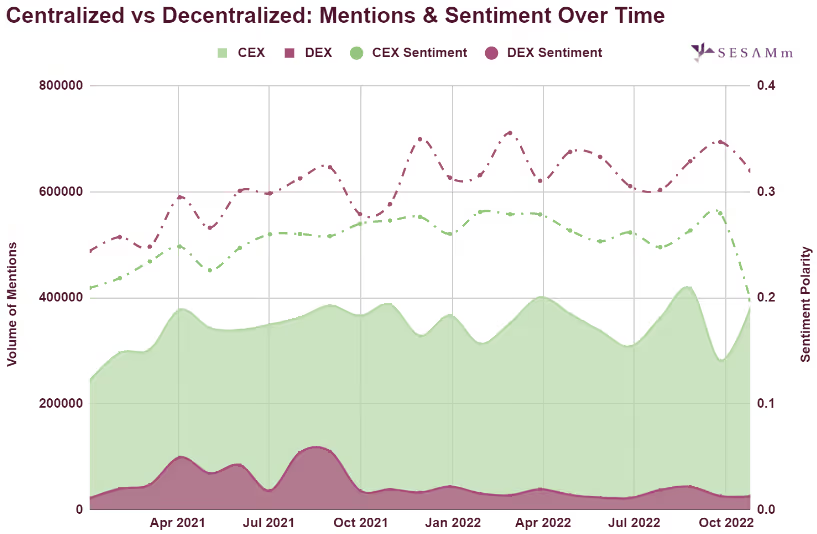
FTX’s collapse also affected sentiment around the centralized vs. decentralized debate. Since October 2022, sentiment for centralized exchange platforms, such as FTX and its competitors, has fallen (Figure 9).
Figure 9: Centralized vs. decentralized mentions and sentiment over time.
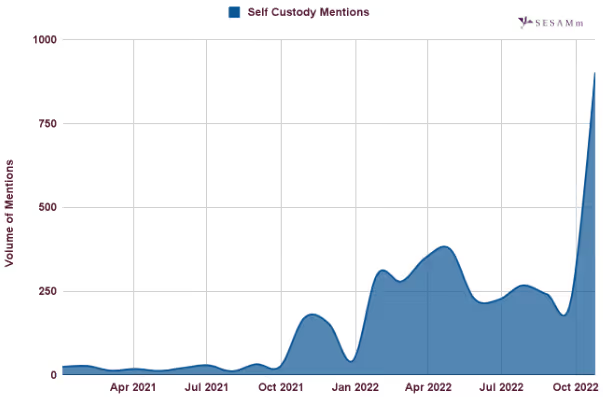
Likewise, the mention volume for self-custody has more than doubled in the last couple of months (Figure 10). Although centralized platforms offer quicker and easier access to crypto trading, traders are considering complex but more secure options such as crypto wallets and keys because, like banks, centralized exchanges can do what they will with cryptocurrency while it’s in their possession. With self-custody, owners are in control.
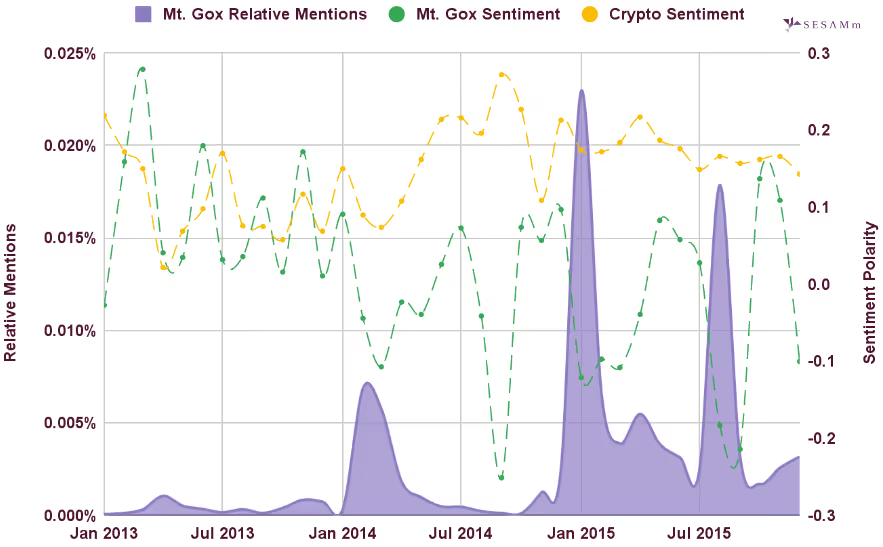
Believe it or not, FTX was not the first crypto exchange to collapse. In 2014, Mt. Gox—the biggest crypto exchange at the time—lost half a billion dollars worth of Bitcoin due to a hack. How did Mt. Gox’s collapse affect sentiment for the crypto market then? The short answer is: It didn’t.
Figure 11 shows that while Mt. Gox’s sentiment polarity fluctuated, even reaching negative territories, the sentiment for the crypto market remained relatively stable and positive.
Figure 11: Mt. Gox and crypto sentiment comparison.
Is FTX’s collapse a warning for investors?
Our analysis is that investors should treat cryptocurrency exchanges like any investment opportunity. Do your due diligence and monitor your portfolio with tools like SESAMm’s TextReveal®.
As for the cryptocurrency market, data shows that sentiment for it remains level and positive. We speculate that cryptocurrency and centralized exchanges are here to stay. However, based on historical data and current news, we suspect conversations about crypto regulations to increase.
Reach out to SESAMm
For a deeper analysis of FTX’s collapse and access to all charts and supportive-article links, reach out to a representative today.
Stay ahead with the latest in ESG and AI intelligence
Join our mailing list to receive new reports, event invites, and updates from SESAMm directly to your inbox.