On October 1st, SESAMm hosted its second annual “SESAMm Day” in Paris at the EY Impact Lab. The evening kicked off with the Paris 2043 immersive experience, an eye-opening scenario of Paris in 2043 should climate commitments fail. Designed to spark forward-looking discussions, the experience set the stage for a full evening of insight, exchange, and networking among peers across private equity, asset management, banking, and consulting.
The event also featured a dynamic 45-minute panel discussion moderated by Sylvain Forté, CEO of SESAMm, with three distinguished panelists:
Dr. Julia Haake, Head of ESG Rating Agency at EthiFinance
Elsa Couteaud, RSE Director at Praemia
Abigail Arellano Sanchez, Sustainability Project Manager and Data Specialist at Natixis Investment Managers
From Data to Decisions
The conversation opened with a critical challenge facing the industry: transforming abundant ESG data into actionable insights. The panelists discussed their approaches to filtering signal from noise, focusing on how controversy alerts, automated reports, and ESG scores inform actual investment, financing, and rating decisions. The key, they emphasized, lies in establishing clear hierarchies and methodologies to prevent information overload.
Addressing ESG Skepticism
The panel also addressed the growing concerns around greenwashing, regulatory complexity, and "ESG fatigue." An interesting linguistic shift emerged during the discussion. One panelist noted that the term “sustainability” is increasingly preferred over "ESG" in job titles. In contrast, another panelist pointed out that 10-15 years ago, the trend was reversed, as the industry moved from sustainability to ESG.
While European skepticism focuses less on ESG fundamentals and more on complexity and costs, particularly with regulations like Omnibus, the panelists acknowledged growing operational fatigue. For example, the speakers highlighted that teams are demanding more pragmatism and concrete action over the burden of reporting.
The Future of ESG Data and Themes
Looking forward, the panel identified several emerging priorities:
Climate adaptation is taking center stage, with physical risks such as heatwaves and flooding becoming increasingly impossible to ignore. The future of ESG data will be increasingly forward-looking and predictive.
New themes are reshaping the ESG landscape. Biodiversity remains a work in progress requiring significant development. Responsible AI has emerged as both an ESG theme and a transformative force for the industry itself. Even defense has become a consideration as an exclusion or inclusion criterion, raising questions about which other exclusion themes might emerge or fade.
Supply chain risks are gaining prominence, particularly in emerging markets where local taxonomies and data remain scarce. One panelist shared that accessing reliable data on emissions and physical risks in these regions is challenging, with insurance data often providing the most qualified information.
A Call to Action
The panel concluded with a pragmatic vision: rather than being overwhelmed by ever-increasing data, the focus should shift toward enhancing real-world impact and climate resilience. With reputational and financial risks mounting, the message is clear: it's time to move from reporting to action.
Closing Reflections
SESAMm Day 2025 closed on a high note, with participants continuing the conversation over networking drinks. We extend our warm thanks to everyone who joined us, and in particular to our panelists for sharing their perspectives and making the evening both insightful and engaging.
SESAMm’s AI Technology Reveals ESG Insights
Discover unparalleled insights into ESG controversies, risks, and opportunities across industries. Learn more about how SESAMm can help you analyze millions of private and public companies using AI-powered text analysis tools.
The aerospace and defense industry is essential to global technology and transportation, playing a crucial role in maintaining international security and connectivity. However, this sector faces intense scrutiny due to its significant impact on environmental, social, and governance (ESG) factors. Amidst challenges like safety lapses and whistleblower revelations, stakeholders are increasingly relying on advanced AI technologies to gain insights into potential controversies. Such technologies have enabled a deeper understanding of the complex ESG issues that permeate the industry, revealing not only the specific challenges faced by companies like Boeing but also providing a broader view of the sector's commitment to corporate responsibility and sustainability. This article explores the aerospace industry and its ESG challenges, backed up by a case study of industry giant Boeing. It also explains how we used SESAMm’s AI-powered tools to detect these controversies beforehand.
This article is a preview of the webinar entitled "The Boeing Scandal: Can AI Predict Controversies Before Traditional Tools?" based on SESAMm's proprietary research. Sylvain Forté, CEO and Cofounder, and Emna Abid, Research and Analytics Team Lead at SESAMm, will lead the webinar and will share SESAMm's findings in detail on the Boeing case and the use of AI to detect these types of controversies ahead of time.
Aerospace and Defense Market Mentions
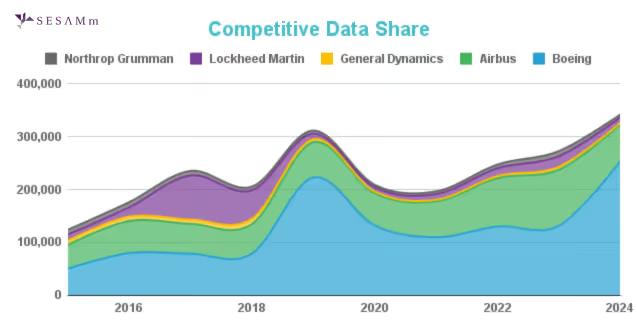
The top market players in the aerospace and defense industry command 8.3% of the overall market's online mentions. This sector is increasingly scrutinized for its ESG practices amidst technological advancements and global policy shifts.
Overview
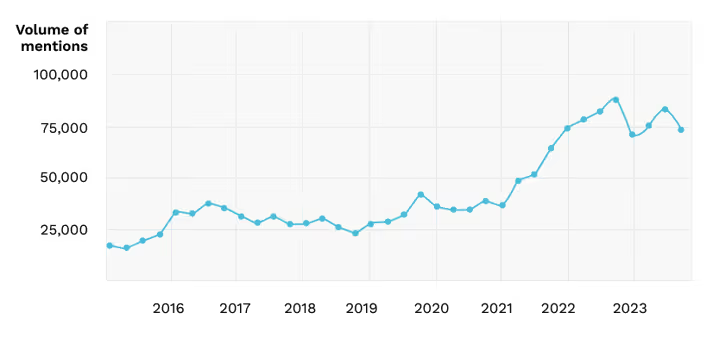
Our study processed our large data lake to identify key aerospace players: Northrop Grumman, Lockheed Martin, General Dynamics, Airbus, and Boeing, from 2015 onwards. It found a surge in online mentions, especially after Boeing's plane crashes post-2018. Both Airbus and Boeing saw increased attention, highlighting the competitive and evolving aerospace industry, where online presence correlates with market position shifts and significant events.
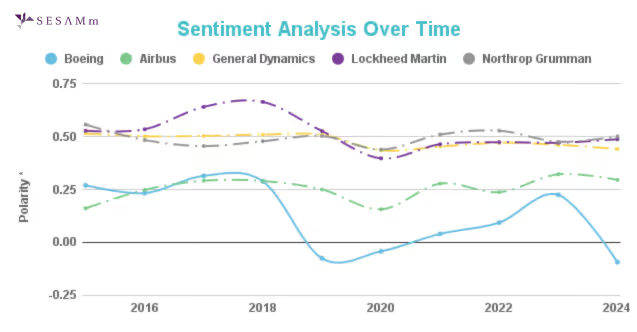
Polarity, indicating a company's mix of positive and negative opinions, ranges from -1 to 1. A zero score shows equal positive and negative sentiment. Brands with high e-reputation often score above 0.5. The aerospace market experiences significant highs and lows. Lockheed Martin has seen a positive impact from new contracts and technological advancements, particularly between 2016 and 2018, boosting its reputation and value. In contrast, Boeing faces significant challenges due to safety lapses, including 737 MAX crashes, legal issues, and whistleblower claims, negatively affecting its perception and highlighting the industry's vulnerability to reputational risks.
Deep Dive: Boeing
The aerospace industry has faced increasing scrutiny over its ESG practices. Among the key players, the American aerospace company Boeing has been prominently featured in media discussions, not only due to its market distinction but also because of its ESG challenges that have sparked significant controversy.
Boeing Word Cloud
The word cloud displays key topics about Boeing, particularly the 737 Max controversies, including safety issues and FAA oversight. "737 Max," "Boeing," "safety," "death," and "FAA" are the main terms that show their prominence in discussions. The visualization also touches on "lawsuits," "Senate hearings," and "missed inspections," indicating the wide range of concerns surrounding Boeing's regulatory, safety, and ethical challenges.
Conclusion
These incidents underscore the aerospace industry's urgent need for reforms to prioritize safety and ethics over profit. SESAMm's TextReveal® platform plays a key role in detecting such ESG controversies early by analyzing vast amounts of data and helping stakeholders understand and address the intricacies of corporate accountability and regulatory compliance.
Reach out to SESAMm
TextReveal’s web data analysis of over five million public and private companies is essential for keeping tabs on ESG investment risks. To learn more about how you can analyze web data or to request a demo, reach out to one of our representatives.
Sustainability trends have become ubiquitous in the business world, mainly due to the attention ESG is receiving. To state the obvious, this is a positive trend as it helps push companies to consider their impact on the environment, employees, and customers and ensure their governance practices are sound. However, it also incentivizes actors in the business world to try to game the system through marketing campaigns to improve their reputation.
Through the use of artificial intelligence and other technologies, we embarked on a mission to analyze the sentiment on the web and uncover to what extent companies are incurring reputational laundering techniques to deceive investors, customers, and other stakeholders but also to identify the ones that are actually performing actions to have a positive impact around them.
This analysis dives into the concept of greenwashing and reputational laundering. It reveals the nuanced interplay between genuine sustainability efforts and deceptive practices, offering a new lens to distinguish genuine from false corporate sustainability claims.
Beyond Greenwashing: Reputational Laundering
Let’s start with some definitions. Reputational laundering is deliberately hiding unethical behavior with highly visible positive actions. Greenwashing is just one component of reputational laundering. Another component is the social aspect of it, and it includes various forms of color washing such as purplewashing, pinkwashing, purpose washing, etc. So far, in 2023, greenwashing accounted for 55% of all the volume of reputational laundering mentions on the web. So, the remaining 45% represents color-washing.
TerraChoice defines greenwashing as “the act of misleading consumers regarding the environmental practices of a company or the environmental performance and positive communication about environmental performance."
Colorwashing, on the other hand, refers to a strategy used by organizations to create a positive public image by associating themselves with specific causes, ethics, or moral standpoints.
Beyond the conventional understanding of deliberate greenwashing, there’s a more nuanced concept and less discussed: unintentional greenwashing, where companies inadvertently convey misleading environmental claims. This can occur due to a lack of understanding of the true impact of their products or services, unverified claims, overlooking hidden consequences, unintentional confusion in marketing materials, or insufficient transparency. While these companies may not have malicious intent, their actions can inadvertently misrepresent their environmental efforts and mislead consumers about their commitment to sustainability.
Reputational laundering at a glance
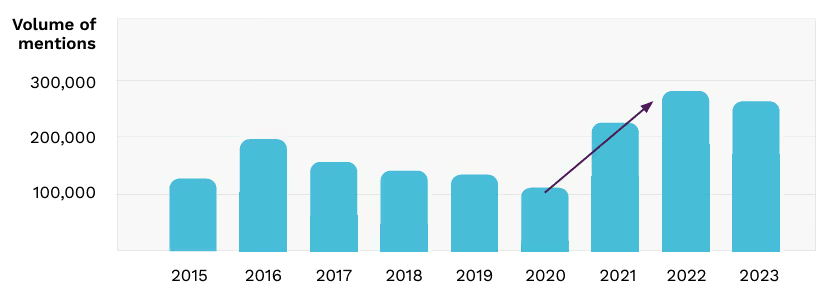
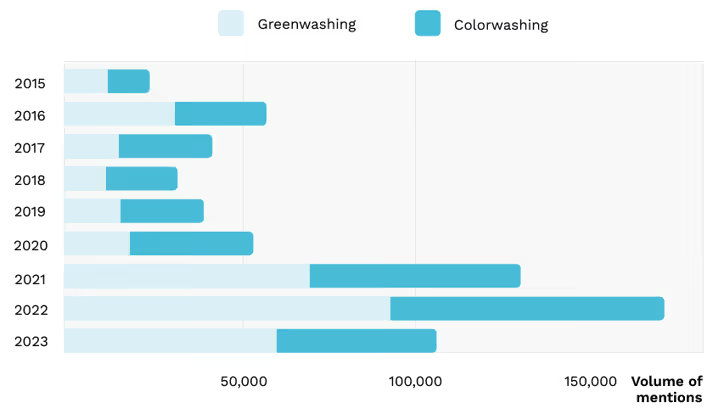
Figure 1: Reputation laundering mentions.
Over the past eight years, reputational laundering mentions have increased steadily. However, from 2021 onwards, they’ve grown a staggering 3.3x. The mentions of reputational laundering are coming from different topics, from false advertising, and misleading practices to lawsuits regarding greenwashing. Furthermore, we have observed a growing number of references regarding the declining trust of the public in corporate pledges, such as those related to 'net-zero' climate goals.
This increase can be attributed to two main reasons: the actual increase in reputational laundering and, more interestingly, the growing awareness from stakeholders (i.e., Investors and eco-conscious consumer base).
According to a report published by the UN Environment Programme (UNEP), climate change lawsuits have continuously surged over the past five years. Consequently, we analyze mentions of lawsuits related to environmental breaches and detect a significant increase in 2021 – which continues to the present day.
While greenwashing often dominates the conversation around reputational risks, it's crucial not to overlook the social dimension, which tends to receive less attention from the public. Since 2020, we've observed a significant uptick in mentions of greenwashing and its less-discussed counterpart, colorwashing.
Historically, up until 2020, the distribution of mentions leaned toward one-third greenwashing compared to two-thirds colorwashing. However, post-2021, this pattern has shifted. We've witnessed a rise in the frequency of greenwashing mentions, surpassing those of colorwashing and signaling an evolution in the focus of reputational laundering concerns.
Figure 3: Breakdown by type of washing.
During the COP27 conference at the end of 2022, a call was made to verify carbon and other environmental claims and show zero greenwashing tolerance. As a result, there has been a rise in scrutiny, and data now shows an increase in the number of allegations related to greenwashing. Here are a few examples:
In analyzing advertisements, we found instances of reputational laundering through various means. Some companies engaged in social washing, while others used sportwashing to bolster their reputation. The mining and energy industries were particularly guilty of this practice. Meanwhile, the communication industry, including companies such as Netflix and Disney, was associated with black and whitewashing.
Inspecting the Regulatory Landscape
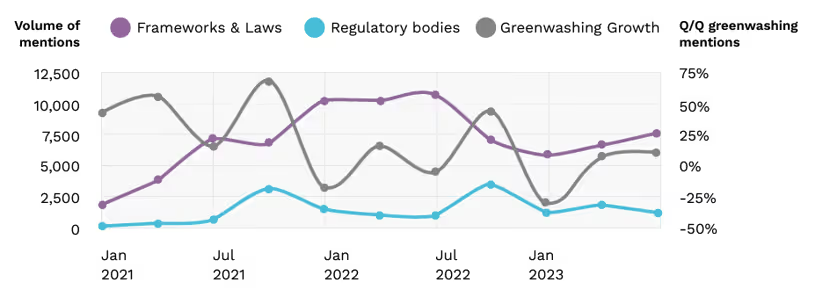
To analyze the regulatory environment of reputational laundering, we studied the effects of different legal frameworks and government organizations on greenwashing and other forms of reputational laundering. We measured the influence of legal frameworks and regulatory bodies on greenwashing by analyzing the quarterly growth of greenwashing mentions over the study period.
In this analysis, we define the concept of legal frameworks by capturing references related to the 'Green Claims' directive, Sustainable Finance Disclosure Regulation, EU Taxonomy, Green Product Certification, Fair Labeling and Advertising Act, Non-Financial Reporting Directive, FTC Act, FTC Green Guides, etc.
Concepts of Regulation bodies are defined by references to governments and Supranational entities (i.e., US government, FTC, SEC, Chinese government, Japanese government, etc.) or regulatory agencies established to safeguard the environment (United Nations Environment Programme (UNEP), Environmental Protection Agency (EPA), European Environment Agency (EAA), Intergovernmental Panel on Climate Change (IPCC), etc.)
Figure 4: Anti-greenwashing regulation vs greenwashing growth.
There has been a slight increase in the mentions of regulatory bodies over the years, mainly due to the growing interest in greenwashing, which has peaked during events like COP26 and COP27. Legal frameworks and regulatory bodies have played a significant role in the fight against greenwashing. Although there is no decrease in the mentions of this topic, the growth rate has reduced significantly. In fact, the quarter-on-quarter growth for greenwashing web mentions has been decreasing lately.
The trends reveal an interesting fact that there is a negative correlation between the growth in mentions of frameworks, laws, and regulatory bodies and the growth in mentions of greenwashing. Though the mentions of greenwashing are still increasing, the growth rate has significantly decreased from a 75% quarterly growth rate to 10% in the last year (except for spikes related to controversial events such as Greta Thunberg labeling COP26 as a “greenwash festival,” and not attending COP27).
Conclusion
As we navigate the landscape of corporate sustainability, it becomes evident that distinguishing genuine efforts from greenwashing is not just a matter of skepticism but a necessity. This exploration underscores the importance of vigilant analysis and the role of AI in unmasking deceptive practices. It calls for a collective commitment to transparency and accountability, empowering stakeholders to make informed decisions and advocating for a future where corporate responsibility aligns authentically with sustainable development.
At SESAMm, we used AI to study billions of articles and analyze greenwashing trends. Download this comprehensive ebook for an in-depth understanding of the evolving landscape of reputational laundering, notably greenwashing, and dive into its trends in the corporate world.
SESAMm’s AI Technology Reveals ESG Insights
Discover unparalleled insights into ESG controversies, risks, and opportunities across industries. Learn more about how SESAMm can help you analyze millions of private and public companies using AI-powered text analysis tools.
We are excited to announce the launch of SESAMm’s proprietary Controversy Exposure Score (CES), a new score designed to transform how ESG and finance professionals assess risks. The CES offers a dynamic, real-time view of a company's exposure to ESG controversies, enabling fast, informed decision-making.
What is the Controversy Exposure Score (CES)?
The CES is a continuously updated score ranging from 1 to 100, reflecting a company or project's evolving exposure to ESG controversies. Leveraging SESAMm’s proprietary Intensity and Volume Scores, the CES captures both the severity and frequency of ESG incidents, allowing stakeholders to monitor and understand risks as they develop. Below, we’ve put together an example demonstrating how the CES for Renault compares to Stellantis based on their respective ESG controversies. As we see in the chart below, Renault has had fewer high–intensity events, which results in a lower, more stable CES compared to Stellantis.
Renault CES
Stellantis CES
How Does It Work?
The CES is powered by state-of-the-art Large Language Models (LLMs) that filter and analyze content from our data lake containing over 25 billion articles. Two main components impact the score’s value:
Intensity Score: Measures the severity of each ESG incident, considering its impact on a company’s reputational, stakeholder, financial, and legal standing. This score is derived from a Large Language Model (LLM) fine-tuned by SESAMm’s experts and trained on thousands of humanly annotated events.
Volume Score: Assesses the number of articles associated with an event, calculated using a short-term rolling window. To ensure accuracy, the Volume Score is normalized against the average article volume concerning the company and relevant ESG topics over the past year, reducing potential bias.
Track ESG controversy trends: Evaluate how a company’s risk exposure has evolved. The CES is updated daily, ensuring that users have the most current data at their fingertips.
Benchmark companies against their peers: Compare a company’s risk exposure to its peers, providing a comprehensive view of its relative risk.
Ready to Transform Your ESG Analysis?
For more information on how the Controversy Exposure Score can help you make smarter, data-driven decisions and to see it in action, request a demo.
Reach out to SESAMm
TextReveal’s web data analysis of over five million public and private companies is essential for keeping tabs on ESG investment risks. To learn more about how you can analyze web data or to request a demo, reach out to one of our representatives.
Stay ahead with the latest in ESG and AI intelligence
Join our mailing list to receive new reports, event invites, and updates from SESAMm directly to your inbox.









.png)