SESAMm et le Crédit Mutuel Arkéa renouvellent leur collaboration pour le suivi des risques ESG.
•
5 mins read
Paris, France – 24 février 2026 – SESAMm, leader mondial des données de controverses ESG et réputationnelles, annonce le renouvellement de son partenariat avec le Crédit Mutuel Arkéa, initié en janvier 2023, pour le renforcement de l’évaluation et du suivi des risques ESG au sein de ses activités d’achats et d’investissement.
Depuis le début de cette collaboration, Crédit Mutuel Arkéa s’appuie sur la plateforme SESAMm pour analyser les risques environnementaux, sociaux et de gouvernance liés à ses fournisseurs, partenaires et participations. Grâce à des données de controverses ESG fondées sur l’intelligence artificielle, il est possible d’identifier notamment les manquements réglementaires, incidents environnementaux, risques sociaux, atteintes aux droits humains, cas de corruption et autres risques réputationnels.
Dans le cadre de ce partenariat renouvelé, SESAMm poursuit cet accompagnement, à la fois lors des appels d’offres et dans le suivi continu des tiers, ainsi que pour l’analyse des dossiers d’investissement et la surveillance quotidienne du portefeuille, complétées par des synthèses hebdomadaires des controverses ESG.
Ce renouvellement de confiance confirme la valeur ajoutée des analyses de SESAMm pour renforcer la cohérence, la réactivité et la robustesse des processus de due diligence et de gestion des risques ESG du Crédit Mutuel Arkéa.
As the year closes, it's time to reflect on some of our favorite moments, so we've compiled a list of the top 10 blog posts highlighting the most popular and insightful content we've published. From alternative data trends to NLP and ESG topics, these posts have resonated with you, our readers, and hopefully, continue to provide valuable information and inspiration. Join us as we look back at the top 10 posts of the year and see what made them stand out.
It's truly humbling that this blog post, celebrating our eighth anniversary, made the top 10 list. It reflects on the progress we've made and the milestones we achieved over the past eight years. We also discuss our plans for the future and our commitment to continuing to innovate and provide high-quality solutions for our clients.
#9 3 Remarkable Trends NLP Text Mining Exposes About Used Cars & U.S. Inflation
Back in May, we revealed inflation trends in the used car market and identified specific trends and patterns that can help predict changes in the market and inform investment decisions.
Suppose you're interested in learning how AI technology can improve the efficiency and accuracy of financial analysis. In that case, you won't want to miss this blog post. In it, we discuss a case study involving Tokio Marine Nichido, one of the largest insurance companies in Japan. By partnering with SESAMm, they were able to implement our AI-powered solutions and achieve impressive results, including increased productivity and a more comprehensive understanding of their data. This post provides valuable insight into the potential of AI technology and its real-world applications in the financial industry.
Are you curious about how we use AI technology to gain valuable financial insights from news and social media? This blog post is a must-read. We discuss how SESAMm's AI-powered solutions can analyze a vast amount of data from these sources and extract valuable information that can inform investment decisions. From predicting market movements to identifying trends and patterns, our technology provides a unique and powerful way to stay ahead of the game in the financial industry.
Learn more about the role of alternative data in the financial industry. In this blog post, we discuss how SESAMm's AI technology can analyze a wide range of data sources, such as news and social media, to identify controversies and potential risks in the market. By providing a more comprehensive view of a company or investment, our solutions can help investors make informed and strategic decisions. Overall, this post offers valuable insights into the potential of alternative data and its role in the financial industry.
Read this quick guide to natural language processing, a subfield of AI technology that focuses on the interaction between computers and human language. We discuss the basics of NLP, including its history and applications, as well as the challenges and opportunities it presents. It also provides an overview of SESAMm's NLP technology and its role in the financial industry. This post offers a valuable introduction to NLP for those interested in learning more about this exciting field of AI technology.
One of the year's biggest news events was the exclusion of Tesla from the S&P 500 ESG index, a huge hit for the electric car manufacturer and a sign of the growing importance of ESG criteria in the financial industry. This blog post discusses the event's significance and provides insight into the potential of ESG data and its role in informing investment decisions.
This blog post discusses how knowledge graphs are at the core of text analysis and provide valuable insights for investors. We explain how these graphs, representing real-world entities and their relationships, can analyze large amounts of data and extract valuable information. We also discuss how SESAMm's AI technology can generate and use knowledge graphs to provide a more comprehensive view of a company or investment and support decision-making in the financial industry.
Learn how organizations use NLP technology to detect greenwashing, the practice of making false or misleading claims about a company's environmental practices. We explain how SESAMm's AI technology can analyze large amounts of data, including news and social media, to identify inconsistencies and potential risks in a company's ESG claims. This post also offers valuable insight into the potential of NLP technology to support responsible investment and combat greenwashing in the financial industry.
At number one, your favorite post is about the potential of AI technology to provide valuable insights into ESG data. Here, we discuss how SESAMm's AI-powered solutions can analyze a wide range of alternative data sources, including news and social media, to provide a more comprehensive view of a company or investment's ESG performance. This post offers valuable insight into the role of AI in responsible investment and the potential of alternative data in informing ESG analysis.
Thank you for reading through this year's 10 most-popular blog posts. Which is your favorite, and how would you rate them?
Greenwashing in ESG has become harder to detect, not easier, because the corporate playbook has matured. Claims are vaguer, disclosure is more selective. Meanwhile, two adjacent problems have grown up next to it: greenwishing and greenhushing. The biggest greenwashing risk in your portfolio probably isn't the company you suspect, it's the one you don't. This guide is about all three, and how AI surfaces them at the speed your investment process needs.
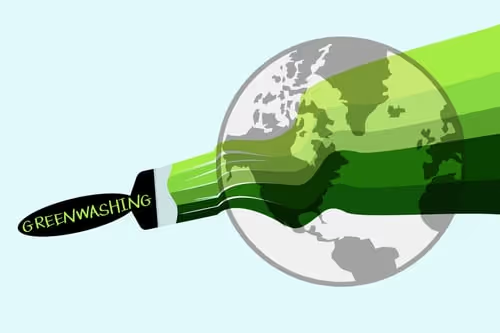
Over the past decade, many organizations have improved their carbon footprints, from recyclable and biodegradable packaging and single-use plastic to planting trees and reducing their greenhouse gas emissions. However, some businesses and companies looking to boost their eco-friendly image without committing to serious changes and addressing environmental issues have been associated with false green marketing. We call this "Greenwashing."
Defining Concepts
What is Greenwashing?
Greenwashing is a practice used by businesses to represent themselves as more sustainable than they truly are. Greenpeace and the Environmental Protection Agency define greenwashing as making false and misleading claims about a product's environmental benefits or practices, services, technology, or company practices. Greenwashing typically involves companies spending more money on advertising and marketing than on implementing sustainable business practices that minimize environmental impact. These false green claims can deceive consumers into believing that a product or company is more environmentally friendly than it is, leading to increased sales and profits. As a result, false advertising, misleading initiatives, and groundless claims have increased green investors' exposure to risks emerging from potential lawsuits from activist groups, image deterioration, and heavy losses in assets invested.
Greenwashing Mentions Over Time
In recent years, new concepts have emerged alongside greenwashing:
Greenwashing, Greenhushing, and Greenwishing Mentions Over Time
Greenhushing refers to a company’s refusal to publicize ESG information. The company may fear pushback from stakeholders who would find its sustainability efforts lacking or from investors who believe ESG undermines returns.
Greenwishing, or unintentional greenwashing, describes a practice where a company hopes to meet certain sustainability commitments but simply does not have the means to do so.
High-Profile Greenwashing Case Studies
When talking about greenwashing, the usual suspects are the oil and gas industry, the food and beverage sector, and other environmentally impactful industries. However, the financial industry has also been embroiled in its own greenwashing controversies.
It’s challenging to produce an accurate assessment of environmental, social, and governance (ESG) factors, which creates opportunities for companies to hide ineffective and fake green initiatives. According to Regtank, the main challenges to detecting greenwashing include:
Lack of reporting standards – There’s no universal set of standards for ESG compliance.
Lack of transparency – Companies often don’t disclose the specifics of their “green campaigns,” making it hard for investors and consumers to verify their claims.
Limited consumer awareness – Misleading marketing can exploit consumers’ eco-consciousness and brand loyalty, reducing scrutiny of false green claims.
These gaps lead to inaccurate ESG data and scores, allowing greenwashers to avoid accountability. Ultimately, detecting greenwashing requires careful scrutiny of company claims and a deep understanding of their supply chains and operations.
How Artificial Intelligence Detects Greenwashing
As greenwashing practices become more common, activist investors, journalists, and the general public are using social media, news outlets, and blogs to highlight false claims. Artificial intelligence (AI) has become an invaluable tool in the early detection of greenwashing by analyzing vast amounts of public data.
At SESAMm, we use generative AI and LLMs to identify greenwashing risks across billions of web-based articles. Our data lake covers over 25 billion articles in more than 100 languages from four million news sources, blogs, social media platforms, and forums, analyzing data on five million public and private companies. Through our AI platform, we generate reliable, timely, and comprehensive insights to detect greenwashing, monitor ESG controversies, and identify related risks.
The CSRD significantly strengthens the requirements for companies to substantiate their sustainability commitments. Mandating standardized and detailed ESG disclosures directly addresses the practice of greenwashing, where companies exaggerate their environmental credentials in marketing without meaningful follow-through. Under the CSRD, companies can no longer rely on vague or selectively presented data—any gaps or inconsistencies in their sustainability claims will be exposed in public filings, making greenwashing much riskier. This means an end to cherry-picked data and a shift toward more comprehensive, comparable, and verifiable ESG performance for investors and stakeholders.
The CSDDD (if it stands) further reinforces these efforts by obligating companies to go beyond marketing statements and prove they’re actively managing environmental and human rights impacts throughout their supply chains. This directive closes loopholes that greenwashing often exploits, such as highlighting only direct operations while ignoring supplier practices. By requiring due diligence on environmental impacts across the value chain, the CSDDD aims to turn sustainability from a branding exercise into a legal and operational priority. If real supply chain actions don’t support a company’s green claims, it could face legal action and reputational damage.
Looking Ahead
Looking ahead, greenwashing will continue to face intense scrutiny from regulators, investors, and the public. With evolving regulatory frameworks like CSRD and CSDDD, the pressure is on for companies to ensure genuine environmental responsibility—not just green advertising. At SESAMm, we believe that the combination of regulatory rigor and advanced AI technologies will play a critical role in uncovering false green claims and supporting investors in navigating ESG risks with greater transparency and accountability.
SESAMm’s AI Technology Reveals ESG Insights
Discover unparalleled insights into ESG controversies, risks, and opportunities across industries. Learn more about how SESAMm can help you analyze millions of private and public companies using AI-powered text analysis tools.
Imagine finding out you've run out of milk immediately after pouring a bowl of cereal. Or maybe realizing you don't have eggs while in the middle of baking a cake. We've all been there, and it's frustrating, to say the least. And this scene has been playing around the globe over the last couple of years for many foods and products. One day it's microchip shortages, and the next, it's baby formula.
Unfortunate as it is, it's one thing for consumers to cope with an empty car lot because of chip shortages. It's another to cope with a hungry infant because store shelves that once contained baby formula are now bare. For those parents and caretakers, their emotions are beyond feeling frustrated. They feel anger and panic, the sort of emotions that they share with their friends and colleagues on social media and forums. The kind of expression that can change the public's sentiment about a company, which in turn can move markets.
This Alternative Data Trends post will examine web data concerning the baby formula shortage. We'll analyze articles, social media, and forum conversations culminating in the U.S. crisis as the news reaches national exposure. We'll also highlight red flags investors could've seen had they monitored the situation with an AI-powered text analysis tool like SESAMm's TextReveal®.
Early warnings: When baby formula supplies began to run dry vs. when it became a national crisis
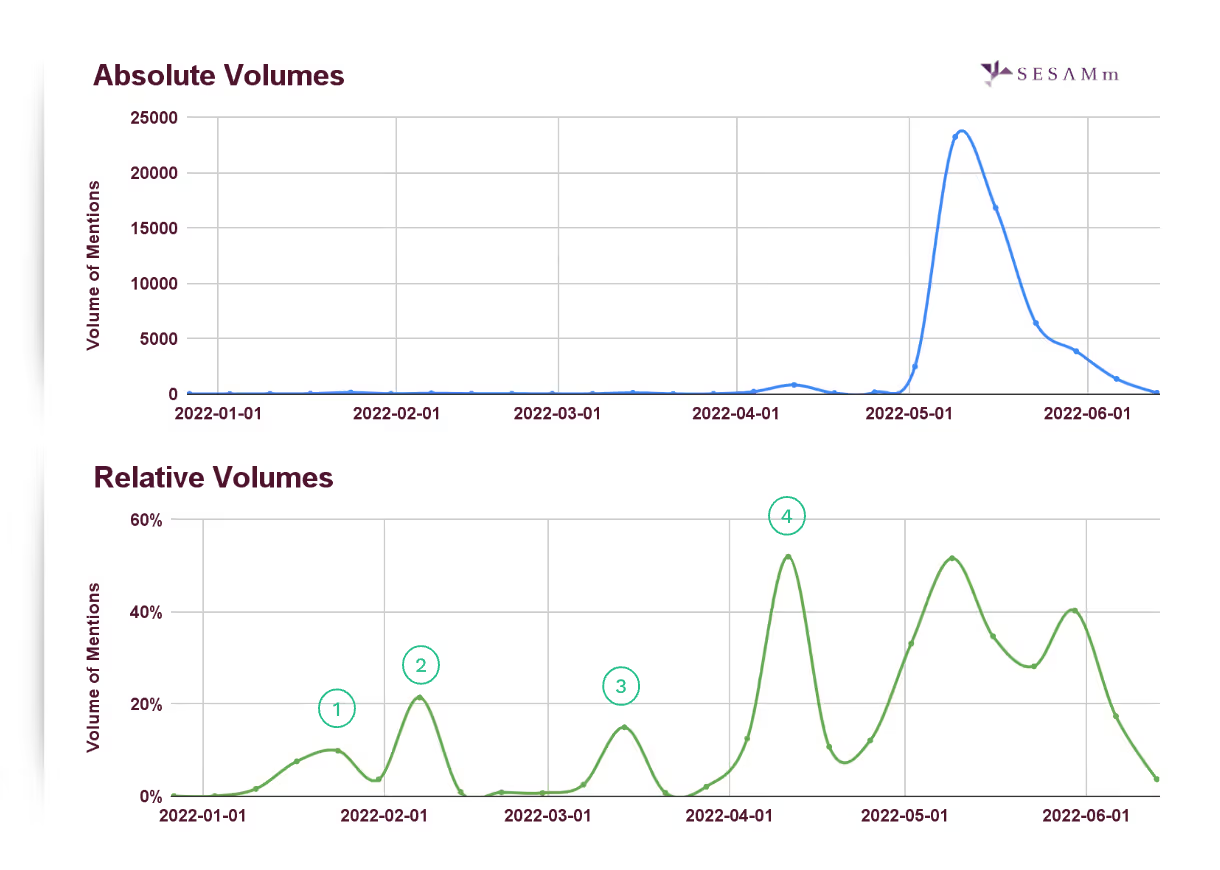
If we compare absolute and relative volumes—relative being mentions about the topic compared to our entire data lake—the term "formula milk market" yields parallel results. Mentions spike in May when the crisis reaches national coverage (see Figure 1).
Figure 1: Absolute and relative mention volumes for “formula milk market” match.
However, comparing absolute and relative volumes for the term "formula milk shortage," we find red flags as early as January 2022, four months before the crisis receives national attention (see Figure 2). Relative mentions spike on three occasions before absolute volumes register any significant noise. The fourth instance matches a ripple on the absolute chart.
Figure 2: Relative mention volumes for “formula milk shortage” show possible controversies.
These articles provide an example of the content published around the times of those rises in mentions:
Analyzing the sentiment and polarity of the formula milk market
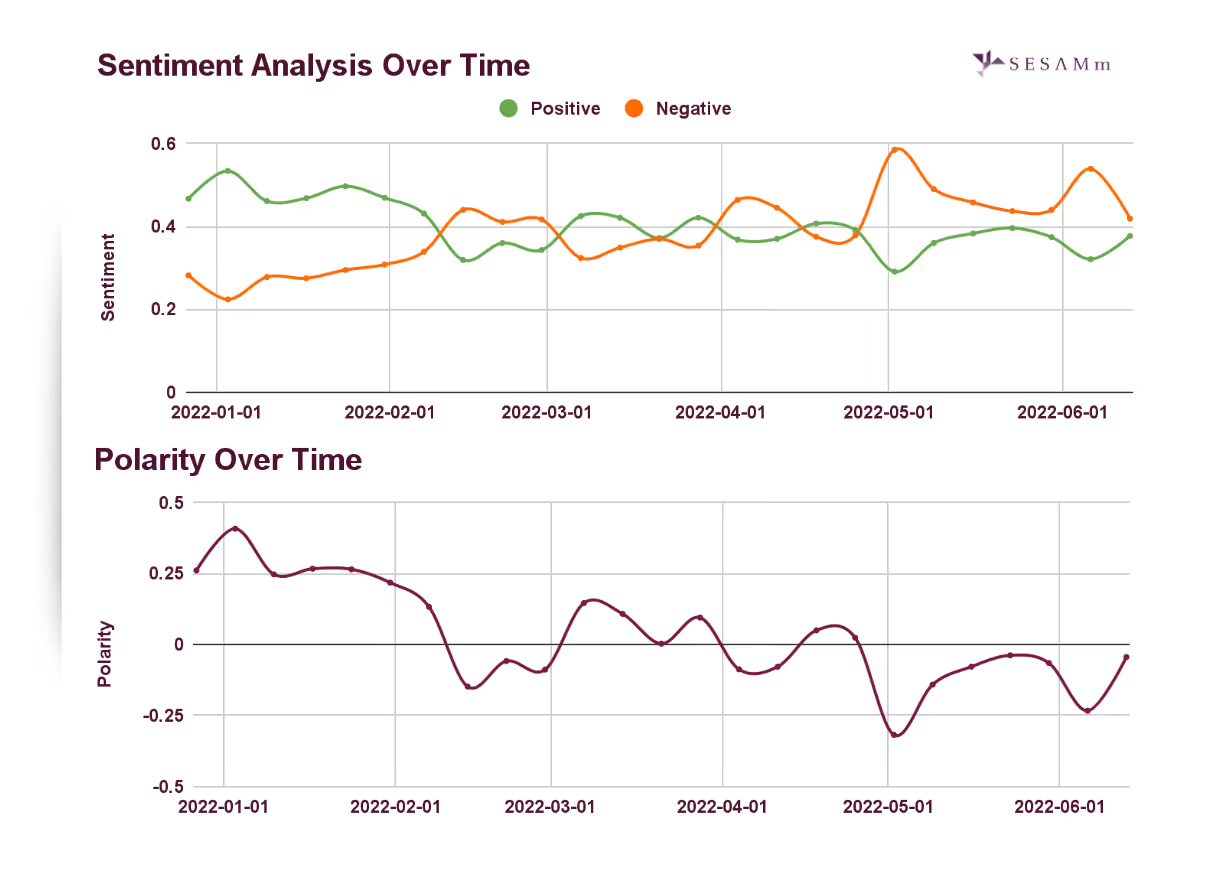
In short, the e-reputation of the formula milk market has been negative since the beginning of 2022 (see Figure 3). Positive sentiment drops and reflects the opposing negative sentiment almost exactly until May, when the news about the crisis breaks. Likewise, polarity trends downward over the same period.
Note: Polarity represents a company's aggregate of positive and negative sentiment (opinions, reviews), ranging from -1 to 1. A zero score means that there is as much positive as negative sentiment. High e-reputation brands can have polarity scores of more than 0.5.
Figure 3: “Formula milk market” sentiment analysis and polarity moved negatively over time
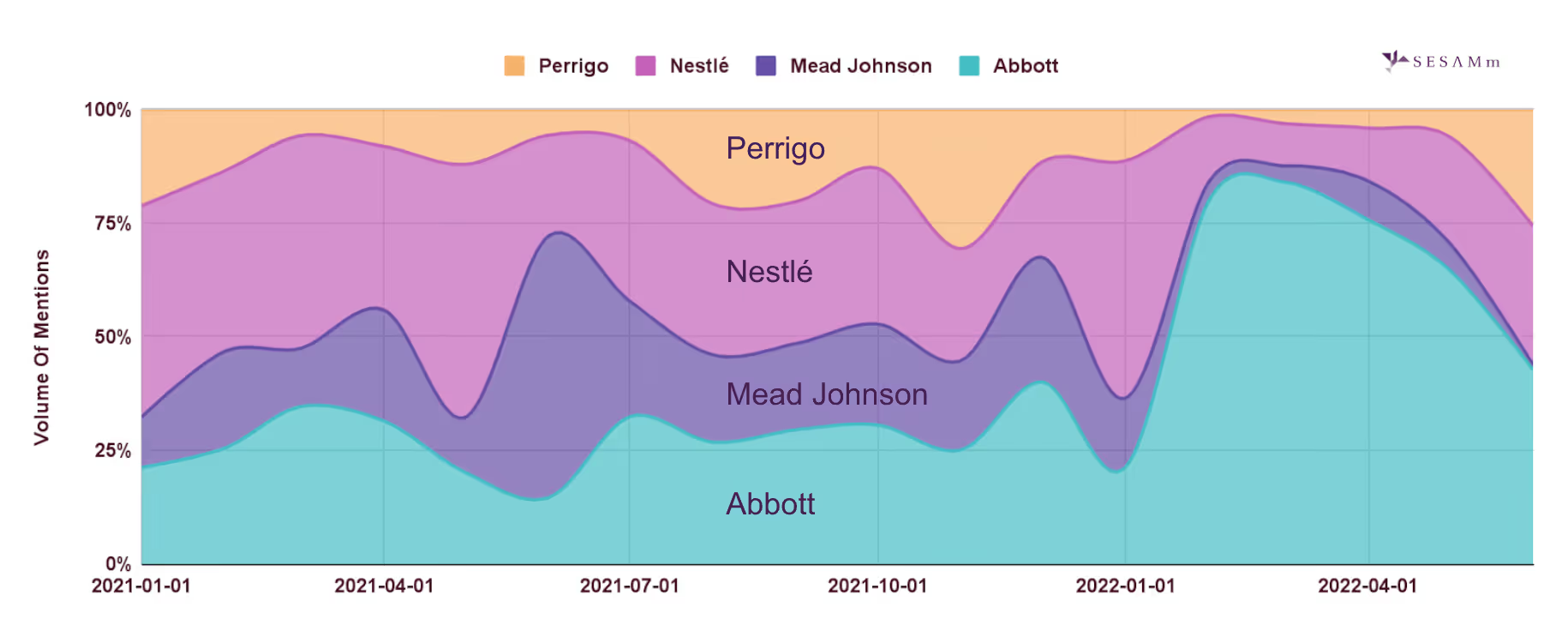
In the U.S., four brands produce the bulk of formula milk: Abbott, Mead Johnson, Nestlé, and Perrigo. Abbott and Nestlé hold the largest share of the formula milk market.
Figure 4: Abbott gains more than 75% of mention volume share in Q1 2022.
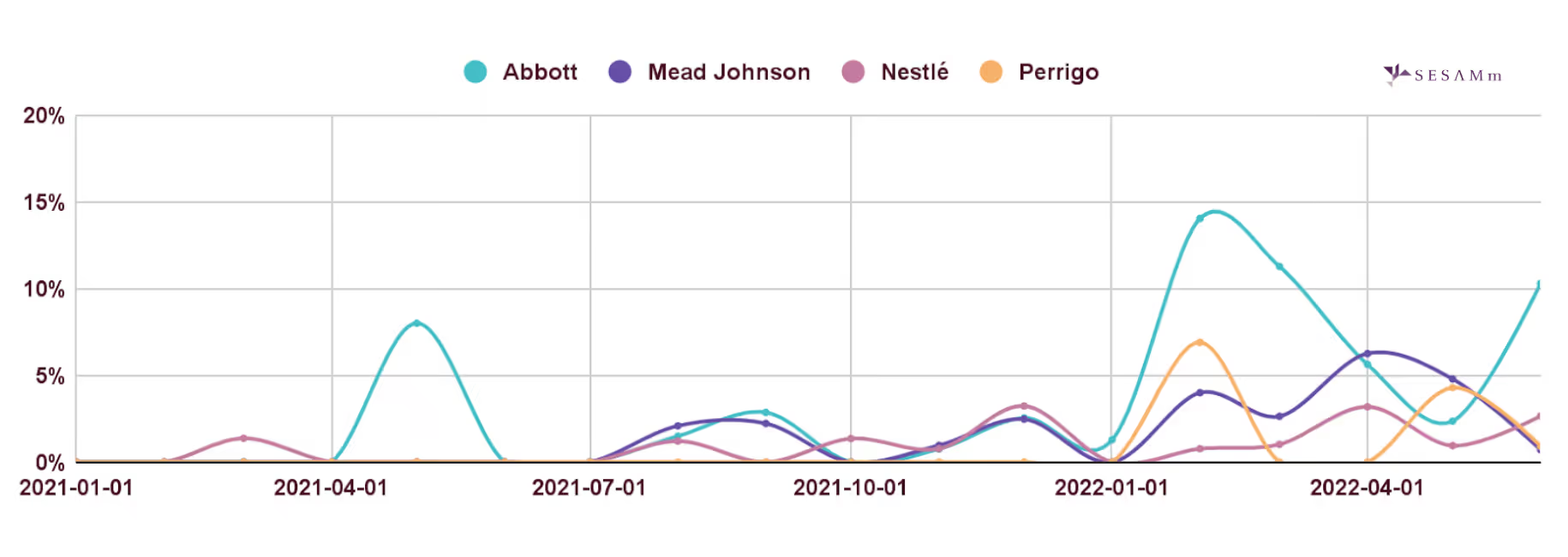
When we group these four brands' mentions from January 2021 to June 2022, we can see how their mention volumes compare (Figure 4). For example, at the beginning of the graph, we can see that Abbott and Nestlé have more mention-volume relative to their market share. However, at the end of 2021, Mead Johnson and Abbott experience spikes in mentions due to lawsuits against their formulas. Then, in Q1 2022, Abbott mentions increased drastically after its formulas were recalled due to possible contamination, taking more than 75% of the mention volume.
The baby formula market in the U.S. has been volatile for many reasons, which we won't get into in this article. However, this volatility could be seen and planned for. In this case, here are some tactics you can take to minimize your investment risks:
Employ a tool like SESAMm’s TextReveal to evaluate web data for insights into your investments. With premiere NLP technology, you can uncover sentiment and ESG insights about your industry, portfolio companies, or current investments.
Expand your research term for deeper insights. In this study, the term "formula milk market" had matching absolute and relative volumes. From this view, nothing looks out of place, and there aren't any red flags. However, when we expanded our research with the term "formula milk shortage," we found many controversies before the crisis gained national attention.
Dig into the controversies' causes. It's not enough to acknowledge a red flag. It would be best if you looked into what the potential reason is. Is the controversy caused by external factors or internal ones? Maybe both? Is the issue a one-time occurrence, or is it a pattern? So it's essential to avoid black-box tools. With solutions such as TextReveal that allow you to see beyond, you can access the underlying articles triggering the red flags.
Stay in touch with SESAMm
Thanks for reading this issue of Alternative Data Trends. Be sure to catch the next issue by subscribing to our blog. And if you'd like a TextReveal demo, send us a message via the form.
Stay ahead with the latest in ESG and AI intelligence
Join our mailing list to receive new reports, event invites, and updates from SESAMm directly to your inbox.




















.png)