
SESAMm Featured in Datos Insights Capital Markets Fintech Spotlight Q3 Report
November 21, 2024
•
5 mins read
Paris, France – November 21, 2024 – SESAMm, a leading artificial intelligence company, has been prominently featured in the latest edition of Datos Insights' Capital Markets Fintech Spotlight for Q3. This recognition underscores SESAMm's pivotal role in transforming the landscape of ESG and sentiment analysis through innovative AI technologies.
SESAMm's technological prowess allows clients to conduct in-depth due diligence and risk assessments, monitor investments, and make informed decisions. The platform’s strength lies in its ability to detect ESG controversies and identify positive impact events related to the UN Sustainable Development Goals (SDGs).
The report by Datos Insights highlights the challenges investment firms face regarding timely and transparent ESG risk information, particularly with small to mid-sized companies and in diverse geographic locations. SESAMm addresses these issues by providing a robust alternative to more traditional, often costlier, solutions. Its capacity to offer detailed ESG monitoring and analysis positions SESAMm as a valuable asset to its clients, which include some of Europe's largest financial institutions and notable names like Carlyle and Raiffeisen Bank International.
The Capital Markets Fintech Spotlight is a quarterly report that evaluates innovative companies shaping the future of finance through technology. Featuring SESAMm in this report highlights its impact on integrating ESG considerations into the investment process globally. This recognition is a testament to SESAMm’s commitment to excellence and innovation in the rapidly evolving fintech landscape.
Discover unparalleled insights into ESG controversies, risks, and opportunities across industries. Learn more about how SESAMm can help you analyze millions of private and public companies using AI-powered text analysis tools.

The Sustainable Finance Disclosure Regulation (SFDR) is the EU’s framework for governing how sustainability considerations are disclosed in investment products. While designed to improve transparency and reduce greenwashing, SFDR gradually evolved into a de facto labelling system, with Articles 8 and 9 shaping how funds were marketed and perceived.
In late 2025, the European Commission put together an SFDR 2.0 proposal. It’s intended to acknowledge that this approach has created complexity, inconsistency, and confusion for investors. By shifting toward clearer product categories and simpler disclosures, the reform aims to restore credibility and usability.
A New Category-Based Framework
SFDR 2.0 introduces three product categories: Sustainable, Transition, and ESG Basics. While categorization is voluntary, funds choosing a category must meet mandatory criteria for that classification. Each category is tied to a minimum 70% portfolio alignment with the stated strategy, alongside mandatory exclusions for activities such as those involving controversial weapons, tobacco, hard coal, and severe breaches of international norms. Products outside these categories face tighter limits on ESG-related naming and marketing claims.
Sustainable products are reserved for funds investing primarily in sustainable activities or assets, including taxonomy-aligned strategies and Paris-aligned benchmarks. These products are subject to the strictest fossil fuel exclusions, including a ban on new coal, oil, and gas development.
Transition products are designed to capture strategies financing the shift toward sustainability. They rely on credible transition plans, science-based targets, and structured engagement, with tighter restrictions on fossil fuels than ESG Basics products and a clear focus on forward-looking change.
ESG Basics products integrate ESG approaches in the investment strategy but do not qualify as Sustainable or Transition. While still subject to baseline exclusions and the 70% alignment rule, this category has drawn early criticism for its relatively lenient treatment of fossil fuels.
Less Complexity, Tighter Guardrails
SFDR 2.0 removes entity-level PAI disclosures and simplifies product templates. Rather than relying on the current sustainable investment definition and DNSH mechanics in SFDR 1.0, the proposal operationalizes ‘no harm’ and safeguards through a common exclusion baseline plus product-level disclosure of principal adverse impacts, with DNSH and good governance reflected via category criteria. Disclosures are significantly shortened, with pre-contractual and periodic reports capped at two pages, and marketing rules tightened to limit sustainability claims to qualifying products.
The intent is clear. SFDR 2.0 shifts from dense, technical disclosures toward clearer categories supported by exclusions and simpler safeguards.
Timeline and Market Impact
The legislative process is expected to conclude in late 2026 or early 2027, followed by an 18-month implementation period. Until then, asset managers must continue complying with SFDR 1.0 while preparing for a full reclassification of their product ranges.
For the market, this likely means a smaller but more clearly defined universe of labelled funds. Many current Article 8 and 9 products are expected to reclassify, while Sustainable products under the new regime may be fewer but broader in scope. Asset managers face near-term transition costs and communication challenges, but also the prospect of greater long-term clarity and reduced compliance complexity.
A Reform Still Under Scrutiny
Initial reactions have been mixed. Industry groups broadly welcome the simplification and stronger fossil fuel exclusions for Sustainable and Transition products. At the same time, concerns persist regarding the scope of the ESG Basics category, the lack of a level playing field for unclassified funds, and the absence of more stringent engagement requirements for transition strategies. Organizations such as Eurosif and Morningstar have described the proposal as a step forward that still leaves room for improvement, particularly in preventing greenwashing at the lower end of the spectrum. Triodos Investment Management has also voiced similar caution.
What SFDR 2.0 Signals
SFDR 2.0 reflects a broader recalibration in EU sustainable finance policy. After years of expanding disclosure requirements, the focus is shifting toward usability, clarity, and enforceable standards. For asset managers, the message is straightforward: Sustainability claims will be more tightly defined, product positioning will matter more, and the margin for ambiguity is narrowing as SFDR enters its next phase.
ESG frameworks and regulations have developed due to rising awareness of sustainability and supply chain risks. They aim to enhance transparency, accountability, and ethics, encouraging environmental preservation, social improvement, and better governance. While fostering innovation and financial benefits, aligning with sustainable development goals, these measures might increase costs for businesses, especially smaller ones. Differences across regions and a focus on compliance could inhibit real change, promoting a superficial 'tick-box' approach rather than significant enhancements.
This article takes an in-depth view of some of the most relevant recent regulations and analyzes how effective they seem to be.
Unraveling Supply Chain Regulations: From Past to Present
We traced the evolution of supply chain regulations from non-binding guidelines to binding laws, examining their impact on corporate sustainability. Along the way, we explored the challenges businesses face as they strive to comply with these constantly evolving standards.
Note: The list of regulations and frameworks mentioned is a high-level list of the most mentioned acts.
Global and Non-binding
When analyzing global and non-binding regulations, although they provide crucial frameworks for promoting corporate accountability by offering guidelines for responsible business conduct, they also have limitations. For instance, they lack legal enforceability due to their non-binding nature, potentially hindering compliance. Given the broad scope of the guidelines, implementation challenges arise, particularly in regions with weak governance.
Here are a few examples of recent sustainability regulations:
By Region and Binding
Binding legislation requires companies to meet specific standards in sustainability, environmental protection, and social responsibility. Non-compliance risks legal penalties and reputational damage. However, weak enforcement, insufficient penalties, and legal ambiguities often lead to criticism. Additionally, logistical and resource constraints, especially across borders, limit the effectiveness of regulatory bodies in monitoring and enforcing compliance. Furthermore, the penalties imposed are often disproportionately low. Moreover, these bodies depend on companies’ self-reporting without independent verification, leading to underreporting.
By Country/State and Binding
State or country legislation on supply chains encounters several challenges. These include jurisdictional limitations, enforcement difficulties due to resource constraints, and compliance burdens, especially for smaller businesses. Additionally, fragmented regulations across states or countries can complicate compliance for companies operating nationally. This underscores the importance of coordinated efforts between states and the federal government to address supply chain issues effectively. In addition, regulatory bodies contend with logistical and resource limitations, mainly when operating across borders, which can hinder their effectiveness in monitoring and enforcing compliance.
Unveiling Vulnerabilities Sector Screening for Supply Chain Controversies
In this section, we explore the evolving landscape of supply chain regulatory frameworks and ESG risks in supply chain management. We also dive into how future regulations will affect global trade, corporate responsibility, and sustainability efforts.
Supply Chain Controversies Over Time
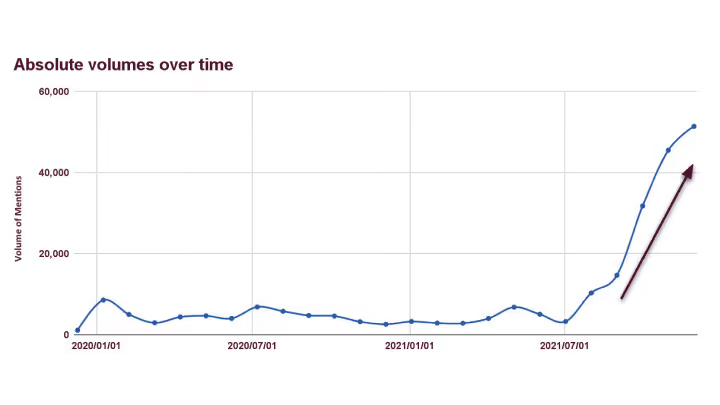
We analyzed supply chain-related controversies from 2019 onwards and found a consistent increase each year, peaking in 2023. Concurrently, mentions of various frameworks, laws, and legislations [mentioned in Part I] related to these issues have also risen. Our analysis reveals a strong and positive correlation between the two trends (r=0.99), indicating a significant relationship. While the apparent increase in supply chain issues, breaches, and controversies may be concerning, it's largely caused by implementing more frameworks that increase visibility and accountability. Even without binding regulations, companies' reputations are affected. Thus, the proliferation of laws and frameworks contributes to the heightened online attention to these breaches.
Supply Chain Controversies: An ESG Analysis
For this analysis, we primarily focused on environmental and social issues within the supply chain, as legislation often targets these areas due to their significant external impacts. Issues like environmental damage and labor violations are most likely to occur in the supply chain and can profoundly affect communities and ecosystems. Governance issues, on the other hand, are more internal and directly pertain to a company's operations and management practices. Therefore, we analyzed a sample of 31,011 entities across industries with frequent mentions of ESG-related supply chain risks, focusing on social and environmental risks.
Specialized Retail has the highest incidence of social and environmental controversies, followed by Technology Software and Automobile & Components, respectively. As shown in the graph above, many of the issues highlighted in the Social ESG supply chain pillar are driven by human and labor rights breaches, which significantly contribute to the ESG risks mentioned.
Social Risks in the Supply Chain
In specialized retail, many brands face scrutiny for alleged forced labor; some examples include Amazon, Hugo Boss, Diesel, and Costco. Additionally, Amazon garnered widespread attention when the company settled a $1.9 million human rights abuse claim. Consumer groups sued Starbucks over deceptive ethical sourcing claims linked to human rights issues. Walmart and Centric were also investigated for human rights violations. Moreover, reports tie Amazon and IKEA suppliers to forced labor. These controversies dominate ESG supply chain discussions in retail.
Regarding the other industries, we also see that technology hardware displays a significant proportion of mentions stemming from mentions of forced labor for Lenovo, Cisco, and Intel, and numerous controversies regarding Apple, among many other allegations.
Similarly, Companies from the food and beverage manufacturers industry were also linked with human rights violations and infringements on labor rights, with companies like Tyson Foods, McDonald's, Hershey, Pepsi, and Nestle having multiple supplier issues connected with child labor, discrimination, and exploitative work. While Technology Software companies mentions were primarily related to contractors and content moderators’ health & safety issues and labor rights infringements from companies like Meta, Microsoft, and Google.
In sum, the evolving supply chain regulations reflect a global commitment to sustainability and ethical business practices. Navigating these regulations presents challenges and opportunities for businesses to lead in corporate responsibility and advance principles of environmental stewardship and social equity. Embracing these regulations as a compass rather than a constraint can help chart a course toward a sustainable future.
Reach out to SESAMm
TextReveal’s web data analysis of over five million public and private companies is essential for keeping tabs on ESG investment risks. To learn more about how you can analyze web data or to request a demo, reach out to one of our representatives.
This Labor Day, we take a moment to celebrate the contributions of workers worldwide and reflect on the critical labor issues and milestones that have shaped the past year. From corporate controversies to strides in workplace wellbeing, 2024–2025 underscored the ongoing importance of protecting fair, dignified work across industries.
Key Trends Shaping Labor Risks
Data from the past year shows that labor-related risks remain a significant and rising concern within the broader landscape of social risks affecting businesses and the global workforce.
Working conditions overwhelmingly dominate the labor risk landscape, reflecting widespread worker actions, negotiations, and demands for higher standards.
Workplace diversity and inclusion continues to be a significant area of focus, as organizations navigate evolving expectations around equity, representation, and belonging.
Although smaller in proportion, forced labor and child labor risks remain critical concerns, attracting heightened regulatory scrutiny and public attention.
Real-world examples from the past year illustrate how companies have confronted—and, in some cases, exacerbated—these challenges.
Labor Controversies: A Year of Struggle and Advocacy
Several major companies faced notable labor controversies over the past year, revealing systemic issues and prompting calls for change:
Volkswagen AG grappled with deep unrest, both at home and abroad. Mass strikes erupted over layoffs and wage cuts in Germany following the company’s decision to scrap its historic no-layoffs policy. Internationally, Volkswagen’s sale of its Xinjiang plant, under scrutiny for alleged human rights violations, highlighted the persistent pressure to address ethical concerns in global supply chains.
Other companies also faced investigations over child and forced labor violations. To mention a few, HelloFresh faced an investigation in the U.S. regarding allegations of migrant child labor at its Illinois facility, which has led to lawsuits from shareholders. Similarly, JBS USA reached a $4 million settlement related to child labor violations identified in its meatpacking plants. Additionally, Temu, managed by PDD Holdings, is being investigated in both the U.S. and Europe for purported connections to forced labor in China, highlighting ethical issues in global e-commerce supply chains.
Despite these challenges, 2024–2025 also featured companies making meaningful strides in promoting employee well-being and ethical labor practices.
The steady engagement around Sustainable Development Goal 8—promoting decent work and sustained economic growth—remains a bright spot. While progress is ongoing, consistent attention to this goal underscores its critical role in shaping future business and social outcomes. Several companies stood out for their positive contributions:
Alight Solutions was recognized by Newsweek as one of America’s Greatest Workplaces for Mental Wellbeing 2025. Initiatives like Mindful Mondays, peer mentoring, and partnerships with organizations such as NAMI-NYC demonstrate Alight’s commitment to fostering a thriving, mentally healthy workforce.
KnowBe4, a cybersecurity training leader, was named one of the Best Workplaces in Technology for the GCC region. Its culture of transparency, ownership, and continuous professional growth has positioned it as an exemplary employer. Cushman & Wakefield earned dual accolades: inclusion in the 2025 Global Outsourcing 100 by IAOP and a perfect score on the Human Rights Campaign Foundation’s Corporate Equality Index. These honors reflect the firm’s dedication to operational excellence and workplace inclusivity.
Looking Ahead: Progress and Persistence
As we mark Labor Day 2025, one truth stands out: while important progress has been made, much work remains. Workers continue to push for safer conditions, fair treatment, and respect across industries, prompting organizations to adapt and evolve.
Happy Labor Day!
Stay ahead with the latest in ESG and AI intelligence
Join our mailing list to receive new reports, event invites, and updates from SESAMm directly to your inbox.