Generate reports on any company - public or private - in under 30 minutes.
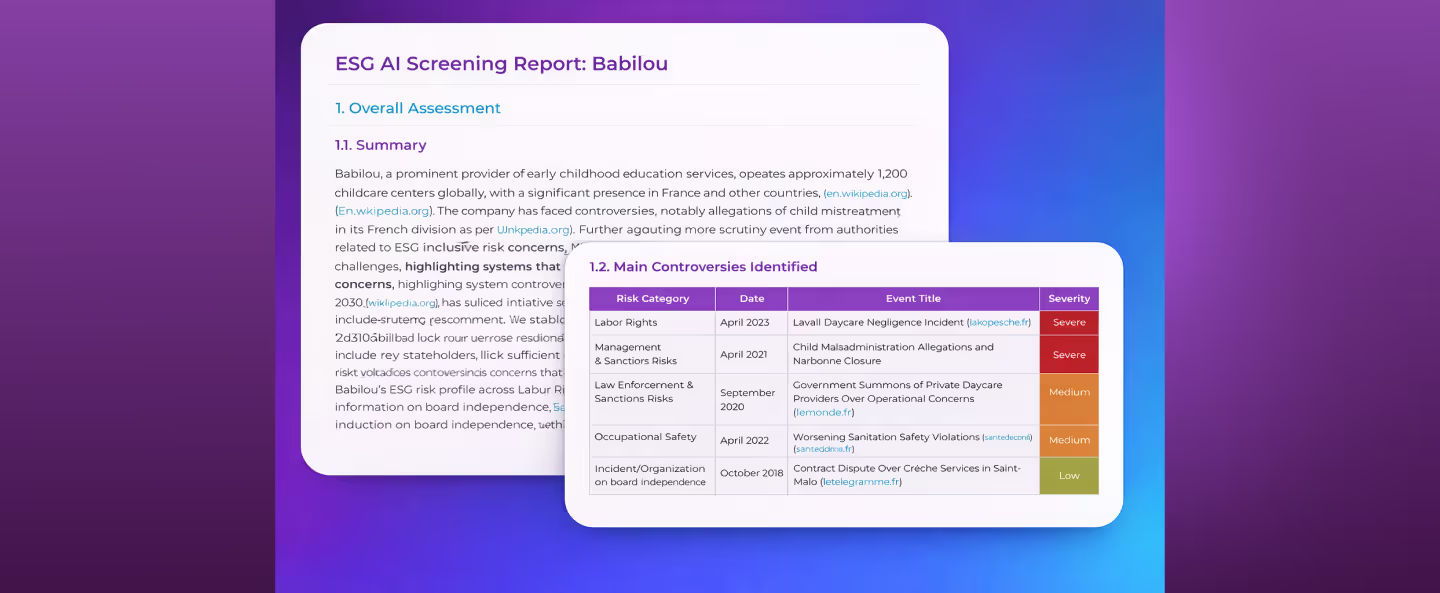
Due diligence just got a major upgrade. With SESAMm’s new AI-powered ESG Assessment Reports, you can uncover critical risks on any company in minutes. These reports leverage state-of-the-art AI technology to analyze billions of documents and generate detailed reports that cover environmental, social, and governance risks, as well as controversial activities, industry and regulatory pressures, and sanctions screening. SESAMm’s ESG reports unlock rapid, scalable, and data-driven due diligence, so you can make fast, confident investment decisions.
The Benefits at a Glance
Fast, Scalable Due Diligence
Traditional due diligence research is time-consuming and manual, particularly when covering small, private firms. SESAMm’s reports are ready in minutes, letting you assess companies quickly and at scale.
Complete ESG Risk Coverage
Get a 360° view of risk, with sections on E, S, and G risks, controversial activities, industry and regulatory pressures, norms screening, sanctions screening, ESG disclosure maturity, and more. Beyond ESG risks, SESAMm is analyzing publiclyavailable company disclosures for the first time.
Built for All Company Types
Analyze any company and even infrastructure projects. Our AI-generated reports adapt to the company’s size and context.
Ready to Share
Delivered as polished PDFs, these reports are ready to be shared.
Discover unparalleled insights into ESG controversies, risks, and opportunities across industries. Learn more about how SESAMm can help you analyze millions of private and public companies using AI-powered text analysis tools.
Controversial business involvement screening is moving beyond its origins as a compliance exercise.
Under frameworks like SFDR and the EU Taxonomy, investors must prove that their portfolios not only promote sustainability but also exclude activities fundamentally at odds with environmental, social, or ethical principles. This marks a shift from static disclosure toward dynamic accountability, and it has broadened both the scope and ambition of ESG screening.
Historically, exclusions focused on a narrow range of activities - weapons, tobacco, or fossil fuels - and primarily applied to public equities. Today, that universe has expanded dramatically. Private markets, secondaries portfolios, and private credit exposures are now expected to undergo the same scrutiny as listed assets. This reflects not only regulatory alignment but also diversifying investor expectations, as institutions incorporate reputational, cultural, and mission-based constraints into their investment frameworks.
Modern exclusion policies increasingly include areas not yet covered by regulation but relevant to ethics, faith, or social impact. Examples range from pork-related activities in Sharia-compliant portfolios to emerging debates over cryptocurrency mining and trading, and even biotechnology topics such as human cloning or genetic manipulation that raise profound ethical questions. These additions illustrate how business involvement screening is evolving from a rule-based checklist into a reflection of each investor’s worldview and stakeholder commitments.
This evolution, however, brings complexity. Private assets and novel sectors often lack standardized data or public disclosures. ESG, compliance, and deal teams must process incomplete information, document decisions, and adapt quickly to new mandates - all without expanding headcount. The result is a growing need for automation that can adapt to human nuance.
SESAMm’s AI-powered business involvement screening meets that need. By allowing investors to screen based on their own exclusion categories and thresholds, it translates varied mandates - from regulatory to reputational - into a single, automated process.
Automating Controversial Business Involvement Screening in Public and Private Assets
SESAMm’s platform uses a new AI agent approach that scans and analyzes vast amounts of information. Below, we provide an overview of SESAMm’s business involvement screening capabilities and how they address investors’ needs for automation, thresholding, and flexible outputs.
Comprehensive Coverage through Big Data
SESAMm utilizes its AI engine to monitor over 30 billion articles and 10 million new documents daily from various sources, including news sites and NGOs. This extensive data collection spans multiple languages and local outlets, enabling it to detect obscure references to companies and raise alerts for issues such as misconduct. SESAMm's coverage encompasses millions of public and private companies, enabling users to conduct thorough screenings of any entity, including private companies and subsidiaries.
Customizable Exclusion Frameworks
SESAMm’s business involvement screening gives investors control over what to screen and how to classify it. Users can request customization of exclusion categories to mirror their own policy, whether based on regulation (e.g., SFDR, EU Taxonomy) or internal mandates (e.g., faith-based or reputational constraints). In addition to standard ESG categories like fossil fuels or weapons, investors can add custom topics. This flexibility allows ESG, compliance, and secondaries teams to tailor the tool to their precise needs,.
Threshold-Based Classification
SESAMm’s business involvement screening module is built around the concept of threshold-based flags. The AI utilizes structured data and unstructured signals to determine involvement levels. The output for each company is a clear classification: No Involvement, Limited Involvement, or Significant Involvement for each category. These classifications correspond to thresholds – limited might mean some involvement but below the exclusion threshold, significant means above the threshold or its a core business. By encoding the thresholds in the system, SESAMm ensures consistency with the investor’s policy. This is crucial for automation: rather than an analyst manually checking revenue percentages and news, the system does it automatically and provides clear justification.
Rapid Portfolio Screening Process
The system is designed for fast, self-contained screening. A user simply uploads a list or portfolio, and within hours receives a complete file summarizing involvement across all exclusion categories. The output includes company-level classifications, summaries of supporting evidence, and references to sources. This enables investors to integrate the results directly into due diligence workflows, risk committees, or regulatory reporting, with no ongoing manual data maintenance required.
Cost and Resource Efficiency
Automating this process saves substantial analyst time, particularly for rating agencies and secondaries investors managing high volumes of entities. Rating agencies can use the pre-classified results as a baseline input for their own ESG or credit assessments, reducing the manual data-gathering burden. LPs and GPs can run large private company universes in-house without additional research teams. In secondaries, where a full portfolio review can take days of analyst effort, SESAMm’s workflow compresses that timeline to just a few hours, enabling ESG validation to fit seamlessly into transaction schedules.
Auditability and Verification
Each classification is fully transparent. Analysts can drill down into the evidence behind a flag, including links to original articles, filings, or corporate statements, and verify the AI’s reasoning. Automatic translation ensures accessibility across languages. This transparency builds trust in the results and provides auditable documentation for LP reporting or regulator reviews.
As ESG investing matures, the leaders will be those who can implement exclusions transparently, efficiently, and in alignment with evolving norms. The next frontier is no longer just regulatory compliance - it is the ability to anticipate what clients and society will expect tomorrow, and to operationalize those expectations across all asset classes. SESAMm’s technology makes that possible: a platform that keeps pace with both policy evolution and moral expectations, bringing consistency and clarity to an increasingly complex ESG landscape.
PARIS, FRANCE, March 1, 2023 — SESAMm, a leader in natural language processing (NLP), a field of artificial intelligence, today announced the close of a Series B2 funding round of €35 million (USD 37 million) to accelerate its ambitious growth and global expansion plans.
Securing this funding will enable SESAMm to further expand into U.S. and Asian markets, support technology development to generate AI-powered ESG and sentiment analytics, and hire key talent across sustainability, technology, sales, and marketing.
The Series B2 round was co-led by Elaia, a deep tech VC firm, and Opera Tech Ventures, the venture capital arm of BNP Paribas (BNPP). Other participating companies include asset manager Unigestion, Raiffeisen Bank International’s (RBI) venture capital entity Elevator Ventures, AFG Partners, CEGEE Capital, and historical backers, including Carlyle (CG) and New Alpha Asset Management, who participated in the previous Series B1 round. This latest round brings the total funding raised to €50 million.
“We are delighted to support SESAMm's ambitious journey to leverage deep technology and create actionable data insights on ESG analysis and monitoring. We are impressed by the quality and seniority of the executive team, already leading operations in every continent with anchor and Tier 1 clients. The vision of bringing technology to the Finance industry and the corporate world to empower with ESG insights is a game changer, and we are very excited to be part of the adventure by their side,” said Pauline Roux, Partner at Elaia.
“In a context where it is increasingly critical for decision makers to feed their assessments with deeper data points, we found SESAMm’s product very relevant to help identify, filter out, weigh, and report key data insights on companies ranging from small private firms to larger corporations. We have found deep common ground with the team and are very proud to support SESAMm in its journey onward,” said Thibaut Schlaeppi, Managing Director at Opera Tech Ventures.
SESAMm is one of the fastest-growing natural language analytics data providers, serving global investment firms such as top private equity firms, hedge funds, and other asset management companies, in addition to corporations of all sizes. Leveraging its data lake, which comprises more than 20 billion articles and grows by 20% per year, SESAMm provides datasets and NLP capabilities to generate innovative analytics for use cases such as controversy detection, ESG and SDG sentiment scores, private equity due diligence, suppliers monitoring, and more.
“Since we started working with SESAMm as investors and clients over two years ago, we’ve been impressed with both the company’s growth and the advanced analytics that have supported our deal sourcing, diligence, and portfolio company value creation efforts,” said Matt Anderson, Carlyle’s Chief Digital Officer. “We are delighted to build on our strong partnership with SESAMm by participating in this latest round.”
CEO Sylvain Forté, COO Pierre Rinaldi, and CTO Florian Aubry co-founded SESAMm in 2014. With their team of nearly 100 data experts, they leverage the vast amount of textual information on the web, from news websites to NGO reports and social media, to translate it into powerful, digestible, and actionable insights.
Sylvain Forté, CEO and Co-Founder of SESAMm, said, “We are happy and grateful to close this €35 million Series B2 round, a testament to the dedication of our entire team and the strength of SESAMm’s C-suite leadership – my cofounders Pierre Rinaldi COO & Florian Aubry CTO, Marie-Charlotte Deucher CFO, Jorge Alvarez CMO, and Eric Sionnet CDO – to continue our growth journey and expand to new international markets such as Singapore. Raising a significant amount during challenging market conditions highlights the relevancy of SESAMm's focus on two key trends: AI and sustainability. In turn, these tools enable organizations to make better decisions and fill the data gaps, particularly in ESG, on both public and private companies.”
About SESAMm
SESAMm is a leading artificial intelligence company serving global investment firms and corporations around the globe. SESAMm analyzes more than 20 billion documents in real-time to generate insights for controversy detection on investments, clients and suppliers, ESG and positive impact scores, private equity due diligence and sourcing, sentiment analysis on financial assets, and more.
About Elaia
Elaia is a venture capital firm specializing in funding early-stage technology companies. The firm focuses on software, internet, and digital media startups and has a strong track record of backing companies that become successful and profitable. Elaia's team includes experienced investors and entrepreneurs who provide valuable guidance and support to the startups in their portfolio. With a focus on helping companies scale and grow, Elaia is a valuable partner for any entrepreneur looking to launch a technology business.
About Opera Tech Ventures by BNP Paribas
Opera Tech Ventures is BNP Paribas’ VC arm, launched in 2018 with the objective to invest in startups that transform or disrupt the financial industry. The fund is managed by BNP Paribas Asset Management France, as part of its Private Assets division, dedicated to private asset management. With a global scope, Opera Tech Ventures supports entrepreneurs building ambitious ventures from Series A to Series C with investments ranging from 3 to €15m.
About Carlyle
Carlyle (NASDAQ: CG) is a global investment firm with deep industry expertise that deploys private capital across three business segments: Global Private Equity, Global Credit, and Global Investment Solutions. With $373 billion of assets under management as of December 31, 2022, Carlyle’s purpose is to invest wisely and create value on behalf of its investors, portfolio companies, and the communities in which we live and invest. Carlyle employs more than 2,100 people in 29 offices across five continents. Further information is available at www.carlyle.com. Follow Carlyle on Twitter @OneCarlyle.
The aerospace and defense industry is essential to global technology and transportation, playing a crucial role in maintaining international security and connectivity. However, this sector faces intense scrutiny due to its significant impact on ESG factors. Amidst challenges like safety lapses and whistleblower revelations, stakeholders are increasingly relying on advanced AI technologies to gain insights into potential controversies. Such technologies have enabled a deeper understanding of the complex ESG issues that permeate the industry, revealing not only the specific challenges faced by companies like Boeing but also providing a broader view of the sector's commitment to corporate responsibility and sustainability.
This article explores the aerospace industry and its ESG challenges, backed up by a case study of industry giant Boeing. It also explains how we used SESAMm’s AI-powered tools to detect these controversies beforehand.
Aerospace and Defense Market Mentions
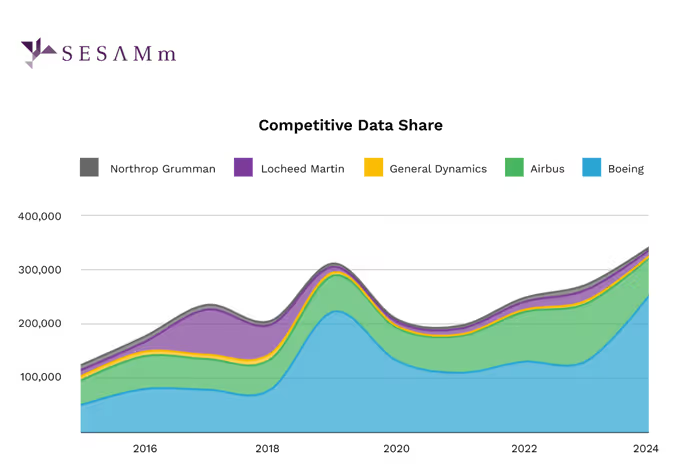
The top market players in the aerospace and defense industry command 8.3% of the overall market's online mentions. This sector is increasingly scrutinized for its ESG practices amidst technological advancements and global policy shifts.
Media Sentiment in the Aerospace Industry
In this study, we ran our AI tools through our data lake to extract the major market players: Northrop Grumman, Lockheed Martin, General Dynamics, Airbus, and Boeing, with the time frame starting from 2015 to date. The data reveals a notable peak in online mentions of the market trend, mainly following Boeing’s plane crash controversies. Post-2018, we noticed a general upward trend for Airbus and Boeing, indicating their increasing dominance or recovery in the market. This trend demonstrates the shifting landscape of the aerospace industry, where competition is intense, and the share of mentions can reflect broader market movements and company-specific developments.
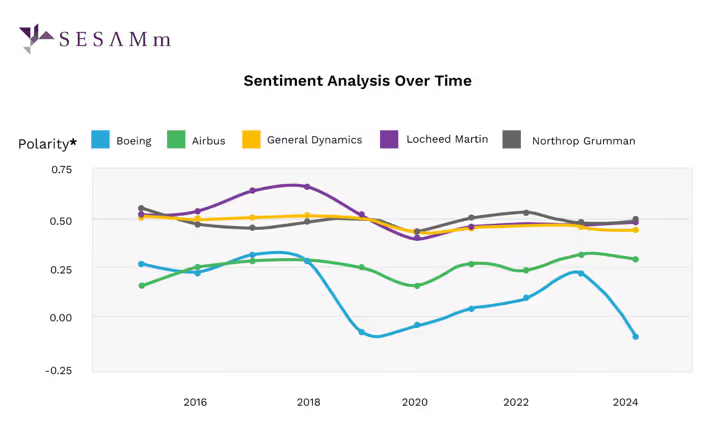
(*): Polarity or sentiment polarity represents a company's aggregate of positive and negative sentiment (opinions, reviews), ranging from -1 to 1. A zero score means that there is as much positive as negative sentiment. High e-reputation brands can have polarity scores of more than 0.5.
The sentiment across the aerospace market reflects the industry’s highs and lows. On one hand, there are moments of significant achievements like new contracts and technological breakthroughs that drive companies like Lockheed Martin to positive media highlights. Between 2016 and 2018, Lockheed Martin experienced a surge in positive mentions due to key contract wins and proactive company initiatives, which have contributed to maintaining its reputation and market value.
Conversely, the industry faces intense scrutiny over various controversies, notably those surrounding Boeing. The company, a dominant figure in the market, has been at the center of numerous negative headlines, giving it the lowest sentiment polarity among its peers. Issues range from serious safety lapses, such as the tragic 737 MAX crashes throughout the years, to ongoing legal challenges and whistleblower claims that overshadow its governance practices. These incidents have not only affected Boeing’s sentiment negatively but have also influenced the overall perception of the aerospace and defense sector, highlighting the industry's susceptibility to reputational risks.
Macro Themes
The aerospace sector, while essential for global connectivity, has not been without its controversies, especially concerning safety and compliance issues. Among the major players, Boeing's significant share of media mentions is primarily driven by a series of high-profile accidents, including the 737 MAX crashes in 2019, killing all passengers and another serious incident in South China in 2022. These accidents triggered a cascade of lawsuits and fines, severely impacting Boeing’s public perception and operational standing. The aftermath of these incidents also precipitated broader discussions around leadership changes, management practices, safety protocols, and accountability measures within the company.
Similarly, Airbus has faced its own challenges, with notable accidents in 2015 in France and 2016 in the Mediterranean Sea, followed by another in 2020, resulting in 97 fatalities. These incidents underline the persistent safety risks inherent in aerospace operations and the critical need for stringent oversight. Accusations of ethical and legal violations also loom large across the industry. Boeing, for example, has been embroiled in numerous investigations and lawsuits related to various accusations. Meanwhile, other industry giants like Northrop Grumman and Lockheed Martin have faced legal actions over environmental and contracting practices, such as Northrop’s involvement in residential chemical contamination and Lockheed’s settlement over accusations of overcharging the Navy. General Dynamics has also encountered legal scrutiny over employment practices and allegations of human rights and privacy violations.
These controversies highlight a complex landscape of operational, legal, and ethical challenges in the aerospace industry. Each incident not only affects the involved company but also catalyzes shifts in regulatory practices and leadership strategies, underscoring the need for robust governance and proactive risk management to uphold safety and integrity in aerospace operations.
ESG Analysis
The influence of ESG factors on public perception and internal company policies within the aerospace industry is profound. Governance issues, in particular, continue to be a critical focus as aerospace companies confront challenges related to compliance, ethical practices, and transparency. Social factors are also prominent, with labor practices and safety standards critically influencing operational and strategic decision-making. Environmental considerations are escalating in importance as the industry progresses towards more sustainable practices, driven by increasing concerns over climate change and environmental sustainability.
Northrop Grumman illustrates an aspect of ESG concerns with specific environmental risks linked to its operations. Accusations have surfaced against Northrop Grumman for its role in environmental degradation, such as pollution from manufacturing plants and involvement in contamination incidents at residential sites. These issues not only affect the company’s environmental track record but also impact its social standing and governance integrity. The company also displays some governance risks related to its total mentions volume driven by accusations of fueling false ‘Revenge Porn’ allegations against CIA whistleblower John Kiriakou as well as legal investigations driven by Northrop Grumman investors over its claims to recover their losses and class action lawsuits over claims of a breach of fiduciary duty.
The aerospace sector’s engagement with these ESG factors indicates a shift towards addressing the critical issues facing the industry. Boeing ranks first in terms of risks, with social risks having the highest share, followed by Airbus, with risks coming from social issues such as customer relations, fundamental human rights, and governance risks mainly related to its fraud, bribery, and corruption charges. This shift is not just about mitigating risks but also about harnessing opportunities to enhance corporate responsibility and ensure long-term sustainability.
Deep Dive into Boeing: ESG Risks and Public Perception
The aerospace industry has faced increasing scrutiny over its ESG practices. Among the key players, the American aerospace company Boeing has been prominently featured in media discussions, not only due to its market distinction but also because of its ESG challenges that have sparked significant controversy.
Boeing Word Cloud
This word cloud visually represents the main online topics surrounding Boeing, particularly focusing on the issues and controversies related to the 737 Max aircraft. Key terms like "737 Max," "Boeing," "safety," "death," and "FAA" are prominently displayed, indicating these as central themes in the discussion. The size of each word in the cloud signifies its frequency and importance in related discussions, with larger words being more prevalent. This visualization encapsulates a range of associated topics such as "lawsuit," "Senate hearing," and "missed inspections," highlighting the broad spectrum of regulatory, safety, and ethical issues that have dominated public and media discourse regarding Boeing.
Boeing ESG Analysis
According to TextReveal’s findings, since 2019, Boeing's ESG risks have intensified, particularly in social and governance, leading to a substantial impact on its public image and stock performance. The company's struggles with governance issues are well-documented, encompassing major safety lapses that resulted in the tragic crashes of the 737 MAX aircraft in the span of six months in Indonesia and Ethiopia. These events have not only led to a loss of life but also raised serious questions about the company's commitment to safety protocols and ethical standards.
Social risks at Boeing are also prominent, with multiple incidents involving customer relations and human capital management. Notably, the company has faced significant scrutiny regarding its response to the 737 MAX crashes, highlighting deficiencies in transparency and accountability in dealing with the fallout. The handling of these incidents resulted in widespread public distrust, significantly damaging Boeing's relationships with airlines, regulatory bodies, and the flying public. Issues such as delays in disclosing software malfunctions and the initial reluctance to ground the fleet have led to accusations of prioritizing profit over passenger safety. Furthermore, Boeing's labor practices have also come under fire. There have been multiple instances of tension with labor unions over contract negotiations, job cuts, and factory conditions, which exacerbate the social risks by affecting employee morale and productivity. These labor disputes and the perceived erosion of safety standards contribute to a challenging environment, complicating Boeing's efforts to rebuild trust and ensure operational stability.
Early Signs: Whistleblowers
We used TextReveal's analytics capabilities to track the prevalence of whistleblower mentions within the aerospace industry, with data pointing back as far as 2019. This tool has effectively highlighted ongoing concerns and patterns related to corporate governance and safety issues.
Boeing has also been facing whistleblower retaliation. High-profile cases involving whistleblowers like John Barnett, who was found dead under mysterious circumstances, and Sam Salehpour, who reported safety shortcuts and received physical threats, illustrate the perilous environment for those who challenge the status quo. These whistleblowers' stories, while distressing, shed light on a culture that may prioritize expediency over thoroughness and safety.
One of the most significant cases involved John Barnett, a former quality manager at Boeing, who raised alarms about critical safety lapses in the production of the 787 Dreamliner. Barnett claimed that faulty parts were knowingly installed on planes, potentially endangering passengers. His revelations were met with hostility and retaliation, resulting in his tragic and suspicious death, which was officially ruled as a suicide. This case has fueled widespread media coverage and public outcry, questioning the integrity of Boeing’s internal safety practices and the treatment of employees who report such critical issues.
Another well-known whistleblower, Ed Pierson, reported concerns about the 737 MAX's manufacturing process, specifically pointing to the rushed production schedules that he believed compromised safety. His testimony before congressional hearings helped to expose a "profit over safety" mentality that appeared to saturate Boeing’s management practices. Pierson’s allegations were particularly damaging as they were directly linked to the two fatal crashes of the 737 MAX, which tragically resulted in 346 deaths.
Sam Salehpour, a Boeing engineer, also came forward with allegations of manufacturing shortcuts that compromised the structural integrity and safety of Boeing aircraft. Like others, Salehpour faced significant backlash from superiors and was reportedly blackballed within the industry for his outspokenness, highlighting the severe personal and professional risks faced by whistleblowers within the air travel giant.
The cumulative effect of these whistleblower cases has led to significant scrutiny from regulatory bodies, the media, and the public. The Federal Aviation Administration (FAA) has stepped up its oversight of Boeing, leading to fines, increased regulations, and a temporary grounding of the 737 MAX fleet. These incidents have sparked broader discussions about the need for systemic reforms within the aerospace industry to ensure that safety and ethical standards are not only upheld but prioritized over financial incentives.
How does SESAMm Detect ESG
Navigating the vast amounts of data available is a significant challenge when conducting this type of analysis. At SESAMm, our experts begin with a comprehensive sentiment analysis of the industry and its key players. By examining trends, particularly spikes in data volume or shifts in sentiment—both positive and negative—they can pinpoint the issues and controversies driving these changes. Following this, our team conducts a thematic deep dive into the topics most relevant to the industry, providing a nuanced understanding of the issues that are particularly sensitive for stakeholders. With these insights in hand, our team then moves to company-specific analyses and benchmarking to assess how individual companies perform relative to their peers.
SESAMm's TextReveal® platform plays a significant role in identifying and understanding the complex web of controversies within industries such as aerospace. Through its algorithms, the platform sifts through vast amounts of data from diverse sources like news outlets, social media, and corporate disclosures to detect subtle cues and patterns that might indicate emerging ESG controversies. This robust data collection and analysis enable SESAMm to pinpoint issues related to whistleblower activities, safety violations, and governance lapses well before they gain widespread attention. By integrating this intelligence, SESAMm facilitates a deeper understanding of the underlying factors contributing to these controversies, aiding stakeholders in navigating the intricate dynamics of corporate accountability and regulatory compliance.
SESAMm's TextReveal® platform provides a comprehensive suite of ESG analytics tools that leverage extensive data collection from news outlets, social media, corporate disclosures, and NGO reports, ensuring thorough coverage of emerging and underreported ESG issues. Utilizing advanced artificial intelligence, the platform analyzes sentiments and contextual nuances within this data to identify positive and negative ESG indicators, helps stakeholders measure public sentiment before issues escalate, and makes accurate business decisions. Additionally, its capability to identify and map relationships between entities such as companies, individuals, and products to various ESG issues is crucial for assessing how internal dynamics influence a company’s overall ESG profile.
TextReveal® also employs predictive analytics to foresee potentil ESG controversies, enabling proactive risk management and strategic planning. Moreover, it offers detailed ESG reporting and scoring, providing quantifiable insights into a company’s ESG performance, which is invaluable for investors and analysts. Lastly, the platform’s analysis of the influence of key individuals on ESG practices offers deeper insights into leadership effectiveness and ethical compliance, making SESAMm's tools essential for integrating ESG considerations into comprehensive corporate strategy and maintaining competitive advantage in a socially conscious market environment.
Conclusion
Navigating the complexities of ESG risk management requires a shift from traditional methods to more advanced, AI-driven approaches. AI's ability to analyze vast amounts of unstructured data enables early detection of hidden risks, as demonstrated in our case study on Boeing. Using AI, we identified emerging controversies around Boeing's safety practices, quality control, and governance issues before they escalated, showcasing the technology's potential for proactive risk management.
Incorporating AI into ESG assessments allows private equity firms and other stakeholders to move beyond reactive strategies. By detecting potential risks early, firms can safeguard their investments, protect their reputations, and align with a growing emphasis on responsible investing. Embracing AI-driven tools is not just about keeping pace with market demands—it's about ensuring a more secure, transparent, and sustainable approach to investment in an ESG-focused world.
Reach out to SESAMm
TextReveal’s web data analysis of over five million public and private companies is essential for keeping tabs on ESG investment risks. To learn more about how you can analyze web data or to request a demo, reach out to one of our representatives.
Stay ahead with the latest in ESG and AI intelligence
Join our mailing list to receive new reports, event invites, and updates from SESAMm directly to your inbox.







.avif)
.avif)


.png)