
Navigating the ESG Impact of Generative AI: Risks, Controversies, and Positive Initiatives
October 18, 2023
•
5 mins read
Introduction
As generative AI has grown from a fledgling concept to a force disrupting most industries, its broader implications have come under scrutiny. Public perception of generative AI has also evolved significantly due to its association with various Environmental, Social, and Governance (ESG) factors. In this article, we’ll offer an extensive ESG analysis of generative AI, focusing on how different industries react to it, the ESG risks it potentially fuels, and the ESG positive impact events it has given rise to.
Generative AI: Public Perception Since Launch
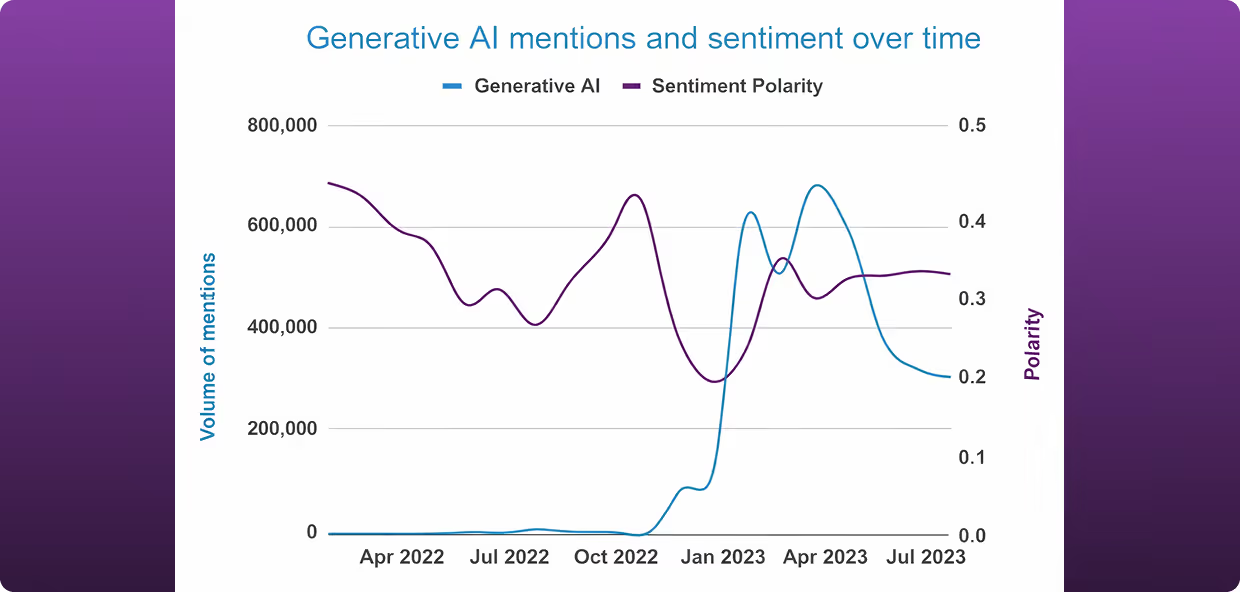
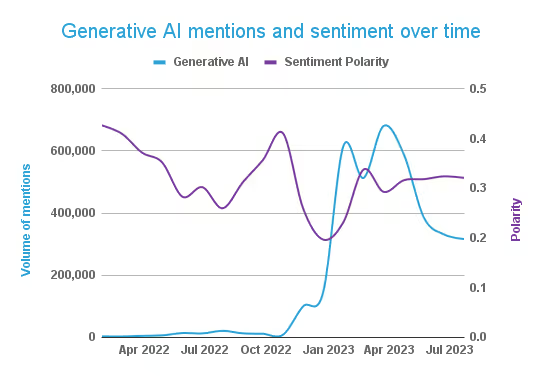
Generative AI was initially met with widespread enthusiasm as the next evolutionary step in artificial intelligence. OpenAI's ChatGPT garnered significant attention quickly upon its release in 2022, as it amassed 100 million monthly active users in just two months post-launch. However, as its capabilities have become more powerful and universal, many ESG controversies have emerged, impacting the public sentiment towards the technology. A notable drop in sentiment polarity was observed from October to December of ‘22, going from 0.4 to 0.22. The decline in polarity was attributed to some critical topics, notably the environmental toll of its energy consumption and the ethical difficulties posed by its potential to disseminate false information.
* Polarity, a proprietary metric developed by SESAMm, ranging from -1 to 1, represents the aggregate of positive and negative sentiment.
Generative AI and its Implications on ESG
In What Industries Is Generative AI Mentioned More Often?
As expected, the IT industry was initially the most mentioned, along with Generative AI. However, as the technology became more widespread, other sectors have garnered more attention among web publications and social media. In particular, the communication and finance sectors are capturing a substantial share of the attention. In particular, data privacy in finance and communications are the main concerns, and fraud for finance is also being widely discussed on the web.
ESG Controversies Fueled by Generative AI
When we looked at ESG controversies and risks in detail, we found that most of the attention and mentions are related to social risks, particularly Human Rights (right to privacy), labor rights, and customer relations (customer privacy). Governance has also gotten its fair share of ESG controversies, primarily focused on anticompetitive practices (copyright infringement). On the environmental side, controversies are concentrated on water consumption (by Gen AI tools) and climate change, specifically energy consumption. However, the number of mentions and controversies has decreased considerably.
Data Breaches: The Focal Point
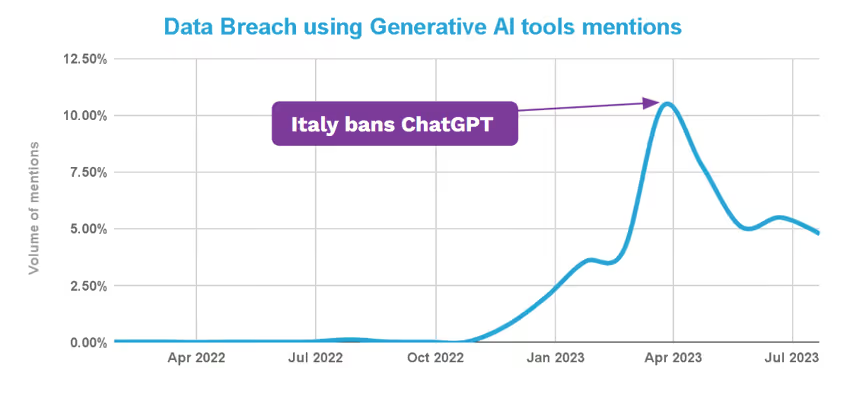
By far, the lion's share of ESG controversies and mentions gravitate towards social risks, specifically data breaches. From Italy banning Chat GPT in April to Samsung’s alleged data leak in August, controversies around data privacy have been among the most concerning topics surrounding Chat GPT ESG risks. In just five months, mentions of data breaches went from virtually 0% to over 10% of total mentions.
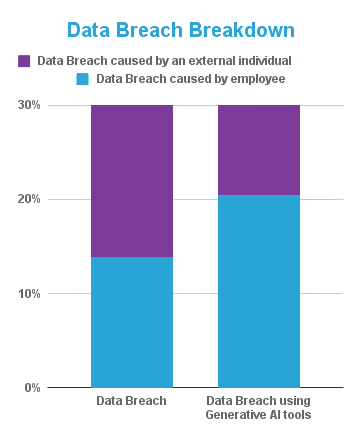
Digging deeper into data breaches at companies, we found that the number of breaches did increase significantly after generative AI tools became available. In particular, we see that the number of internal (employees) vs. external (non-company affiliated) data breaches increased by almost 50% when using generative AI tools from 14% to 21%.
The Silver Lining: ESG Initiatives Generated by Generative AI
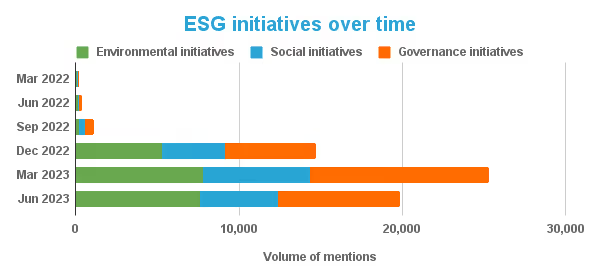
Despite all the risks and controversies emerging, generative AI is also an enabler of positive ESG initiatives. Interestingly, on the positive impact side, we see a similar volume of mentions of initiatives on the three ESG dimensions.
Generative AI has shown promise in optimizing energy use, reducing waste, and even modeling and mitigating the impacts of climate change. On the environmental side, we see a rapid increase in mentions related to its applications in efficiency and productivity, asset reliability, operational safety, lower energy consumption, and reduced environmental impact.
The technology also has the potential to revolutionize healthcare by enabling more accurate and early diagnosis, thereby contributing to social well-being. Generative AI could also transform web surfing and make it easier for users to navigate the internet and find or generate information.
Conclusion
As our analysis shows, generative AI is bringing unprecedented capabilities and complex ESG risks and controversies. We expect to see it evolving, with public sentiment shifting and industries grappling with its ESG implications. But we are still in the very early stages of this new trend and will continue monitoring its evolution.
SESAMm’s AI Technology Reveals ESG Insights
Discover unparalleled insights into ESG controversies, risks, and opportunities across industries. Learn more about how SESAMm can help you analyze millions of private and public companies using AI-powered text analysis tools.

SESAMm’s AI-generated ESG Assessment Reports deliver fast, sharp insights into the ESG performance, risks, and controversies of leading global companies in under 30 minutes. Designed for investors, risk teams, and sustainability leaders, they surface the issues that matter most for due diligence and portfolio oversight. In this edition, we dive into LVMH, one of the world’s largest luxury groups, to see how its sustainability ambitions stack up against the challenges it faces. Explore the summary below or fill out the form to receive your own free AI-generated report.
ESG AI Screening Report Summary: LVMH
LVMH Louis Vuitton Moët Hennessy SE (LVMH) is a leading French multinational conglomerate in the luxury goods sector, with a diverse portfolio of 75 brands across fashion, wines, spirits, cosmetics, and more. Despite its strong market position, LVMH faces significant ESG challenges. A major red flag is the €8 million fine by the French Autorité des Marchés Financiers for failing to disclose its acquisition of a stake in Hermès, highlighting governance and transparency issues. The company has been criticized for environmental impacts, including deforestation linked to its leather supply chain and allegations of greenwashing. Social risks are also prominent, with labor exploitation cases in its supply chain and allegations of workplace harassment.
However, the luxury goods industry inherently faces severe ESG risks due to high scrutiny and frequent controversies, such as cultural appropriation and labor issues. LVMH's ESG reporting is comprehensive, with detailed disclosures on environmental and social initiatives, but the presence of significant controversies suggests a need for improved governance and transparency.
SESAMm, a leading provider of AI-powered ESG and reputational risk insights, is pleased to announce that Paine Schwartz Partners, the largest private equity firm dedicated to sustainable food chain investing, has selected SESAMm’s platform to enhance its ESG due diligence and portfolio monitoring processes.
Paine Schwartz Partners manages over $6 billion in assets and invests globally across the food and agribusiness value chain, pursuing predominantly buyout investments, with a smaller allocation to growth companies. With a strong, long-standing commitment to sustainable investing in the food chain, Paine Schwartz integrates environmental, social, and governance (ESG) considerations at every stage of its investment process, from initial screening to active portfolio management.
As part of its investment process, Paine Schwartz Partners will leverage SESAMm’s platform to enhance its ESG risk screening, due diligence, and supplier and portfolio monitoring.
SESAMm’s platform provides real-time visibility into ESG and reputational risks across millions of public and private companies worldwide. The platform leverages multilingual large language models to analyze content from over 4 million sources in 100+ languages, enabling rapid first-gate screening, continuous monitoring of portfolio companies and their supply chains, and early detection of potential red flags, all while providing fully auditable data.
Among the platform’s capabilities, Paine Schwartz Partners will make use of SESAMm’s AI Reports, a suite of AI-generated reports covering ESG Assessment, Legal, and Governance Screening, available directly within the platform. These reports make it possible to rapidly screen companies for ESG and reputational risks even where direct access to company data is limited, for example, when evaluating whether to pursue a smaller or minority investment, or before launching a full due diligence process. The reports will also help the firm efficiently screen key suppliers across its portfolio, a particularly valuable capability given the firm’s focus on the food and agribusiness value chain.
About Paine Schwartz Partners
Paine Schwartz Partners is the largest private equity firm dedicated to sustainable food chain investing, with ~$6.5 billion of AUM and over 20 years of experience. The firm invests across specific segments of the food and agribusiness value chain, with a focus on two core investment themes: productivity and sustainability and health and wellness. Through its proactive, thesis-driven approach, the firm targets value-added and differentiated companies and makes primarily control buyout investments, with a smaller allocation to growth companies. Learn more at www.paineschwartz.com.
About SESAMm
SESAMm is a global leader in controversy data, leveraging advanced large language models and generative AI to uncover ESG, reputational, and supplier risks in seconds. Our AI-powered platform surfaces real-time insights, even in low-disclosure markets, on millions of companies and infrastructure projects, supporting more informed decisions, enhanced due diligence, and regulatory alignment at scale. We work with leading firms, including Carlyle, Warburg, Natixis, RBI, Sustainable Fitch, Oddo, and others. SESAMm has raised $50M from renowned investors and operates across four continents. Learn more at sesamm.com
Globally, ethics and sustainability are important, but the retail industry faces intense scrutiny over supply chain integrity. This spotlight shines on SHEIN and TEMU, two giants in the fast fashion and e-commerce sectors, known for their vast reach yet marred by controversies around labor practices and environmental impacts. This article explores their supply chain strategies, examining how current and emerging legislation, like the CSDDD initiative, aims to tackle the ethical dilemmas plaguing global retail. Through a comparison of SHEIN and TEMU, we assess the effectiveness of regulatory frameworks in addressing these critical issues. By analyzing their ESG controversies and comparing their responses, we assess how well current and future legislation, particularly the CSDDD initiative, addresses ethical issues in global supply chains.
Specialized Retail: The Case of SHEIN and TEMU
SHEIN and TEMU are compelling use cases due to their past controversies and the focus on their supply chain practices. Both companies have come under scrutiny for their labor practices, environmental impacts, and ethical issues, making them ideal subjects for analysis. By studying their supply chain challenges, we aim to assess the effectiveness of current legislation and predict the potential impact of future regulatory frameworks, particularly in the context of the CSDDD initiative.
While both companies operate with a similar business model, SHEIN is an established player entangled in numerous supply chain controversies. On the other hand, TEMU, a newcomer since 2022, faces similar issues. Comparing them helps us evaluate the effectiveness of existing supply chain legislation and determine whether increased regulatory scrutiny has improved compliance or merely raised awareness of these controversies within the industry.
Note:
Size bias mitigation:
We normalized the data for both companies to ensure an equal basis of comparison, accommodating the difference in operational history—SHEIN since 2008 and TEMU since 2022— to eliminate discrepancies in web attention.
Risk analysis:
It’s worth noting that the figures presented here specifically relate to supply chain risks, as that is the primary focus of our analysis.
Examining Supply Chain Controversies
We analyzed ESG risks in the supply chains of SHEIN and TEMU over the past four years, adjusting data volumes for comparative analysis. SHEIN's supply chain risks have significantly increased since 2021, peaking in 2022 and continuing to rise in 2023, reflecting a growing online focus on its issues. Meanwhile, TEMU, despite only being established in 2022, has quickly come under intense scrutiny. The company faces frequent criticism for its supply chain practices, including condemnations for inaction and ongoing human rights violations.
Examining Social Sub-risks
In our analysis of social risks within the supply chains of TEMU and SHEIN, we discovered that fundamental human rights and labor rights are the most and second most prevalent issues, respectively. Notably, despite TEMU's more recent establishment compared to SHEIN, its supply chain has a relatively higher proportion of human rights controversies.
Both companies have faced serious allegations related to their supply chain practices. TEMU and SHEIN are scrutinized for using Chinese cotton potentially linked to slave labor, with insufficient efforts to mitigate forced labor risks. Allegations include child slavery, privacy issues related to sharing user data, and environmental neglect, including the use of carcinogens in products. Despite their efforts to boost their public image through aggressive marketing and influencer engagements, both companies have been criticized for their approach to environmental responsibility and labor practices.
Political calls for investigations into the use of Uyghur slave labor in both companies underscore their ethical challenges. Neither company has shown rigorous compliance with anti-forced labor laws, lacking stringent programs to audit supplier compliance. This highlights significant gaps in their corporate responsibility efforts.
It's evident that social risks, particularly human rights breaches and labor rights controversies, have received significantly more attention than environmental risks. Despite the severity of environmental events, they represent a lower percentage in comparison. This highlights the prioritization of addressing social issues within these companies' operations.
SHEIN experiences extensive scrutiny, leading to a wealth of data on its practices. Conversely, TEMU, despite facing environmental controversies, has been less transparent about its environmental footprint, with Greenpeace reports highlighting this lack of clarity. This disparity underscores that SHEIN’s environmental impacts are more thoroughly documented than TEMU’s.
These environmental and health issues gained attention during SHEIN’s attempts to launch IPOs in the US and UK, spotlighting the company's ethical and environmental practices. Despite SHEIN's pledges to donate towards solving textile waste problems, critics label these actions as greenwashing, calling for significant alterations to its business model to address the underlying issues effectively.
Supply Chain Dynamics: SHEIN vs TEMU
While TEMU doesn't have its own brand like SHEIN, it operates under a comparable business model. It acts as an intermediary, managing shipments for products it doesn't manufacture. Despite their distinct approaches, both companies frequently engage in disputes, drawing attention to their supply chains. Additionally, policymakers often group them with similar firms, subjecting their fast fashion practices to heightened scrutiny.
These events highlight the growing scrutiny surrounding the supply chain practices of both SHEIN and TEMU. Senator Rubio's call for an investigation into allegations of Uyghur slave labor usage by both companies, additionally, mentions of Congressional attention has also focused on these companies, with reports exposing violations of U.S. tariff laws and evasion of human rights reviews on imports, shedding light on systemic issues within their operations.
Increasing Sustainability Awareness
We studied the mentions of both ESG initiatives associated with the brands and detected that over the analyzed time frame, SHEIN has been associated with significantly more initiatives than TEMU.
We analyzed the sustainability initiatives of these companies, finding that SHEIN's efforts outpace TEMU's significantly.
SHEIN focused on circular economy practices, exemplified by partnerships like that with Queen of Raw to reuse excess industry inventory and launches such as EvoluSHEIN and SHEIN Exchange, also boosting Product safety mentions, which promote recycled materials and resale of used products, respectively.
Throughout our analysis period, we noted that 2022 was a turning point for SHEIN's sustainability efforts, sparked by several mentions of breaches related to the Modern Slavery Act and child labor allegations in the previous year, which subsequently increased the company’s sustainability-related mentions. By 2023, as SHEIN prepared for potential IPOs in the US and UK and with the release of a controversial documentary, the company faced heightened scrutiny, with more allegations surfacing in its supply chain concerning various acts and legislations, such as the Modern Slavery Act, Uyghur Forced Labor Prevention Act, and others. Despite these challenges, mentions of SHEIN’s ESG initiatives also rose, although they remained less prominent than risk-related mentions due to controversies typically gaining more attention online. However, from 2024 to the present, we have observed more initiatives than risks, suggesting that, despite some acts and legislations being non-binding or not directly applicable to SHEIN, the potential reputational impacts drive the company toward positive change.
It's worth noting that we've observed discussions linking SHEIN with the recent EU Corporate Sustainability Due Diligence Directive, also referred to as CSDDD or CS3D. These discussions underscore the view that governments should refrain from incentivizing fast fashion companies like SHEIN. As the CSDDD is expected to bring about significant changes, forcing businesses to identify, prevent, or mitigate adverse impacts of their operations on human rights and the environment. Notably broader in scope compared to previous legislation, this directive will apply to all EU companies surpassing a certain revenue threshold. Consequently, fast-fashion retailers like SHEIN will face increased requirements to take action and ensure compliance.
The absence of enforceable regulations allows companies like TEMU to continue operating, but SHEIN's actions, particularly as it moves towards an IPO, raise questions about whether its efforts to improve practices are driven by the scrutiny associated with preparing for a public offering or by a sincere commitment to compliance with laws and regulations.
To conclude, our analysis underscores the dynamic landscape of supply chain regulations, ESG risks, and sustainability initiatives within the specialized retail sector, particularly in the fast-fashion industry. A focus on SHEIN and TEMU reveals a rise in both ESG initiatives and identified breaches. SHEIN's proactive initiatives suggest a response to regulatory pressures. Additionally, our findings suggest that even without binding legal requirements, companies may still choose to comply to enhance their reputation or respond to heightened scrutiny.
Reach out to SESAMm
TextReveal’s web data analysis of over five million public and private companies is essential for keeping tabs on ESG investment risks. To learn more about how you can analyze web data or to request a demo, reach out to one of our representatives.
Stay ahead with the latest in ESG and AI intelligence
Join our mailing list to receive new reports, event invites, and updates from SESAMm directly to your inbox.