
-converti-depuis-png.avif)

Executive Summary
The physical infrastructure powering the AI boom (the data centers that house it, and the hardware that runs it) has become one of the most ESG-exposed sectors in the global economy. As demand for computing accelerates, so does the scrutiny on the companies enabling it.
This scorecard examines three major players across the AI infrastructure stack: Equinix and Digital Realty, two of the world's largest data center operators, and Supermicro, a leading manufacturer of high-performance AI server hardware. Despite their different roles, all three are navigating the same storm: a convergence of governance failures, environmental friction, and national security risk that is reshaping how investors, regulators, and communities assess the sector.
Our analysis reveals three defining pressure points: governance failures spanning accounting manipulation, board instability, and fraud; environmental and social friction from community opposition, resource strain, and safety violations; and national security exposure through data breaches, export control violations, and supply chain risk.
Together, these risks represent a fundamental shift for the sector. ESG in AI infrastructure is no longer about carbon reporting - it is about fiduciary integrity, operational transparency, and the social license to keep building.
Supermicro: Fraud, Malware & Supply Chain Violations
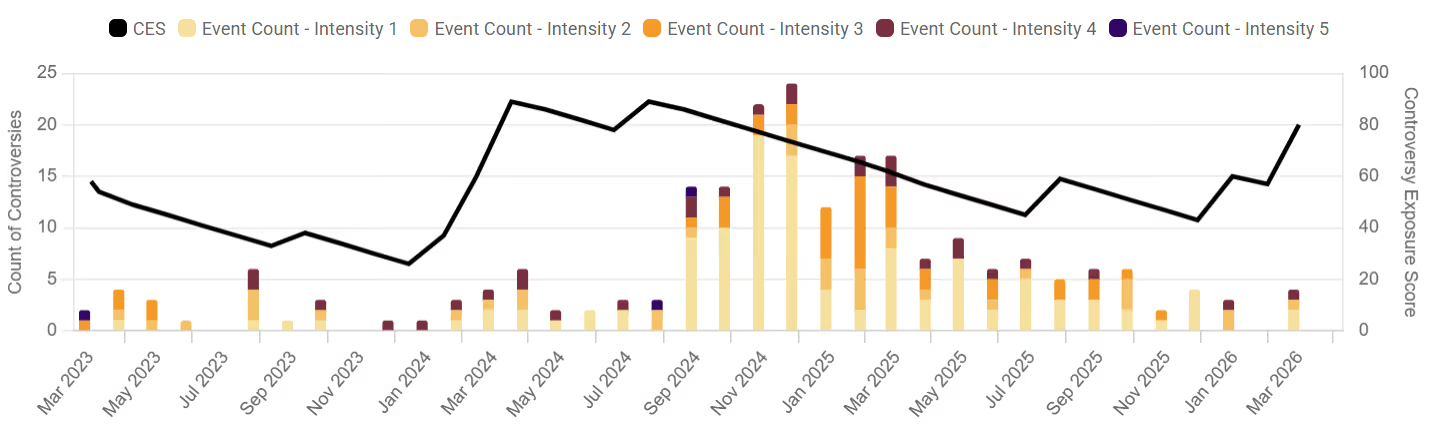
With a controversy exposure score (CES) of 80/100, Supermicro’s ESG profile is dominated by extreme governance risks centered on systemic accounting failures and geopolitical compliance breaches. The company is currently battling a U.S. Justice Department probe, Nasdaq delisting threats, and a series of securities fraud lawsuits following a 2024 accounting scandal that forced the search for a new CFO and echoed a prior $17.5 million SEC fine from 2020.
Beyond financial integrity, the firm faces severe national security scrutiny over the alleged smuggling of restricted Nvidia AI chips to China, alongside 2025 investigations into "spy chips," unremovable motherboard malware, and multiple patent infringement claims from competitors like AMD and Lenovo. Socially, the company’s risk is compounded by a 2025 whistleblower retaliation suit and labor rights violations involving Filipino workers at its semiconductor supply chain partners, as well as multiple OSHA safety penalties for workplace hazards.
- Supermicro Pays $17.5M SEC Fine Over Alleged Accounting Violations
- Super Micro and Dell suspected of exporting Nvidia chips to China
- Super Micro Whistleblower Advances Suit Over Retaliation
- Taiwan: Filipino workers at semiconductor factories allege rights violations
- Supermicro server motherboards can be infected with unremovable malware
Equinix: Accounting Manipulation & the AI Infrastructure Backlash
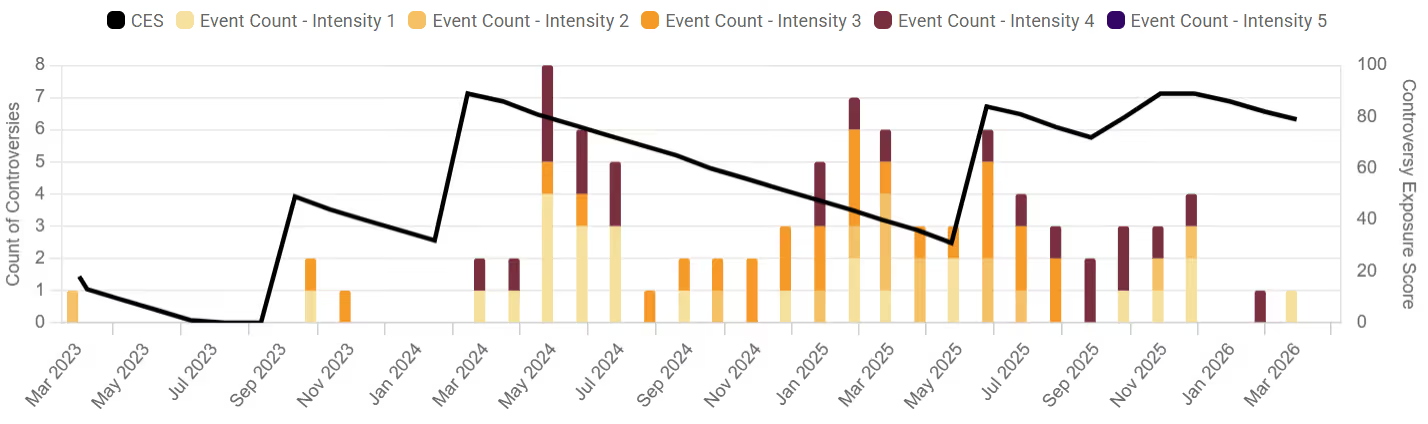
Similarly, Equinix’s CES of 79/100 is defined by a volatile combination of intensifying community opposition, environmental resource strain, and severe governance scrutiny. Socially and environmentally, the company faces a "Global AI Arms Race" backlash, where massive 340-acre proposals on local farmland in Minooka and "green belt" developments in South Mimms have sparked significant resident opposition over air pollution and traffic, while regulators in Dublin have begun blocking gas-powered facilities that violate national climate targets. These operational hurdles are compounded by a lack of transparency regarding massive water consumption and a series of high-profile safety and security failures, including data center fires in São Paulo and Madrid and a recurring "cybersecurity blind spot" in building systems. On the governance front, Equinix is navigating a severe trust deficit following a $41.5 million settlement over allegations of "major accounting manipulations" and the systematic over-selling of power capacity.
- South Mimms data centre team address environmental concerns
- The Small English Town Swept Up in the Global AI Arms Race
- Equinix loses appeal to get permission for gas-powered data center in Dublin
- Equinix (EQIX) Faces Class Action, DOJ and SEC Investigations After Hindenburg Accuses EQIX of Manipulating Accounting
- Equinix Sued By Data Center Tenant, Accused Of Stealing Intellectual Property”
Digital Realty: Board Instability, Gas Leaks & Cybersecurity Breaches
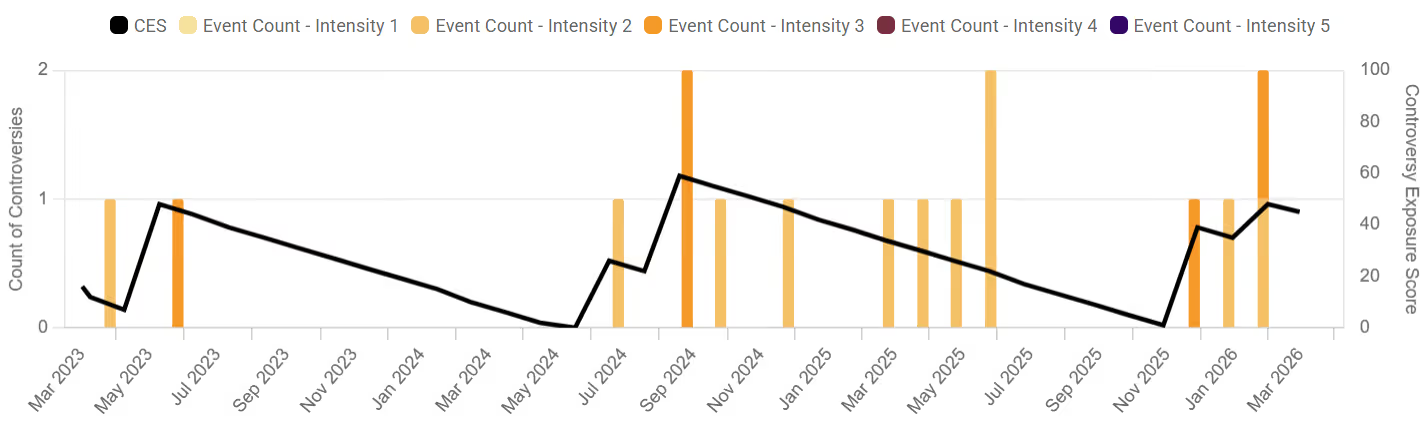
Although it has a lower CES of 48/100, Digital Realty’s ESG profile is defined by governance instability and intensifying environmental friction in key urban hubs. The abrupt 2022 termination of its CEO and the 2023 resignation of its Chairman, who alleged bias against female directors, highlight deep-seated board-level conflicts, further exacerbated by 2026 investigations into director bias and a $3.4 million loss of tax breaks in Hillsboro.
Environmentally, the company faces formal legal notices in Marseille over fluorinated gas leaks and "imminent dangers to health," as well as noise complaints in Chicago and a 2024 fire in Singapore. Socially, the firm is navigating a Biometric Information Privacy Act (BIPA) lawsuit over scanning workers' fingerprints without consent, a major 2025 "Salt Typhoon" hacking breach, and mounting federal scrutiny over the industry's role in driving up local electricity and water costs.
- $3.4 Million Reality Check: Digital Realty Loses Massive Hillsboro Tax Break
- Digital Realty among victims of Salt Typhoon Chinese hacking gang
- Chicago residents complain of noise from Digital Realty data center
- Digital Realty among victims of Salt Typhoon Chinese hacking gang
- NYSE: DLR Investor Alert: Investigation over Possible Wrongdoing at Digital Realty Trust
Conclusion
The ESG challenges facing AI infrastructure operators are no longer peripheral concerns; they have become central to the sector's long-term viability. As the cases of Equinix, Supermicro, and Digital Realty illustrate, the consequences of their unchecked growth range from community backlash and environmental violations to governance failures and national security breaches. The AI infrastructure industry stands at an inflection point: continued expansion without proportional investment in transparency, accountability, and sustainability risks eroding stakeholder trust, inviting heavier regulation, and ultimately undermining the very infrastructure it seeks to build.





.png)