
Thematic Search in Action: Tracking Iran-Linked Exposure Across Thousands of Companies
03/19/2026
•
5 mins read
Geopolitical events can quickly create ripple effects across global trade routes, supply chains, and corporate operations. For investors, commercial banks, insurers, and other organizations, identifying which portfolio companies or counterparties are exposed to these developments is a real challenge, especially when monitoring large universes of public and private companies.
SESAMm's thematic keyword search enables analysts to quickly discover controversies related to specific topics or emerging events across thousands of companies. This functionality allows them to filter results by theme without having to manually review large volumes of news and event data.
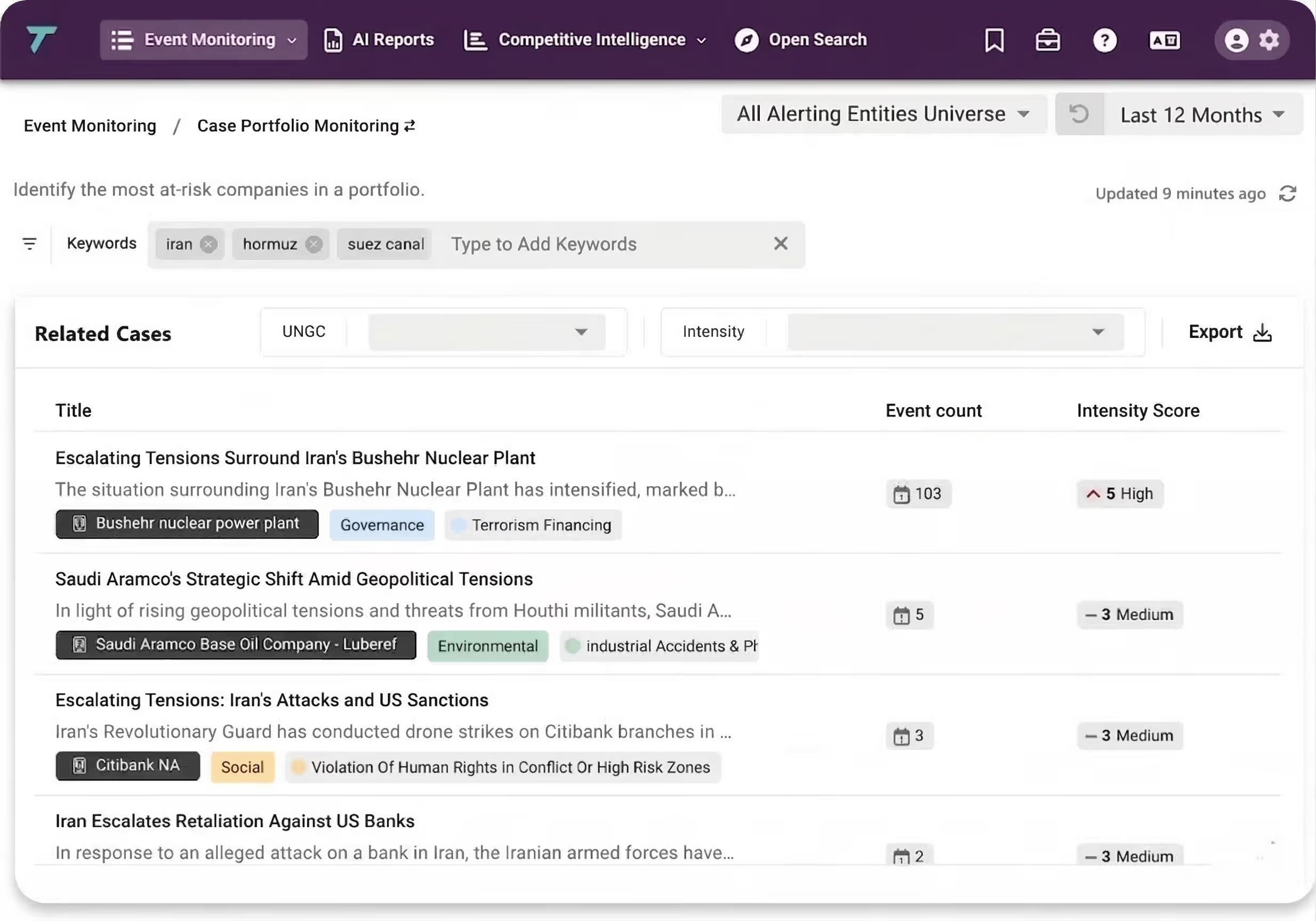
This functionality is particularly valuable when monitoring rapidly evolving geopolitical situations. To assess exposure related to the current conflict involving Iran, for example, users can run a thematic search across a broad company universe using keywords such as: Iran, Hormuz, and Suez Canal.
These keywords capture references to critical geopolitical locations and maritime chokepoints that may affect global shipping routes, energy markets, cybersecurity risks, and broader operational disruptions. Keywords can be tailored to any geopolitical scenario. Users can start broad and refine as the situation develops, or combine location-based terms with event-specific language to narrow results to the most relevant controversies.
When applied across a large company universe, the dashboard surfaces a range of related controversies ranked by severity. From high-intensity cases like escalating tensions around Iran's Bushehr Nuclear Plant, to medium-intensity signals such as retaliatory actions targeting US banks, offering clear visibility into which companies may face the highest risks.
Zooming In on Company-Level Exposure: The Example of Amazon
Alternatively, analysts can also use the same keyword approach to filter controversies associated with a specific company. This helps determine whether a particular portfolio holding, borrower, or insured entity may be affected by the same geopolitical developments.
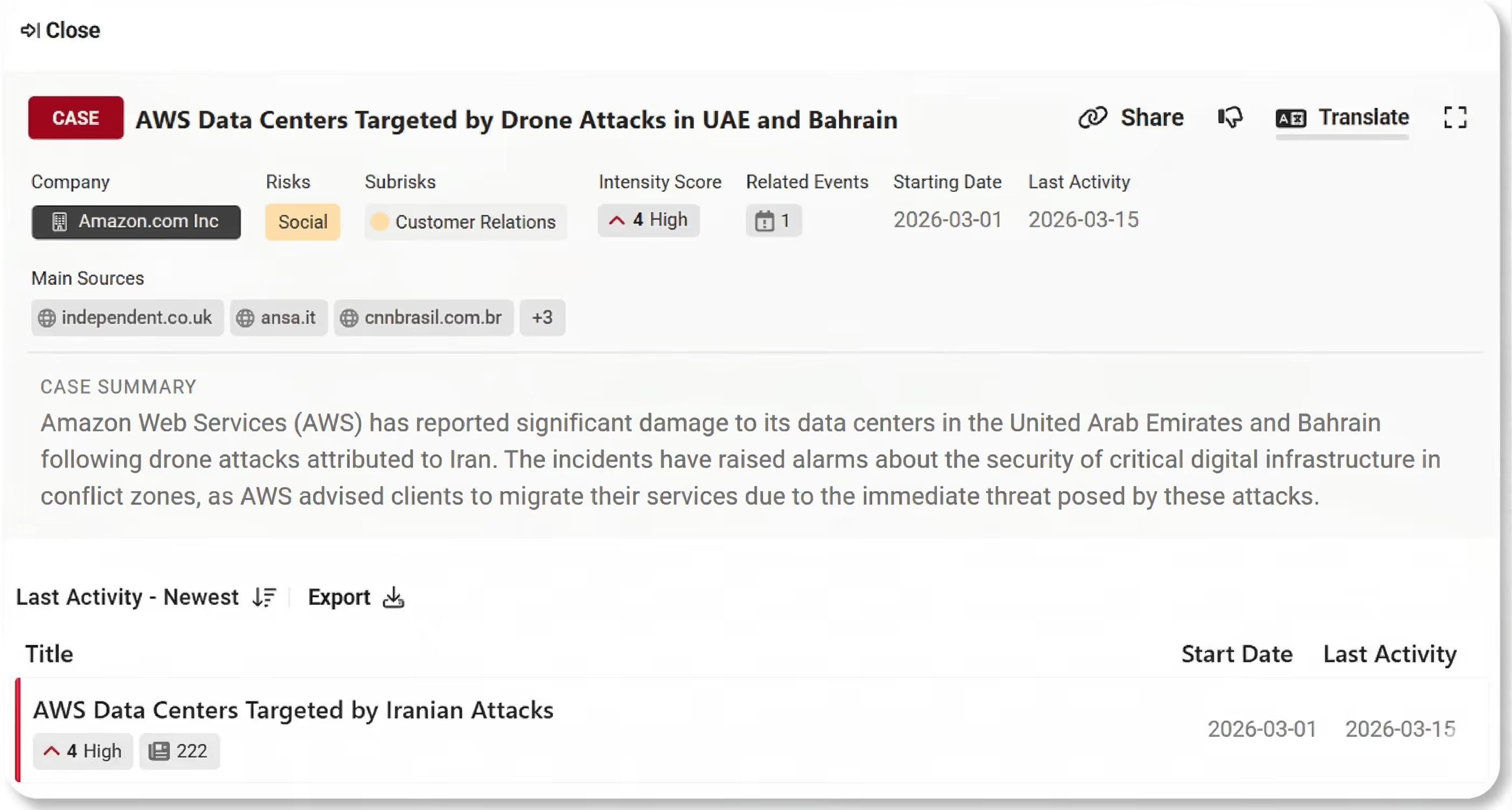
Applying this search to Amazon, for instance, surfaces a high-intensity case titled "AWS Data Centers Targeted by Drone Attacks in UAE and Bahrain." The case, rated 4/5 in severity and drawing on over 200 related news events, describes significant damage to AWS infrastructure in the UAE and Bahrain following attacks attributed to Iran, prompting AWS to advise clients to migrate services.
This kind of signal carries real weight for financial institutions. For investors, it highlights operational and geopolitical risks affecting a major technology provider. For banks and insurers, it may point to infrastructure vulnerabilities, operational disruption risks, or broader geopolitical tensions affecting clients' critical systems.
From Geopolitical Events to Portfolio Risk Signals
Geopolitical events rarely affect just one company. For financial institutions monitoring thousands of entities, they create complex, evolving risk exposures across entire portfolios, lending books, and insurance coverage.
Thematic keyword searches help bridge this gap, connecting macro-level developments to company-level controversies quickly and systematically. By combining automated controversy detection with flexible search capabilities, analysts can rapidly identify relevant signals, investigate affected companies, and prioritize follow-up work.
In practice, this means moving faster from emerging geopolitical events to actionable risk insights. Whether the trigger is a conflict in the Middle East, sanctions on a major economy, or rising tensions around a critical shipping lane, the same approach applies, giving investors, banks, and insurers a systematic way to stay ahead of geopolitical risk across their entire portfolio.

Private markets are changing fast. From new ESG regulations to advances in AI, the forces shaping investment decisions are multiplying.
Join Clarity AI and SESAMm as we explore the biggest shifts redefining private-market investing in 2026 and how data and technology are transforming due diligence, risk management, and deal flow.
Watch this replay to explore:
What shaped private markets in 2025 - and what’s ahead in 2026
How AI is transforming due diligence, risk monitoring, and value creation
What these changes mean for deal-flow, risk, and competitive advantage
In private equity, as in most industries, decision-making counts on accessing accurate and valuable information. However, these firms often encounter significant challenges when sourcing reliable data, especially when dealing with small, private companies. This article dives into the complexities of identifying high-quality information on smaller companies and underscores its value in investment decisions, operational efficiency, and risk management. It also explores how advanced artificial intelligence (AI) technologies are revolutionizing the identification of these risks, leading to higher rewards and more secure investments, thus providing a competitive edge.
The challenge of identifying valuable information for Smaller Firms
Lack of valuable data
Sturgeon's Law, which states that "Ninety percent of everything is crap (or noise)," becomes particularly relevant in the context of data sourcing. For private equity and investment firms focused on small companies, finding the golden nuggets of information amid the overwhelming amount of digital noise can be daunting. The data available on these companies is often sparse, fragmented, and difficult to uncover using conventional methods. This scarcity of reliable information makes it challenging for private equity firms to make informed decisions, heightening the risk of overlooking critical issues that could impact their investment process.
The difficulties extend beyond just locating information. Many small companies operate without a significant online presence or may not be required to disclose as much information as publicly traded firms. This lack of transparency can further blur critical data points. Furthermore, the data that is available is often unstructured, residing in various forms such as social media posts, obscure local news articles, or industry-specific reports. Extracting meaningful insights from these disparate sources requires sophisticated data processing capabilities, which traditional methods often lack. As a result, private equity firms are left with a significant challenge: how to separate valuable data from the noise without missing critical risk indicators, thereby optimizing their deal sourcing and investment strategies.
Diverse language and terminology
Smaller firms frequently face existential risks, and the potential rewards for identifying these risks early on can be significant for the private equity firms that invest in them. However, mainstream methods of risk identification often fall short, as these companies may not use standardized language to describe materiality. Instead, risks are discussed in varied and context-specific ways, complicating the task of recognizing relevant information. Therefore, it is essential to adopt a specialized approach that analyzes and decodes these firms' unique terminologies and business idiosyncrasies, ultimately translating them into a standardized language that can be effectively used in risk assessment.
The diversity in language is not just a barrier to risk identification but also to the communication of these risks within and between private equity firms. When a small firm uses industry-specific jargon or localized expressions to describe potential threats, it can lead to misunderstandings or underestimations of the actual risk. For instance, a manufacturing startup in a developing country might describe supply chain disruptions in terms that do not translate easily to a global investor’s risk framework. Additionally, cultural differences in how risk is perceived and reported can lead to further complications. This linguistic diversity necessitates the use of advanced natural language processing tools that can interpret data through a common lens while considering industry-specific contexts. For an insurance company, understanding financial models, insurance principles, and regulatory frameworks is crucial. Conversely, assessing risks for a beauty company requires a focus on product safety, consumer preferences, and market trends. By appreciating the specific contexts of each industry, private equity firms can better identify and evaluate potential risks, enhancing decision-making processes, risk and portfolio management strategies, and operational efficiency.
The dynamic nature of the industries themselves further complicates the challenge. For example, the tech industry evolves rapidly, with new risks emerging as technologies develop and consumer expectations shift. What might be considered a negligible risk today could become a significant issue tomorrow as regulatory landscapes, market conditions, and technological advancements alter the playing field. In contrast, industries like agriculture or real estate might have more stable risk profiles but are subject to sudden changes due to environmental factors or policy shifts. This variability across industries means that a one-size-fits-all approach to risk assessment is inadequate. Private equity firms must adopt flexible, industry-specific risk models that can adapt to the unique characteristics and evolving landscapes of the sectors they invest in, thus optimizing their AI capabilities.
The Power of AI in Enhancing Risk Management in Small Firms
AI technologies, particularly natural language processing (NLP) and machine learning algorithms, are important tools for private equity firms aiming to monitor and manage risks in small firms. These technologies can sift through vast amounts of data, extracting the valuable 10% and identifying patterns, trends, and subtle nuances in the language used to describe risks. By detecting these patterns, AI can reveal potential risks that might not be immediately apparent through traditional methods. This proactive approach to risk identification allows firms to address issues before they escalate, providing a more comprehensive and nuanced understanding of the risks facing small firms.
AI's ability to process unstructured data is particularly valuable in this context. Many of the risks that small firms face are discussed informally in places like social media, niche blogs, or local news outlets. Traditional risk management tools might overlook these sources, but AI-powered tools can analyze them in real-time, detecting emerging threats as they develop. Moreover, AI can cross-reference these insights with structured data from financial reports, regulatory filings, and other formal documents to create a holistic risk profile. This multidimensional analysis helps private equity firms not only identify risks but also understand their potential impact, enabling more informed, data-driven decision-making that enhances operational efficiency and competitive edge.
Beyond risk identification, AI also enhances risk mitigation strategies. By continuously monitoring data and learning from new information, AI systems can adapt to changing conditions, offering updated risk assessments that reflect the latest developments. This dynamic approach allows private equity firms to stay ahead of potential issues, making it possible to implement preventative measures rather than reacting to crises after they occur. In this way, AI capabilities contribute significantly to the optimization of risk management processes.
How SESAMm’s Advanced Technology Enhances Risk Assessment
SESAMm’s TextReveal® is at the forefront of this technological revolution, enabling private equity firms to efficiently navigate the vast digital landscape and extract the crucial information needed for informed decision-making. Through our proprietary data lake amounting to over 25 billion online articles with 15 years of historical data and our AI algorithms, TextReveal® can quickly identify and retrieve valuable insights, even when the information is deeply buried or highly specific. The tool's ability to analyze and understand the diverse language and terminology used in discussions about risks on the web empowers private equity firms to objectively assess the materiality of certain risks or identify emerging threats that have yet to be formally recognized.
TextReveal® goes beyond merely identifying risks—it categorizes them, providing context that helps private equity firms understand the severity and relevance of each risk. For example, if a small biotech firm is mentioned in discussions about regulatory hurdles, TextReveal® can determine whether these mentions are isolated incidents or part of a broader trend. It can also assess whether the language used suggests an imminent threat or a longer-term concern, enabling firms to prioritize their responses accordingly. Additionally, TextReveal® integrates sentiment analysis, which can gauge the overall tone of discussions surrounding a company, offering further actionable insights into potential reputational risks.
SESAMm has developed a proprietary metric – the Intensity Score, which calculates an event's relevance based on its news coverage and sentiment. It uses negative sentiment, article dispersion, and empirical ESG risk measures to determine how likely an article is to represent a high-risk controversy. The Intensity Score gives TextReveal users a clear understanding of which events require their attention.
Users can also opt to receive email alerts for the more severe controversies, ensuring they’re always aware of significant risks. In addition to the severity, controversies are also categorized by risk and sub–risk type, making it easy to analyze specific areas of concern.
Moreover, SESAMm's platform is designed to be intuitive and user-friendly, making it accessible to investment professionals who may not have a technical background. This ease of use ensures private equity firms can quickly incorporate AI-driven insights into their risk management processes without a steep learning curve. By streamlining the data analysis process, TextReveal® allows firms to focus on strategic decision-making, confident they have a comprehensive understanding of the risks and opportunities associated with their investments and portfolio companies. This level of operational efficiency and optimization is key to maintaining a competitive edge in the fast-paced world of private equity.
TextReveal’s Risk Assessment module enables deep company and thematic research in multiple languages through on-the-fly keyword searches. Users have full access to articles, sentiment analysis, and trending topics to get a complete understanding of the risks. We’ve even developed an AI Text Summary feature that provides a quick summary of a selected article, saving time and enabling a faster analysis.
In summary, the integration of AI tools and natural language processing technologies is transforming risk management in private equity, particularly for firms dealing with small, private companies. By leveraging these advanced tools, private equity firms can enhance their due diligence processes, better monitor risks and controversies, and ultimately make more informed investment decisions that lead to higher rewards and operational efficiency.
Reach out to SESAMm
TextReveal's web data analysis of over five million public and private companies is essential for keeping tabs on ESG investment risks. To learn more about how you can analyze web data or request a demo, contact one of our representatives.
Paris, France – November 12, 2025 – SESAMm, a leader in AI-powered text analysis for financial services, proudly announces its inclusion in the ESGFinTech100 list by FinTech Global for the third consecutive year. This recognition highlights SESAMm's commitment to sustainability and ESG through the application of advanced AI technologies.
FinTech Global's annual ESGFinTech100 list, now in its fourth year, showcases the top 100 ESG companies that are revolutionizing the financial services industry. The list is carefully curated by a panel of industry experts who evaluate over 500 ESG tech companies worldwide. This year’s criteria focused on innovative technology solutions addressing a significant industry challenge, as well as their contributions to ESG imperatives and sustainability improvements for clients.
"We’re proud to be recognized again among the ESGFinTech100, alongside innovators redefining the role of technology in sustainable finance. At SESAMm, we believe the future of ESG lies in intelligence that’s both real-time and actionable. Our mission is to make external data speak — transforming how investors, corporations, and financial institutions understand risk and opportunity.” Said Sylvain Forté, SESAMm’s CEO. “Looking ahead, we’re building on this foundation with SESAMm’s own AI-powered agents, automating entire workflows from risk detection to report generation. These systems make ESG intelligence seamless, embedded, and action-ready."
The inclusion of SESAMm in this year's ESGFinTech100 underscores the rising significance of ESG factors in the financial sector. As institutions increasingly focus on sustainability, SESAMm leverages AI to enhance operational efficiencies while supporting ESG initiatives.
About SESAMm
SESAMm is a global leader in controversy data, leveraging advanced large language models and generative AI to uncover ESG, reputational, and supplier risks in seconds. Our AI-powered platform surfaces real-time insights, even in low-disclosure markets, on millions of companies and infrastructure projects, supporting more informed decisions, enhanced due diligence, and regulatory alignment at scale. We work with leading firms, including Carlyle, Warburg, Natixis, RBI, Sustainable Fitch, Oddo, and others. SESAMm has raised $50M from renowned investors and operates across four continents. Learn more at www.sesamm.com
SESAMm’s AI Technology Reveals ESG Insights
Discover unparalleled insights into ESG controversies, risks, and opportunities across industries. Learn more about how SESAMm can help you analyze millions of private and public companies using AI-powered text analysis tools.
Stay ahead with the latest in ESG and AI intelligence
Join our mailing list to receive new reports, event invites, and updates from SESAMm directly to your inbox.