SESAMm recently announced its successful Series B2 fundraising round. The news was covered by VentureBeat, a technology news and analysis website that covers a wide range of topics related to the business and culture of innovation.
Sentiment analysis, ESG insights from over 5 million companies
The SESAMm technology has found use by data and business teams including ESG (environmental, social and governance) specialists, procurement teams and deal teams. The company provides a range of use cases, including ESG controversy detection; detection of positive-impact events; competitive intelligence; and quantitative investment, with NLP signals generated on equities and macroeconomic factors.
Forté, CEO and cofounder of SESAMm, said: “Raising a significant amount during challenging market conditions highlights the relevance of SESAMm’s focus on two key trends: AI and sustainability. In turn, these tools enable organizations to make better decisions and fill the data gaps, particularly in ESG, in both public and private companies.”
Traditional ESG scores have come under scrutiny because of their lag in updates, issues with methodology and lack of transparency. SESAMm aims to solve these problems by providing up-to-date and unbiased information on companies. Its extensive coverage of more than five million private and public companies includes small and mid-cap firms in Europe and emerging markets, and private companies worldwide.
The company’s off-the-shelf ESG and reputational risk metrics provide investors and corporations with data where there are data gaps. Furthermore, SESAMm helps companies detect and protect against new risks in an increasingly complex macro environment through AI-powered real-time monitoring of inflation mentions across all geographies on the web.
NLP for private equity, finance and more
SESAMm counts as customers seven of the top 10 private equity firms worldwide, as well as other corporations of various sizes. The company’s plans focus on developing new products, with an emphasis on sustainability frameworks, taxonomies, and standardized reputational scores.
“SESAMm wants to become the premier NLP platform for financial firms and corporations looking to enhance their decision-making process by leveraging insights from the web. Our ultimate goal is to be an enabler for companies looking to maximize returns and mitigate risks,” Forté told VentureBeat. “We aim to make web data a real source of business insights using advanced technology. With such a keen focus on sustainability, we can only fulfill our goal of helping firms of all types to achieve their goals if SESAMm itself is truly a sustainable, profitable and responsible company.”
Other participating companies in SESAMm funding include asset manager Unigestion, Raiffeisen Bank International’s (RBI) venture capital entity Elevator Ventures, AFG Partners, CEGEE Capital, and historical backers including Carlyle (CG) and New Alpha Asset Management. Each participated in the previous series B1 round.
This latest round brings the total funding raised to €50 million ($53 million). This funding will enable SESAMm to further expand into U.S. and Asian markets; support development of AI-powered ESG and sentiment analytics; and hire key talent across sustainability, technology, sales and marketing.
CEO Sylvain Forté demonstrates TextReveal’s® latest features applied to supply chain and risk analysis on the main stage of FinovateEurope 2023 in London. He also presents a quick use case on the latest Silicon Valley Bank fallout.
Discover how TextReveal can help automatically analyze millions of companies based on web content at SESAMm.
Over the past years, the for-profit childcare sector in France and the United States has moved from a largely quiet corner of the healthcare and social assistance industry into a subject of sustained public, regulatory, and investor scrutiny. Criminal convictions, government inspectorate findings, parliamentary inquiries, securities litigation, and a wave of investigative journalism ask the same question: Does the ownership and financing model that now dominates the sector come at the direct expense of child safety and care quality?
To help answer that question, we took a look at the controversies surrounding the industry and examined that question through media and ESG-controversy data, tracking mention volume and controversy-tagged coverage across five major operators spanning both French and US Markets, from January 2019 through August 2026:
This article combines whole-market trends with a narrower, controversy-specific signal to distinguish genuine escalation in safety and governance failures from routine growth in industry coverage, studying the case of one of the sector's most heavily implicated operators: People & Baby.
For-profit Childcare Market ESG Controversies
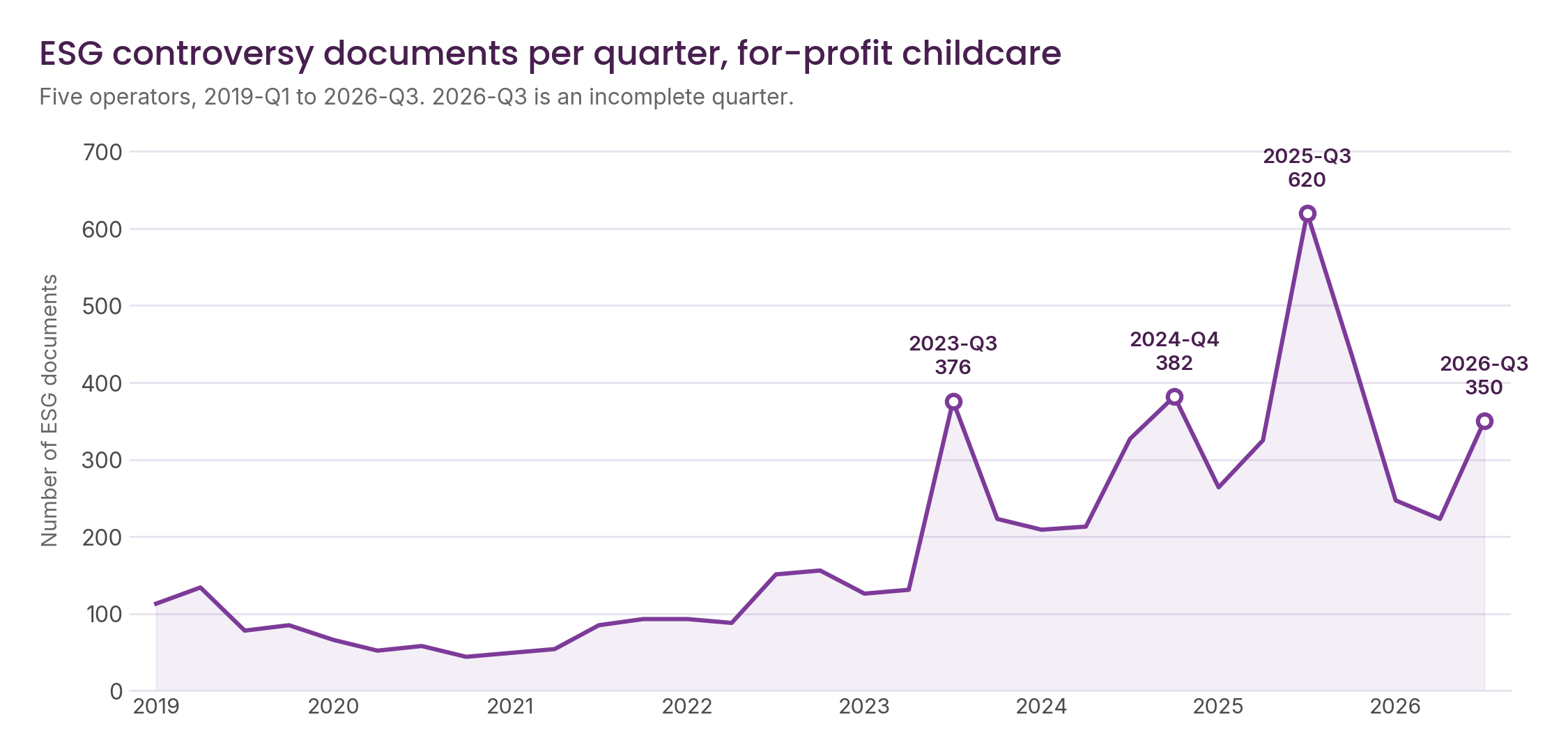
Figure 1 - ESG controversy documents per quarter across the five operators, 2019-Q1 - 2026-Q3. 2026-Q3 is an incomplete quarter.
Mention volume holds flat from 2019 into early 2022, when pandemic closures and suspended inspections suppressed the incidents that generate coverage, though not the underlying risk. The break came in June 2022, when an infant died at a People & Baby crèche in Lyon, France after an employee gave her caustic drain cleaner. A staff member received a 25-year criminal sentence, and the government commissioned a sector-wide review. From 2023 onward, the pattern stops reverting, and each cycle peaks higher than the one before it.
In 2023, a sector-wide IGAS report concluded that the industry showed "institutionalized mistreatment" and called for a "cultural change." Five months later, in September, two investigative books appeared in the same week: Le Prix du Berceau and Babyzness, each documenting understaffing, restricted meals, and abuse. Their reach was sectoral rather than targeted, and the parliamentary hearings and regulatory crackdowns that followed pulled in operators with no incident of their own.
The following year compounded the effect on both sides of the Atlantic. Les Ogres (Victor Castanet, September 18, 2024), a 416-page investigation built over two and a half years on 200 witnesses and internal whistleblowers, centered on People & Baby but alleged complicity from municipalities and senior government officials who looked the other way. It triggered government-wide nursery reviews, and its ripple effect continued to build through the quarter. Within the same period, a Wisconsin television investigation found that an Oak Creek KinderCare location where an 11-month-old had tested positive for cocaine earlier that year had accumulated more than two dozen prior violations, including staff aggression and undocumented injuries. The state suspended the center's license, then revoked it. KinderCare had listed that October.
The largest spike of the period lands in 2025, and it is where two operators' exposure changes character. KinderCare faces a wave of securities fraud lawsuits, consolidated in Gollapalli v. KinderCare, which alleges that SEC registration filings promised "the highest quality care possible" while the Oak Creek violations were accumulating. Once an operator is listed, a safety failure becomes a disclosure failure. In France, an IGAS audit of La Maison Bleue, distinct from the 2023 sector report, documented systemic quality-of-care issues, accounting anomalies, and payroll optimizations designed to maximize public subsidy payments at the expense of staffing ratios. State auditors characterized some findings as potentially criminal, regulators referred the operator to a prosecutor, and the report prompted demands for further audits.
For People & Baby the consequences moved from reputational to structural: the group entered court-supervised accelerated safeguard proceedings, handing majority ownership to creditor fund Alcentra and slating dozens of locations for closure. The sequence runs into 2026 with KinderCare's $33M lawsuit over a child abuse cover-up, prosecutors seeking an investigation into People & Baby, and Babilou sued for negligence over a child's injury.
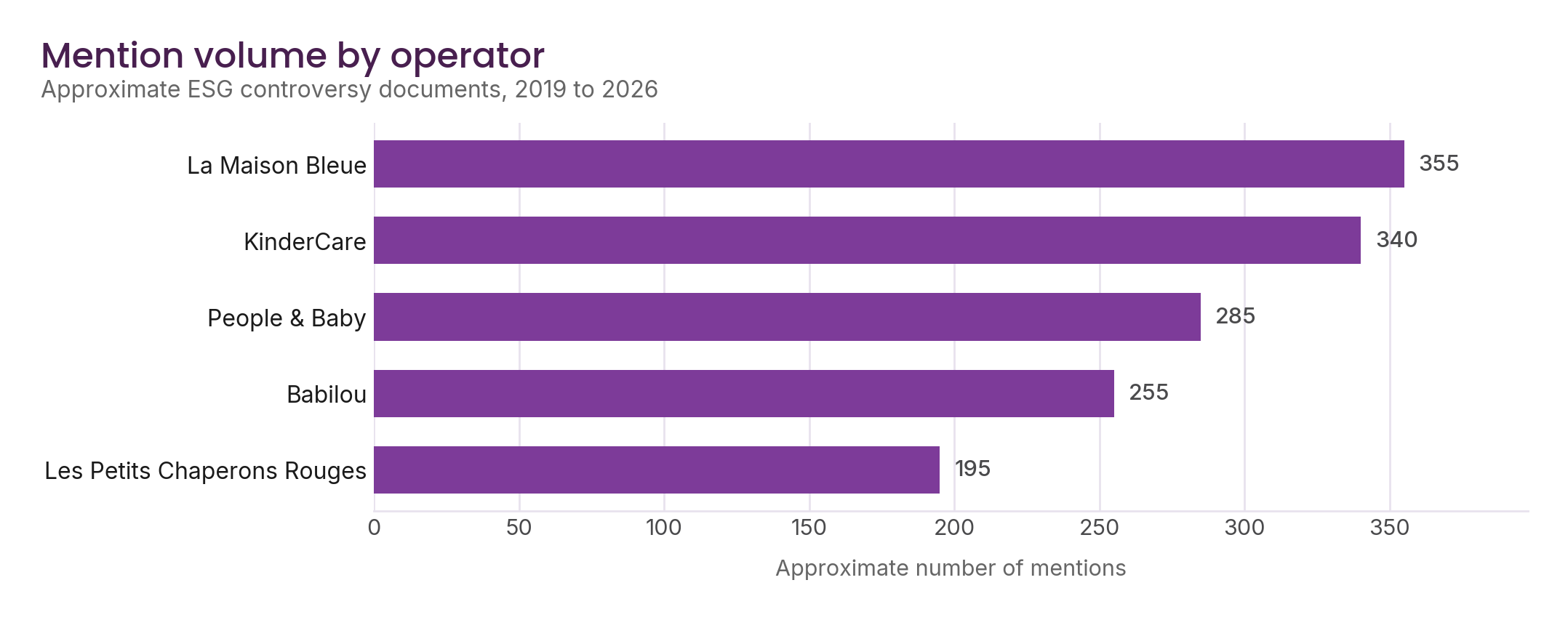
Figure 2. Mention volume by operator, 2019 to 2026 (approximate).
The signal is the floor, not the peaks. Baseline mention volume rose two to three times over and never returned to its prior level, and that elevated floor separates the five operators into two groups. People & Baby, La Maison Bleue, and KinderCare each triggered an event that radiated outward, and each carries a different kind of exposure: an ownership change, an unresolved regulatory referral, and investor litigation.
Babilou and Les Petits Chaperons Rouges never appear on that timeline, which is the point. Babilou carries scrutiny of its own over micro-crèche operating margins and the strikes in Montauban, but no corporate-level criminal indictment. Les Petits Chaperons Rouges draws enforcement at the site level rather than the group level, through the state-ordered emergency closure and admitted operational "dysfunctions" in National Assembly testimony, while remaining cited for the gap between parent company Grandir's expansion and site-level compliance. Neither has restructured, and both sit above the floor anyway.
Top Subrisks
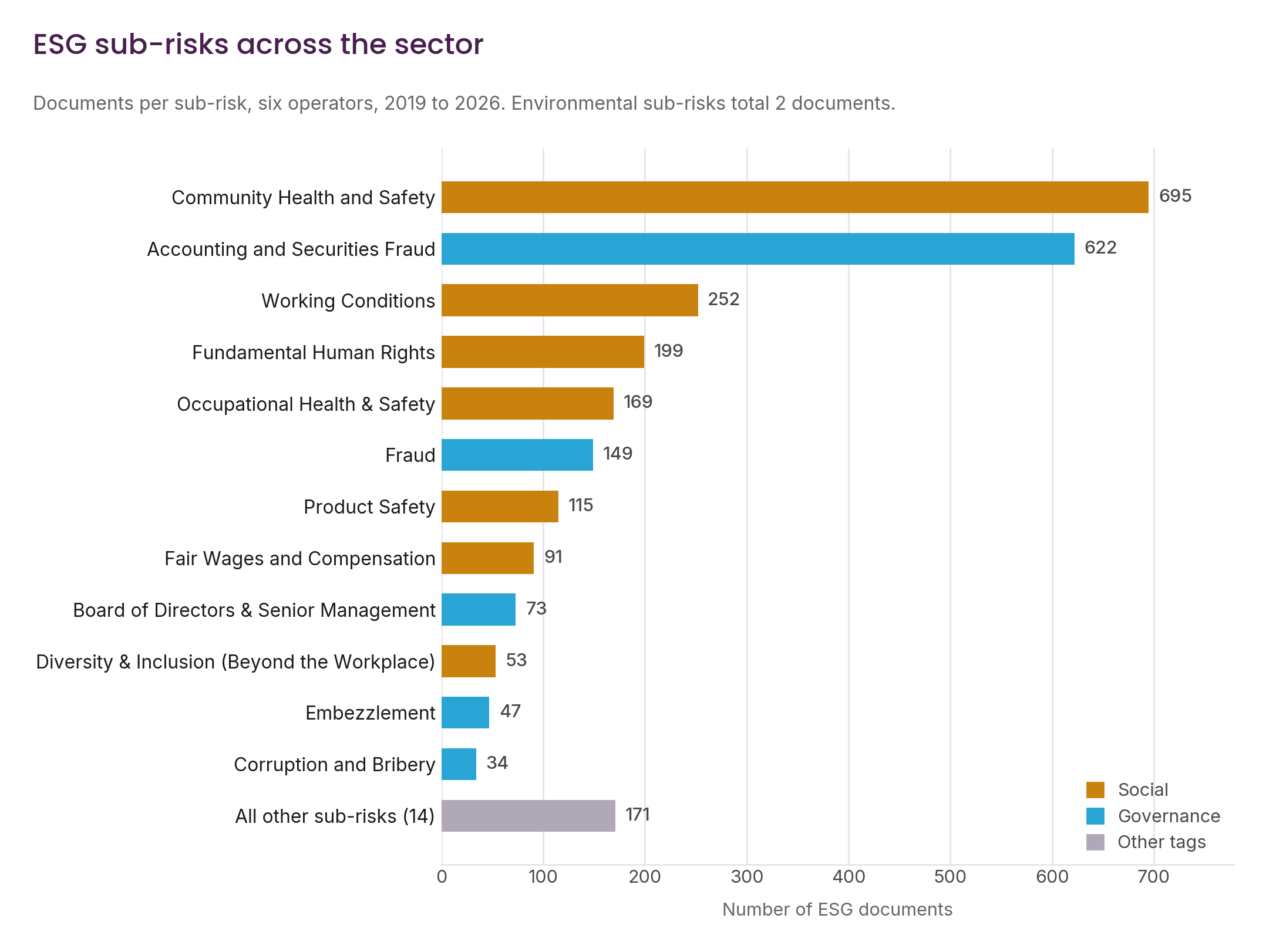
Figure 3 - ESG sub-risk distribution across the five operators (approximate document counts).
ESG risk exposure in the for-profit childcare sector concentrates almost entirely in the social pillar, with a minor governance exposure and an absence of environmental risks. This reflects a business model in which labor practices and care quality directly determine commercial and reputational viability.
Case Study: People & Baby
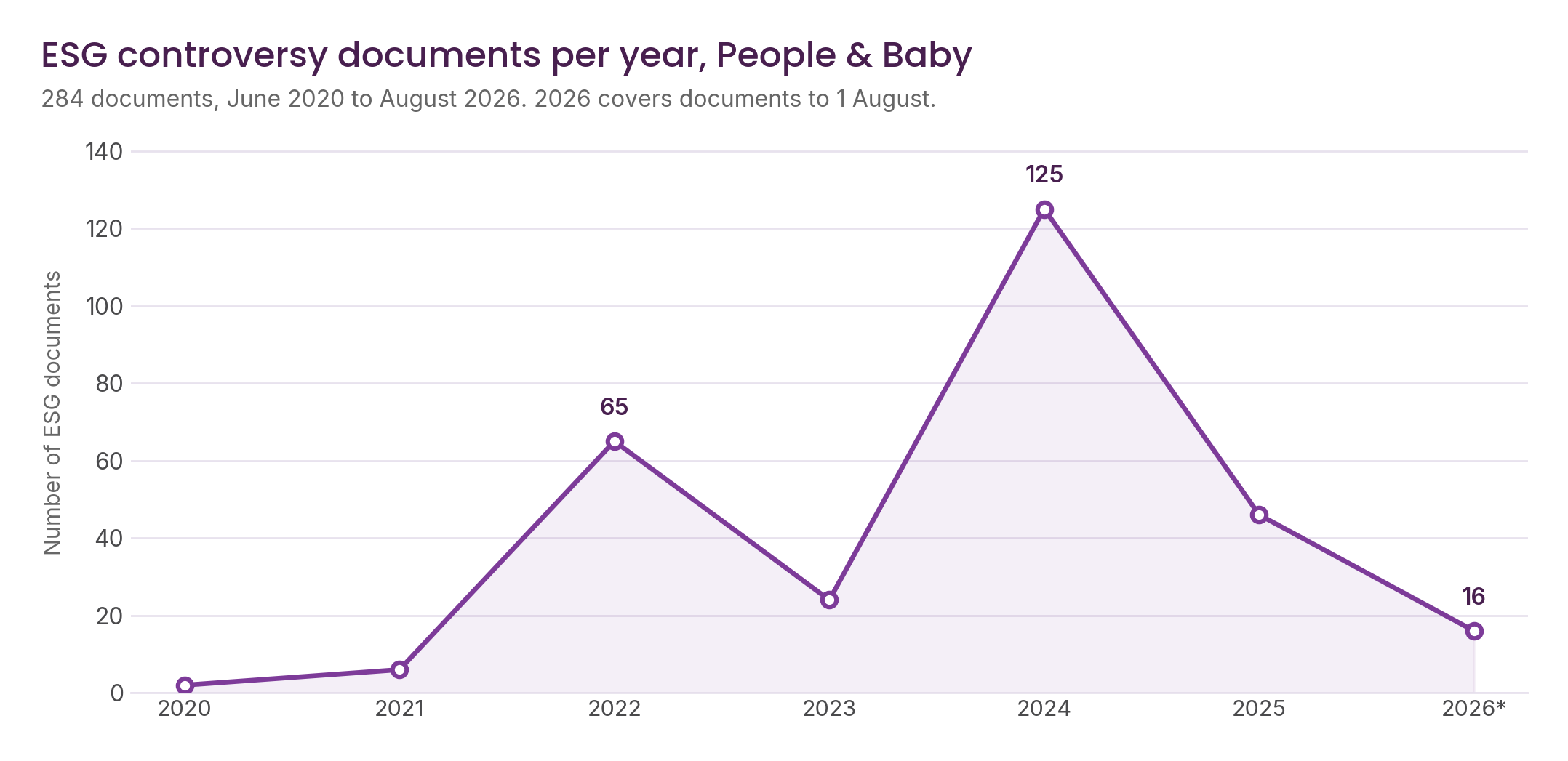
Figure 4 - ESG controversy documents per year, People & Baby (284 documents, June 2020 – August 2026).
People & Baby is a France-based childcare provider headquartered in Paris, operating approximately 600 crèches and reporting revenue of about USD 119 million.
People & Baby’s ESG exposure is defined above all by repeated child-safety and regulatory-compliance failures, including abuse allegations, a child death, and inspections identifying significant deficiencies, while financial restructuring and sustained labor disputes add pressure to the company’s operating and governance profile.
The mention curve describes a company hit by two distinct crises rather than one continuous controversy. Through 2020 and 2021, the exposure was latent, visible only in local and union-press labor and discrimination litigation reported by outlets such as anti-k.org and rapportsdeforce.fr, none of which were high-authority sources. The company's own peak arrives a year before the sector's, which is the point of the case: People & Baby was the operator whose crisis set the wave that the other four were later caught in.
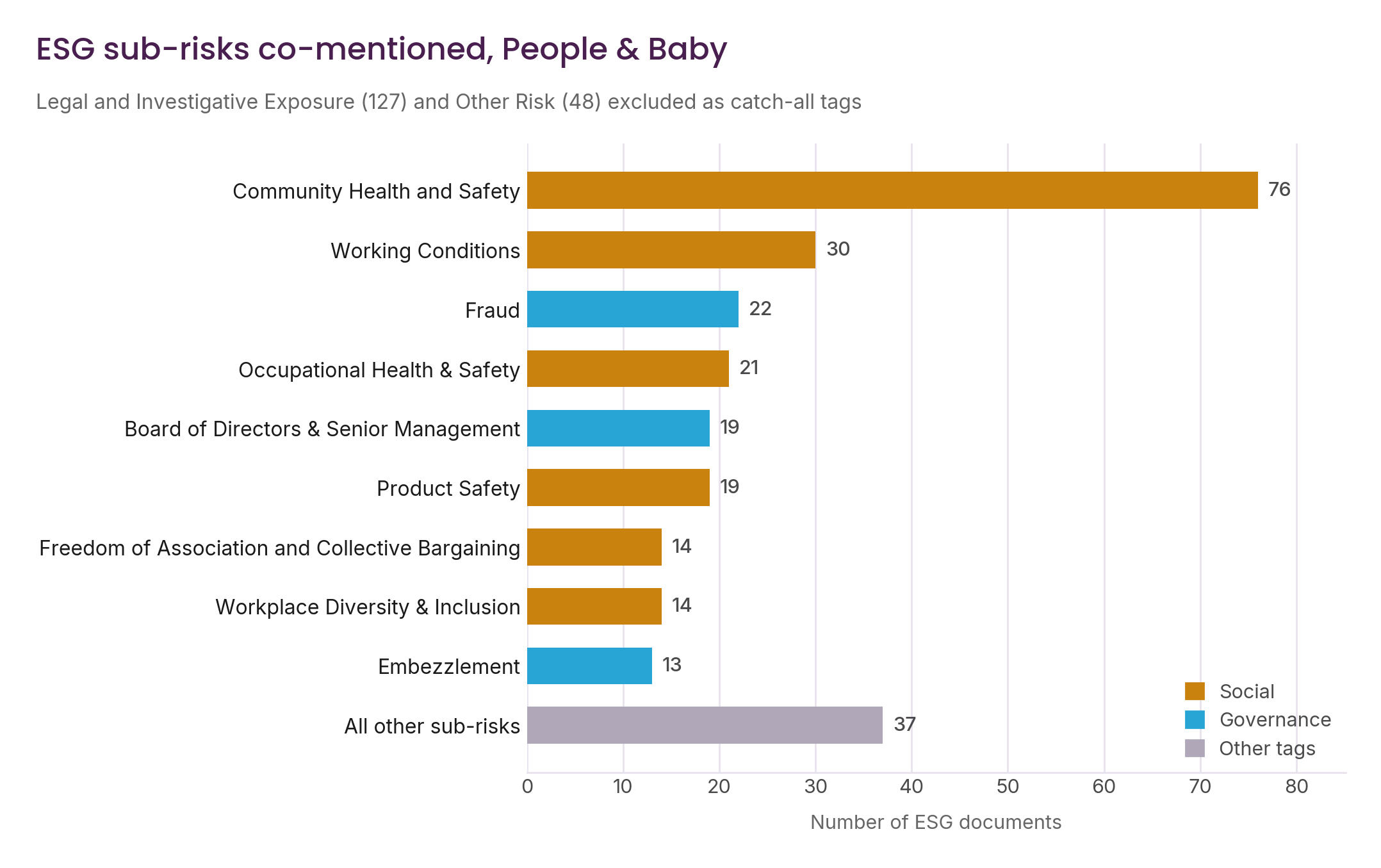
Figure 5 - Sub-risks co-mentioned across People & Baby coverage. Legal And Investigative Exposure (127) and Other Risk (48) are excluded as catch-all tags.
Four cases account for nearly all of People & Baby's exposure: the Castanet, Anticor, and public-funds case, the child-safety case covering the Lyon death and the Bordeaux closure, employee litigation culminating in a Court of Cassation ruling, and the Lille abuse convictions and their sentencing. Spread across 19 sub-risk categories, the same material looks far more diversified than it is. Tags such as Child Labor, Tax Strategy, and Right to Property register because a case touched them once in passing, not because the operator carries exposure there.
Neither crisis is closed. The 2022 safety failures were never structurally resolved, and the 2024 governance case remains before the courts, though counter-signals exist: an ex-director was acquitted on appeal, and one municipality has maintained its contract. The variables to track are the outcome of the fraud investigation, contract renewals with municipalities, and any further union escalation.
The Takeaways:
Across seven years, for-profit childcare has moved from near-invisibility to sustained scrutiny in three markets at once. What surfaced as isolated incidents in individual centers has become a question about the operating model: state inspectors, parliamentary committees, investigative journalists, and prosecutors have converged on the same finding, that margin is held by cutting staffing in a service where staffing is the service. The consequences have stopped being reputational. Operators have lost licenses, entered court-supervised proceedings, changed hands, and closed centers, and in France, the demand has shifted from holding an operator accountable for a given incident to removing it from nursery management altogether. The coverage has thinned since its peak, but nothing in the data suggests the underlying question has been settled.
The EU’s Corporate Sustainability Reporting Directive (CSRD) promised a new era of transparency and comparability in sustainability reporting. But as the first wave of CSRD-aligned reports emerges in 2025, the reality is proving more complex. Some companies are racing ahead with detailed disclosures, while others are taking a minimalist approach. Investors? Many are struggling to make sense of it all.
We’re only at the beginning of the CSRD journey, but the early lessons are already clear: The gap between reporting ambition and data quality is widening. And the path forward may be shaped as much by simplification as by regulation.
Early CSRD Reporting: A Diverse Landscape Takes Shape
Since early 2025, over 250 companies have published sustainability reports aligned with CSRD — with report lengths ranging from 30 pages to over 300. One striking takeaway: The number of sustainability-related Impacts, Risks, and Opportunities (IROs) disclosed varies dramatically. Some companies report on fewer than 15 IROs. Others disclose more than 80. This variation highlights not only the complexity of CSRD implementation but also differences in how companies interpret their reporting obligations — and their readiness to meet them.
A PwC analysis shows that 90% of the first 100 CSRD reports came from just five European countries, including Germany, Spain, and the Netherlands, none of which have yet transposed CSRD into national law. Why report early? The answer is clear: mounting pressure from investors, regulators, and other stakeholders demanding greater transparency on sustainability performance.
But just as the first reports hit the market, uncertainty looms. The European Commission’s February Omnibus package could remove up to 80% of companies from the directive’s scope — a move that may significantly reshape the reporting landscape.
Data Quality: The New Focus Area for Reporting and Investors
At the heart of CSRD reporting lies the double materiality assessment, a process that requires companies to disclose sustainability matters that affect both enterprise value and broader environmental and social impacts. But execution varies widely.
According to PwC, while nearly all companies engage with internal stakeholders during the materiality process, few provide detailed information about engagement with external stakeholders.
The most commonly reported topics include:
Climate Change (mitigation, adaptation, energy use)
Business Conduct (ethics, anti-corruption measures)
As PwC notes, the goal is to help companies and stakeholders “understand more clearly the interplay between sustainability and value creation.” But when reporting approaches differ so dramatically, comparison becomes difficult, leaving investors to navigate a patchwork of methodologies and disclosures.
Sondre Myge, head of ESG at Skagen Funds, said that while it’s still early, his “first impression is that it complicates comparability. Investors are now drowning in a mix of voluntary and legal disclosures requiring them to make assessments through a kaleidoscope of standards and methodologies. Sifting critically through hundreds of pages of text just for one company is a huge undertaking. While first movers will provide glossy reports that convey a convincing impression, it is important to remember that disclosures are not necessarily representative.”
Jan Kaeraa Rasmussen, head of ESG and sustainability at PensionDanmark, agreed, stating that initial disclosures tend to be “more narrative than quantitative. This limits our ability to draw robust, forward-looking insights from the information provided.”
What’s Next: Simplification or More Complexity?
Despite these challenges, the direction of travel is clear: sustainability reporting in the EU is becoming more structured, more transparent, and more data-driven. But we are still in a period of transition.
Companies are building internal systems and capabilities to support CSRD compliance. Best practices are only now emerging. And regulatory changes, like the proposed Omnibus package, could dramatically alter the scope of reporting obligations.
For investors and stakeholders, the challenge will be to sift through early reports critically, distinguishing between narrative-heavy disclosures and data-rich insights that can drive better decision-making.
How SESAMm Helps Investors Navigate ESG Data Complexity
As sustainability reporting evolves, so too does the need for faster, more scalable ways to uncover ESG and reputational risks. At SESAMm, we help investors and companies cut through the noise.
Using advanced Generative AI, we automate ESG monitoring and due diligence on public and private assets — providing real-time coverage of over 5 million companies globally. Leading firms like Carlyle, Warburg, Natixis, RBI, Fitch, and Oddo trust SESAMm to uncover risks in seconds, not weeks.
Discover unparalleled insights into ESG controversies, risks, and opportunities across industries. Learn more about how SESAMm can help you analyze millions of private and public companies using AI-powered text analysis tools.
Stay ahead with the latest in ESG and AI intelligence
Join our mailing list to receive new reports, event invites, and updates from SESAMm directly to your inbox.