David Platt Joins SESAMm’s Advisory Board to Support Strategic Growth
03/31/2026
•
5 mins read
SESAMm is pleased to announce the appointment of David Platt to its Advisory Board. David has spent his career at the intersection of M&A, corporate strategy, and risk intelligence - most recently as Senior Vice President, Chief Strategy Officer at Moody’s Corporation, where he contributed to the diversification of one of the world's leading financial data companies.
During his twelve years at Moody’s, David helped architect the firm’s diversification into data, analytics, and technology-driven risk assessment. He oversaw more than 75 transactions valued at $9 billion, including landmark acquisitions in climate risk, cybersecurity, and private company data. Before Moody’s, he held senior M&A roles at Deutsche Bank, Bank of America, Citigroup, and Credit Suisse First Boston, advising on complex transactions and corporate strategy for global clients.
“Over the course of my career, I’ve focused on helping organizations scale by expanding into new markets, strengthening their strategic foundations, and building platforms that help institutions better measure, manage, and understand risk,” said David Platt. "SESAMm has built an impressive platform at the intersection of AI and risk intelligence, and I’m excited to support the team as they shape their strategy and scale the business globally.”
David’s appointment comes as SESAMm continues to scale its AI-powered risk intelligence platform and expand its global presence. His experience driving profitable and strategic growth initiatives and scaling data and analytics platforms will help guide the company’s strategic direction.
"David has sat on both sides of the table, as a buyer of data and analytics capabilities, and as a trusted advisor to some of the world's largest financial institutions," said Sylvain Forté, CEO and Co-Founder of SESAMm. "That perspective will be invaluable as we shape SESAMm’s strategic direction and execute our next phase of growth."
David is a CFA charterholder and has served on the boards of BitSight Technologies and ICRA, an Indian credit rating agency. He holds an MBA from the University of Chicago Booth School of Business.
Happy new year! 2018 already holds many exciting news with various projects and clients already onboard. We begin the year with 2 recently signed contracts with top-ranked hedge funds, additional features and cryptocurrencies added to L’Humeur des Marchés and published plentiful of internships and job opportunities. Moreover, following our partnership with Eagle Alpha and the event in New York last month, we will be organizing a roadshow in London to meet high-ranked hedge funds on February 7th and 8th.
Collaboration with new major clients
Recently, we have signed 2 major contracts with top-ranked hedge funds.
The first contract is with Nikko Global Wrap (one of the subsidiaries of Sumitomo Mitsui Asset Management, a major asset manager in Japan) managing JPY 1.7 trillion.
Second contract has been signed with La Française Investment Solutions, a subsidiary of La Française Group, a top 10 French asset manager with more than €64bn assets under management.
This great news proves our technology is trusted by major financial institutions and gives us more confidence to continue looking for collaboration opportunities worldwide.
Future contracts and new distributor
We are currently in negotiation talks with another major French asset manager, a bank, two insurers and a US hedge fund. We hope to keep up at the same pace for the whole year and sign new contracts in the weeks ahead.
Also, we have recently started a new partnership with Neudata, a major UK alternative data distributor. We have signed an agreement, so they could support us and promote our solutions & services.
After New York, London
Last month, SESAMm made its very 1st trip to the USA for the BIG Alternative Data Showcase week organized by our partner Eagle Alpha. It proved to be a valuable experience from which multiple business opportunities arose and we launched many product trials with significant US funds.
Next month, we are planning a roadshow in London with Eagle Alpha. We already arranged multiple meetings with hedge funds and, thanks to Eagle Alpha’s support, we are given a unique opportunity to present and show our solutions to asset managers and C-level decision makers.
New additions to L’Humeur des Marchés
Concerning our platform L’Humeur des Marchés, we are glad to announce that we will soon be providing historical data concerning the assets. This update is planned to happen during next month and will give users more flexibility and options related to their investment and strategies.
In addition, an alert module is under development and we have begun to include cryptocurrencies into the platform. Most of the top-ranked cryptocurrencies are currently covered – such as Bitcoin, Ethereum or Ripple, among others as shown below.
Developments are planned to further extend our coverage of alt-coins with the objective to include every single major capitalization into L’Humeur des Marchés.
New job opportunities
Last but not least, we will be scaling our team during 2018. Multiple internships and job offers are currently available to further support SESAMm’s growth and ambition. We are looking for candidates in the fields of IT, finance and Data science but, most of all, highly motivated individuals seeking challenges! You can find all our offers by following this link. We would be very excited to receive your applications or recommendations for profiles seeking to work with us!
Thank you for your support and best wishes to you for 2018!
Public companies, due to their large market presence and mandatory financial disclosures, often receive a lot of attention on the Internet. Their operations and regulatory obligations put them under a media spotlight, which amplifies any ESG controversies they face in public and online discussions. In contrast, private companies operate with a higher degree of discretion and are generally less exposed to intense external scrutiny.
Although private companies are less visible to the public, there is still an underlying interest and, more importantly, a need to understand the nature of ESG controversies they face. Are these controversies different in any way, such as being less significant or having unique characteristics? This raises questions about whether certain types of risks are more susceptible to controversies in the private sector. When comparing prominent public companies with their private counterparts, do controversies differ within the same industry?
ESG Overview
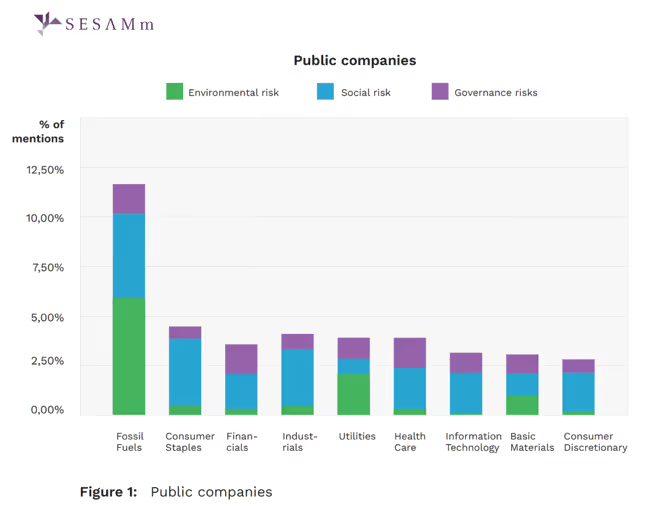
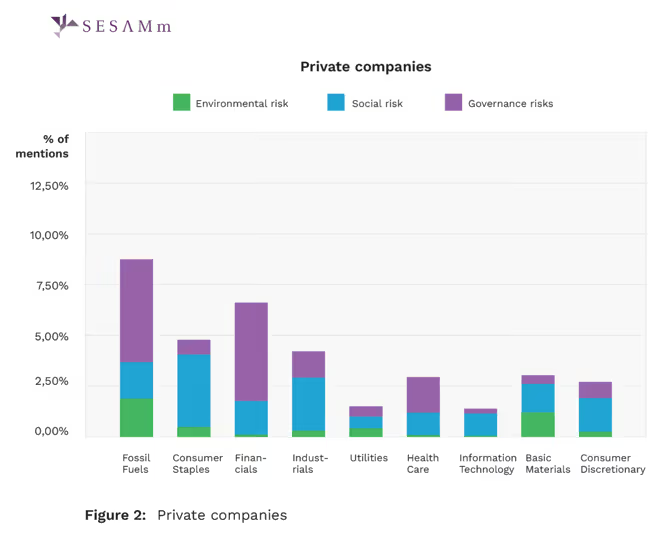
In exploring the ESG landscape, a compelling comparison emerges between private and public companies. Public companies predominantly grapple with environmental and social risks. On the other hand, private companies, especially in the financial sector, are more frequently embroiled in governance-related controversies. This section highlights the ESG challenges each sector faces and the varying degrees of visibility and scrutiny these issues receive in the public and private domains.
Within the fossil fuel industry, a distinct difference emerges: public companies are predominantly associated with environmental and social risks, while private companies face more governance-related issues.
This disparity is partly due to the more visible and significant environmental impacts often linked to public companies, such as BP's gasoline spill cleanup in Washington state and the devastating impacts of Shell's oil spills in Nigeria. Public companies also tend to experience more social issues, like employee strikes, protests, and human rights infringements.
In contrast, private companies, particularly in the financial sector, show a higher frequency of governance risks. Examples include controversies surrounding FTX and Binance, highlighting issues like corruption, substantial fines, and money laundering allegations. This trend mirrors the earlier observation in the fossil fuel sector, where private companies, despite fewer controversies, experience more pronounced impacts when significant ESG issues arise.
It's noteworthy that private sector controversies, due to their relatively lower level of scrutiny, can gain significant traction and visibility when they do surface. This differs from the public sector, where the constant exposure to ESG risks leads to more frequent detection but not necessarily the same level of virality for each event. Public companies regularly encounter ESG risks, but the prevalence of such issues in their operations means that individual events may not always attain widespread attention.
ESG Deep-dive
Environmental risks deep-dive
Looking at environmental risks, public companies often face significant issues like emissions, climate change, and water pollution, while private firms encounter these challenges on a smaller scale and with different focuses, such as animal cruelty and environmental strategy.
In the Consumer Discretionary sector, both types of companies encounter environmental risks, but the nature of these risks differs. Public companies, particularly in the automotive industry, are often involved in incidents like fires and lawsuits related to harmful emissions. Private companies, while also dealing with fires and automotive issues, face additional problems like animal cruelty allegations in retail.
The Fossil Fuel sector shows a clear distinction in ESG issues. Public companies frequently face controversies related to climate change and atmospheric pollution, often involved in significant incidents like legal actions and fines. Private companies, on the other hand, are more focused on general environmental strategy, though their controversies tend to be of a smaller scale.
In Utilities, public companies are more involved in water pollution controversies, with significant incidents like fines for unlawful water extraction making headlines. Private companies, while also dealing with water pollution, do so less frequently and on a smaller scale.
The Healthcare sector, particularly in public companies, shows a focus on biodiversity-related controversies. Issues like animal cruelty in biotechnology are prominent.
Overall, public companies tend to be at the center of more significant and high-profile environmental controversies, particularly in sectors like fossil fuels, utilities, and financials. Private companies, while also facing environmental and ethical challenges, often do so on a different scale, indicating different approaches and impacts in their management.
Social risks deep-dive
Public companies across sectors like Consumer Discretionary, IT, Financials, and Fossil Fuels frequently confront a broad spectrum of social risks, including human rights breaches and human capital concerns. Private companies, while also facing these issues, tend to have a more focused approach, with specific concerns in areas like telecommunications, social media, and health & safety. This indicates differing strategies and impacts on their social management.
Public companies in the Consumer Discretionary sector struggle with a substantial volume of data related to human rights breaches and human capital issues. These challenges are widespread across various industries, with incidents in telecommunications, social media, and the automobile industry being particularly noteworthy. In contrast, private companies in this sector primarily confront human rights breaches, with a significant focus on issues within telecommunications and social media. This contrast indicates a more specialized concern for private companies in this sector.
Both public and private companies in the Information Technology sector experience significant risks related to fundamental human rights breaches and human capital concerns. However, public companies, particularly those in software and hardware, are more frequently linked to these issues. Private companies, while also implicated, tend to have a different focus within the same concerns.
In the Financial world, public companies exhibit a pronounced focus on human capital issues, surpassing their private counterparts. This focus spans the banking and insurance industries with notable instances of discriminatory dismissals and wage disputes. Additionally, public companies in this sector also navigate complexities related to human rights and customer relations, including racial discrimination lawsuits and data breaches. Conversely, private financial companies face significant customer relations issues, especially highlighted in financial services, and human rights concerns, such as charges against Binance for child pornography and terrorism financing.
Private companies in the Consumer Staples sector lead in mentions related to health and safety, particularly in the Food/Beverage and tobacco manufacturing industry. These references often involve serious incidents like industrial accidents and lapses in COVID protocols. Additionally, customer relations issues are slightly more pronounced in private companies compared to their public counterparts. Public companies, meanwhile, have a slightly higher proportion of mentions related to human rights risks, including labor law violations and privacy concerns.
Public companies in the Fossil Fuel sector are notable for their focus on human capital issues, with references to industry-wide strikes and layoffs. In contrast, private companies in this sector demonstrate a significant focus on human rights issues, as exemplified by the case of the ex-Citgo CEO.
A divergence is seen in the Basic Materials sector, where private companies face more prevalent human capital issues, particularly in mining & metals and the chemical industry. Public companies, on the other hand, encounter a higher proportion of human rights breaches, including harassment lawsuits and violations of indigenous rights.
In summary, public companies across these sectors tend to face a wider range of social controversies, encompassing both human rights and human capital issues, often on a larger and more varied scale. Private companies, while also dealing with similar challenges, tend to do so with a more specific focus, suggesting different approaches and impacts in their social management strategies.
Governance risks deep-dive
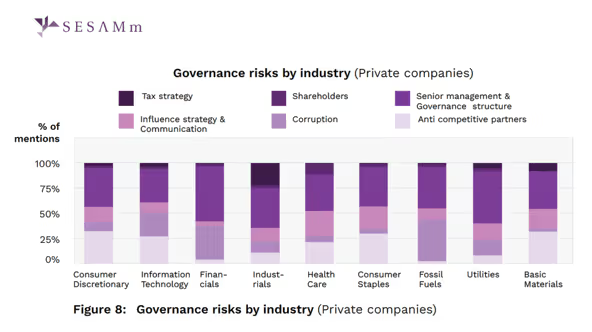
In scrutinizing governance, we found that public firms face risks in management and governance, while private entities encounter issues like anti-competitive practices and corruption. Financial and Industrial sectors see public companies dealing with strategy and compliance challenges, whereas private firms face tax strategy risks. Overall, public companies are more involved in high-profile governance controversies, while private companies focus on specific areas like tax and anti-competitive behavior.
In the Consumer Discretionary sector, governance issues vary notably between public and private entities. Public companies, particularly in telecommunications and Social Media, encounter significant risks in senior management and governance structures, evidenced by legal actions and allegations against companies like Verizon and Ericsson. Conversely, private companies in Media & Entertainment are more embroiled in anti-competitive practices, as highlighted by Epic Games' antitrust trial against Google.
Information Technology presents a clear distinction. Private companies are frequently linked to substantial corruption issues, with the FTX scandal serving as a prime example. Public companies, on the other hand, are more inclined towards engaging in anti-competitive practices, as seen in the cases of technology giants like Google and Microsoft facing antitrust lawsuits and scrutiny for monopolistic behavior.
In the Financials sector, governance risks are predominantly tied to senior management and corporate structure. Public companies face challenges primarily in their influence on strategy and communication, with notable instances including BlackRock's lawsuit over an alleged misleading ESG strategy. Meanwhile, prominent financial services companies like PayPal have faced regulatory scrutiny, further illustrating the sector's vulnerabilities.
The Industrials sector shows similar trends among public and private companies but with a specific emphasis on tax strategy risks in private firms. This is exemplified by the PwC tax leaks scandal, indicating the deep impact of governance issues in private entities.
In the Fossil Fuels sector, corruption issues are more pronounced, especially among privately-held companies. Incidents such as the lawsuit against Citgo and the Amec bribery case settlement underscore the sector's susceptibility to governance-related controversies.
Lastly, the Utilities sector shows a higher prevalence of corruption among public companies, as demonstrated by the investigation into FirstEnergy's public corruption scandal and subsequent legal actions.
Overall, governance risks manifest differently in public and private companies across various sectors. Public companies are often at the forefront of high-profile governance controversies, dealing with issues related to management, strategy, and regulatory compliance. Private companies, while also grappling with governance challenges, tend to face issues like anti-competitive practices and tax strategy risks, reflecting a variance in operational focus and impact on governance risk management.
Conclusion
By diving into the complexities of ESG, both public and private sectors have a unique opportunity not only to enhance their financial performance but also to drive positive societal and environmental impacts. As we further examine corporate controversies and gain a deeper understanding of the nuances within the ESG landscape, it becomes increasingly clear that a commitment to these principles is essential for long-term success and global well-being. Our journey highlights the tremendous potential for positive change when corporations embrace the pressing demands of today's ESG landscape, paving the way for a more sustainable, equitable, and governance-focused world.
Download the full report to discover how different sectors navigate regulatory pressures and sustainability challenges with real-world examples to guide your strategy.
Reach out to SESAMm
TextReveal’s web data analysis of over five million public and private companies is essential for keeping tabs on ESG investment risks. To learn more about how you can analyze web data or to request a demo, reach out to one of our representatives.
In our newest research, "ESG Controversies: A Comparative Study of Public vs Private Sectors," our ESG and Research & Analytics teams present an exhaustive study on the nuances of ESG controversies across public and private sectors. We combined artificial intelligence with our extensive dataset of over 25 billion documents to extract ESG controversies in both sectors. This research highlights the increased visibility and scrutiny of public companies compared to the more discretion in private companies. A case study on IKEA uncovers challenges in product safety and human capital, underlining the importance of proactive sustainability practices. The study examines these sectors' alignment with major ESG frameworks, including the UN Global Compact and Sustainable Development Goals, offering invaluable insights for enhancing corporate ESG strategies.
Key takeaways:
Public companies are under constant observation, leading to higher exposure to ESG risks such as pollution, labor disputes, and governance failures. This visibility is partly due to regulatory requirements for transparency, making every aspect of their operations subject to public and investor scrutiny.
Private companies, while benefiting from less regulatory oversight, encounter substantial repercussions from ESG controversies. These can manifest as sudden shifts in investor confidence, challenges in securing financing, or damage to reputation, underscoring the critical need for comprehensive risk management approaches that encompass environmental, social, and governance factors.
The case study on IKEA provides an in-depth look at specific issues like product recalls due to safety concerns and the complexities of managing a global workforce. It highlights IKEA's efforts to implement forward-thinking sustainability initiatives and human capital management practices as key components of its corporate strategy, demonstrating the tangible benefits of such measures in mitigating ESG risks.
ESG controversies and breaches of SDG goals vary notably between public and private sectors. Public companies frequently encounter more visible and consistent ESG risks, while private companies, although subject to less scrutiny, experience significant impacts when controversies occur.
Dive deeper into ESG controversies and uncover strategies for navigating these challenges effectively. Download "ESG Controversies: A Comparative Study of Public vs Private Sectors" and equip your organization with the insights needed to enhance your ESG practices for a sustainable future. Fill out the form below to access your copy and lead the way in corporate sustainability.
Fill out the form to download the ebook.
Stay ahead with the latest in ESG and AI intelligence
Join our mailing list to receive new reports, event invites, and updates from SESAMm directly to your inbox.






.avif)




.png)