Eureden is a large farmer‑owned French agri‑food co‑operative headquartered in Brittany, combining upstream agricultural inputs and advice with downstream vegetables, eggs, meat/charcuterie, dairy, retail chains and labs across roughly 40 industrial sites in France, Germany, Spain and Hungary and generating about €3.7–3.8bn in annual revenue, according to its website and latest integrated report.
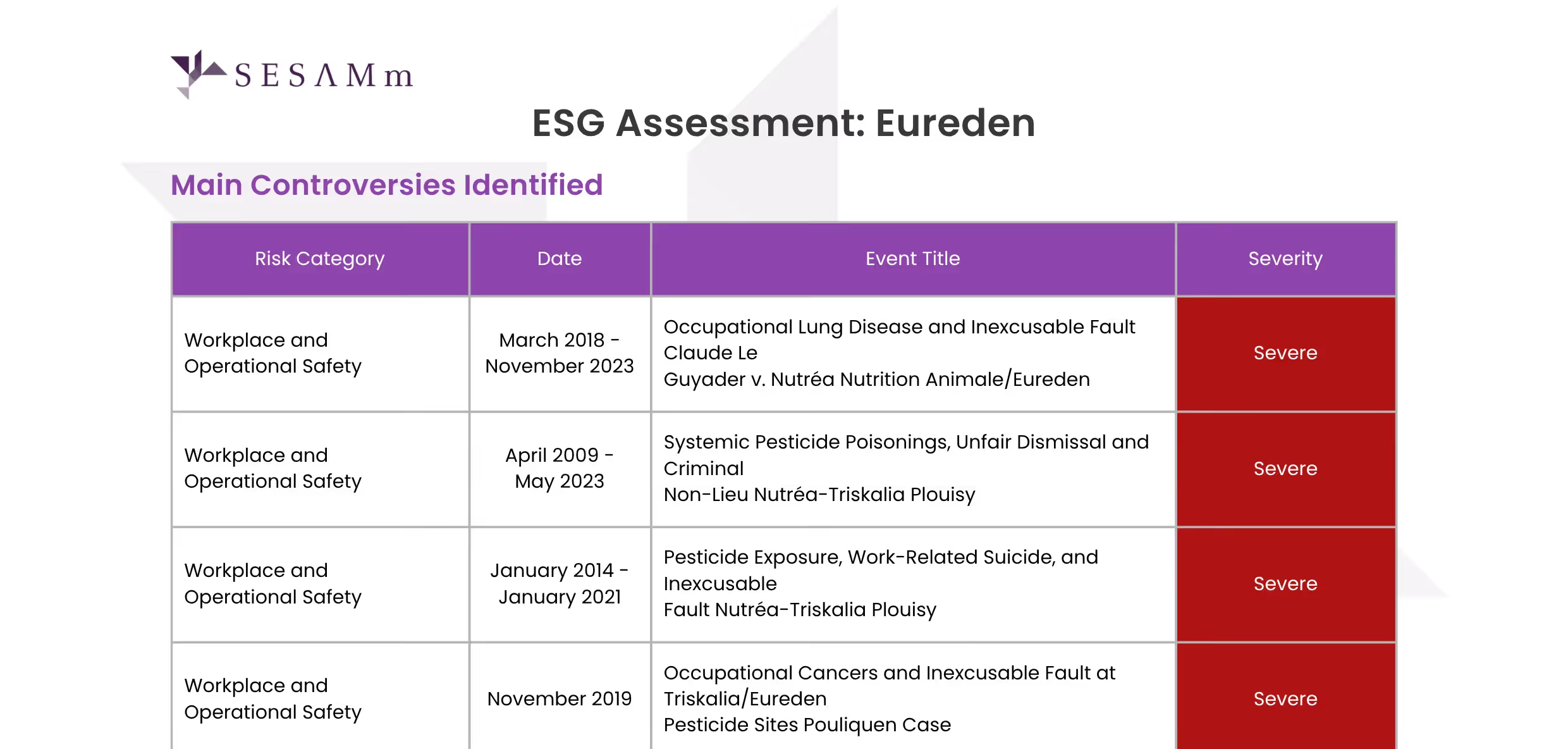
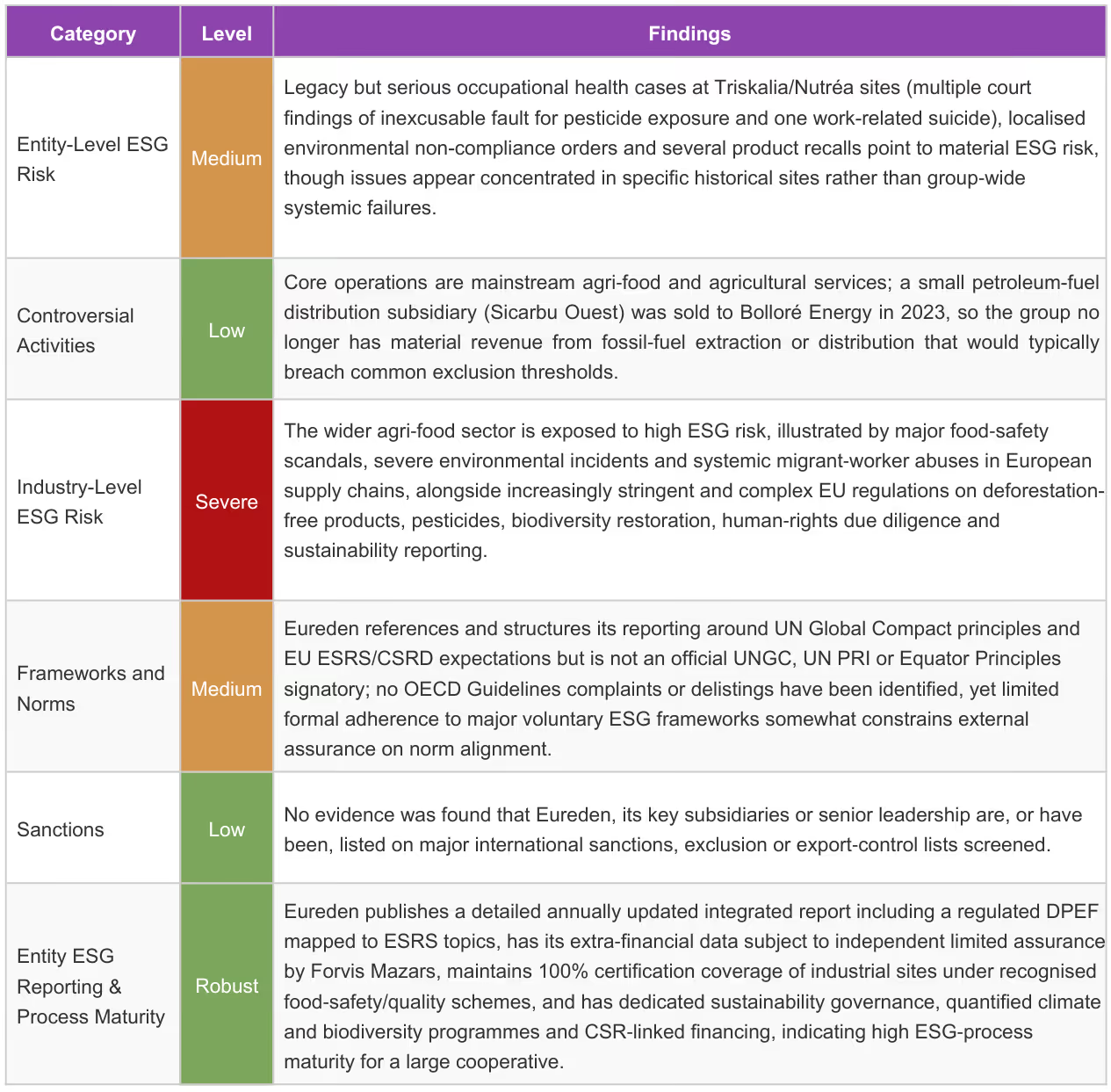
Eureden’s main ESG risks stem from legacy health‑and‑safety failings at Triskalia/Nutréa pesticide and feed sites, where French courts repeatedly recognised work accidents and occupational diseases as due to the employer’s “inexcusable fault” in pesticide‑exposure cases, including a worker suicide linked to workplace conditions, alongside other labour tensions, recurring though mostly precautionary food and allergen recalls, an environmental enforcement order against an ICPE site, and structural exposure to climate, biodiversity, animal‑welfare and chemical‑use risks from intensive livestock, pesticides and Seveso‑classified storage. At the same time, the company reports a relatively advanced CSR framework, high levels of external certifications (100% of industrial sites under at least one food‑safety/quality standard), externally assured integrated reporting with group‑wide ESG KPIs, CSR‑linked financing and programmes on pesticide reduction, non‑deforestation soy, climate, water and waste, while stating alignment with UN Global Compact principles without being a listed signatory; no international sanctions listings or OECD complaints involving Eureden were identified in public sources.
Reach out to SESAMm
SESAMm's web data analysis of over five million public and private companies is essential for keeping tabs on ESG investment risks. To learn more about how you can analyze web data or to request a demo, reach out to one of our representatives.
As 2025 kicks off, we stopped to take a look at the significant environmental, social, and governance (ESG) controversies of 2024, as we do every year. In this article, we dive into the three public companies with the most controversies for each pillar: environmental, social, and governance, analyzing the companies and the wider impact of the controversies themselves. Join us as we analyze these key moments that have not only influenced public opinion but also shaped the future of responsible business practices.
ESG Risks: Focus 2024
Starting with environmental risks, biodiversity and ecosystems, climate change, waste management, and atmospheric pollution emerged as the most scrutinized sub-risks in 2024. These issues were primarily tied to greenwashing, such as the Mercer Super case and energy companies' expansions at the expense of climate change.
Meanwhile, for social controversies, working conditions and fundamental human rights took center stage. Notably, some companies were linked to forced labor, while coffee supply chains were linked to child labor. Boycotts over the war on Gaza have also been a major highlight of 2024.
Environmental Controversies: Top 3 Public Companies
Shell
In 2024, Shell faced a host of environmental controversies, particularly through its Nigerian subsidiary, Nigeria Delta, which was implicated in serious water pollution due to oil spills. The company dealt with several other notable controversies, including a €15 million compensation related to the spills, a New York City lawsuit over climate change, and a landmark emissions ruling from a Dutch court. Additionally, the company faced condemnation from U.S. lawmakers for alleged greenwashing practices, a carbon credit scandal, and a water contamination lawsuit resolved with a $230 million settlement.
ExxonMobil
2024 was a challenging year for ExxonMobil. First, its Hammerhead project was hit by an FDA-required Environmental Impact Assessment to evaluate the potential ecological risks. Then, conflicts with Venezuela arose over environmental concerns, followed by several U.S. lawsuits. California, Kansas, and Puerto Rico all sued the company for issues ranging from global plastic pollution and greenwashing to trade law violations. Additionally, ExxonMobil was targeted in a climate lawsuit and faced ongoing fallout from the 1989 oil spill. Protests from groups like CalPERS and student activists highlighted dissatisfaction with ExxonMobil’s environmental practices, emphasizing the company's broad regulatory and public relations challenges.
TotalEnergies
Coming in at number three, TotalEnergies dealt with several environmental controversies, notbably protests related to its East African crude oil pipeline project in Tanzania and Uganda. The company has also been accused of greenwashing and misleading sustainability claims while struggling with oil leaks at its Donges refinery and Egina field. On top of these environmental controversies, TotalEngeries faced key governance and social controversies, including a $48 million fine by the U.S. Commodity Futures Trading Commission (CFTC) for attempting to manipulate the European gasoline market in March 2018. There are also ongoing investigations into an attack in Mozambique.
Social Controversies: Top 3 Public Companies
Boeing
In 2024, Boeing faced significant challenges due to safety concerns and production controversies, which have fueled employee unrest and public skepticism. Recent incidents, including a missing door plug attachment on a Boeing 737 Max and investigations into quality control lapses at Boeing and its supplier Spirit AeroSystems, have eroded trust among small businesses reliant on the manufacturer. Whistleblower testimonies and increasing scrutiny from Congress and the FAA highlight systemic safety failures. These developments suggest a difficult path ahead for Boeing as it works to regain credibility amid ongoing struggles.
Pfizer
In 2024, Pfizer faced scrutiny after EU documents revealed over 4.9 million adverse events and 3,280 deaths linked to its COVID-19 vaccine, especially among women and individuals aged 31-50. Critics allege Pfizer continued distribution despite knowing the risks, questioning the EMA's approval. Additionally, DNA contaminants, including carcinogenic SV40 sequences, have been reported in the vaccines. A whistleblower disclosed that Pfizer employees were offered a "separate" COVID vaccine, raising concerns about access inequality. Kansas has filed a lawsuit accusing Pfizer of misleading the public about vaccine safety; meanwhile, the company faces fines in the UK for excessive pricing of an anti-epileptic drug.
Meta
In 2024, Meta faced intense scrutiny and legal challenges due to multiple controversies, including a significant data breach, allegations of failing to protect children, and privacy concerns. The company settled a $1.4 billion lawsuit related to facial recognition practices and was fined $220 million by Nigeria for violating data laws. Additional lawsuits from school districts and the Consumer Protection Association highlighted issues related to social media addiction and mental health impacts on teenagers.
Governance Controversies: Top 3 Public Companies
Alphabet
2024 was a legally challenging year for Alphabet, facing numerous antitrust issues globally. For instance, Allegro sued Alphabet for $568 million over anti-competitive practices, and the U.S. Justice Department accused Google of monopolies in the search engine and Android app markets. It has also faced an antitrust ruling, which it plans to appeal. In Europe, Google was scrutinized under the Digital Markets Act and fined 71 million euros in Turkey for anti-competitive behavior. Additionally, France imposed a $271 million fine on Google for using news content without publisher consent, and India began investigating Google's gaming app policies. These incidents highlight Alphabet’s ongoing regulatory battles across multiple continents.
In conclusion, the controversies surrounding environmental, social, and governance issues in 2024 have underscored the urgent need for accountability and transparency within corporations. As these companies grapple with significant backlash and legal challenges, it is clear that stakeholder expectations are evolving. The demand for responsible practices is louder than ever, and the consequences of neglecting these issues can be severe, impacting not just public perception but also financial stability and sustainability.
SESAMm’s AI Technology Reveals ESG Insights
Discover unparalleled insights into ESG controversies, risks, and opportunities across industries. Learn more about how SESAMm can help you analyze millions of private and public companies using AI-powered text analysis tools.
In our most recent webinar, "Unmasking Greenwashing: How to Identify Genuine and Deceiving Sustainability Initiatives with AI," Sylvain Forté, SESAMm’s CEO and Co-founder, discussed our recent ebook entitled with the same name focusing on the vital role of AI in identifying and understanding ESG controversies, focusing on greenwashing and reputational laundering.
Greenwashing, the act of misleadingly portraying products or services as environmentally friendly, and reputational laundering, where companies create a facade of ethical behavior, are increasingly prevalent challenges. These practices mislead investors and consumers, obscuring the reality of a company's environmental impact. Our webinar highlighted the complexity of these issues and their relevance across various industries.
We discussed how AI technology is revolutionizing the detection of greenwashing and reputational laundering. By analyzing vast amounts of web data, including news articles, social media, and public records, AI uncovers patterns and red flags that might indicate deceptive practices. This is particularly pertinent for stakeholders in the financial sector, such as private equity firms, who must navigate the intricate landscape of ESG compliance and sustainability.
Our recent research study underscored the importance of this technology. We found that mentions of greenwashing and related controversies have grown exponentially over the years. This increase aligns with a rising global awareness of environmental issues and the demand for corporate transparency. AI's ability to sift through and analyze this growing body of data is invaluable in providing accurate, timely insights into potential ESG risks.
We also noted an interesting trend: while greenwashing mentions are increasing, their growth rate is slowing down. This suggests that as regulatory frameworks around ESG become more formalized and the market becomes more educated, instances of unintentional greenwashing decrease. It's a sign that clearer rules are helping companies avoid these pitfalls.
Our analysis also revealed that different industries experience varying levels of exposure to greenwashing claims. Sectors like food, drug retail, and oil and gas have seen significant increases in accusations of reputational laundering. However, we also observed a positive trend in the fashion industry, where regulatory frameworks have led to a decrease in greenwashing mentions.
Lastly, we highlighted the importance of distinguishing between negative and positive ESG mentions. While it's crucial to identify and monitor greenwashing allegations, it's equally important to recognize and support genuine sustainability initiatives. Our analysis showed that positive ESG initiatives often have a more significant impact on public perception than negative ones.
Watch the webinar replay now:
Reach out to SESAMm
TextReveal's web data analysis of over five million public and private companies is essential for keeping tabs on ESG investment risks. To learn more about how you can analyze web data or request a demo, contact one of our representatives.
SESAMm is pleased to welcome Guy Gresham to its Advisory Board. A globally recognized capital-markets strategist and former Group Head of Global Investor Relations Advisory at BNY, Guy brings more than two decades of experience in global financial services, specializing in equity capital markets, investor relations, and sustainability. Originally from New Zealand and now based in New York, he has deep expertise in regulatory compliance, ESG governance, and aligning global standards with business operations. His presence in North America will further strengthen SESAMm’s footprint in the U.S. market at a time of rapidly evolving expectations around sustainability and reputational risk.
"Guy’s experience advising companies across more than 50 countries, combined with his understanding of the North American market, brings a tremendous amount of insight and credibility,” said Sylvain Forté, CEO of SESAMm. “He has a remarkable ability to bridge sustainability, regulation, and capital-markets strategy, and we’re delighted to welcome him to our advisory board.”
During his time leading BNY’s Global Investor Relations Advisory group, Guy oversaw a global team supporting issuers across multiple markets and guided companies through major shifts in regulation, geopolitics, and capital markets expectations. As co-chair of BNY’s enterprise ESG Advisory Council and the Sustainable Client Solutions Working Group, he advised executive management on governance and regulatory requirements, embedding sustainability into core decision-making and risk management.
Today, Guy sits on the advisory committee of Sedex, a leading global supply-chain sustainability data platform, and serves as a non-executive director at Strategy&Ops, an international consultancy focused on sustainability and digital transformation. He holds an MBA from Cornell University, a BA (Hons) in International Relations from Victoria University of Wellington, and is a 2026 Digital Statecraft Fellow at Cambridge University.
“The growing convergence of sustainability, regulation, and technology is reshaping how companies engage with investors and manage risk,” said Guy Gresham. “SESAMm is at the forefront of this transition, using advanced AI to surface insights that were previously inaccessible. I’m delighted to support the team as they scale these capabilities globally.”
We’re thrilled to welcome Guy to SESAMm’s Advisory Board and look forward to working together as we continue advancing AI-powered ESG and reputational risk analysis worldwide, including expanding our partnerships and presence across North America.
SESAMm’s AI Technology Reveals ESG Insights
Discover unparalleled insights into ESG controversies, risks, and opportunities across industries. Learn more about how SESAMm can help you analyze millions of private and public companies using AI-powered text analysis tools.
Stay ahead with the latest in ESG and AI intelligence
Join our mailing list to receive new reports, event invites, and updates from SESAMm directly to your inbox.







.png)