Environmental challenges, such as climate change, biodiversity loss, and resource depletion, rapidly increase daily. The urgency for a coherent and actionable framework to promote sustainable investments has never been more important. With all of the terms and claims surrounding sustainability, it is a struggle for investors, companies, and consumers to identify which activities and projects are genuinely beneficial for the environment. This is where the EU Taxonomy is a guiding instrument to illuminate the path toward a sustainable economy.
Introduced by the European Union, the EU Taxonomy is a green classification system designed to provide criteria for identifying environmentally sustainable economic activities. Offering a common language and set of standards, the Taxonomy helps mitigate the confusion surrounding sustainability claims and enhances the transparency needed for informed investment decisions.
Understanding the EU Taxonomy
What is the EU Taxonomy?
The EU Taxonomy is a systematic framework that translates the European Union's climate and environmental objectives into specific criteria for economic activities. It assists investors and companies in recognizing which investments qualify as “green,” ensuring that capital flows toward activities with a positive environmental impact.
Main Objectives
The EU Taxonomy is built upon several objectives aimed at transforming the economic landscape:
- Supporting the transition to a sustainable economy: The Taxonomy enables businesses to align their operations with the EU's environmental goals by providing clear definitions and criteria for sustainable activities.
- Mitigating market fragmentation: The Taxonomy aims to provide uniform standards across EU member states, reducing inconsistencies arising from different national interpretations of sustainability.
- Protecting against greenwashing: In an environment where misleading claims about sustainability are prevalent, the Taxonomy offers a reliable benchmark, ensuring that companies cannot misrepresent their environmental practices.
- Accelerating financing for sustainable projects: By identifying what constitutes a sustainable activity, the Taxonomy directs investments toward projects that contribute to the EU’s climate and environmental objectives, promoting the development of green technologies and practices.
The EU Taxonomy in Sustainable Finance
The EU Taxonomy is a key component of the broader sustainable finance agenda. By providing a systematic approach to sustainability, it helps guide financial flows toward investments that will foster real environmental progress. This initiative is particularly significant as global investors increasingly seek to align their portfolios with sustainability goals.
Understanding the EU Taxonomy
What is the EU Taxonomy?
The implementation of the EU Taxonomy is facilitated through the Taxonomy Climate Delegated Act. This act sets the criteria for activities concerning climate objectives, recognizing those contributing to achieving climate neutrality and enhancing climate change resilience. It represents the first step towards establishing a comprehensive set of criteria applicable to various sectors.
Sectors Covered
The Taxonomy initially focuses on sectors with significant contributions to greenhouse gas emissions. These sectors include:
- Energy: Emphasizing renewable energy production and energy efficiency improvements.
- Forestry: Promoting sustainable forest management.
- Manufacturing: Aiming for reduced emissions and efficient resource use in manufacturing processes.
- Transport: Encouraging the adoption of lower-emission transport options.
- Buildings: Focusing on energy-efficient design and construction methods.
Technical Screening Criteria
The Taxonomy includes strict technical screening criteria that define acceptable thresholds for sustainability. These criteria are based on scientific evidence and best practices, ensuring that activities meet established environmental standards.
Defining Green Economic Activities
The Six EU Environmental Objectives
At the core of the EU Taxonomy are six environmental objectives that guide the classification of economic activities:
- Climate change mitigation: Activities that significantly reduce greenhouse gas emissions.
- Climate change adaptation: Actions aimed at preparing for and adjusting to the impacts of climate change.
- Sustainable use and protection of water and marine resources: Strategies to ensure long-term viability and health of water resources and marine ecosystems.
- Transition to a circular economy: Practices that promote efficient resource use, waste reduction, and recycling.
- Pollution prevention and control: Efforts focused on minimizing pollution and managing waste effectively.
- Protection and restoration of biodiversity and ecosystems: Initiatives dedicated to conserving biodiversity and restoring ecological systems.
Conditions for Taxonomy-Aligned Activities
For economic activities to be recognized as taxonomy-aligned, they must fulfill four critical conditions:
- Make a substantial contribution: The activity must significantly contribute to at least one of the environmental objectives.
- Do no significant harm: It must not adversely impact any other environmental objective.
- Comply with minimum social safeguards: Activities must meet criteria protecting social and labor rights.
- Meet technical screening criteria: These are established through scientific methodologies, ensuring that activities genuinely contribute to sustainability goals.
Integrating the EU Taxonomy with Other Regulations
Corporate Sustainability Reporting Directive (CSRD)
The CSRD complements the EU Taxonomy by requiring companies to disclose comprehensive information about their environmental performance. This regulation aligns closely with the Taxonomy by mandating that organizations within its scope report on the extent to which their activities are taxonomy-aligned, promoting transparency and accountability in corporate sustainability efforts.
Sustainable Finance Disclosure Regulation (SFDR)
The SFDR mandates that financial market participants disclose how their financial products align with the Taxonomy standards. This regulatory framework aims to provide investors with insights into the sustainability impacts of their investment options, fostering greater trust and informed decision-making.
Implementation and Compliance
Corporate Mandatory vs. Voluntary Disclosure
- Mandatory Disclosure: Large companies and financial market participants are obligated to disclose the alignment of their activities with the Taxonomy. This requirement enhances transparency and ensures stakeholders have access to key information regarding corporate environmental performance.
- Voluntary Disclosure: Companies can also engage in voluntary reporting to highlight their sustainability strategies and progress. This allows businesses to strategically utilize Taxonomy criteria in their planning and investment decisions.
The Role of Member States and Financial Entities
Member States and the EU are expected to leverage the Taxonomy in their regulatory frameworks. This includes establishing public labels for green corporate bonds and financial products aligned with SFDR, thus fostering market acceptance and stimulating demand for sustainable investments.
Challenges and Opportunities
Market Fragmentation
While the EU Taxonomy aims to unify standards across the region, differences in implementation and interpretation among member states could lead to market fragmentation. The EU must maintain a cohesive approach and address any differences that may arise.
The Risk of Greenwashing
With the growing popularity of green investments, there is an increasing risk of greenwashing, where companies may exaggerate or misrepresent their sustainability claims. The EU Taxonomy provides a valuable tool to combat this risk by establishing clear and robust criteria for what constitutes a sustainable activity.
Benefits for Companies and Investors
For companies, engaging in taxonomy-aligned activities can attract institutional and retail investors, banks, and other financial entities that prioritize sustainability. Investors, on the other hand, benefit from improved clarity and assurance about the environmental impact of their investments, allowing them to align their portfolios with their sustainability values.
Future of the EU Taxonomy
Expansion of Coverage
The EU Taxonomy is not static; it is designed to evolve over time. While it currently focuses on sectors with the highest emissions, plans are in place to expand its coverage to include additional sectors and activities as the regulatory framework matures and new technologies emerge.
Adaptation to Technological Changes
As technological advancements grow, the EU Taxonomy must remain responsive to new developments in sustainability practices. This adaptability is crucial for ensuring that the criteria remain relevant and effective in guiding investments toward genuine environmental sustainability.
The Role of the EU Taxonomy in Achieving Sustainability Goals
The EU Taxonomy serves as a cornerstone for sustainable finance within the European Union. By providing clarity and consistency in defining what constitutes a sustainable activity, it empowers both companies and investors to make informed decisions that contribute to environmental preservation and climate goals.
Conclusion
The EU Taxonomy is an initiative aimed at redirecting investments toward environmentally sustainable activities. By establishing clear criteria and creating a common understanding of sustainability, the Taxonomy not only assists companies in navigating their transitions to greener practices but also safeguards the integrity of the environmental finance market.
SESAMm’s AI Technology Reveals ESG Insights
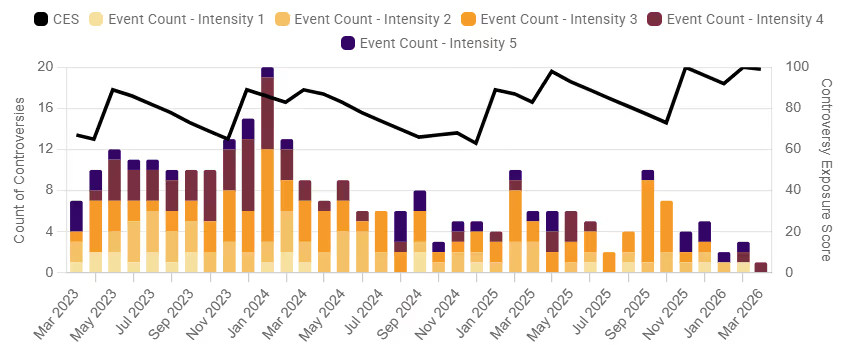
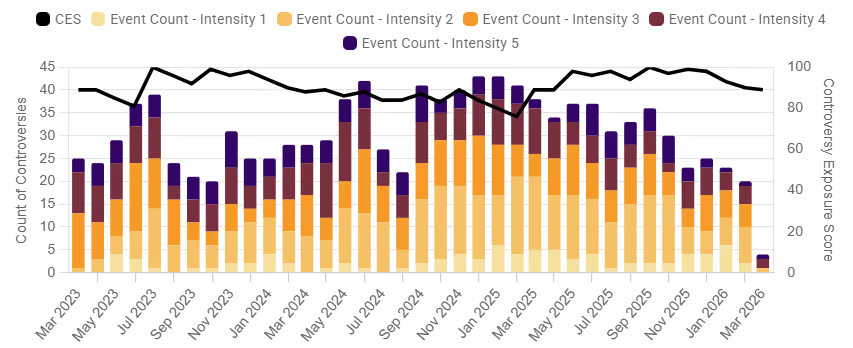
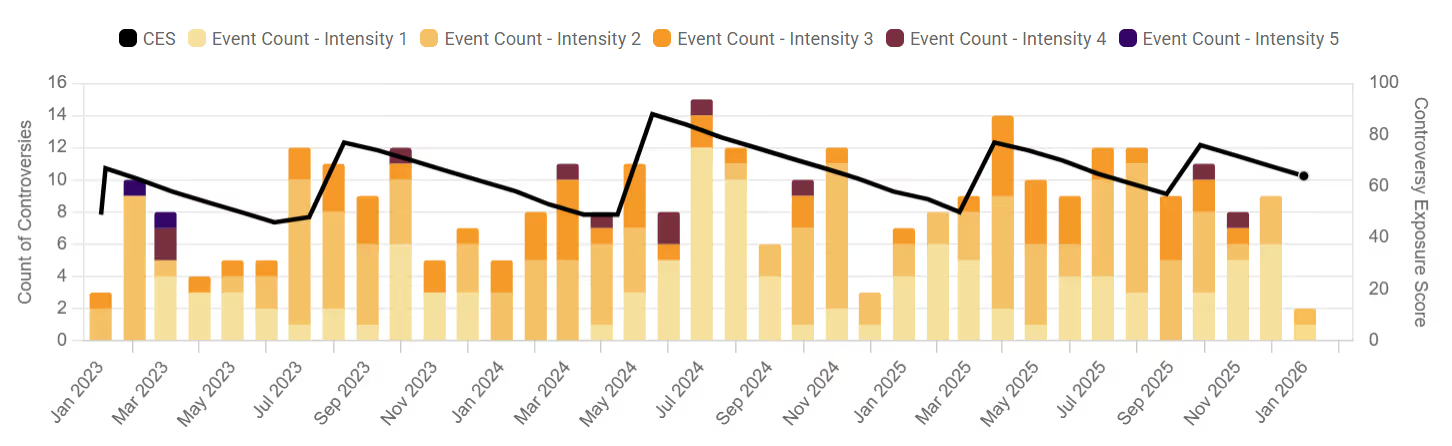
Discover unparalleled insights into ESG controversies, risks, and opportunities across industries. Learn more about how SESAMm can help you analyze millions of private and public companies using AI-powered text analysis tools.

-converti-depuis-png.avif)





.png)