Blueprints for Sustainability: Unmasking ESG Trends in Modern Infrastructure
07/27/2026
•
5 mins read
Infrastructure sits at the center of the energy transition, and it's also one of the sectors most exposed to ESG controversy, from community displacement and water pollution to safety failures and corruption. As LPs, lenders, and regulators sharpen their scrutiny, knowing where that risk concentrates and how it evolves has become essential to due diligence and portfolio monitoring alike.
This whitepaper draws on SESAMm's analysis of over 250,000 infrastructure projects worldwide between 2021 and 2026, built on our natural language processing engine's coverage of millions of news, NGO, and regulatory sources.
It covers which project types carry the highest ESG risk, which pillar (Environmental, Social, or Governance) dominates the narrative, what drives spikes in governance controversy, and how two contrasting case studies, the Turów and Cerrejón coal mines, show just how differently a controversy can play out over time.
Download the full report
The complete data-driven breakdown of ESG risk across 250,000+ infrastructure projects.
With 2023 drawing to an end, we wanted to share the most relevant ESG controversies during the year. In this article, we provide a comprehensive overview of the year's top ESG controversies, breaking them down into the three pillars of ESG: Environmental, Social, and Governance. Through our research, we will explore each of these areas in detail, shedding light on the most talked-about controversies and the companies involved.
Methodology
To gain a comprehensive understanding of the ESG risks in 2023, we conducted a thorough analysis of web mentions related to SESAMm’s ESG taxonomy across our expansive data lake with 20B+ articles. This allowed us to evaluate the overall volume of mentions related to each risk category: Environmental (E), Social (S), and Governance (G).
ESG Risks Over Time
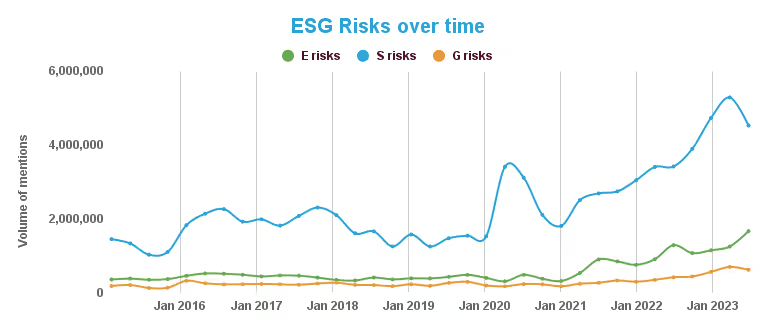
Before diving into the details, we looked into the main trends over the last few years in ESG trends. We found a detectable increase in the volume of ESG-related web mentions, with an emphasis on social risks. Especially since the start of 2020, social risks have been on a consistent upward trajectory. Notably, there was a significant spike in mentions around mid-2020 following mass protests amid the COVID-19 lockdown, in addition to reports of cyberattacks and allegations of sexual assault. Furthermore, 2021 saw an uptick in mentions related to issues of racism (Black Lives Matter movement) and homophobia.
Figure 1: ESG risks over time.
ESG Risks: Focus 2023
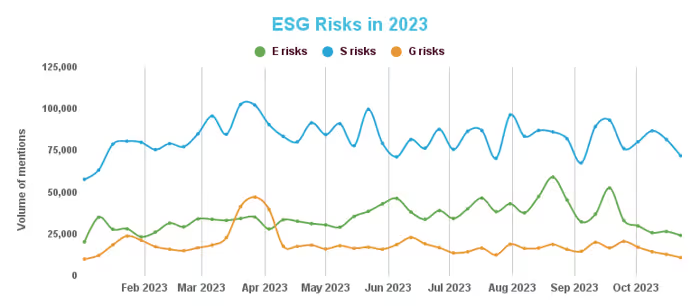
We outlined the prominent risks in 2023: social risks, with layoffs and strikes gaining attention; environmental risks, marked by wildfires and oil spills; and governance risks, where tax evasion and ethical violations like bribery were in focus. Each risk category underscores the urgent issues facing society and the need for accountability and action.
Figure 2: ESG risks in 2023.
Environmental Controversies of 2023
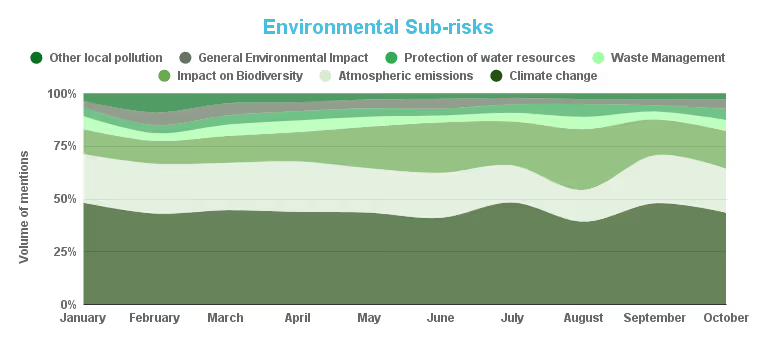
Environmental risks may not match the sheer number of mentions that social risks receive, but their presence in discussions has steadily grown over the year, particularly in the third quarter. Let's explore the most common controversies that have emerged.
Climate Change and Policy
Climate change dominated environmental discussions in 2023. A noticeable peak in mentions arose in the latter half of the year, particularly around heatwaves and debates surrounding climate policies.
Atmospheric Emissions
September saw increased discussions about atmospheric emissions, notably due to the emissions from volcanic eruptions, hybrid cars, and the discovery of toxic metals in food products.
Impact on Biodiversity
The wildfires that spread in June sparked significant debates around their impact on biodiversity, leading to increased mentions and concerns related to environmental preservation.
Figure 3: Top environmental sub-risks in 2023.
Top 5 Environmental Controversies
These controversies are ranked by relative volume*.
Marathon Petroleum
Volume of mentions: 62
Relative volume: 69%
A significant portion of environmental risk discussions surrounding Marathon Petroleum was due to its chemical leak in Garyville. This incident led to massive fires, so large they could be observed from space. (source)
Nestlé
Volume of mentions: 30
Relative volume: 54%
Nestlé faced scrutiny in 2023, with over half of its environmental risk mentions associated with drought controversies. The company was urged to cease its water mining activities following severe droughts in France. (source)
Coca-Cola
Volume of mentions: 178
Relative volume: 53%
Coca-Cola garnered attention due to a hydrochloric acid leak in January 2023, leading to significant environmental concerns. (source)
ExxonMobil
Volume of mentions: 571
Relative volume: 31%
Exxon, along with Guyana’s environmental agency, was implicated in breaches of oil spill insurance policies. (source)
Shell
Volume of mentions: 872
Relative volume: 23%
An oil spill from a Shell pipeline adversely affected farms and a river in a region of Nigeria already grappling with pollution. (source)
Social Controversies of 2023
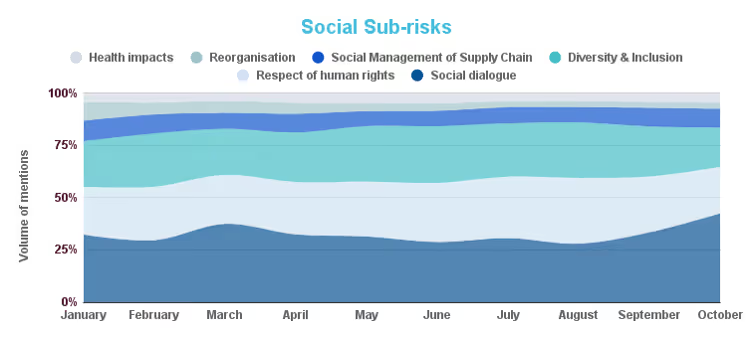
Social risks have taken the forefront in 2023, with notable web mentions increasing significantly. Here are the most relevant controversial topics:
Social Dialogue
Social discourse intensified at the start of the year, with news of widespread strikes in various sectors, including aviation and education, primarily driven by pay disputes. The wave of layoffs in several tech companies was the talk of the town, especially during the first quarter of the year.
Discrimination against minority groups, including the LGBTQ community and people of color, and age-based discrimination became a significant topic of discussion in 2023.
Figure 4: Top social sub-risks in 2023.
Top 5 Social Controversies
These controversies are ranked by relative volume*.
McDonald's
Volume of mentions: 8,903
Relative volume: 87%
McDonald's faced substantial social risks in 2023 due to significant layoffs of its corporate staff in April. The move led to public concern and discussions around the company's employment practices and stability. (source)
Google
Volume of mentions: 13,504
Relative volume: 43%
Google found itself in the spotlight as it faced challenges related to major layoffs in January and October of 2023. These layoffs contributed to almost half of the social risk mentions associated with the tech giant. (source)
Meta
Volume of mentions: 10,965
Relative volume: 38%
Meta, formerly known as Facebook, also faced scrutiny as 38% of the company's social risk mentions revolved around layoffs that took place in March and October 2023. (source)
Microsoft
Volume of mentions: 6,060
Relative volume: 28%
Microsoft faced challenges due to disruptions caused by cyberattacks in early June. In addition, the company had to navigate through controversies related to layoffs, contributing to its social risks. (source)
X (formerly Twitter)
Volume of mentions: 7,246
Relative volume: 8%
X/Twitter experienced a global outage, which was followed by significant layoffs. These events led to considerable public discussions and social risks for the company. (source)
Governance Controversies of 2023
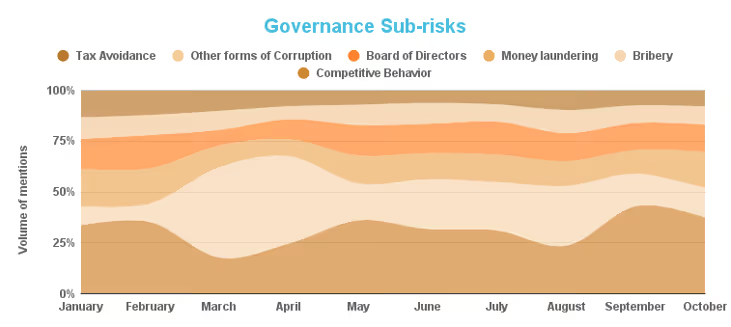
Governance risks, though often overlooked, play a pivotal role in shaping corporate responsibility and ethical conduct. In 2023, several governance controversy trends emerged:
Money Laundering
Tax evasion was a major topic of discussion in the first quarter, highlighting the need for greater transparency and accountability within corporations.
Bribery
There was a significant increase in mentions related to bribery cases, underscoring the challenges in maintaining ethical governance standards.
These controversies are ranked by relative volume*.
FTX
Volume of mentions: 8,085
Relative volume: 40%
FTX, a notable entity in the financial sector, found itself at the center of governance controversies. A significant portion of the discussions surrounding FTX's governance risks in 2023 pertained to allegations of its founder's involvement in bribery schemes. (source)
Apple
Volume of mentions: 3,162
Relative volume: 28%
Apple, a tech giant, faced scrutiny as a third of its governance risk mentions revolved around antitrust violations reported in October 2023. (source)
Microsoft
Volume of mentions: 4,429
Relative volume: 25%
Microsoft encountered legal challenges with its deal with Activision. The company had to approach the court to reject the FTC's request to halt the deal. (source)
X (formerly Twitter)
Volume of mentions: 2,251
Relative volume: 18%
X/Twitter, another major player in the tech industry, faced legal challenges when a judge dismissed a shareholder lawsuit against Elon Musk concerning a Twitter buyout. (source)
Google
Volume of mentions: 3,920
Relative volume: 13%
Google faced judicial sanctions for allegedly destroying evidence in an antitrust case, further emphasizing the critical governance challenges even major tech giants face. (source)
Conclusion
In conclusion, the year 2023 proved to be eventful in the ESG landscape. From environmental concerns sparked by significant events like chemical leaks and wildfires to social challenges such as widespread layoffs and discrimination and governance risks underscored by bribery and antitrust violations, the year offered a comprehensive view of the myriad challenges companies face in the modern era.
Understanding these controversies and the companies involved provides invaluable insights for stakeholders, especially in the private equity and asset management sectors. AI-driven ESG insights, like those provided by SESAMm, can be pivotal in navigating the ever-evolving ESG landscape, ensuring informed decision-making and proactive risk management.
Relative volume*: Relative to the total volume of E, S, or G risks for the company during the same period.
SESAMm’s AI Technology Reveals ESG Insights
Discover unparalleled insights into ESG controversies, risks, and opportunities across industries. Learn more about how SESAMm can help you analyze millions of private and public companies using AI-powered text analysis tools.
Imagine finding out you've run out of milk immediately after pouring a bowl of cereal. Or maybe realizing you don't have eggs while in the middle of baking a cake. We've all been there, and it's frustrating, to say the least. And this scene has been playing around the globe over the last couple of years for many foods and products. One day it's microchip shortages, and the next, it's baby formula.
Unfortunate as it is, it's one thing for consumers to cope with an empty car lot because of chip shortages. It's another to cope with a hungry infant because store shelves that once contained baby formula are now bare. For those parents and caretakers, their emotions are beyond feeling frustrated. They feel anger and panic, the sort of emotions that they share with their friends and colleagues on social media and forums. The kind of expression that can change the public's sentiment about a company, which in turn can move markets.
This Alternative Data Trends post will examine web data concerning the baby formula shortage. We'll analyze articles, social media, and forum conversations culminating in the U.S. crisis as the news reaches national exposure. We'll also highlight red flags investors could've seen had they monitored the situation with an AI-powered text analysis tool like SESAMm's TextReveal®.
Early warnings: When baby formula supplies began to run dry vs. when it became a national crisis
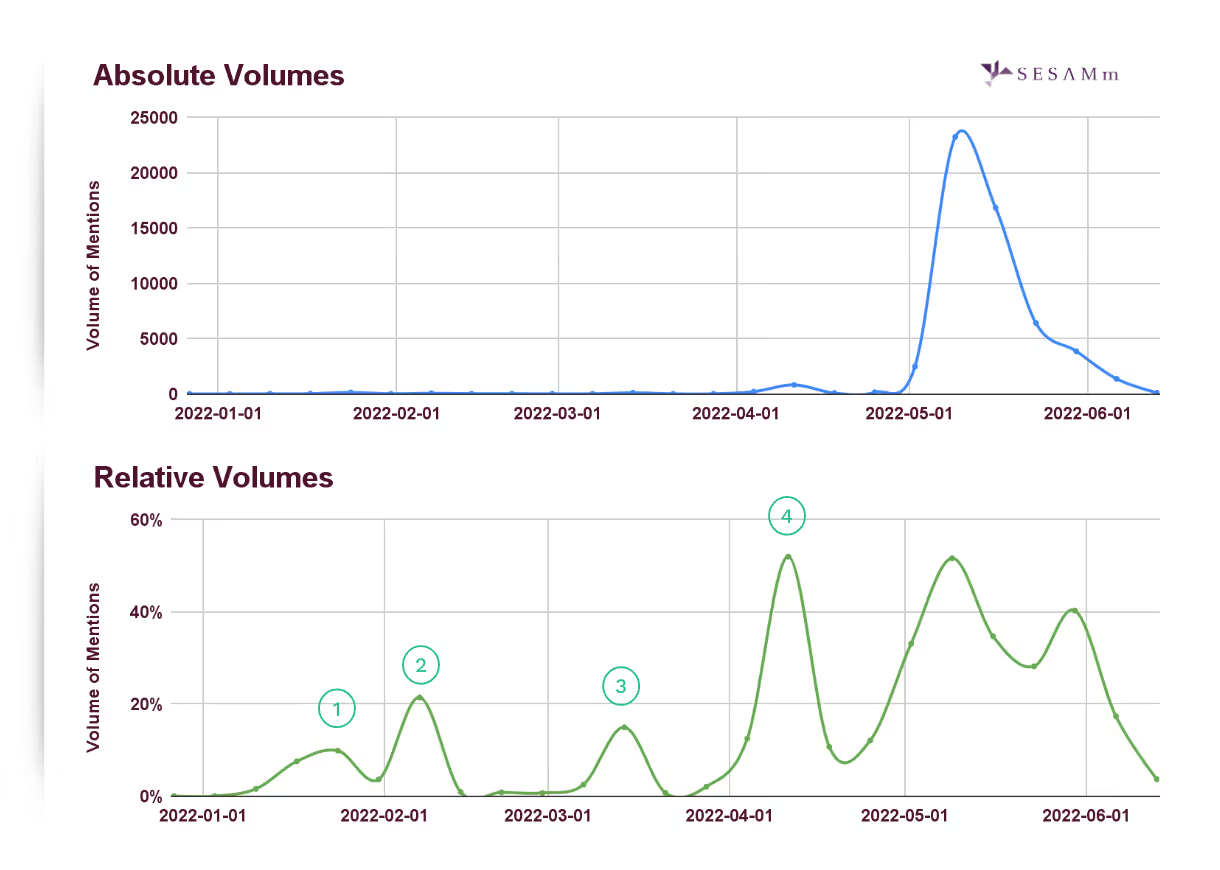
If we compare absolute and relative volumes—relative being mentions about the topic compared to our entire data lake—the term "formula milk market" yields parallel results. Mentions spike in May when the crisis reaches national coverage (see Figure 1).
Figure 1: Absolute and relative mention volumes for “formula milk market” match.
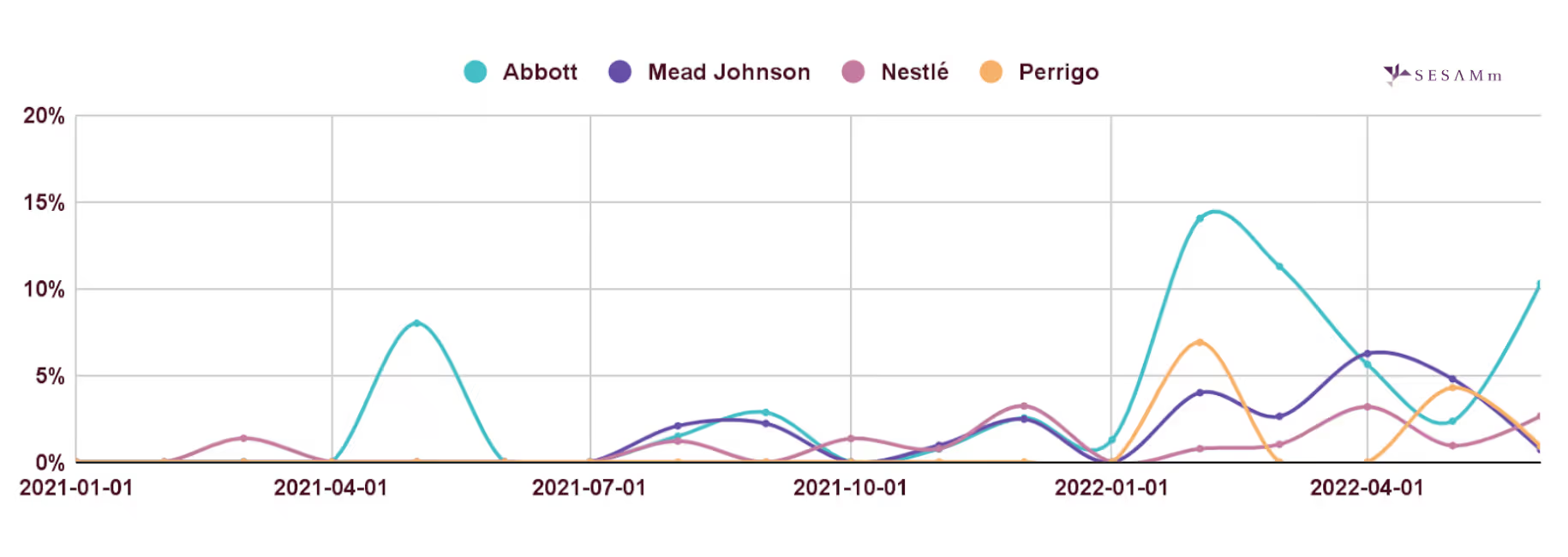
However, comparing absolute and relative volumes for the term "formula milk shortage," we find red flags as early as January 2022, four months before the crisis receives national attention (see Figure 2). Relative mentions spike on three occasions before absolute volumes register any significant noise. The fourth instance matches a ripple on the absolute chart.
Figure 2: Relative mention volumes for “formula milk shortage” show possible controversies.
These articles provide an example of the content published around the times of those rises in mentions:
Analyzing the sentiment and polarity of the formula milk market
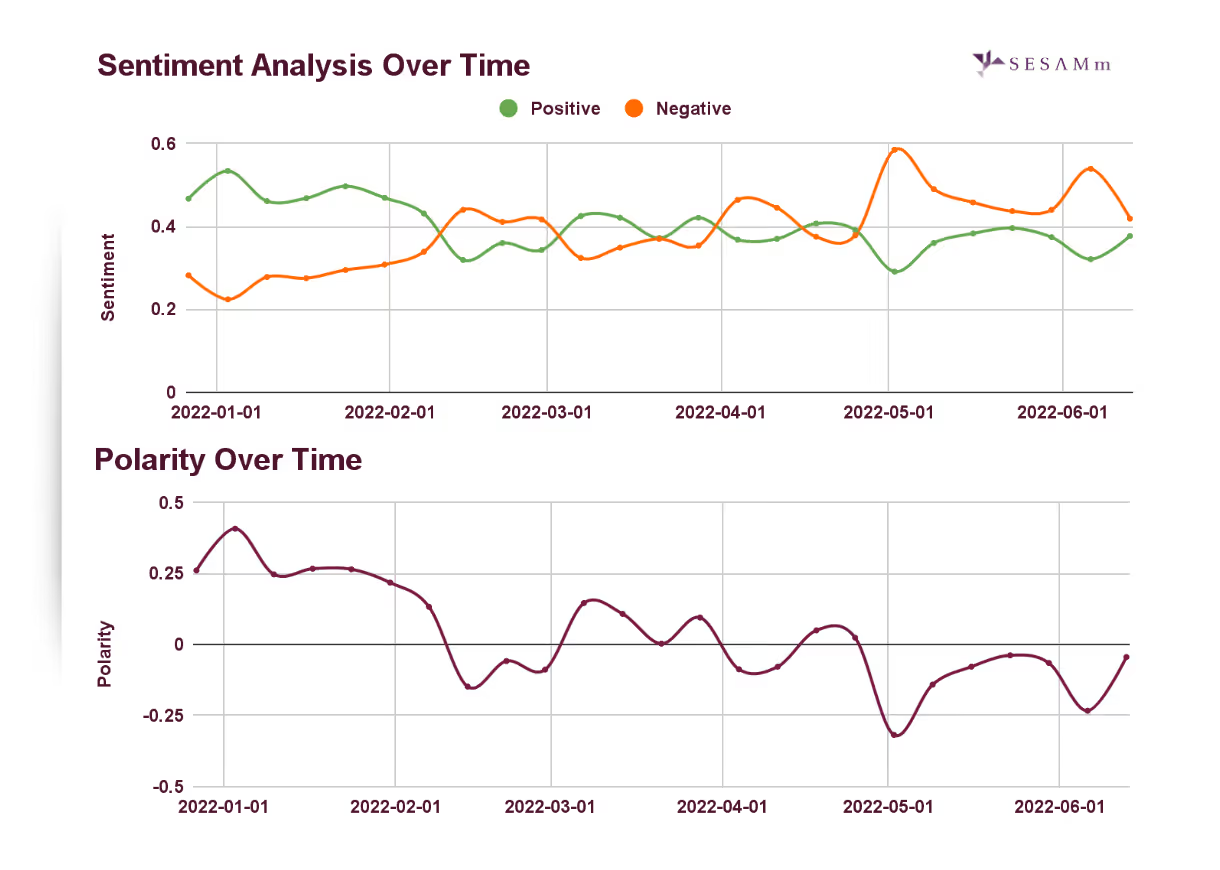
In short, the e-reputation of the formula milk market has been negative since the beginning of 2022 (see Figure 3). Positive sentiment drops and reflects the opposing negative sentiment almost exactly until May, when the news about the crisis breaks. Likewise, polarity trends downward over the same period.
Note: Polarity represents a company's aggregate of positive and negative sentiment (opinions, reviews), ranging from -1 to 1. A zero score means that there is as much positive as negative sentiment. High e-reputation brands can have polarity scores of more than 0.5.
Figure 3: “Formula milk market” sentiment analysis and polarity moved negatively over time
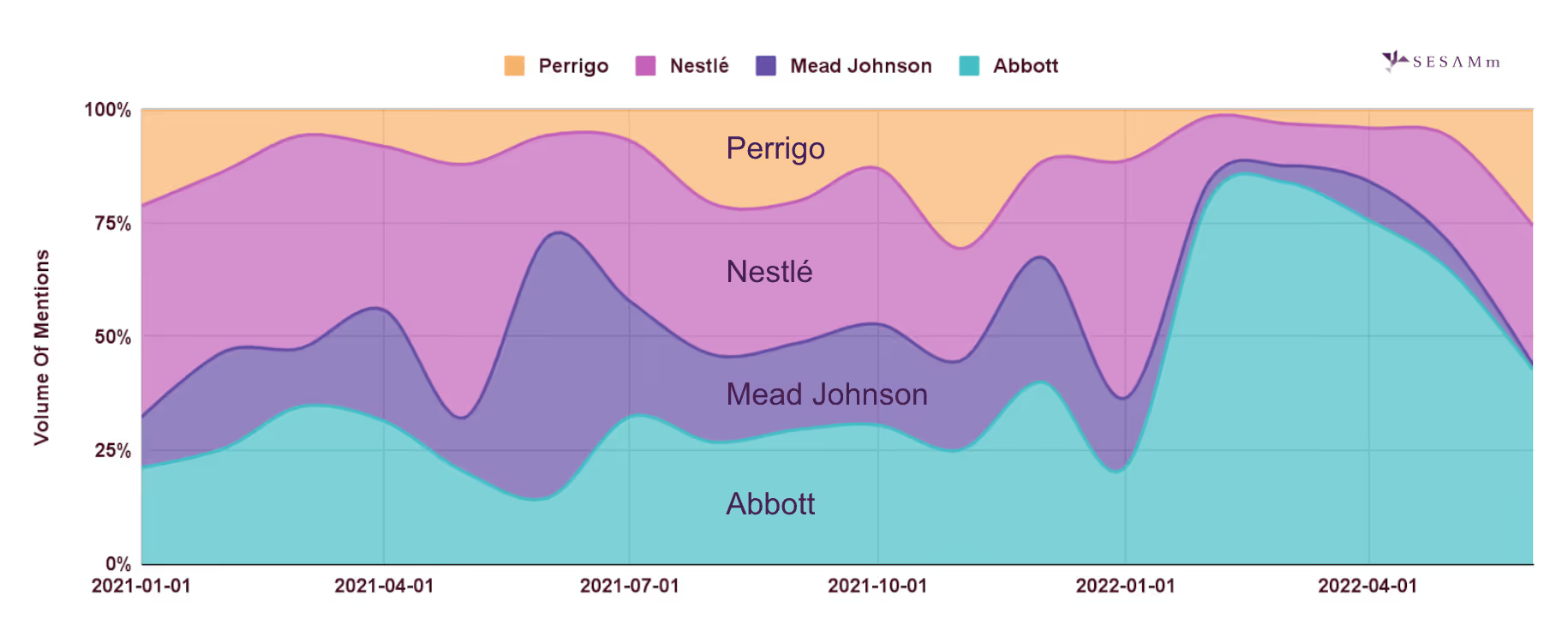
In the U.S., four brands produce the bulk of formula milk: Abbott, Mead Johnson, Nestlé, and Perrigo. Abbott and Nestlé hold the largest share of the formula milk market.
Figure 4: Abbott gains more than 75% of mention volume share in Q1 2022.
When we group these four brands' mentions from January 2021 to June 2022, we can see how their mention volumes compare (Figure 4). For example, at the beginning of the graph, we can see that Abbott and Nestlé have more mention-volume relative to their market share. However, at the end of 2021, Mead Johnson and Abbott experience spikes in mentions due to lawsuits against their formulas. Then, in Q1 2022, Abbott mentions increased drastically after its formulas were recalled due to possible contamination, taking more than 75% of the mention volume.
The baby formula market in the U.S. has been volatile for many reasons, which we won't get into in this article. However, this volatility could be seen and planned for. In this case, here are some tactics you can take to minimize your investment risks:
Employ a tool like SESAMm’s TextReveal to evaluate web data for insights into your investments. With premiere NLP technology, you can uncover sentiment and ESG insights about your industry, portfolio companies, or current investments.
Expand your research term for deeper insights. In this study, the term "formula milk market" had matching absolute and relative volumes. From this view, nothing looks out of place, and there aren't any red flags. However, when we expanded our research with the term "formula milk shortage," we found many controversies before the crisis gained national attention.
Dig into the controversies' causes. It's not enough to acknowledge a red flag. It would be best if you looked into what the potential reason is. Is the controversy caused by external factors or internal ones? Maybe both? Is the issue a one-time occurrence, or is it a pattern? So it's essential to avoid black-box tools. With solutions such as TextReveal that allow you to see beyond, you can access the underlying articles triggering the red flags.
Stay in touch with SESAMm
Thanks for reading this issue of Alternative Data Trends. Be sure to catch the next issue by subscribing to our blog. And if you'd like a TextReveal demo, send us a message via the form.
Held from June 21–29, London Climate Action Week (LCAW) 2025 brought together over 45,000 participants across 700+ events, emphasizing London’s role as a global hub for climate finance and leadership. As geopolitical uncertainty clouds climate ambitions, this year’s event signaled a broader market pivot: investors are now prioritizing regions with regulatory clarity and policy momentum, namely Europe and Asia.
He also outlined plans for new corporate sustainability reporting standards, a move intended to improve transparency, build investor confidence, and ensure alignment with the UK's net-zero targets. These commitments were part of the UK’s post-Brexit green industrial strategy, distinguishing it from recent ESG policy slowdowns in Brussels and Washington.
Climate Finance and Market Confidence
One of the most prominent themes throughout the week was capital mobilization. At the “Finance Live” forum, asset managers, banks, and insurers debated how to align their portfolios with net-zero goals while navigating geopolitical instability and rising greenwashing scrutiny. Key discussions included scaling blended finance vehicles, investing in transition technologies, and strengthening ESG data governance.
Meanwhile, sessions like the Nature Hub spotlighted biodiversity and natural capital, moving beyond carbon to more holistic definitions of environmental value. This reflects a growing consensus that an effective climate strategy must include nature-based solutions and ecosystem restoration.
The Broader Message: A Shift in Global Climate Leadership
While the U.S. backtracks on core climate regulations, London and Europe are entering a leadership void. For global investors, that means that developing a climate strategy now includes not only where to invest but also where to trust. In that context, LCAW 2025 offered both policy and finance updates and a credibility reset.
The takeaway is clear: in an age of fragmented regulation and climate politicization, market trust flows towards stability. London Climate Action Week didn’t just reflect that shift; it helped define it.
Stay ahead with the latest in ESG and AI intelligence
Join our mailing list to receive new reports, event invites, and updates from SESAMm directly to your inbox.







.png)