
ESMA Tightens ESG Oversight: From Fund Labels to Ratings Providers
May 13, 2025
•
5 mins read
As global scrutiny of sustainability claims intensifies, the European Securities and Markets Authority (ESMA) is stepping up its regulatory game to combat greenwashing and strengthen investor trust. In a decisive move, ESMA is tightening rules around ESG fund labeling and expanding its oversight to include ESG ratings providers—ushering in a new era of accountability and transparency across the sustainable finance landscape.
Strengthening ESG Fund Labeling
In May 2024, the European Securities and Markets Authority (ESMA) introduced final guidelines regulating the use of ESG and sustainability-related terms in fund names. These rules respond to concerns that many investment products were using “green” or “sustainable” labels without sufficient alignment to actual portfolio practices—raising risks of greenwashing.
Following the publication of official translations in August 2024, the guidelines became effective on November 21, 2024. New funds must comply immediately, while existing funds have until May 21, 2025, to align. The rules require funds using ESG-related terms to ensure that at least 80% of their assets reflect stated environmental or social characteristics. Those using terms like “sustainable” or “impact” must also apply stricter exclusions, based on EU benchmarks.
The objective is to restore trust in sustainable investing by ensuring fund marketing reflects substance, not just strategy. These guidelines mark a move from self-declared ESG ambition to measurable regulatory alignment.
The regulations faced swift opposition from industry trade groups and Republican state attorneys general, who argued the SEC had overstepped its authority. The legal challenge quickly gained momentum, and with the change in SEC leadership, the agency opted not to continue defending the rules. Caroline Crenshaw, the lone Democratic commissioner, sharply criticized the move. She described it as an attempt to “unlawfully undo valid regulations” and accused her colleagues of “watching the rule’s demise while eating popcorn on the sidelines.”
New Rules for ESG Ratings Providers
In May 2025, ESMA extended its oversight by publishing a draft set of Regulatory Technical Standards (RTS) to regulate ESG ratings providers under the EU’s new ESG Ratings Regulation, adopted in late 2024. These rules are now under public consultation until June 20, 2025.
The draft RTS introduces key requirements: ESG ratings providers operating in the EU must be authorized and supervised by ESMA. They must also publicly disclose their methodologies, data sources, and underlying assumptions—addressing long-standing concerns over opacity and inconsistency in the ESG ratings industry.
Additionally, the proposed framework imposes safeguards to prevent conflicts of interest, particularly where firms offer ratings and related services such as consulting or data sales. The goal is to raise the independence, reliability, and comparability standards across the ESG data ecosystem.
A Unified Push Against Greenwashing
These regulatory initiatives reflect ESMA’s growing focus on creating a more credible, harmonized ESG landscape. From product labeling to third-party assessments, the authority is closing loopholes that have allowed inconsistencies and misrepresentations to persist.
The message for asset managers and ratings firms is clear: ESG marketing is no longer a grey area. Regulators expect proof of substance behind sustainability claims. Whether naming a fund or issuing a rating, firms must demonstrate transparency, governance, and alignment with new EU standards.
ESMA’s efforts also solidify Europe’s leadership in ESG regulation. While other jurisdictions still debate voluntary disclosures, the EU is moving ahead with enforceable rules that are reshaping expectations for financial products and ESG analytics. As the consultation period closes and final rules are adopted, firms operating in the EU—or servicing EU clients—will need to prepare for closer scrutiny.
SESAMm’s AI Technology Reveals ESG Insights
Discover unparalleled insights into ESG controversies, risks, and opportunities across industries. Learn more about how SESAMm can help you analyze millions of private and public companies using AI-powered text analysis tools.

Sustainability trends have become ubiquitous in the business world, mainly due to the attention ESG is receiving. To state the obvious, this is a positive trend as it helps push companies to consider their impact on the environment, employees, and customers and ensure their governance practices are sound. However, it also incentivizes actors in the business world to try to game the system through marketing campaigns to improve their reputation.
Through the use of artificial intelligence and other technologies, we embarked on a mission to analyze the sentiment on the web and uncover to what extent companies are incurring reputational laundering techniques to deceive investors, customers, and other stakeholders but also to identify the ones that are actually performing actions to have a positive impact around them.
This analysis dives into the concept of greenwashing and reputational laundering. It reveals the nuanced interplay between genuine sustainability efforts and deceptive practices, offering a new lens to distinguish genuine from false corporate sustainability claims.
Beyond Greenwashing: Reputational Laundering
Let’s start with some definitions. Reputational laundering is deliberately hiding unethical behavior with highly visible positive actions. Greenwashing is just one component of reputational laundering. Another component is the social aspect of it, and it includes various forms of color washing such as purplewashing, pinkwashing, purpose washing, etc. So far, in 2023, greenwashing accounted for 55% of all the volume of reputational laundering mentions on the web. So, the remaining 45% represents color-washing.
TerraChoice defines greenwashing as “the act of misleading consumers regarding the environmental practices of a company or the environmental performance and positive communication about environmental performance."
Colorwashing, on the other hand, refers to a strategy used by organizations to create a positive public image by associating themselves with specific causes, ethics, or moral standpoints.
Beyond the conventional understanding of deliberate greenwashing, there’s a more nuanced concept and less discussed: unintentional greenwashing, where companies inadvertently convey misleading environmental claims. This can occur due to a lack of understanding of the true impact of their products or services, unverified claims, overlooking hidden consequences, unintentional confusion in marketing materials, or insufficient transparency. While these companies may not have malicious intent, their actions can inadvertently misrepresent their environmental efforts and mislead consumers about their commitment to sustainability.
Reputational laundering at a glance
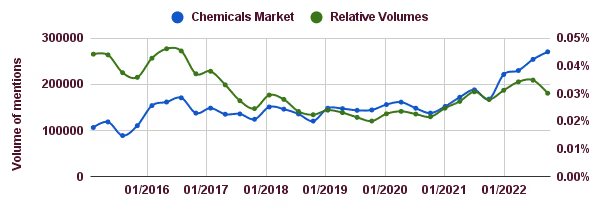
Figure 1: Reputation laundering mentions.
Over the past eight years, reputational laundering mentions have increased steadily. However, from 2021 onwards, they’ve grown a staggering 3.3x. The mentions of reputational laundering are coming from different topics, from false advertising, and misleading practices to lawsuits regarding greenwashing. Furthermore, we have observed a growing number of references regarding the declining trust of the public in corporate pledges, such as those related to 'net-zero' climate goals.
This increase can be attributed to two main reasons: the actual increase in reputational laundering and, more interestingly, the growing awareness from stakeholders (i.e., Investors and eco-conscious consumer base).
According to a report published by the UN Environment Programme (UNEP), climate change lawsuits have continuously surged over the past five years. Consequently, we analyze mentions of lawsuits related to environmental breaches and detect a significant increase in 2021 – which continues to the present day.
While greenwashing often dominates the conversation around reputational risks, it's crucial not to overlook the social dimension, which tends to receive less attention from the public. Since 2020, we've observed a significant uptick in mentions of greenwashing and its less-discussed counterpart, colorwashing.
Historically, up until 2020, the distribution of mentions leaned toward one-third greenwashing compared to two-thirds colorwashing. However, post-2021, this pattern has shifted. We've witnessed a rise in the frequency of greenwashing mentions, surpassing those of colorwashing and signaling an evolution in the focus of reputational laundering concerns.
Figure 3: Breakdown by type of washing.
During the COP27 conference at the end of 2022, a call was made to verify carbon and other environmental claims and show zero greenwashing tolerance. As a result, there has been a rise in scrutiny, and data now shows an increase in the number of allegations related to greenwashing. Here are a few examples:
In analyzing advertisements, we found instances of reputational laundering through various means. Some companies engaged in social washing, while others used sportwashing to bolster their reputation. The mining and energy industries were particularly guilty of this practice. Meanwhile, the communication industry, including companies such as Netflix and Disney, was associated with black and whitewashing.
Inspecting the Regulatory Landscape
To analyze the regulatory environment of reputational laundering, we studied the effects of different legal frameworks and government organizations on greenwashing and other forms of reputational laundering. We measured the influence of legal frameworks and regulatory bodies on greenwashing by analyzing the quarterly growth of greenwashing mentions over the study period.
In this analysis, we define the concept of legal frameworks by capturing references related to the 'Green Claims' directive, Sustainable Finance Disclosure Regulation, EU Taxonomy, Green Product Certification, Fair Labeling and Advertising Act, Non-Financial Reporting Directive, FTC Act, FTC Green Guides, etc.
Concepts of Regulation bodies are defined by references to governments and Supranational entities (i.e., US government, FTC, SEC, Chinese government, Japanese government, etc.) or regulatory agencies established to safeguard the environment (United Nations Environment Programme (UNEP), Environmental Protection Agency (EPA), European Environment Agency (EAA), Intergovernmental Panel on Climate Change (IPCC), etc.)
Figure 4: Anti-greenwashing regulation vs greenwashing growth.
There has been a slight increase in the mentions of regulatory bodies over the years, mainly due to the growing interest in greenwashing, which has peaked during events like COP26 and COP27. Legal frameworks and regulatory bodies have played a significant role in the fight against greenwashing. Although there is no decrease in the mentions of this topic, the growth rate has reduced significantly. In fact, the quarter-on-quarter growth for greenwashing web mentions has been decreasing lately.
The trends reveal an interesting fact that there is a negative correlation between the growth in mentions of frameworks, laws, and regulatory bodies and the growth in mentions of greenwashing. Though the mentions of greenwashing are still increasing, the growth rate has significantly decreased from a 75% quarterly growth rate to 10% in the last year (except for spikes related to controversial events such as Greta Thunberg labeling COP26 as a “greenwash festival,” and not attending COP27).
Conclusion
As we navigate the landscape of corporate sustainability, it becomes evident that distinguishing genuine efforts from greenwashing is not just a matter of skepticism but a necessity. This exploration underscores the importance of vigilant analysis and the role of AI in unmasking deceptive practices. It calls for a collective commitment to transparency and accountability, empowering stakeholders to make informed decisions and advocating for a future where corporate responsibility aligns authentically with sustainable development.
At SESAMm, we used AI to study billions of articles and analyze greenwashing trends. Download this comprehensive ebook for an in-depth understanding of the evolving landscape of reputational laundering, notably greenwashing, and dive into its trends in the corporate world.
SESAMm’s AI Technology Reveals ESG Insights
Discover unparalleled insights into ESG controversies, risks, and opportunities across industries. Learn more about how SESAMm can help you analyze millions of private and public companies using AI-powered text analysis tools.

The rapid growth of social media companies has created significant ESG challenges, particularly in the areas of data privacy, content moderation, and corporate governance.
Meta and ByteDance, in particular, have been hit with lawsuits and fines related to data breaches, privacy violations, harmful content affecting minors, labor practices, and antitrust, with regulatory bodies across the US, EU, and Asia increasing scrutiny of their data collection practices.
Let’s dive into some of the key ESG challenges facing the social networking industry.
Meta Platforms Inc.: Privacy Breaches and Regulatory Scrutiny
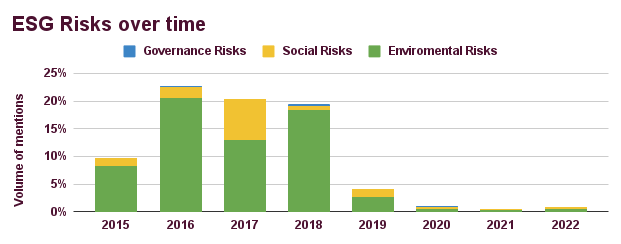
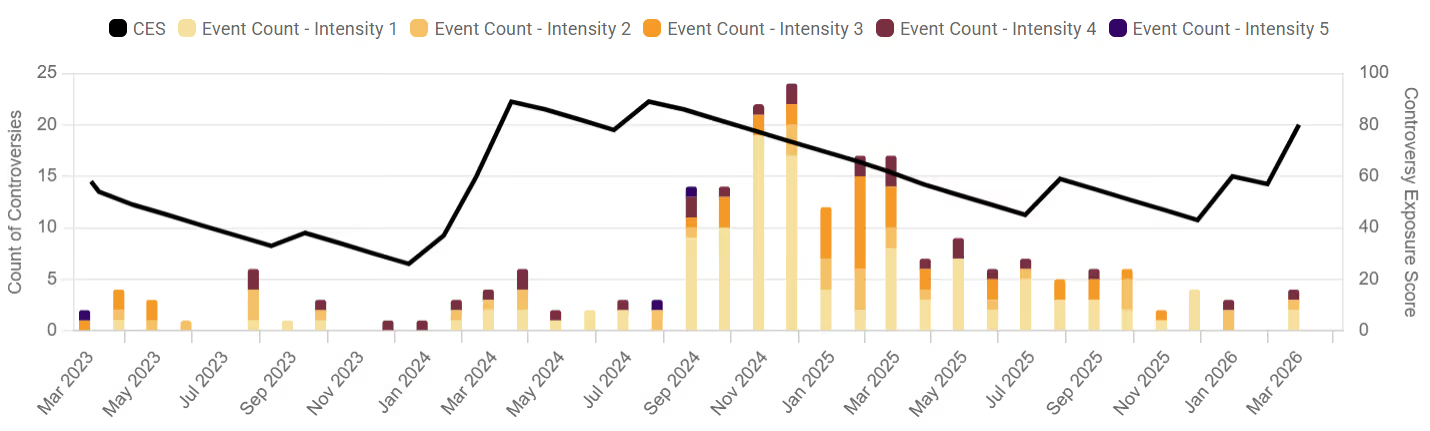
Meta, the mother company of some of the most used social platforms, Facebook, Instagram, and WhatsApp, has faced numerous ESG challenges over the years, including privacy breaches, data misuse, and content moderation issues. 2025 is off to a rocky start, with the company facing a new lawsuit over personal data usage for targeted ads. In 2024, Meta was fined €251 million for a 2018 data breach and faced fines in South Korea and Nigeria for unlawful data collection and antitrust trials regarding Instagram and WhatsApp. In 2023, it addressed issues related to minors and employee treatment. Previous years included fines over the Cambridge Analytica scandal and minors' privacy violations, highlighting ongoing governance and privacy risks amidst regulatory scrutiny.
ByteDance Ltd (TikTok): National Security Risks and Content Concerns
In recent years, TikTok has faced significant ESG risks as U.S. politicians labeled it a national security threat, leading to data privacy concerns and investigations in the EU. By 2022, it incurred major fines, including a £27 million penalty in the UK for data breaches. In 2023, child safety and harmful content lawsuits increased, prompting government bans on official devices in the U.S., UK, and EU. In 2024, TikTok lost its appeal against a U.S. ban, while countries like Canada and Albania imposed restrictions. A 2025 Supreme Court ruling heightened the risk of a complete ban, highlighting ongoing legal challenges.
Since Elon Musk's acquisition of X (formerly Twitter), the platform has faced major controversies over hate speech and misinformation. Legal issues from the $44 billion buyout and a $150 million settlement for security breaches surfaced in 2022, along with fines in Russia and India. In 2023, X received backlash for hosting anti-Semitic content, leading to advertiser losses and lawsuits. The EU initiated investigations into disinformation, and by 2024, X faced fines in Brazil and Australia, GDPR complaints, and class action lawsuits related to age discrimination and mass layoffs, raising concerns about its online impact.
Kakao has faced moderate ESG risks, notably privacy issues and market behavior controversies. In 2024, the company was fined $11.1 million due to a KakaoTalk data breach. Additionally, in 2023, Kakao faced investigations over market manipulation linked to its SM Entertainment acquisition and experienced security vulnerabilities enabling fraudulent activities. Despite these concerns, Kakao's service outages and monopolistic practice allegations have had less severe impacts compared to industry peers.
REDnote (Xiaohongshu) has fewer ESG issues compared to its peers, facing challenges primarily related to censorship, privacy, and regulatory compliance. In 2025, Texas banned its use on government devices due to security concerns. Earlier, REDnote encountered legal challenges over AI-generated art copyrights (2023), a Taiwan-imposed national security ban (2022), layoffs due to restructuring (2022), and fines by Chinese regulators for inappropriate content involving minors (2021).
The social networking industry continues to grapple with significant ESG challenges related to data privacy, harmful content, and corporate governance. Major companies such as Meta, ByteDance, X Corp, KakaoTalk, and REDnote face ongoing regulatory scrutiny, fines, and lawsuits, highlighting persistent ethical concerns. While these issues pressure platforms to improve transparency and governance practices, they also underscore the industry's substantial risks and responsibilities to users and stakeholders.
Reach out to SESAMm
TextReveal’s web data analysis of over five million public and private companies is essential for keeping tabs on ESG investment risks. To learn more about how you can analyze web data or to request a demo, reach out to one of our representatives.
SESAMm, leader mondial de la donnée de controverses, annonce le renouvellement de son partenariat avec Praemia REIM autour de son outil de suivi des controverses ESG. Grâce à l’exploitation de sources d’information internationales, à l’intelligence artificielle et à une revue par des analystes, la solution permet une détection des risques réputationnels et extra-financiers liés aux actifs immobiliers. Ce dispositif s’inscrit dans une démarche globale de maîtrise des risques ESG et d’amélioration continue des pratiques responsables.
Un outil au service de l’engagement dans l’immobilier de santé
Praemia REIM utilise l’outil SESAMm comme levier de dialogue auprès de ses locataires, notamment dans le secteur de la santé, où les enjeux sociaux et éthiques revêtent une importance particulière. En facilitant une gestion active des controverses, la solution contribue à l’accompagnement des locataires opérateurs de santé, à renforcer la transparence et à répondre aux attentes croissantes des investisseurs en matière d’impact social et de responsabilité des pratiques. SESAMm confirme ainsi son positionnement comme partenaire technologique clé pour les acteurs de l’investissement immobilier responsable.
SESAMm’s AI Technology Reveals ESG Insights
Discover unparalleled insights into ESG controversies, risks, and opportunities across industries. Learn more about how SESAMm can help you analyze millions of private and public companies using AI-powered text analysis tools.
Stay ahead with the latest in ESG and AI intelligence
Join our mailing list to receive new reports, event invites, and updates from SESAMm directly to your inbox.