Unlock the Future of Risk Mitigation with AI-Driven Insights
November 3, 2023
•
5 mins read
SESAMm recently hosted a webinar led by Lead Solutions Engineer Leo Shamash. The session focused on the critical role of Artificial Intelligence in identifying and managing ESG (Environmental, Social, Governance) risks and controversies, especially in private companies.
During the webinar, Leo Shamash shared insights on how SESAMm’s advanced AI technologies analyze millions of daily articles to provide accurate ESG risk assessments.
Why is this important for private equity firms? Because traditional methods of risk assessment are often labor-intensive and limited in scope. SESAMm’s AI-driven approach offers a scalable, efficient solution. The webinar also touched on SESAMm's extensive data lake comprising over 20 billion documents, making it one of the largest repositories for tracking ESG risks and controversies.
Watch the webinar replay now:
Join us for our next webinar on November 15 at 4 PM Paris time/10 AM New York time, and watch Sylvain Forté share his insights into how artificial intelligence can help distinguish between genuine sustainability efforts and greenwashing. Book your spot.
Reach out to SESAMm
TextReveal's web data analysis of over five million public and private companies is essential for keeping tabs on ESG investment risks. To learn more about how you can analyze web data or request a demo, contact one of our representatives.
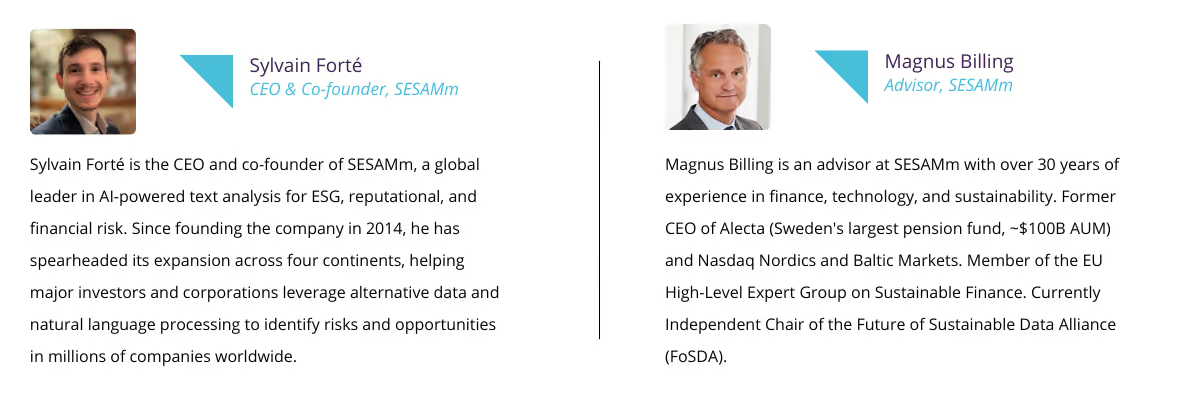
By Magnus Billing, SESAMm advisor, with insights from Sylvain Forté, CEO of SESAMm
Investors have faced so-called “black swan” events throughout history: unexpected crises with severe consequences, often rationalized only in hindsight. Yet in an era defined by generative AI and vast, real-time data lakes, the question arises: could such events be understood and acted upon before they unfold?
The 2023 U.S. regional banking crisis offers a striking case study. The rapid collapses of Silicon Valley Bank and Signature Bank revealed how quickly stress can spread and how difficult it remains to connect early warning signs across sources.
While traditional financial analysis focuses on fundamentals such as capital ratios, liquidity positions, governance, and earnings, a new class of tools is expanding the lens. AI-driven controversy data aggregates and analyzes millions of public sources, from regulatory statements to media and industry discussions, to detect emerging issues as they surface. It does not replace quantitative and fundamental analysis; it complements it by tracking the visibility of risk as it enters public conversation.
This combination of approaches may offer investors a fuller picture: the structural risks visible in balance sheets, and the narrative risks revealed through public dialogue. To test this idea, we revisited the 2023 crisis through both perspectives, starting with what traditional analysis could have shown and what it missed.
Traditional Analysis and Its Blind Spots
In hindsight, the vulnerabilities of regional banks such as Silicon Valley Bank and Signature Bank were visible before the start of 2023. Unrealized losses on long-term securities, heavy reliance on uninsured deposits, and exposure to interest-rate risk pointed to potential liquidity stress. Yet these indicators were neither fully recognized nor connected in the market.
Traditional analysis has a tendency to evaluate banks based on their specific niches: Silicon Valley Bank focused on technology and venture financing, while Signature Bank served commercial real estate and digital asset clients. However, this approach risks overlooking the common and shared structural factors: concentrated depositor bases, high sensitivity to interest rate changes, rapid growth, and weaknesses in governance. Few, if any, observers recognized how rapidly these vulnerabilities could interact and escalate in a modern, digitalized banking environment.
While financial reports contained the data, there was little discussion connecting these risks in the public domain. But what about controversy data? Would it have caught the impending crisis? To find out, I asked Sylvain Forté, CEO of SESAMm, to provide an AI perspective.
What the Data Showed: Signature Bank
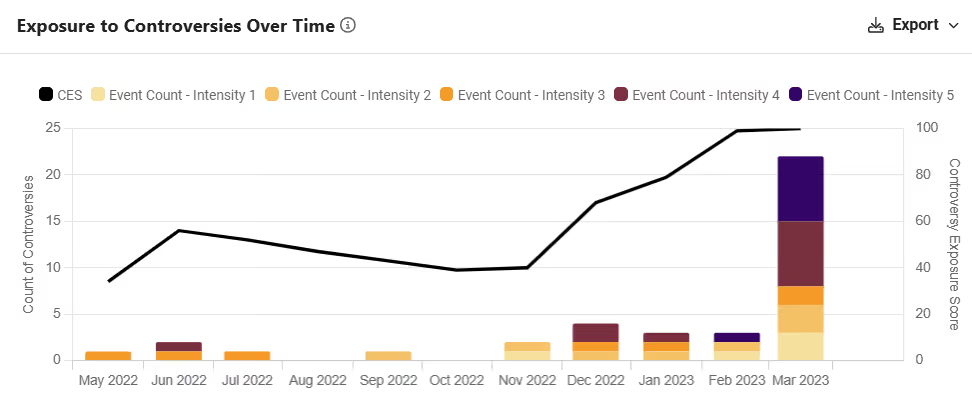
Signature Bank displayed a gradual pattern of emerging risk visible through public discussion. From mid-2022 onward, controversy data showed a rise in coverage related to governance practices, management oversight, and deposit concentration risks, often in the context of its ties to the digital-asset industry.
Importantly, it was not the crypto exposure itself that led to the bank’s collapse. The bank even announced in December 2022 that it would reduce its crypto-related business. Instead, the FDIC’s Supervision of Signature Bank report concluded that, “the root cause of SBNY’s failure was poor management. SBNY’s board of directors and management pursued rapid, unrestrained growth without developing and maintaining adequate risk management practices and controls.”
From a controversy perspective, those signals were publicly visible but fragmented. As shown in the chart above, AI-powered monitoring could have aggregated them into a clear view of a sustained drift in governance-related discussions, offering an early indication that oversight and internal controls were under pressure and risk was increasing.
What the Data Missed: Silicon Valley Bank
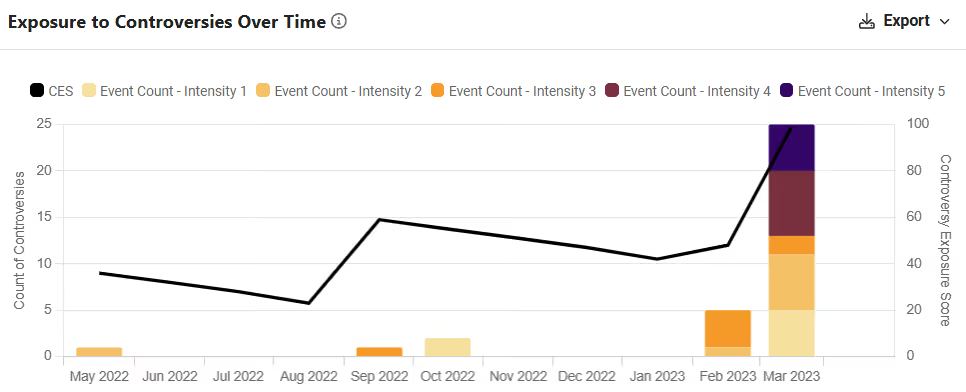
In contrast, Silicon Valley Bank presented a markedly different pattern. While controversy data registered some activity in late 2022, including investor reactions to financial forecasts and coverage of routine business operations, these signals were fundamentally different in character from Signature Bank's governance-related warnings.
The September 2022 increase reflected market disappointment with financial guidance rather than operational or governance concerns. The subsequent activity captured normal business news, such as arranging syndicated loans. Critically, there was minimal public discussion of the bank's balance-sheet structure, unrealized losses, or depositor concentration risk until the crisis was already unfolding in March 2023.
This example underscores a key distinction: AI controversy monitoring excels at capturing reputational, governance, and operational risks as they enter public dialogue, but may not surface structural financial risks that remain confined to regulatory filings and analyst reports.
Lessons from Both Cases
The contrast between these two banks illustrates the complementary roles of quantitative and fundamental financial analysis vs AI-driven controversy monitoring.
In Signature Bank’s case, controversy data captured a steady accumulation of governance-related warnings, a slow build-up of risk visible through public discussion.
In Silicon Valley Bank’s case, the risks were structural but not yet discussed, leaving little for AI-powered controversy data to detect.
As Sylvain explains, “AI controversy monitoring helps investors understand how and when risks start to emerge in public dialogue. It does not replace fundamental analysis. It complements it by showing when the conversation begins to shift.”
Conclusion
Black swan events are often rationalized only in hindsight, but the 2023 regional banking crisis suggests a more nuanced reality. Some signals existed. What remained difficult was connecting them across sources before stress became contagion.
AI-driven controversy monitoring proved effective at surfacing governance and operational risks as they entered public dialogue, as Signature Bank demonstrated. Yet structural financial vulnerabilities like those at Silicon Valley Bank may not generate discussion until crisis forces the conversation, underscoring that no single lens captures all risk.
The advantage lies not in prediction, but in preparation: combining the structural risks visible in balance sheets with the narrative risks revealed through public discourse. In an era of real-time data and generative AI, the question is no longer whether information exists, but whether investors can connect it before it becomes consensus.
Reach out to SESAMm
TextReveal’s web data analysis of over five million public and private companies is essential for keeping tabs on ESG investment risks. To learn more about how you can analyze web data or to request a demo, reach out to one of our representatives.
The Nordics have long been global leaders in responsible investment. Nordic banks, pension funds, and asset managers were among the first to integrate ESG considerations into portfolio management and stewardship practices.
But the landscape is changing. Investors now face new types of risks that go beyond traditional ESG frameworks, including geopolitical tensions, supply chain controversies, and fast-moving reputational crises. At the same time, new technologies such as artificial intelligence are transforming how investors detect and interpret these signals.
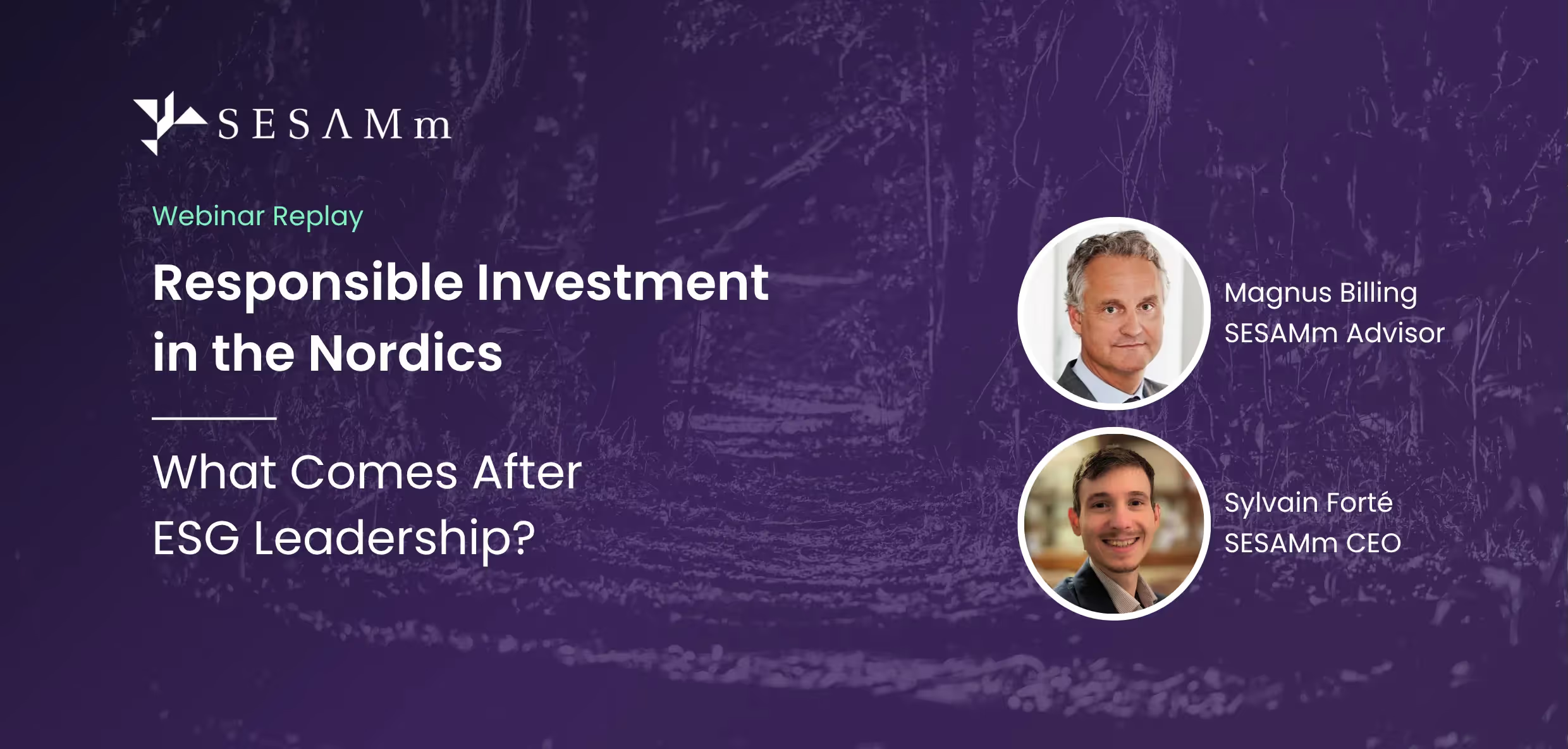
Watch this replay to hear Magnus Billings, SESAMm Advisor, and Sylvain Forté, SESAMm CEO, explore how Nordic investors are adapting their responsible investment strategies and what the next decade of risk monitoring may look like.
Paris, France – November 21, 2024 – SESAMm, a leading artificial intelligence company, has been prominently featured in the latest edition of Datos Insights' Capital Markets Fintech Spotlight for Q3. This recognition underscores SESAMm's pivotal role in transforming the landscape of ESG and sentiment analysis through innovative AI technologies.
SESAMm's technological prowess allows clients to conduct in-depth due diligence and risk assessments, monitor investments, and make informed decisions. The platform’s strength lies in its ability to detect ESG controversies and identify positive impact events related to the UN Sustainable Development Goals (SDGs).
The report by Datos Insights highlights the challenges investment firms face regarding timely and transparent ESG risk information, particularly with small to mid-sized companies and in diverse geographic locations. SESAMm addresses these issues by providing a robust alternative to more traditional, often costlier, solutions. Its capacity to offer detailed ESG monitoring and analysis positions SESAMm as a valuable asset to its clients, which include some of Europe's largest financial institutions and notable names like Carlyle and Raiffeisen Bank International.
The Capital Markets Fintech Spotlight is a quarterly report that evaluates innovative companies shaping the future of finance through technology. Featuring SESAMm in this report highlights its impact on integrating ESG considerations into the investment process globally. This recognition is a testament to SESAMm’s commitment to excellence and innovation in the rapidly evolving fintech landscape.
Discover unparalleled insights into ESG controversies, risks, and opportunities across industries. Learn more about how SESAMm can help you analyze millions of private and public companies using AI-powered text analysis tools.
Stay ahead with the latest in ESG and AI intelligence
Join our mailing list to receive new reports, event invites, and updates from SESAMm directly to your inbox.





.avif)


.png)