Sayari and SESAMm Partner to Revolutionize ESG Risk Management in Supply Chains
September 25, 2025
•
5 mins read
New partnership equips customers with real-time intelligence from over 4 million sources to strengthen due diligence and monitoring across global supply chains
WASHINGTON, D.C. – September 26, 2025 – Sayari, a leader in corporate risk intelligence and supply chain transparency, today announced a new data partnership with SESAMm, a global provider of AI-driven controversy risk data. This collaboration integrates SESAMm’s real-time, AI-driven controversy risk data into the Sayari platform, providing users with unprecedented insights into hidden ESG risks across global supply chains. By combining our unique datasets, we are closing the information gap on hard-to-assess private entities and their suppliers, a critical blind spot in traditional ESG and supply chain monitoring.
The partnership directly addresses the growing need for procurement and risk teams to have comprehensive insight into emerging reputational risks as global ESG compliance requirements intensify. By integrating SESAMm’s data, Sayari's solution now monitors over 650,000 suppliers, allowing customers to proactively identify and mitigate risks from small, hard-to-assess private entities that are typically excluded from traditional ESG coverage.
The data partnership is powered by SESAMm’s advanced AI, which analyzes content from over 4 million sources in more than 100 languages. This real-time analysis provides actionable decision intelligence that can detect red flags like human rights violations, environmental scandals, and governance failures, often days or even weeks before they surface in traditional data sets, transforming reactive risk management into strategic foresight. This powerful analysis offers a unique advantage, complementing traditional ESG metrics and strengthening due diligence and ongoing monitoring efforts. The data is available across all of Sayari's platforms, including API, bulk, and visually in both Sayari Graph and Sayari Map.
“For the first time, our customers can gain a truly holistic, interconnected view of every entity in their ecosystem, from tier-1 suppliers to hidden sub-tier partners,” said Chris Brazdziunas, Chief Product and Technology Officer at Sayari. “By integrating SESAMm's real-time, AI-driven insights, we're empowering our clients to proactively identify and mitigate hidden risks on a global scale, fundamentally changing the way they approach due diligence and supply chain transparency.”
“For more than a decade, we’ve advanced AI to reveal hidden ESG and reputational risks in companies worldwide. We’re excited to partner with Sayari to bring these insights into procurement and supply chain risk management, enabling teams to detect issues earlier and address them more effectively,” said Sylvain Forté, CEO and co-founder of SESAMm.
The future of risk management demands a holistic, interconnected view of every entity within an organization's ecosystem. This partnership, powered by AI-driven analysis of more than 4 million sources, lays the foundation for a comprehensive, integrated risk management solution that will revolutionize the quality, efficiency, speed, and scale at which organizations can identify and manage third-party risk. The ability to transform deep analysis into strategic foresight is the key to empowering customers to act with confidence in an increasingly complex global economy.
About Sayari
Sayari provides global corporate transparency and supply chain risk identification for government and industry. Its commercial risk intelligence platform aggregates data from more than 250 jurisdictions worldwide. Sayari's solutions are trusted by government agencies, financial institutions, and Fortune 500 companies.
About SESAMm
SESAMm is a global provider of AI-driven controversy risk data. The company delivers real-time reputational and sustainability risk signals using advanced large language models and generative AI. SESAMm has raised over $50 million in funding and is backed by major investors including Carlyle, BNP Paribas, and Elaia. They work with major financial institutions, private equity firms, rating agencies, and corporations.
SESAMm’s AI Technology Reveals ESG Insights
Discover unparalleled insights into ESG controversies, risks, and opportunities across industries. Learn more about how SESAMm can help you analyze millions of private and public companies using AI-powered text analysis tools.
Public companies, due to their large market presence and mandatory financial disclosures, often receive a lot of attention on the Internet. Their operations and regulatory obligations put them under a media spotlight, which amplifies any ESG controversies they face in public and online discussions. In contrast, private companies operate with a higher degree of discretion and are generally less exposed to intense external scrutiny.
Although private companies are less visible to the public, there is still an underlying interest and, more importantly, a need to understand the nature of ESG controversies they face. Are these controversies different in any way, such as being less significant or having unique characteristics? This raises questions about whether certain types of risks are more susceptible to controversies in the private sector. When comparing prominent public companies with their private counterparts, do controversies differ within the same industry?
ESG Overview
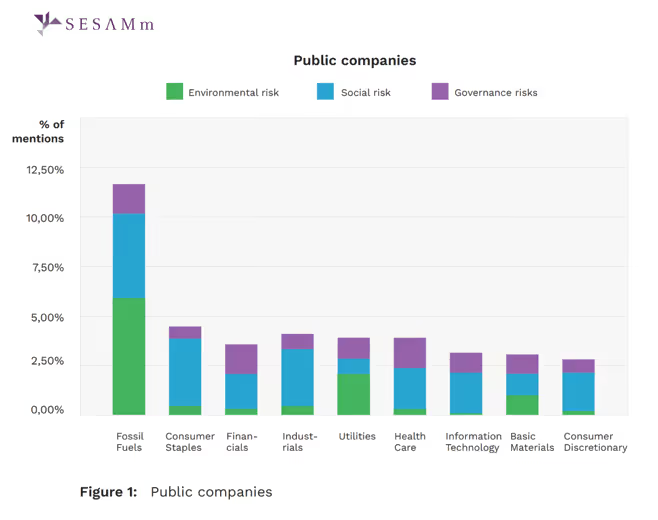
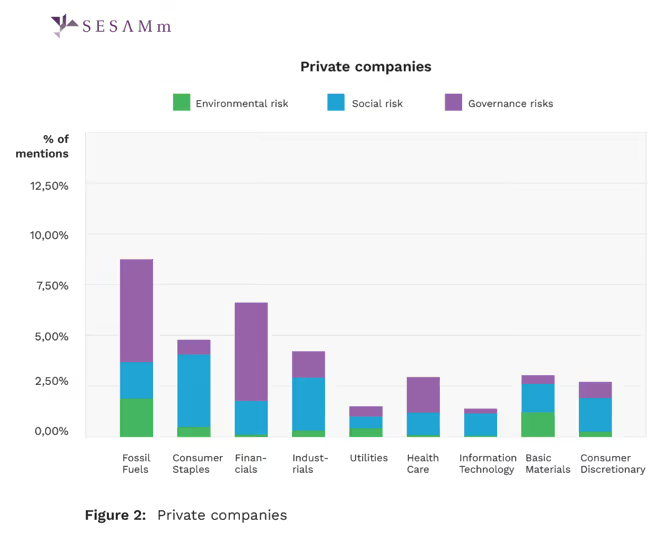
In exploring the ESG landscape, a compelling comparison emerges between private and public companies. Public companies predominantly grapple with environmental and social risks. On the other hand, private companies, especially in the financial sector, are more frequently embroiled in governance-related controversies. This section highlights the ESG challenges each sector faces and the varying degrees of visibility and scrutiny these issues receive in the public and private domains.
Within the fossil fuel industry, a distinct difference emerges: public companies are predominantly associated with environmental and social risks, while private companies face more governance-related issues.
This disparity is partly due to the more visible and significant environmental impacts often linked to public companies, such as BP's gasoline spill cleanup in Washington state and the devastating impacts of Shell's oil spills in Nigeria. Public companies also tend to experience more social issues, like employee strikes, protests, and human rights infringements.
In contrast, private companies, particularly in the financial sector, show a higher frequency of governance risks. Examples include controversies surrounding FTX and Binance, highlighting issues like corruption, substantial fines, and money laundering allegations. This trend mirrors the earlier observation in the fossil fuel sector, where private companies, despite fewer controversies, experience more pronounced impacts when significant ESG issues arise.
It's noteworthy that private sector controversies, due to their relatively lower level of scrutiny, can gain significant traction and visibility when they do surface. This differs from the public sector, where the constant exposure to ESG risks leads to more frequent detection but not necessarily the same level of virality for each event. Public companies regularly encounter ESG risks, but the prevalence of such issues in their operations means that individual events may not always attain widespread attention.
ESG Deep-dive
Environmental risks deep-dive
Looking at environmental risks, public companies often face significant issues like emissions, climate change, and water pollution, while private firms encounter these challenges on a smaller scale and with different focuses, such as animal cruelty and environmental strategy.
In the Consumer Discretionary sector, both types of companies encounter environmental risks, but the nature of these risks differs. Public companies, particularly in the automotive industry, are often involved in incidents like fires and lawsuits related to harmful emissions. Private companies, while also dealing with fires and automotive issues, face additional problems like animal cruelty allegations in retail.
The Fossil Fuel sector shows a clear distinction in ESG issues. Public companies frequently face controversies related to climate change and atmospheric pollution, often involved in significant incidents like legal actions and fines. Private companies, on the other hand, are more focused on general environmental strategy, though their controversies tend to be of a smaller scale.
In Utilities, public companies are more involved in water pollution controversies, with significant incidents like fines for unlawful water extraction making headlines. Private companies, while also dealing with water pollution, do so less frequently and on a smaller scale.
The Healthcare sector, particularly in public companies, shows a focus on biodiversity-related controversies. Issues like animal cruelty in biotechnology are prominent.
Overall, public companies tend to be at the center of more significant and high-profile environmental controversies, particularly in sectors like fossil fuels, utilities, and financials. Private companies, while also facing environmental and ethical challenges, often do so on a different scale, indicating different approaches and impacts in their management.
Social risks deep-dive
Public companies across sectors like Consumer Discretionary, IT, Financials, and Fossil Fuels frequently confront a broad spectrum of social risks, including human rights breaches and human capital concerns. Private companies, while also facing these issues, tend to have a more focused approach, with specific concerns in areas like telecommunications, social media, and health & safety. This indicates differing strategies and impacts on their social management.
Public companies in the Consumer Discretionary sector struggle with a substantial volume of data related to human rights breaches and human capital issues. These challenges are widespread across various industries, with incidents in telecommunications, social media, and the automobile industry being particularly noteworthy. In contrast, private companies in this sector primarily confront human rights breaches, with a significant focus on issues within telecommunications and social media. This contrast indicates a more specialized concern for private companies in this sector.
Both public and private companies in the Information Technology sector experience significant risks related to fundamental human rights breaches and human capital concerns. However, public companies, particularly those in software and hardware, are more frequently linked to these issues. Private companies, while also implicated, tend to have a different focus within the same concerns.
In the Financial world, public companies exhibit a pronounced focus on human capital issues, surpassing their private counterparts. This focus spans the banking and insurance industries with notable instances of discriminatory dismissals and wage disputes. Additionally, public companies in this sector also navigate complexities related to human rights and customer relations, including racial discrimination lawsuits and data breaches. Conversely, private financial companies face significant customer relations issues, especially highlighted in financial services, and human rights concerns, such as charges against Binance for child pornography and terrorism financing.
Private companies in the Consumer Staples sector lead in mentions related to health and safety, particularly in the Food/Beverage and tobacco manufacturing industry. These references often involve serious incidents like industrial accidents and lapses in COVID protocols. Additionally, customer relations issues are slightly more pronounced in private companies compared to their public counterparts. Public companies, meanwhile, have a slightly higher proportion of mentions related to human rights risks, including labor law violations and privacy concerns.
Public companies in the Fossil Fuel sector are notable for their focus on human capital issues, with references to industry-wide strikes and layoffs. In contrast, private companies in this sector demonstrate a significant focus on human rights issues, as exemplified by the case of the ex-Citgo CEO.
A divergence is seen in the Basic Materials sector, where private companies face more prevalent human capital issues, particularly in mining & metals and the chemical industry. Public companies, on the other hand, encounter a higher proportion of human rights breaches, including harassment lawsuits and violations of indigenous rights.
In summary, public companies across these sectors tend to face a wider range of social controversies, encompassing both human rights and human capital issues, often on a larger and more varied scale. Private companies, while also dealing with similar challenges, tend to do so with a more specific focus, suggesting different approaches and impacts in their social management strategies.
Governance risks deep-dive
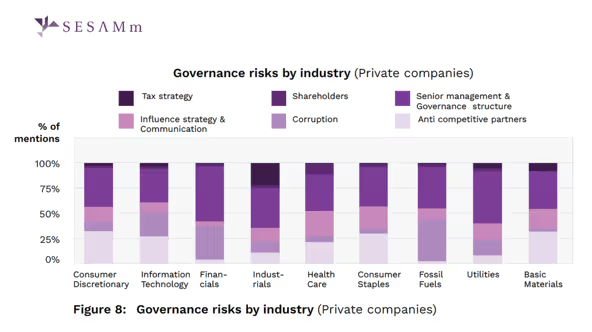
In scrutinizing governance, we found that public firms face risks in management and governance, while private entities encounter issues like anti-competitive practices and corruption. Financial and Industrial sectors see public companies dealing with strategy and compliance challenges, whereas private firms face tax strategy risks. Overall, public companies are more involved in high-profile governance controversies, while private companies focus on specific areas like tax and anti-competitive behavior.
In the Consumer Discretionary sector, governance issues vary notably between public and private entities. Public companies, particularly in telecommunications and Social Media, encounter significant risks in senior management and governance structures, evidenced by legal actions and allegations against companies like Verizon and Ericsson. Conversely, private companies in Media & Entertainment are more embroiled in anti-competitive practices, as highlighted by Epic Games' antitrust trial against Google.
Information Technology presents a clear distinction. Private companies are frequently linked to substantial corruption issues, with the FTX scandal serving as a prime example. Public companies, on the other hand, are more inclined towards engaging in anti-competitive practices, as seen in the cases of technology giants like Google and Microsoft facing antitrust lawsuits and scrutiny for monopolistic behavior.
In the Financials sector, governance risks are predominantly tied to senior management and corporate structure. Public companies face challenges primarily in their influence on strategy and communication, with notable instances including BlackRock's lawsuit over an alleged misleading ESG strategy. Meanwhile, prominent financial services companies like PayPal have faced regulatory scrutiny, further illustrating the sector's vulnerabilities.
The Industrials sector shows similar trends among public and private companies but with a specific emphasis on tax strategy risks in private firms. This is exemplified by the PwC tax leaks scandal, indicating the deep impact of governance issues in private entities.
In the Fossil Fuels sector, corruption issues are more pronounced, especially among privately-held companies. Incidents such as the lawsuit against Citgo and the Amec bribery case settlement underscore the sector's susceptibility to governance-related controversies.
Lastly, the Utilities sector shows a higher prevalence of corruption among public companies, as demonstrated by the investigation into FirstEnergy's public corruption scandal and subsequent legal actions.
Overall, governance risks manifest differently in public and private companies across various sectors. Public companies are often at the forefront of high-profile governance controversies, dealing with issues related to management, strategy, and regulatory compliance. Private companies, while also grappling with governance challenges, tend to face issues like anti-competitive practices and tax strategy risks, reflecting a variance in operational focus and impact on governance risk management.
Conclusion
By diving into the complexities of ESG, both public and private sectors have a unique opportunity not only to enhance their financial performance but also to drive positive societal and environmental impacts. As we further examine corporate controversies and gain a deeper understanding of the nuances within the ESG landscape, it becomes increasingly clear that a commitment to these principles is essential for long-term success and global well-being. Our journey highlights the tremendous potential for positive change when corporations embrace the pressing demands of today's ESG landscape, paving the way for a more sustainable, equitable, and governance-focused world.
Download the full report to discover how different sectors navigate regulatory pressures and sustainability challenges with real-world examples to guide your strategy.
Reach out to SESAMm
TextReveal’s web data analysis of over five million public and private companies is essential for keeping tabs on ESG investment risks. To learn more about how you can analyze web data or to request a demo, reach out to one of our representatives.
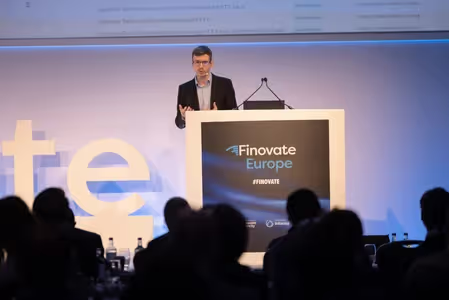
CEO Sylvain Forté demonstrates TextReveal’s® latest features applied to supply chain and risk analysis on the main stage of FinovateEurope 2023 in London. He also presents a quick use case on the latest Silicon Valley Bank fallout.
Discover how TextReveal can help automatically analyze millions of companies based on web content at SESAMm.
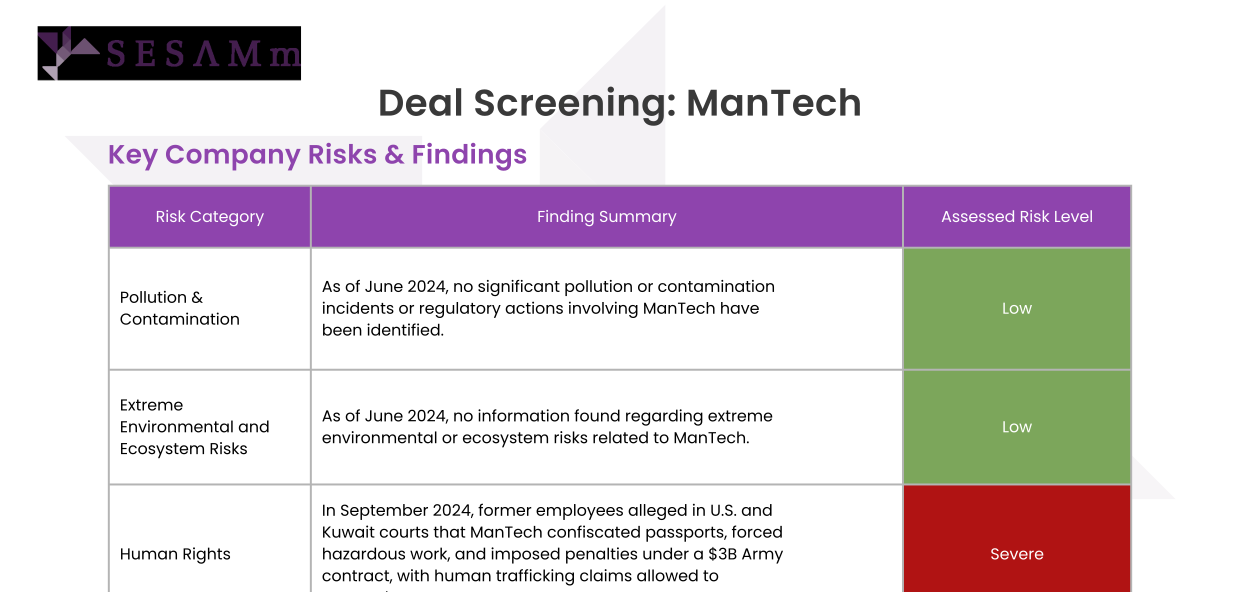
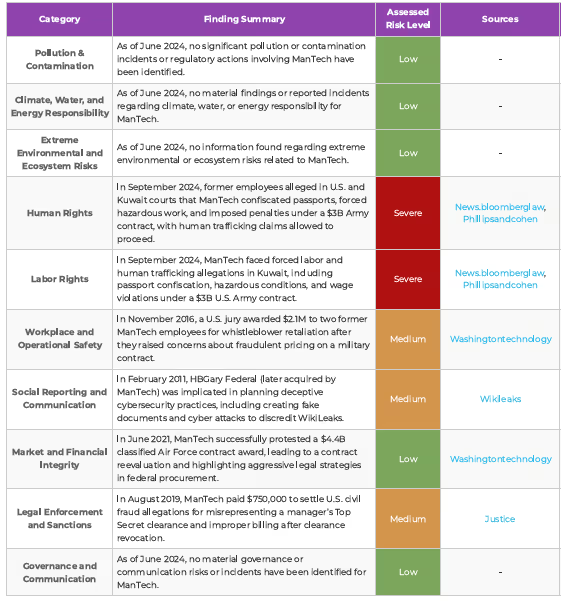
This is from SESAMm’s Deal Screening AI report. These reports are usually used by private equity deal teams and M&A teams to conduct pre-commercial due diligence on any company or project in minutes, and they contain insights and risks on the target company as well as a full competitive and market analysis.
ManTech International Corporation is a U.S.-based defense contractor specializing in cybersecurity, data analytics, and systems engineering solutions for national security and government agencies. Founded in 1968 and headquartered in Herndon, Virginia, the company operates globally. It primarily serves U.S. defense, intelligence, and homeland security clients, delivering technology services that support mission-critical operations such as cybersecurity protection, artificial intelligence and analytics, and intelligence, surveillance, and reconnaissance capabilities.
The broader defense and intelligence services market in which ManTech operates is expanding rapidly due to rising global defense spending, geopolitical tensions, and increasing demand for advanced digital and cyber capabilities. Within this context, ManTech has recently secured several growth signals, including a $200 million cybersecurity contract with the National Oceanic and Atmospheric Administration, partnerships to deploy secure AI technologies, and major analytics and systems contracts with the U.S. Army, reflecting continued demand for its technical expertise.
The report identifies several legal and reputational risks that could be relevant in a due diligence context. The most significant relate to labor and human rights issues, including allegations by former employees that the company confiscated passports and imposed hazardous working conditions under a U.S. Army contract in Kuwait, with a U.S. court allowing human-trafficking claims to proceed. Other previous issues include whistleblower retaliation claims linked to military contract billing practices and a civil fraud settlement involving misrepresentation of security clearance status. Environmental risks appear limited, with no major pollution or climate-related incidents identified.
In the competitive landscape, ManTech operates alongside firms such as Booz Allen Hamilton, Leidos, CACI International, SAIC, and General Dynamics Information Technology. While not the largest player in the sector, it is regarded as a capable provider of secure IT and cybersecurity solutions for classified government missions. Overall, the report concludes that ManTech benefits from strong demand for defense technology and cyber capabilities but faces reputational exposure primarily tied to labor practices and contract-related compliance risks.
Reach out to SESAMm
SESAMm’s AI Deal Screening Reports analyze web data across over five million public and private companies to help investors quickly identify legal, ESG, and reputational risks during due diligence. To learn more about how you can generate these reports or to request a demo, reach out to one of our representatives.
Stay ahead with the latest in ESG and AI intelligence
Join our mailing list to receive new reports, event invites, and updates from SESAMm directly to your inbox.



.avif)





.png)