SESAMm Launches AI-Powered Deal Screening Reports for Private Equity and M&A
September 24, 2025
•
5 mins read
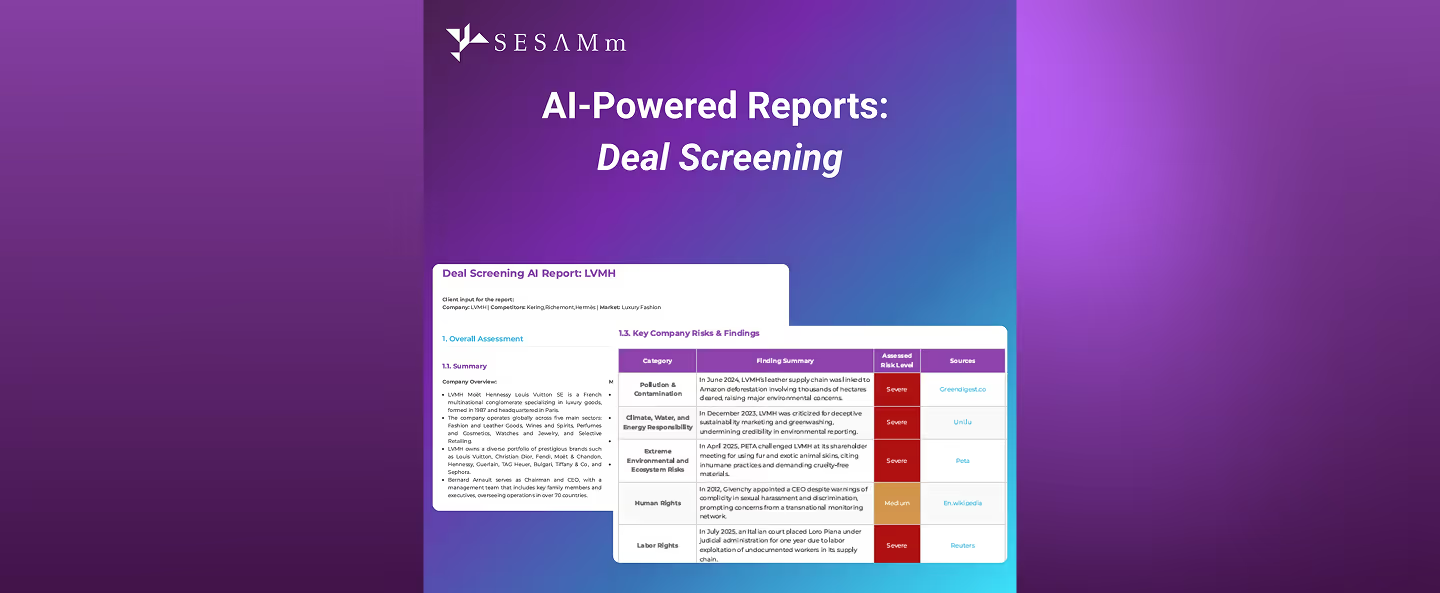
Private equity deal teams and M&A teams are under constant pressure to move faster, screen more opportunities, and avoid costly blind spots. To meet this challenge, SESAMm is expanding its suite of AI Reports with a new offering: the AI-powered Deal Screening Report.
This latest addition gives deal teams the ability to conduct pre-commercial due diligence on any company or project in minutes, not weeks. Not only does it surface insights and risks on the target company, it also provides a full competitive and market analysis.
Faster, Smarter Deal Screening
Built for high-volume, time-sensitive deal environments, SESAMm’s Deal Screening reports act as an early-stage radar: surfacing hidden risks, growth signals, and market dynamics before significant expenses are incurred.
Delivering weeks of manual research in just hours, these reports provide a structured view of target companies to guide where deeper diligence should focus.
Key benefits include:
Faster prioritization: Eliminate weak targets early and shrink the funnel.
Sharper focus: Direct consultants and expert networks to areas that matter most.
Greater confidence: Make earlier, more strategic go/no-go decisions.
Lower costs: Reduce wasted hours and consultant spend on low-value deals.
Supporting the Full Diligence Cycle
Deal Screening reports fit seamlessly into every stage of the diligence process:
Pre-CIM: Shape hypotheses and spot risks before significant time and budget are invested.
During CIM review: Use SESAMm insights to challenge claims and guide expert calls.
Post-CIM: Monitor ongoing sentiment and emerging risks as diligence deepens.
By acting as a bridge to deep diligence, SESAMm ensures consultants and expert calls are focused on what truly matters, helping deal teams allocate resources more effectively and move forward with sharper decision confidence.
A Growing Suite of AI Reports
These new Deal Screening reports are the latest addition to SESAMm’s expanding portfolio of AI-generated reports. From ESG assessments to supply chain and business exclusion screenings, SESAMm provides scalable, AI-powered insights that help firms make faster, smarter, and more confident decisions.
Get Started Today
SESAMm is trusted by 7 of the top 10 private equity firms worldwide, such as Carlyle and Warburg, to deliver AI-powered intelligence at the speed of deal flow. Request a free trial of the Deal Screening report and experience how SESAMm can transform your early diligence process.
SESAMm’s AI Technology Reveals ESG Insights
Discover unparalleled insights into ESG controversies, risks, and opportunities across industries. Learn more about how SESAMm can help you analyze millions of private and public companies using AI-powered text analysis tools.
As the year closes, it's time to reflect on some of your favorite pieces of content, so we've compiled a list of the top 8 blog posts highlighting the most popular and insightful content we've published. From investor guides to detecting greenwashing practices, these posts have resonated with you, our readers, and hopefully, continue to provide valuable information and inspiration. Join us as we look back at the top 8 posts of the year and see what made them stand out.
This piece explains the pivotal role of knowledge graphs in enhancing text analysis for investors. It clarifies how these graphs contribute to a more nuanced understanding of data, aiding in investment decisions. Readers appreciated the clear, practical insights into how knowledge graphs strengthen SESAMm’s cutting-edge AI technology.
In this article, Sylvain Forté presents an optimistic view of the future of AI in the financial sector, focusing on the rapid advancements in AI. He discusses how these technologies are evolving and what this means for investors and companies alike. Readers were captivated by the forward-looking perspective and practical implications of these innovations.
This article serves as a guide on the relationship between Sustainable Development Goals (SDGs) and AI. It explains how AI facilitates the identification and tracking of SDG-aligned investment opportunities. Our audience found the straightforward approach and practical examples particularly enlightening for understanding the intersection of sustainability and technology.
Highlighting SESAMm's innovative approach, this piece details the incorporation of generative AI into ESG risk mitigation. It underscores the significant improvements in process efficiency and accuracy, which resonated well with our audience, particularly those keen on technological advancements in finance.
This guide offers a practical look at how AI is revolutionizing and simplifying ESG data for investors. It provides real-world examples and strategies, making it a favorite among readers for its direct application in their investment processes.
This article addresses the increasingly relevant issue of greenwashing, showcasing how AI tools are employed to detect and mitigate it. The relevance of this topic in today’s sustainability-focused investment landscape made this article highly popular among our readers.
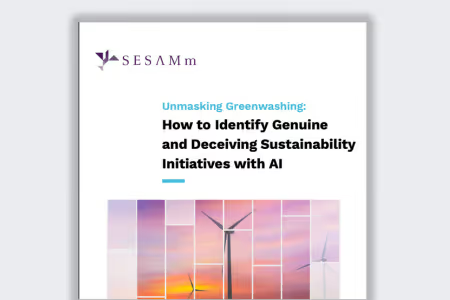
This comprehensive ebook gained popularity for its detailed exploration of AI’s role in distinguishing between genuine and deceptive sustainability initiatives. It provided readers with a deeper understanding of the intricacies involved in evaluating sustainability claims, making it a valuable resource. Download the ebook.
Topping our list is the announcement of SESAMm’s Series B2 funding. This milestone article not only signifies SESAMm's growth and success but also reflects the increasing importance of ESG and sentiment analysis in the financial world. The article’s blend of business success and industry relevance made it the year’s highlight for our readers.
Thank you for reading through this year's eight most popular blog posts. Which is your favorite, and how would you rate them?
The private markets secondaries space has entered a new chapter. What was once a niche corner of alternative investments, used primarily by limited partners (LPs) seeking early exits from fund commitments, has grown into one of the most dynamic segments of global private capital. The market has tripled in size since 2019 and grown by approximately 50% between 2024 and 2025 alone, reaching an estimated $230 billion in annual transaction volume and now representing around 5% of all global private equity assets under management.
This piece examines the forces behind that expansion, the structural shifts redefining the market, and the operational and regulatory challenges participants will need to navigate as the asset class continues to scale.
Market Growth and Shifting Deal Dynamics
Several converging factors have driven the secondaries market to its current size. A prolonged slowdown in IPO activity and traditional exits has created a liquidity bottleneck across private markets, leaving many LPs over-allocated to alternatives and constrained in their ability to make new commitments. The secondary market has become a primary mechanism for these investors to rebalance portfolios and free up capital.
Deal structuring has grown more sophisticated in step with market volumes. Ropes & Gray has observed a continued expansion in the use of purchase price deferrals and earnouts, and more recently, the introduction of deal-specific funding caps, limits on how much capital a buyer can be called to deploy before a specified date. These mechanisms allow sellers to achieve higher reference-date pricing while enabling buyers to manage capital deployment pacing and portfolio composition. In Q1 2026 alone, institutions initiated new secondary sales processes totaling north of $20 billion, some linked to denominator effect concerns as declines in public market portfolios pushed private allocations above target levels. Whether this proves a sustained driver of supply will depend on how institutional portfolios weather current market conditions.
The Three Transaction Types
Secondary transactions fall into three main categories:
LP-led transactions, the original form, involve an LP selling existing fund interests, sometimes across a broad portfolio of hundreds of positions, typically through competitive auction processes with tight timelines.
GP-led continuation funds, the fastest-growing segment, involve a sponsor transferring select assets into a new vehicle, giving existing LPs the option to cash out or roll forward. As of 2025, GP-led and LP-led volumes are roughly evenly split at around $115 billion each. GP-led buyout fund volume grew 39% year-over-year, while private credit secondaries saw nearly 300% year-over-year growth in GP-led activity.
The third category, structured solutions, provides capital to a GP collateralized by existing fund assets and can take a wide variety of bespoke forms.
What Are the Operational and ESG Challenges in the Market?
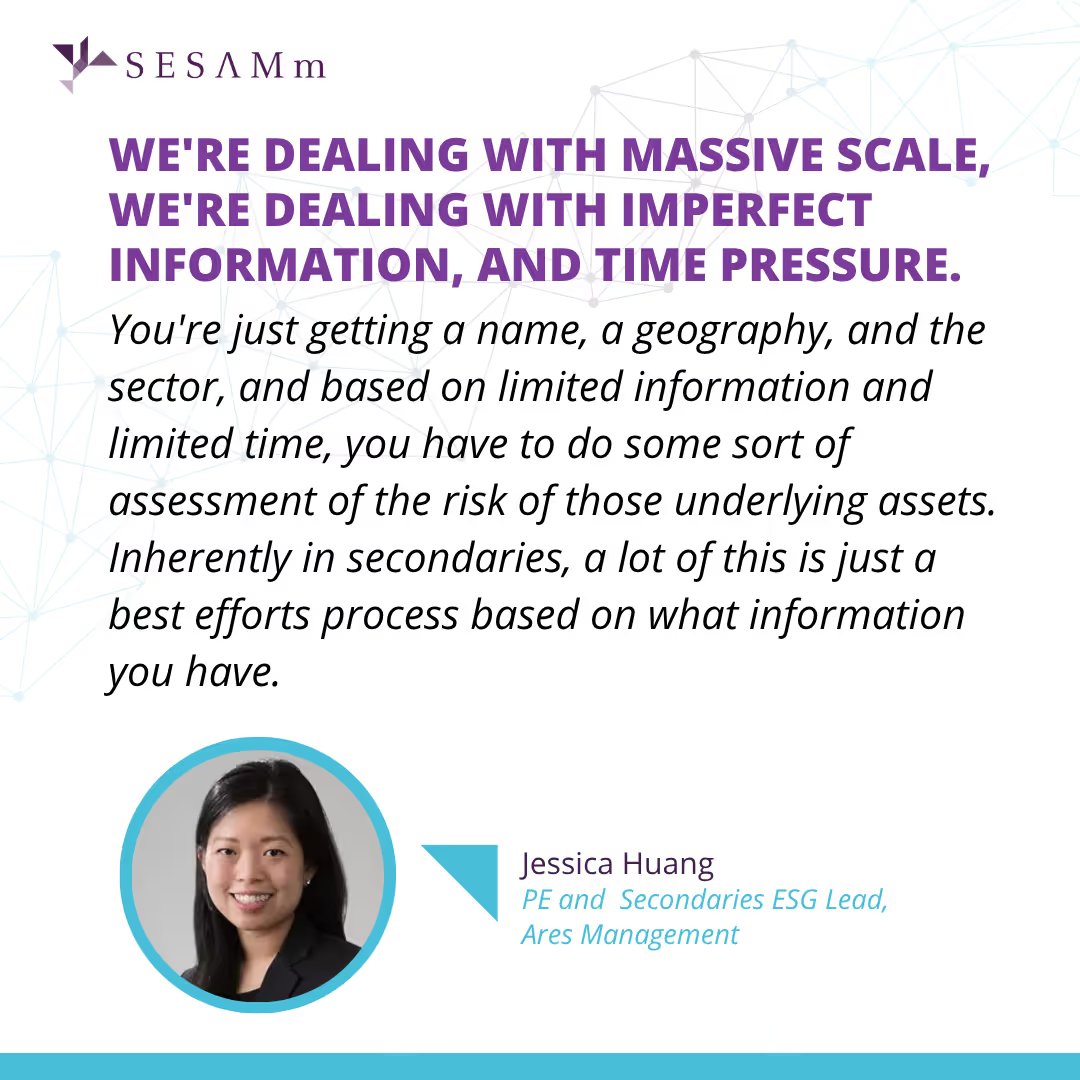
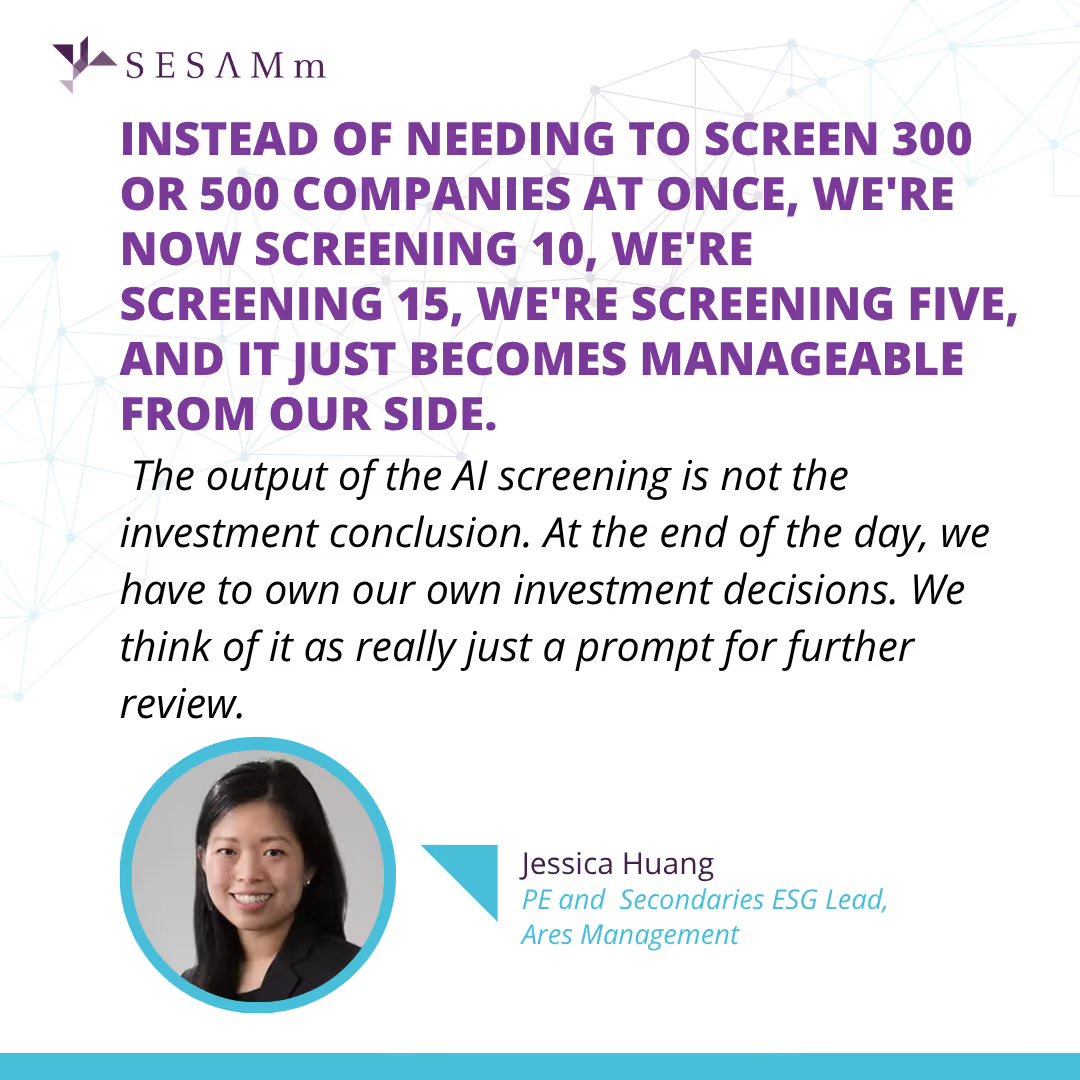
One of the defining challenges in secondaries is the speed and scale of due diligence required, particularly in LP-led transactions. Buyers may need to evaluate hundreds, or in private credit secondaries, over a thousand, underlying positions with limited information and within windows of 24 to 48 hours. As Jessica Huang, Managing Director and ESG lead for private equity and secondaries at Ares Management, noted in a recent webinar:
Against this backdrop, LP expectations around ESG integration have risen sharply. LPs are now holding secondaries to a standard closer to that applied to direct investments, with requests for Article 8-classified funds, look-through exclusion lists, and UN Global Compact compliance screening becoming more common. Main exclusion categories include fossil fuels, controversial weapons, tobacco, and gambling, though definitions and revenue thresholds vary significantly across mandates. SFDR 2.0, currently in draft form, may introduce additional mandatory exclusion categories that managers are monitoring closely. In LP-led deals where buyers are inheriting a broad portfolio of assets, highly granular opt-outs can mean missing certain large transactions, a trade-off that must be clearly communicated to LPs.
The Role of Technology and AI
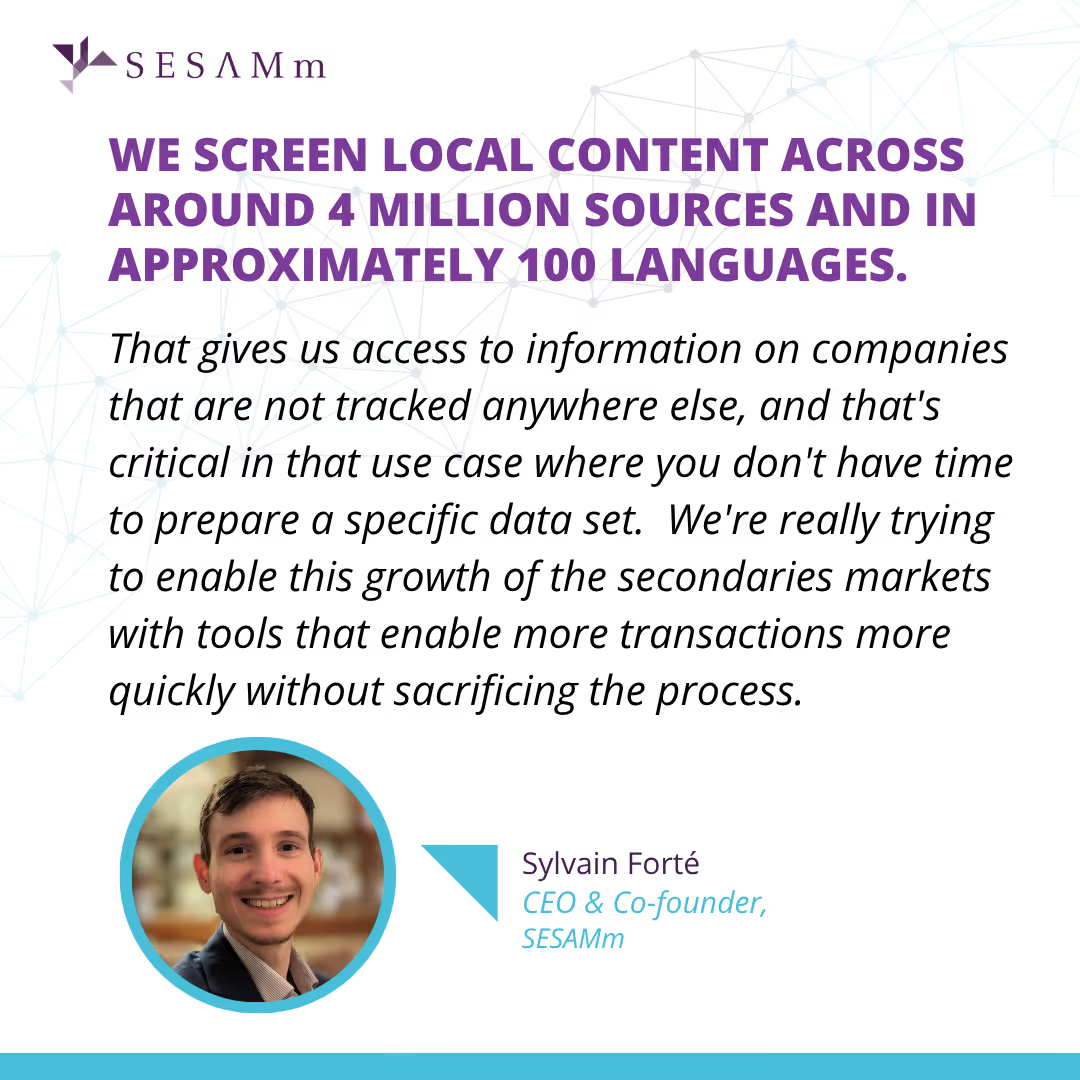
Technology has become central to the scaling of secondaries operations. AI tools are now applied across controversy screening, ESG data analysis, and emissions estimation, where direct disclosures are unavailable. A particular challenge in the asset class is coverage: many underlying companies are small or mid-market private businesses not captured in conventional databases.
Market participants consistently emphasize that AI outputs serve as inputs to human judgment, not as replacements for it. At Ares, screening results are reviewed by ESG specialists before being passed to deal teams for final decisions.
What the Future Holds
Transaction volumes are forecast to continue rising as both the seller and buyer universes expand. Private credit, infrastructure, and structured secondaries all represent areas of growing specialization and regional expansion, particularly in Asia, where secondary activity has been limited but is expected to grow as investment programs mature, broadening the market further. Capital supply dynamics bear watching: while dry powder remains substantial, deal volume growth has outpaced fundraising since 2023, which could create pricing or capital constraints. The entry of retail investors through evergreen vehicles adds a meaningful new source of capital but brings different liquidity expectations and regulatory considerations.
On the operational side, the sophistication of deal terms, the complexity of ESG compliance, and the volume of data processed per transaction are all increasing. Firms that can integrate technology into their diligence and monitoring workflows, while preserving the human judgment layer, will be best positioned to manage market growth. Secondaries are no longer a supplementary liquidity tool; they have become a structural feature of how private markets operate.
With 2023 drawing to an end, we wanted to share the most relevant ESG controversies during the year. In this article, we provide a comprehensive overview of the year's top ESG controversies, breaking them down into the three pillars of ESG: Environmental, Social, and Governance. Through our research, we will explore each of these areas in detail, shedding light on the most talked-about controversies and the companies involved.
Methodology
To gain a comprehensive understanding of the ESG risks in 2023, we conducted a thorough analysis of web mentions related to SESAMm’s ESG taxonomy across our expansive data lake with 20B+ articles. This allowed us to evaluate the overall volume of mentions related to each risk category: Environmental (E), Social (S), and Governance (G).
ESG Risks Over Time
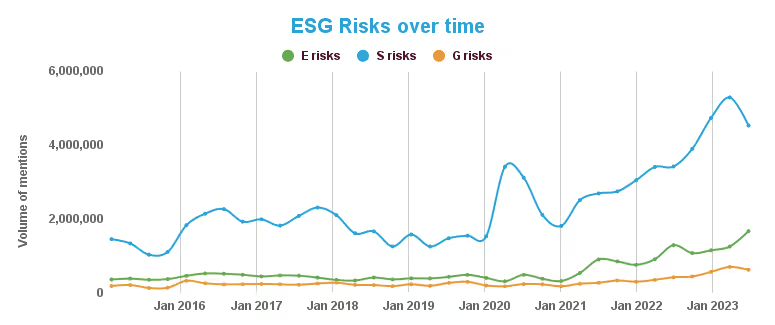
Before diving into the details, we looked into the main trends over the last few years in ESG trends. We found a detectable increase in the volume of ESG-related web mentions, with an emphasis on social risks. Especially since the start of 2020, social risks have been on a consistent upward trajectory. Notably, there was a significant spike in mentions around mid-2020 following mass protests amid the COVID-19 lockdown, in addition to reports of cyberattacks and allegations of sexual assault. Furthermore, 2021 saw an uptick in mentions related to issues of racism (Black Lives Matter movement) and homophobia.
Figure 1: ESG risks over time.
ESG Risks: Focus 2023
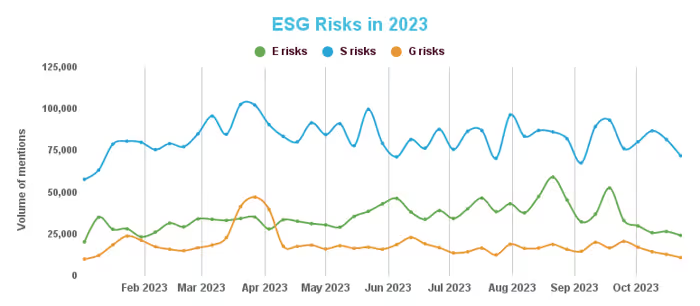
We outlined the prominent risks in 2023: social risks, with layoffs and strikes gaining attention; environmental risks, marked by wildfires and oil spills; and governance risks, where tax evasion and ethical violations like bribery were in focus. Each risk category underscores the urgent issues facing society and the need for accountability and action.
Figure 2: ESG risks in 2023.
Environmental Controversies of 2023
Environmental risks may not match the sheer number of mentions that social risks receive, but their presence in discussions has steadily grown over the year, particularly in the third quarter. Let's explore the most common controversies that have emerged.
Climate Change and Policy
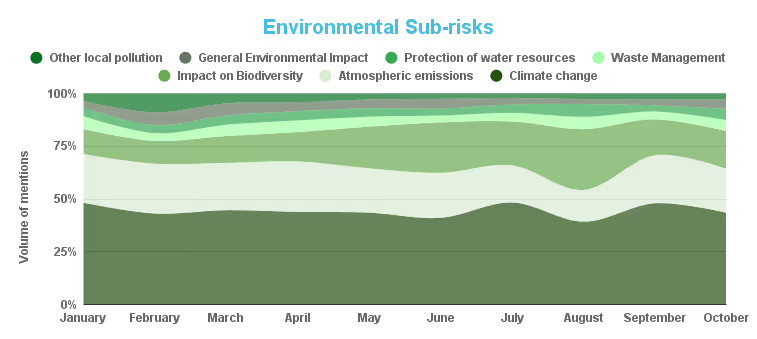
Climate change dominated environmental discussions in 2023. A noticeable peak in mentions arose in the latter half of the year, particularly around heatwaves and debates surrounding climate policies.
Atmospheric Emissions
September saw increased discussions about atmospheric emissions, notably due to the emissions from volcanic eruptions, hybrid cars, and the discovery of toxic metals in food products.
Impact on Biodiversity
The wildfires that spread in June sparked significant debates around their impact on biodiversity, leading to increased mentions and concerns related to environmental preservation.
Figure 3: Top environmental sub-risks in 2023.
Top 5 Environmental Controversies
These controversies are ranked by relative volume*.
Marathon Petroleum
Volume of mentions: 62
Relative volume: 69%
A significant portion of environmental risk discussions surrounding Marathon Petroleum was due to its chemical leak in Garyville. This incident led to massive fires, so large they could be observed from space. (source)
Nestlé
Volume of mentions: 30
Relative volume: 54%
Nestlé faced scrutiny in 2023, with over half of its environmental risk mentions associated with drought controversies. The company was urged to cease its water mining activities following severe droughts in France. (source)
Coca-Cola
Volume of mentions: 178
Relative volume: 53%
Coca-Cola garnered attention due to a hydrochloric acid leak in January 2023, leading to significant environmental concerns. (source)
ExxonMobil
Volume of mentions: 571
Relative volume: 31%
Exxon, along with Guyana’s environmental agency, was implicated in breaches of oil spill insurance policies. (source)
Shell
Volume of mentions: 872
Relative volume: 23%
An oil spill from a Shell pipeline adversely affected farms and a river in a region of Nigeria already grappling with pollution. (source)
Social Controversies of 2023
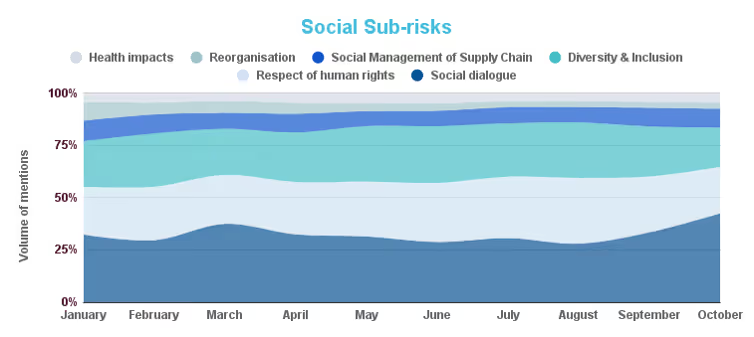
Social risks have taken the forefront in 2023, with notable web mentions increasing significantly. Here are the most relevant controversial topics:
Social Dialogue
Social discourse intensified at the start of the year, with news of widespread strikes in various sectors, including aviation and education, primarily driven by pay disputes. The wave of layoffs in several tech companies was the talk of the town, especially during the first quarter of the year.
Discrimination against minority groups, including the LGBTQ community and people of color, and age-based discrimination became a significant topic of discussion in 2023.
Figure 4: Top social sub-risks in 2023.
Top 5 Social Controversies
These controversies are ranked by relative volume*.
McDonald's
Volume of mentions: 8,903
Relative volume: 87%
McDonald's faced substantial social risks in 2023 due to significant layoffs of its corporate staff in April. The move led to public concern and discussions around the company's employment practices and stability. (source)
Google
Volume of mentions: 13,504
Relative volume: 43%
Google found itself in the spotlight as it faced challenges related to major layoffs in January and October of 2023. These layoffs contributed to almost half of the social risk mentions associated with the tech giant. (source)
Meta
Volume of mentions: 10,965
Relative volume: 38%
Meta, formerly known as Facebook, also faced scrutiny as 38% of the company's social risk mentions revolved around layoffs that took place in March and October 2023. (source)
Microsoft
Volume of mentions: 6,060
Relative volume: 28%
Microsoft faced challenges due to disruptions caused by cyberattacks in early June. In addition, the company had to navigate through controversies related to layoffs, contributing to its social risks. (source)
X (formerly Twitter)
Volume of mentions: 7,246
Relative volume: 8%
X/Twitter experienced a global outage, which was followed by significant layoffs. These events led to considerable public discussions and social risks for the company. (source)
Governance Controversies of 2023
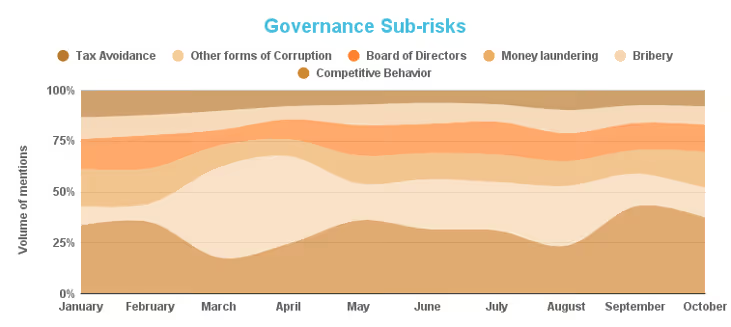
Governance risks, though often overlooked, play a pivotal role in shaping corporate responsibility and ethical conduct. In 2023, several governance controversy trends emerged:
Money Laundering
Tax evasion was a major topic of discussion in the first quarter, highlighting the need for greater transparency and accountability within corporations.
Bribery
There was a significant increase in mentions related to bribery cases, underscoring the challenges in maintaining ethical governance standards.
These controversies are ranked by relative volume*.
FTX
Volume of mentions: 8,085
Relative volume: 40%
FTX, a notable entity in the financial sector, found itself at the center of governance controversies. A significant portion of the discussions surrounding FTX's governance risks in 2023 pertained to allegations of its founder's involvement in bribery schemes. (source)
Apple
Volume of mentions: 3,162
Relative volume: 28%
Apple, a tech giant, faced scrutiny as a third of its governance risk mentions revolved around antitrust violations reported in October 2023. (source)
Microsoft
Volume of mentions: 4,429
Relative volume: 25%
Microsoft encountered legal challenges with its deal with Activision. The company had to approach the court to reject the FTC's request to halt the deal. (source)
X (formerly Twitter)
Volume of mentions: 2,251
Relative volume: 18%
X/Twitter, another major player in the tech industry, faced legal challenges when a judge dismissed a shareholder lawsuit against Elon Musk concerning a Twitter buyout. (source)
Google
Volume of mentions: 3,920
Relative volume: 13%
Google faced judicial sanctions for allegedly destroying evidence in an antitrust case, further emphasizing the critical governance challenges even major tech giants face. (source)
Conclusion
In conclusion, the year 2023 proved to be eventful in the ESG landscape. From environmental concerns sparked by significant events like chemical leaks and wildfires to social challenges such as widespread layoffs and discrimination and governance risks underscored by bribery and antitrust violations, the year offered a comprehensive view of the myriad challenges companies face in the modern era.
Understanding these controversies and the companies involved provides invaluable insights for stakeholders, especially in the private equity and asset management sectors. AI-driven ESG insights, like those provided by SESAMm, can be pivotal in navigating the ever-evolving ESG landscape, ensuring informed decision-making and proactive risk management.
Relative volume*: Relative to the total volume of E, S, or G risks for the company during the same period.
SESAMm’s AI Technology Reveals ESG Insights
Discover unparalleled insights into ESG controversies, risks, and opportunities across industries. Learn more about how SESAMm can help you analyze millions of private and public companies using AI-powered text analysis tools.
Stay ahead with the latest in ESG and AI intelligence
Join our mailing list to receive new reports, event invites, and updates from SESAMm directly to your inbox.












.png)