Generate reports on any company - public or private - in under 30 minutes.
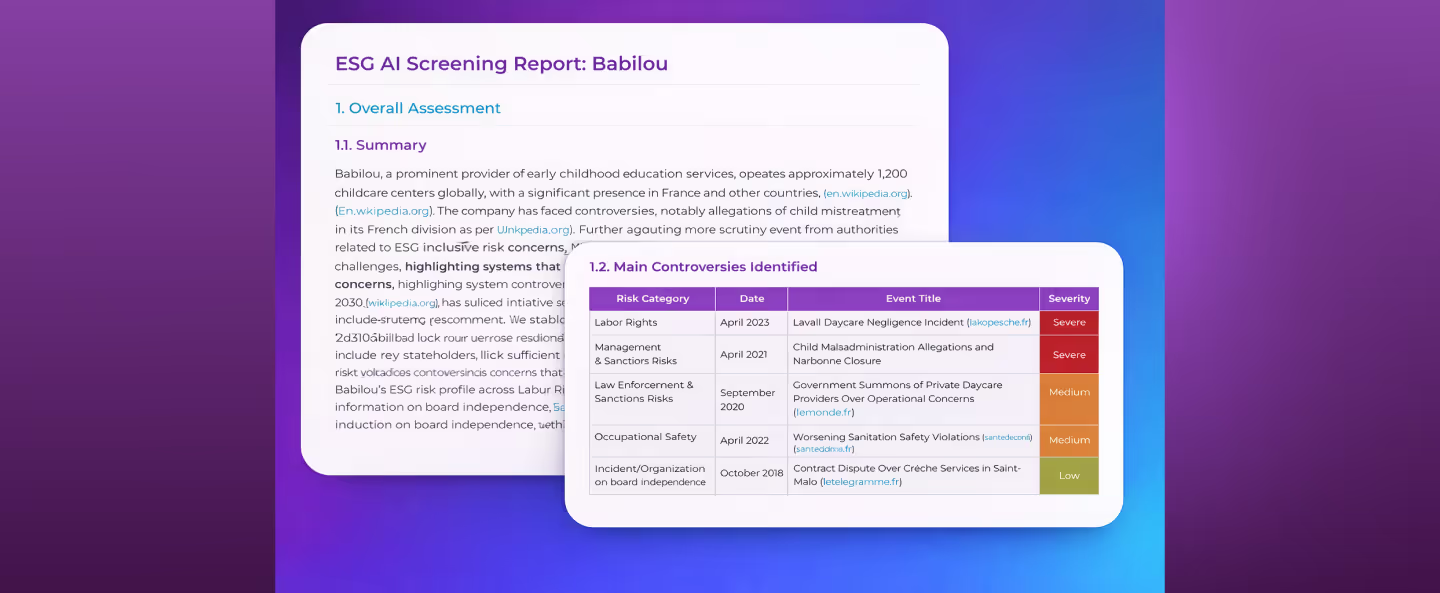
Due diligence just got a major upgrade. With SESAMm’s new AI-powered ESG Assessment Reports, you can uncover critical risks on any company in minutes. These reports leverage state-of-the-art AI technology to analyze billions of documents and generate detailed reports that cover environmental, social, and governance risks, as well as controversial activities, industry and regulatory pressures, and sanctions screening. SESAMm’s ESG reports unlock rapid, scalable, and data-driven due diligence, so you can make fast, confident investment decisions.
The Benefits at a Glance
Fast, Scalable Due Diligence
Traditional due diligence research is time-consuming and manual, particularly when covering small, private firms. SESAMm’s reports are ready in minutes, letting you assess companies quickly and at scale.
Complete ESG Risk Coverage
Get a 360° view of risk, with sections on E, S, and G risks, controversial activities, industry and regulatory pressures, norms screening, sanctions screening, ESG disclosure maturity, and more. Beyond ESG risks, SESAMm is analyzing publiclyavailable company disclosures for the first time.
Built for All Company Types
Analyze any company and even infrastructure projects. Our AI-generated reports adapt to the company’s size and context.
Ready to Share
Delivered as polished PDFs, these reports are ready to be shared.
Discover unparalleled insights into ESG controversies, risks, and opportunities across industries. Learn more about how SESAMm can help you analyze millions of private and public companies using AI-powered text analysis tools.
Environmental, Social, and Governance (ESG) factors have moved from the periphery to the core of investment and risk management discussions. While positive ESG actions are often linked to better financial stability, new research from the Norwegian University of Science and Technology reveals the flip side: ESG controversies significantly increase a company’s exposure to systemic risk.
The researchers analyzed 463 non-financial companies listed in the STOXX Europe 600 index between 2016 and 2022. Their objective was to assess whether ESG controversies, such as environmental violations, social misconduct, or governance failures, impact a company’s systematic risk, measured by its beta coefficient (a key risk indicator in finance).
Importantly, the study leveraged a Random Forest machine learning model combined with Explainable AI (XAI) methods to predict and interpret firm-level risk.
The study's core conclusion is clear: ESG controversies significantly raise a firm’s systematic risk. In other words, when a company is embroiled in environmental scandals, social misconduct, or governance failures, investors perceive it as riskier, leading to greater stock volatility and sensitivity to market shocks.
Sondre Myge, head of ESG at Skagen Funds, said that while it’s still early, his “first impression is that it complicates comparability. Investors are now drowning in a mix of voluntary and legal disclosures requiring them to make assessments through a kaleidoscope of standards and methodologies. Sifting critically through hundreds of pages of text just for one company is a huge undertaking. While first movers will provide glossy reports that convey a convincing impression, it is important to remember that disclosures are not necessarily representative.”
Jan Kaeraa Rasmussen, head of ESG and sustainability at PensionDanmark, agreed, stating that initial disclosures tend to be “more narrative than quantitative. This limits our ability to draw robust, forward-looking insights from the information provided.”
What’s Next: Simplification or More Complexity?
Interestingly, the study found that the relationship between ESG controversies and risk is non-linear:
Firms experiencing their first ESG controversy ("first-timers") see a pronounced jump in risk.
For firms regularly facing controversies ("regulars"), the effect on risk remains high but stabilizes.
Small controversies matter most for firms with otherwise clean records. For already controversial
firms, additional issues have less incremental impact.
This pattern aligns with investor behavior: markets tend to overreact to initial controversies while becoming desensitized to repeated issues.
Machine Learning: A Powerful Risk Prediction Tool
The researchers used Random Forest regression, a machine learning technique that captures complex, non-linear relationships in data, to predict systematic risk.
Compared to traditional models, the Random Forest approach reduced the prediction error by nearly 30%. The model achieved a mean absolute error of 0.25 for 2022 risk predictions, outperforming a naïve benchmark model that assigned every company the same average risk.
This reinforces the value of machine learning in financial risk management — particularly when assessing non-traditional factors like ESG controversies.
Industry Matters: Some Sectors Are More Vulnerable
The study also highlights that the impact of ESG controversies on risk is highly sector-specific.
Industries with Highest Sensitivity to ESG Controversies:
Machinery
Oil, Gas & Consumable Fuels
Chemicals
Metals & Mining
Professional Services
These industries tend to face greater investor scrutiny due to their environmental footprint or governance challenges.
Industries with Lowest Sensitivity:
Real Estate
Food Products
Electric Utilities
The lower sensitivity in these sectors may reflect stronger sustainability practices, regulatory protections, or reduced operational exposure to ESG risks.
Geographic Differences in Risk
In addition to industry effects, the research found that firms in certain countries face higher systematic risk linked to ESG controversies.
Countries with the highest predicted systematic risk included:
Finland
Portugal
Poland
Netherlands
Sweden
Meanwhile, firms in Italy and Germany showed lower ESG-related risk exposure.
Implications for Investors, Risk Managers, and Companies
This study provides clear takeaways for finance professionals and ESG practitioners:
ESG Controversy Monitoring Is Critical Investors need advanced ESG monitoring tools to detect early signs of controversy, particularly for first-time incidents, which have the highest risk impact.
Tailor Risk Management to Industry Risk managers should take into account industry-specific vulnerabilities.
Machine Learning Enhances Risk Prediction Traditional risk models may overlook non-linear ESG effects. Machine learning offers a powerful, data-driven approach to anticipate market reactions to ESG incidents.
Proactive ESG Management Reduces Risk Companies should address ESG risks early before they escalate into high-profile controversies that damage reputation and investor trust.
Conclusion
This groundbreaking research bridges ESG and AI, demonstrating that ESG controversies are not just a reputational issue; they are a quantifiable financial risk. Machine learning models provide finance professionals with more accurate tools to assess and mitigate this risk.
About SESAMm
Discover SESAMm provides AI-powered solutions to help investors and companies identify ESG controversies and risks before they escalate. Using state-of-the-art AI, SESAMm analyzes millions of sources in near real-time, detecting ESG controversies across public and private companies worldwide. Whether for due diligence, portfolio monitoring, or supplier risk management, SESAMm enables financial professionals to stay ahead of emerging risks and make more informed decisions. Learn more at www.sesamm.com.
SESAMm’s AI Technology Reveals ESG Insights
Discover unparalleled insights into ESG controversies, risks, and opportunities across industries. Learn more about how SESAMm can help you analyze millions of private and public companies using AI-powered text analysis tools.
Paris, France – June 25, 2024 – SESAMm, a leader in AI-powered text analysis for financial services, proudly announces its inclusion in the AIFinTech100 list by FinTech Global for the second consecutive year. This recognition highlights SESAMm's commitment to sustainability and ESG through the application of advanced AI technologies.
FinTech Global's annual AIFinTech100 list, now in its fourth year, showcases the top 100 AI companies that are revolutionizing the financial services industry. The list is carefully curated by a panel of industry experts who evaluate over 2,000 fintech companies worldwide. This year’s criteria focused on the transformative impact and the innovative use of generative AI in financial services, from banking and insurance to investment and customer experience.
"We are honored to be listed again on the AIFinTech100. This recognition highlights our leadership in employing AI to detect ESG controversies, helping our clients proactively manage risks and uphold sustainability commitments,” said Sylvain Forté, SESAMm’s CEO. “At SESAMm, we aim to transform financial analysis by ensuring it is as responsible as innovative."
FinTech Global director Richard Sachar said "SESAMm has been selected for the AIFinTech100 list due to their exceptional capabilities in ESG controversy detection using AI. Their technology plays a pivotal role in enabling the financial industry to address and navigate ESG risks effectively, marking a significant advancement in sustainable finance."
The inclusion of SESAMm in this year's AIFinTech100 comes at a time when the financial sector is increasingly relying on AI to enhance operational efficiencies and customer interactions. With AI investments in FinTech expected to reach $44.08 billion by 2024, SESAMm continues to lead the charge by providing cutting-edge solutions that address the complex needs of today’s financial institutions.
About SESAMm
SESAMm is an innovative fintech firm specializing in AI-powered text analysis for asset managers, private equity firms, and financial institutions. Its flagship product, TextReveal, offers actionable insights into ESG risks and investment opportunities, cementing SESAMm’s role as a leading provider of financial intelligence and predictive analytics.
For more information about SESAMm and its innovative solutions, please visit www.sesamm.com.
SESAMm’s AI Technology Reveals ESG Insights
Discover unparalleled insights into ESG controversies, risks, and opportunities across industries. Learn more about how SESAMm can help you analyze millions of private and public companies using AI-powered text analysis tools.
With 2023 drawing to an end, we wanted to share the most relevant ESG controversies during the year. In this article, we provide a comprehensive overview of the year's top ESG controversies, breaking them down into the three pillars of ESG: Environmental, Social, and Governance. Through our research, we will explore each of these areas in detail, shedding light on the most talked-about controversies and the companies involved.
Methodology
To gain a comprehensive understanding of the ESG risks in 2023, we conducted a thorough analysis of web mentions related to SESAMm’s ESG taxonomy across our expansive data lake with 20B+ articles. This allowed us to evaluate the overall volume of mentions related to each risk category: Environmental (E), Social (S), and Governance (G).
ESG Risks Over Time
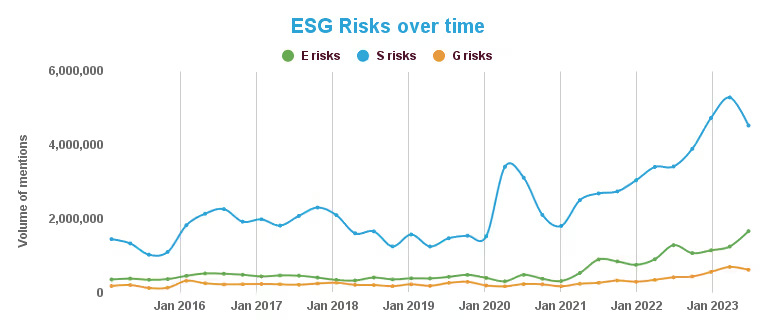
Before diving into the details, we looked into the main trends over the last few years in ESG trends. We found a detectable increase in the volume of ESG-related web mentions, with an emphasis on social risks. Especially since the start of 2020, social risks have been on a consistent upward trajectory. Notably, there was a significant spike in mentions around mid-2020 following mass protests amid the COVID-19 lockdown, in addition to reports of cyberattacks and allegations of sexual assault. Furthermore, 2021 saw an uptick in mentions related to issues of racism (Black Lives Matter movement) and homophobia.
Figure 1: ESG risks over time.
ESG Risks: Focus 2023
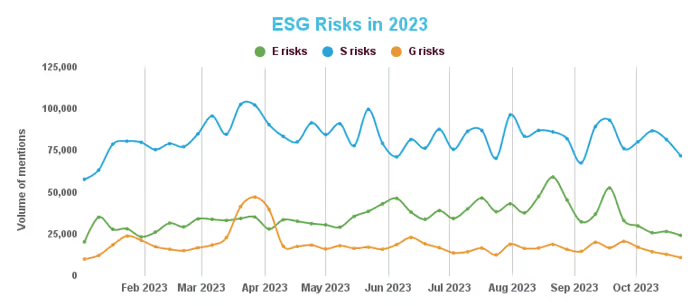
We outlined the prominent risks in 2023: social risks, with layoffs and strikes gaining attention; environmental risks, marked by wildfires and oil spills; and governance risks, where tax evasion and ethical violations like bribery were in focus. Each risk category underscores the urgent issues facing society and the need for accountability and action.
Figure 2: ESG risks in 2023.
Environmental Controversies of 2023
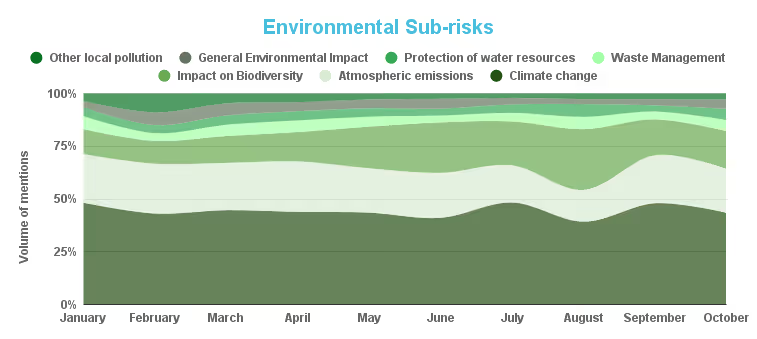
Environmental risks may not match the sheer number of mentions that social risks receive, but their presence in discussions has steadily grown over the year, particularly in the third quarter. Let's explore the most common controversies that have emerged.
Climate Change and Policy
Climate change dominated environmental discussions in 2023. A noticeable peak in mentions arose in the latter half of the year, particularly around heatwaves and debates surrounding climate policies.
Atmospheric Emissions
September saw increased discussions about atmospheric emissions, notably due to the emissions from volcanic eruptions, hybrid cars, and the discovery of toxic metals in food products.
Impact on Biodiversity
The wildfires that spread in June sparked significant debates around their impact on biodiversity, leading to increased mentions and concerns related to environmental preservation.
Figure 3: Top environmental sub-risks in 2023.
Top 5 Environmental Controversies
These controversies are ranked by relative volume*.
Marathon Petroleum
Volume of mentions: 62
Relative volume: 69%
A significant portion of environmental risk discussions surrounding Marathon Petroleum was due to its chemical leak in Garyville. This incident led to massive fires, so large they could be observed from space. (source)
Nestlé
Volume of mentions: 30
Relative volume: 54%
Nestlé faced scrutiny in 2023, with over half of its environmental risk mentions associated with drought controversies. The company was urged to cease its water mining activities following severe droughts in France. (source)
Coca-Cola
Volume of mentions: 178
Relative volume: 53%
Coca-Cola garnered attention due to a hydrochloric acid leak in January 2023, leading to significant environmental concerns. (source)
ExxonMobil
Volume of mentions: 571
Relative volume: 31%
Exxon, along with Guyana’s environmental agency, was implicated in breaches of oil spill insurance policies. (source)
Shell
Volume of mentions: 872
Relative volume: 23%
An oil spill from a Shell pipeline adversely affected farms and a river in a region of Nigeria already grappling with pollution. (source)
Social Controversies of 2023
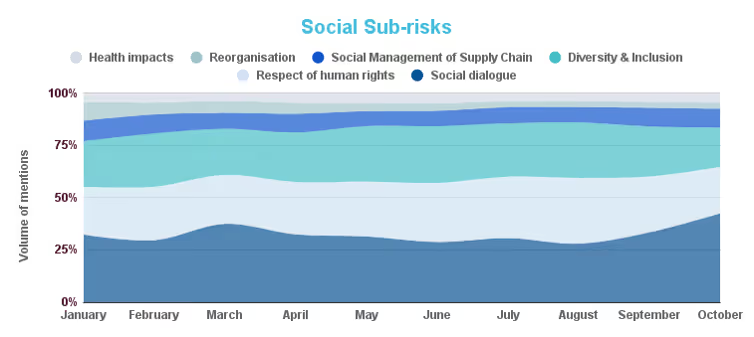
Social risks have taken the forefront in 2023, with notable web mentions increasing significantly. Here are the most relevant controversial topics:
Social Dialogue
Social discourse intensified at the start of the year, with news of widespread strikes in various sectors, including aviation and education, primarily driven by pay disputes. The wave of layoffs in several tech companies was the talk of the town, especially during the first quarter of the year.
Discrimination against minority groups, including the LGBTQ community and people of color, and age-based discrimination became a significant topic of discussion in 2023.
Figure 4: Top social sub-risks in 2023.
Top 5 Social Controversies
These controversies are ranked by relative volume*.
McDonald's
Volume of mentions: 8,903
Relative volume: 87%
McDonald's faced substantial social risks in 2023 due to significant layoffs of its corporate staff in April. The move led to public concern and discussions around the company's employment practices and stability. (source)
Google
Volume of mentions: 13,504
Relative volume: 43%
Google found itself in the spotlight as it faced challenges related to major layoffs in January and October of 2023. These layoffs contributed to almost half of the social risk mentions associated with the tech giant. (source)
Meta
Volume of mentions: 10,965
Relative volume: 38%
Meta, formerly known as Facebook, also faced scrutiny as 38% of the company's social risk mentions revolved around layoffs that took place in March and October 2023. (source)
Microsoft
Volume of mentions: 6,060
Relative volume: 28%
Microsoft faced challenges due to disruptions caused by cyberattacks in early June. In addition, the company had to navigate through controversies related to layoffs, contributing to its social risks. (source)
X (formerly Twitter)
Volume of mentions: 7,246
Relative volume: 8%
X/Twitter experienced a global outage, which was followed by significant layoffs. These events led to considerable public discussions and social risks for the company. (source)
Governance Controversies of 2023
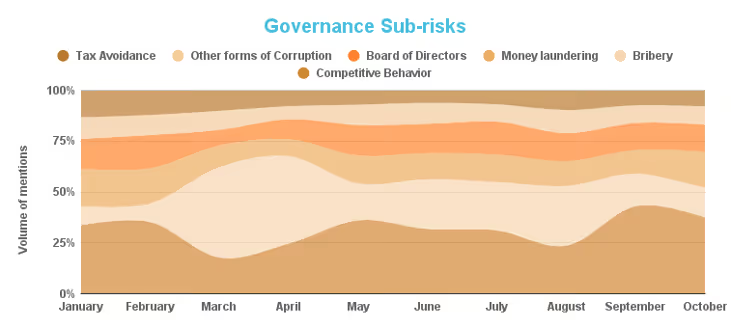
Governance risks, though often overlooked, play a pivotal role in shaping corporate responsibility and ethical conduct. In 2023, several governance controversy trends emerged:
Money Laundering
Tax evasion was a major topic of discussion in the first quarter, highlighting the need for greater transparency and accountability within corporations.
Bribery
There was a significant increase in mentions related to bribery cases, underscoring the challenges in maintaining ethical governance standards.
These controversies are ranked by relative volume*.
FTX
Volume of mentions: 8,085
Relative volume: 40%
FTX, a notable entity in the financial sector, found itself at the center of governance controversies. A significant portion of the discussions surrounding FTX's governance risks in 2023 pertained to allegations of its founder's involvement in bribery schemes. (source)
Apple
Volume of mentions: 3,162
Relative volume: 28%
Apple, a tech giant, faced scrutiny as a third of its governance risk mentions revolved around antitrust violations reported in October 2023. (source)
Microsoft
Volume of mentions: 4,429
Relative volume: 25%
Microsoft encountered legal challenges with its deal with Activision. The company had to approach the court to reject the FTC's request to halt the deal. (source)
X (formerly Twitter)
Volume of mentions: 2,251
Relative volume: 18%
X/Twitter, another major player in the tech industry, faced legal challenges when a judge dismissed a shareholder lawsuit against Elon Musk concerning a Twitter buyout. (source)
Google
Volume of mentions: 3,920
Relative volume: 13%
Google faced judicial sanctions for allegedly destroying evidence in an antitrust case, further emphasizing the critical governance challenges even major tech giants face. (source)
Conclusion
In conclusion, the year 2023 proved to be eventful in the ESG landscape. From environmental concerns sparked by significant events like chemical leaks and wildfires to social challenges such as widespread layoffs and discrimination and governance risks underscored by bribery and antitrust violations, the year offered a comprehensive view of the myriad challenges companies face in the modern era.
Understanding these controversies and the companies involved provides invaluable insights for stakeholders, especially in the private equity and asset management sectors. AI-driven ESG insights, like those provided by SESAMm, can be pivotal in navigating the ever-evolving ESG landscape, ensuring informed decision-making and proactive risk management.
Relative volume*: Relative to the total volume of E, S, or G risks for the company during the same period.
SESAMm’s AI Technology Reveals ESG Insights
Discover unparalleled insights into ESG controversies, risks, and opportunities across industries. Learn more about how SESAMm can help you analyze millions of private and public companies using AI-powered text analysis tools.
Stay ahead with the latest in ESG and AI intelligence
Join our mailing list to receive new reports, event invites, and updates from SESAMm directly to your inbox.



.avif)



.png)