


Chinese companies face elevated ESG risk exposure as scale, rapid growth, and cross-border operations intersect with tighter regulations and geopolitical pressures. Social risks cluster around worker rights and customer harm: “996” overwork and layoffs in tech, safety failures in new technologies and EVs, and severe labor allegations in global supply chains.
Governance risks are the dominant theme, reflected across multiple jurisdictions and industry sectors: recurring regulatory enforcement and compliance failures, litigation-heavy operating models, weak internal controls, and heightened disclosure, audit, and listing pressure in overseas markets. A major amplifier is data-security and national-security risk, with allegations of illegal data collection or leaks and intensifying foreign scrutiny over potential military ties and state influence.
Environmental risks cluster around manufacturing pollution and emissions compliance, alongside chemical-product safety and carbon-intensive logistics footprints in fast fashion and e-commerce.
What are the most pressing ESG challenges currently facing Chinese companies? Read on to find out.
Alibaba: Navigating Controversies and Governance Challenges
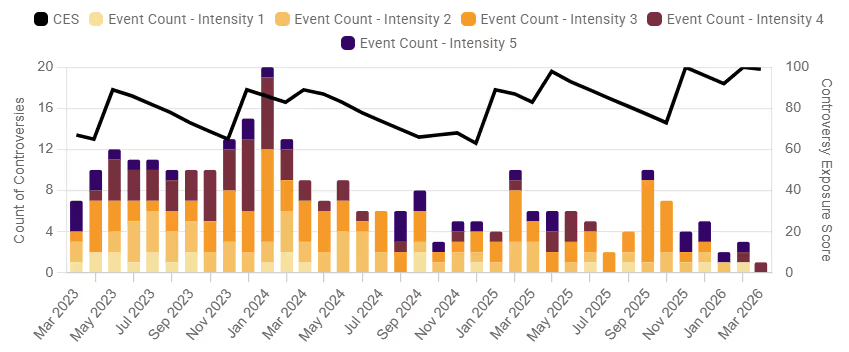
Alibaba’s ESG risk profile remains elevated, reflected in its controversy exposure score (CES) of 99/100. Social risks include persistent criticism of “996” work practices, workplace conduct controversies, layoffs, and reputational fallout from marketplace safety incidents, and rising customer complaints. Governance risks, meanwhile, are multi-jurisdictional, spanning U.S. audit scrutiny and past NYSE delisting threats, alleged filing irregularities in India, EU DSA pressure on AliExpress, and ongoing counterfeit and patent litigation.
In parallel, integrity and geopolitical risks heighten scrutiny, notably through a police investigation into alleged supply-chain corruption at Ele.me, U.S. probes related to data privacy and alleged military links, and a $433.5 million investor lawsuit recovery. Environmental exposure remains primarily supply-chain and footprint-driven, including a 2025 pesticide finding and emissions-related criticism in Belgium. Based on SESAMm’s UNGC screening, we found that several of Alibaba’s controversies show potential alignment concerns with UN Global Compact principles, reinforcing the need for continuous monitoring.
Shein: Heavy ESG Scrutiny Amid Legal and Environmental Challenges
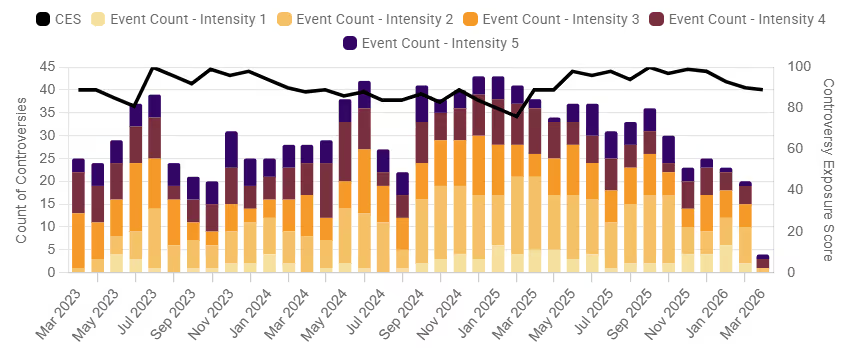
Similarly, Shein faces sustained ESG pressures across governance, environmental, and social dimensions, reflected in its high CES of 89/100, indicating material and ongoing exposure. Social risks include allegations of exploitative factory conditions, disclosed child-labor cases, and reputational backlash linked to cultural appropriation and marketing practices, alongside integrity concerns such as reported coordinated bot activity to defend the brand online.
Governance risks are multi-jurisdictional and litigation-heavy, spanning a $100 million U.S. lawsuit, repeated IP disputes, and a RICO suit alleging systematic design theft, as well as data and marketing compliance failures that resulted in a $1.9 million fine and major enforcement actions in Europe, including France’s $176 million cookie fine. Meanwhile, environmental exposure remains structurally tied to Shein’s fast-fashion model, with recurring hazardous chemical findings breaching EU limits, scrutiny over air-freight emissions, and greenwashing enforcement, including a €1 million fine in Italy.
BYD: Risks and Controversies Demand Ongoing Monitoring
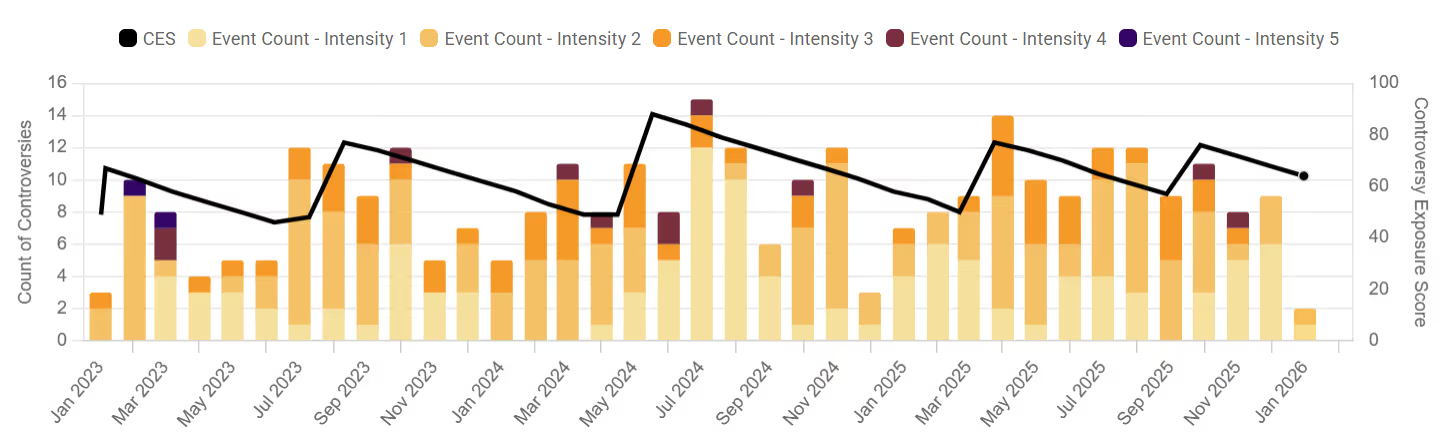
BYD’s ESG profile reflects sustained controversy exposure, with a CES score of 89/100, indicating material and ongoing risk. Social risks include product-safety concerns, notably the Atto 3 receiving the lowest-ever assisted-driving safety score and a recall of more than 16,000 EVs; more critically, Brazilian authorities shut down a factory site over alleged “slavery-like” labor conditions and battery mineral sourcing linked to human-rights abuses, culminating in a $50 million lawsuit.
Governance risks are cross-border and multifaceted, spanning tax-fraud allegations, IP disputes such as BMW’s “M6” trademark case, EU scrutiny over potential unfair Chinese subsidies at BYD’s Hungary plant, concerns in South Korea regarding possible in-vehicle data leakage, a securities-fraud investigation notice, and U.S. designation activity linking BYD to Chinese military-affiliated entities. Meanwhile, environmental exposure centers on factory pollution at Changsha tied to reported health impacts and heightened emissions-compliance scrutiny following accusations of emissions cheating.
From a UNGC perspective, a number of BYD’s controversies show potential alignment concerns with UN Global Compact principles, particularly around labor rights and governance, and reinforcing the importance of ongoing monitoring.
Conclusion
Taken together, Alibaba, Shein, and BYD illustrate how scale, speed, and global expansion can amplify ESG exposure when governance, labor oversight, and compliance controls lag behind operational growth. High CES scores across all three companies underscore that these risks are not isolated incidents but structural and recurring in nature.




.png)