Unmasking Greenwashing: How to Identify Genuine and Deceiving Sustainability Initiatives with AI
November 23, 2023
•
5 mins read
In our most recent webinar, "Unmasking Greenwashing: How to Identify Genuine and Deceiving Sustainability Initiatives with AI," Sylvain Forté, SESAMm’s CEO and Co-founder, discussed our recent ebook entitled with the same name focusing on the vital role of AI in identifying and understanding ESG controversies, focusing on greenwashing and reputational laundering.
Greenwashing, the act of misleadingly portraying products or services as environmentally friendly, and reputational laundering, where companies create a facade of ethical behavior, are increasingly prevalent challenges. These practices mislead investors and consumers, obscuring the reality of a company's environmental impact. Our webinar highlighted the complexity of these issues and their relevance across various industries.
We discussed how AI technology is revolutionizing the detection of greenwashing and reputational laundering. By analyzing vast amounts of web data, including news articles, social media, and public records, AI uncovers patterns and red flags that might indicate deceptive practices. This is particularly pertinent for stakeholders in the financial sector, such as private equity firms, who must navigate the intricate landscape of ESG compliance and sustainability.
Our recent research study underscored the importance of this technology. We found that mentions of greenwashing and related controversies have grown exponentially over the years. This increase aligns with a rising global awareness of environmental issues and the demand for corporate transparency. AI's ability to sift through and analyze this growing body of data is invaluable in providing accurate, timely insights into potential ESG risks.
We also noted an interesting trend: while greenwashing mentions are increasing, their growth rate is slowing down. This suggests that as regulatory frameworks around ESG become more formalized and the market becomes more educated, instances of unintentional greenwashing decrease. It's a sign that clearer rules are helping companies avoid these pitfalls.
Our analysis also revealed that different industries experience varying levels of exposure to greenwashing claims. Sectors like food, drug retail, and oil and gas have seen significant increases in accusations of reputational laundering. However, we also observed a positive trend in the fashion industry, where regulatory frameworks have led to a decrease in greenwashing mentions.
Lastly, we highlighted the importance of distinguishing between negative and positive ESG mentions. While it's crucial to identify and monitor greenwashing allegations, it's equally important to recognize and support genuine sustainability initiatives. Our analysis showed that positive ESG initiatives often have a more significant impact on public perception than negative ones.
Watch the webinar replay now:
Reach out to SESAMm
TextReveal's web data analysis of over five million public and private companies is essential for keeping tabs on ESG investment risks. To learn more about how you can analyze web data or request a demo, contact one of our representatives.
In private equity, as in most industries, decision-making counts on accessing accurate and valuable information. However, these firms often encounter significant challenges when sourcing reliable data, especially when dealing with small, private companies. This article dives into the complexities of identifying high-quality information on smaller companies and underscores its value in investment decisions, operational efficiency, and risk management. It also explores how advanced artificial intelligence (AI) technologies are revolutionizing the identification of these risks, leading to higher rewards and more secure investments, thus providing a competitive edge.
The challenge of identifying valuable information for Smaller Firms
Lack of valuable data
Sturgeon's Law, which states that "Ninety percent of everything is crap (or noise)," becomes particularly relevant in the context of data sourcing. For private equity and investment firms focused on small companies, finding the golden nuggets of information amid the overwhelming amount of digital noise can be daunting. The data available on these companies is often sparse, fragmented, and difficult to uncover using conventional methods. This scarcity of reliable information makes it challenging for private equity firms to make informed decisions, heightening the risk of overlooking critical issues that could impact their investment process.
The difficulties extend beyond just locating information. Many small companies operate without a significant online presence or may not be required to disclose as much information as publicly traded firms. This lack of transparency can further blur critical data points. Furthermore, the data that is available is often unstructured, residing in various forms such as social media posts, obscure local news articles, or industry-specific reports. Extracting meaningful insights from these disparate sources requires sophisticated data processing capabilities, which traditional methods often lack. As a result, private equity firms are left with a significant challenge: how to separate valuable data from the noise without missing critical risk indicators, thereby optimizing their deal sourcing and investment strategies.
Diverse language and terminology
Smaller firms frequently face existential risks, and the potential rewards for identifying these risks early on can be significant for the private equity firms that invest in them. However, mainstream methods of risk identification often fall short, as these companies may not use standardized language to describe materiality. Instead, risks are discussed in varied and context-specific ways, complicating the task of recognizing relevant information. Therefore, it is essential to adopt a specialized approach that analyzes and decodes these firms' unique terminologies and business idiosyncrasies, ultimately translating them into a standardized language that can be effectively used in risk assessment.
The diversity in language is not just a barrier to risk identification but also to the communication of these risks within and between private equity firms. When a small firm uses industry-specific jargon or localized expressions to describe potential threats, it can lead to misunderstandings or underestimations of the actual risk. For instance, a manufacturing startup in a developing country might describe supply chain disruptions in terms that do not translate easily to a global investor’s risk framework. Additionally, cultural differences in how risk is perceived and reported can lead to further complications. This linguistic diversity necessitates the use of advanced natural language processing tools that can interpret data through a common lens while considering industry-specific contexts. For an insurance company, understanding financial models, insurance principles, and regulatory frameworks is crucial. Conversely, assessing risks for a beauty company requires a focus on product safety, consumer preferences, and market trends. By appreciating the specific contexts of each industry, private equity firms can better identify and evaluate potential risks, enhancing decision-making processes, risk and portfolio management strategies, and operational efficiency.
The dynamic nature of the industries themselves further complicates the challenge. For example, the tech industry evolves rapidly, with new risks emerging as technologies develop and consumer expectations shift. What might be considered a negligible risk today could become a significant issue tomorrow as regulatory landscapes, market conditions, and technological advancements alter the playing field. In contrast, industries like agriculture or real estate might have more stable risk profiles but are subject to sudden changes due to environmental factors or policy shifts. This variability across industries means that a one-size-fits-all approach to risk assessment is inadequate. Private equity firms must adopt flexible, industry-specific risk models that can adapt to the unique characteristics and evolving landscapes of the sectors they invest in, thus optimizing their AI capabilities.
The Power of AI in Enhancing Risk Management in Small Firms
AI technologies, particularly natural language processing (NLP) and machine learning algorithms, are important tools for private equity firms aiming to monitor and manage risks in small firms. These technologies can sift through vast amounts of data, extracting the valuable 10% and identifying patterns, trends, and subtle nuances in the language used to describe risks. By detecting these patterns, AI can reveal potential risks that might not be immediately apparent through traditional methods. This proactive approach to risk identification allows firms to address issues before they escalate, providing a more comprehensive and nuanced understanding of the risks facing small firms.
AI's ability to process unstructured data is particularly valuable in this context. Many of the risks that small firms face are discussed informally in places like social media, niche blogs, or local news outlets. Traditional risk management tools might overlook these sources, but AI-powered tools can analyze them in real-time, detecting emerging threats as they develop. Moreover, AI can cross-reference these insights with structured data from financial reports, regulatory filings, and other formal documents to create a holistic risk profile. This multidimensional analysis helps private equity firms not only identify risks but also understand their potential impact, enabling more informed, data-driven decision-making that enhances operational efficiency and competitive edge.
Beyond risk identification, AI also enhances risk mitigation strategies. By continuously monitoring data and learning from new information, AI systems can adapt to changing conditions, offering updated risk assessments that reflect the latest developments. This dynamic approach allows private equity firms to stay ahead of potential issues, making it possible to implement preventative measures rather than reacting to crises after they occur. In this way, AI capabilities contribute significantly to the optimization of risk management processes.
How SESAMm’s Advanced Technology Enhances Risk Assessment
SESAMm’s TextReveal® is at the forefront of this technological revolution, enabling private equity firms to efficiently navigate the vast digital landscape and extract the crucial information needed for informed decision-making. Through our proprietary data lake amounting to over 25 billion online articles with 15 years of historical data and our AI algorithms, TextReveal® can quickly identify and retrieve valuable insights, even when the information is deeply buried or highly specific. The tool's ability to analyze and understand the diverse language and terminology used in discussions about risks on the web empowers private equity firms to objectively assess the materiality of certain risks or identify emerging threats that have yet to be formally recognized.
TextReveal® goes beyond merely identifying risks—it categorizes them, providing context that helps private equity firms understand the severity and relevance of each risk. For example, if a small biotech firm is mentioned in discussions about regulatory hurdles, TextReveal® can determine whether these mentions are isolated incidents or part of a broader trend. It can also assess whether the language used suggests an imminent threat or a longer-term concern, enabling firms to prioritize their responses accordingly. Additionally, TextReveal® integrates sentiment analysis, which can gauge the overall tone of discussions surrounding a company, offering further actionable insights into potential reputational risks.
SESAMm has developed a proprietary metric – the Intensity Score, which calculates an event's relevance based on its news coverage and sentiment. It uses negative sentiment, article dispersion, and empirical ESG risk measures to determine how likely an article is to represent a high-risk controversy. The Intensity Score gives TextReveal users a clear understanding of which events require their attention.
Users can also opt to receive email alerts for the more severe controversies, ensuring they’re always aware of significant risks. In addition to the severity, controversies are also categorized by risk and sub–risk type, making it easy to analyze specific areas of concern.
Moreover, SESAMm's platform is designed to be intuitive and user-friendly, making it accessible to investment professionals who may not have a technical background. This ease of use ensures private equity firms can quickly incorporate AI-driven insights into their risk management processes without a steep learning curve. By streamlining the data analysis process, TextReveal® allows firms to focus on strategic decision-making, confident they have a comprehensive understanding of the risks and opportunities associated with their investments and portfolio companies. This level of operational efficiency and optimization is key to maintaining a competitive edge in the fast-paced world of private equity.
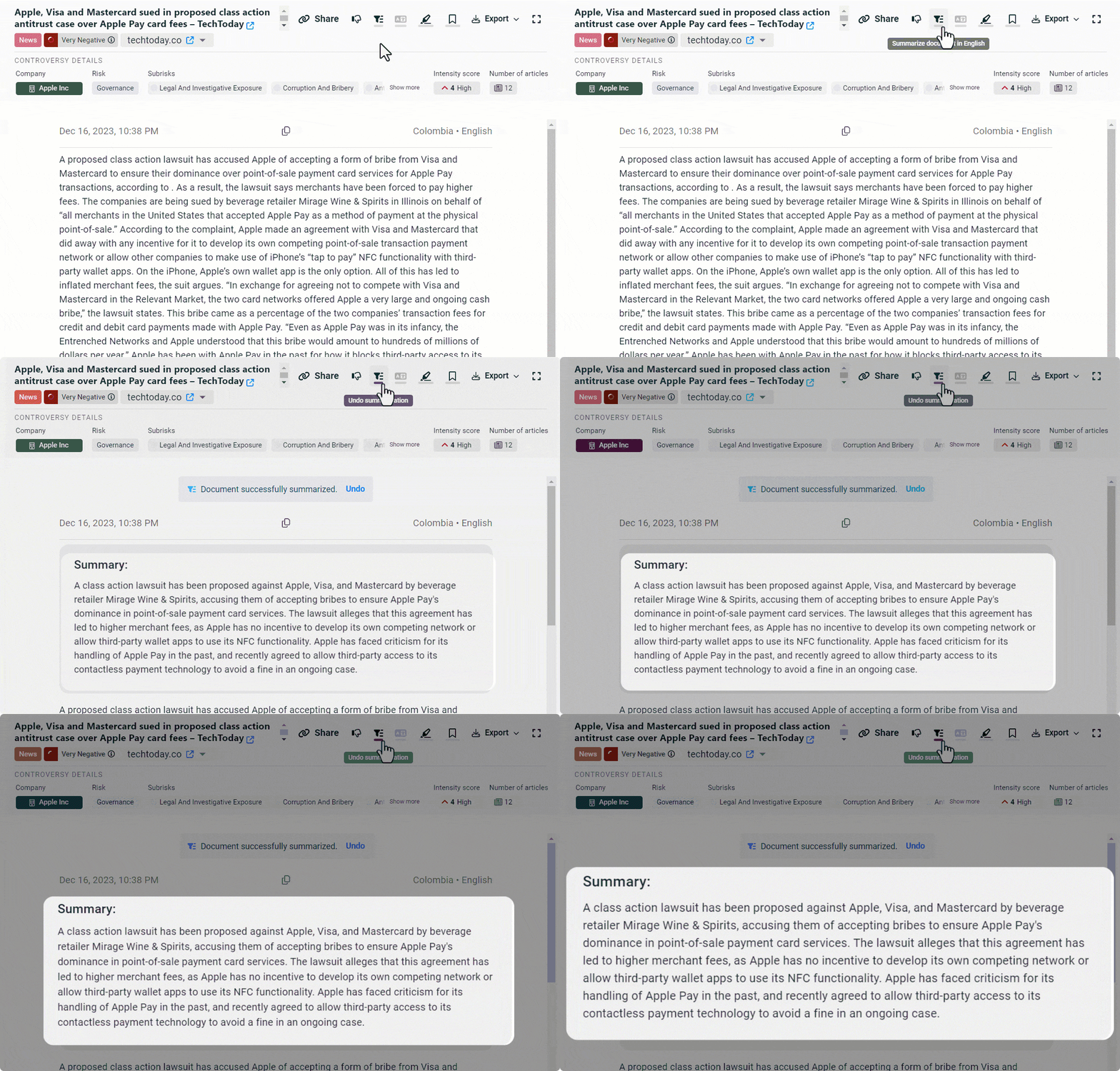
TextReveal’s Risk Assessment module enables deep company and thematic research in multiple languages through on-the-fly keyword searches. Users have full access to articles, sentiment analysis, and trending topics to get a complete understanding of the risks. We’ve even developed an AI Text Summary feature that provides a quick summary of a selected article, saving time and enabling a faster analysis.
In summary, the integration of AI tools and natural language processing technologies is transforming risk management in private equity, particularly for firms dealing with small, private companies. By leveraging these advanced tools, private equity firms can enhance their due diligence processes, better monitor risks and controversies, and ultimately make more informed investment decisions that lead to higher rewards and operational efficiency.
Reach out to SESAMm
TextReveal's web data analysis of over five million public and private companies is essential for keeping tabs on ESG investment risks. To learn more about how you can analyze web data or request a demo, contact one of our representatives.
The ESG landscape for U.S. private equity firms is increasingly defined by systemic governance pressure and rising social and environmental scrutiny. Governance issues at firms such as Blackstone, KKR, Thoma Bravo, TPG, and Francisco Partners primarily focus on deal processes, disclosure practices, and investor protection. These concerns encompass settlements related to pension mismanagement, actions taken by the Department of Justice regarding pre-merger filings, as well as lawsuits and shareholder investigations examining the fairness of take-private transactions and stock buybacks. On the social side, exposure is driven largely by portfolio companies and political positioning. Housing and tenant-rights disputes sit alongside allegations of labor abuses, child labor, and unsafe conditions. Environmental concerns are increasingly prominent, with major companies facing criticism for their exposure to fossil fuels, their impact on climate change, and associated lobbying efforts.
What are the most pressing ESG challenges currently facing the U.S. private equity firms? Read on to find out.
Blackstone: Governance Pressure, Social Backlash, and Climate Criticism
Blackstone is facing a wide range of ESG controversies. Governance challenges include a $227.5 million settlement related to Kentucky pension mismanagement, a $590 million lawsuit involving SPAC Recovery Co. that alleges a fraudulent scheme, and SEC fines tied to off-channel communications failures. On the social front, the firm has drawn criticism for political spending that heavily favors right-leaning candidates, child-labor incidents, and recurring safety violations at portfolio companies. Housing-related concerns also persist, with tenant protests over rent and eviction practices and university movements calling for divestment from Blackstone-linked real estate funds. Environmentally, Blackstone continues to be targeted by climate activists for its fossil fuel exposure and its perceived contribution to escalating climate risks.
TextReveal’s web data analysis of over five million public and private companies is essential for keeping tabs on ESG investment risks. To learn more about how you can analyze web data or to request a demo, reach out to one of our representatives.
SESAMm's ESG data shows FIFA's Controversy Exposure Score has stayed High to Very High since 2020. See why continuous monitoring beats the four-year cycle.
With the 2026 World Cup now underway, FIFA is back in the global spotlight, and its risk profile is once again being narrated in four-year cycles, as though controversy arrives with the tournament and recedes with the closing ceremony. The data points to a different pattern. Across the period from January 2020 to June 2026, the large majority of FIFA's most serious controversies were recorded outside any World Cup window. Tournaments concentrate global attention on FIFA's existing liabilities, but the evidence suggests they do not drive the underlying volume. Many of the substantive events, including court verdicts, regulator rulings, fund decisions, and bid matters, occur in the periods between tournaments.
For investors, sponsors, and anyone screening exposure to football's governing body, this distinction matters. If controversy were cyclical, it could be assessed around the calendar. Because the data indicates it is closer to continuous, it is better suited to ongoing monitoring. To examine this, the analysis below draws on SESAMm's controversy data, which captures and classifies FIFA's reputational, regulatory, and operational controversies.
Context: How FIFA's Structure Shapes Its Risk
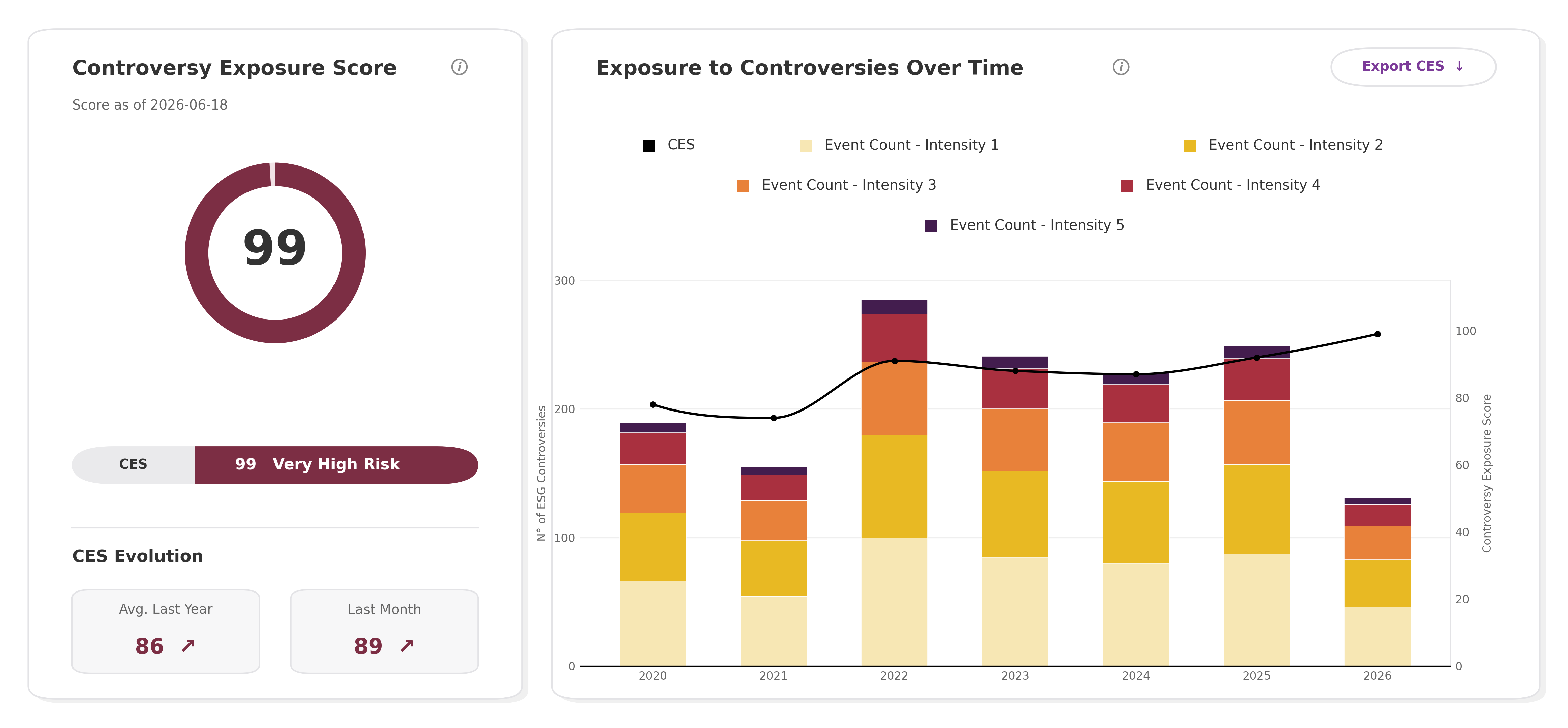
Controversy Exposure Over Time
*Unsolicited ratings - produced from public sources, not commissioned by the rated company. For more information, visit here.
It helps to start with how FIFA is organized, because its governance structure has a direct bearing on the type of risk it carries. As a Swiss-law association, FIFA answers to a membership rather than to shareholders or a securities regulator, and its decision-making body, the FIFA Council, is composed of representatives from the regional confederations whose commercial interests the Council also oversees. This means the regulatory functions of sanctioning, eligibility, and integrity sit close to the commercial function of awarding and selling tournaments. Arrangements of this kind tend to produce a steady stream of governance-related questions as part of normal operations, which is consistent with SESAMm’s controversy data.
One useful illustration is procedural rather than criminal. The Blatter and Platini proceedings span the entire time period without reaching a clear resolution, running from a 2020 complaint through a fraud indictment, an acquittal, a prosecutorial appeal, and a second acquittal, before Platini opened a fresh action against FIFA and Infantino in June 2026. As a corruption narrative, the sequence is inconclusive. As a governance observation, it illustrates a broader dynamic in which matters are litigated and re-litigated over long periods, in part because resolution often depends on external courts operating on their own timelines. The result is a long-running procedural footprint rather than discrete, time-bound events.
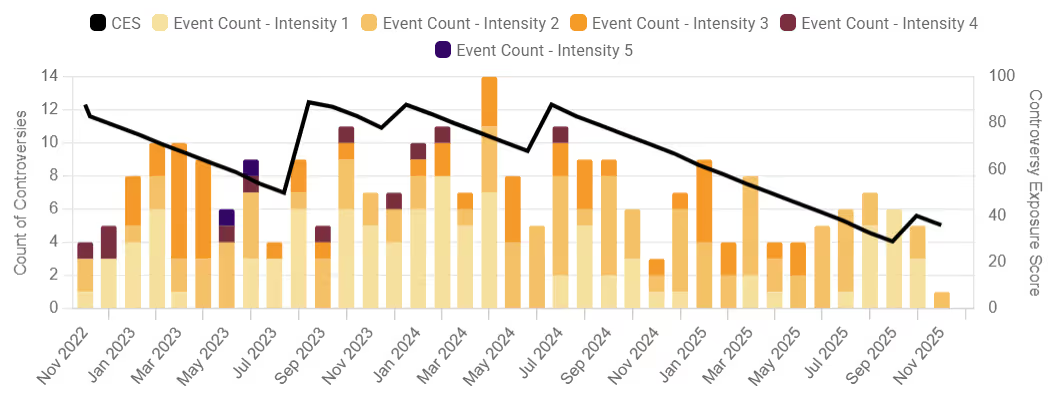
The CES is an aggregate, entity-level score (0–100) that measures an entity's overall exposure to ESG controversies over time. It's built from individual ESG events and their intensities, synthesizing both event volume and severity into a single trackable figure. The intensity score, by contrast, operates one level down: it's applied at the event level, measuring how severe or important each individual ESG event is on a scale from 1 (least severe) to 5 (most severe). In short, the CES tells you how exposed an entity is overall, while the intensity score tells you how serious each underlying event is.
ESG Risk Over Time
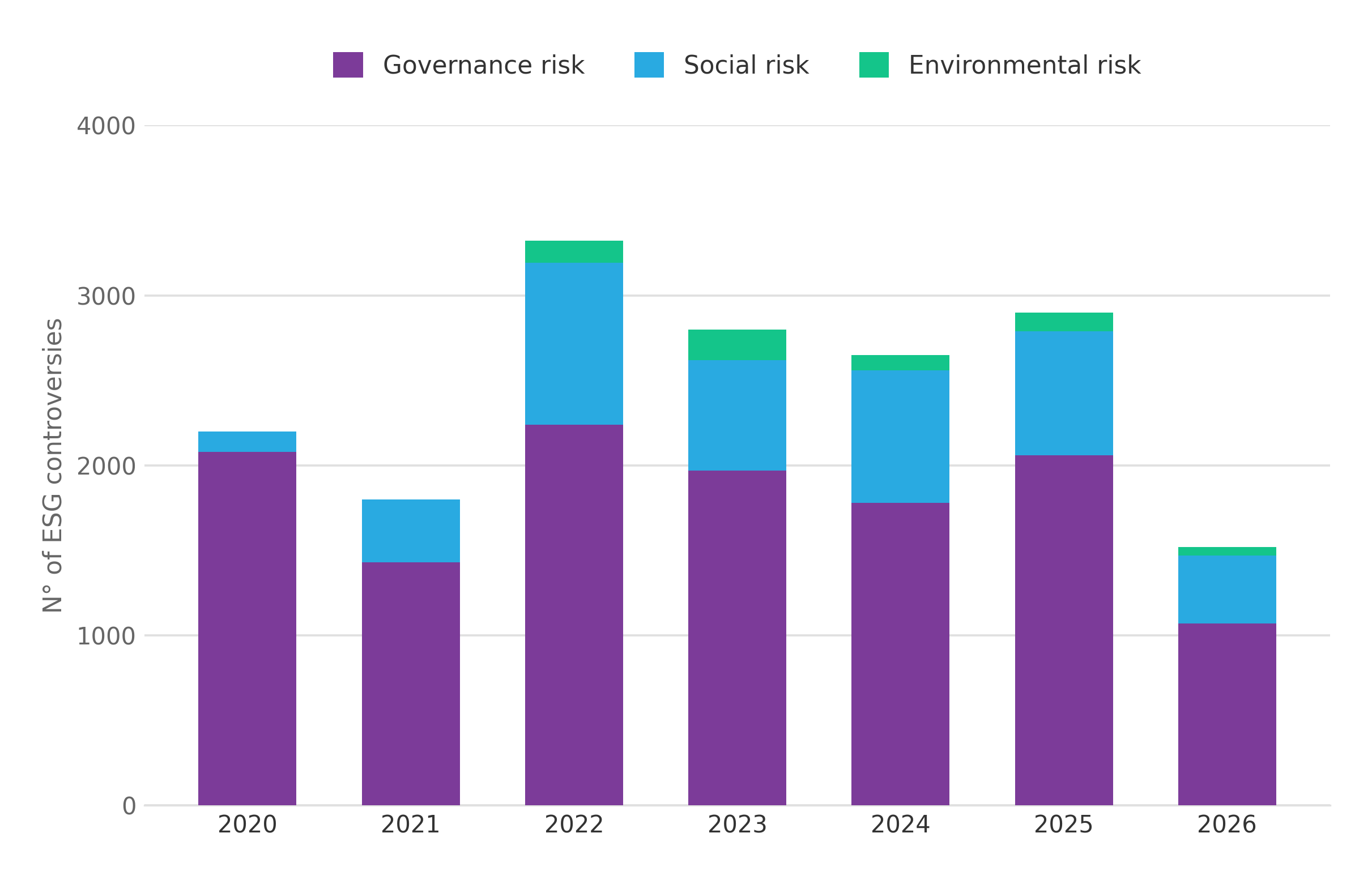
This chart tracks FIFA's ESG controversies per year from 2020 to 2026, stacked by risk pillar. Governance dominates every bar, with social forming a secondary band and environmental barely visible. Volume climbs from a governance-heavy opening year to a clear peak in 2022, then holds at a stable plateau through 2025 before the short 2026 bar. The shape is driven by a handful of major events. The 2020 corruption investigations kept the opening-year baseline elevated and were almost purely governance-related, following a US DOJ indictment unsealed that April, which alleged bribes were paid for the votes that awarded Russia and Qatar the 2018 and 2022 World Cups.
The 2022 Qatar World Cup marked the clear inflection point, drawing sportswashing accusations and pushing total controversies to their peak, while migrant-worker conditions and human-rights coverage around Qatar thickened the social band into a permanent quarter-to-third of each bar from 2022 onward. Rather than reverting, controversies settled into a post-2022 "new normal," plateauing well above the pre-tournament level.
Underneath it all, corruption-and-bribery and legal/investigative exposure account for the bulk of total risk across 2020 to 2026, while environmental risk stays statistically negligible throughout.
ESG Risk by Type
Environmental Risks
Environmental risk accounts for a small share of FIFA's total controversy volume, but that low frequency masks cases of genuine severity. The Swiss Fairness Commission ruled against FIFA's Qatar 2022 carbon-neutrality marketing, turning a greenwashing accusation into a formal regulatory matter still active in June 2026. Related controversies extend the theme, including criticism of the Saudi Aramco and Coca-Cola sponsorships, the cooling and water-use controversies at Qatar, and the animal-welfare outcry over stray-dog culling ahead of Morocco's 2030 hosting.
Beyond these, FIFA has drawn criticism over its marketing and communications, notably branding the 2022 Qatar World Cup as "carbon neutral," and has dealt with fraud and embezzlement, exemplified by the case of former FIFA and CONCACAF official Chuck Blazer. Issues tied to its board and senior management leadership round out the picture, though the overall pattern is one of an organization reacting to the weight of its legal and ethical past rather than getting ahead of it.
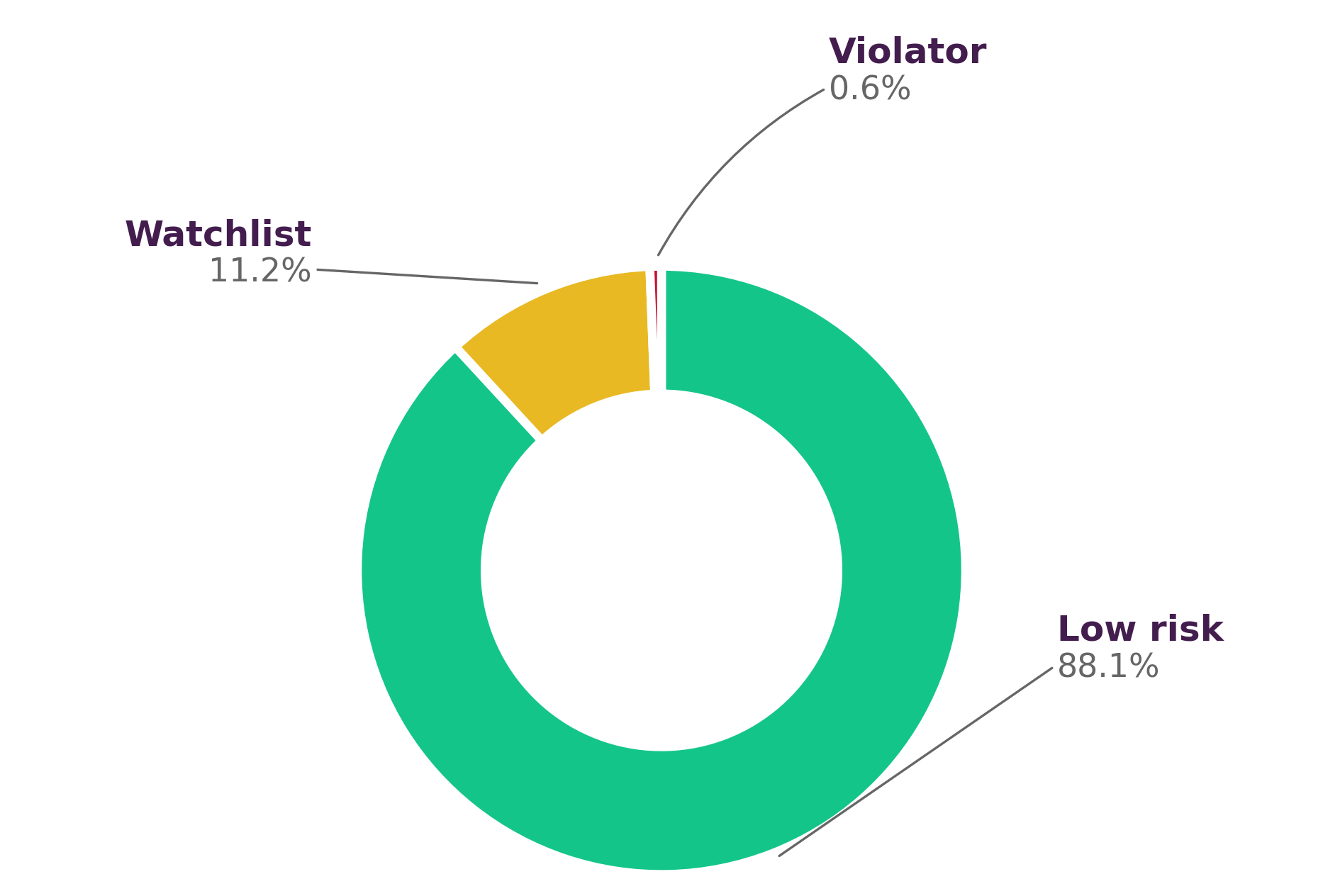
As the breakdown above shows, the overwhelming majority of FIFA's screened ESG events fall into the low-risk tier (1,294, or 88.1%), with 165 (11.2%) on the watchlist and 9 (0.6%) classified as Violator, the highest-risk tier under SESAMm's UN Global Compact screening. That tier is assigned only where there is clear evidence of a breach, such as formal sanctions, court findings, or regulatory condemnations, rather than unresolved allegations. For investors with SFDR Article 8 or 9 obligations, or internal exclusion policies tied to UNGC compliance, a Violator flag on a core holding or counterparty is a material signal rather than a monitoring note, which is why the profile is best read as governance-led: the nine Violator events reflect adjudicated breaches concentrated in FIFA's governance history, not the live controversies surrounding the current tournament.
The composition that emerges is a governance core of long-running legal cases, a Qatar-rooted social overlay that has proven durable, and a small but genuinely high-severity environmental tail now being contested through formal channels.
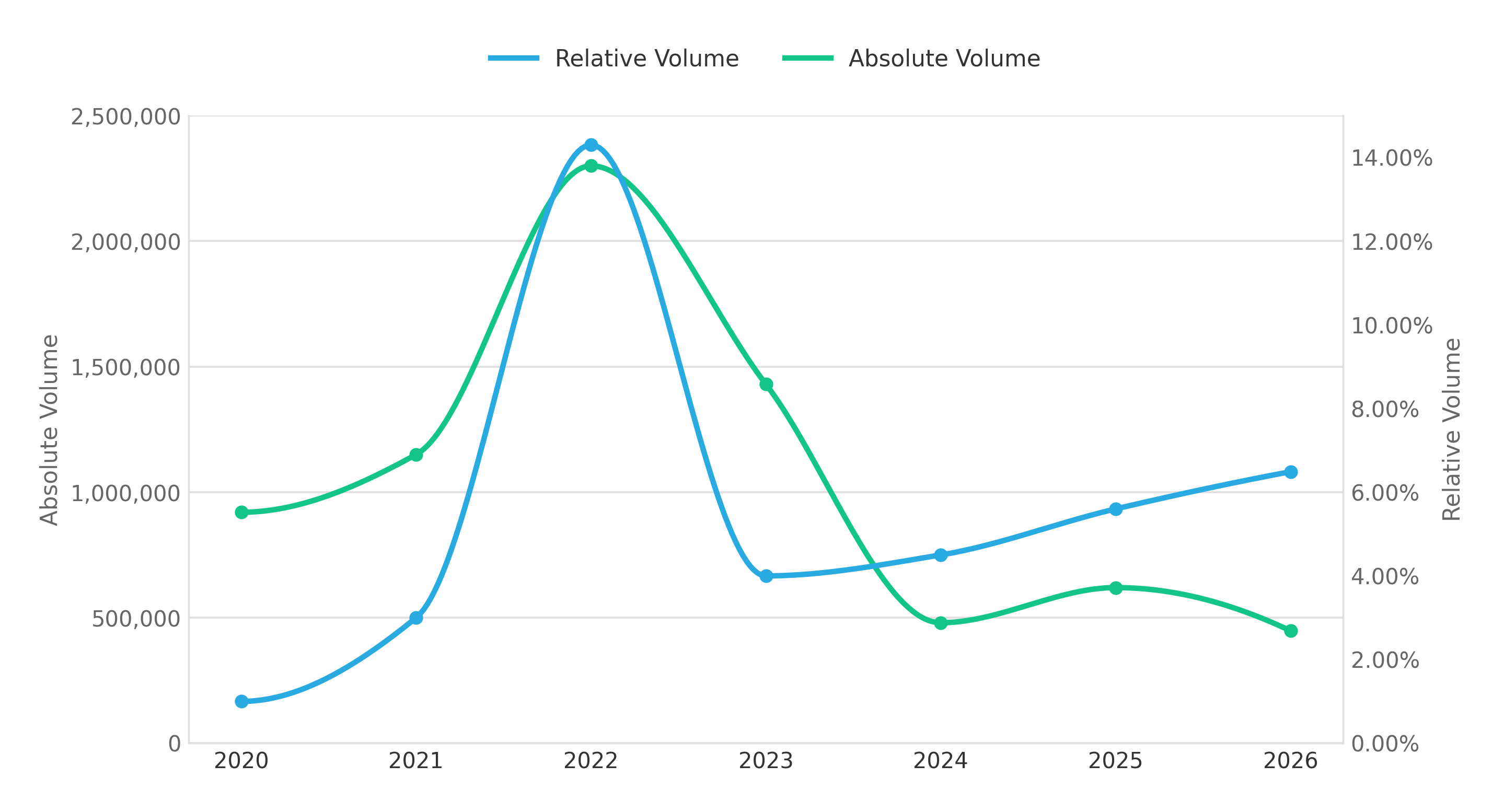
Both lines explode together, but unevenly: absolute volume roughly doubles while the relative share more than quadruples, briefly making Qatar roughly one in seven of all FIFA-related items, because nearly every controversy fires at once. The spike packs in wider labor abuses, and the jailing of whistleblower Abdullah Ibhais; the OneLove armband ban and Qatar's criminalization of same-sex relations and the broader sportswashing and carbon-neutral greenwashing charges; and the unresolved bribery allegations over the 2010 hosting vote. On its own, this acute cluster would suggest a controversy that lives and dies with the tournament.
Phase 3: Off-Season Accumulation (2023–2026)
This is where the two lines part ways, and the accumulation shows itself. After the tournament, the relative share deflates sharply in 2023, the acute spike clearing, but it never returns to baseline; instead, it grinds steadily upward every subsequent year, ending in 2026 at roughly four-and-a-half times its pre-tournament level. Over the same stretch, the absolute volume collapses, from 1.43M in 2023 to around 448K in 2026, under a fifth of the 2022 peak. The two movements together are the key finding: even as total FIFA coverage shrank dramatically, the Qatar migrant-worker case captured a larger and larger share of what remained. Driving that residual are post-tournament findings: The non-payment of the migrant workers during the 2022 World Cup, the campaign for a migrant-worker compensation and remedy fund, and Amnesty's continued push for FIFA to fund remediation.A storyline that merely echoes the event would fade with the falling volume; one that accumulates does the opposite. The controversy is no longer powered by the match calendar but by its own momentum.
The Case Underneath
Underneath that residual sits the report's single heaviest case: the human-rights strand of 135 events running from 2020 to 2026, the longest-running and most densely populated case in the dataset. What stops it fading is that each turn of the hosting cycle reactivates it: the 2026 uptick to 6.49%, the highest reading outside the tournament year itself, coincides with the 2026 World Cup now underway in North America, which revives retrospective scrutiny of Qatar, and the emerging human-rights questions around Saudi Arabia's 2034 tournament, which carries the same migrant-labour lens straight to the next host. The case is not simply failing to fade; it is being actively topped up by each new host, which is why the social exposure reads as structural rather than event-bound.
Key Takeaways
Taken together, the data describes a profile that is primarily governance-related, with the most severe and persistent cases concerning legal exposure, corruption, and bribery, supported by a durable Qatar-rooted social overlay and a small but high-severity environmental tail. All three pillars reach maximum case intensity, so severity is not confined to any single dimension.
The most consistent feature is persistence. FIFA's Controversy Exposure Score has remained in the High-to-Very-High band throughout the period and sits at 99 today. The largest cases run continuously from 2020 to 2026, and a significant share of binding decisions occur outside tournament windows. None of this reduces the significance of the World Cup, which clearly concentrates attention and scrutiny. But the underlying controversy is produced across the quarters between tournaments, and several of FIFA's most consequential outcomes are set during lower-attention periods. For those screening FIFA, the practical implication is that continuous monitoring suits this profile better than event-triggered review, because much of the relevant activity occurs between tournaments rather than during them.
The data suggests that for an entity like FIFA, a four-year review cycle misses most of what matters. Request a demo to see how SESAMm supports the kind of ongoing monitoring this profile requires.
*The Controversy Exposure Score (CES) is a continuous score from 0 to 100 measuring a company's exposure to ESG controversies over time, based on the severity of incidents and their media volume. This is an unsolicited rating: it is not commissioned by the rated company. The company is notified before its score is first issued, does not take part in the rating, and SESAMm has no access to its management or non-public documents. Ratings are produced only from public and licensed sources. The methodology is available here.
Stay ahead with the latest in ESG and AI intelligence
Join our mailing list to receive new reports, event invites, and updates from SESAMm directly to your inbox.









.png)