Webinar Replay: ESG Controversies: A Comparative Study of the Public and Private Sectors
March 1, 2024
•
5 mins read
In our recent webinar titled "ESG Controversies: A Comparative Study of the Public and Private Sectors," Sylvain Forté, CEO, and Alexandre Tiesset, Head of ESG, explored the transformative impact of Artificial Intelligence (AI) on understanding and evaluating ESG controversies, especially in the context of public versus private sectors. This in-depth discussion provided unique insights into the challenges and opportunities presented by ESG data analysis.
One of the primary challenges highlighted was the disparity in data availability between public and private companies. Public entities are subject to stricter disclosure requirements, which often results in a wealth of data facilitating ESG assessment. In contrast, the opacity of private companies complicates the evaluation of their ESG performance, creating a demand for innovative solutions to ensure equitable and accurate comparisons across the investment spectrum.
SESAMm, with its pioneering AI-powered text analysis tool TextReveal, stands at the forefront of tackling these challenges. By analyzing billions of documents, TextReveal extracts crucial ESG insights, addressing the data scarcity in the private sector and enabling a more nuanced understanding of ESG controversies.
The webinar underscored the importance of data normalization to counteract biases, allowing for more precise comparisons across sectors and companies. With the help of AI, SESAMm can conduct analyses across a vast number of entities, offering investors a comprehensive view of potential risks and controversies.
The Ikea case study served as a prime example of SESAMm's capability to perform deep dives into specific companies. The analysis revealed Ikea's slightly higher environmental controversies than the consumer discretionary sector average, including accusations of greenwashing related to deforestation. On the social front, Ikea faced challenges with product safety, human rights breaches, data leaks, and privacy violations, such as the 2021 lawsuit against Ikea France for alleged privacy violations of staff.
Furthermore, the webinar touched on the challenges Ikea faces under specific Sustainable Development Goals (SDGs), including health and well-being (due to product recalls and workforce health concerns), Sustainable Cities, and Responsible Consumption and Production. Despite these issues, Ikea shows fewer problems related to industry innovation and infrastructure, and peace, justice, and strong institutions, indicating areas of better risk mitigation.
In conclusion, the integration of AI into ESG evaluation marks a significant advancement in investment analysis. As the demand for sustainable investment options grows, the need for sophisticated tools to analyze ESG controversies becomes increasingly evident. The webinar's insights highlight AI's potential to enhance our understanding of ESG risks and opportunities, paving the way for more responsible investing.
Watch the webinar replay now:
Dive deeper into ESG controversies and uncover strategies for navigating these challenges effectively. Download "ESG Controversies: A Comparative Study of Public vs Private Sectors" and equip your organization with the insights needed to enhance your ESG practices for a sustainable future. Fill out the form below to access your copy and lead the way in corporate sustainability.
Reach out to SESAMm
TextReveal's web data analysis of over five million public and private companies is essential for keeping tabs on ESG investment risks. To learn more about how you can analyze web data or request a demo, contact one of our representatives.
Sustainability trends have become ubiquitous in the business world, mainly due to the attention ESG is receiving. To state the obvious, this is a positive trend as it helps push companies to consider their impact on the environment, employees, and customers and ensure their governance practices are sound. However, it also incentivizes actors in the business world to try to game the system through marketing campaigns to improve their reputation.
Through the use of artificial intelligence and other technologies, we embarked on a mission to analyze the sentiment on the web and uncover to what extent companies are incurring reputational laundering techniques to deceive investors, customers, and other stakeholders but also to identify the ones that are actually performing actions to have a positive impact around them.
This analysis dives into the concept of greenwashing and reputational laundering. It reveals the nuanced interplay between genuine sustainability efforts and deceptive practices, offering a new lens to distinguish genuine from false corporate sustainability claims.
Beyond Greenwashing: Reputational Laundering
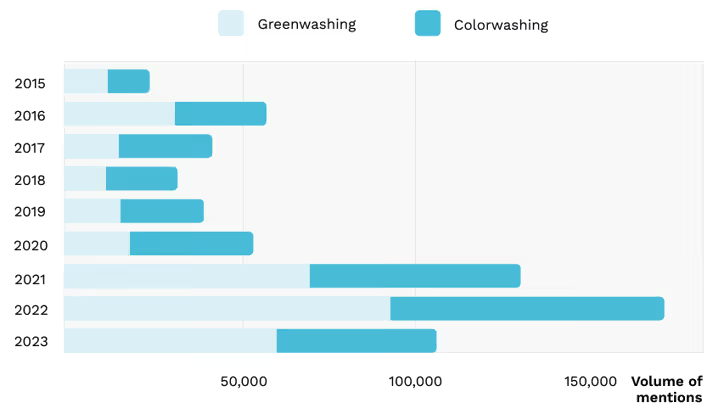
Let’s start with some definitions. Reputational laundering is deliberately hiding unethical behavior with highly visible positive actions. Greenwashing is just one component of reputational laundering. Another component is the social aspect of it, and it includes various forms of color washing such as purplewashing, pinkwashing, purpose washing, etc. So far, in 2023, greenwashing accounted for 55% of all the volume of reputational laundering mentions on the web. So, the remaining 45% represents color-washing.
TerraChoice defines greenwashing as “the act of misleading consumers regarding the environmental practices of a company or the environmental performance and positive communication about environmental performance."
Colorwashing, on the other hand, refers to a strategy used by organizations to create a positive public image by associating themselves with specific causes, ethics, or moral standpoints.
Beyond the conventional understanding of deliberate greenwashing, there’s a more nuanced concept and less discussed: unintentional greenwashing, where companies inadvertently convey misleading environmental claims. This can occur due to a lack of understanding of the true impact of their products or services, unverified claims, overlooking hidden consequences, unintentional confusion in marketing materials, or insufficient transparency. While these companies may not have malicious intent, their actions can inadvertently misrepresent their environmental efforts and mislead consumers about their commitment to sustainability.
Reputational laundering at a glance
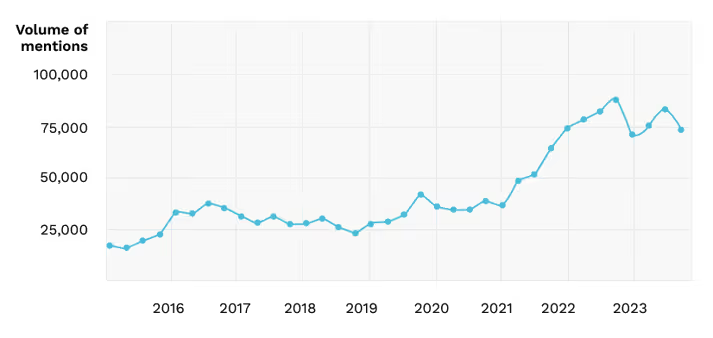
Figure 1: Reputation laundering mentions.
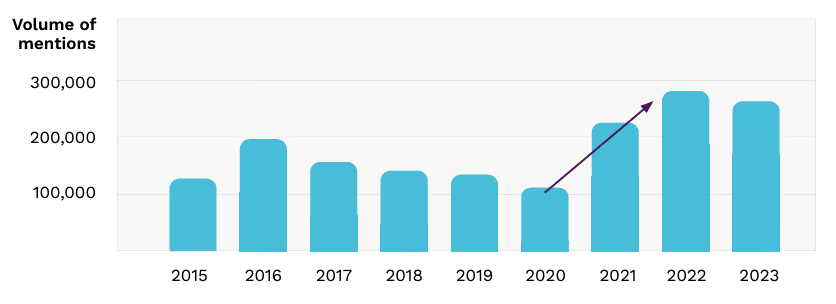
Over the past eight years, reputational laundering mentions have increased steadily. However, from 2021 onwards, they’ve grown a staggering 3.3x. The mentions of reputational laundering are coming from different topics, from false advertising, and misleading practices to lawsuits regarding greenwashing. Furthermore, we have observed a growing number of references regarding the declining trust of the public in corporate pledges, such as those related to 'net-zero' climate goals.
This increase can be attributed to two main reasons: the actual increase in reputational laundering and, more interestingly, the growing awareness from stakeholders (i.e., Investors and eco-conscious consumer base).
According to a report published by the UN Environment Programme (UNEP), climate change lawsuits have continuously surged over the past five years. Consequently, we analyze mentions of lawsuits related to environmental breaches and detect a significant increase in 2021 – which continues to the present day.
While greenwashing often dominates the conversation around reputational risks, it's crucial not to overlook the social dimension, which tends to receive less attention from the public. Since 2020, we've observed a significant uptick in mentions of greenwashing and its less-discussed counterpart, colorwashing.
Historically, up until 2020, the distribution of mentions leaned toward one-third greenwashing compared to two-thirds colorwashing. However, post-2021, this pattern has shifted. We've witnessed a rise in the frequency of greenwashing mentions, surpassing those of colorwashing and signaling an evolution in the focus of reputational laundering concerns.
Figure 3: Breakdown by type of washing.
During the COP27 conference at the end of 2022, a call was made to verify carbon and other environmental claims and show zero greenwashing tolerance. As a result, there has been a rise in scrutiny, and data now shows an increase in the number of allegations related to greenwashing. Here are a few examples:
In analyzing advertisements, we found instances of reputational laundering through various means. Some companies engaged in social washing, while others used sportwashing to bolster their reputation. The mining and energy industries were particularly guilty of this practice. Meanwhile, the communication industry, including companies such as Netflix and Disney, was associated with black and whitewashing.
Inspecting the Regulatory Landscape
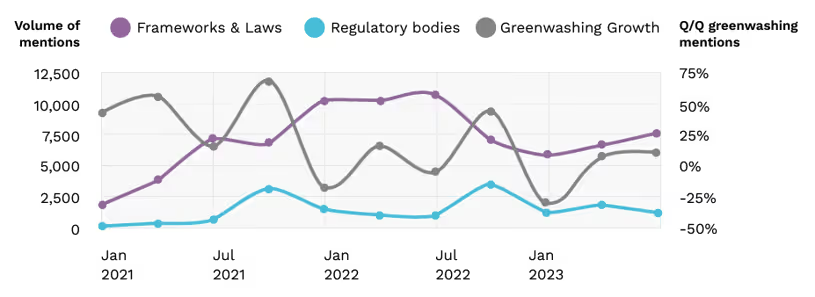
To analyze the regulatory environment of reputational laundering, we studied the effects of different legal frameworks and government organizations on greenwashing and other forms of reputational laundering. We measured the influence of legal frameworks and regulatory bodies on greenwashing by analyzing the quarterly growth of greenwashing mentions over the study period.
In this analysis, we define the concept of legal frameworks by capturing references related to the 'Green Claims' directive, Sustainable Finance Disclosure Regulation, EU Taxonomy, Green Product Certification, Fair Labeling and Advertising Act, Non-Financial Reporting Directive, FTC Act, FTC Green Guides, etc.
Concepts of Regulation bodies are defined by references to governments and Supranational entities (i.e., US government, FTC, SEC, Chinese government, Japanese government, etc.) or regulatory agencies established to safeguard the environment (United Nations Environment Programme (UNEP), Environmental Protection Agency (EPA), European Environment Agency (EAA), Intergovernmental Panel on Climate Change (IPCC), etc.)
Figure 4: Anti-greenwashing regulation vs greenwashing growth.
There has been a slight increase in the mentions of regulatory bodies over the years, mainly due to the growing interest in greenwashing, which has peaked during events like COP26 and COP27. Legal frameworks and regulatory bodies have played a significant role in the fight against greenwashing. Although there is no decrease in the mentions of this topic, the growth rate has reduced significantly. In fact, the quarter-on-quarter growth for greenwashing web mentions has been decreasing lately.
The trends reveal an interesting fact that there is a negative correlation between the growth in mentions of frameworks, laws, and regulatory bodies and the growth in mentions of greenwashing. Though the mentions of greenwashing are still increasing, the growth rate has significantly decreased from a 75% quarterly growth rate to 10% in the last year (except for spikes related to controversial events such as Greta Thunberg labeling COP26 as a “greenwash festival,” and not attending COP27).
Conclusion
As we navigate the landscape of corporate sustainability, it becomes evident that distinguishing genuine efforts from greenwashing is not just a matter of skepticism but a necessity. This exploration underscores the importance of vigilant analysis and the role of AI in unmasking deceptive practices. It calls for a collective commitment to transparency and accountability, empowering stakeholders to make informed decisions and advocating for a future where corporate responsibility aligns authentically with sustainable development.
At SESAMm, we used AI to study billions of articles and analyze greenwashing trends. Download this comprehensive ebook for an in-depth understanding of the evolving landscape of reputational laundering, notably greenwashing, and dive into its trends in the corporate world.
SESAMm’s AI Technology Reveals ESG Insights
Discover unparalleled insights into ESG controversies, risks, and opportunities across industries. Learn more about how SESAMm can help you analyze millions of private and public companies using AI-powered text analysis tools.
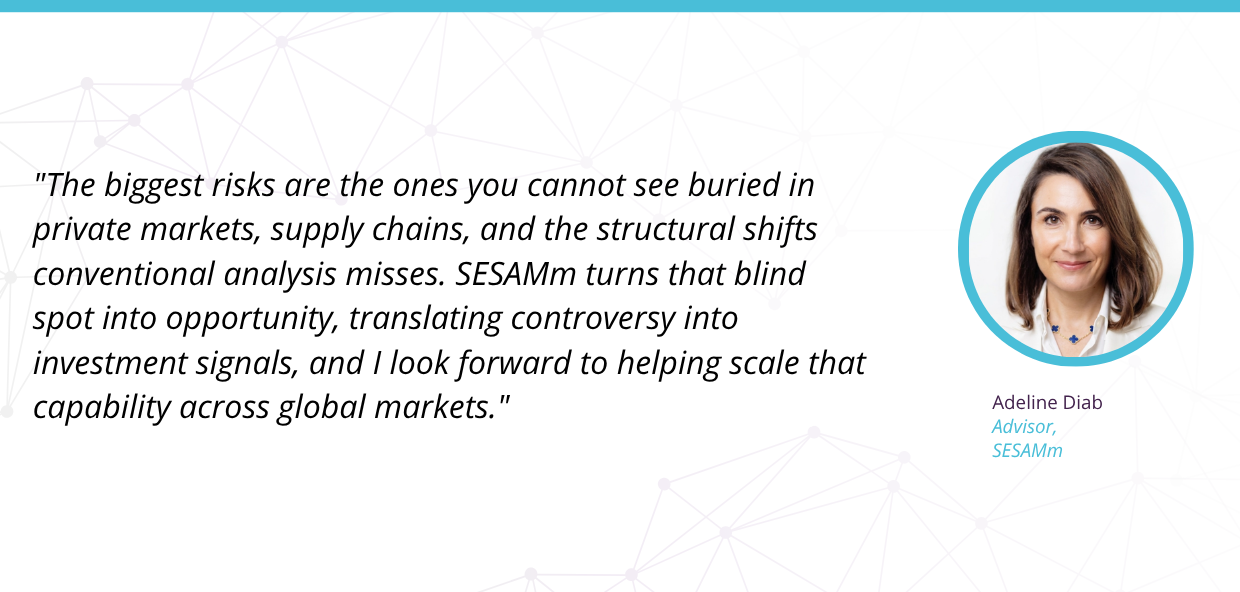
Paris, June 2026 – SESAMm is delighted to welcome Adeline Diab to its Advisory Board, a senior investment executive who has spent two decades integrating financial rigor, thematic strategy, and sustainable finance as one investment discipline.
Across roles at Bloomberg, Man Group, APG Asset Management, and the World Bank, she has managed funds up to €2 billion and overseen strategies across $450 billion in multi-asset portfolios, converting the structural forces reshaping markets, from decarbonization to digitalization, into investment signals and portfolio strategy across public and private markets.
Most recently, as Managing Director and Head of Investment Strategy & Research (Sustainability & Thematic) at Bloomberg Intelligence, she built a global multi-asset research and analytics platform, developing the proprietary thematic frameworks and AI-driven tools behind investment decisions for clients worldwide.
A recognized voice on sustainable finance and governance, she is a regular speaker at international forums including Davos, COP, and PRI, and has helped shape industry standards through GFANZ, UNEP FI, and the OECD. Today, she serves as Senior Expert Advisor to The Earthshot Prize and backs growth ventures such as Notpla, a conviction she now extends to SESAMm.
Powered by large language models and generative AI, SESAMm's platform cuts through the noise across all listed markets and five million private companies, surfacing financial, sustainability, governance, and conflict-related risks, and translating controversy into the precision intelligence investors need to act, not just report.
Adeline joins SESAMM’s advisory group, which brings togetherleading figures across the investment management, sustainable finance, and financial data, including David Platt and Magnus BIlling, amongst others.
As the debate around ESG investing continues to evolve, some institutions and policymakers have grown increasingly vocal in their skepticism. Questions about greenwashing, the effectiveness of ESG strategies, and even outright regulatory rollbacks have cast a shadow over the sustainability movement. However, amidst the noise and uncertainty, there are clear signs of resilience and commitment from major financial players determined to keep sustainability front and center.
Two recent initiatives by European financial leaders—Snam and La Banque Postale—demonstrate that even as some institutions step back from ESG, others are doubling down and forging ahead with ambitious plans to integrate sustainability at the heart of their financial strategies.
This move is particularly significant when SLB issuance has generally slowed due to concerns over the credibility of targets. Snam’s SLB, however, was met with overwhelming demand, being five times oversubscribed with an order book of nearly $10 billion. Such enthusiasm from the market underscores a growing appetite for credible and ambitious sustainability-linked investments. Moreover, by setting clear milestones—like a 25% reduction in Scope 1 and 2 emissions by 2027 and a 90% reduction across Scopes 1, 2, and 3 by 2050—Snam is making a public, measurable commitment to climate action.
La Banque Postale: Transforming Savings with ESG Tiers
The bank’s strategy is built around three distinct ESG tiers. The first excludes companies that conflict with environmental and social goals, while the second prioritizes firms with the best ESG practices. The third and most ambitious tier channels savings into impact-driven solutions—investments directly contributing to environmental and social progress. By creating these accessible, transparent pathways, La Banque Postale empowers individuals to align their savings with their values and participate in the ecological and social transition.
Positive Momentum for ESG
These two examples send a powerful message: while ESG may face headwinds in some circles, forward-thinking institutions remain firmly committed to integrating sustainability into their financial practices. This momentum is important, especially as public trust and regulatory scrutiny around greenwashing intensify.
ltimately, these initiatives remind us that sustainable finance is not about pleasing every critic. It’s about taking concrete steps to create long-term value for investors, communities, and the planet.
SESAMm’s AI Technology Reveals ESG Insights
Discover unparalleled insights into ESG controversies, risks, and opportunities across industries. Learn more about how SESAMm can help you analyze millions of private and public companies using AI-powered text analysis tools.
Stay ahead with the latest in ESG and AI intelligence
Join our mailing list to receive new reports, event invites, and updates from SESAMm directly to your inbox.





.png)
.png)


.png)