Webinar Replay: The Boeing Scandal: Can AI Predict Controversies Before Traditional Tools?
October 3, 2024
•
5 mins read
In our recent webinar, "The Boeing Scandal: Can AI Predict ESG Controversies?" Sylvain Forté, SESAMm’s CEO and Co-founder, along with Emna Abid, Research and Analytics Team Lead, focused on the important role AI plays in detecting and predicting ESG controversies. They explored how AI provides early warning signals for potential crises, using Boeing’s well-known 737 Max scandal as a central example.
The webinar addressed the challenges businesses face when relying on traditional tools to monitor ESG risks. Traditional methods often struggle to capture early signals, particularly when dealing with unstructured data from local news, NGO reports, or social media. SESAMm’s AI solution overcomes this issue by continuously analyzing vast amounts of data in real time to identify red flags that may not be visible through conventional ESG tools.
Using Boeing’s 737 Max crisis as a case study, the webinar demonstrated how SESAMm's AI Solutions detected early warnings before the controversy escalated. The AI system flagged crucial information from whistleblower reports and localized sources well before the issues became major public scandals.
"ESG factors are no longer just secondary concerns. They are at the forefront of how this industry is perceived by the public, investors, and regulators." Emna Abid - Research & Analytics Team Lead, SESAMm
The webinar also touched on the broader aerospace industry, which has faced heightened scrutiny for its environmental and governance issues. The analysis revealed how AI can help companies in high-risk sectors stay ahead of controversies by providing real-time insights and helping them navigate the complex landscape of ESG compliance and public perception.
To sum up, AI is revolutionizing ESG risk detection, providing companies with the ability to identify early warning signs of potential controversies before they escalate into major crises. By analyzing vast amounts of unstructured data in real time, SESAMm’s AI platform helps organizations navigate complex ESG landscapes, particularly in high-risk industries like aerospace. This proactive approach enables businesses to protect their reputation, make more informed decisions, and ensure compliance with evolving ESG standards.
To explore these insights further, be sure to watch the full webinar replay.
Today, it's important to understand the complexities of supply chain regulations. This was the main topic of a recent SESAMm webinar, “Understanding Supply Chain Regulations: The Future Implications of CSDDD”, which explored the implications of the Corporate Sustainability Due Diligence Directive (CSDDD) and other important regulatory frameworks that affect global supply chains.
The webinar, led by SESAMm's CEO, Sylvain Forte, and ESG analyst Maha Chihaoui, explored the evolving landscape of ESG frameworks, laws, and regulations that influence supply chain operations. As businesses strive to enhance transparency, accountability, and ethical practices, they face a multitude of challenges and opportunities. The session highlighted how these initiatives could lead to substantial benefits such as environmental conservation, improved social conditions, and strengthened governance structures.
During the webinar, Maha Chihaoui emphasized the shift from non-binding guidelines to binding laws in the regulatory spectrum, signaling a more robust approach to enforcing corporate accountability and responsibility. Sylvain Forte also discussed the importance of moving beyond mere compliance to ensure genuine adherence to ESG principles, advocating for a systematic and continuous evaluation process to ensure businesses act on their promises.
The session also touched on real-life applications and challenges in implementing these frameworks. For example, the discussion included case studies on companies like Shein and Temu, highlighting how regulatory focus on supply chain controversies has increased visibility and accountability.
As regulatory frameworks around supply chains continue to evolve, the dialogue between various stakeholders—regulators, businesses, and the public—becomes crucial. SESAMm's webinar effectively shed light on these critical issues, offering insights and fostering a deeper understanding of the dynamic relationship between ESG initiatives and supply chain management.
Watch the webinar replay now:
Unlock a deeper understanding of supply chain regulations' complexities and future implications.
November 11, 2022, FTX, a $32 billion cryptocurrency exchange company that many believed would “change the world,” filed for bankruptcy. This news shook the crypto and financial communities, compelling many to debate the future of the crypto market and its platforms.
How did FTX collapse?
You could say that FTX’s collapse began before the news broke, but here’s a summary of events as The New York Times and ABC News details:
Breaking news
In early November, CoinDesk, a crypto publication, broke the news on a leaked document from FTX. The balance sheet showed that the hedge fund run by Sam Bankman-Fried (SBF), Alameda Research, held a substantial amount of FTT tokens. In short, SBF had set up Alameda (his trading firm) and FTX (his exchange firm) in such a way that if one unit experienced trouble, such as dropping cryptocurrency prices, the other experienced it, too.
First domino falls
By the way, FTT is used for various functions, including traders’ payment of operation fees. Also, by the way, Changpeng Zhao, Binance’s Chief Executive, sold his stake in FTX to SBF in 2021, partially with FTT. So, “due to recent revelations,” Binance (Zhao) announced on November 6, 2022, that it would sell its FTT tokens.
Other dominos follow
Traders responded; they hurried to pull funds out of FTX out of fear, and FTT’s price fell. Meanwhile, FTX processed withdrawal requests over three days, amounting to an estimated $6 billion. The liquidity crunch was upon it.
Then, on November 8, Binance said it would bail out FTX. But on November 9, Binance backtracked and announced in a Tweet that it would not “as a result of corporate due diligence,” while also citing regulatory investigations and reports of mishandled funds.
Things get worse
The next day, November 10, the Securities Commission of the Bahamas froze FTX’s assets, citing the public statement about potentially “mishandled” and “mismanaged” customer funds. On November 11, FTX filed for Chapter 11 bankruptcy protections, and SBF resigned as CEO. John J. Ray III—famously known as the CEO who headed the infamously known energy company, Enron, through its collapse in the 2000s—replaced SBF on November 17.
Fallout
Today, FTX faces federal investigation for securities laws violations based on a report by The Wall Street Journal regarding FTX lending customer deposits to Alameda Research for liabilities, of which the company’s top executives were aware. Investors have suffered loss, traders have suffered loss, and the greater crypto community and regulators are asking questions.
FTX and SBF web data analysis
News about FTX’s collapse generated tons of web data for us to scour. With this data, here’s what we aimed to find out:
How did the public web react to FTX’s collapse?
Could we have seen red flags before the news broke?
What was FTX’s collapse’s effect on the cryptocurrency market’s sentiment?
Is it possible to evaluate cryptocurrency exchange companies’ ESG risks and opportunities?
Was FTX’s collapse unprecedented? If not, what does web data tell us about that?
FTX and Sam Bankman-Fried mentions analysis
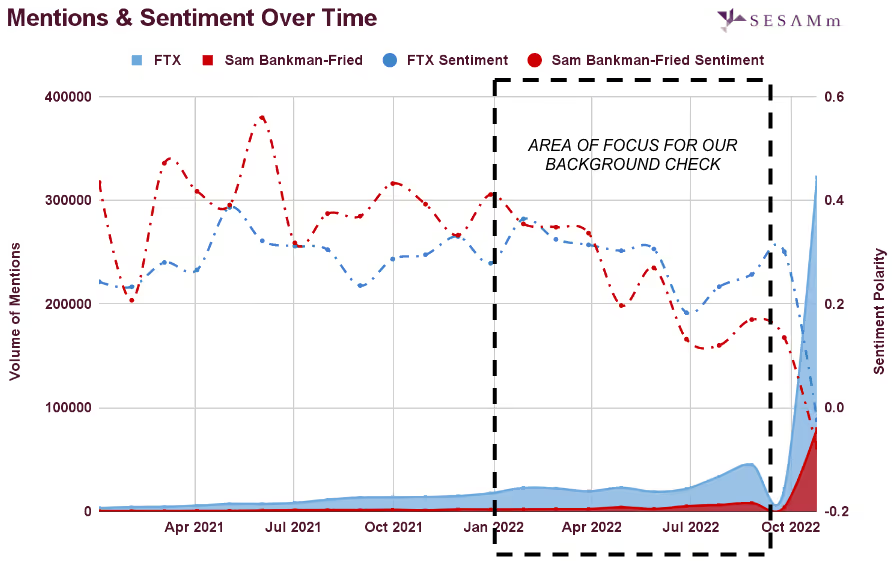
Web public sentiment for FTX and SBF was consistently positive until Q1 of 2022. As mentions volume increased, their sentiment polarity decreased (Figure 1). The mentions spike for both in November when CoinDesk broke the news. Likewise, polarity dips into the negative range for both.
Definition: Polarity represents the aggregate of positive and negative sentiments (opinions or reviews) on a company. A 0 score means there is as much positive as negative sentiment expressed. The dotted and dashed lines represent sentiment in the following charts.
Figure 1: FTX and SBF mentions and sentiment over time.
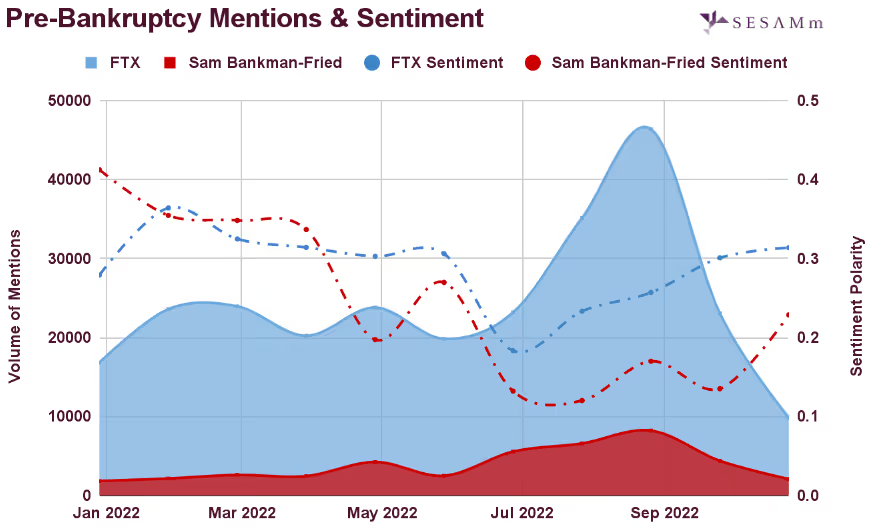
Looking closer at Q1 (Figure 2), we find that mentions affecting sentiment increased for FTX and SBF during this period. What are the mentions about, and why did they affect polarity negatively?
Figure 2: FTX and SBF pre-bankruptcy mentions and sentiment.
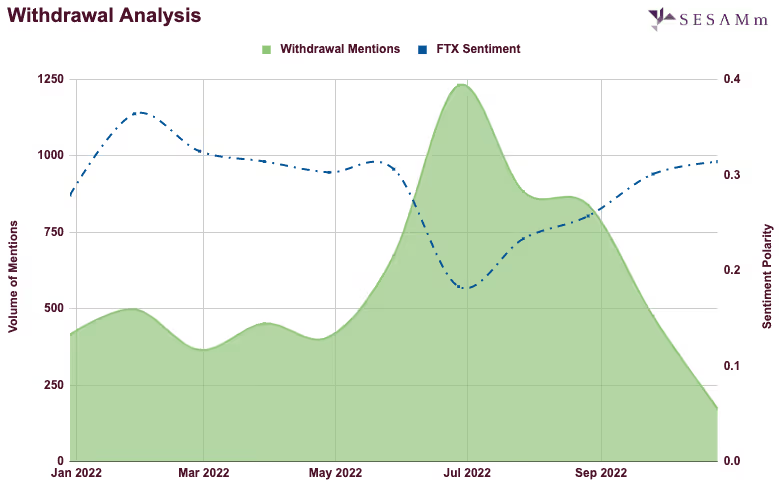
It turns out that SBF is linked to other keywords—we call these co-mentions—and between January 2022 and November 2022, SBF/withdrawal co-mentions (Figure 3) spiked in July when SBF defended Terra Luna’s founder, who was accused of peddling a Ponzi scheme.
Figure 3: FTX and SBF withdrawal co-mentions.
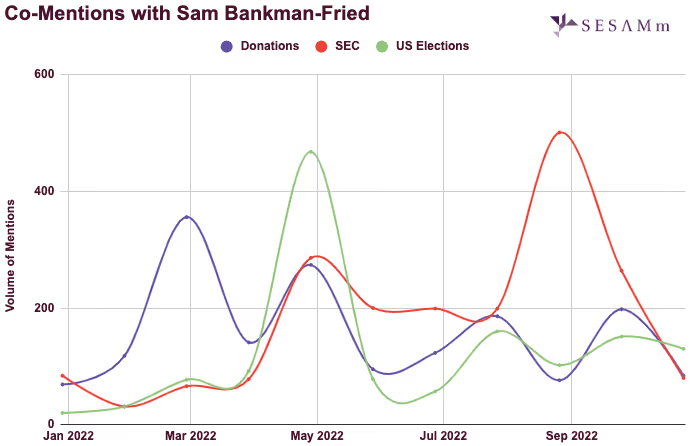
If withdrawal co-mentions brought up possible reasons why SBF and FTX experienced dips in sentiment, what other co-mentions could give us more insight? How about donations, SEC, and U.S. elections?
Figure 4: Donations, SEC, and U.S. elections co-mentions with SBF.
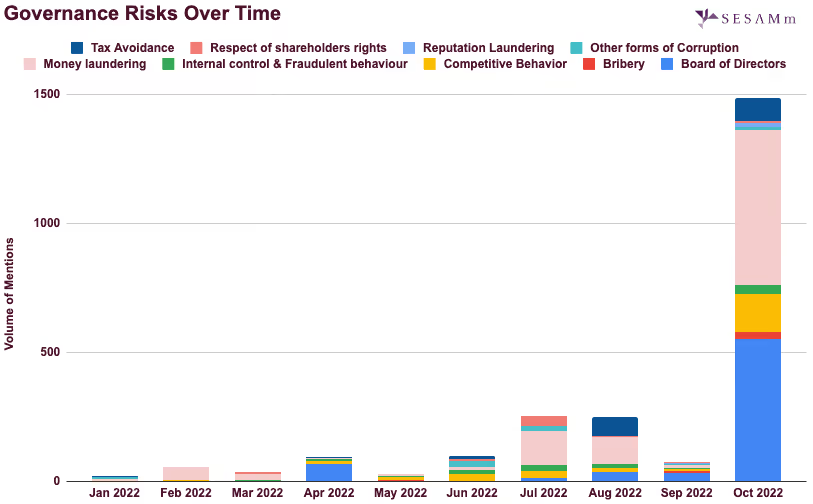
Corporate governance stands out when evaluating SBF’s ESG risks, but his social risks are nothing to ignore either.
Figure 5: SBF governance risks over time.
Two areas of governance risks to note are money laundering and board of directors (Figure 5). Money laundering as a co-mention has been an issue as early as February 2022, but it became a bigger issue in October. These risks may be popping up due to allegations of manipulating the price of the APT token and a securities violations probe.
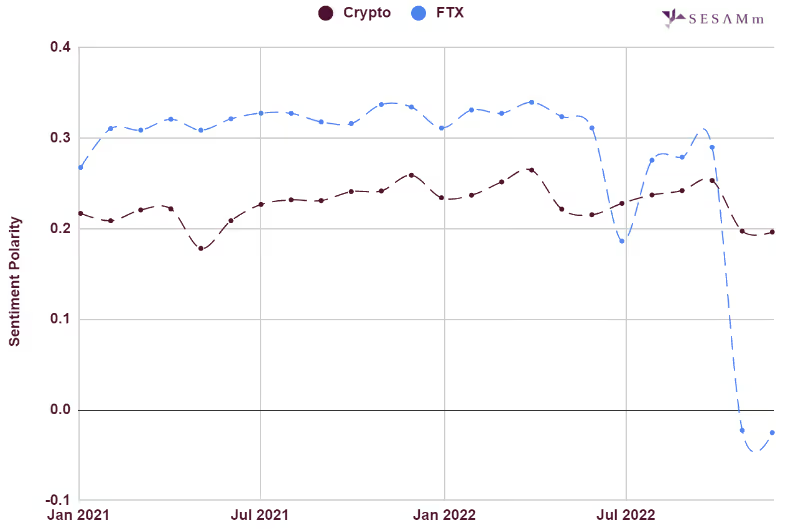
If you’ve read this far, you by now get an impression of FTX and SBF, from mention volume to sentiment analysis and ESG risk. But how did FTX’s collapse affect the overall cryptocurrency market? Let’s find out.
In comparing the sentiment polarities for FTX and the crypto market from January 2021 through November 2022 (Figure 6), the sentiment for crypto remains relatively steady despite FTX’s sentiment taking a hit.
Figure 6: Effect of FTX collapse on the crypto market.
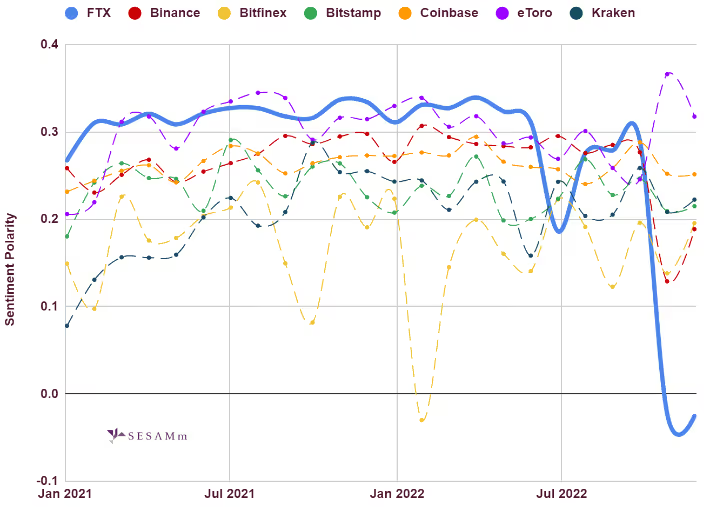
When comparing other cryptocurrency exchanges to FTX (Figure 7), sentiment polarity for them is hardly affected, except Binance, because of its connection with FTX. Oddly enough, eToro experienced a boost in sentiment, possibly because of its core values around openness and transparency, the fact that they’ve been around since 2007, its early compliance with regulations (i.e., AMF, FCA, ASIC, BaFin, and ACPR), and that it also proposes investing in stocks and ETFs, a contrast to most other crypto market exchanges. Bitfinex has its own issues, so its dip in sentiment might not be correlated.
Figure 7: FTX sentiment comparison across competitors.
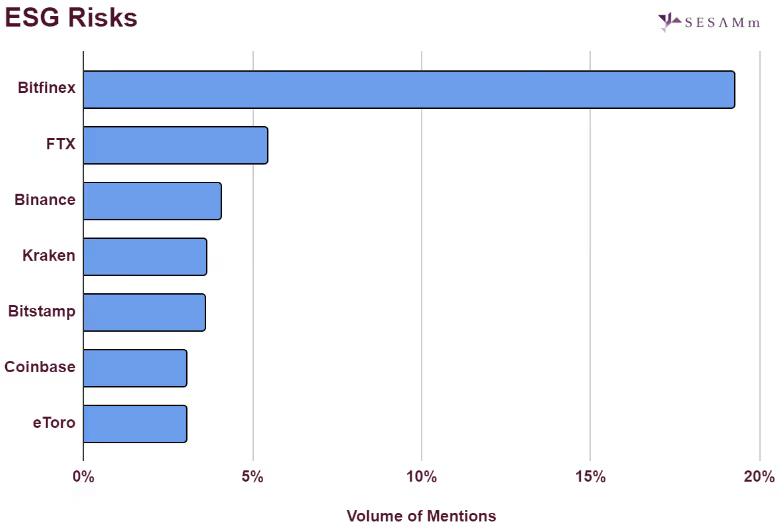
At this time, FTX’s ESG risks based on the mention volume are only surpassed by Bitfinex (Figure 8), which its risks are based on many other reasons we won’t get into in this article.
Figure 8: FTX and competitors ESG risks by mention volume.
Centralized vs. decentralized crypto exchange platforms
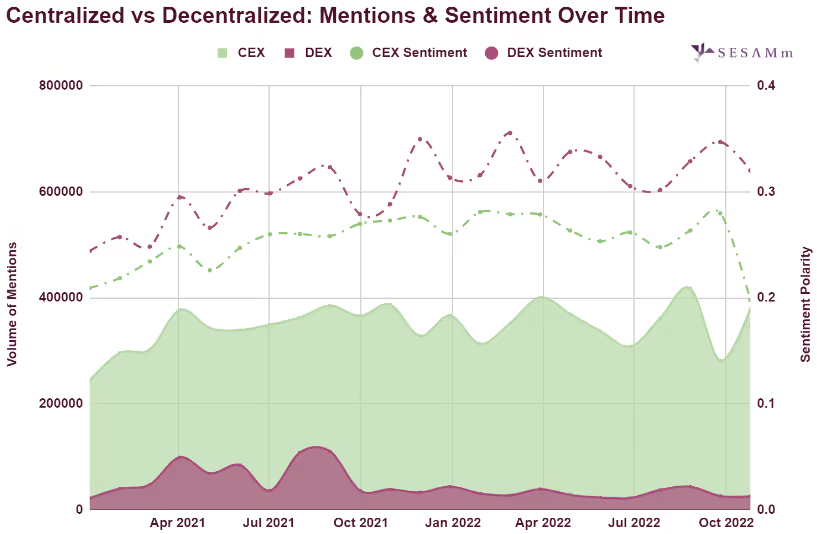
FTX’s collapse also affected sentiment around the centralized vs. decentralized debate. Since October 2022, sentiment for centralized exchange platforms, such as FTX and its competitors, has fallen (Figure 9).
Figure 9: Centralized vs. decentralized mentions and sentiment over time.
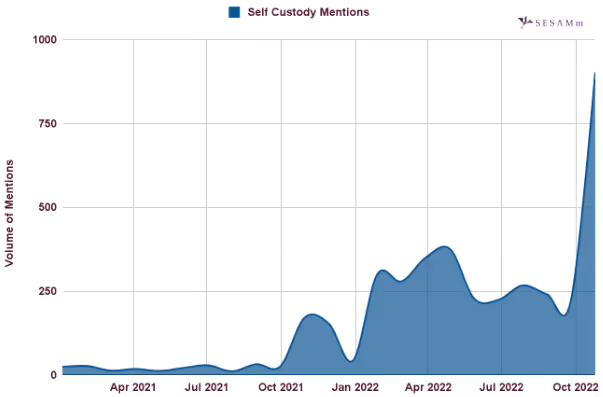
Likewise, the mention volume for self-custody has more than doubled in the last couple of months (Figure 10). Although centralized platforms offer quicker and easier access to crypto trading, traders are considering complex but more secure options such as crypto wallets and keys because, like banks, centralized exchanges can do what they will with cryptocurrency while it’s in their possession. With self-custody, owners are in control.
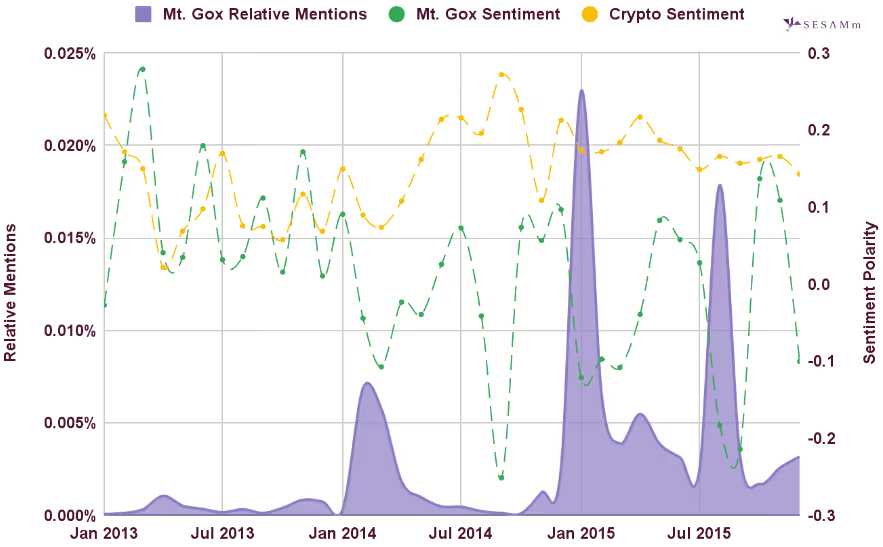
Believe it or not, FTX was not the first crypto exchange to collapse. In 2014, Mt. Gox—the biggest crypto exchange at the time—lost half a billion dollars worth of Bitcoin due to a hack. How did Mt. Gox’s collapse affect sentiment for the crypto market then? The short answer is: It didn’t.
Figure 11 shows that while Mt. Gox’s sentiment polarity fluctuated, even reaching negative territories, the sentiment for the crypto market remained relatively stable and positive.
Figure 11: Mt. Gox and crypto sentiment comparison.
Is FTX’s collapse a warning for investors?
Our analysis is that investors should treat cryptocurrency exchanges like any investment opportunity. Do your due diligence and monitor your portfolio with tools like SESAMm’s TextReveal®.
As for the cryptocurrency market, data shows that sentiment for it remains level and positive. We speculate that cryptocurrency and centralized exchanges are here to stay. However, based on historical data and current news, we suspect conversations about crypto regulations to increase.
Reach out to SESAMm
For a deeper analysis of FTX’s collapse and access to all charts and supportive-article links, reach out to a representative today.
On 2 July 2026, the EU ESG Rating Regulation, Regulation (EU) 2024/3005, entered into application. For the first time, providers of ESG ratings in the European Union operate under formal supervision, with common expectations for transparency, governance and independence. We see this as a turning point for the industry, and a welcome one.
SESAMm welcomes the Regulation because its objectives have been ours for a long time. On the day it entered into application, we notified ESMA of our intention to continue operating in the Union and to seek authorization as an ESG rating provider. This article explains how we have prepared, how we take part in the wider regulatory environment, and where we are in the process.
A Regulation We Have Been Preparing For
The Regulation did not take us by surprise. We have been preparing for it for more than two years, following each step of its development and taking part in the workshops ESMA has held for the industry along the way.
That preparation runs deeper than paperwork. Long before the Regulation existed, SESAMm was built on a simple conviction: an ESG signal should be traceable to its source and explainable in its method. We monitor ESG controversies in real time across millions of public and private companies, and the discipline required to do that at scale, and to stand behind every score, is exactly the discipline a regime built on transparency now asks of every provider.
An Active Voice in the Ecosystem
We have not watched this Regulation from the sidelines. SESAMm is a member of EASRA, the European association of ESG rating providers, where our CEO, Sylvain Forté, serves as Vice-Chair. He also sits on the Sustainable Finance Commission of the AMF, the French financial markets authority.
We have engaged directly with ESMA as part of our preparation for the Regulation. A good regulation is built through dialogue between supervisors and practitioners, and we have been a constructive part of that conversation, contributing the perspective of a technology-led provider working at global scale.
Transparency and Independence, Built In
The heart of the Regulation is transparency, and that is where our longest-standing investment sits.
Our full rating methodology is now public and free to access at sesamm.com/methodology, with disclosures provided at the level of our rating product. It sets out what our Controversy Exposure Score measures, the data behind it, how severity is assessed, where AI does the work, and where our analysts validate it.
That combination is deliberate. AI gives us the scale to read millions of documents a day. Our analysts give the system its rigor, defining the methodology, running quality assurance and validating the data every day. Changes to the methodology are backtested against an extensive historical database of controversy events before they ever reach a client.
Independence is part of the same design. Our scoring logic is applied by rule, consistently across every entity, and is not adjusted for any individual company. That is a structural choice, and it is one of the reasons the market can read a SESAMm score as an opinion formed by method rather than by negotiation.
Where We Are in the Process
Under the Regulation's transitional arrangements, providers that notify ESMA of their intention to seek authorization may continue to operate while their application is assessed. Having given that notification on 2 July 2026, SESAMm will file its full application within the window the Regulation sets, and our service continues without interruption.
We want to be precise about status. Authorization is a process, and it is underway. We are not describing a completed outcome, and we will inform our clients and partners as the process reaches its conclusion. What we can say today is that we have done the work to approach it from a position of readiness rather than from a standing start.
What This Means for Our Clients
For the institutions that rely on our data, the direction of travel is clear and positive. The Regulation raises the bar for the whole market on transparency, governance and independence, and it turns those qualities into something a provider must show rather than simply assert.
Those are the principles SESAMm has been building on for years. We are glad the market is moving toward a standard we have long believed in, and we intend to keep playing our part in getting it there.
To read our full methodology, visit sesamm.com/methodology. To discuss what the Regulation means for your ESG data, get in touch with our team.
Stay ahead with the latest in ESG and AI intelligence
Join our mailing list to receive new reports, event invites, and updates from SESAMm directly to your inbox.




.avif)


.png)