Ebook: Corporate Responsibility Redefined: A 5-year Review of the UN Global Compact
April 24, 2025
•
5 mins read
As sustainability expectations rise, so does scrutiny. This ebook explores how industries are performing against the UNGC’s Ten Principles—and where risks are being overlooked. Backed by SESAMm’s AI-powered UNGC violations screening, it offers a data-backed view into ESG alignment and accountability.
What You'll Learn:
Commitment doesn’t always mean compliance: Public alignment with the UNGC is there, but our data reveals persistent ESG risks that often go unaddressed.
Certain sectors face heightened exposure: The technology, finance, and automotive industries consistently rank among those most frequently linked to potential breaches.
The enforcement gap is widening: A clear disconnect exists between alleged violations and actual accountability, emphasizing the need for real-time monitoring and stronger ESG oversight.
Geopolitical events can quickly create ripple effects across global trade routes, supply chains, and corporate operations. For investors, commercial banks, insurers, and other organizations, identifying which portfolio companies or counterparties are exposed to these developments is a real challenge, especially when monitoring large universes of public and private companies.
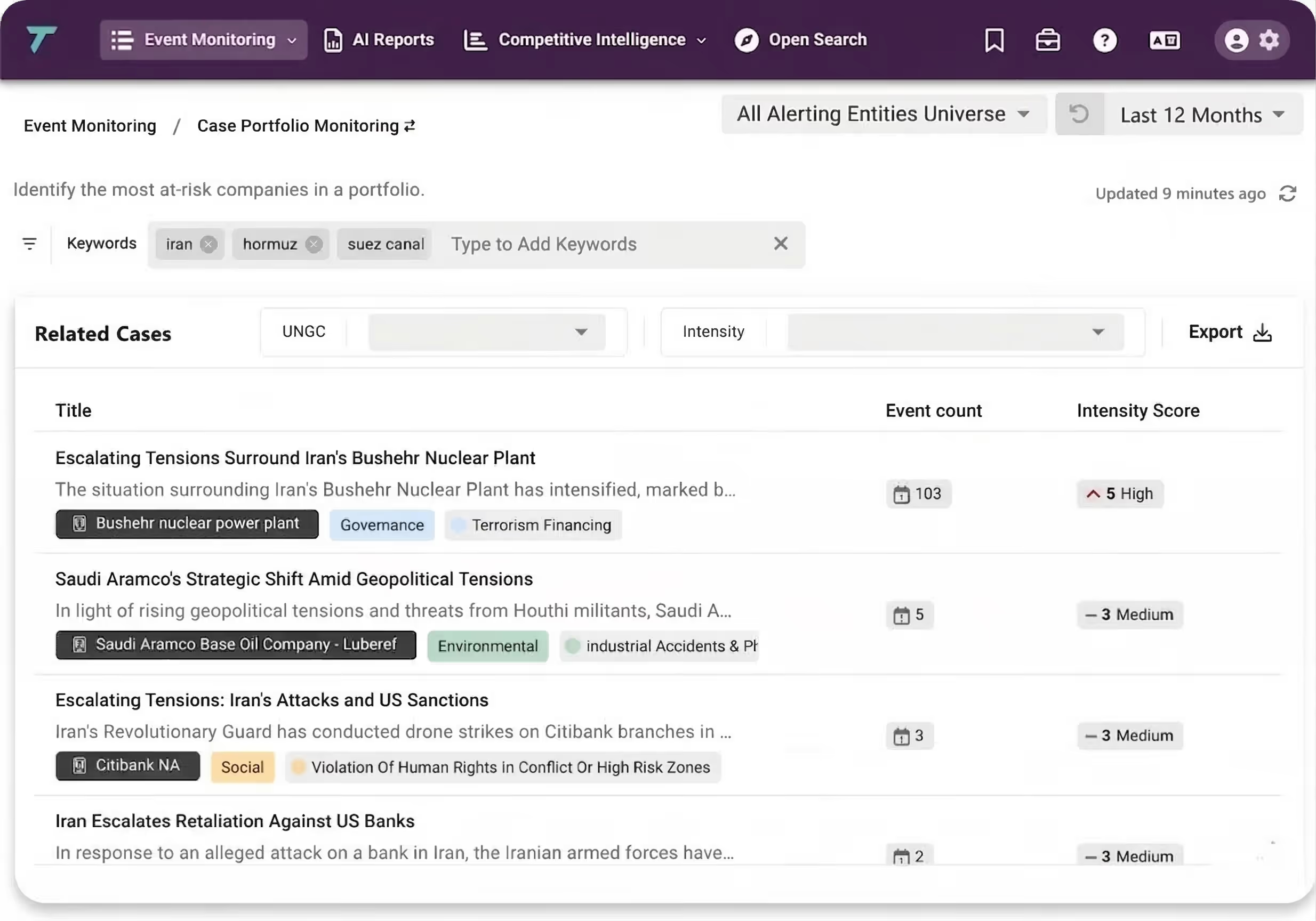
SESAMm's thematic keyword search enables analysts to quickly discover controversies related to specific topics or emerging events across thousands of companies. This functionality allows them to filter results by theme without having to manually review large volumes of news and event data.
This functionality is particularly valuable when monitoring rapidly evolving geopolitical situations. To assess exposure related to the current conflict involving Iran, for example, users can run a thematic search across a broad company universe using keywords such as: Iran, Hormuz, and Suez Canal.
These keywords capture references to critical geopolitical locations and maritime chokepoints that may affect global shipping routes, energy markets, cybersecurity risks, and broader operational disruptions. Keywords can be tailored to any geopolitical scenario. Users can start broad and refine as the situation develops, or combine location-based terms with event-specific language to narrow results to the most relevant controversies.
When applied across a large company universe, the dashboard surfaces a range of related controversies ranked by severity. From high-intensity cases like escalating tensions around Iran's Bushehr Nuclear Plant, to medium-intensity signals such as retaliatory actions targeting US banks, offering clear visibility into which companies may face the highest risks.
Zooming In on Company-Level Exposure: The Example of Amazon
Alternatively, analysts can also use the same keyword approach to filter controversies associated with a specific company. This helps determine whether a particular portfolio holding, borrower, or insured entity may be affected by the same geopolitical developments.
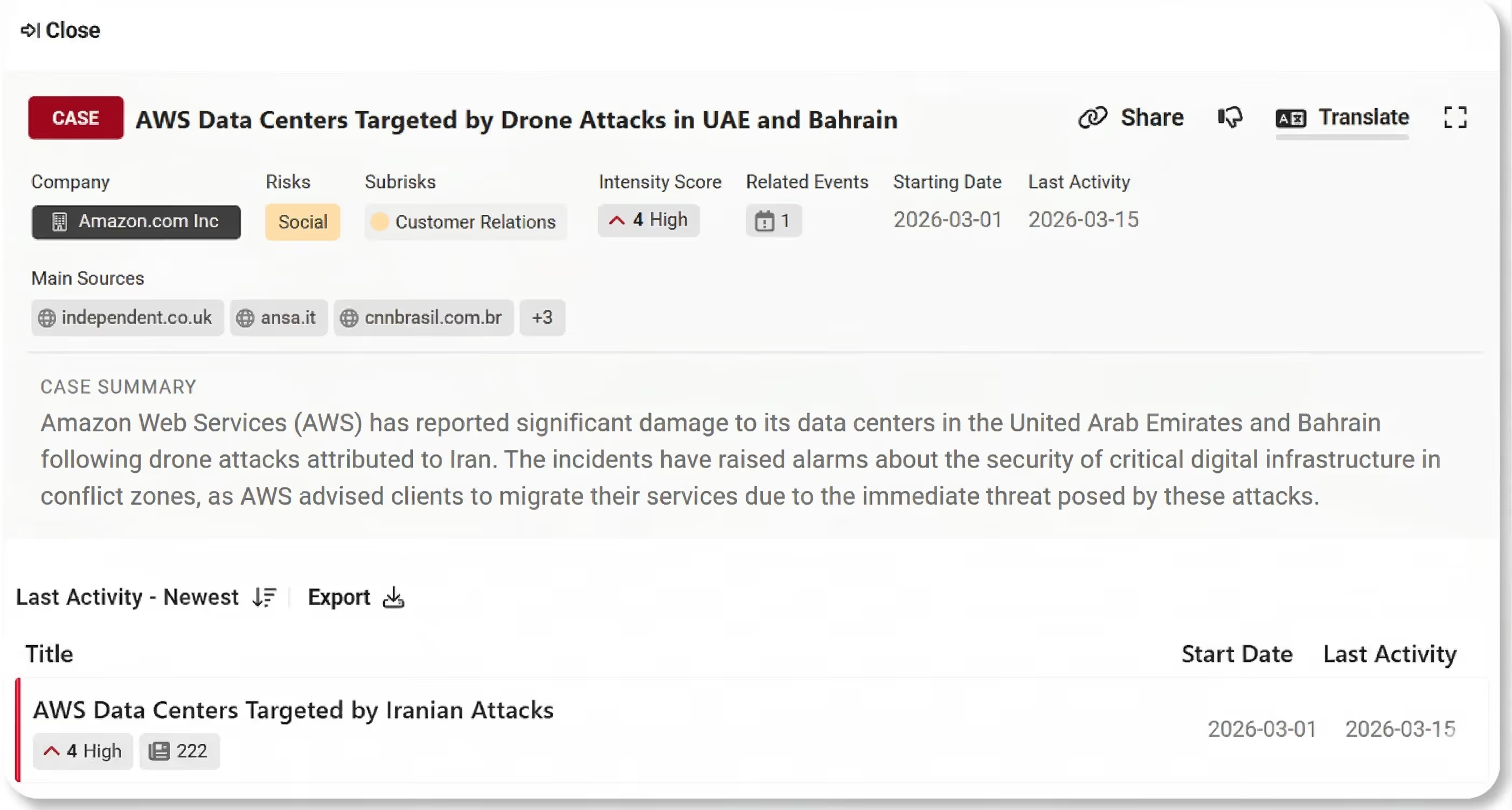
Applying this search to Amazon, for instance, surfaces a high-intensity case titled "AWS Data Centers Targeted by Drone Attacks in UAE and Bahrain." The case, rated 4/5 in severity and drawing on over 200 related news events, describes significant damage to AWS infrastructure in the UAE and Bahrain following attacks attributed to Iran, prompting AWS to advise clients to migrate services.
This kind of signal carries real weight for financial institutions. For investors, it highlights operational and geopolitical risks affecting a major technology provider. For banks and insurers, it may point to infrastructure vulnerabilities, operational disruption risks, or broader geopolitical tensions affecting clients' critical systems.
From Geopolitical Events to Portfolio Risk Signals
Geopolitical events rarely affect just one company. For financial institutions monitoring thousands of entities, they create complex, evolving risk exposures across entire portfolios, lending books, and insurance coverage.
Thematic keyword searches help bridge this gap, connecting macro-level developments to company-level controversies quickly and systematically. By combining automated controversy detection with flexible search capabilities, analysts can rapidly identify relevant signals, investigate affected companies, and prioritize follow-up work.
In practice, this means moving faster from emerging geopolitical events to actionable risk insights. Whether the trigger is a conflict in the Middle East, sanctions on a major economy, or rising tensions around a critical shipping lane, the same approach applies, giving investors, banks, and insurers a systematic way to stay ahead of geopolitical risk across their entire portfolio.
People are leaving traditional jobs in droves according to the latest figures from the U.S Bureau of Labor Statistics, which showed a record breaking 4.5 Million resignations as of Nov 2021.
The trend has originated a movement on Reddit similar to r/wallstreetbets called r/antiwork where more than 1.7 Million active members share resignation stories, discuss unfair work practices, criticize their bosses, and advocate for employee rights and better work conditions.
We applied SESAMm’s AI and Natural Language Processing (NLP) engine TextReveal® to analyze r/antiwork subreddit thread posts, as well as other related content, from a context and sentiment analysis perspective.
The full report, entitled “The Big Quit”, is one of our series of Alternative Data Trends, which leverages web data and AI to provide regular analytics on key industries and subjects. They typically contain alternative data based insights and analyses, including numerous detailed charts and graphs as well as supporting data which can be reprocessed by client teams.
Here are some of The Big Quit report’s highlights:
Mentions of the Anti-Work movement exploded by 215% in June 2021 coinciding with the start of the ‘Great Resignation’.
Leisure & Hospitality, Healthcare and Retail are the three most mentioned sectors.
McDonalds and Starbucks are the two companies with the highest number of mentions.
The three brands displaying the most negative sentiment are Wendy’s, Chipotle Mexican Grill and McDonald’s.
The three most talked about topics are compensation benefits, and workload.
The Debtstrike movement, seeking debt relief for the less fortunate in society as well as banning unfair debt practices, saw mentions shoot up 497% in September 2021.
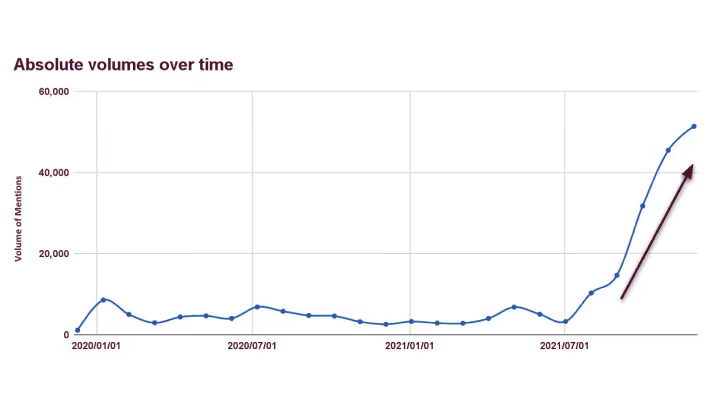
Volume of Mentions of “Anti-work” as a predictive Indicator of The Big Quit
The graph above shows that prior to August 2021, anti-work mentions on Reddit have been fairly stable before this topic went viral with a 215% increase, this growth of mentions appears to be a leading indicator to the 4.5 million resignations in November 2021.
SESAMm’s TextReveal® platform can be used in a wide variety of use cases and projects. Request a copy of the full Alternative Data Trends report “The Big Quit” report here, or if you have any other questions regarding our data, or would like a demo, please contact info@sesamm.com.
Raiffeisen Bank International’s (RBI) Advanced Analytics and AI Tribe is crucial to the bank’s operations. The team delivers, maintains, and operates AA&AI (digital) solutions allowing Retail and Whole-Sale Banking to increase revenues (and to fulfill their role as the first line of defense). They are pioneers in using cloud-based infrastructure. With more than 50 data scientists, data engineers, machine learning engineers, and cloud engineers, they play a crucial role in transforming RBI into a data-driven company.
The AA&AI tribe at RBI recognized a significant opportunity in SESAMm, a leading AI-powered analytics, and data solutions provider. SESAMm’s solutions offer access to an extensive range of web-based information, which is otherwise challenging to obtain. This data is critical for RBI’s operations, enabling the bank to stay ahead of the curve regarding market trends, consumer preferences, and industry insights.
Key successes for RBI after working with SESAMm include:
Generated analytics on clients to specifically monitor companies exposed to the Ukraine war, enabling the bank to proactively identify potential risks and minimize its exposure to geopolitical events.
Integrated specific languages within RBI’s core market, including Russian, Romanian, Slovak, Czech, and Polish, improving the bank’s ability to analyze and understand regional data.
Integrated SESAMm’s data with RBI’s internal visualization dashboard, allowing the bank to leverage the insights generated by SESAMm’s AI-powered analytics to improve decision-making and drive business growth.
Why RBI chose SESAMm: Coverage, early warning signals, and customizability
Raiffeisen Bank International decided to partner with SESAMm due to several key factors:
SESAMm’s excellent coverage, including that of the CEE market, is a crucial need for RBI. This coverage enables RBI to obtain critical data and insights that help inform the bank’s decision-making process.
SESAMm’s product, TextReveal API, provides data and the underlying natural language processing (NLP) capabilities, enabling RBI to analyze data at a deeper level. This capability is significant for the bank’s operations in the CEE region, where multiple languages are spoken.
The relationship built between SESAMm and the RBI team during the proofs-of-concept (PoCs) brought confidence in the quality of SESAMm’s products and the potential value they could bring to the bank.
Overall, the combination of SESAMm’s excellent coverage of the CEE market, NLP capabilities, and positive relationship with the RBI team made them the ideal partner for the bank’s data and analytics needs.
The Collaboration
After SESAMm and Raiffeisen Bank International agreed to collaborate, SESAMm began working with David Eschwé, the Head of Group Advanced Analytics at RBI. SESAMm onboarded the RBI team on TextReveal API and opened dashboards and API access to RBI. This access allowed RBI to generate historical datasets. SESAMm worked with the RBI team to define the roadmap and key milestones, particularly for integrating Central and Eastern European languages. This enabled RBI to access critical information efficiently that could help their internal teams generate early warning signals to better mitigate potential risks that can harm the bank. By working closely together, SESAMm and RBI achieved key milestones, demonstrating the value of the collaboration to both parties.
The results
By leveraging SESAMm’s solutions, RBI was able to monitor more than 1,000 clients, generating analytics on companies exposed to the Ukraine war and creating early warning signals to mitigate better potential risks that could harm the bank. Additionally, SESAMm’s solutions provide substantial yearly savings in raw-data-related costs, allowing RBI to allocate resources more efficiently and effectively. Through this collaboration, SESAMm helped RBI achieve more significant insights into their data, improve their risk management processes, and achieve considerable cost savings.
"Our partnership has been a great success. Thanks to SESAMm, we can now answer business-relevant questions within days, including those related to the critical topic of ESG” —David Eschwé, Head of Group Advanced Analytics in RBI.
About Raiffeisen Bank International
Raiffeisen Bank International AG (RBI) is a leading Austrian banking group that operates across Central and Eastern Europe. It is headquartered in Vienna, Austria. RBI offers a wide range of banking and financial services, including corporate and investment banking, retail banking, leasing, and asset management. With a focus on sustainability and social responsibility, RBI is committed to providing high-quality banking services while supporting the communities in which it operates.
Reach out to SESAMm
Whether you’re a financial institution, an asset manager, or a data-driven company looking to gain insights into your data, SESAMm’s technology and team of experts can help you achieve your goals.
Stay ahead with the latest in ESG and AI intelligence
Join our mailing list to receive new reports, event invites, and updates from SESAMm directly to your inbox.









.png)