Paine Schwartz Partners Selects SESAMm to Strengthen ESG Screening and Controversy Monitoring
05/05/2026
•
5 mins read
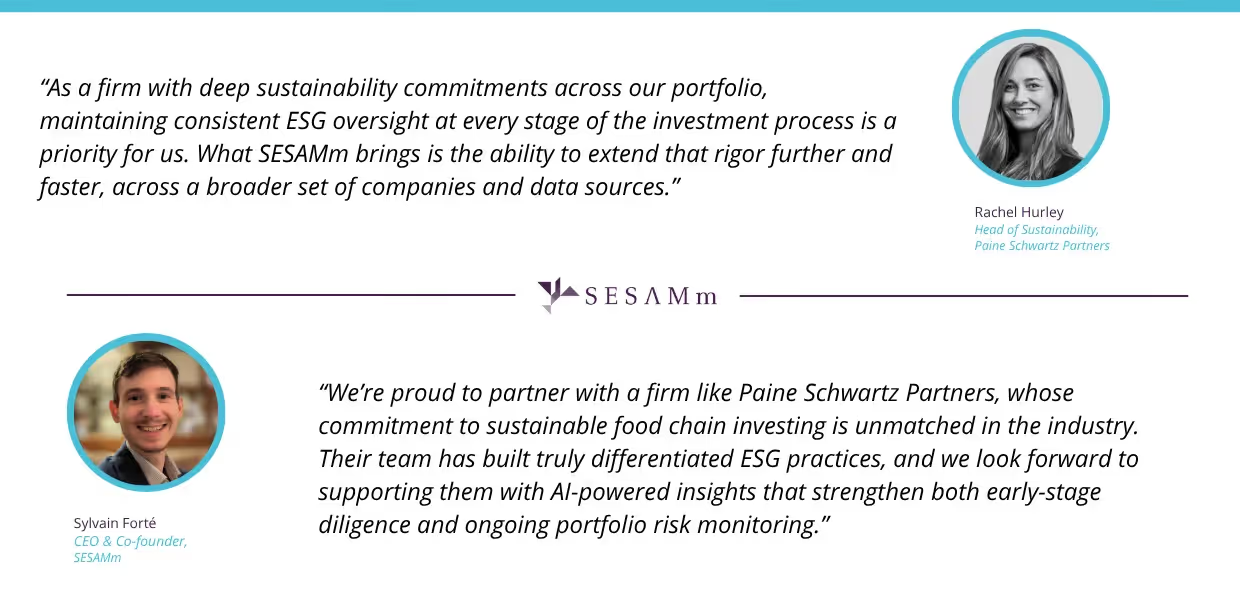
SESAMm, a leading provider of AI-powered ESG and reputational risk insights, is pleased to announce that Paine Schwartz Partners, the largest private equity firm dedicated to sustainable food chain investing, has selected SESAMm’s platform to enhance its ESG due diligence and portfolio monitoring processes.
Paine Schwartz Partners manages over $6 billion in assets and invests globally across the food and agribusiness value chain, pursuing predominantly buyout investments, with a smaller allocation to growth companies. With a strong, long-standing commitment to sustainable investing in the food chain, Paine Schwartz integrates environmental, social, and governance (ESG) considerations at every stage of its investment process, from initial screening to active portfolio management.
As part of its investment process, Paine Schwartz Partners will leverage SESAMm’s platform to enhance its ESG risk screening, due diligence, and supplier and portfolio monitoring.
SESAMm’s platform provides real-time visibility into ESG and reputational risks across millions of public and private companies worldwide. The platform leverages multilingual large language models to analyze content from over 4 million sources in 100+ languages, enabling rapid first-gate screening, continuous monitoring of portfolio companies and their supply chains, and early detection of potential red flags, all while providing fully auditable data.
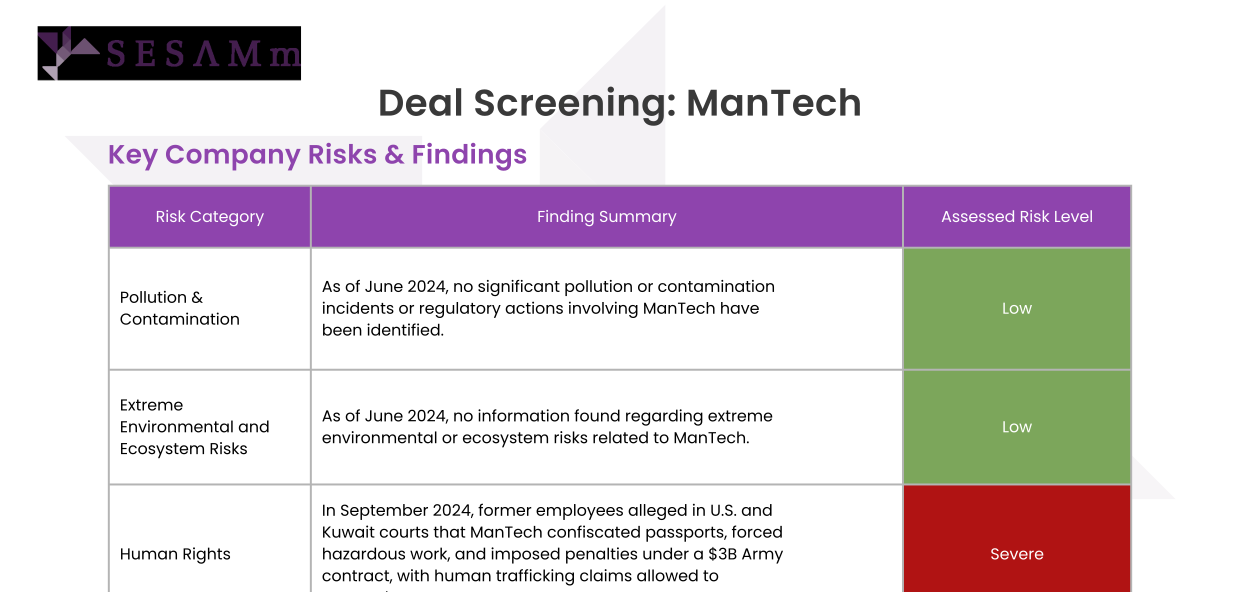
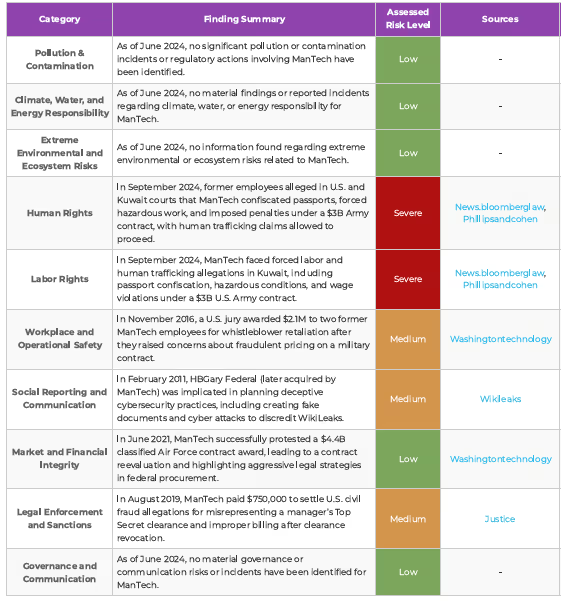
Among the platform’s capabilities, Paine Schwartz Partners will make use of SESAMm’s AI Reports, a suite of AI-generated reports covering ESG Assessment, Legal, and Governance Screening, available directly within the platform. These reports make it possible to rapidly screen companies for ESG and reputational risks even where direct access to company data is limited, for example, when evaluating whether to pursue a smaller or minority investment, or before launching a full due diligence process. The reports will also help the firm efficiently screen key suppliers across its portfolio, a particularly valuable capability given the firm’s focus on the food and agribusiness value chain.
About Paine Schwartz Partners
Paine Schwartz Partners is the largest private equity firm dedicated to sustainable food chain investing, with ~$6.5 billion of AUM and over 20 years of experience. The firm invests across specific segments of the food and agribusiness value chain, with a focus on two core investment themes: productivity and sustainability and health and wellness. Through its proactive, thesis-driven approach, the firm targets value-added and differentiated companies and makes primarily control buyout investments, with a smaller allocation to growth companies. Learn more at www.paineschwartz.com.
About SESAMm
SESAMm is a global leader in controversy data, leveraging advanced large language models and generative AI to uncover ESG, reputational, and supplier risks in seconds. Our AI-powered platform surfaces real-time insights, even in low-disclosure markets, on millions of companies and infrastructure projects, supporting more informed decisions, enhanced due diligence, and regulatory alignment at scale. We work with leading firms, including Carlyle, Warburg, Natixis, RBI, Sustainable Fitch, Oddo, and others. SESAMm has raised $50M from renowned investors and operates across four continents. Learn more at sesamm.com
Kotaro Hama will represent us at the conference and talk about our experience as an alumnus of the Plug and Play accelerator program. Come and say hello.
Join us on March 14 and watch Sylvain Forté’s live demo on stage, where he’ll present our latest ESG technology.
On the second day of the conference, March 15, Sylvain Forté will also take part in a panel discussion entitled “Fintech Founder Power Panel: We're In The Revenue - Now What?”
It's a word that most of us in the U.S. despise, almost as much as the word taxes. It's probably because, like taxes, we can't escape its wallet-draining effect when it increases. Maybe the way we feel about it is because the last time the U.S. economy deflated—giving us relief from it—was in the 1930s, when "Prices dropped an average of nearly 7% every year between the years of 1930 and 1933," according to Investopedia. But I digress.
We won’t go into how inflation works, but how the government calculates it—and how its categories affect it—has always been consistent. At least it was until the COVID-19 pandemic hit, that is.
What NLP text mining reveals about the U.S. economy inflation-rate factors and the online conversations about them
To ensure we're on the same page about how we came to the forthcoming information in this use case, let's cover a couple of basics on NLP text mining and inflation rate indexes.
What are NLP and text mining?
Natural language processing (NLP), an A.I. technology, automates the data analysis of mined textual, unstructured data. It includes natural language understanding and natural language generation to simulate a human’s ability to create language, and it’s a component of text mining that performs a special kind of linguistic analysis by deep learning algorithms so a machine can “read” text. Apps like Grammarly or Wordtune analyze text to improve a written text, for example, and chatbots use this technology to interact with customers. Text mining, or text analytics, is the process of examining big data document collections. It’s a computer science discipline that converts unstructured text data in documents and databases into normalized, structured data and datasets for analysis by machine learning models. Deep learning machine-learning algorithms then analyze this data, analyzing semantics and grammatical structures, to gain new insight or aid research from human language. Together, NLP and text mining are like a search engine on steroids.
The Consumer Price Index (CPI)
According to this Forbes Advisor article, "The two most frequently cited indexes that calculate the inflation rate in the U.S. are the Consumer Price Index (CPI) and the Personal Consumption Expenditures Price Index (PCE)." For this article, however, we'll only use the Bureau of Labor Statistics (BLS) method of CPI inflation calculation as a reference. CPI observes a specific group of commonly-purchased goods and services to gauge how prices fluctuate. These foods and services include:
Apparel: Women's and men's clothes, jewelry, etc.
Alcoholic beverages: Beers, wine, liquor, etc.
Energy and commodities: Gasoline, natural gas, electricity, etc.
Food: Items bought by the average consumer, such as breakfast cereal, milk, meat, fruits, vegetables, etc.
Housing and shelter: Rent, housing insurance, bedroom furniture, hotel or motel accommodation costs, etc.
Medical care services: Physicians' services, prescription drugs, medical supplies, etc.
New and used vehicles: Trucks, vans, sedans, SUVs, etc.
Tobacco and smoking products: Tobacco-related items, such as cigarettes, cigars, bidis, kreteks, loose tobacco, etc.
Transportation services: Airline fares, vehicle insurance, etc.
NLP text-mining process: web mentions matched to CPI categories
Using SESAMm's web text analysis engine TextReveal®, we analyzed textual data relating to the inflation topic within the U.S. from 2017 until now. For this analysis, we defined co-mentions as the articles and social media posts that mention "inflation" and at least one of the CPI categories. Note: Although we can analyze more than 100 languages, we focused on English in this case. Also, we didn’t conduct a sentiment analysis from the information extraction.
Figure 1: Inflation co-mentions by category and percentage.
From 2017 to 2019, inflation co-mentions within the U.S. are relatively stable (see Figure 1). But this trend changes with the first shift in 2020, continuing its rapid growth and peak by the end of 2021 due to this surge of inflation reaching record levels.
What was one of the main drivers of the inflation surge? Used cars.
3 used-car and inflation trends uncovered through NLP Text Mining
According to the U.S. Bureau of Labor Statistics, the cost of used vehicles was one of the main drivers of the inflation spike. How did used cars contribute to inflation? The chain of events occurred like so: The increased used-car demand was fueled by a new-vehicle supply shortage caused by a chip shortage generated by supply-chain interruptions due to the COVID-19 pandemic.
As the pandemic-induced supply-chain interruption unfolded, used-car trends developed. Here are three we found in our data mining research:
Trend 1: Co-mentions percentage for used vehicles more than doubled
Figure 2: Used vehicles co-mentions increase percentage-wise.
Based on the percentage of co-mentions compared to other topics, the used-car topic moves from the number eight spot to the number four spot in 2021 (see Figure 2).
Figure 3: Used-car co-mentions begin in early 2021 and exceed those for new cars.
Before 2020, mentions were relatively steady. However, we observe an increase in used-vehicles mentions caused by disruptions in supply chains leading to chip shortages (see Figure 3) as early as January 2020. These shortages led to a decrease in new vehicle inventory. The Statista report, indicating an increase of the used vehicle value index by 49 points compared to the price index recorded in 2020, supports our findings.
Trend 2: Used vehicle prices rose with used-car co-mentions
Figure 4: In 2020, inventory spikes as production and sales plummet, affecting inflation.
Because of the pandemic, car production nearly stopped along with the sale of cars, which created two situations: 1. high inventory to sales ratio and 2. historically low car production (see Figure 4). Vehicles sales picked up later, but car production was still suffering because of supply-chain disruption. That meant the inventory to sales ratio dropped to virtually zero.
So consumers with little-to-no options for new vehicles turned to used cars, increasing their demand and therefore increasing their prices. We confirm this hypothesis with increasing mentions within the used-vehicles topic, coinciding with an inventory volume decrease. All in all, used-vehicle prices rose 40.5%.
Trend 3: The COVID-19 pandemic and new vehicle inventory shortage increased demand
A smaller new-vehicle inventory wasn't the only reason consumers sought out used vehicles. They also wanted used cars because of the pandemic.
Figure 5: The pandemic and new-vehicle supply shortage became bigger reasons for consumers to seek out used cars over cost.
For 2020, we observe that consumers avoided public transportation by rising co-mentions between pandemic-related mentions and the demand for secondhand vehicles (see Figure 5).
Used-car and inflation trends summary
We can summarize the used-car and inflation trends with one phrase: It's a used-car seller's market. For example, online retailers like Carvana have leveraged these factors to grow significantly. In contrast, due mainly to significant supply chain disruptions, motor companies have had the opposite effect, with the Automotive industry projected to lose $210 Billion. Judging by the number of mentions in public web forums and social media, the chip shortage and used-car boom affected General Motors, Ford, and Toyota the most (see Figure 6).
Figure 6: General Motors, Ford, and Toyota suffered pandemic-related shortages the most based on co-mentions.
About SESAMm and TextReveal’s® NLP Text-mining Capabilities
SESAMm is a leading company in alternative data and artificial intelligence, delivering global investment firms and corporations descriptive, prescriptive, or predictive investment analytics worldwide. TextReveal is SESAMm's premiere NLP text-mining product, a solution that allows you to fully leverage NLP-driven insights and receive high-quality results through data streams, modular API and dashboard visualization, and signals and alerts. In other words, we organize, categorize, and capture relevant information from raw data for you.
Greenwashing in ESG has become harder to detect, not easier, because the corporate playbook has matured. Claims are vaguer, disclosure is more selective. Meanwhile, two adjacent problems have grown up next to it: greenwishing and greenhushing. The biggest greenwashing risk in your portfolio probably isn't the company you suspect, it's the one you don't. This guide is about all three, and how AI surfaces them at the speed your investment process needs.
Over the past decade, many organizations have improved their carbon footprints, from recyclable and biodegradable packaging and single-use plastic to planting trees and reducing their greenhouse gas emissions. However, some businesses and companies looking to boost their eco-friendly image without committing to serious changes and addressing environmental issues have been associated with false green marketing. We call this "Greenwashing."
Defining Concepts
What is Greenwashing?
Greenwashing is a practice used by businesses to represent themselves as more sustainable than they truly are. Greenpeace and the Environmental Protection Agency define greenwashing as making false and misleading claims about a product's environmental benefits or practices, services, technology, or company practices. Greenwashing typically involves companies spending more money on advertising and marketing than on implementing sustainable business practices that minimize environmental impact. These false green claims can deceive consumers into believing that a product or company is more environmentally friendly than it is, leading to increased sales and profits. As a result, false advertising, misleading initiatives, and groundless claims have increased green investors' exposure to risks emerging from potential lawsuits from activist groups, image deterioration, and heavy losses in assets invested.
Greenwashing Mentions Over Time
In recent years, new concepts have emerged alongside greenwashing:
Greenwashing, Greenhushing, and Greenwishing Mentions Over Time
Greenhushing refers to a company’s refusal to publicize ESG information. The company may fear pushback from stakeholders who would find its sustainability efforts lacking or from investors who believe ESG undermines returns.
Greenwishing, or unintentional greenwashing, describes a practice where a company hopes to meet certain sustainability commitments but simply does not have the means to do so.
High-Profile Greenwashing Case Studies
When talking about greenwashing, the usual suspects are the oil and gas industry, the food and beverage sector, and other environmentally impactful industries. However, the financial industry has also been embroiled in its own greenwashing controversies.
It’s challenging to produce an accurate assessment of environmental, social, and governance (ESG) factors, which creates opportunities for companies to hide ineffective and fake green initiatives. According to Regtank, the main challenges to detecting greenwashing include:
Lack of reporting standards – There’s no universal set of standards for ESG compliance.
Lack of transparency – Companies often don’t disclose the specifics of their “green campaigns,” making it hard for investors and consumers to verify their claims.
Limited consumer awareness – Misleading marketing can exploit consumers’ eco-consciousness and brand loyalty, reducing scrutiny of false green claims.
These gaps lead to inaccurate ESG data and scores, allowing greenwashers to avoid accountability. Ultimately, detecting greenwashing requires careful scrutiny of company claims and a deep understanding of their supply chains and operations.
How Artificial Intelligence Detects Greenwashing
As greenwashing practices become more common, activist investors, journalists, and the general public are using social media, news outlets, and blogs to highlight false claims. Artificial intelligence (AI) has become an invaluable tool in the early detection of greenwashing by analyzing vast amounts of public data.
At SESAMm, we use generative AI and LLMs to identify greenwashing risks across billions of web-based articles. Our data lake covers over 25 billion articles in more than 100 languages from four million news sources, blogs, social media platforms, and forums, analyzing data on five million public and private companies. Through our AI platform, we generate reliable, timely, and comprehensive insights to detect greenwashing, monitor ESG controversies, and identify related risks.
The CSRD significantly strengthens the requirements for companies to substantiate their sustainability commitments. Mandating standardized and detailed ESG disclosures directly addresses the practice of greenwashing, where companies exaggerate their environmental credentials in marketing without meaningful follow-through. Under the CSRD, companies can no longer rely on vague or selectively presented data—any gaps or inconsistencies in their sustainability claims will be exposed in public filings, making greenwashing much riskier. This means an end to cherry-picked data and a shift toward more comprehensive, comparable, and verifiable ESG performance for investors and stakeholders.
The CSDDD (if it stands) further reinforces these efforts by obligating companies to go beyond marketing statements and prove they’re actively managing environmental and human rights impacts throughout their supply chains. This directive closes loopholes that greenwashing often exploits, such as highlighting only direct operations while ignoring supplier practices. By requiring due diligence on environmental impacts across the value chain, the CSDDD aims to turn sustainability from a branding exercise into a legal and operational priority. If real supply chain actions don’t support a company’s green claims, it could face legal action and reputational damage.
Looking Ahead
Looking ahead, greenwashing will continue to face intense scrutiny from regulators, investors, and the public. With evolving regulatory frameworks like CSRD and CSDDD, the pressure is on for companies to ensure genuine environmental responsibility—not just green advertising. At SESAMm, we believe that the combination of regulatory rigor and advanced AI technologies will play a critical role in uncovering false green claims and supporting investors in navigating ESG risks with greater transparency and accountability.
SESAMm’s AI Technology Reveals ESG Insights
Discover unparalleled insights into ESG controversies, risks, and opportunities across industries. Learn more about how SESAMm can help you analyze millions of private and public companies using AI-powered text analysis tools.
Stay ahead with the latest in ESG and AI intelligence
Join our mailing list to receive new reports, event invites, and updates from SESAMm directly to your inbox.