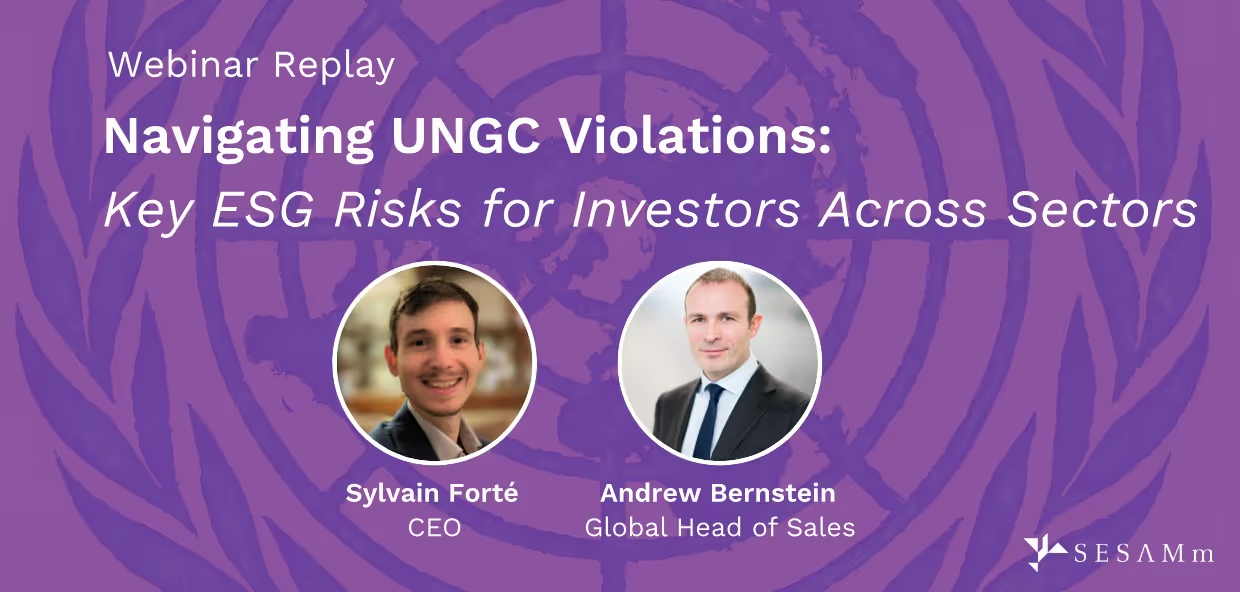
Webinar Replay: Navigating UNGC Violations - Key ESG Risks for Investors Across Sectors
April 24, 2025
•
5 mins read
In our recent webinar, “Navigating UNGC Violations: Key ESG Risks for Investors Across Sectors,” SESAMm CEO Sylvain Forté and Head of Sales Andrew Bernstein break down the latest research on corporate alignment with the UN Global Compact (UNGC). The session also marks the launch of our UNGC Breach Detection tool, designed to help investors monitor and address UNGC-related ESG risks in line with SFDR’s PAI 10.
Watch this webinar to learn how to:
Tech, Automotive, and Retail sectors show the highest number of confirmed and potential UNGC breaches.
A significant gap exists between allegations and enforcement—many companies face claims without consequences.
SESAMm’s new UNGC Breach Detection tool uses AI to identify and classify violations across industries, offering timely, data-driven insights.
Fill out the form to access the webinar replay now!
Webinar Replay: Navigating UNGC Violations - Key ESG Risks for Investors Across Sectors
The modern world is in a peculiar place right now. We’ve got the technology and resources to improve our planet, but we often don’t know how to use them despite our best intentions. Or, at the very least, we don’t know where to put our efforts. Consequently, some investors are looking into Sustainable Development Goals (SDGs). Not only do they want their investments to earn more, but they also want them to do good. If you’re also interested in doing good with your investments, it’s essential to understand the SDGs and their meaning for your portfolio. In this article, we’ll break down the SDG basics, SDG scores, their relevance to investing, and how SESAMm can help you get and read SDG metrics. But first, a quick review of SDGs.
What SDG means
SDGs, or Sustainable Development Goals, are a set of 17 goals that the United Nations set in 2015 to be achieved by the year 2030, a framework that “provides a shared blueprint for peace and prosperity for people and the planet, now and into the future.” The global goals and the 2030 Agenda for Sustainable Development cover issues such as human rights, poverty, health, education, gender equality, and environmental sustainability, and they were designed to be universal across countries and continents worldwide. Here are the 17 UN Sustainable Development Goals:
SDG 1: No Poverty: Striving to end poverty in all its forms everywhere. This goal underscores the importance of equitable resource distribution and access to basic needs.
SDG 2: Zero Hunger: Aiming to end hunger, achieve food security, improve nutrition, and promote sustainable agriculture, thereby ensuring that everyone, everywhere, has enough quality food to lead a healthy life.
SDG 3: Good Health and Well-being: It emphasizes the need for universal healthcare access, including reproductive, maternal, and child healthcare, and combats health threats by supporting research and development of vaccines and medicines.
SDG 4: Quality Education: Envisioning inclusive and equitable quality education and lifelong learning opportunities for all, this goal recognizes education as the foundation of empowerment and prosperity.
SDG 5: Gender Equality: Achieving gender equality and empowering all women and girls to participate fully in societal, economic, and political spheres
SDG 6: Clean Water and Sanitation: This goal aims to ensure the availability and sustainable management of water and sanitation for all, recognizing the essential role of water resources in sustaining life and ecosystems.
SDG 7: Affordable and Clean Energy: Promoting access to affordable, reliable, sustainable, and modern energy for all; this goal underscores the critical nature of energy in achieving other SDGs and the transition towards renewable energy sources to combat climate change.
SDG 8: Decent Work and Economic Growth: It focuses on promoting sustained, inclusive economic growth, full and productive employment, and decent work for all, highlighting the role of the private sector in initiating impactful initiatives.
SDG 9: Industry, Innovation, and Infrastructure: Aiming to build resilient infrastructure, promote inclusive and sustainable industrialization, and foster innovation, this goal recognizes the importance of a robust infrastructure and an innovative ecosystem as drivers of economic growth and development.
SDG 10: Reduced Inequalities: This goal seeks to reduce inequality within and among countries, focusing on policies designed to achieve greater equity and involve stakeholders from all sectors of society in decision-making processes.
SDG 11: Sustainable Cities and Communities: It aims to make cities and human settlements inclusive, safe, resilient, and sustainable, emphasizing the need for green public spaces, improved urban planning, and sustainable construction practices.
SDG 12: Responsible Consumption and Production: Focusing on promoting resource and energy efficiency, sustainable infrastructure, and providing access to a better quality of life for all, this goal underscores the importance of adopting sustainable practices and reducing waste.
SDG 13: Climate Action: Taking urgent action to combat climate change and its impacts, this goal underscores the necessity for countries, stakeholders, and the private sector to collaborate in reducing emissions and enhancing renewable energy usage.
SDG 14: Life Below Water: Aimed at conserving and sustainably using the oceans, seas, and marine resources for sustainable development, this goal addresses the critical importance of our aquatic ecosystems.
SDG 15: Life on Land: Protecting, restoring, and promoting sustainable use of terrestrial ecosystems, sustainably managing forests, combating desertification, halting and reversing land degradation, and halting biodiversity loss.
SDG 16: Peace, Justice, and Strong Institutions: Promoting peaceful and inclusive societies for sustainable development, providing access to justice for all, and building effective, accountable, and inclusive institutions at all levels.
SDG 17: Partnerships for the Goals: This goal recognizes the importance of revitalizing the global partnership for sustainable development and the role of strong partnerships in achieving the SDGs, involving governments, the private sector, civil society, and others.
The UN’s 17 Sustainable Development Goals. Image courtesy of UN.org.
What are SDG scores?
Each Sustainable Development Goal has specific targets or indicators that help measure progress toward achieving those targets over time. SDG scores are numerical values given to each entity (country, company, person, etc.) based on their performance in meeting specific targets or indicators for each particular goal. Incorporating these evaluations into the decision-making process is crucial for stakeholders across various sectors, including the private sector, healthcare, financial services, and more. These stakeholders can leverage insights from SDG scores to prioritize initiatives that address critical issues like climate change, emissions reduction, and ecosystem preservation.
How do SDGs relate to ESG?
The environmental, social, and governance (ESG) framework is a tool to achieve and comply with the SDG goals. From a company’s perspective, ESG and SDG frameworks emphasize the importance of measuring and reporting progress. Companies incorporating ESG criteria into their operations often report on their sustainability performance, which can directly show their contribution towards achieving specific SDGs. For investors, ESG metrics provide a tangible way to evaluate companies' potential risks and opportunities related to sustainability, which can also align with the broader objectives of the SDGs.
The SDGs primarily focus on global challenges such as poverty, inequality, climate change, and environmental degradation, which represent the environmental and social pillars of ESG.
Within the same principles, several of these goals directly relate to the governance pillar of ESG. On the one hand, goal 16 aims to reduce corruption and bribery, develop effective and transparent institutions, and ensure inclusive and representative decision-making. On the other hand, goal 17 strives to enhance international cooperation, encourage effective public, public-private, and civil society partnerships, and ensure that policies are coherent and integrated, all of which are governance-related issues.
While the SDGs might not explicitly label these aspects as 'governance' in the way the ESG framework and regulatory landscapes do, the inclusion of these goals demonstrates a clear recognition of the importance of governance in achieving sustainable development. SDGs and ESG also have different purposes. ESG measures companies’ environmental, social, and governance performance risks and initiatives, while SDGs evaluate any entity’s performance in reaching its goals. Put another way, SDGs represent the goals, while ESG concerns methodology and processes.
At the company level, SDGs help align corporate strategy with society’s needs. Because the UN designed SDGs to be measurable, countries, companies, and people can hold themselves accountable for progress toward achieving them. And because the goals are measurable, we can score a company’s efforts, giving you an indicator to invest responsibly by aligning your portfolios with SDGs.
According to a publication by McKinsey & Company, sustainable investing appears to have a positive effect, if any, on returns. In other words, investors care about SDGs not only because they benefit society but also because they measurably support better investment decisions. For example, by incorporating SDGs into company assessments, investors can identify well-run businesses that are better positioned to benefit from the positive effects of improved social and economic conditions. SDGs also allow investors to make better-informed decisions within a defined investment time horizon by focusing on a company’s business exposure toward them. Investors can thus better measure and track a company’s opportunity exposure as a result of its achievement of the SDGs.
How to measure an entity’s SDG score
There are tools available to measure progress toward each goal—and those tools will play an essential role in helping investors decide which entities they want to invest in and which ones they don’t want to support. For example, SESAMm’s platform, TextReveal®, can analyze web data to generate SDG scores for virtually any entity in our data lake.
How SESAMm provides SDG scores
SESAMm provides SDG scores through its platform, TextReveal, a platform that allows investors to gain insights into companies, people, or topics. Specifically, we use artificial intelligence (AI) to track entities’ contributions toward SDGs, including public and private companies.
We track the 17 Sustainable Development Goals and the 169 underlying targets to detect negative news and positive events, using a similar algorithm we use for ESG alerts and gathering alternative data. Each UN SDG item displays a score from 0 to 5 to show the intensity of the company’s positive impact. Then, we translate the information into multiple languages.
This dashboard view example shows some SDG scores for Aker Carbon Capture.
We queried the Norwegian carbon capture company, Aker Carbon Capture, using our SDG positive impact dashboard over the past three years. As you might notice, Aker contributes to the goals associated with Partnerships, Climate Action, Clean Energy, and Sustainability. Maybe they could do more regarding Decent Work and Economic Growth, and Responsible Consumption and Production, but overall, the company’s online data shows a positive contribution.
See how SESAMm can help you with your SDG research
SESAMm is the leading provider of AI solutions and analytics for investment firms and corporations.
Analyzes text in billions of web-based articles and messages
Generates investment insights, ESG and SDG analysis used in systematic trading, fundamental research, risk management, and sustainability analysis
Enables a more quantitative approach to leveraging the value of web data that’s less prone to human bias
Addresses a growing need in public and private investment sectors for robust, timely, and granular sentiment and SDG data
SESAMm’s AI Technology Reveals ESG Insights
Discover unparalleled insights into ESG controversies, risks, and opportunities across industries. Learn more about how SESAMm can help you analyze millions of private and public companies using AI-powered text analysis tools.
With sustainability being imperative, it's essential to examine how public and private companies align with the Sustainable Development Goals (SDGs). This article, leveraging insights from SESAMm's TextReveal, dives into the behaviors of both sectors across industries, exploring their impact on achieving a sustainable future. Join us as we unravel the complexities of corporate contributions to the SDGs, highlighting key differences and challenges public and private entities face in their journey toward sustainability.
What are the 17 Sustainable Development Goals?
The 17 UN SDG objectives, introduced in 2015 with the target of achievement by 2030, are geared towards building a sustainable society. Initially designed for governments, certain companies can contribute significantly to these goals through their products or conduct. However, our focus here will center on identifying behaviors that counter these 17 objectives.
The analysis of Sustainable Development Goal (SDG) adverse behaviors, as identified by SESAMm's TextReveal, offers a comprehensive comparison between public and private companies within various industries. The focus is to discern disparities in SDG behaviors within the same sector and pinpoint the predominant SDG goal breaches in these industries.
Excluding Goal 2 ("End hunger") due to its alignment with state-related initiatives, the analysis concentrates on corporate-impactful goals.
Public and private sectors face challenges in meeting SDGs, particularly Goals 1 ("End poverty") and 16 ("Peace & justice and strong institutions"), with issues in labor rights and governance. However, public companies are more aligned with Goal 8 ("Decent work and economic growth") across industries, facing a range of controversies from biodiversity to management issues. In contrast, private companies focus on Goal 11 ("Sustainable cities"), dealing with climate change and customer relations risks.
Goal 16 ("Peace & justice and strong institutions") is significant in both sectors but particularly in the Financials and Information Technology for public companies and in Financials, Fossil Fuels, and Health Care for private companies. This goal involves human rights, labor rights, human capital, and governance-related controversies.
These findings highlight the profound impact of SDG-related risks on economic growth and stability across various sectors. Industries like Information Technology, Industrials, and Consumer Discretionary exhibit heightened susceptibility to SDG adverse behaviors, underscoring the necessity for vigilant risk management to ensure economic prosperity and security.
Industrial UNGC Use Case
What is the UN Global Compact?
The United Nations Global Compact (UNGC), established in 2000, outlines ten principles across four main pillars: human rights, labor standards, and anti-corruption. These principles are critical in guiding companies toward ethical and responsible behaviors.
Figure 1: UNGC for public companies.
Figure 2: UNGC for private companies.
The analysis reveals distinct patterns in breaches of UNGC principles. Private companies in the industrials and fossil fuel sectors show a notable correlation with anti-corruption breaches, emphasizing the importance of due diligence in these areas. In the fossil fuel industry, public companies primarily breach environmental principles, while private companies show more breaches related to anti-corruption along with environmental concerns.
Private industrial companies also display a significant number of anti-corruption breaches involving various legal challenges. In the consumer staples sector, public companies primarily face human rights breaches, including forced labor and privacy violations. The private consumer discretionary sector also shows a high number of human rights breaches, particularly related to privacy and diversity and inclusion.
Overall, public companies across various sectors tend to have more frequent or severe UNGC breaches compared to private companies. This highlights the different challenges faced by public and private entities in adhering to the UNGC principles.
Conclusion
Significant variations in sustainability strategies emerge when looking at public and private companies through their SDG performances. Public companies prioritize economic growth and grapple with environmental and governance concerns, while private companies focus on creating sustainable cities, addressing climate change, and fulfilling social responsibilities. Both sectors encounter obstacles in eradicating poverty and ensuring justice, highlighting their crucial roles in promoting global sustainability objectives. This analysis underscores the essential proactive approach needed from both public and private entities to tackle sustainability challenges effectively.
Download the full report to discover how different sectors navigate regulatory pressures and sustainability challenges with real-world examples to guide your strategy.
Reach out to SESAMm
TextReveal’s web data analysis of over five million public and private companies is essential for keeping tabs on ESG investment risks. To learn more about how you can analyze web data or to request a demo, reach out to one of our representatives.

As the summer draws to a close, it's the perfect time to reflect on the exciting developments we've had at SESAMm over the past few months. From insightful webinars and ebooks to new product features and industry recognitions, we've been busy making strides in the world of ESG and AI. Before we transition into the busier months ahead, take a moment to catch up on our latest updates and explore the resources we've curated for you. Whether you're lounging by the pool or gearing up for the fall, we've got something that will pique your interest.
This ebook provides an in-depth look at the EU's Corporate Sustainability Due Diligence Directive, offering practical insights for businesses to align with new regulatory expectations on sustainability.
Explore how ESG controversies differ between public and private companies. This study highlights key areas where private firms lag in transparency and governance compared to their public counterparts.
This webinar dives deeper into the findings from our comparative study, featuring expert opinions on addressing ESG challenges in different sectors.
Product Features
Heatmap: ESG Controversy Risk Exposure
Introducing our new ESG Controversy Risk Exposure Heatmap, which provides an easy, visual way to assess an entity’s reputational risk profile. With a comprehensive overview of ESG risks, you can quickly zero in on areas of concern and prioritize your next steps. Test it out for yourself with a free trial.
Text Summarization: Efficiently Identify ESG Risks
Our new Text Summary feature allows you to quickly get to the heart of the matter by creating on-the-fly summaries of news articles and documents with just the click of a button. Ideal for those needing to swiftly assess ESG-related risks.
This article highlights real-world applications of AI in detecting greenwashing, showcasing how companies are leveraging technology to maintain credibility.
Join us as we examine AI's capabilities compared to traditional risk management tools. Our webinar on September 25 will highlight how AI more efficiently detects and predicts ESG controversies. We will also showcase a detailed case study on the Boeing scandal, providing invaluable insights into AI's predictive prowess within the aerospace industry.
Events in September Here are some events we’ll be attending in September. Here is a chance for us to catch up and meet in person. Check them out, and let’s meet soon. Click here for more details.
Reach out to SESAMm
TextReveal’s web data analysis of over five million public and private companies is essential for keeping tabs on ESG investment risks. To learn more about how you can analyze web data or to request a demo, reach out to one of our representatives.
Stay ahead with the latest in ESG and AI intelligence
Join our mailing list to receive new reports, event invites, and updates from SESAMm directly to your inbox.