Webinar Replay: ESG Ratings in 2025: Emerging Trends and Evolving Standards
February 19, 2025
•
5 mins read
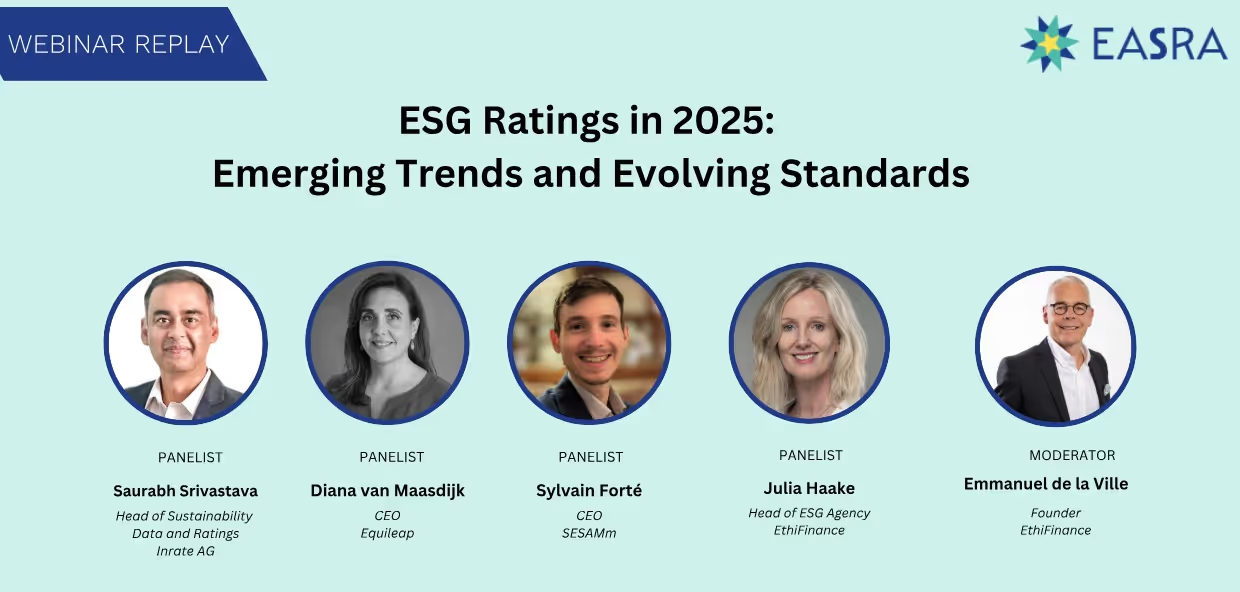
In our latest webinar with the European Association for Sustainable Rating Agencies (EASRA), “ESG Ratings in 2025: Emerging Trends and Evolving Standards,” SESAMm’s CEO, Sylvain Forté, Julia Haake, Head of ESG Rating Agency at Ethifinance, Diana van Maasdijk, CEO at Equileap, Saurabh Srivastava, Head of Sustainability Data and Ratings at Inrate, and Emmanuel de la Ville, Founder of Ethifinance, sat down and discussed the future of ESG ratings and what’s next for all parties involved.
Key Takeaways:
Keep up with the latest regulatory updates.
Explore the newest AI innovations reshaping ESG ratings.
Gain a deeper understanding of the political climate and emerging trends affecting ESG.
Fill out the form to access the webinar replay now!
As the year comes to an end, we wanted to highlight the most relevant ESG controversies during 2023. This article zeroes in on these risks, showing their critical role in corporate ethics and responsibility. Throughout the year, we've seen a variety of governance-related challenges that highlight the urgent need for corporate accountability.
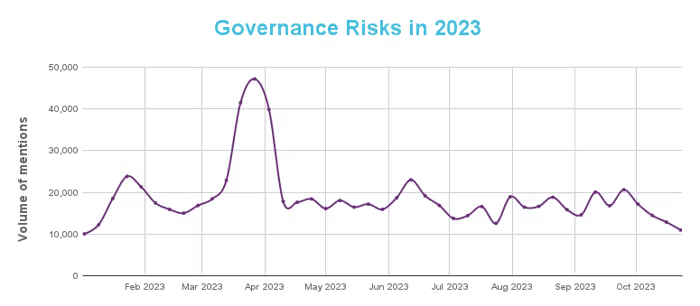
Governance Risks: Focus 2023
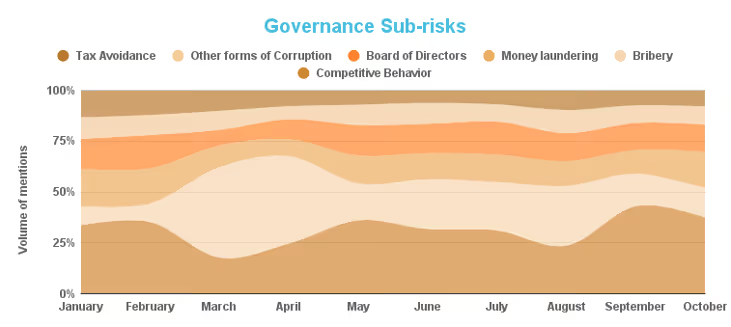
We highlighted the most significant governance risks in 2023. From tax evasion to ethical breaches such as bribery, these issues highlighted the growing importance of strong, ethical governance in corporate conduct.
Governance Controversies of 2023
Governance risks, though often overlooked, play a pivotal role in shaping corporate responsibility and ethical conduct. In 2023, several governance controversy trends emerged:
Money Laundering
Tax evasion was a major topic of discussion in the first quarter, highlighting the need for greater transparency and accountability within corporations.
Bribery
There was a significant increase in mentions related to bribery cases, underscoring the challenges in maintaining ethical governance standards.
These controversies are ranked by relative volume*.
FTX
Volume of mentions: 8,085
Relative volume: 40%
FTX, a notable entity in the financial sector, found itself at the center of governance controversies. A significant portion of the discussions surrounding FTX's governance risks in 2023 pertained to allegations of its founder's involvement in bribery schemes. (source)
Apple
Volume of mentions: 3,162
Relative volume: 28%
Apple, a tech giant, faced scrutiny as a third of its governance risk mentions revolved around antitrust violations reported in October 2023. (source)
Microsoft
Volume of mentions: 4,429
Relative volume: 25%
Microsoft encountered legal challenges with its deal with Activision. The company had to approach the court to reject the FTC's request to halt the deal. (source)
X (formerly Twitter)
Volume of mentions: 2,251
Relative volume: 18%
X/Twitter, another major player in the tech industry, faced legal challenges when a judge dismissed a shareholder lawsuit against Elon Musk concerning a Twitter buyout. (source)
Google
Volume of mentions: 3,920
Relative volume: 13%
Google faced judicial sanctions for allegedly destroying evidence in an antitrust case, further emphasizing the critical governance challenges even major tech giants face. (source)
Conclusion
In 2023, governance issues, particularly tax evasion and bribery, significantly impacted the ESG landscape, challenging corporate integrity and highlighting the importance of strong ethical standards. For private equity firms and financial institutions, these developments emphasize the value of AI-powered governance analysis in identifying risks and promoting transparency and accountability. The insights gained from this year's governance controversies are important for steering towards more responsible and sustainable business practices in the future. Remember to check out the top 5 environmental and social controversies of 2023.
Relative volume*: Relative to the total volume of E, S, or G risks for the company during the same period.
SESAMm’s AI Technology Reveals ESG Insights
Discover unparalleled insights into ESG controversies, risks, and opportunities across industries. Learn more about how SESAMm can help you analyze millions of private and public companies using AI-powered text analysis tools.
SESAMm recently hosted a webinar led by Lead Solutions Engineer Leo Shamash. The session focused on the critical role of Artificial Intelligence in identifying and managing ESG (Environmental, Social, Governance) risks and controversies, especially in private companies.
During the webinar, Leo Shamash shared insights on how SESAMm’s advanced AI technologies analyze millions of daily articles to provide accurate ESG risk assessments.
Why is this important for private equity firms? Because traditional methods of risk assessment are often labor-intensive and limited in scope. SESAMm’s AI-driven approach offers a scalable, efficient solution. The webinar also touched on SESAMm's extensive data lake comprising over 20 billion documents, making it one of the largest repositories for tracking ESG risks and controversies.
Watch the webinar replay now:
Join us for our next webinar on November 15 at 4 PM Paris time/10 AM New York time, and watch Sylvain Forté share his insights into how artificial intelligence can help distinguish between genuine sustainability efforts and greenwashing. Book your spot.
Reach out to SESAMm
TextReveal's web data analysis of over five million public and private companies is essential for keeping tabs on ESG investment risks. To learn more about how you can analyze web data or request a demo, contact one of our representatives.
Alternative Data | Sentiment Analysis | Strategic Insights
The macroeconomic environment is moving quickly—inflationary pressures, war in Europe, political instability, and plenty of other topics to make a trader's head spin. While there’s an abundance of structured macro data, it's much more difficult to extract value from unstructured text on the web.
However, with the right partner and the right tools, it doesn't need to be difficult to rein in this complexity. But more on that later.
More data, more problems
We're obviously in the information age; we have more data within reach than ever before. And you'd think that more data would make it easier to find consistent relationships between the macro economy and price returns. The hard truth is that it doesn't.
Of course, you have access to comprehensive historical information, but developing economically intuitive and worthwhile systematic strategies from historical data alone is challenging. Despite having this data, it could still be incomplete, missing that bit of nuance for a theme you're examining.
Nowcasting for more complete, current data
Nowcasting—a contraction of the words now and forecasting—is the prediction of the present and the near future using data from the recent past as an economic indicator. Nowcasting models can be applied in real time as a proxy for official measures, such as monitoring the state of the economy, themes, or sectors: food, transportation, energy, and so on.
For example, you could look into what's being said about supply chain disruption for semiconductors. How is the topic trending across industries or the broader public? And how positively or negatively is that topic perceived over time? This information helps give financial data context and direction, a way to predict what happens next. So where do you turn to for reliable, timely nowcasting data?
Nowcast-enhancing platform
At SESAMm, we have a flexible, adaptable, and modular platform to nowcast pretty much any macroeconomic theme: inflation, supply chains, unemployment, and everything in between. If you can gauge it, we can find data on it.
How do we do this? Our natural language processing (NLP) platform makes sense of all available news, articles, and forums on the web. Currently, there are more than 20 billion articles in our data lake, and it's growing by millions daily. And because we update our data lake multiple times a day, you can read nowcast macroeconomic indicators in near real time.
This flexible approach to building themes goes way beyond off-the-shelf sentiment feeds, and you can adapt to new, emerging factors on the fly.
Use case: inflation insights
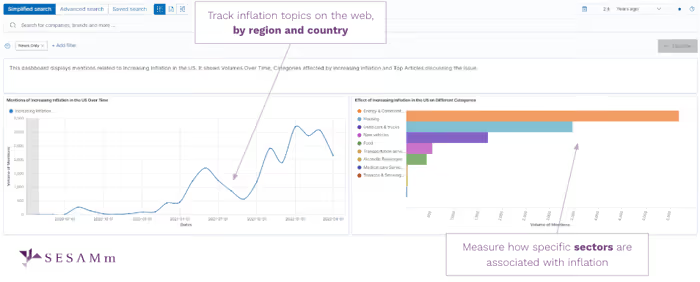
With the TextReveal® API and Dashboards, you can generate custom proprietary inflation requests—or pull existing queries by country and sector—and use this data in your nowcasting models (Figure 1).
Figure 1: TextReveal's dashboard highlights inflation topics on the web and associated sectors.
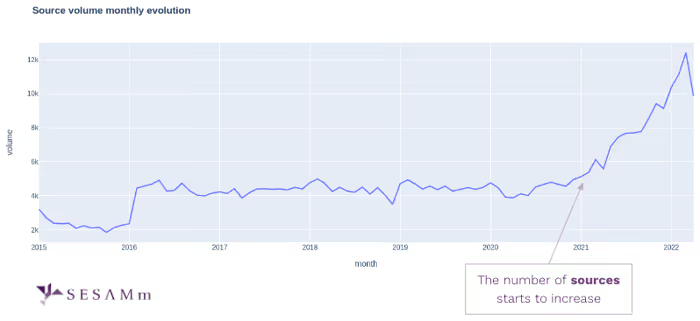
In this example extracted from our API (Figure 2), the number of sources mentioning inflation is relatively stable until 2021, when it starts to increase rapidly, in anticipation of actual inflation readings.
Figure 2: The number of sources mentioning inflation increase in early 2021.
As you can see, you can track a topic and map it to various segments, creating a signal that accurately follows that theme over time. But that's not all. Macro teams can inject their expertise into building these queries, too. So if they have specific ideas on keywords and themes to capture—for example, inflation in Brazil—they have complete control over them.
Ultimately, you can break down the data by volume, sentiment, sector, language, or country. Do you want to know what the Japanese market makes of rising inflation in the U.S.? With SESAMm's platform, you can slice the data in different ways to find out.
Results with transparency
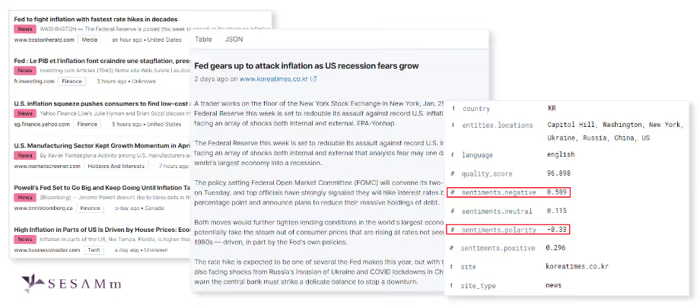
All that inform the results of your queries are available for scrutiny. Say you want to understand why a topic or theme is trending one way or the other, or maybe the sentiment isn't what you expect. You can drill down to the source articles to see why (figure 3).
Figure 3: An example of source articles affecting sentiment score.
Use Case: predictive signals for macro factors and commodities
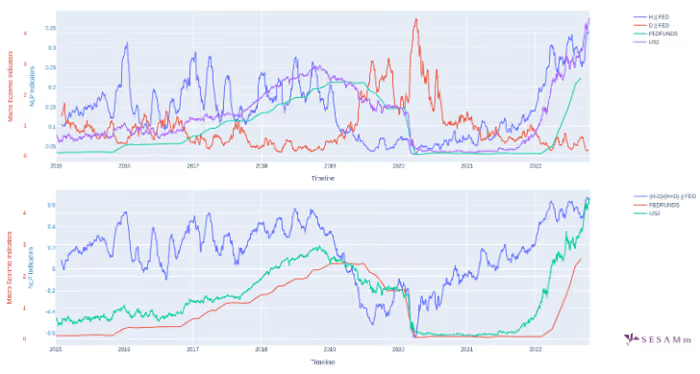
We worked with a client as part of an asset allocation strategy to build indicators reflecting the tone of the Fed fund rate to see what we could predict based on the indicators.
[figure 4]
Figure 4: The Fed tone indicator successfully anticipated the major changes in the fed rates—a reduction during the COVID-19 crisis and a rise in 2022.
In Figure 4, the language we uncover becomes increasingly dovish, as indicated by the blue line, the aggregate of the hawkish and dovish indicators. It's proceeded by the fall in interest rates, the start of covid, and the recent inflationary period. Then, the indicators spike way before interest rates move up. Of course, it isn't the only factor, and it's not 100% predictive, but it does reflect future movements. Inflation is at an eight-year high right now, so it's indicative of continuing inflation returns and continuing rising interest rates.
Nowcasting and forecasting with TextReveal
With TextReveal, you can nowcast any macro theme by building expert-driven queries and predictive forecasting signals to get insights into volume, sentiment, and more.
If you want to find data relationships that accurately reflect economic trends and macro themes to what's happening online in near real time with a high degree of control, reach out for a demo.
Stay ahead with the latest in ESG and AI intelligence
Join our mailing list to receive new reports, event invites, and updates from SESAMm directly to your inbox.




-1.avif)


.png)