Ebook: The Corporate Sustainability Due Diligence Directive (CSDDD): A Comprehensive Guide
May 8, 2024
•
5 mins read
The Corporate Sustainability Due Diligence Directive (CSDDD or CS3D) is a significant European Union initiative, shifting businesses from voluntary environmental and social practices to legally binding obligations. Companies must align with stringent standards to address issues like child labor, modern slavery, and environmental degradation. The directive's phased implementation starts in 2026 and focuses on companies with extensive operations and revenues.
CSDDD requires companies to proactively identify, prevent, and mitigate adverse impacts across their value chains. It mandates transparency and public reporting, enhancing trust with consumers and investors. The directive also imposes financial penalties for non-compliance, highlighting the importance of sustainable practices for business stability.
Fill out this form to download our ebook and explore the Corporate Sustainability Due Diligence Directive (CS3D) to ensure your business is compliant with the latest EU regulations.
In our recent webinar titled "ESG Controversies: A Comparative Study of the Public and Private Sectors," Sylvain Forté, CEO, and Alexandre Tiesset, Head of ESG, explored the transformative impact of Artificial Intelligence (AI) on understanding and evaluating ESG controversies, especially in the context of public versus private sectors. This in-depth discussion provided unique insights into the challenges and opportunities presented by ESG data analysis.
One of the primary challenges highlighted was the disparity in data availability between public and private companies. Public entities are subject to stricter disclosure requirements, which often results in a wealth of data facilitating ESG assessment. In contrast, the opacity of private companies complicates the evaluation of their ESG performance, creating a demand for innovative solutions to ensure equitable and accurate comparisons across the investment spectrum.
SESAMm, with its pioneering AI-powered text analysis tool TextReveal, stands at the forefront of tackling these challenges. By analyzing billions of documents, TextReveal extracts crucial ESG insights, addressing the data scarcity in the private sector and enabling a more nuanced understanding of ESG controversies.
The webinar underscored the importance of data normalization to counteract biases, allowing for more precise comparisons across sectors and companies. With the help of AI, SESAMm can conduct analyses across a vast number of entities, offering investors a comprehensive view of potential risks and controversies.
The Ikea case study served as a prime example of SESAMm's capability to perform deep dives into specific companies. The analysis revealed Ikea's slightly higher environmental controversies than the consumer discretionary sector average, including accusations of greenwashing related to deforestation. On the social front, Ikea faced challenges with product safety, human rights breaches, data leaks, and privacy violations, such as the 2021 lawsuit against Ikea France for alleged privacy violations of staff.
Furthermore, the webinar touched on the challenges Ikea faces under specific Sustainable Development Goals (SDGs), including health and well-being (due to product recalls and workforce health concerns), Sustainable Cities, and Responsible Consumption and Production. Despite these issues, Ikea shows fewer problems related to industry innovation and infrastructure, and peace, justice, and strong institutions, indicating areas of better risk mitigation.
In conclusion, the integration of AI into ESG evaluation marks a significant advancement in investment analysis. As the demand for sustainable investment options grows, the need for sophisticated tools to analyze ESG controversies becomes increasingly evident. The webinar's insights highlight AI's potential to enhance our understanding of ESG risks and opportunities, paving the way for more responsible investing.
Watch the webinar replay now:
Dive deeper into ESG controversies and uncover strategies for navigating these challenges effectively. Download "ESG Controversies: A Comparative Study of Public vs Private Sectors" and equip your organization with the insights needed to enhance your ESG practices for a sustainable future. Fill out the form below to access your copy and lead the way in corporate sustainability.
Reach out to SESAMm
TextReveal's web data analysis of over five million public and private companies is essential for keeping tabs on ESG investment risks. To learn more about how you can analyze web data or request a demo, contact one of our representatives.
Alternative Data | Risk Management | Sentiment Analysis
Wednesday, September 14, 2022, a16z (Andreessen Horowitz), a large, well-known VC firm, funded Flow, a new startup led by a seemingly scandalous entrepreneur, Adam Neumann, the founder infamously known to have been ousted as WeWork CEO.
Why did a16z invest in Flow and, by proxy, Adam Neumann?
In his blog post about “Investing in Flow,” Andreessen acknowledges the U.S. housing crisis in the first sentence, and here’s what he has to say about Neumann: “Adam is a visionary leader who revolutionized the second largest asset class in the world—commercial real estate—by bringing community and brand to an industry in which neither existed before.” Andreessen continues, “[I]t’s often underappreciated that only one person has fundamentally redesigned the office experience and led a paradigm-changing global company in the process.”
So that gives us a clue as to what Andreessen thinks. But what does the public web have to say, and what is its overall sentiment?
In this edition of Alternative Data Trends, we dig into public web data before, during, and after a16z announced that it would fund Flow. Does the public web agree with Andreesen’s view? If not, how does it differ? And how can this information inform an investor and other VC firms?
Let’s find out.
a16z web mention volume and polarity (Nov. 2015 to Jun. 2022)
Figure 1: Andreessen Horowitz mention volume and polarity chart.
Mention volumes spike in mid-June 2021
TextReveal® uncovered 181,620 articles and messages from SESAMm’s data lake about Andreessen Horowitz (Figure 1). Mention volume remains consistent until late 2020, at which time a16z invests in a bunch of new companies and startups, such as:
Beacons
Clubhouse
Dapper Labs
Eco
Helium
Labster
Maven
Nansen
OpenSea
Skydio
SpotOn
Tackle.io
Valon
Zus Health
a16z also focused on the NFT market and, as a result, launched the world’s biggest crypto-fund valued at $2.2 Billion in June 2021. Moreover, Andreessen Horowitz launched its own media property, Future.com, in mid-2021.
Andreessen Horowitz web mentions further spike after it doubles down, announcing $4.5B crypto fund IV in May 2022. Additional news increased mention volume because of its investment in Neumann’s new startups, Flowcarbon and Flow.
Polarity (positive and negative sentiment) dips
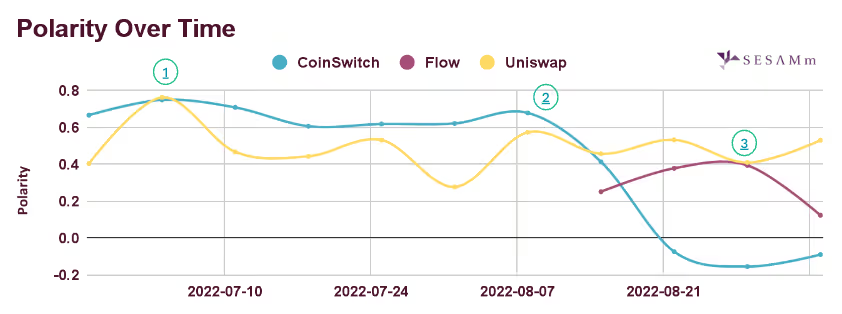
Sentiment toward a16z remained relatively stable over time with only minor dips until mid-2021, when it began falling, a trend driven by mentions of Flow investments news, the Uniswap related lawsuit, and suspected CoinSwitch Forex law violations (Figure 2).
Figure 2: Uniswap and CoinSwitch events affected a16z’s polarity as early as July 2022. As it rebounded, Flow began influencing polarity negatively by mid-August.
Why was Flow affecting a16z’s polarity so much?
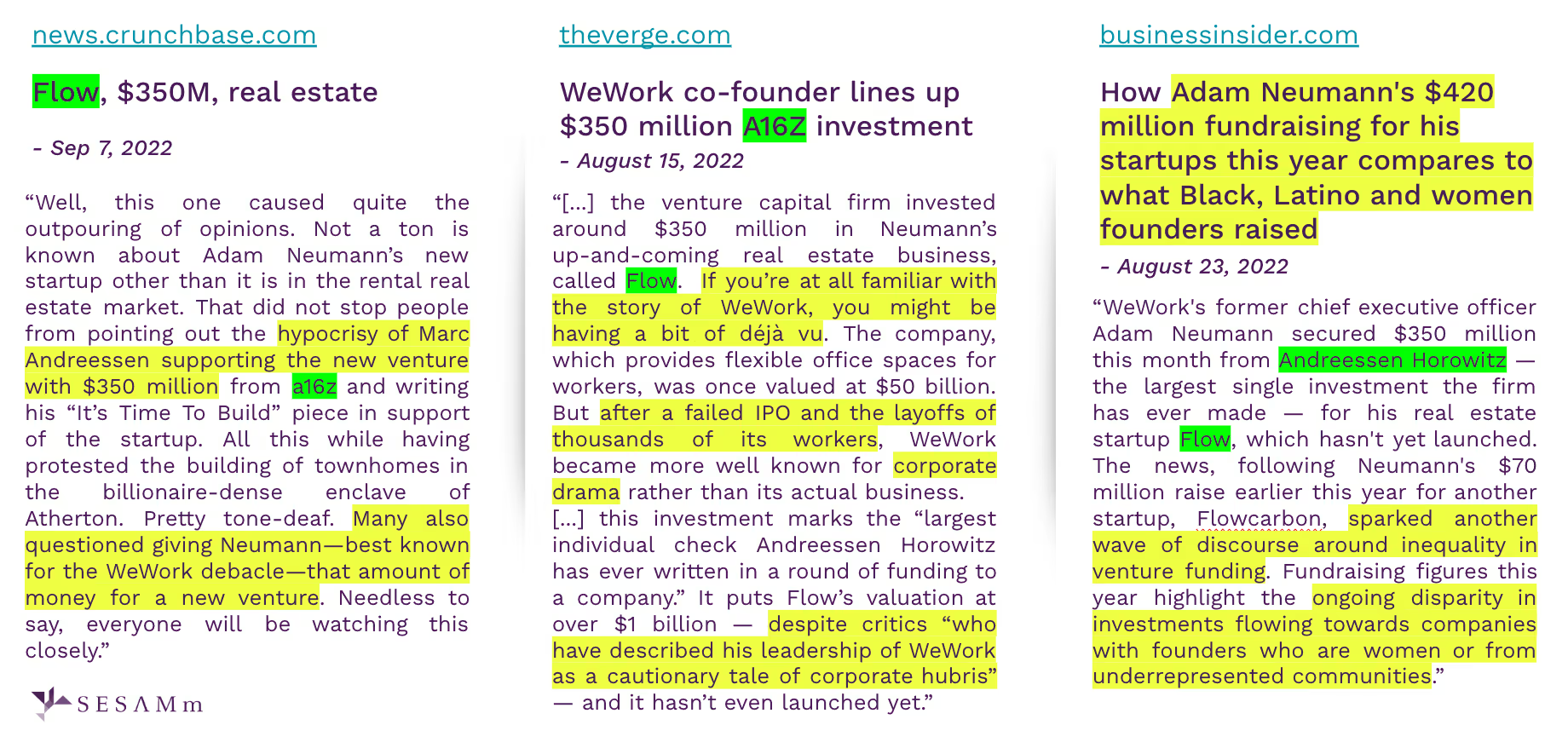
Figure 3: Newsclips about a16z investing in Flow.
Despite Andreessen’s reasons for giving Flow and Neumann a chance, the public’s opinion seems to disagree, leaning toward a negative sentiment (Figure 3). Overall, the public doesn’t seem to trust that Neumann is worth a second chance and that his choices are beyond forgiving. Moreover, the public criticizes a16z’s choice to overlook women and people of color. This The Guardian article highlights tweets of these differences in opinion:
In summary, TextReveal’s web data analysis tells us that it’s essential to keep an eye on the latent ESG risks this investment could bring to a16z’s portfolio, particularly on the social side.
Andreessen Horowitz, from an ESG perspective
a16z ESG initiatives
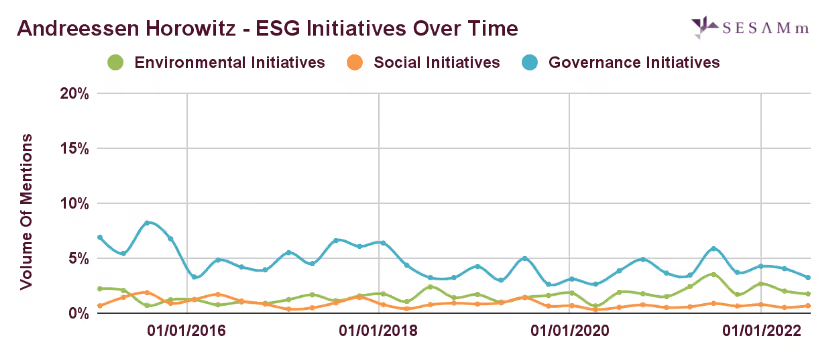
Figure 4: a16z’s governance initiatives exceed environmental and social.
From a mention volume perspective, a16z’s ESG initiative numbers remain stable (Figure 4). Andreessen Horowitz has a good share of ESG initiatives shares with the highest percentage for governance driven by partnerships and collaborations, followed by the environmental aspect that has been increasing over the last two years.
ESG risks, from a portfolio perspective
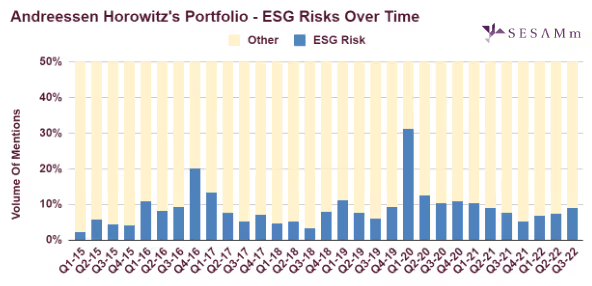
Figure 5: a16z’s aggregated portfolio’s ESG risks over time.
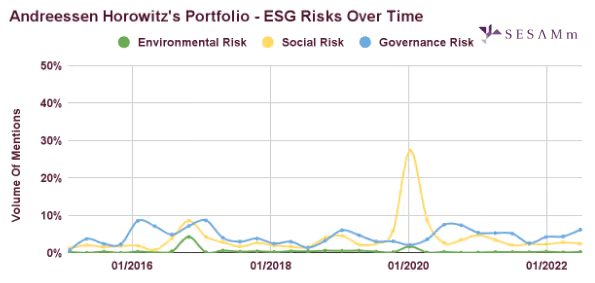
Figure 6: a16z’s portfolio’s social risk spikes in January 2020.
Figures 5 and 6 cover 160 companies in Andreessen Horowitz’s portfolio in the venture and growth stage. Overall, a16z’s portfolio represents a lower ESG risk (<15%) over time, except for the occasional moderately higher ESG risks score (<35%) indicated by two prominent spikes, one at the end of 2016 (Q4) and the second at the beginning of the year 2020 during the pandemic (Q1). The first spike is mainly a governance risk related to Soylent’s products being recalled and supply-chain-shortage risks. The spike is also caused by another top executive resigning from Magic Leap. In contrast, the second spike is a social risk driven by Instacart’s employees’ strike upon working conditions and safety concerns during the Covid-19 pandemic.
Note: Very low risk is <5%, low risk is <15%, moderate risk is <=35%, high risk is <=50%, and very high risk is >50%. Also, note that this scale is for demonstration only and does not indicate actual risk values.
Figure 7: A deeper look into the top companies in a16z’s portfolio generating mention volumes shows Instacart and MakerDAO in the moderate risk range. In contrast, the others are low to very low in risk in comparison.
Does the public’s view of a16z’s investment of Flow have merit?
Maybe, maybe not.
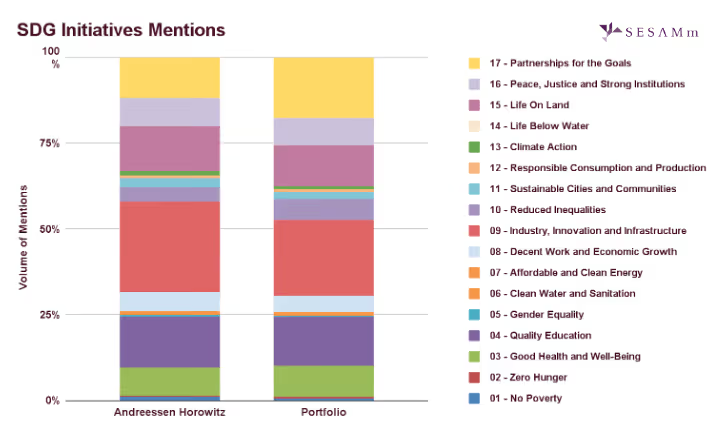
Looking at Andreessen Horowitz’s company and portfolio through the lens of web data, it is, if anything, consistent with its ESG initiatives and has experienced very few controversies. Should investors ignore the potential red flags that come with Flow and Adam Neumann? Of course not. But they should feel assured that a16z has exhibited a pattern of making sound investments. For example, if we compare the firm’s SDG initiatives to those in its portfolio (Figure 8), they are almost identical.
Figure 8: Andreessen Horowitz portfolio companies are focusing on the Sustainable Development Goals with specific attention toward goal 9: Industry, Innovation, and Infrastructure and Goal 17: Partnerships for the Goals, followed by Goal 4: Quality Education and Goal 15: Life On Land.
It’s possible that maybe Marc Andreessen and a16z et al. see something in Flow that the general public does not. After all, it’s why they’re a successful venture capital firm that consistently “backs bold entrepreneurs building the future through technology,” controversies and all.
The biotech industry faces significant ESG risks, particularly in governance. Social and operational risks are less common but still material.
Across the sector, companies like Cassava Sciences, BrainStorm Cell Therapeutics, and Anavex Life Sciences frequently face governance controversies, including shareholder and class action litigation, security fraud, SEC investigations, and more. While social risks are generally secondary, they are notable in areas such as workforce reductions, layoffs following acquisitions, and labor disputes, with patient-safety considerations emerging in therapies with adverse effects.
What are the most pressing ESG challenges currently facing the biotech sector? Read on to find out.
Cassava Sciences: Governance and Transparency Concerns
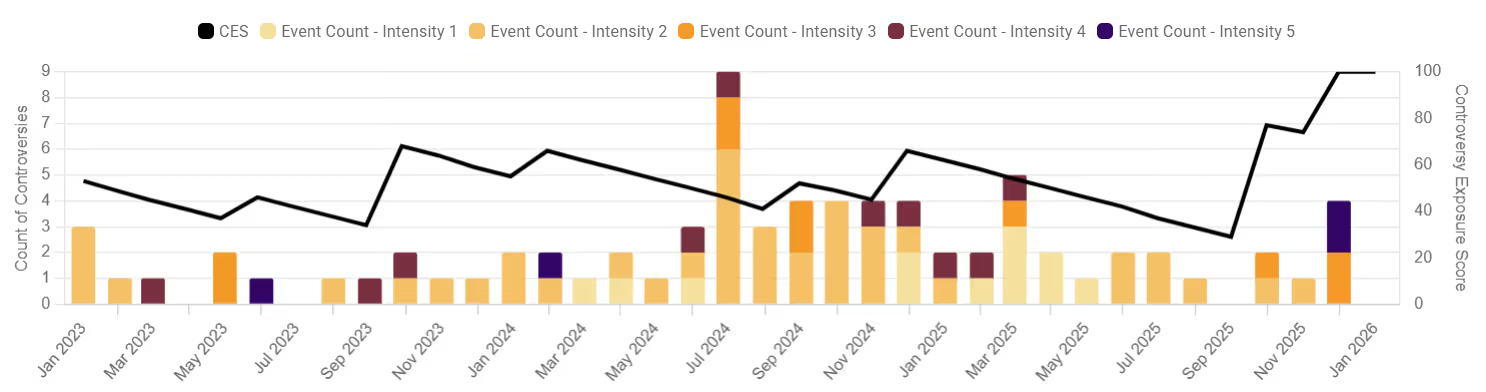
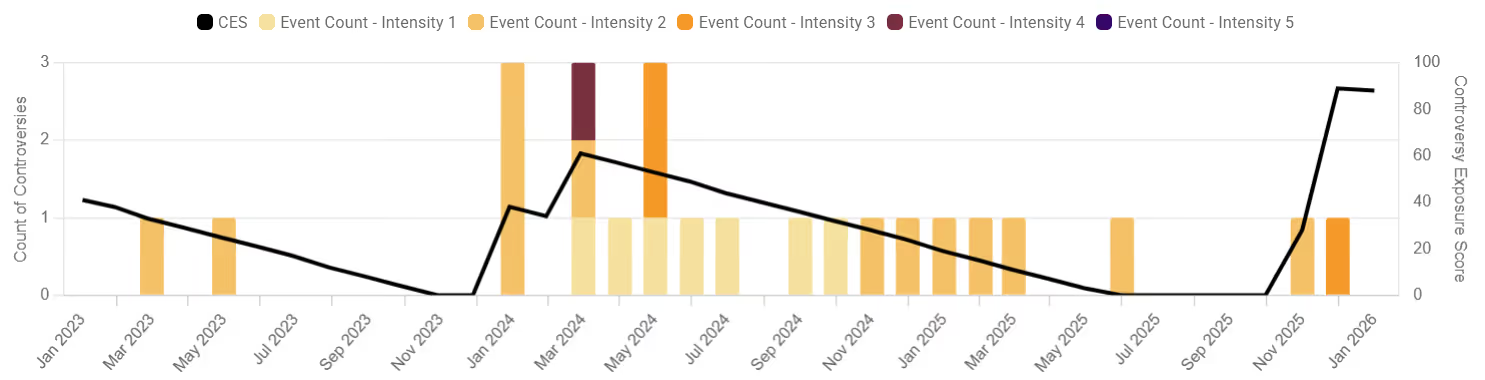
Cassava Sciences has a high Controversy Exposure Score, the result of its involvement in several severe ESG controversies. The company has faced class action and shareholder litigation, resulting in settlements of $31M and $40M over allegedly misleading statements related to its Alzheimer’s drug, Simufilam. Governance concerns are further amplified by allegations of manipulating trial data and scientific misconduct, which have attracted both SEC investigations and reports of criminal probes. Additional legal controversies include malicious prosecution and defamation lawsuits filed in response to alleged “short and distort” campaigns. On the social side, Cassava has faced a 33% reduction in its workforce, reflecting operational restructuring.
Anavex Life Sciences: Lawsuits and Regulatory Scrutiny
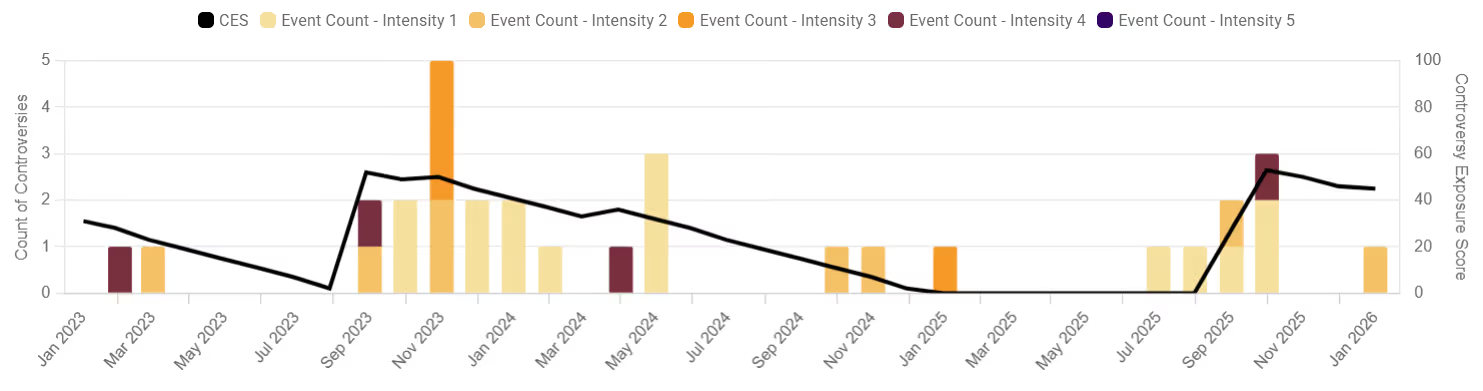
Anavex Life Sciences faces notable governance risks, primarily stemming from shareholder litigation and concerns regarding the integrity of its clinical trials. Multiple class action lawsuits allege misrepresentation and deceptive practices, particularly in reporting outcomes for Rett syndrome and Alzheimer’s disease trials. Governance concerns are compounded by data inconsistencies, changes in trial evaluation criteria, and regulatory scrutiny, including the EU’s rejection of its Alzheimer’s drug.
BrainStorm Cell Therapeutics: Fraud and Credibility Allegations
BrainStorm Cell Therapeutics exhibits a concentrated governance risk profile, with issues spanning several aspects. Class action lawsuits and securities fraud claims allege investor harm from misstatements, while the company faces lawsuits for overstating FDA feedback and misrepresenting the efficacy of its ALS therapy, NurOwn. These allegations are reinforced by FDA panel and reviewer concerns, raising questions about its scientific credibility. BrainStorm is also facing delisting from Nasdaq and a breach of contract lawsuit. On the social front, the company’s ESG exposure stems from plant shutdowns, workforce restructuring, and job cuts, raising labor practice concerns.
The biotech industry’s ESG profile is increasingly shaped by governance-related controversies, particularly around transparency, litigation, and regulatory scrutiny. Companies like Cassava Sciences exemplify how unresolved allegations, ranging from trial data manipulation to securities fraud, can significantly shake stakeholder trust and financial stability. While social and operational risks appear less frequently, workforce reductions, safety concerns, and labor disputes highlight broader vulnerabilities tied to the sector’s rapid pace and scientific complexity. As the industry continues to innovate, managing these ESG risks will be crucial not only for compliance but also for long-term credibility and sustainable growth.
Reach out to SESAMm
TextReveal’s web data analysis of over five million public and private companies is essential for keeping tabs on ESG investment risks. To learn more about how you can analyze web data or to request a demo, reach out to one of our representatives.
Stay ahead with the latest in ESG and AI intelligence
Join our mailing list to receive new reports, event invites, and updates from SESAMm directly to your inbox.










.png)