


At SESAMm Day 2026 in Paris, CEO and co-founder Sylvain Forté closed the morning with what SESAMm shipped this year and what comes next. One idea ran through the whole session: controversy data is moving out of dashboards and into the places where decisions are made, from AI assistants to automated reports and day-to-day risk workflows.
Investment, credit and compliance teams increasingly draft their analysis in ChatGPT, Claude or Copilot, and assemble their final memo there. "We need platforms and graphical interfaces less and less," Sylvain told the audience. "More and more, everything happens in AI agents and AI conversations." This year's launches follow from that view.
Bring SESAMm data into your AI assistant
One of the most important launches of the year was the SESAMm MCP server, released in May 2026. MCP (Model Context Protocol) lets AI assistants call external data sources directly. With it, teams query SESAMm controversy data in natural language from ChatGPT, Claude or Copilot, without leaving the conversation.
Unlike an API integration, it needs no IT project. Users connect the server from their interface and start asking questions, and they can combine SESAMm data with the other sources their assistant already reaches, such as company financials.
A typical case comes from credit. A bank's credit committee expects a report in a fixed structure, which the analyst can define once in their assistant. What was missing was the controversy information. When the report is drafted, the assistant now pulls it straight from the SESAMm MCP server.
Screen and assess in minutes, not days
SESAMm puts its AI expertise to work in ready-to-use reports. Built with clients and partners around market best practice, they cover what a complete analysis should contain:
- ESG due diligence,
- legal,
- compliance and M&A reviews,
- good governance assessments under SFDR,
- exclusion screening across around 30 criteria, from tobacco to controversial weapons.
This year, reports became 2.5 times faster, enabling faster due diligence and business involvement screening.
That speed matters most where volumes are high. Exclusion screening has become one of the most used modules in the platform, with thousands of transactions screened every week as private equity secondaries grow.
Answer go or no-go at the scale of a large corporate
Beyond finance, SESAMm increasingly works with large corporates and banks on supply chain and counterparty risk. The need is lighter but much larger in volume: a go or no-go before onboarding a new supplier, client or insured party, across hundreds of thousands of transactions.
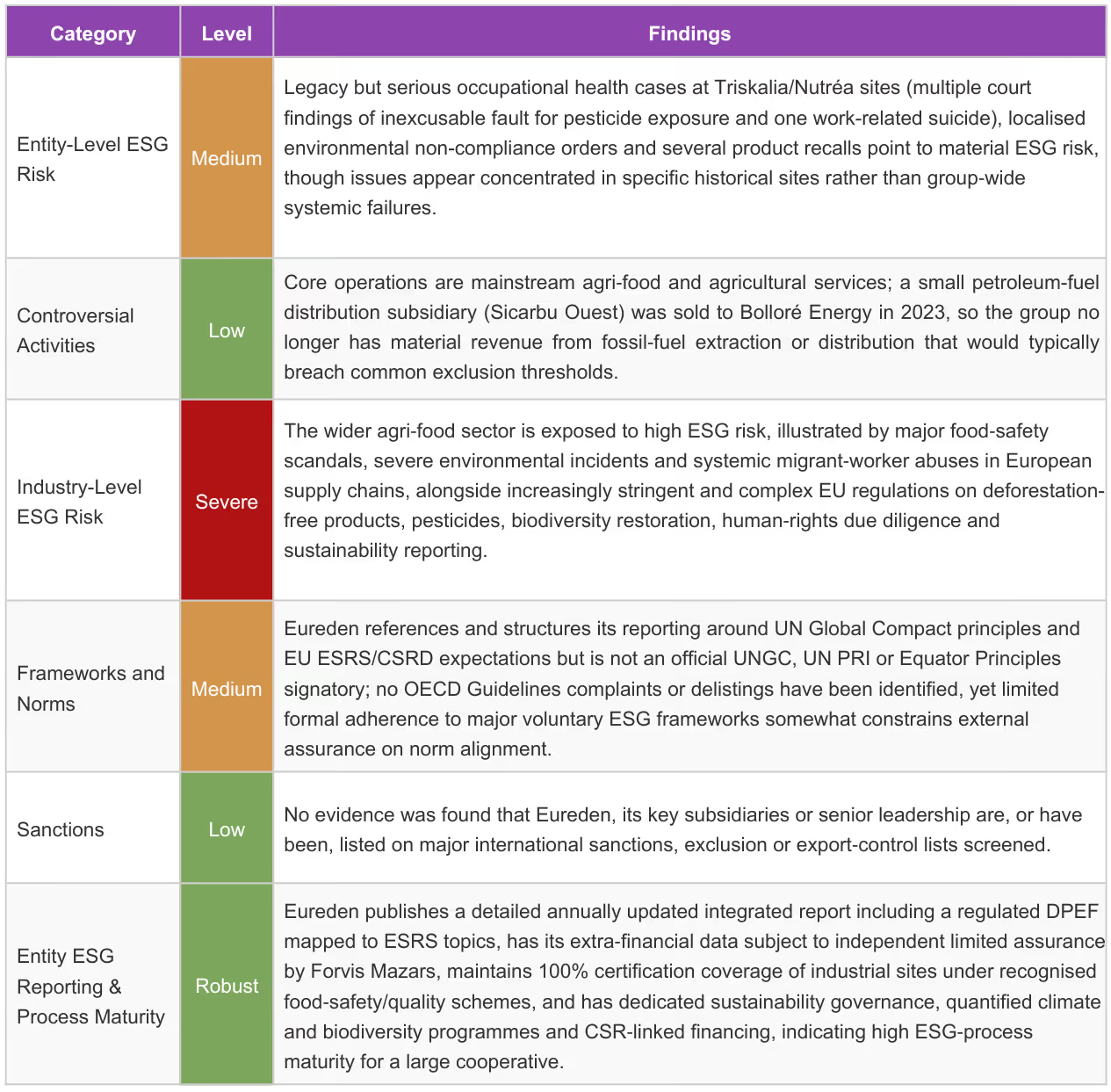
For these teams, an AI module fills in the client's own risk questionnaire. A typical question is whether a company has been involved in a human rights issue in the past three years, under the client's risk criteria. The module returns the answer, the level of risk and its justification, with the underlying controversy data attached.
Allianz Commercial uses this approach in its underwriting. Underwriters enter a company identifier and, in under a minute, get answers to predefined sustainability and reputational due diligence questions directly in their existing interface. Each answer comes with a yes or no, its justification and evidence that meets Allianz Commercial's audit trail requirements, and the setup supports the assessment of hundreds of thousands of companies a year. Read the Allianz Commercial case study.
Regulation is driving this demand. Germany's Supply Chain Due Diligence Act is a major driver today, and the EU Corporate Sustainability Due Diligence Directive (CS3D) points the same way.
Read company risk at a glance
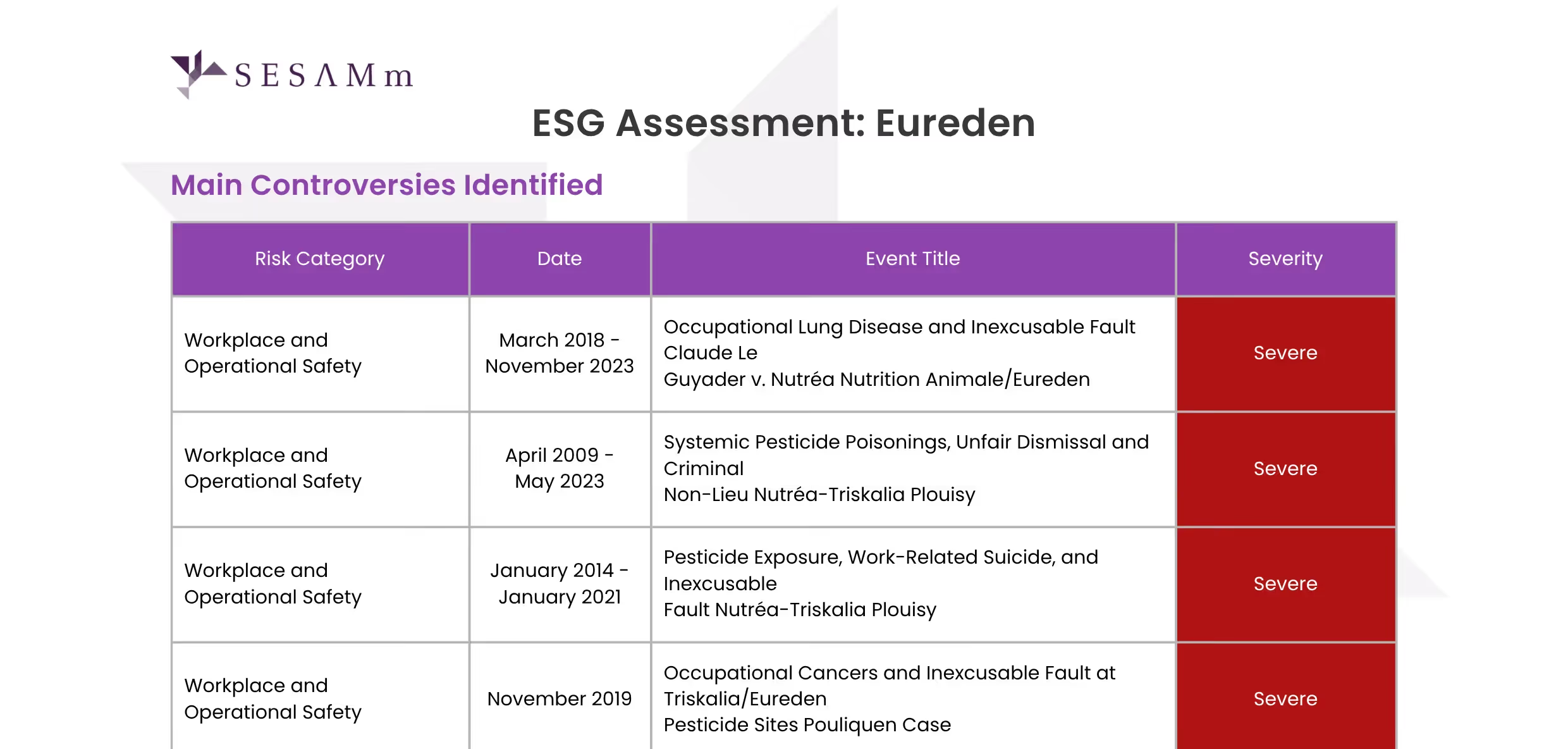
Teams screening large portfolios need to see where risk sits without reading every controversy. The platform's risk indicator now uses the Max CES, the peak of a company's Controversy Exposure Score, so a serious controversy from a few years ago stays visible even after the score has declined. Controversy summaries add the main themes for each company, giving LPs and funds of funds a fast go or no-go across tens of thousands of holdings. And when a committee needs the full picture, a company's complete controversy page can be exported as a PDF in about 10 seconds.
Build regulation into the product
The EU regulation on ESG ratings kept SESAMm busy this year. SESAMm notified the European Securities and Markets Authority (ESMA) directly and built the requirements into its systematic processes rather than treating them as a one-off project.
In practice, that means millions of companies were notified. Each receives access to the platform to review its controversies and scores. Automating this step let SESAMm keep its full coverage without a matching rise in costs.
For clients, the result is transparency and stability. The methodology is public on the SESAMm website. Major changes will be announced in advance and go through public consultation, so scores will not shift overnight.
What comes next
Three developments are coming to the platform in the months ahead:
- Portfolio and sector CES. The portfolio CES, now available, rates the risk of a specific portfolio or investment universe. The sector CES compares a company with its peers. It answers a frequent request in sectors where every player is exposed, and where the question is whether a company does better or worse than the rest.
- OECD screening. Alongside the existing screening for UN Global Compact violations, a screening against the OECD Guidelines for Multinational Enterprises is coming in the next few months.
- MCP in AI marketplaces. The SESAMm MCP server will be listed in the ChatGPT and Claude marketplaces, so any SESAMm license holder can add it in one click.
To see these features in action or connect the MCP server to your AI assistant, request a demo or contact us at contact@sesamm.com.



.png)