SESAMm Launches Controversy Exposure Score: A New Era for ESG Risk Analysis
September 12, 2024
•
5 mins read
We are excited to announce the launch of SESAMm’s proprietary Controversy Exposure Score (CES), a new score designed to transform how ESG and finance professionals assess risks. The CES offers a dynamic, real-time view of a company's exposure to ESG controversies, enabling fast, informed decision-making.
What is the Controversy Exposure Score (CES)?
The CES is a continuously updated score ranging from 1 to 100, reflecting a company or project's evolving exposure to ESG controversies. Leveraging SESAMm’s proprietary Intensity and Volume Scores, the CES captures both the severity and frequency of ESG incidents, allowing stakeholders to monitor and understand risks as they develop. Below, we’ve put together an example demonstrating how the CES for Renault compares to Stellantis based on their respective ESG controversies. As we see in the chart below, Renault has had fewer high–intensity events, which results in a lower, more stable CES compared to Stellantis.
Renault CES
Stellantis CES
How Does It Work?
The CES is powered by state-of-the-art Large Language Models (LLMs) that filter and analyze content from our data lake containing over 25 billion articles. Two main components impact the score’s value:
Intensity Score: Measures the severity of each ESG incident, considering its impact on a company’s reputational, stakeholder, financial, and legal standing. This score is derived from a Large Language Model (LLM) fine-tuned by SESAMm’s experts and trained on thousands of humanly annotated events.
Volume Score: Assesses the number of articles associated with an event, calculated using a short-term rolling window. To ensure accuracy, the Volume Score is normalized against the average article volume concerning the company and relevant ESG topics over the past year, reducing potential bias.
Track ESG controversy trends: Evaluate how a company’s risk exposure has evolved. The CES is updated daily, ensuring that users have the most current data at their fingertips.
Benchmark companies against their peers: Compare a company’s risk exposure to its peers, providing a comprehensive view of its relative risk.
Ready to Transform Your ESG Analysis?
For more information on how the Controversy Exposure Score can help you make smarter, data-driven decisions and to see it in action, request a demo.
Reach out to SESAMm
TextReveal’s web data analysis of over five million public and private companies is essential for keeping tabs on ESG investment risks. To learn more about how you can analyze web data or to request a demo, reach out to one of our representatives.
Over the past decade, many organizations have improved their carbon footprints, from recyclable and biodegradable packaging and single-use plastic to planting trees and reducing their greenhouse gas emissions. However, some businesses and companies looking to boost their eco-friendly image without committing to serious changes and addressing environmental issues have been associated with false green marketing. We call this "Greenwashing."
What is Greenwashing?
Greenpeace and the Environmental Protection Agency define greenwashing as making false and misleading claims about a product's environmental benefits or practices, services, technology, or company practices. Greenwashing typically involves companies spending more money on advertising and marketing than on implementing sustainable business practices that minimize environmental impact. These false green claims can deceive consumers into believing that a product or company is more environmentally friendly than it is, leading to increased sales and profits. As a result, false advertising, misleading initiatives, and groundless claims have increased green investors' exposure to risks emerging from potential lawsuits from activist groups, image deterioration, and some heavy loss in assets invested.
Why is Spotting Greenwashing Important?
Greenwashing is a growing concern for investors as they look to make sustainable and responsible investments. Therefore, spotting greenwashing practices is important for these firms. Here's why.
The deceptive practices used by greenwashers can have significant implications for the integrity of investments made in what investors believe to be sustainably operated companies or sustainable funds. In other words, greenwashing makes it difficult for investors to distinguish between genuinely committed to sustainability companies and those merely making false claims about their environmental practices. As a result, investors may unknowingly invest in companies that are not as sustainable as they claim to be, which can harm their financial returns and the environment. Therefore, it's essential for investors to be aware of greenwashing tactics and to carefully research companies before investing in them to ensure that their investments align with their values and contribute to a more sustainable future.
What Are the Challenges to Detecting Greenwashing?
It's challenging to produce an accurate assessment of environmental, social, and governance (ESG) factors, which gives companies the opportunity to cover or hide ineffective and fake green initiatives. According to Regtank, some of the main challenges to detecting greenwashing practices are the following:
Lack of reporting standards: some investors believe that we haven’t universally agreed upon a set of standards to determine whether a product is ESG compliant.
Lack of transparency: greenwashing companies don’t disclose the specificities of their “green campaigns,” which makes it difficult for investors and consumers to fact-check and evaluate their sustainability claims.
Limited consumer awareness: false marketing strategies could be based on a combination of the consumer’s eco-consciousness and brand loyalty. As a result, consumers become less aware of the misleading strategies greenwashing companies use to sell their products.
Ultimately, these factors may contribute to the inaccuracy and limitations of ESG data and scores, which makes it easier for greenwashers to get away with their false marketing campaigns. Consequently, detecting greenwashing requires scrutiny of environmental claims made by companies and an understanding of the complex supply chains and manufacturing processes involved in producing products and services.
To learn more about greenwashing and have access to real-life case studies, download this comprehensive report:
How Does Artificial Intelligence Detect Greenwashing?
As greenwashing practices increase, activist investors, experts, journalists, and even the general public are spreading awareness of the issue using social media, news outlets, forums, and blogs, among other means. Recently, artificial intelligence (AI), particularly natural language processing (NLP), has proven to be effective in the early detection of greenwashing by analyzing vast amounts of qualitative data publicly available on the web. At SESAMm, for example, we apply our NLP capabilities to identify companies likely to engage in greenwashing practices by analyzing text in billions of web-based articles. Our data lake contains over 25 billion web–sourced articles, sourced from four million news, blogs, social media, and forum discussions on five million public and private companies in more than 100 languages. We run these articles through our AI platform tool, TextReveal®, and systematically craft reliable, timely, and comprehensive insights to detect greenwashing, generate ESG alerts, and identify related risks.
The Rise of Greenwashing
Greenwashing, the deceptive practice where companies claim to be more environmentally friendly than they actually are, has become a growing concern in recent years. By analyzing the frequency of web mentions of greenwashing over time, we can observe important trends and understand the factors contributing to this phenomenon.
Recent analyses indicate a significant increase in greenwashing mentions since late 2019. This rise aligns with a growing public awareness of the climate emergency and the increase in media outlets and social media accounts dedicated to exposing greenwashing. The number of mentions escalated from fewer than 200 to over 23,000 in the last quarter of 2023, highlighting the increasing scrutiny of corporate environmental claims.
A noteworthy pattern is the regular occurrence of spikes in greenwashing mentions during the third quarter over the past three years. This timing corresponds with the "pre-COP" periods, leading to critical international climate change management conferences. These periods see heightened discussions around sustainability, with increased attention on companies' environmental practices.
Figure 1: Greenwashing mentions over time.
Greenwashing in the Energy Sector
The energy sector, particularly the oil industry, has faced significant scrutiny regarding greenwashing. In this context, companies like Shell and ENI have been prominent due to the frequency of greenwashing mentions associated with them.
Figure 2: Examples of greenwashing mentions in the energy sector over time.
For Shell and ENI, the volume of greenwashing mentions has fluctuated, with notable increases in specific quarters. For example, Shell saw spikes in mentions during the second quarter of both 2021 and 2022 while experiencing a drop in the third quarter of 2022. ENI has faced similar fluctuations, often linked to legal actions and publicized environmental issues.
Shell's Greenwashing Mentions, ESG Risks, and Initiatives
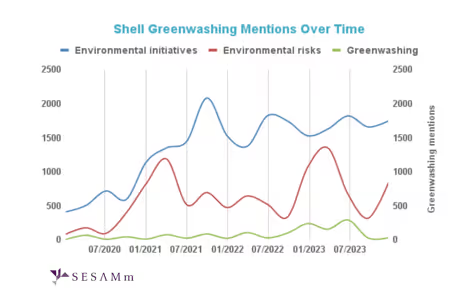
Shell, a British multinational and prominent player in this sector, has faced considerable scrutiny for such practices. The company has experienced notable spikes in greenwashing mentions and has been involved in several ESG-related risks.
Figure 3: Shell greenwashing and ESG mentions over time.
Greenwashing Mentions
We can see an increase in greenwashing mentions in the first half of 2023. Around that period, Shell faced allegations and lawsuits concerning its environmental claims. The company was criticized for misleading U.S. authorities and investors about its energy transition efforts. Additionally, Shell faced public backlash for labeling fossil gas as 'renewable' while reporting record profits. A notable incident involved a shareholder suing Shell's executives over climate risks.
ESG Risks
Shell has faced several ESG-related risks, including legal challenges and pollution issues. In 2021, the company was sued by New York City over climate change-related advertising and filed an arbitration claim against Nigeria concerning a spill dispute. In March 2023, Shell faced another oil spill, this time in another region in Nigeria, Rivers State, and also saw institutional investors backing a lawsuit against its board over climate risks. The mid-2023 period saw Shell agreeing to pay $10 million for air pollution violations at a Pennsylvania petrochemical plant. Despite its net-zero pledge, the company announced plans to increase fossil fuel production.
ESG Initiatives
Despite its challenges, Shell has also engaged in various sustainability initiatives. In late 2021, the company announced plans to purchase power from the world's largest offshore wind farm. Mid-2022 saw a leadership change with the company's CEO stepping down as Shell aimed to align with its climate goals. The company also planned to deploy 10,000 EV chargers across India as part of its global strategy. In mid-2023, Shell committed to investing $10–15 billion in developing low-carbon energy solutions. Although the company abandoned its lower oil production target, it maintained its commitment to reducing emissions.
Shell's journey underscores the challenges of aligning environmental claims with real actions, emphasizing the importance of transparency and genuine sustainability efforts.
ENI's Greenwashing Mentions, ESG Risks, and Initiatives
ENI, an Italian multinational oil and gas company, has faced scrutiny for such practices. The company has experienced fluctuations in greenwashing mentions and has been involved in a number of ESG-related risks.
Figure 4: ENI greenwashing and ESG mentions over time.
Greenwashing Mentions
ENI's greenwashing mentions are fairly low. However, the company has been featured in discussions about greenwashing, especially with recent developments. In early 2022, the company faced criticism for inconsistencies in emissions data and greenwashing activities, as highlighted by the Sereno Regis Study Center. Greenpeace also criticized ENI for using the Sanremo Music Festival as a platform for greenwashing. In May 2023, ENI faced a lawsuit for allegedly lobbying and greenwashing to promote fossil fuels despite being aware of their environmental risks. Greenpeace sued the company, accusing it of knowingly contributing to climate change.
ESG Risks
Over the past 4 years, the oil giant's ESG risks have been few but not inexistent. ENI has encountered several risks, including legal challenges and pollution issues. In 2022, ENI's environmental strategy was deemed a failure, and concerns arose about a pipeline spill into the East Irish Sea. The company also faced legal actions in 2021, including an appeal against a court ruling in an illegal waste case and warnings from the Legality Network to reduce greenhouse gas emissions or face prosecution.
The company faced a lawsuit in early 2023 for allegedly having prior knowledge of the climate crisis. In another incident, a report found that ENI and Shell were responsible for significant pollution in Bayelsa, requiring a $12 billion cleanup.
Shell and ENI both face the challenge of balancing economic interests with environmental responsibility. Despite allegations of greenwashing and environmental risks, both companies have taken steps towards sustainability, such as investing in low-carbon solutions and renewable energy projects. Their experiences highlight the importance of transparency, genuine commitment to environmental responsibility, and the role of public scrutiny in holding companies accountable.
Greenwashing and ESG Investing
In sum, certain companies advertise their sustainability and green initiatives, while in reality, they are making false claims and practicing greenwashing, as evidenced by our analysis using SESAMm's AI and ESG reports. We use AI through TextReveal to generate alternative data for use cases, such as ESG and SDG, sentiment, private equity due diligence, corporate studies, and more. Our technologies can reliably ensure the credibility of ecological initiatives and serve global investment firms, corporations, and investors, such as private equity firms, hedge funds, and other asset management firms, to enhance their investment strategies.
Conclusion
In conclusion, the issue of greenwashing represents a substantial obstacle in the journey towards genuine environmental sustainability, misleading consumers and investors and diluting the efforts of genuine sustainable enterprises. Nevertheless, the emergence of advanced technologies such as Artificial Intelligence (AI) and Natural Language Processing (NLP) indicated a new era of accountability. Innovators like SESAMm are at the forefront, deploying these technologies to effectively unravel and counteract greenwashing practices. This empowers investors, asset, and portfolio managers to discern and align their resources with legitimately sustainable entities. The call to action is clear: a collective demand for transparency and responsibility is crucial.
Reach out to SESAMm
TextReveal’s web data analysis of over five million public and private companies is essential for keeping tabs on ESG investment risks. To learn more about how you can analyze web data or to request a demo, reach out to one of our representatives.
Welcome to the latest article in our ESG Data Trends series. Today, we're turning our attention to the growing bike industry, specifically spotlighting Italy's Pinarello. Our aim is to illustrate how health-conscious and ecological trends, increased by the pandemic, have steered the world towards bicycles for both commuting and exercise. Pinarello, as well as many of its competitors, are private companies, which poses a particular challenge to analyze them in depth as the amount of data available is particularly sparse and harder to find. However, with the help of AI tools, this task becomes not only possible but also highly automated.
Bike Industry Trends: A General Overview
Long–term Momentum: Online mentions related to the bicycle market have exhibited a consistent upward trend since 2015, peaking in the last three years in the wake of COVID-19.
Figure 1: Bike market volume of mentions over time.
Government Initiatives: Notably, a spike in government investment in cycling infrastructure has paralleled the pandemic-induced behavioral changes.
Figure 2: Bike commuting VS. government focus on cycling infrastructure over time.
Type-specific Popularity: Among the various segments, E-bikes dominate online mentions, followed by mountain bikes and road bikes.
Figure 3: Bike market breakdown by type over time.
Digital Ecosystem: The digital facet of the trend reveals that sports data apps, especially those focusing on performance tracking, have gained considerable traction.
Figure 4: Sports data apps and their use mentions over time.
E-bikes: Riding the High Wave
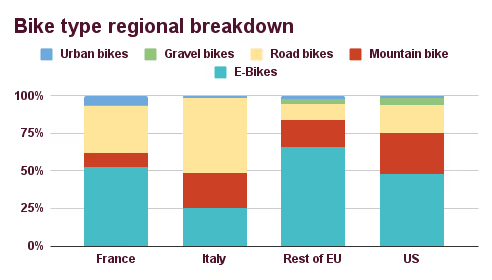
E-bikes have captivated attention across the board. They are now deemed a convenient solution to commuting, more so after the pandemic. Geographically, Europe outperforms the US in E-bike mentions, with France leading the charge on urban bikes. Italy, on the other hand, showcases a stronger inclination towards road bikes.
Figure 5: Bike type regional breakdown.
The Pandemic Effect on Road Bikes
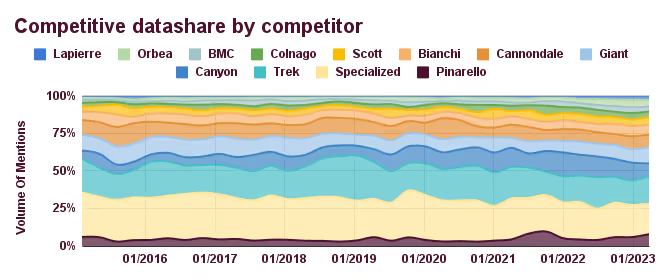
The road bike segment witnessed an unprecedented surge in mid-2020, corresponding with pandemic lockdowns. Major players like Specialized, Trek, and Canyon lead in online mentions, but Pinarello holds its ground with a stable and slightly growing competitive share.
Figure 6: Road bike market data share by competitor over time.
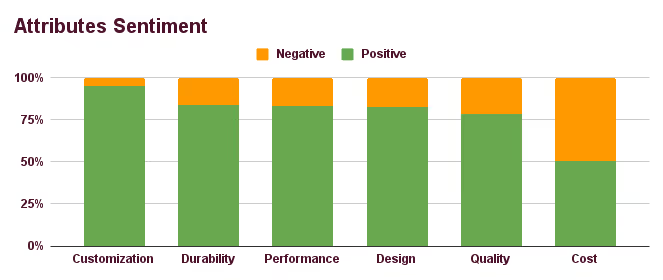
Consumer Preferences: Performance and quality emerge as the dominant positive attributes, whereas cost remains the primary consumer concern.
Attribute Sentiment: When analyzed based on sentiment, customization, and performance, score the highest, whereas cost ranks the lowest due to consumer complaints.
Figure 7: Road bike market attributes sentiment.
Case Study: Pinarello
Online Reputation Insights
The volume of online mentions for Pinarello has seen a steady climb, particularly after 2021. Quality and performance have risen as positive attributes, while cost remains a predominant negative sentiment, inflamed further by recent discussions about the brand's pricing strategy.
Figure 8: Pinarello attributes sentiment.
ESG Analysis of Pinarello and the Bike Industry
Low-risk ESG Profile: In general, the bike industry fares well in ESG evaluations. The risks usually center around social and governance aspects.
Social Risks: These primarily relate to product safety, with several recalls from various companies, including Specialized and Trek.
Governance Risks: Pinarello has faced patent infringement claims, while other brands like Giant have been accused of fraudulent behavior.
ESG Positive Impact Initiatives
The industry, by and large, is aligned with environmental sustainability goals. Trek stands out for its environmental initiatives and social opportunities, while Canyon demonstrates advances mainly in the environmental management of the supply chain.
As for Pinarello, the brand has undertaken ESG-positive initiatives, notably in environmental and social spheres. Product innovations like the Nytro E e-bike and high-performance 3D printed bikes signify their commitment to sustainable technology. Moreover, their partnerships and sponsorships aim to uplift local communities.
Navigating ESG Goals in the Bike Market
The bike market, led by brands like Pinarello, demonstrates significant strides in alignment with ESG goals. For private equity firms and asset managers, the value lies not just in financial returns but also in understanding ESG risks and opportunities that could influence long-term sustainability and risk mitigation.
How can SESAMm help you track ESG performance using AI?
We combined natural language processing with billions of textual web data related to the bike market to produce this analysis. Using NLP-powered models gives us an edge as we can extract ESG, SDG, and financial insights that aren’t necessarily obvious or easy to detect. These insights help investors make better investment decisions. SESAMm leverages AI and machine learning technologies to help you decipher and understand timely sentiment, trends, and ESG metrics on public and private companies to assist organizations in risk mitigation and profit generation strategies.
Reach out to SESAMm
TextReveal's web data analysis of over five million public and private companies is essential for keeping tabs on ESG investment risks. To learn more about how you can analyze web data or request a demo, contact one of our representatives.
ESG reporting is no longer just a compliance requirement; it is now essential for structuring and managing ESG data to anticipate risks and adjust strategies. ESG platforms go beyond generating reports—they must provide actionable data to inform decision-making, much like financial tools. The emergence of regulatory frameworks such as CSRD is accelerating this transformation. With a rapidly expanding market, how do you choose the most suitable solution for your organization?
What is ESG Software and What is its Purpose?
An ESG software solution is designed to help companies structure, analyze, and improve their non-financial performance. It centralizes ESG data collection, automates analysis, and ensures compliance with current regulations. As legal requirements become more complex and data quality remains a significant challenge, these tools play a key role in ensuring reliability, traceability, and transparency. Advanced features, often powered by artificial intelligence (AI), facilitate data extraction, consolidation, and interpretation, enabling companies to manage their sustainability strategies efficiently.
Key uses of ESG Software include:
Carbon footprint calculation and tracking of greenhouse gas emissions
Biodiversity impact analysis and other environmental dimensions
Evaluation of ESG maturity of suppliers and partners
Regulatory compliance (CSRD, SFDR, EU Taxonomy, etc.)
Double materiality analysis and ESG risk management
Automated dashboards and non-financial reports
Tracking action plans and ESG progress reporting
By integrating these functionalities, ESG software ensures compliance and supports a proactive approach to managing risks and opportunities related to sustainability.
Top ESG Software Solutions
Here are some leading ESG software solutions and their features:
A top-tier solution for financial institutions, investors, and large firms. It integrates AI-powered tools for data collection, analysis, and compliance verification.
Ideal for: Investors and enterprises with >1,000 employees
A comprehensive ESG and decarbonization solution with a climate and CSRD module, launched in 2024. It combines software, consulting support, and training.
Ideal for: SMEs / mid-sized enterprises
Key focus: Carbon footprint, life cycle analysis, CSRD compliance
Strengths:
Advanced visualization of double materiality
Smart data collection interface
Integrated climate and CSRD module
AI-assisted narrative generation
Novisto
A SaaS platform that optimizes ESG data collection, analysis, and communication.
Ideal for: Investors and large enterprises (CAC 40)
Key focus: ESG reporting, compliance
Strengths:
AI-powered ESG ratings and insights
Sectoral benchmarking
Auditable platform and data
Live support, webinars, and consulting services
Greenomy
Specialized in regulatory reporting, built around the EU Taxonomy and CSRD requirements.
Ideal for: Mid-sized and large enterprises (CAC 40)
Key focus: ESG reporting, compliance
Strengths:
AI-generated ESG narratives and streamlined ESRS compliance
Established taxonomy tool in 2022
ESG data library and automated imports/exports
Continuous regulatory updates
Sweep
A modular ESG platform suited for industries like retail, consumer goods, and manufacturing. It offers four modules: Climate, Finance, Supply Chain, ESG-CSRD.
Ideal for: SMEs, mid-sized firms, and large enterprises (CAC 40)
IBM’s ESG software suite covers ESG data management, carbon footprint tracking, and CSRD reporting.
Ideal for: Investors and companies of all sizes
Key focus: Carbon footprint, ESG reporting
Strengths:
Compatible with 500+ data formats (ERP, finance, etc.)
Integration with IBM Maximo, Tririga and Turbonomic
Pre-configured CSRD templates with risk scoring
Automated workflows and supplier data collection
Tennaxia
A historic ESG and HSE (Health, Safety, Environment) solutions provider with 20+ years of experience. Acquired Traace in 2024 to strengthen carbon footprint and CSRD compliance capabilities.
Ideal for: SMEs, mid-sized firms, and large enterprises (CAC 40)
Key focus: Carbon footprint, ESG reporting, HSE
Strengths:
ESG and HSE expertise with an internal consulting team
Materiality module for risk/opportunity visualization
AI-powered data entry assistance and compliance management
Continuous regulatory updates
Apiday
A hybrid solution that combines an ESG platform with consulting partners for double materiality analysis.
A flexible ESG platform that unifies all market frameworks. Its modular approach (Evaluate, Manage, Align) simplifies compliance and performance enhancement.
Ideal for: SMEs, mid-sized firms, and large enterprises (CAC 40)
A SaaS platform designed for private equity investors and portfolio companies. It centralizes ESG data collection and analysis with advanced scoring and benchmarking tools.
A presence in North America and global compliance standards
What Are the Benefits of ESG Software?
ESG software solutions provide major benefits in compliance and strategic management. They improve data processing, ensure reliable reporting, and enhance decision-making with consolidated ESG performance insights.
Key Advantages
Automation and time savings: Reduces administrative workload with real-time data collection and analysis.
Data reliability and quality: Eliminates manual errors and ensures complete data traceability.
Regulatory compliance: Keeps up with evolving legal frameworks (CSRD, SFDR, Taxonomy).
Investor attractiveness: Strong ESG reporting boosts transparency and credibility. 56% of investors have backed out of deals due to ESG concerns.
Strategic ESG management: Provides a consolidated ESG performance overview and risk anticipation.
Impact analysis: Advanced analytics tools help drive sustainable decision-making.
ESG software can no longer be limited to a simple reporting tool; it must be fully integrated into your strategy. To make the right choice, it's essential to define your project in advance: What functional, organizational, and geographic scope should the solution cover? Do your needs relate to compliance, strategy, impact improvement, risk analysis, or value chain data collection? Do you have clear governance in place to deal with sustainability issues?
In addition to functionalities, we need to assess the full range of customer services that accompany the solution. Does the provider offer a robust support team integrated into the license? Does it have partners capable of facilitating deployment, enriching your data, or providing strategic support? Integration with your information systems is also a key criterion, and security should not be overlooked. Check that the vendor applies high standards of data protection and service continuity. Many teams also pair their reporting software with an external ESG data source for controversy and risk signals. Our guide to choosing an ESG data provider walks through the seven questions to ask before you decide.
Clearly defining your needs and objectives and evaluating these criteria will enable you to choose an ESG solution that is truly adapted to your organization.
SESAMm’s AI Technology Reveals ESG Insights
Discover unparalleled insights into ESG controversies, risks, and opportunities across industries. Learn more about how SESAMm can help you analyze millions of private and public companies using AI-powered text analysis tools.
Stay ahead with the latest in ESG and AI intelligence
Join our mailing list to receive new reports, event invites, and updates from SESAMm directly to your inbox.

















.png)