

There’s no denying that ESG risk exposure in the pharmaceutical industry is high. This stems from the intense regulatory oversight, complex global operations, and the sector’s direct impact on public health. Governance issues represent the most persistent challenge, with leading companies repeatedly facing bribery and corruption cases, antitrust and excessive pricing investigations, misleading marketing practices, patent disputes, and data integrity concerns, often resulting in significant fines, large settlements, and prolonged legal scrutiny across jurisdictions.
Social risks are closely tied to product safety and workforce management, as evidenced by recurring drug recalls, regulatory suspensions, and litigations linked to adverse patient outcomes, alongside layoffs, labor disputes, and workplace safety concerns. Environmental risks, while comparatively less frequent, increasingly center on credibility and compliance, including sustainability reporting weaknesses, greenwashing allegations, and operational environmental violations.
What are the most persistent ESG challenges in the pharmaceutical industry? Read on to find out.
GlaxoSmithKline: Legal Battles and Social Accountability
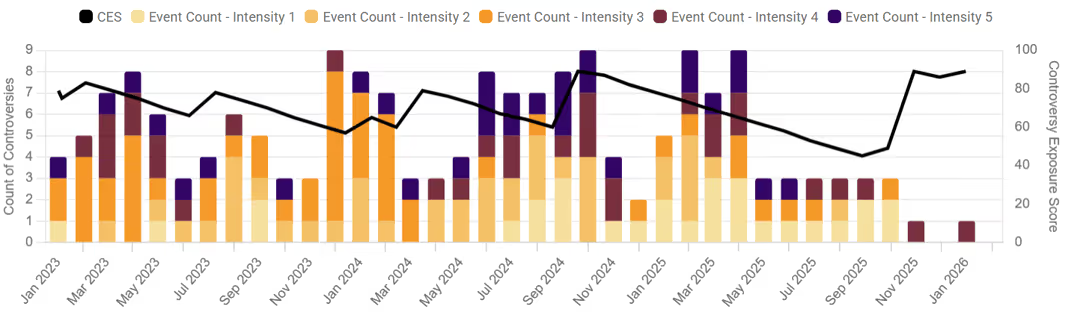
While taking a deeper look at GlaxoSmithKline (GSK), we found that the company has a very high Controversy Exposure Score (CES) of 88/100. This elevated score reflects a sustained pattern of governance and social controversies rather than isolated incidents.
On the governance side, GSK has repeatedly faced major legal and regulatory actions, including a $2.2 billion settlement linked to Zantac, a $235 million patent award upheld by the U.S. Supreme Court, and multiple fines for misleading marketing, anticompetitive behavior, and bribery. Several of these events are flagged as UN Global Compact (UNGC) violations, particularly under principles related to anti-corruption, labor rights, and ethical business conduct, while others remain under UNGC watchlist classification.
Social risks further expose GSK, including recurring product recalls and regulatory suspensions tied to contamination, dosing, and packaging defects, as well as labor disputes, strikes, and large-scale layoffs across Europe and the United States. Together, the CES score and UNGC screening highlight persistent governance weaknesses and social risk drivers that continue to shape GSK’s overall risk profile.
Key Controversies:
- GSK workers to strike after rejecting pay offer at pharmaceutical giant
- Pharmaceuticals giant GSK aims to cut 720 jobs in Wallonia
- GSK told to pay up for experiments in Mother and Baby homes at meeting of Sligo County Council
- Pharmaceuticals giant GSK to pay $2.2bn to settle Zantac lawsuits
- Judge: GlaxoSmithKline Can Be Held Liable for Fatal Injuries Suffered From Generic Equivalent of Lamictal
Novartis: Governance and Sustainability Concerns
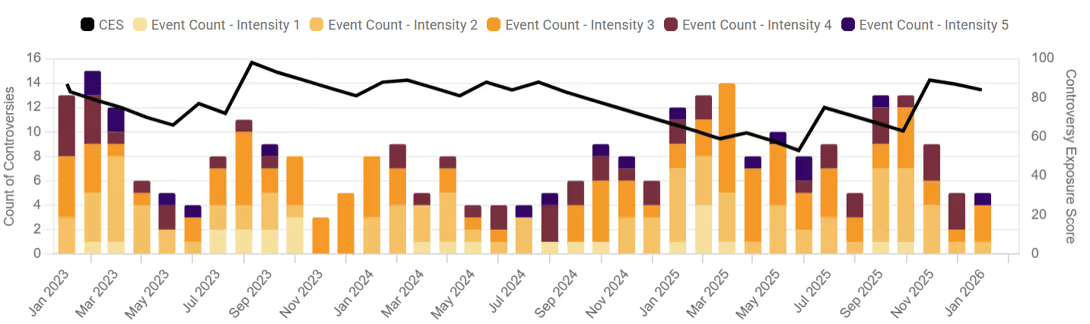
Similar to GSK, Novartis shows very high controversy exposure, with a CES of 84/100, reflecting sustained ESG headwinds rather than isolated events. Governance risks are the primary driver of this elevated score, with Novartis facing repeated fraud and bribery allegations, competition and price-fixing investigations, patent disputes, and data integrity concerns across multiple jurisdictions. These issues have resulted in significant financial consequences, including nearly $1 billion in U.S. settlements related to improper physician incentives, $345 million to resolve foreign corruption cases, a €444 million antitrust fine in Europe, and several high-value patent dispute settlements.
A number of these controversies are flagged under UNGC screening, primarily classified as Watchlist events, particularly in relation to anti-corruption, ethical conduct, and legal compliance. Environmental risks also contribute to Novartis’ exposure, following greenwashing allegations and scrutiny over the credibility of its net-zero commitments. On the social front, large-scale workforce reductions, protests, strikes, and voluntary product recalls linked to safety oversight have further intensified the company’s overall risk profile.
Key Controversies:
- Novartis Case Closes in US with Deal Excluding Greek Bribe Allegations
- Novartis pays close to $1 billion to settle suit over doctors' bribes
- Belgium Authority imposes a EUR 2.78 million fine on Novartis
- Novartis used manipulated data in winning Zolgensma approval, FDA says
- Greenwashing: Accusations against Novartis and Nestlé
Roche: Facing the Spotlight on Governance and Ethics
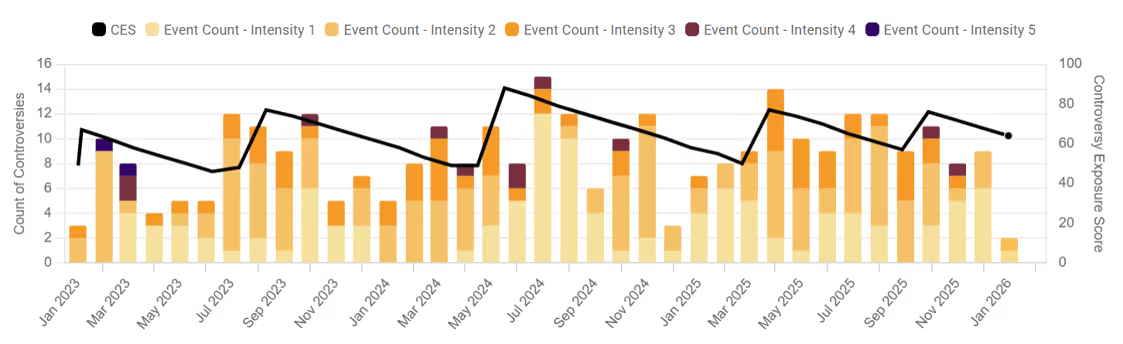
While lower than some of its peers, Roche shows a high level of controversy exposure, with a CES of 64/100. This score still reflects recurring ESG controversies across governance, social, and operational dimensions. Governance-related risks are the main contributors, with Roche involved in multiple lawsuits linked to bribery allegations, antitrust and excessive pricing practices, patent disputes, and marketing misconduct, including a €444 million antitrust fine in Europe.
Several of these events are captured under the UNGC screening, predominantly classified as Watchlist cases, particularly in relation to anti-corruption, competition practices, and governance standards. Environmental risks have also emerged, with the Ethos Foundation publicly challenging Roche’s sustainability reporting and executive remuneration practices, and its subsidiary Genentech was fined $158k for hazardous materials violations. On the social front, Roche has faced drug recalls tied to safety deficiencies, large-scale global layoffs, reported employee exposure to hazardous substances, and legal rulings related to workplace discrimination, all contributing to its overall ESG risk profile.
Key Controversies:
- Emails and Bribery Samples Offered by Roche Drug Company to Authorities
- Les laboratoires Novartis, Roche et Genentech condamnées à 444 M€ d’amende
- Roche settles US patent lawsuit against Biogen over blockbuster arthritis drug
- The Ethos Foundation raises its voice against Roche
- Roche Reports Employee Exposure to Ethylene Oxide Due to Packaging Issues
Conclusion
Across GlaxoSmithKline, Novartis, and Roche, ESG risk in the pharmaceutical sector is clearly structural. Governance controversies remain the most persistent and financially material, while social risks tied to product safety and workforce practices continue to drive litigation and reputational pressure. Environmental issues, though less frequent, increasingly raise questions around credibility and compliance.
Together, these cases highlight the need for continuous, forward-looking risk monitoring in a sector where regulatory scrutiny, public trust, and long-term value are tightly connected.
Reach out to SESAMm
TextReveal’s web data analysis of over five million public and private companies is essential for keeping tabs on ESG investment risks. To learn more about how you can analyze web data or to request a demo, reach out to one of our representatives.

.jpg)


.png)