Secondaries investors evaluate large, diversified portfolios under compressed timelines, with the level of detail and underlying company visibility differing by transaction type.
In this context, screening is embedded in the underwriting workflow, not a one-off exercise: it helps apply investment guidelines, support LP opt-outs, prioritize follow-up diligence, and enable ongoing monitoring over the life of the investment.
Watch this webinar replay to hear Jessica Huang, Private Equity and Secondaries ESG Lead at Ares Management, and Sylvain Forté, CEO at SESAMm, discuss:
The operational and data challenges secondaries teams face
How screening is applied in secondaries investing in practice
How AI helps teams scale screening and support ongoing monitoring workflows
As regulatory scrutiny intensifies across industries, several major corporations faced significant legal challenges related to anti-competitive behavior in October 2025. Using SESAMm's AI-powered controversy data, we analyzed corporate activity to identify the companies most involved in anti-competitive practices during the month. The results reveal a pattern of regulatory action spanning tech giants, financial services, and food production sectors.
#1: Alphabet: Mounting Regulatory Pressure
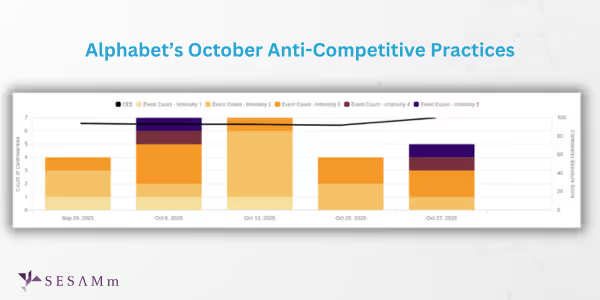
Alphabet continues to face unprecedented legal challenges across multiple jurisdictions. The company is facing a substantial $8.3 billion lawsuit from Klarna, alleging anti-competitive practices in the Android market. The situation intensified when the U.S. Supreme Court denied Google's request to delay mandated changes that would open Google Play to rival app stores.
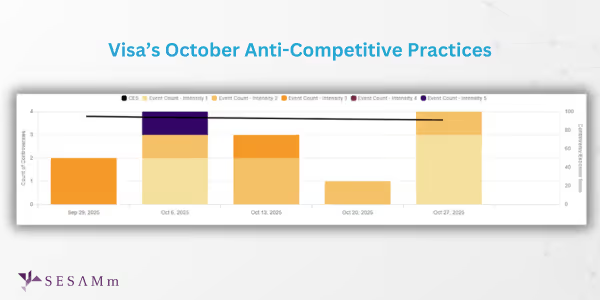
Visa continues to face legal and regulatory pressures across multiple jurisdictions. In the United States, the long-running merchant fee antitrust litigation (MDL 1720) remains active, with ongoing appeals and challenges to proposed settlements. Several merchant groups that opted out of earlier agreements have been permitted by the courts to continue pursuing their claims, extending Visa’s legal exposure.
The company's $5.3 billion acquisition of Plaid has drawn intense scrutiny from the U.S. Department of Justice, reflecting growing concern about consolidation in the fintech sector. Meanwhile, across the Atlantic, the UK Competition Appeal Tribunal delivered a landmark ruling against both Visa and Mastercard, determining that their Multilateral Interchange Fees violate competition laws; a significant victory for European merchants and a potential precedent for future cases.
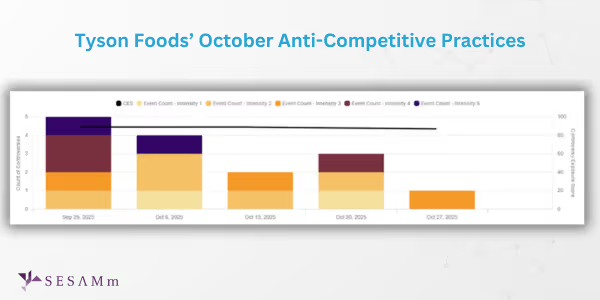
Beyond beef, Tyson reached an even larger $85 million settlement in a separate antitrust case concerning pork price inflation, the largest settlement to date in ongoing litigation against major U.S. meat producers.
Conclusion
The findings from October 2025 underscore a critical moment in corporate regulation, as authorities worldwide demonstrate an increased willingness to challenge anti-competitive practices in sectors ranging from technology and finance to food production. The substantial fines, denied appeals, and ongoing investigations signal a regulatory environment that is actively reshaping market dynamics.
For investors and market observers, these cases highlight the material financial and operational risks associated with anti-competitive behavior. As enforcement mechanisms strengthen and legal precedents solidify, companies across all sectors should anticipate heightened scrutiny of market practices, particularly those involving platform dominance, merger activities, and pricing coordination.
Reach out to SESAMm
TextReveal’s web data analysis of over five million public and private companies is essential for keeping tabs on ESG investment risks. To learn more about how you can analyze web data or to request a demo, reach out to one of our representatives.
The world of private equity has been fertile ground for the adoption of alternative data, including AI-driven insights from firms like SESAMm, an expert in Natural Language Processing (NLP).
Could SESAMm’s technology provide Carlyle with the tools to identify a better class of investment opportunity?
When SESAMm’s CEO Sylvain Forté met the man in charge of data at The Carlyle Group, at an industry conference, the opportunity arose to put SESAMm’s data to the test.
“I remember the first day I met Sylvain and he said, I can tell you if your company is trending positively or negatively on the internet,” recounts Matt Anderson, Chief Data Officer of Carlyle, at a recent PE Insights webinar, in which EQT and Apollo were also speaking. Sensing potential in the data, he decided to give it a go.
SESAMm’s NLP platform generates quantitative and qualitative analytics on a wide array of entities – from public and private companies, to brands, products and individuals, by running cutting edge algorithms across billions of web-based articles.
Their data lake is not limited to news stories from the New York Times or Wall Street Journal, but spans a whole variety of global sources – social media, blog posts, professional forums, customer reviews and more, in over 100 languages.
Using this ability to interpret unstructured text from a huge slice of the internet, SESAMm’s team created insights designed to help Matt’s deal teams evaluate target companies.
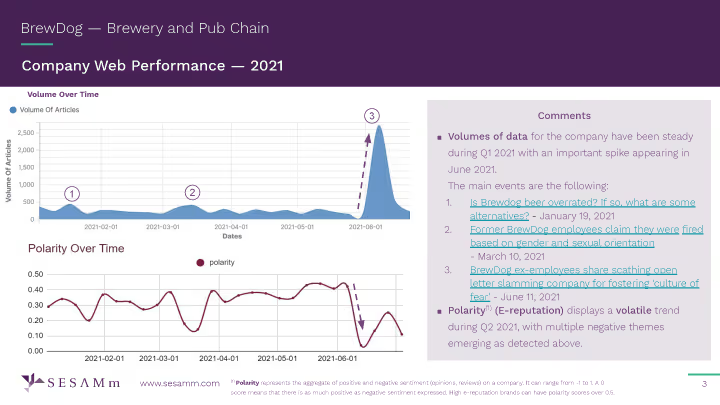
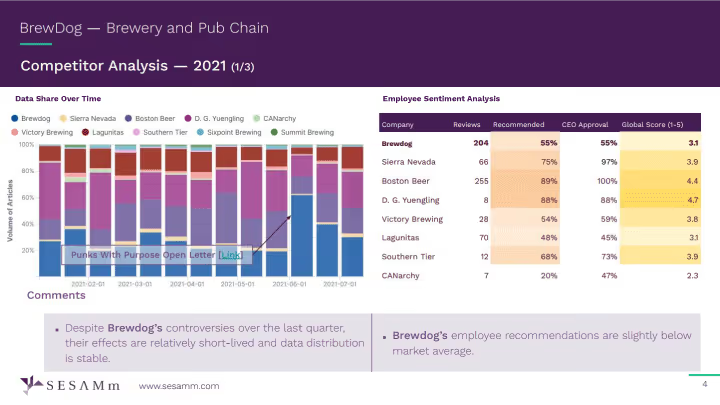
The challenge was getting investment professionals to buy into the value of alternative data for private companies, so SESAMm condensed everything into easily-digestible reports. They included time-series and charts measuring companies on a variety of key metrics versus their peers, including ESG risk, e-reputation, competitive positioning, sentiment, positive and negative themes and other critical KPIs.
Fig 1. An Example of one of SESAMm’s deal slides, in this case for brewery Brewdog (Not a Carlyle portfolio company).
By regularly presenting SESAMm’s analytics reports to investment committees, Sylvain and Matt hoped to gradually convince deal teams that alternative data could have a positive impact on the investment process.
“It was about sharing the data in the form of slides directly with deal teams in a way that was automated on our side but easily consumable as part of the pre-deal decision process”, said Forté.
“We saw the need to convince people and show, time after time, that it really works, that this data is really valuable and can give an edge”, added Forté.
Fig 2. A deal slide showing competitor analysis.
“In some instances it helped us to not make investments or avoid allocating resources to things that were marginal or moving in the wrong direction, and that was really valuable”, said Anderson.
To further prove the value of the data, Matt asked Sylvain to create analytics reports on a selection of Carlyle’s historical target companies. The idea was to see if SESAMm’s scores and analytics were predictive of the deal outcome, whether positive or negative.
“If we put a number on how positive SESAMm feels about some of these deals between one and ten, with one being, ‘avoid at all costs’ , and ten, ‘go for it’, what would it have told us?”, said Anderson.
After running the back test, the results showed a clear correlation between SESAMm’s analysis, and the deals that performed well and those that fell through.
“Looking at the results, I think that people would have really paused an investment committee around some of the conclusions”, commented Anderson.
“Having a view of the themes being surfaced, the plateaus in certain trends, and the sentiment charts heading in a negative direction was eye-opening for our leaders and deal teams – because they had to actually live through those deals. So seeing that kind of data, and what it can help you avoid was really insightful.” Says Anderson.
Ultimately, the integration of SESAMm’s analytics reports into Carlyle’s investment process was so successful that they were rolled out across all global investment teams. The two companies have developed a strong partnership based on the proven value of alternative data in the private equity investment process.
To find out how SESAMm can support your investment decision-making, to request a demo or for any other questions regarding our data do not hesitate to contact info@sesamm.com.
The physical infrastructure powering the AI boom (the data centers that house it, and the hardware that runs it) has become one of the most ESG-exposed sectors in the global economy. As demand for computing accelerates, so does the scrutiny on the companies enabling it.
This scorecard examines three major players across the AI infrastructure stack: Equinix and Digital Realty, two of the world's largest data center operators, and Supermicro, a leading manufacturer of high-performance AI server hardware. Despite their different roles, all three are navigating the same storm: a convergence of governance failures, environmental friction, and national security risk that is reshaping how investors, regulators, and communities assess the sector.
Our analysis reveals three defining pressure points: governance failures spanning accounting manipulation, board instability, and fraud; environmental and social friction from community opposition, resource strain, and safety violations; and national security exposure through data breaches, export control violations, and supply chain risk.
Together, these risks represent a fundamental shift for the sector. ESG in AI infrastructure is no longer about carbon reporting - it is about fiduciary integrity, operational transparency, and the social license to keep building.
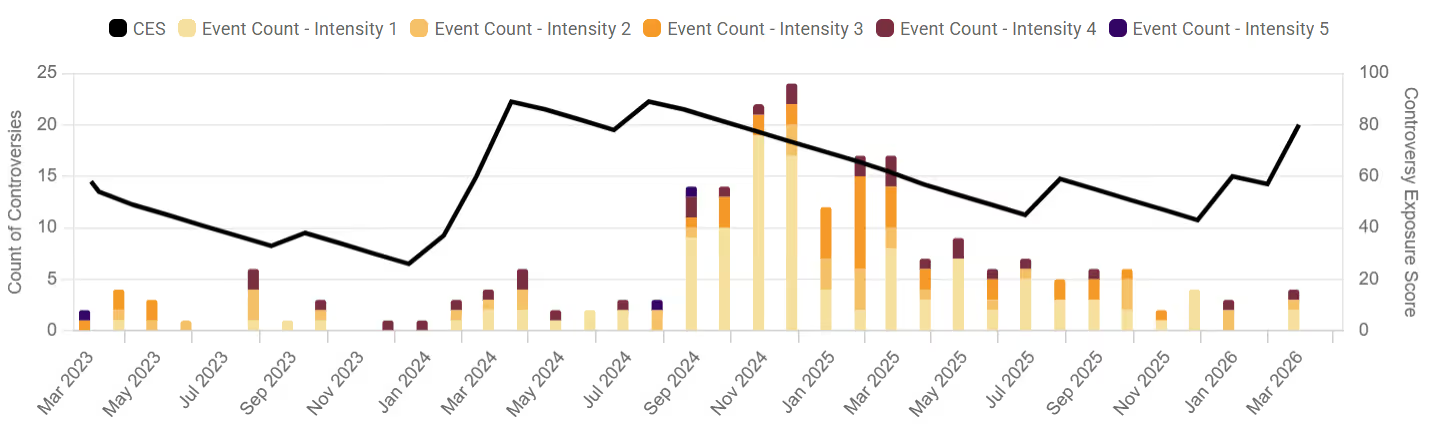
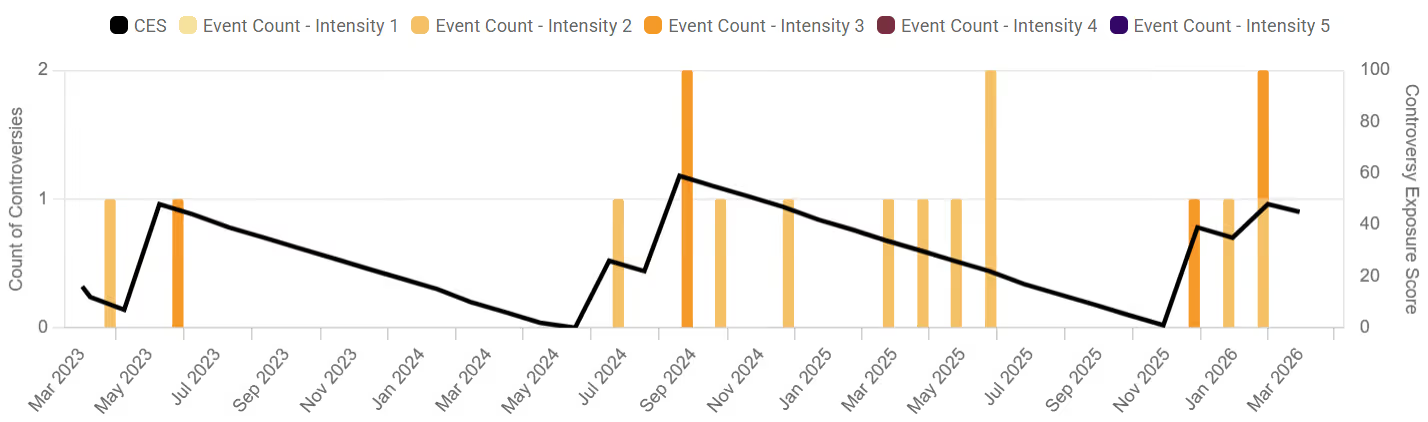
With a controversy exposure score (CES) of 80/100, Supermicro’s ESG profile is dominated by extreme governance risks centered on systemic accounting failures and geopolitical compliance breaches. The company is currently battling a U.S. Justice Department probe, Nasdaq delisting threats, and a series of securities fraud lawsuits following a 2024 accounting scandal that forced the search for a new CFO and echoed a prior $17.5 million SEC fine from 2020.
Beyond financial integrity, the firm faces severe national security scrutiny over the alleged smuggling of restricted Nvidia AI chips to China, alongside 2025 investigations into "spy chips," unremovable motherboard malware, and multiple patent infringement claims from competitors like AMD and Lenovo. Socially, the company’s risk is compounded by a 2025 whistleblower retaliation suit and labor rights violations involving Filipino workers at its semiconductor supply chain partners, as well as multiple OSHA safety penalties for workplace hazards.
Equinix: Accounting Manipulation & the AI Infrastructure Backlash
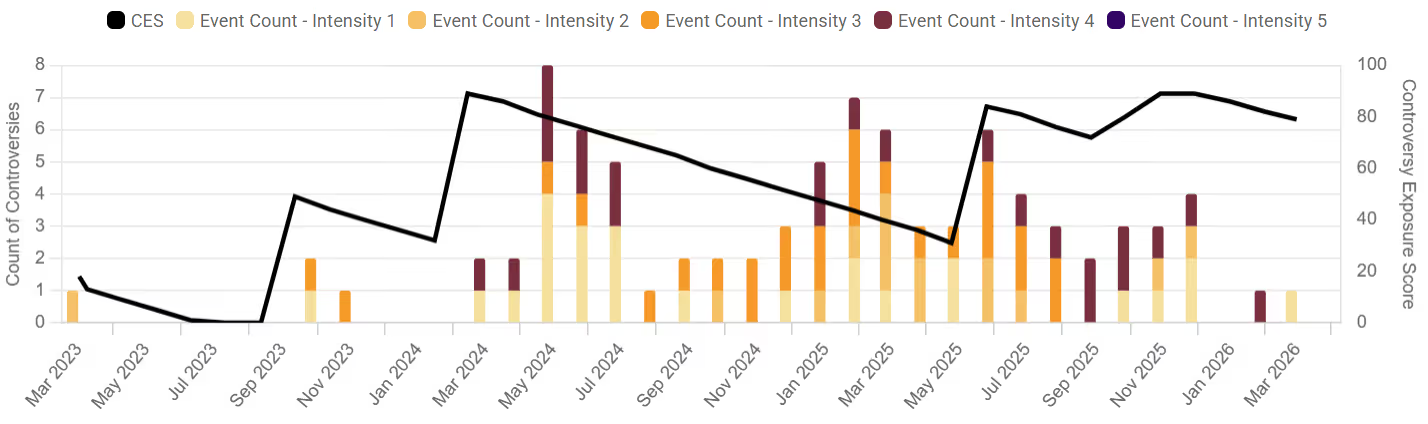
Similarly, Equinix’s CES of 79/100 is defined by a volatile combination of intensifying community opposition, environmental resource strain, and severe governance scrutiny. Socially and environmentally, the company faces a "Global AI Arms Race" backlash, where massive 340-acre proposals on local farmland in Minooka and "green belt" developments in South Mimms have sparked significant resident opposition over air pollution and traffic, while regulators in Dublin have begun blocking gas-powered facilities that violate national climate targets. These operational hurdles are compounded by a lack of transparency regarding massive water consumption and a series of high-profile safety and security failures, including data center fires in São Paulo and Madrid and a recurring "cybersecurity blind spot" in building systems. On the governance front, Equinix is navigating a severe trust deficit following a $41.5 million settlement over allegations of "major accounting manipulations" and the systematic over-selling of power capacity.
Digital Realty: Board Instability, Gas Leaks & Cybersecurity Breaches
Although it has a lower CES of 48/100, Digital Realty’s ESG profile is defined by governance instability and intensifying environmental friction in key urban hubs. The abrupt 2022 termination of its CEO and the 2023 resignation of its Chairman, who alleged bias against female directors, highlight deep-seated board-level conflicts, further exacerbated by 2026 investigations into director bias and a $3.4 million loss of tax breaks in Hillsboro.
Environmentally, the company faces formal legal notices in Marseille over fluorinated gas leaks and "imminent dangers to health," as well as noise complaints in Chicago and a 2024 fire in Singapore. Socially, the firm is navigating a Biometric Information Privacy Act (BIPA) lawsuit over scanning workers' fingerprints without consent, a major 2025 "Salt Typhoon" hacking breach, and mounting federal scrutiny over the industry's role in driving up local electricity and water costs.
The ESG challenges facing AI infrastructure operators are no longer peripheral concerns; they have become central to the sector's long-term viability. As the cases of Equinix, Supermicro, and Digital Realty illustrate, the consequences of their unchecked growth range from community backlash and environmental violations to governance failures and national security breaches. The AI infrastructure industry stands at an inflection point: continued expansion without proportional investment in transparency, accountability, and sustainability risks eroding stakeholder trust, inviting heavier regulation, and ultimately undermining the very infrastructure it seeks to build.
Stay ahead with the latest in ESG and AI intelligence
Join our mailing list to receive new reports, event invites, and updates from SESAMm directly to your inbox.

-converti-depuis-png.avif)


.avif)
-converti-depuis-png.avif)


.png)