EthiFinance and SESAMm join forces to detect ESG controversies on SMEs
December 16, 2021
•
5 mins read
PARIS, December 16, 2021
SESAMm, an alternative data specialist at the forefront of AI-based text analytics, and EthiFinance, a non-financial analysis and consulting agency with expertise in sustainable development, are now working together to launch a new unique service: Identifying and scoring ESG controversies on European Small & Midsize Enterprises (SMEs).
When dealing with SMEs, a common issue with traditional data providers and rating agencies is the lack of coverage. Information gaps and opacity about a company can negatively affect asset managers in their investment decisions.
EthiFinance possesses strong expertise in rating SMEs – both listed and private – for the purpose of portfolio due diligence and monitoring. SESAMm’s TextReveal® tool leverages Natural Language Processing (NLP) to analyze more than 16 billion online articles and messages to track ESG topics.
“We have been working with SESAMm for months and have now reached a stage where we can deliver quality and depth of results needed to create reliable and relevant ESG alerts.”, shares Xavier Leroy, Head of Investor Services from EthiFinance “Our teams of ESG analysts have enhanced and refined these alerts for controversies into our methodology, thus ensuring value to our clients”.
Controversy detections are notoriously difficult to assess and evaluate properly, be it the language barrier, lack of data, or difficulty for machines to work with ambiguity. The democratization of artificial intelligence and data science, the exponential growth of data, and wider access to more computing power have provided a fertile ground for new solutions to address this issue.
“Natural Language Processing is a game-changer, especially when working on ESG. Combined with alternative data, it helps us crunch billions of articles in dozens of languages and detect controversies very quickly” explains Sylvain Forté, CEO of SESAMm. “By fine-tuning TextReveal® with EthiFinance’s expertise in ESG, we are able to reach excellent results with 100% accuracy on the detection of critical controversies.”
SESAMm’s data and tools are leveraged globally by asset managers like The Carlyle Group, to conduct ESG studies for the purpose of due diligence, company analysis, and risk management. The partnership with EthiFinance breaks new ground thanks to its unique expertise in sustainability, ESG know-how, and very specific focus on European midsized companies.
SESAMm and EthiFinance have also developed a specific virality indicator to help assess how ESG controversies are spreading on the web. “This technological edge relies on an enormous amount of data which we can access through SESAMm’s platform,” shares Leroy.
A worldwide scandal, significantly impacting a company’s market price and its ESG scoring, can start from just one article or post, sometimes in a very niche community. SESAMm’s data lake, with its billions of articles and documents, serves as a real-time curated proxy of the internet enabling the timely detection of such scandals and the subsequent insights.
“This level of speed and depth of information not only represents a headstart when it comes to the competition but also a safety-net for asset managers, looking to monitor and manage their portfolio” confides Forté. “This innovative approach can be applied to other regions, Europe is only a starting point.”
The two companies are now working together to expand this innovative approach to listed companies across Europe.
About EthiFinance
Founded in 2004, EthiFinance is a non-financial analysis and consulting agency that supports its clients in managing risks and opportunities related to sustainable development.
EthiFinance develops services tailor-made to meet the specific needs of its clients, including investors, banks, companies and not-for-profit organizations.
Since 2017, EthiFinance has been working closely with Spread Research, a French financial rating agency (registered with ESMA) and independent credit research provider. The two companies are now part of the Qivalio Group.
Qivalio is an innovative European group providing rating, research, and consulting services in the field of sustainable finance. The Group provides solutions for investors, companies and organizations to address the challenges raised by financing as well as social and environmental transformations.
SESAMm (www.sesamm.com) is an innovative company specializing in alternative data and artificial intelligence for investment. Its team builds analytics and indicators, such as Sentiment Analytics, ESG Indicators, and investment signals by analyzing billions of web articles and messages using natural language processing and machine learning. With its NLP platform TextReveal®, SESAMm addresses the entire value chain of alpha research. With 6 offices including Paris, New York, London, and Tokyo, SESAMm works with major hedge funds, banks, private equity firms, corporate and asset management clients around the world for fundamental or quantitative investment use cases, market analysis and competitive insights.
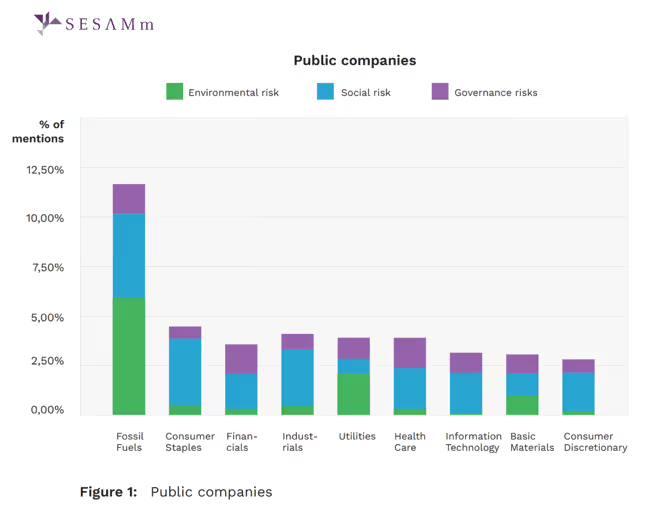
Public companies, due to their large market presence and mandatory financial disclosures, often receive a lot of attention on the Internet. Their operations and regulatory obligations put them under a media spotlight, which amplifies any ESG controversies they face in public and online discussions. In contrast, private companies operate with a higher degree of discretion and are generally less exposed to intense external scrutiny.
Although private companies are less visible to the public, there is still an underlying interest and, more importantly, a need to understand the nature of ESG controversies they face. Are these controversies different in any way, such as being less significant or having unique characteristics? This raises questions about whether certain types of risks are more susceptible to controversies in the private sector. When comparing prominent public companies with their private counterparts, do controversies differ within the same industry?
ESG Overview
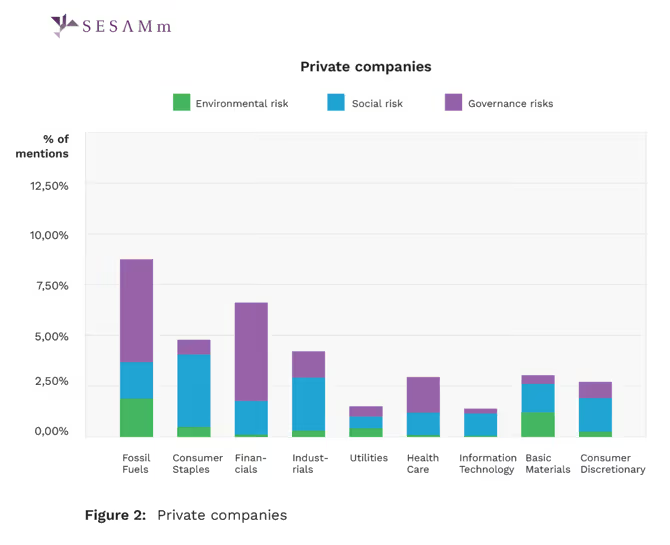
In exploring the ESG landscape, a compelling comparison emerges between private and public companies. Public companies predominantly grapple with environmental and social risks. On the other hand, private companies, especially in the financial sector, are more frequently embroiled in governance-related controversies. This section highlights the ESG challenges each sector faces and the varying degrees of visibility and scrutiny these issues receive in the public and private domains.
Within the fossil fuel industry, a distinct difference emerges: public companies are predominantly associated with environmental and social risks, while private companies face more governance-related issues.
This disparity is partly due to the more visible and significant environmental impacts often linked to public companies, such as BP's gasoline spill cleanup in Washington state and the devastating impacts of Shell's oil spills in Nigeria. Public companies also tend to experience more social issues, like employee strikes, protests, and human rights infringements.
In contrast, private companies, particularly in the financial sector, show a higher frequency of governance risks. Examples include controversies surrounding FTX and Binance, highlighting issues like corruption, substantial fines, and money laundering allegations. This trend mirrors the earlier observation in the fossil fuel sector, where private companies, despite fewer controversies, experience more pronounced impacts when significant ESG issues arise.
It's noteworthy that private sector controversies, due to their relatively lower level of scrutiny, can gain significant traction and visibility when they do surface. This differs from the public sector, where the constant exposure to ESG risks leads to more frequent detection but not necessarily the same level of virality for each event. Public companies regularly encounter ESG risks, but the prevalence of such issues in their operations means that individual events may not always attain widespread attention.
ESG Deep-dive
Environmental risks deep-dive
Looking at environmental risks, public companies often face significant issues like emissions, climate change, and water pollution, while private firms encounter these challenges on a smaller scale and with different focuses, such as animal cruelty and environmental strategy.
In the Consumer Discretionary sector, both types of companies encounter environmental risks, but the nature of these risks differs. Public companies, particularly in the automotive industry, are often involved in incidents like fires and lawsuits related to harmful emissions. Private companies, while also dealing with fires and automotive issues, face additional problems like animal cruelty allegations in retail.
The Fossil Fuel sector shows a clear distinction in ESG issues. Public companies frequently face controversies related to climate change and atmospheric pollution, often involved in significant incidents like legal actions and fines. Private companies, on the other hand, are more focused on general environmental strategy, though their controversies tend to be of a smaller scale.
In Utilities, public companies are more involved in water pollution controversies, with significant incidents like fines for unlawful water extraction making headlines. Private companies, while also dealing with water pollution, do so less frequently and on a smaller scale.
The Healthcare sector, particularly in public companies, shows a focus on biodiversity-related controversies. Issues like animal cruelty in biotechnology are prominent.
Overall, public companies tend to be at the center of more significant and high-profile environmental controversies, particularly in sectors like fossil fuels, utilities, and financials. Private companies, while also facing environmental and ethical challenges, often do so on a different scale, indicating different approaches and impacts in their management.
Social risks deep-dive
Public companies across sectors like Consumer Discretionary, IT, Financials, and Fossil Fuels frequently confront a broad spectrum of social risks, including human rights breaches and human capital concerns. Private companies, while also facing these issues, tend to have a more focused approach, with specific concerns in areas like telecommunications, social media, and health & safety. This indicates differing strategies and impacts on their social management.
Public companies in the Consumer Discretionary sector struggle with a substantial volume of data related to human rights breaches and human capital issues. These challenges are widespread across various industries, with incidents in telecommunications, social media, and the automobile industry being particularly noteworthy. In contrast, private companies in this sector primarily confront human rights breaches, with a significant focus on issues within telecommunications and social media. This contrast indicates a more specialized concern for private companies in this sector.
Both public and private companies in the Information Technology sector experience significant risks related to fundamental human rights breaches and human capital concerns. However, public companies, particularly those in software and hardware, are more frequently linked to these issues. Private companies, while also implicated, tend to have a different focus within the same concerns.
In the Financial world, public companies exhibit a pronounced focus on human capital issues, surpassing their private counterparts. This focus spans the banking and insurance industries with notable instances of discriminatory dismissals and wage disputes. Additionally, public companies in this sector also navigate complexities related to human rights and customer relations, including racial discrimination lawsuits and data breaches. Conversely, private financial companies face significant customer relations issues, especially highlighted in financial services, and human rights concerns, such as charges against Binance for child pornography and terrorism financing.
Private companies in the Consumer Staples sector lead in mentions related to health and safety, particularly in the Food/Beverage and tobacco manufacturing industry. These references often involve serious incidents like industrial accidents and lapses in COVID protocols. Additionally, customer relations issues are slightly more pronounced in private companies compared to their public counterparts. Public companies, meanwhile, have a slightly higher proportion of mentions related to human rights risks, including labor law violations and privacy concerns.
Public companies in the Fossil Fuel sector are notable for their focus on human capital issues, with references to industry-wide strikes and layoffs. In contrast, private companies in this sector demonstrate a significant focus on human rights issues, as exemplified by the case of the ex-Citgo CEO.
A divergence is seen in the Basic Materials sector, where private companies face more prevalent human capital issues, particularly in mining & metals and the chemical industry. Public companies, on the other hand, encounter a higher proportion of human rights breaches, including harassment lawsuits and violations of indigenous rights.
In summary, public companies across these sectors tend to face a wider range of social controversies, encompassing both human rights and human capital issues, often on a larger and more varied scale. Private companies, while also dealing with similar challenges, tend to do so with a more specific focus, suggesting different approaches and impacts in their social management strategies.
Governance risks deep-dive
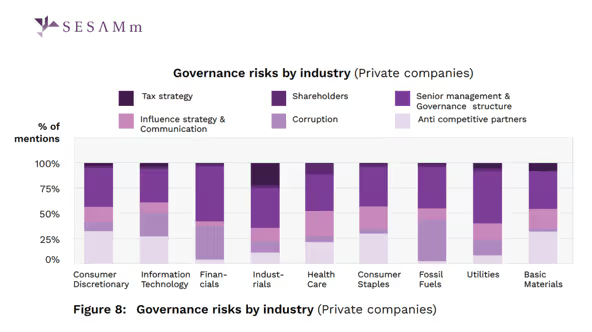
In scrutinizing governance, we found that public firms face risks in management and governance, while private entities encounter issues like anti-competitive practices and corruption. Financial and Industrial sectors see public companies dealing with strategy and compliance challenges, whereas private firms face tax strategy risks. Overall, public companies are more involved in high-profile governance controversies, while private companies focus on specific areas like tax and anti-competitive behavior.
In the Consumer Discretionary sector, governance issues vary notably between public and private entities. Public companies, particularly in telecommunications and Social Media, encounter significant risks in senior management and governance structures, evidenced by legal actions and allegations against companies like Verizon and Ericsson. Conversely, private companies in Media & Entertainment are more embroiled in anti-competitive practices, as highlighted by Epic Games' antitrust trial against Google.
Information Technology presents a clear distinction. Private companies are frequently linked to substantial corruption issues, with the FTX scandal serving as a prime example. Public companies, on the other hand, are more inclined towards engaging in anti-competitive practices, as seen in the cases of technology giants like Google and Microsoft facing antitrust lawsuits and scrutiny for monopolistic behavior.
In the Financials sector, governance risks are predominantly tied to senior management and corporate structure. Public companies face challenges primarily in their influence on strategy and communication, with notable instances including BlackRock's lawsuit over an alleged misleading ESG strategy. Meanwhile, prominent financial services companies like PayPal have faced regulatory scrutiny, further illustrating the sector's vulnerabilities.
The Industrials sector shows similar trends among public and private companies but with a specific emphasis on tax strategy risks in private firms. This is exemplified by the PwC tax leaks scandal, indicating the deep impact of governance issues in private entities.
In the Fossil Fuels sector, corruption issues are more pronounced, especially among privately-held companies. Incidents such as the lawsuit against Citgo and the Amec bribery case settlement underscore the sector's susceptibility to governance-related controversies.
Lastly, the Utilities sector shows a higher prevalence of corruption among public companies, as demonstrated by the investigation into FirstEnergy's public corruption scandal and subsequent legal actions.
Overall, governance risks manifest differently in public and private companies across various sectors. Public companies are often at the forefront of high-profile governance controversies, dealing with issues related to management, strategy, and regulatory compliance. Private companies, while also grappling with governance challenges, tend to face issues like anti-competitive practices and tax strategy risks, reflecting a variance in operational focus and impact on governance risk management.
Conclusion
By diving into the complexities of ESG, both public and private sectors have a unique opportunity not only to enhance their financial performance but also to drive positive societal and environmental impacts. As we further examine corporate controversies and gain a deeper understanding of the nuances within the ESG landscape, it becomes increasingly clear that a commitment to these principles is essential for long-term success and global well-being. Our journey highlights the tremendous potential for positive change when corporations embrace the pressing demands of today's ESG landscape, paving the way for a more sustainable, equitable, and governance-focused world.
Download the full report to discover how different sectors navigate regulatory pressures and sustainability challenges with real-world examples to guide your strategy.
Reach out to SESAMm
TextReveal’s web data analysis of over five million public and private companies is essential for keeping tabs on ESG investment risks. To learn more about how you can analyze web data or to request a demo, reach out to one of our representatives.
Geopolitical events can quickly create ripple effects across global trade routes, supply chains, and corporate operations. For investors, commercial banks, insurers, and other organizations, identifying which portfolio companies or counterparties are exposed to these developments is a real challenge, especially when monitoring large universes of public and private companies.
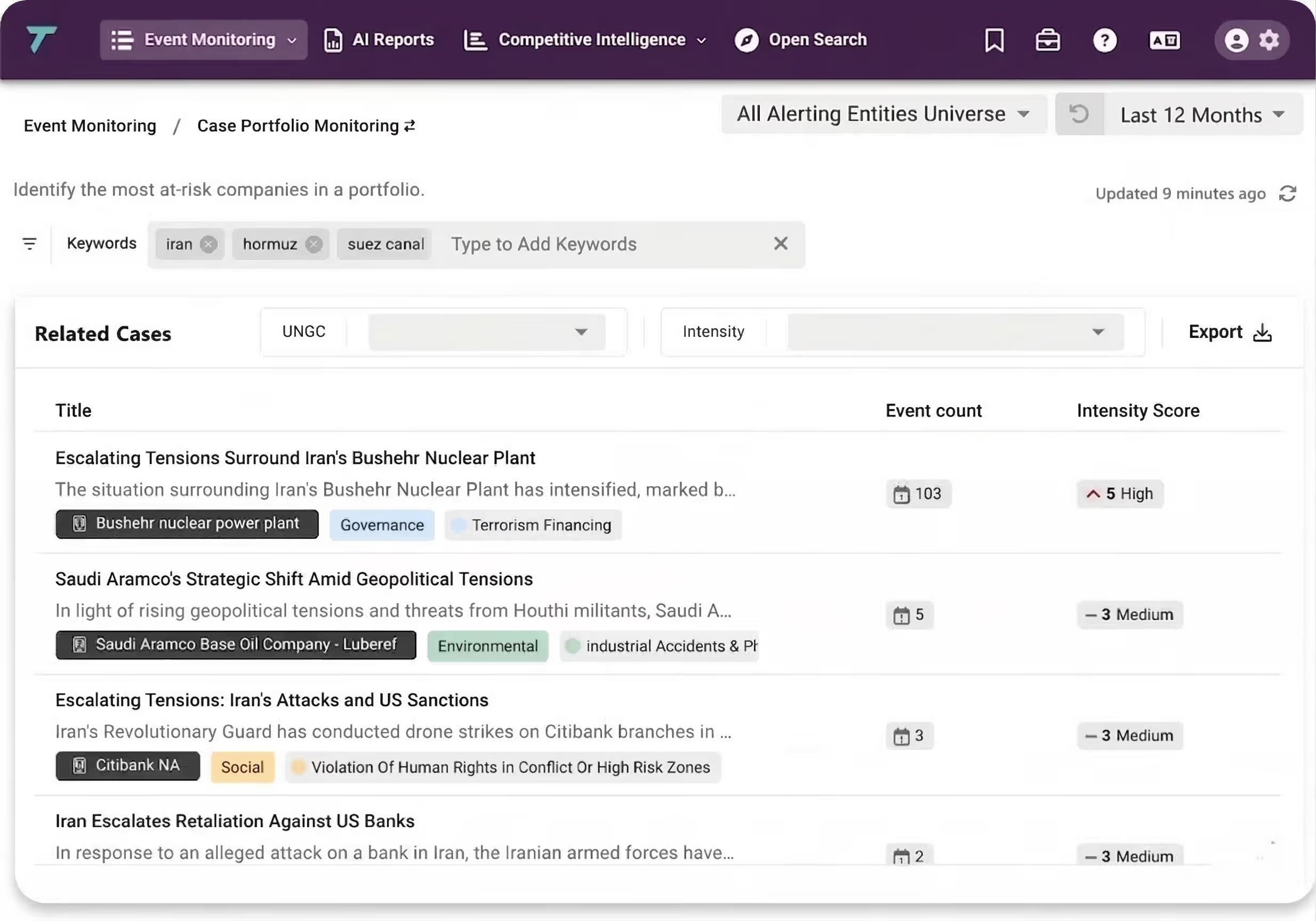
SESAMm's thematic keyword search enables analysts to quickly discover controversies related to specific topics or emerging events across thousands of companies. This functionality allows them to filter results by theme without having to manually review large volumes of news and event data.
This functionality is particularly valuable when monitoring rapidly evolving geopolitical situations. To assess exposure related to the current conflict involving Iran, for example, users can run a thematic search across a broad company universe using keywords such as: Iran, Hormuz, and Suez Canal.
These keywords capture references to critical geopolitical locations and maritime chokepoints that may affect global shipping routes, energy markets, cybersecurity risks, and broader operational disruptions. Keywords can be tailored to any geopolitical scenario. Users can start broad and refine as the situation develops, or combine location-based terms with event-specific language to narrow results to the most relevant controversies.
When applied across a large company universe, the dashboard surfaces a range of related controversies ranked by severity. From high-intensity cases like escalating tensions around Iran's Bushehr Nuclear Plant, to medium-intensity signals such as retaliatory actions targeting US banks, offering clear visibility into which companies may face the highest risks.
Zooming In on Company-Level Exposure: The Example of Amazon
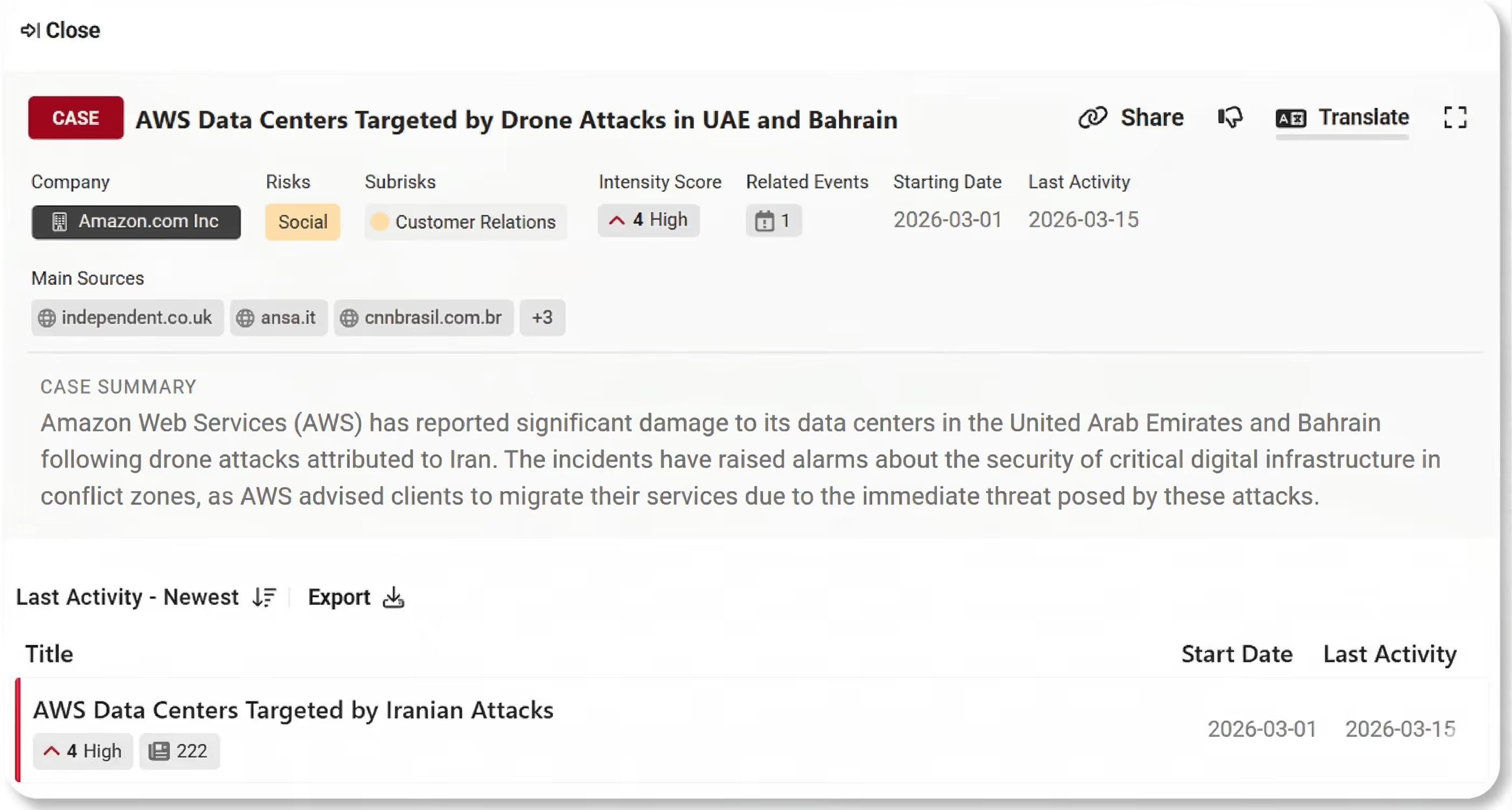
Alternatively, analysts can also use the same keyword approach to filter controversies associated with a specific company. This helps determine whether a particular portfolio holding, borrower, or insured entity may be affected by the same geopolitical developments.
Applying this search to Amazon, for instance, surfaces a high-intensity case titled "AWS Data Centers Targeted by Drone Attacks in UAE and Bahrain." The case, rated 4/5 in severity and drawing on over 200 related news events, describes significant damage to AWS infrastructure in the UAE and Bahrain following attacks attributed to Iran, prompting AWS to advise clients to migrate services.
This kind of signal carries real weight for financial institutions. For investors, it highlights operational and geopolitical risks affecting a major technology provider. For banks and insurers, it may point to infrastructure vulnerabilities, operational disruption risks, or broader geopolitical tensions affecting clients' critical systems.
From Geopolitical Events to Portfolio Risk Signals
Geopolitical events rarely affect just one company. For financial institutions monitoring thousands of entities, they create complex, evolving risk exposures across entire portfolios, lending books, and insurance coverage.
Thematic keyword searches help bridge this gap, connecting macro-level developments to company-level controversies quickly and systematically. By combining automated controversy detection with flexible search capabilities, analysts can rapidly identify relevant signals, investigate affected companies, and prioritize follow-up work.
In practice, this means moving faster from emerging geopolitical events to actionable risk insights. Whether the trigger is a conflict in the Middle East, sanctions on a major economy, or rising tensions around a critical shipping lane, the same approach applies, giving investors, banks, and insurers a systematic way to stay ahead of geopolitical risk across their entire portfolio.
U.S. banks have dramatically increased fossil fuel financing in a notable contradiction with the narrative established after COP26. According to the 2025 Banking on Climate Chaos report, compiled by the Rainforest Action Network and its partners, global banks significantly scaled up their support for the fossil fuel industry in 2024, with a staggering $162 billion increase, pushing total financing to $869 billion.
U.S. institutions are at the forefront of this backslide. JPMorgan Chase, Bank of America, Citigroup, and Wells Fargo accounted for one-third of global fossil fuel financing, approximately $289 billion. JPMorgan alone provided $53.5 billion, a 35% rise in funding that placed it at the top of the global list. Bank of America and Citi each contributed over $44 billion, while Barclays led among European banks, increasing its lending by 55% ($35.4 billion).
Why the Sudden Surge?
This resurgence coincides with the political shift in the U.S. following the Trump administration’s departure from the Paris Agreement and weakened climate policies. In parallel, several major banks have exited the Net-Zero Banking Alliance, prompting environmental groups to accuse them of “walking away from climate commitments.”
What This Means for Climate Risk
The spike in fossil fuel financing carries profound implications. First, it increases banks’ exposure to climate liability risk. A Financial Times analysis cites growing concerns that banks may face litigation due to their financing practices in relation to climate change. Second, funneling money back into carbon-intensive sectors undermines global efforts to limit warming to 1.5 °C; long-term goals rest on systemic transitions away from fossil fuels.
Public Relations vs. Funding Reality
Banks have defended their actions by emphasizing fossil fuels and clean energy investments. JPMorgan, for instance, claims it invested $1.29 in green energy for every dollar in fossil fuel financing. Nevertheless, critics argue that green financing claims ring hollow when fossil fuel funding is simultaneously ramping up.
Rebuilding Credibility in Sustainable Finance
The disconnect between words and actions is a challenge for the financial sector. With growing scrutiny on climate claims, stakeholders demand greater transparency and accountability. Greenwashing has evolved from a reputational issue to a regulatory one, impacting trust and market access. Banks that emphasize climate commitments while increasing fossil fuel investments risk losing credibility. To maintain stakeholder confidence, a genuine transition to clean energy financing is crucial. Trust now hinges on consistent actions rather than just marketing promises, allowing us to build a sustainable future together.
SESAMm’s AI Technology Reveals ESG Insights
Discover unparalleled insights into ESG controversies, risks, and opportunities across industries. Learn more about how SESAMm can help you analyze millions of private and public companies using AI-powered text analysis tools.
Stay ahead with the latest in ESG and AI intelligence
Join our mailing list to receive new reports, event invites, and updates from SESAMm directly to your inbox.



.avif)





.png)