Discover our whitepaper highlighting the power of web data on predictive analytics for the financial industry: how alternative data strengthen the market, the challenges of collecting web data and case studies presenting different approaches, such as ESG, showcasing TextReveal features and capacities for investment purposes.
In the past, investment management institutions relied mostly on traditional data to gain an edge in investing. Traditional data ranges from SEC filings to earnings reports and pricing information any type of data produced by the company itself. The rise of the digital age, however, has opened up new sources of data for investors beyond the scope of traditional data. The seemingly infinite scope of alternative data includes data produced from credit cards, satellites, social media and perhaps most importantly the web.
With the additional integration of alternative data, investment management institutions and hedge funds in particular that once relied only on traditional data now have an edge in predicting the rise and fall of the markets. As increasing numbers of financial institutions jump on the bandwagon of alternative data, spending on alternative data by trading and asset management firms is set to exceed $7 billion by 2020.[1]
What was only a few years ago a question of when institutions should start using data has shifted to the question of howthey can organize and structure these mostly unstructured datasets. And with 4 billion webpages and 1.2 million terabytes of data on the internet estimated to be generated globally by 2025, there is no shortage of web data to sort through. As increasing numbers of investment management institutions incorporate alternative web data into their predictive algorithms, it will change the face of investment as we know it.
This white paper is intended to be a guide for investment management (IMs) institutions to better understand how alternative web data is quickly becoming an essential component for generating alpha and mitigating investment risk. In addition, it explores different models of web data crawlers and what IMs need to look for as they incorporate alternative web data into their predictive analytics models.
Section 1: Beating the Market with Alternative Web Data
“Your company’s biggest database isn’t your transaction, CRM, ERP or other internal database. Rather it’s the Web itself…Treat the Internet itself as your organization’s largest data source.” — Gartner
As previously mentioned, alternative data includes any type of data that is beyond the scope of traditional data: satellite imagery, social media data, and web data (which includes news sites, blogs, discussions and forums) along with credit card data. Alternative web data, which falls under the broader category of big data, is typically unstructured and demands a process for structuring it in order to deliver insights.
[1]
Alternative data for investment decisions: Today’s innovation could be tomorrow’s requirement.
Deloitte Center for Financial Services. 2017.
Tokio Marine & Nichido Fire Insurance Co., Ltd. (TMNF) tapped SESAMm for a joint research venture to predict future stock price movements. SESAMm provided various NLP indicators, such as digital sentiment calculated for single stocks or indices (seen as an entity), as well as its experience in machine learning to work on this task.
These studies concluded with two key findings:
Relationships exist between NLP data from news and social networking sites and investor behavior under specific circumstances. Researchers and investors can use the “digital sentiment” as an indicator of investor sentiment to anticipate price changes. They can then use this anticipation for a specific company or, more generally, any entity that can be isolated in a text (like an index).
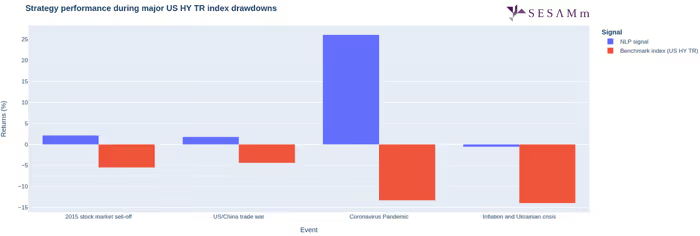
By focusing on more stressed situations, like the 2015 market sell-off, the U.S.-China trade war, the coronavirus pandemic, and the start of the Ukrainian crisis, we could show that digital sentiment is beneficial in times of significant stress in the market. Digital sentiment more accurately reflects the stress level in these complicated situations. It, therefore, helps to predict stock price movements more accurately in these stressed cases, providing a tail hedge. It’s not biased by an excess of confidence linked to the “central banks put” for instance.
Providing safety and security since 1879
Tokio Marine Insurance Company was first established in 1879. Over the years, it has added products and services, acquired other businesses, and merged with other companies to eventually become Tokio Marine & Nichido Fire Insurance Co., Ltd. Commonly called Tokio Marine Nichido today, the company is a property and casualty insurance subsidiary of Tokio Marine Holdings, the largest non-mutual private insurance group in Japan. Its products and services provide safety and security to its clients and partners, contributing to more fulfilling lifestyles and business development.
One of the company’s philosophies is to be a good corporate citizen and fulfill its social responsibilities, including protecting the global environment, promoting human rights, creating a responsible working environment, and contributing to society and individual local communities. Recently, the Emperor of Japan awarded Tokio Marine Holdings, Inc. the Medal with Dark Blue Ribbon for donating to the Japan Student Services Organization to support students who face financial difficulty during the
COVID-19 pandemic. Individuals, corporations, or organizations are awarded the Medal with Dark Blue Ribbon for their outstanding contributions to the public.
Transforming and accepting the challenge to grow
According to TMNF, “The business environment surrounding the insurance industry is changing at a faster pace than ever due to changes in demographics, advances in technologies, such as autonomous driving and AI, and longer-term trends, such as the intensification and frequent occurrence of natural disasters, as well as further progress in digitalization due to the COVID-19 pandemic.”
“The business environment surrounding the insurance industry is changing at a faster pace than ever…”
“While these changes in the business environment pose a threat, we consider them to be excellent opportunities for transformation and the creation of new value.” So they’ve adopted the concept, “Transformation (“X”) and Challenge to Growth 2023: Aiming to be the company most chosen for quality and its passion.” Ultimately, it strives to support customers and local communities in times of need while contributing to social responsibility. Five social issues that it will prioritize are:
Global climate change and the increase in natural disasters
The increased burden of long-term care and healthcare due to the aging of society and advances in medical technology
Technological innovation and its effects on the environment
Symbiotic society and responding to the novel coronavirus
Industrial infrastructure and how it supports economic growth and innovation
Leveraging a partner with the right technology
To secure and protect its clients’ assets while elevating social issues, Tokio Marine Nichido sought out an edge in the stock market. Under these circumstances, it was fortunate that TMNF discovered SESAMm in 2020 through the Plug and Play Japan program, a platform with an event that connects Japan to markets abroad. SESAMm had presented its NLP alternative data solution, TextReveal®, to which TMNF considered the platform for access to alternative data and sought collaboration with the SESAMm team for a research project.
“SESAMm has the technology to extract sentiment from news data with a neural network.” – Tokio Marine & Nichido Fire Insurance Co. Ltd representative
Extracting relations between NLP data and the financial market
In 2021, Tokio Marine Nichido Insurance began collaborating with SESAMm to develop an AI analytics model for alternative data. It models the effect of news and social networking data on investor behavior for stock and bond markets. In other words, it structures text information into knowledge usable by TMNF.
Monitor risks and topics
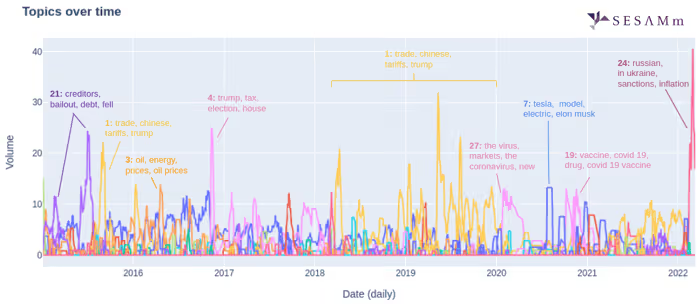
NLP data can improve the understanding of the market’s behavior by exhibiting the most important topics over time, with a direct indication of the importance of the topics through the text volume (Figure 1).
Figure 1: Automatic detection of the main topics in the U.S. market since 2015, thanks to topic modeling.
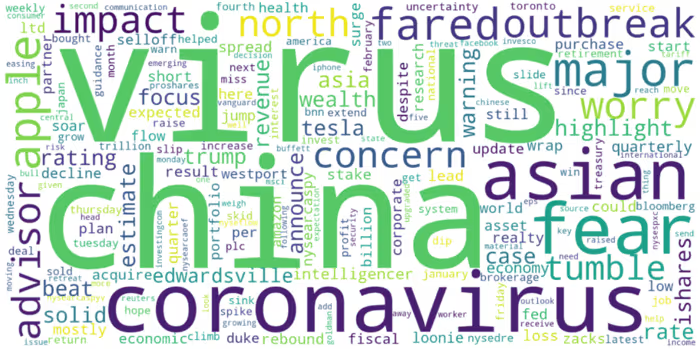
Researchers can also use it to focus on a specific topic or a certain period. For instance, a short analysis of the most frequent keywords in the press, which preceded the market fall during the COVID-19 pandemic, showed the significant predominance of pandemic-related terms (Figure 2).
Figure 2: Most frequent keywords in English S&P 500-related articles between 17 Jan. 2020 and 19 Feb. 2020.
Focusing on the equity market
NLP tools provide specific data, like sentiment, to get more detailed information at the company level and for many underlyings. Indicators for equity indices, for instance, can be calculated and provide a clean sentiment to monitor markets.
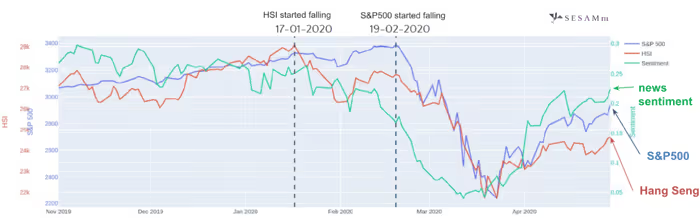
In many situations of stress over recent years, such sentiment proved to be an early indicator of the market’s future degradation. For example, there was a time lag of as long as a month between the time COVID-19 became the main news focus and the time it affected the U.S. stock market. By using SESAMm’s technology to analyze news data during this period, the team found that the U.S. digital sentiment had already deteriorated sharply before stock prices reacted (Figure 3).
Figure 3: In 2020, U.S. news sentiment falls ahead of the stock market in response to COVID-19 concerns.
This sentiment deterioration occurred because of the fear of the coronavirus’s spread’s effect on the global economy (see Figure 2). Even with an all-time high S&P 500, U.S. investors didn’t initially consider this risk. In comparison, HSI companies were closer to the coronavirus spread risk. So as a result, HSI investors reacted ahead of their U.S. counterparts. In other words, by using natural language data, it was possible to capture a risk overlooked by U.S. investors but related in the publicly available texts and take action ahead of the market deleveraging.
Generalizing the results to the credit market
Tokio Marine Nichido also expanded the scope of the research to U.S. high-yield bonds index trade. In the credit market, a high yield has a high beta, which makes its risk comparable to the equity market.
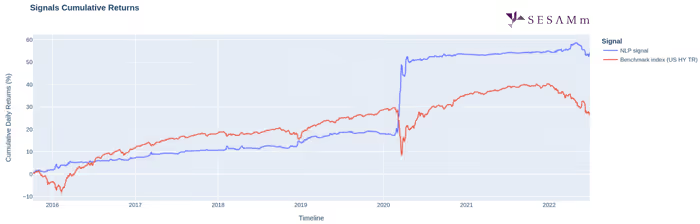
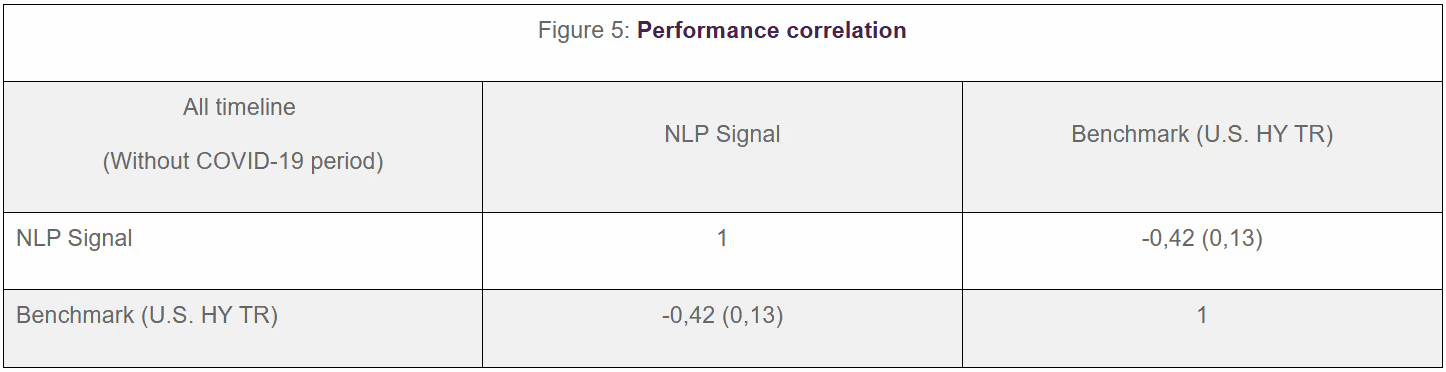
Research shows that, on a risk-adjusted basis, the NLP-data-built signal has a positive and consistent performance through the timeline compared to the U.S. HY T.R. index benchmark (Figure 4). Its performance has a low correlation with the index (Figure 5), so the sentiment is diversifying. It not only acts as a diversifier but delivers higher returns than the benchmark when the U.S. High Yield market sold off (Figure 6). As such, the NLP signal diversifies, hedges, and protects against adverse periods. It provides a mechanical pick-up in risk-adjusted return when running alongside traditional strategy.
Figure 4: An NLP-informed signal has positive and consistent performance. The volatility level is the same for both curves.
Figure 5: The NLP signal and market daily performances are de-correlated.
Figure 6: The NLP signal delivers higher performance during adverse periods.
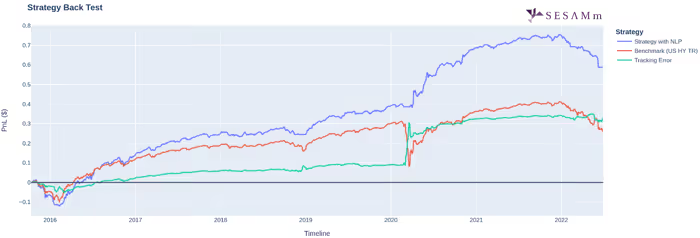
The NLP signal outperforms the index in realistic backtest conditions, including long allocation only, turnover constraints, and trading fees (Figure 7). The quantitative model integrates some macro indicators, but the previous NLP signal induces the main source of outperformance and risk mitigation.
Figure 7: An NLP-informed high-yield strategy outperforms the U.S. high-yield total return index.
TMNF is also applying the research to estimate the Fed’s stance—hawkish or dovish—using natural language data, too. It hypothesizes that the market will be focused on the Fed’s stance on interest rate hikes in the next few years.
“The model developed in collaboration with SESAMm is simple in structure, yet, it’s an orthodox and robust model that uses valid data as input.”
Summarizing the collaboration
In developing models, Tokio Marine Nichido believes it’s essential to consider “what data to consider” and to keep it simple. And TMNF achieved these tenets. The model developed in collaboration with SESAMm is simple in structure, yet, it’s an orthodox and robust model that uses valid data as input which is preferable to a risky over-fitting by increasing complexity.
Get in touch with SESAMm
To learn more about Tokio Marine Nichido’s case study or to request a TextReveal demo, reach out to us.
As global scrutiny of sustainability claims intensifies, the European Securities and Markets Authority (ESMA) is stepping up its regulatory game to combat greenwashing and strengthen investor trust. In a decisive move, ESMA is tightening rules around ESG fund labeling and expanding its oversight to include ESG ratings providers—ushering in a new era of accountability and transparency across the sustainable finance landscape.
Strengthening ESG Fund Labeling
In May 2024, the European Securities and Markets Authority (ESMA) introduced final guidelines regulating the use of ESG and sustainability-related terms in fund names. These rules respond to concerns that many investment products were using “green” or “sustainable” labels without sufficient alignment to actual portfolio practices—raising risks of greenwashing.
Following the publication of official translations in August 2024, the guidelines became effective on November 21, 2024. New funds must comply immediately, while existing funds have until May 21, 2025, to align. The rules require funds using ESG-related terms to ensure that at least 80% of their assets reflect stated environmental or social characteristics. Those using terms like “sustainable” or “impact” must also apply stricter exclusions, based on EU benchmarks.
The objective is to restore trust in sustainable investing by ensuring fund marketing reflects substance, not just strategy. These guidelines mark a move from self-declared ESG ambition to measurable regulatory alignment.
New Rules for ESG Ratings Providers
In May 2025, ESMA extended its oversight by publishing a draft set of Regulatory Technical Standards (RTS) to regulate ESG ratings providers under the EU’s new ESG Ratings Regulation, adopted in late 2024. These rules are now under public consultation until June 20, 2025.
The draft RTS introduces key requirements: ESG ratings providers operating in the EU must be authorized and supervised by ESMA. They must also publicly disclose their methodologies, data sources, and underlying assumptions—addressing long-standing concerns over opacity and inconsistency in the ESG ratings industry.
Additionally, the proposed framework imposes safeguards to prevent conflicts of interest, particularly where firms offer ratings and related services such as consulting or data sales. The goal is to raise the independence, reliability, and comparability standards across the ESG data ecosystem.
A Unified Push Against Greenwashing
These regulatory initiatives reflect ESMA’s growing focus on creating a more credible, harmonized ESG landscape. From product labeling to third-party assessments, the authority is closing loopholes that have allowed inconsistencies and misrepresentations to persist.
The message for asset managers and ratings firms is clear: ESG marketing is no longer a grey area. Regulators expect proof of substance behind sustainability claims. Whether naming a fund or issuing a rating, firms must demonstrate transparency, governance, and alignment with new EU standards.
ESMA’s efforts also solidify Europe’s leadership in ESG regulation. While other jurisdictions still debate voluntary disclosures, the EU is moving ahead with enforceable rules that are reshaping expectations for financial products and ESG analytics. As the consultation period closes and final rules are adopted, firms operating in the EU—or servicing EU clients—will need to prepare for closer scrutiny.
SESAMm’s AI Technology Reveals ESG Insights
Discover unparalleled insights into ESG controversies, risks, and opportunities across industries. Learn more about how SESAMm can help you analyze millions of private and public companies using AI-powered text analysis tools.
Imagine finding out you've run out of milk immediately after pouring a bowl of cereal. Or maybe realizing you don't have eggs while in the middle of baking a cake. We've all been there, and it's frustrating, to say the least. And this scene has been playing around the globe over the last couple of years for many foods and products. One day it's microchip shortages, and the next, it's baby formula.
Unfortunate as it is, it's one thing for consumers to cope with an empty car lot because of chip shortages. It's another to cope with a hungry infant because store shelves that once contained baby formula are now bare. For those parents and caretakers, their emotions are beyond feeling frustrated. They feel anger and panic, the sort of emotions that they share with their friends and colleagues on social media and forums. The kind of expression that can change the public's sentiment about a company, which in turn can move markets.
This Alternative Data Trends post will examine web data concerning the baby formula shortage. We'll analyze articles, social media, and forum conversations culminating in the U.S. crisis as the news reaches national exposure. We'll also highlight red flags investors could've seen had they monitored the situation with an AI-powered text analysis tool like SESAMm's TextReveal®.
Early warnings: When baby formula supplies began to run dry vs. when it became a national crisis
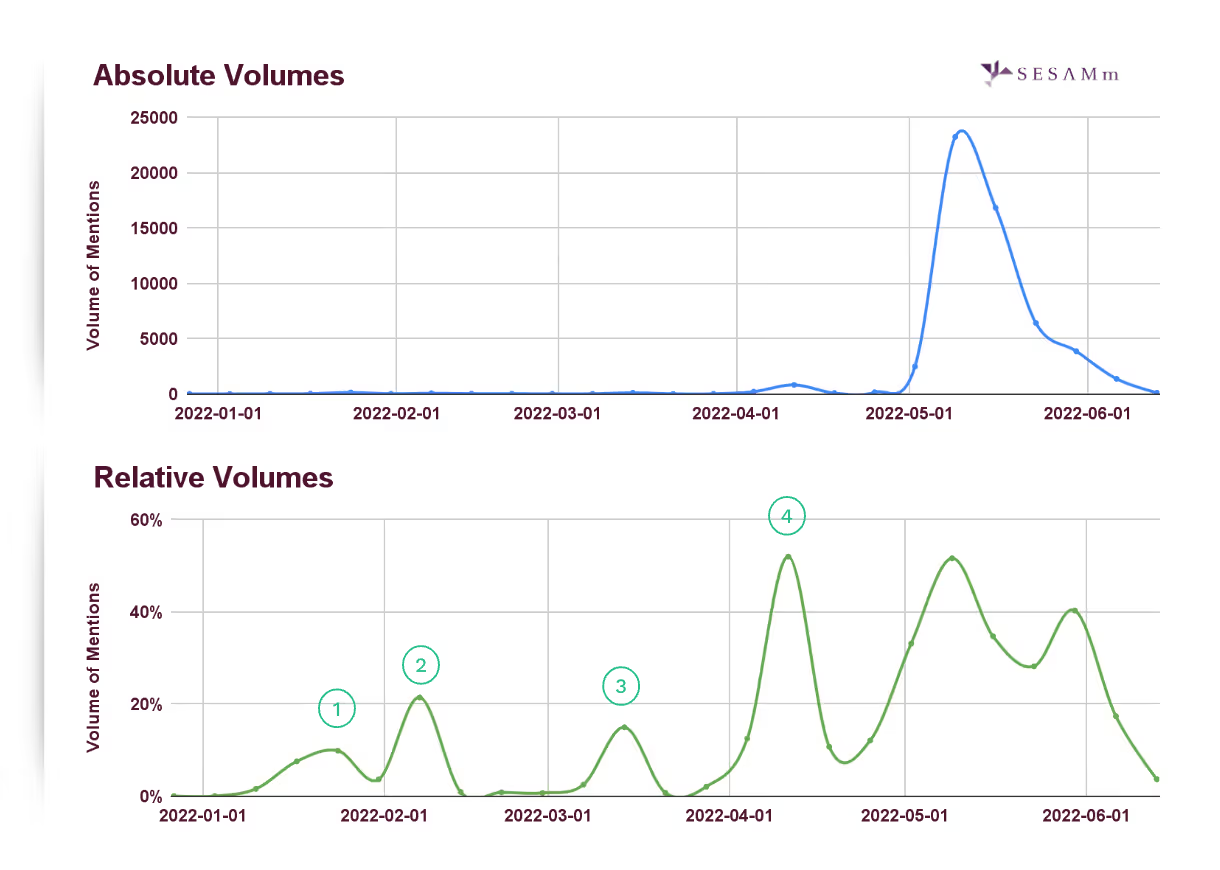
If we compare absolute and relative volumes—relative being mentions about the topic compared to our entire data lake—the term "formula milk market" yields parallel results. Mentions spike in May when the crisis reaches national coverage (see Figure 1).
Figure 1: Absolute and relative mention volumes for “formula milk market” match.
However, comparing absolute and relative volumes for the term "formula milk shortage," we find red flags as early as January 2022, four months before the crisis receives national attention (see Figure 2). Relative mentions spike on three occasions before absolute volumes register any significant noise. The fourth instance matches a ripple on the absolute chart.
Figure 2: Relative mention volumes for “formula milk shortage” show possible controversies.
These articles provide an example of the content published around the times of those rises in mentions:
Analyzing the sentiment and polarity of the formula milk market
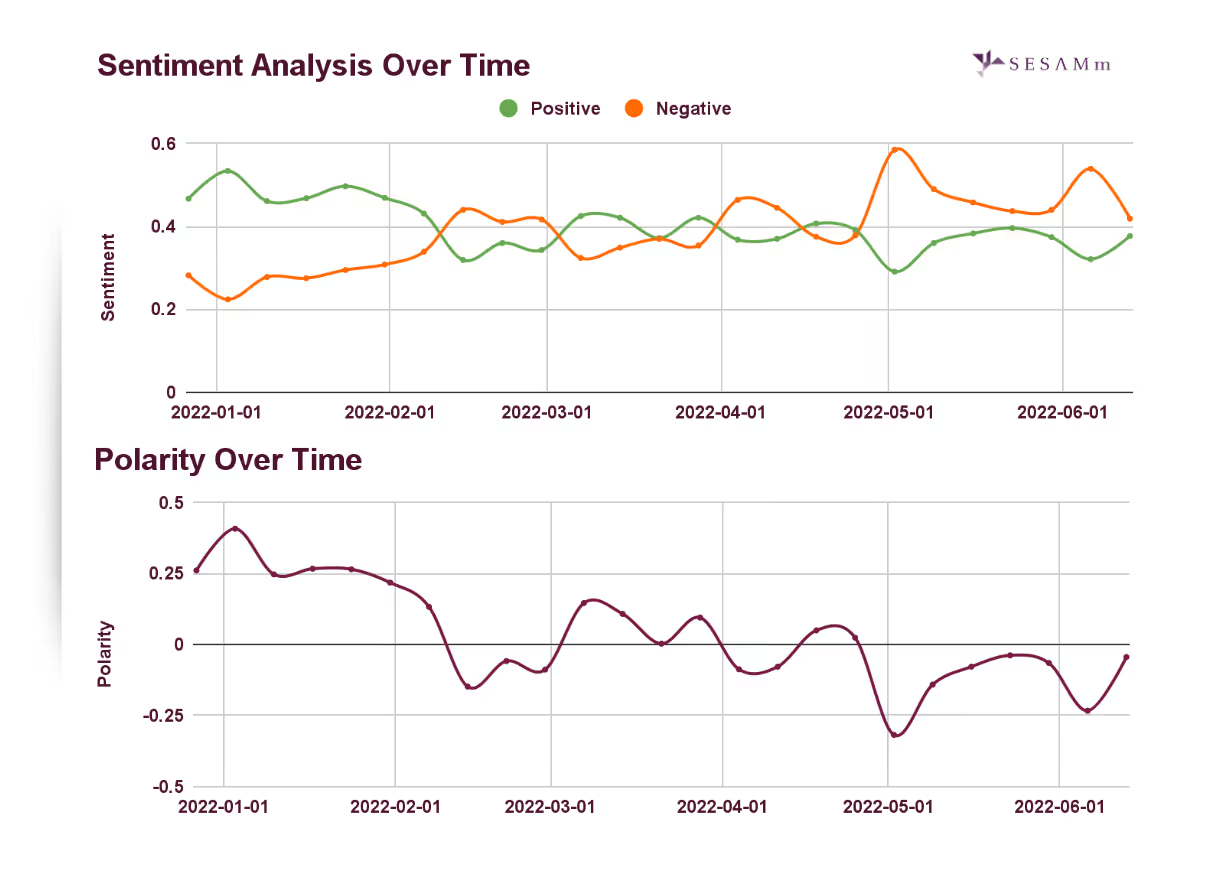
In short, the e-reputation of the formula milk market has been negative since the beginning of 2022 (see Figure 3). Positive sentiment drops and reflects the opposing negative sentiment almost exactly until May, when the news about the crisis breaks. Likewise, polarity trends downward over the same period.
Note: Polarity represents a company's aggregate of positive and negative sentiment (opinions, reviews), ranging from -1 to 1. A zero score means that there is as much positive as negative sentiment. High e-reputation brands can have polarity scores of more than 0.5.
Figure 3: “Formula milk market” sentiment analysis and polarity moved negatively over time
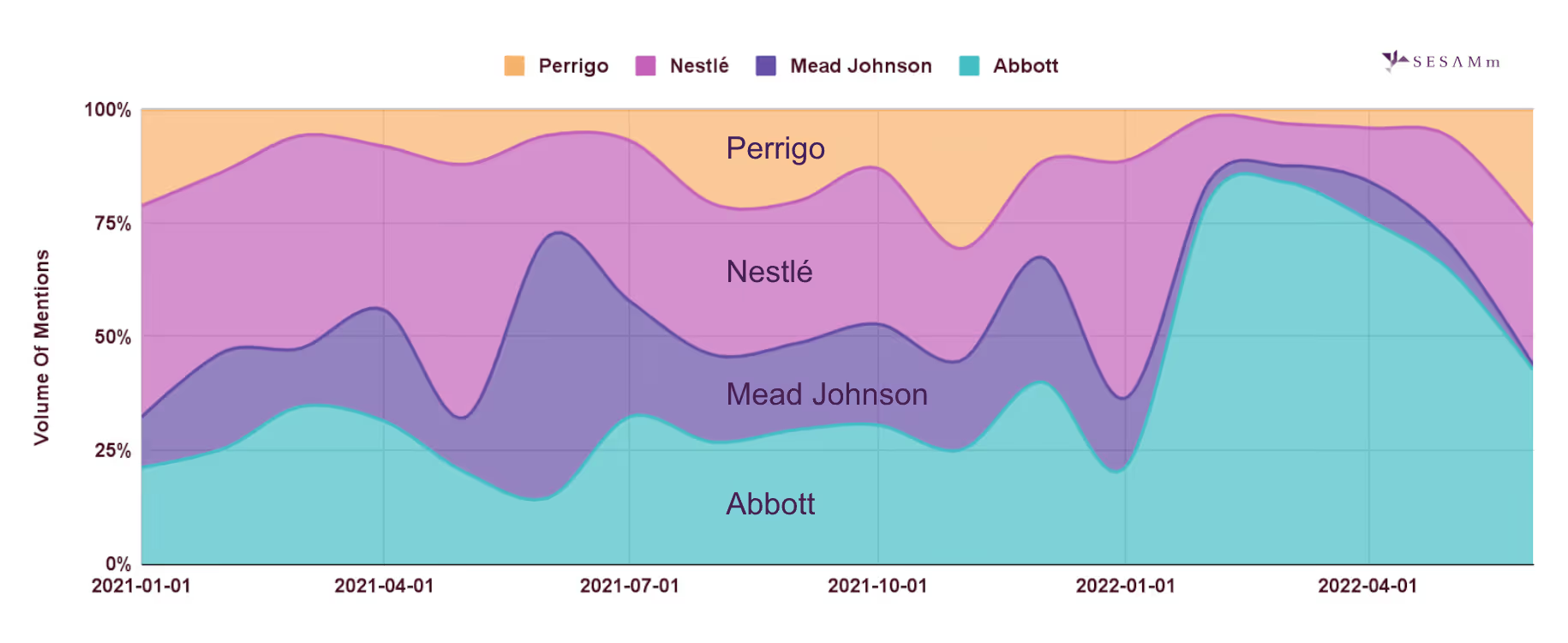
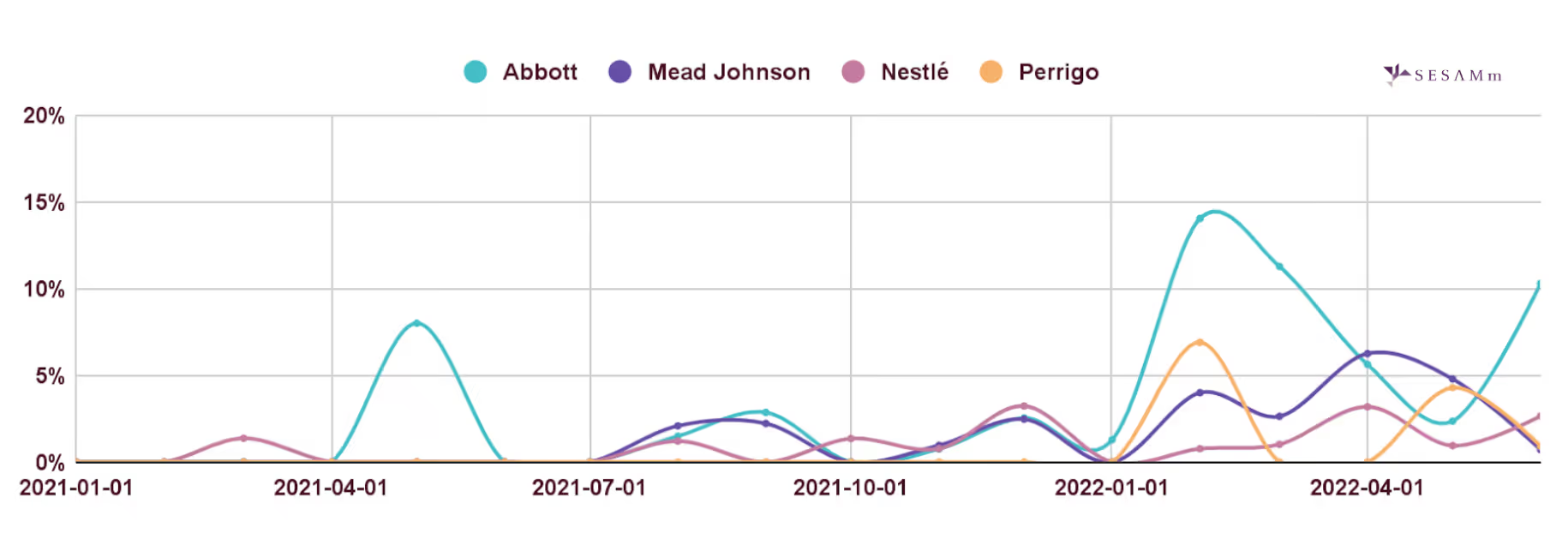
In the U.S., four brands produce the bulk of formula milk: Abbott, Mead Johnson, Nestlé, and Perrigo. Abbott and Nestlé hold the largest share of the formula milk market.
Figure 4: Abbott gains more than 75% of mention volume share in Q1 2022.
When we group these four brands' mentions from January 2021 to June 2022, we can see how their mention volumes compare (Figure 4). For example, at the beginning of the graph, we can see that Abbott and Nestlé have more mention-volume relative to their market share. However, at the end of 2021, Mead Johnson and Abbott experience spikes in mentions due to lawsuits against their formulas. Then, in Q1 2022, Abbott mentions increased drastically after its formulas were recalled due to possible contamination, taking more than 75% of the mention volume.
The baby formula market in the U.S. has been volatile for many reasons, which we won't get into in this article. However, this volatility could be seen and planned for. In this case, here are some tactics you can take to minimize your investment risks:
Employ a tool like SESAMm’s TextReveal to evaluate web data for insights into your investments. With premiere NLP technology, you can uncover sentiment and ESG insights about your industry, portfolio companies, or current investments.
Expand your research term for deeper insights. In this study, the term "formula milk market" had matching absolute and relative volumes. From this view, nothing looks out of place, and there aren't any red flags. However, when we expanded our research with the term "formula milk shortage," we found many controversies before the crisis gained national attention.
Dig into the controversies' causes. It's not enough to acknowledge a red flag. It would be best if you looked into what the potential reason is. Is the controversy caused by external factors or internal ones? Maybe both? Is the issue a one-time occurrence, or is it a pattern? So it's essential to avoid black-box tools. With solutions such as TextReveal that allow you to see beyond, you can access the underlying articles triggering the red flags.
Stay in touch with SESAMm
Thanks for reading this issue of Alternative Data Trends. Be sure to catch the next issue by subscribing to our blog. And if you'd like a TextReveal demo, send us a message via the form.
Stay ahead with the latest in ESG and AI intelligence
Join our mailing list to receive new reports, event invites, and updates from SESAMm directly to your inbox.








.png)