ESG reporting is no longer just a compliance requirement; it is now essential for structuring and managing ESG data to anticipate risks and adjust strategies. ESG platforms go beyond generating reports—they must provide actionable data to inform decision-making, much like financial tools. The emergence of regulatory frameworks such as CSRD is accelerating this transformation. With a rapidly expanding market, how do you choose the most suitable solution for your organization?
What is ESG Software and What is its Purpose?
An ESG software solution is designed to help companies structure, analyze, and improve their non-financial performance. It centralizes ESG data collection, automates analysis, and ensures compliance with current regulations. As legal requirements become more complex and data quality remains a significant challenge, these tools play a key role in ensuring reliability, traceability, and transparency. Advanced features, often powered by artificial intelligence (AI), facilitate data extraction, consolidation, and interpretation, enabling companies to manage their sustainability strategies efficiently.
Key uses of ESG Software include:
- Carbon footprint calculation and tracking of greenhouse gas emissions
- Biodiversity impact analysis and other environmental dimensions
- Evaluation of ESG maturity of suppliers and partners
- Regulatory compliance (CSRD, SFDR, EU Taxonomy, etc.)
- Double materiality analysis and ESG risk management
- Automated dashboards and non-financial reports
- Tracking action plans and ESG progress reporting
By integrating these functionalities, ESG software ensures compliance and supports a proactive approach to managing risks and opportunities related to sustainability.
Top ESG Software Solutions
Here are some leading ESG software solutions and their features:
Greenscope
A top-tier solution for financial institutions, investors, and large firms. It integrates AI-powered tools for data collection, analysis, and compliance verification.
Ideal for: Investors and enterprises with >1,000 employees
Key focus: ESG reporting, impact measurement (Carbon Footprint, Biodiversity), ESG risk evaluation, compliance
Strengths:
- API-based data collection aligned with EU ESG standards
- Advanced risk analysis and interactive dashboards
- Modular and auditable platform with full data traceability
- Customization services, indicator settings, scoring model development
- Partners’ ecosystem (consulting firms, integrators)
Sami
A comprehensive ESG and decarbonization solution with a climate and CSRD module, launched in 2024. It combines software, consulting support, and training.
Ideal for: SMEs / mid-sized enterprises
Key focus: Carbon footprint, life cycle analysis, CSRD compliance
Strengths:
- Advanced visualization of double materiality
- Smart data collection interface
- Integrated climate and CSRD module
- AI-assisted narrative generation
Novisto
A SaaS platform that optimizes ESG data collection, analysis, and communication.
Ideal for: Investors and large enterprises (CAC 40)
Key focus: ESG reporting, compliance
Strengths:
- AI-powered ESG ratings and insights
- Sectoral benchmarking
- Auditable platform and data
- Live support, webinars, and consulting services
Greenomy
Specialized in regulatory reporting, built around the EU Taxonomy and CSRD requirements.
Ideal for: Mid-sized and large enterprises (CAC 40)
Key focus: ESG reporting, compliance
Strengths:
- AI-generated ESG narratives and streamlined ESRS compliance
- Established taxonomy tool in 2022
- ESG data library and automated imports/exports
- Continuous regulatory updates
Sweep
A modular ESG platform suited for industries like retail, consumer goods, and manufacturing. It offers four modules: Climate, Finance, Supply Chain, ESG-CSRD.
Ideal for: SMEs, mid-sized firms, and large enterprises (CAC 40)
Key focus: Carbon footprint, ESG reporting, sustainability strategy
Strengths:
- ISO 27001 and SOC 2 Type II compliance
- AI-assisted ESG reporting and data mapping
- Automated reporting with reminders
- Partnerships with Big Four firms
IBM Envizi
IBM’s ESG software suite covers ESG data management, carbon footprint tracking, and CSRD reporting.
Ideal for: Investors and companies of all sizes
Key focus: Carbon footprint, ESG reporting
Strengths:
- Compatible with 500+ data formats (ERP, finance, etc.)
- Integration with IBM Maximo, Tririga and Turbonomic
- Pre-configured CSRD templates with risk scoring
- Automated workflows and supplier data collection
Tennaxia
A historic ESG and HSE (Health, Safety, Environment) solutions provider with 20+ years of experience. Acquired Traace in 2024 to strengthen carbon footprint and CSRD compliance capabilities.
Ideal for: SMEs, mid-sized firms, and large enterprises (CAC 40)
Key focus: Carbon footprint, ESG reporting, HSE
Strengths:
- ESG and HSE expertise with an internal consulting team
- Materiality module for risk/opportunity visualization
- AI-powered data entry assistance and compliance management
- Continuous regulatory updates
Apiday
A hybrid solution that combines an ESG platform with consulting partners for double materiality analysis.
Ideal for: Investors and mid-sized firms (CAC 40)
Key focus: ESG reporting, impact measurement, compliance
Strengths:
- Fast onboarding (<1 month)
- ISO 27001-certified security
- AI-assisted text input and data extraction
- Automated ESG questionnaire responses
Zei
A flexible ESG platform that unifies all market frameworks. Its modular approach (Evaluate, Manage, Align) simplifies compliance and performance enhancement.
Ideal for: SMEs, mid-sized firms, and large enterprises (CAC 40)
Key focus: Carbon footprint, ESG reporting, compliance
Strengths:
- Database of 70+ ESG frameworks
- “Align” module for data structuring
- Automated report generation via AI
- Notification system for reporting management
Novata
A SaaS platform designed for private equity investors and portfolio companies. It centralizes ESG data collection and analysis with advanced scoring and benchmarking tools.
Ideal for: Investors and mid-sized firms (CAC 40)
Key focus: Carbon footprint, ESG reporting, compliance
Strengths:
- Custom ESG scoring models
- Interactive dashboards and benchmarking tools
- A presence in North America and global compliance standards
What Are the Benefits of ESG Software?
ESG software solutions provide major benefits in compliance and strategic management. They improve data processing, ensure reliable reporting, and enhance decision-making with consolidated ESG performance insights.
Key Advantages
- Automation and time savings: Reduces administrative workload with real-time data collection and analysis.
- Data reliability and quality: Eliminates manual errors and ensures complete data traceability.
- Regulatory compliance: Keeps up with evolving legal frameworks (CSRD, SFDR, Taxonomy).
- Investor attractiveness: Strong ESG reporting boosts transparency and credibility. 56% of investors have backed out of deals due to ESG concerns.
- Strategic ESG management: Provides a consolidated ESG performance overview and risk anticipation.
- Impact analysis: Advanced analytics tools help drive sustainable decision-making.
How to Choose the Right ESG Software?
Find the ESG reporting software that matches your needs.
ESG software can no longer be limited to a simple reporting tool; it must be fully integrated into your strategy. To make the right choice, it's essential to define your project in advance: What functional, organizational, and geographic scope should the solution cover? Do your needs relate to compliance, strategy, impact improvement, risk analysis, or value chain data collection? Do you have clear governance in place to deal with sustainability issues?
In addition to functionalities, we need to assess the full range of customer services that accompany the solution. Does the provider offer a robust support team integrated into the license? Does it have partners capable of facilitating deployment, enriching your data, or providing strategic support? Integration with your information systems is also a key criterion, and security should not be overlooked. Check that the vendor applies high standards of data protection and service continuity. Many teams also pair their reporting software with an external ESG data source for controversy and risk signals. Our comparison of ESG data providers shows how the main options differ.
Clearly defining your needs and objectives and evaluating these criteria will enable you to choose an ESG solution that is truly adapted to your organization.
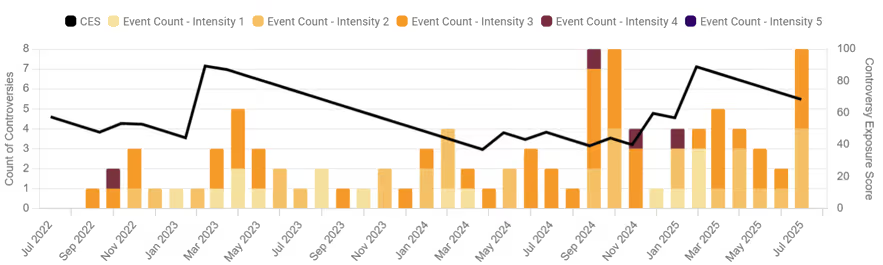
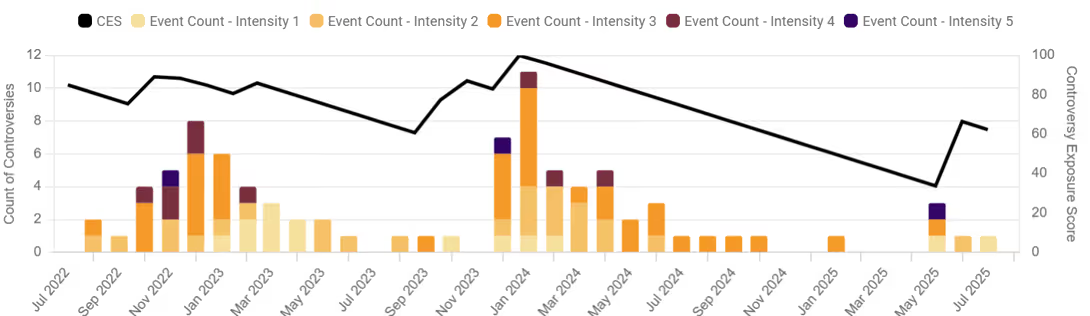
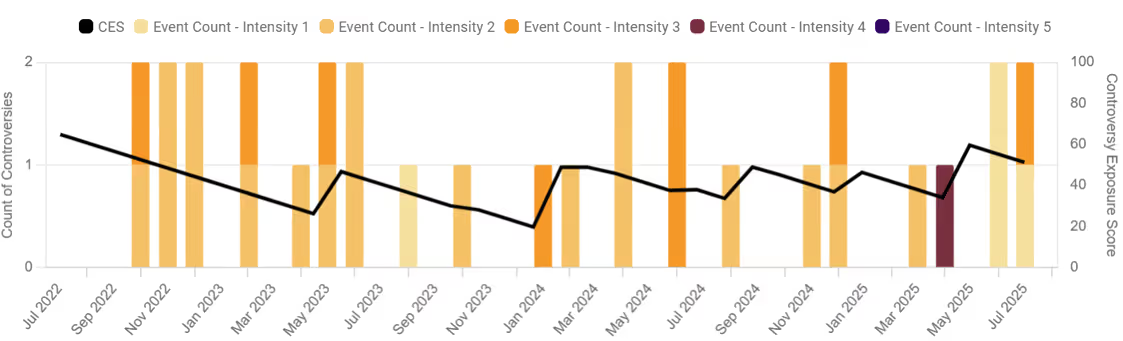
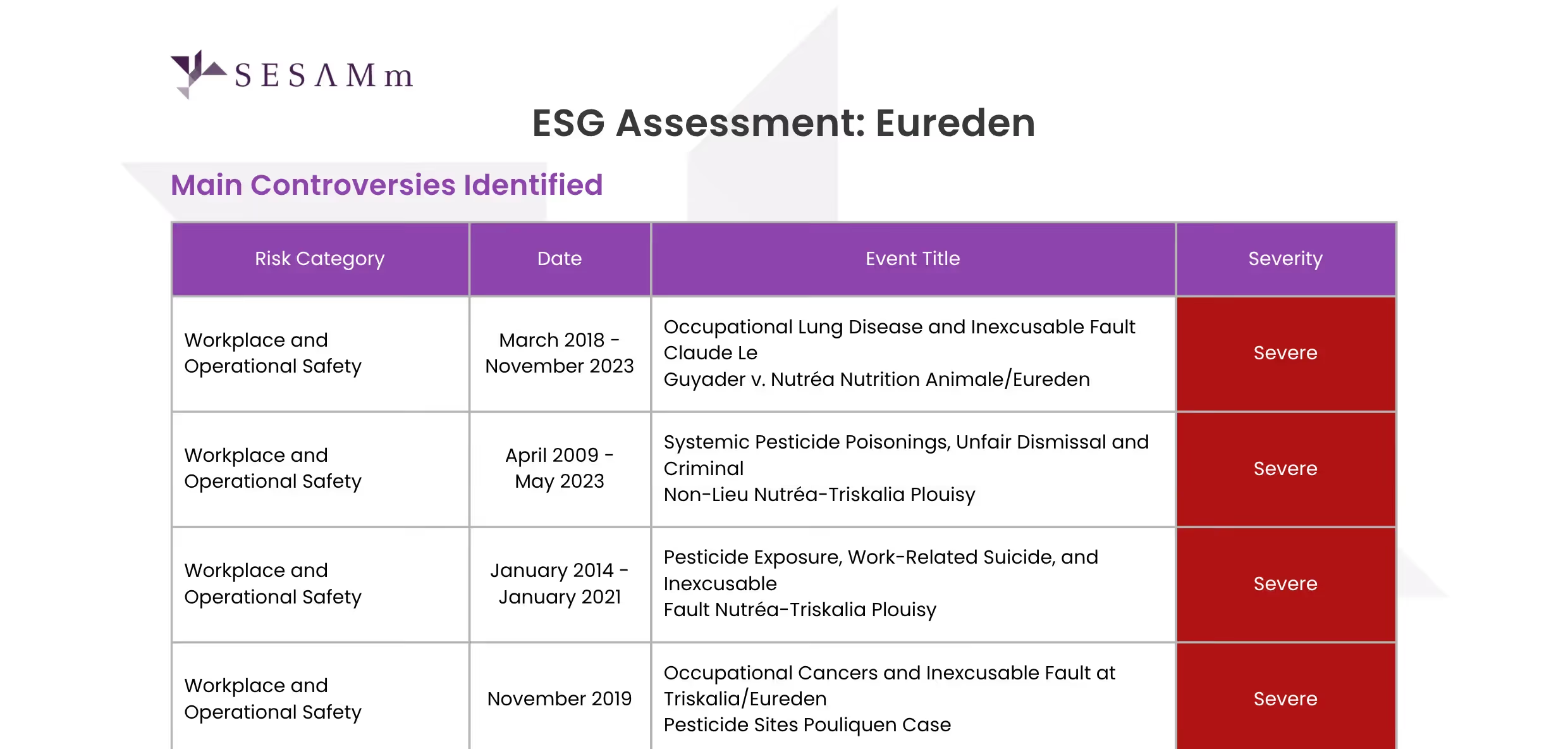
SESAMm’s AI Technology Reveals ESG Insights
Discover unparalleled insights into ESG controversies, risks, and opportunities across industries. Learn more about how SESAMm can help you analyze millions of private and public companies using AI-powered text analysis tools.







.png)