

Alternative Data | Risk Management | Sentiment Analysis
Alternative Data Trends: a16z, Flow, and the Public Web’s Sentiment
September 28, 2022
•
5 mins read
Wednesday, September 14, 2022, a16z (Andreessen Horowitz), a large, well-known VC firm, funded Flow, a new startup led by a seemingly scandalous entrepreneur, Adam Neumann, the founder infamously known to have been ousted as WeWork CEO.
Why did a16z invest in Flow and, by proxy, Adam Neumann?
In his blog post about “Investing in Flow,” Andreessen acknowledges the U.S. housing crisis in the first sentence, and here’s what he has to say about Neumann: “Adam is a visionary leader who revolutionized the second largest asset class in the world—commercial real estate—by bringing community and brand to an industry in which neither existed before.” Andreessen continues, “[I]t’s often underappreciated that only one person has fundamentally redesigned the office experience and led a paradigm-changing global company in the process.”
So that gives us a clue as to what Andreessen thinks. But what does the public web have to say, and what is its overall sentiment?
In this edition of Alternative Data Trends, we dig into public web data before, during, and after a16z announced that it would fund Flow. Does the public web agree with Andreesen’s view? If not, how does it differ? And how can this information inform an investor and other VC firms?
Let’s find out.
a16z web mention volume and polarity (Nov. 2015 to Jun. 2022)
Figure 1: Andreessen Horowitz mention volume and polarity chart.
Mention volumes spike in mid-June 2021
TextReveal® uncovered 181,620 articles and messages from SESAMm’s data lake about Andreessen Horowitz (Figure 1). Mention volume remains consistent until late 2020, at which time a16z invests in a bunch of new companies and startups, such as:
Beacons
Clubhouse
Dapper Labs
Eco
Helium
Labster
Maven
Nansen
OpenSea
Skydio
SpotOn
Tackle.io
Valon
Zus Health
a16z also focused on the NFT market and, as a result, launched the world’s biggest crypto-fund valued at $2.2 Billion in June 2021. Moreover, Andreessen Horowitz launched its own media property, Future.com, in mid-2021.
Andreessen Horowitz web mentions further spike after it doubles down, announcing $4.5B crypto fund IV in May 2022. Additional news increased mention volume because of its investment in Neumann’s new startups, Flowcarbon and Flow.
Polarity (positive and negative sentiment) dips
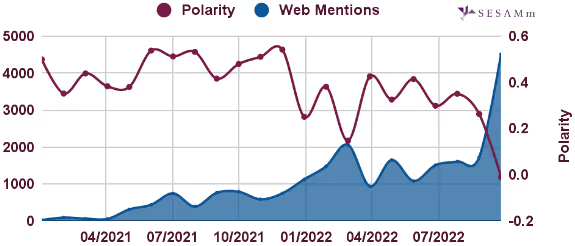
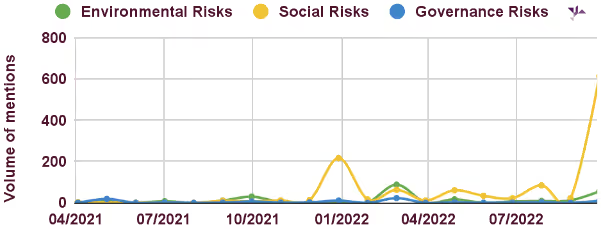
Sentiment toward a16z remained relatively stable over time with only minor dips until mid-2021, when it began falling, a trend driven by mentions of Flow investments news, the Uniswap related lawsuit, and suspected CoinSwitch Forex law violations (Figure 2).
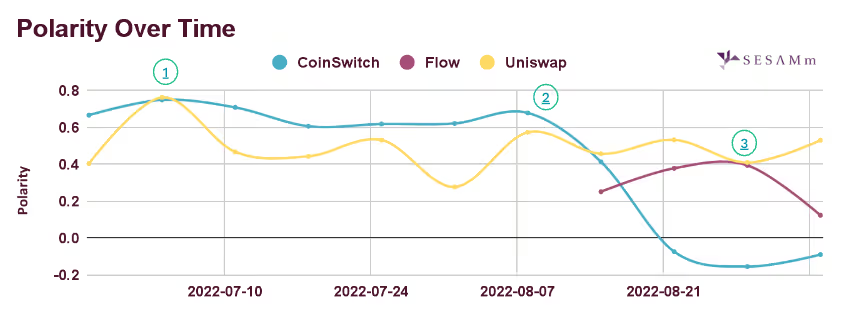
Figure 2: Uniswap and CoinSwitch events affected a16z’s polarity as early as July 2022. As it rebounded, Flow began influencing polarity negatively by mid-August.
Why was Flow affecting a16z’s polarity so much?
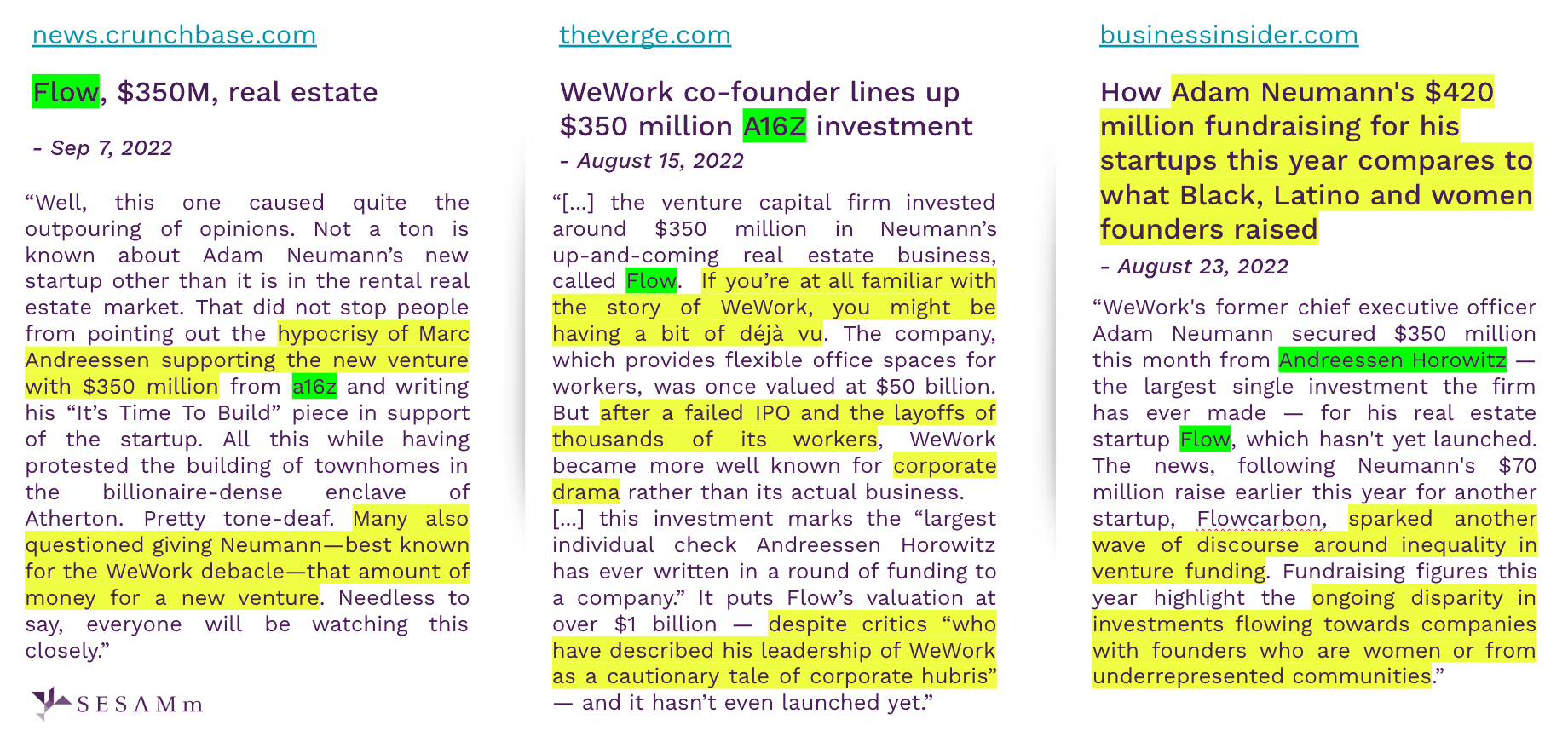
Figure 3: Newsclips about a16z investing in Flow.
Despite Andreessen’s reasons for giving Flow and Neumann a chance, the public’s opinion seems to disagree, leaning toward a negative sentiment (Figure 3). Overall, the public doesn’t seem to trust that Neumann is worth a second chance and that his choices are beyond forgiving. Moreover, the public criticizes a16z’s choice to overlook women and people of color. This The Guardian article highlights tweets of these differences in opinion:
In summary, TextReveal’s web data analysis tells us that it’s essential to keep an eye on the latent ESG risks this investment could bring to a16z’s portfolio, particularly on the social side.
Andreessen Horowitz, from an ESG perspective
a16z ESG initiatives
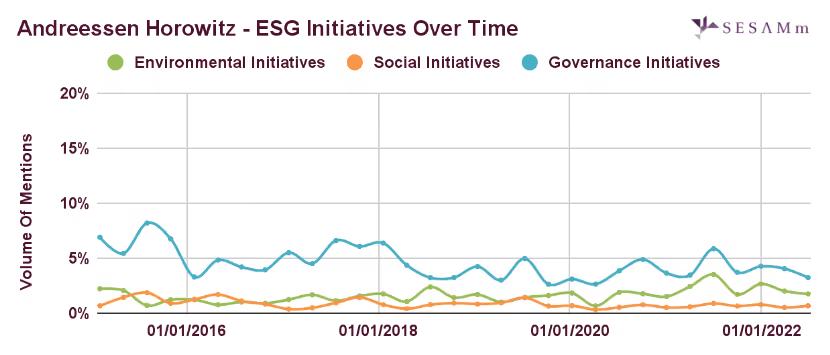
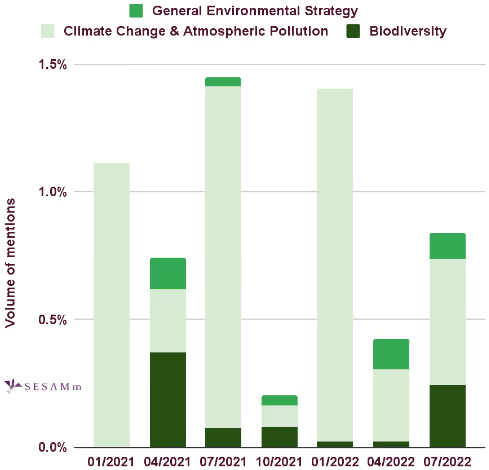
Figure 4: a16z’s governance initiatives exceed environmental and social.
From a mention volume perspective, a16z’s ESG initiative numbers remain stable (Figure 4). Andreessen Horowitz has a good share of ESG initiatives shares with the highest percentage for governance driven by partnerships and collaborations, followed by the environmental aspect that has been increasing over the last two years.
ESG risks, from a portfolio perspective
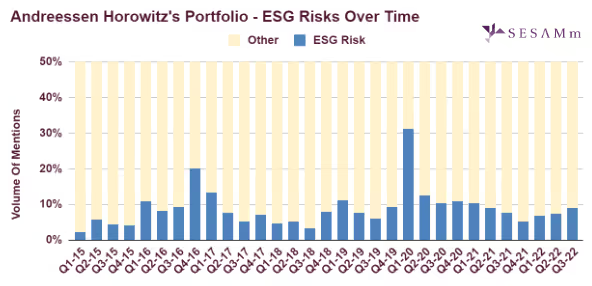
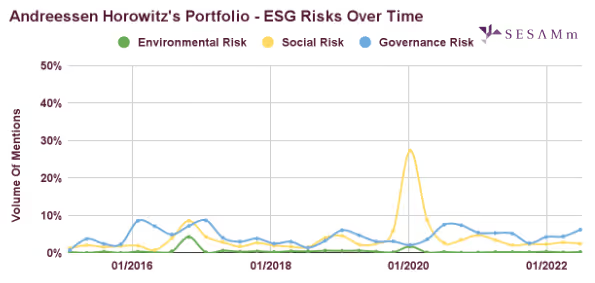
Figure 5: a16z’s aggregated portfolio’s ESG risks over time.
Figure 6: a16z’s portfolio’s social risk spikes in January 2020.
Figures 5 and 6 cover 160 companies in Andreessen Horowitz’s portfolio in the venture and growth stage. Overall, a16z’s portfolio represents a lower ESG risk (<15%) over time, except for the occasional moderately higher ESG risks score (<35%) indicated by two prominent spikes, one at the end of 2016 (Q4) and the second at the beginning of the year 2020 during the pandemic (Q1). The first spike is mainly a governance risk related to Soylent’s products being recalled and supply-chain-shortage risks. The spike is also caused by another top executive resigning from Magic Leap. In contrast, the second spike is a social risk driven by Instacart’s employees’ strike upon working conditions and safety concerns during the Covid-19 pandemic.
Note: Very low risk is <5%, low risk is <15%, moderate risk is <=35%, high risk is <=50%, and very high risk is >50%. Also, note that this scale is for demonstration only and does not indicate actual risk values.
Figure 7: A deeper look into the top companies in a16z’s portfolio generating mention volumes shows Instacart and MakerDAO in the moderate risk range. In contrast, the others are low to very low in risk in comparison.
Does the public’s view of a16z’s investment of Flow have merit?
Maybe, maybe not.
Looking at Andreessen Horowitz’s company and portfolio through the lens of web data, it is, if anything, consistent with its ESG initiatives and has experienced very few controversies. Should investors ignore the potential red flags that come with Flow and Adam Neumann? Of course not. But they should feel assured that a16z has exhibited a pattern of making sound investments. For example, if we compare the firm’s SDG initiatives to those in its portfolio (Figure 8), they are almost identical.
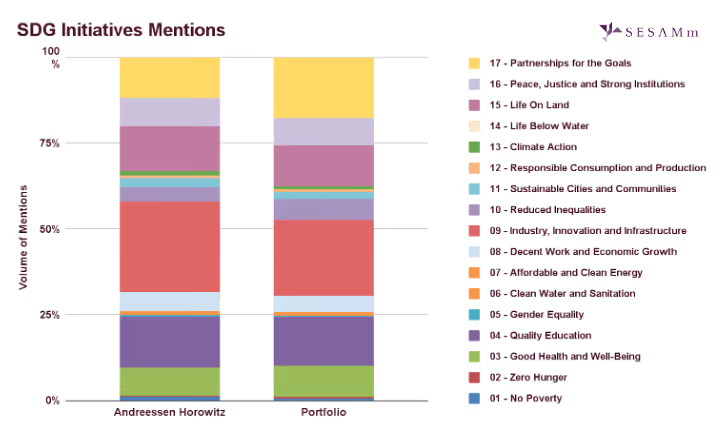
Figure 8: Andreessen Horowitz portfolio companies are focusing on the Sustainable Development Goals with specific attention toward goal 9: Industry, Innovation, and Infrastructure and Goal 17: Partnerships for the Goals, followed by Goal 4: Quality Education and Goal 15: Life On Land.
It’s possible that maybe Marc Andreessen and a16z et al. see something in Flow that the general public does not. After all, it’s why they’re a successful venture capital firm that consistently “backs bold entrepreneurs building the future through technology,” controversies and all.
As 2026 kicks off, I want to take a moment to reflect on the year we’ve just closed. 2025 was an important year for SESAMm, marked by both significant milestones and quieter, foundational progress. We launched new AI-powered reports, welcomed major clients, expanded our coverage, and saw our technology move deeper into real decision-making workflows.
None of this would have been possible without the trust and engagement of our clients, partners, advisors, and team. Your willingness to challenge us, work with us, and build alongside us continues to shape what SESAMm becomes.
Below, I’ve shared a few moments from 2025 that helped move us forward, along with what we’re looking ahead to in 2026.
Growing Through Strong Partnerships
In practice, SESAMm’s data is used in very different ways. It supports large-scale monitoring across thousands of suppliers and assets, while also enabling in-depth analysis of individual companies and local markets.
In 2025, collaborations with organizations such as Sayari, BNP Paribas, Caisse d’Epargne Rhône Alpes, ENGIE, Clarity AI, and Inrate reinforced something we have believed from the beginning: understanding risk today requires data that is both scalable and usable within real decision-making workflows.
More importantly, these partnerships reflect the confidence placed in the quality of SESAMm’s data and its breadth of use. In one case, a financial institution used supplier monitoring to identify early signals of forced labor risk in a supply chain that had previously passed traditional audits. That insight did not replace existing processes, but it changed the questions being asked and the actions that followed.
Welcoming New Advisors
We were also proud to welcome Guy Gresham and Magnus Billing as advisors this year. Their experience, perspective, and intellectual rigor have already challenged us in the best possible way.
As we continue to build SESAMm for the long term, their guidance helps ensure that our technology remains both ambitious and grounded in how risk is actually understood, assessed, and managed in the real world. In a market that is evolving quickly and sometimes unpredictably, that discipline matters.
From AI Promises to AI in Practice
AI dominated conversations again this year. What changed in 2025 was less the technology itself, and more how our clients engage with it.
Initially, the question was whether AI could reliably identify risks. Today, that question has been answered and the conversation has shifted. Clients are asking which risks are most important, which require action, and how to prioritize limited time and resources.
At SESAMm, this translated into concrete product evolution, all with the same objective: supporting both large-scale monitoring and deeper, decision-level analysis. We launched and expanded AI-powered reports, introduced UN Global Compact violation screenings, and significantly increased the number of companies and infrastructure projects we cover globally.
AI is no longer treated as an experimental layer. Our clients are using it as a core component for identifying and tracking risks over time. The question they now face is not whether AI can surface risk, but how to decide which signals deserve attention.
ESG Is Changing, Whether We Like the Term or Not
AI The ESG landscape itself is going through a transformation. Regulatory pressure is uneven. In some regions, expectations are tightening while in others, frameworks are being diluted or politicized. At the same time, the term “ESG” is itself losing ground; it means too much and therefore explains too little.
That has not changed, however, is the nature of the underlying risks. Human rights, forced labor, biodiversity loss, governance failures, and reputational exposure are becoming increasingly visible and material to investors, companies, and regulators alike. The conversation is shifting from broad labels to specific facts, with greater attention paid to the events and the evidence that inform both scores and decisions. This shift from labels to evidence is where SESAMm’s approach is particularly relevant.
Looking Forward
As we move further into 2026, our focus remains clear. We will continue to invest in signal quality over noise, depth over surface-level insight, and tools that help our clients act, not just observe. We will keep expanding coverage where risk is hardest to see, particularly in private markets, and will continue to develop cutting-edge AI agents to support client workflows.
The question for 2026 is not simply how much risk data organizations have, but how effectively they interpret and prioritize it in practice.
Above all, we remain committed to building technology that supports our customers and partners with clear, reliable insight into risk, grounded in reality as it is.
Thank you again to our clients, partners, advisors, and team for your trust and engagement over the past year. We look forward to continuing this journey together!
Wishing you a wonderful and successful year ahead,
Sylvain Forté CEO, SESAMm
Reach out to SESAMm
TextReveal’s web data analysis of over five million public and private companies is essential for keeping tabs on ESG investment risks. To learn more about how you can analyze web data or to request a demo, reach out to one of our representatives.

The aerospace and defense industry is essential to global technology and transportation, playing a crucial role in maintaining international security and connectivity. However, this sector faces intense scrutiny due to its significant impact on environmental, social, and governance (ESG) factors. Amidst challenges like safety lapses and whistleblower revelations, stakeholders are increasingly relying on advanced AI technologies to gain insights into potential controversies. Such technologies have enabled a deeper understanding of the complex ESG issues that permeate the industry, revealing not only the specific challenges faced by companies like Boeing but also providing a broader view of the sector's commitment to corporate responsibility and sustainability. This article explores the aerospace industry and its ESG challenges, backed up by a case study of industry giant Boeing. It also explains how we used SESAMm’s AI-powered tools to detect these controversies beforehand.
This article is a preview of the webinar entitled "The Boeing Scandal: Can AI Predict Controversies Before Traditional Tools?" based on SESAMm's proprietary research. Sylvain Forté, CEO and Cofounder, and Emna Abid, Research and Analytics Team Lead at SESAMm, will lead the webinar and will share SESAMm's findings in detail on the Boeing case and the use of AI to detect these types of controversies ahead of time.
Aerospace and Defense Market Mentions
The top market players in the aerospace and defense industry command 8.3% of the overall market's online mentions. This sector is increasingly scrutinized for its ESG practices amidst technological advancements and global policy shifts.
Overview
Our study processed our large data lake to identify key aerospace players: Northrop Grumman, Lockheed Martin, General Dynamics, Airbus, and Boeing, from 2015 onwards. It found a surge in online mentions, especially after Boeing's plane crashes post-2018. Both Airbus and Boeing saw increased attention, highlighting the competitive and evolving aerospace industry, where online presence correlates with market position shifts and significant events.
Polarity, indicating a company's mix of positive and negative opinions, ranges from -1 to 1. A zero score shows equal positive and negative sentiment. Brands with high e-reputation often score above 0.5. The aerospace market experiences significant highs and lows. Lockheed Martin has seen a positive impact from new contracts and technological advancements, particularly between 2016 and 2018, boosting its reputation and value. In contrast, Boeing faces significant challenges due to safety lapses, including 737 MAX crashes, legal issues, and whistleblower claims, negatively affecting its perception and highlighting the industry's vulnerability to reputational risks.
Deep Dive: Boeing
The aerospace industry has faced increasing scrutiny over its ESG practices. Among the key players, the American aerospace company Boeing has been prominently featured in media discussions, not only due to its market distinction but also because of its ESG challenges that have sparked significant controversy.
Boeing Word Cloud
The word cloud displays key topics about Boeing, particularly the 737 Max controversies, including safety issues and FAA oversight. "737 Max," "Boeing," "safety," "death," and "FAA" are the main terms that show their prominence in discussions. The visualization also touches on "lawsuits," "Senate hearings," and "missed inspections," indicating the wide range of concerns surrounding Boeing's regulatory, safety, and ethical challenges.
Conclusion
These incidents underscore the aerospace industry's urgent need for reforms to prioritize safety and ethics over profit. SESAMm's TextReveal® platform plays a key role in detecting such ESG controversies early by analyzing vast amounts of data and helping stakeholders understand and address the intricacies of corporate accountability and regulatory compliance.
Reach out to SESAMm
TextReveal’s web data analysis of over five million public and private companies is essential for keeping tabs on ESG investment risks. To learn more about how you can analyze web data or to request a demo, reach out to one of our representatives.

Over the past decade, many organizations have improved their carbon footprints, from recyclable and biodegradable packaging and single-use plastic to planting trees and reducing their greenhouse gas emissions. However, some businesses and companies looking to boost their eco-friendly image without committing to serious changes and addressing environmental issues have been associated with false green marketing. We call this "Greenwashing."
What is Greenwashing?
Greenpeace and the Environmental Protection Agency define greenwashing as making false and misleading claims about a product's environmental benefits or practices, services, technology, or company practices. Greenwashing typically involves companies spending more money on advertising and marketing than on implementing sustainable business practices that minimize environmental impact. These false green claims can deceive consumers into believing that a product or company is more environmentally friendly than it is, leading to increased sales and profits. As a result, false advertising, misleading initiatives, and groundless claims have increased green investors' exposure to risks emerging from potential lawsuits from activist groups, image deterioration, and some heavy loss in assets invested.
Why is Spotting Greenwashing Important?
Greenwashing is a growing concern for investors as they look to make sustainable and responsible investments. Therefore, spotting greenwashing practices is important for these firms. Here's why.
The deceptive practices used by greenwashers can have significant implications for the integrity of investments made in what investors believe to be sustainably operated companies or sustainable funds. In other words, greenwashing makes it difficult for investors to distinguish between genuinely committed to sustainability companies and those merely making false claims about their environmental practices. As a result, investors may unknowingly invest in companies that are not as sustainable as they claim to be, which can harm their financial returns and the environment. Therefore, it's essential for investors to be aware of greenwashing tactics and to carefully research companies before investing in them to ensure that their investments align with their values and contribute to a more sustainable future.
What Are the Challenges to Detecting Greenwashing?
It's challenging to produce an accurate assessment of environmental, social, and governance (ESG) factors, which gives companies the opportunity to cover or hide ineffective and fake green initiatives. According to Regtank, some of the main challenges to detecting greenwashing practices are the following:
Lack of reporting standards: some investors believe that we haven’t universally agreed upon a set of standards to determine whether a product is ESG compliant.
Lack of transparency: greenwashing companies don’t disclose the specificities of their “green campaigns,” which makes it difficult for investors and consumers to fact-check and evaluate their sustainability claims.
Limited consumer awareness: false marketing strategies could be based on a combination of the consumer’s eco-consciousness and brand loyalty. As a result, consumers become less aware of the misleading strategies greenwashing companies use to sell their products.
Ultimately, these factors may contribute to the inaccuracy and limitations of ESG data and scores, which makes it easier for greenwashers to get away with their false marketing campaigns. Consequently, detecting greenwashing requires scrutiny of environmental claims made by companies and an understanding of the complex supply chains and manufacturing processes involved in producing products and services.
To learn more about greenwashing and have access to real-life case studies, download this comprehensive report:
How Does Artificial Intelligence Detect Greenwashing?
As greenwashing practices increase, activist investors, experts, journalists, and even the general public are spreading awareness of the issue using social media, news outlets, forums, and blogs, among other means. Recently, artificial intelligence (AI), particularly natural language processing (NLP), has proven to be effective in the early detection of greenwashing by analyzing vast amounts of qualitative data publicly available on the web. At SESAMm, for example, we apply our NLP capabilities to identify companies likely to engage in greenwashing practices by analyzing text in billions of web-based articles. Our data lake contains over 25 billion web–sourced articles, sourced from four million news, blogs, social media, and forum discussions on five million public and private companies in more than 100 languages. We run these articles through our AI platform tool, TextReveal®, and systematically craft reliable, timely, and comprehensive insights to detect greenwashing, generate ESG alerts, and identify related risks.
The Rise of Greenwashing
Greenwashing, the deceptive practice where companies claim to be more environmentally friendly than they actually are, has become a growing concern in recent years. By analyzing the frequency of web mentions of greenwashing over time, we can observe important trends and understand the factors contributing to this phenomenon.
Recent analyses indicate a significant increase in greenwashing mentions since late 2019. This rise aligns with a growing public awareness of the climate emergency and the increase in media outlets and social media accounts dedicated to exposing greenwashing. The number of mentions escalated from fewer than 200 to over 23,000 in the last quarter of 2023, highlighting the increasing scrutiny of corporate environmental claims.
A noteworthy pattern is the regular occurrence of spikes in greenwashing mentions during the third quarter over the past three years. This timing corresponds with the "pre-COP" periods, leading to critical international climate change management conferences. These periods see heightened discussions around sustainability, with increased attention on companies' environmental practices.
Figure 1: Greenwashing mentions over time.
Greenwashing in the Energy Sector
The energy sector, particularly the oil industry, has faced significant scrutiny regarding greenwashing. In this context, companies like Shell and ENI have been prominent due to the frequency of greenwashing mentions associated with them.
Figure 2: Examples of greenwashing mentions in the energy sector over time.
For Shell and ENI, the volume of greenwashing mentions has fluctuated, with notable increases in specific quarters. For example, Shell saw spikes in mentions during the second quarter of both 2021 and 2022 while experiencing a drop in the third quarter of 2022. ENI has faced similar fluctuations, often linked to legal actions and publicized environmental issues.
Shell's Greenwashing Mentions, ESG Risks, and Initiatives
Shell, a British multinational and prominent player in this sector, has faced considerable scrutiny for such practices. The company has experienced notable spikes in greenwashing mentions and has been involved in several ESG-related risks.
Figure 3: Shell greenwashing and ESG mentions over time.
Greenwashing Mentions
We can see an increase in greenwashing mentions in the first half of 2023. Around that period, Shell faced allegations and lawsuits concerning its environmental claims. The company was criticized for misleading U.S. authorities and investors about its energy transition efforts. Additionally, Shell faced public backlash for labeling fossil gas as 'renewable' while reporting record profits. A notable incident involved a shareholder suing Shell's executives over climate risks.
ESG Risks
Shell has faced several ESG-related risks, including legal challenges and pollution issues. In 2021, the company was sued by New York City over climate change-related advertising and filed an arbitration claim against Nigeria concerning a spill dispute. In March 2023, Shell faced another oil spill, this time in another region in Nigeria, Rivers State, and also saw institutional investors backing a lawsuit against its board over climate risks. The mid-2023 period saw Shell agreeing to pay $10 million for air pollution violations at a Pennsylvania petrochemical plant. Despite its net-zero pledge, the company announced plans to increase fossil fuel production.
ESG Initiatives
Despite its challenges, Shell has also engaged in various sustainability initiatives. In late 2021, the company announced plans to purchase power from the world's largest offshore wind farm. Mid-2022 saw a leadership change with the company's CEO stepping down as Shell aimed to align with its climate goals. The company also planned to deploy 10,000 EV chargers across India as part of its global strategy. In mid-2023, Shell committed to investing $10–15 billion in developing low-carbon energy solutions. Although the company abandoned its lower oil production target, it maintained its commitment to reducing emissions.
Shell's journey underscores the challenges of aligning environmental claims with real actions, emphasizing the importance of transparency and genuine sustainability efforts.
ENI's Greenwashing Mentions, ESG Risks, and Initiatives
ENI, an Italian multinational oil and gas company, has faced scrutiny for such practices. The company has experienced fluctuations in greenwashing mentions and has been involved in a number of ESG-related risks.
Figure 4: ENI greenwashing and ESG mentions over time.
Greenwashing Mentions
ENI's greenwashing mentions are fairly low. However, the company has been featured in discussions about greenwashing, especially with recent developments. In early 2022, the company faced criticism for inconsistencies in emissions data and greenwashing activities, as highlighted by the Sereno Regis Study Center. Greenpeace also criticized ENI for using the Sanremo Music Festival as a platform for greenwashing. In May 2023, ENI faced a lawsuit for allegedly lobbying and greenwashing to promote fossil fuels despite being aware of their environmental risks. Greenpeace sued the company, accusing it of knowingly contributing to climate change.
ESG Risks
Over the past 4 years, the oil giant's ESG risks have been few but not inexistent. ENI has encountered several risks, including legal challenges and pollution issues. In 2022, ENI's environmental strategy was deemed a failure, and concerns arose about a pipeline spill into the East Irish Sea. The company also faced legal actions in 2021, including an appeal against a court ruling in an illegal waste case and warnings from the Legality Network to reduce greenhouse gas emissions or face prosecution.
The company faced a lawsuit in early 2023 for allegedly having prior knowledge of the climate crisis. In another incident, a report found that ENI and Shell were responsible for significant pollution in Bayelsa, requiring a $12 billion cleanup.
Shell and ENI both face the challenge of balancing economic interests with environmental responsibility. Despite allegations of greenwashing and environmental risks, both companies have taken steps towards sustainability, such as investing in low-carbon solutions and renewable energy projects. Their experiences highlight the importance of transparency, genuine commitment to environmental responsibility, and the role of public scrutiny in holding companies accountable.
Greenwashing and ESG Investing
In sum, certain companies advertise their sustainability and green initiatives, while in reality, they are making false claims and practicing greenwashing, as evidenced by our analysis using SESAMm's AI and ESG reports. We use AI through TextReveal to generate alternative data for use cases, such as ESG and SDG, sentiment, private equity due diligence, corporate studies, and more. Our technologies can reliably ensure the credibility of ecological initiatives and serve global investment firms, corporations, and investors, such as private equity firms, hedge funds, and other asset management firms, to enhance their investment strategies.
Conclusion
In conclusion, the issue of greenwashing represents a substantial obstacle in the journey towards genuine environmental sustainability, misleading consumers and investors and diluting the efforts of genuine sustainable enterprises. Nevertheless, the emergence of advanced technologies such as Artificial Intelligence (AI) and Natural Language Processing (NLP) indicated a new era of accountability. Innovators like SESAMm are at the forefront, deploying these technologies to effectively unravel and counteract greenwashing practices. This empowers investors, asset, and portfolio managers to discern and align their resources with legitimately sustainable entities. The call to action is clear: a collective demand for transparency and responsibility is crucial.
Reach out to SESAMm
TextReveal’s web data analysis of over five million public and private companies is essential for keeping tabs on ESG investment risks. To learn more about how you can analyze web data or to request a demo, reach out to one of our representatives.
Stay ahead with the latest in ESG and AI intelligence
Join our mailing list to receive new reports, event invites, and updates from SESAMm directly to your inbox.