SESAMm Recognized in the ESG Data And Analytics Providers Landscape Report for Q1 2024
January 30, 2024
•
5 mins read
Paris, January 18, 2024 – SESAMm, a leader in AI-powered text analysis, is proud to announce its recognition in the Forrester report "ESG Data And Analytics Providers Landscape, Q1 2024."
Sylvain Forte, CEO of SESAMm, commented, “We are thrilled to be recognized by Forrester. Our AI-driven approach, particularly our flagship product, TextReveal®, positions us uniquely in the market. TextReveal® leverages a vast data lake and advanced natural language processing to provide comprehensive insights on public and private companies, a capability not commonly found in traditional ESG analytics.”
Alexandre Tiesset, Head of ESG at SESAMm, added, “Our technology's ability to process massive volumes of data, provide nuanced ESG insights and stakeholder feedback is a game changer. It significantly enhances our clients' ability to assess non-financial risks and monitor ESG-related events, offering them a more accurate and effective solution for their needs.”
SESAMm's AI technology sets it apart as a leader in ESG analytics, enabling more precise and timely insights into ESG controversies and positive events. This technology empowers private equity firms, asset managers, corporations, and financial institutions to monitor and identify company events and controversies, providing an edge in the rapidly evolving landscape of sustainable investment.
For more information about SESAMm and its innovative solutions, please visit www.sesamm.com.
SESAMm is an innovative leader in AI and big data analytics for investment. The company specializes in using advanced natural language processing and machine learning techniques to provide comprehensive ESG and thematic insights, aiding clients in identifying potential risks and opportunities in their investment portfolios.
SESAMm’s AI Technology Reveals ESG Insights
Discover unparalleled insights into ESG controversies, risks, and opportunities across industries. Learn more about how SESAMm can help you analyze millions of private and public companies using AI-powered text analysis tools.
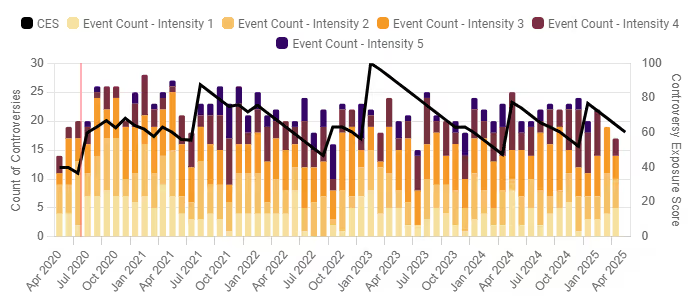
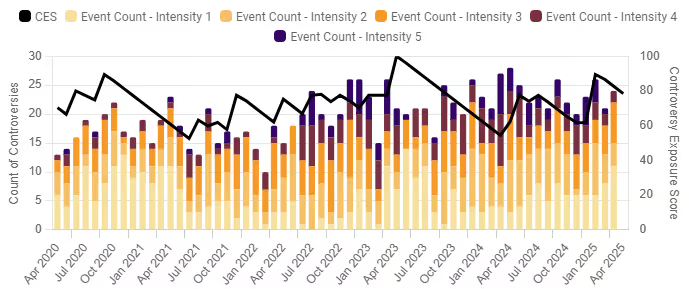
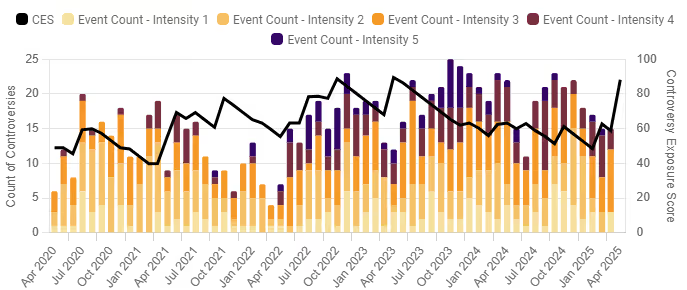
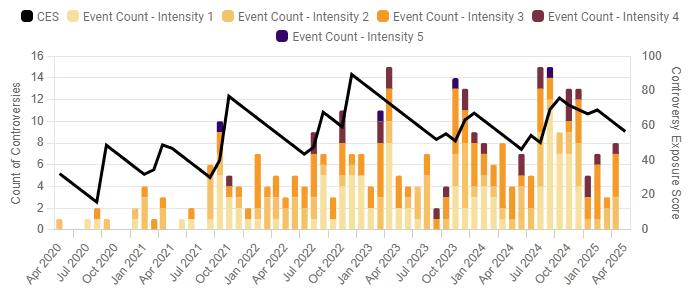
The rapid growth of social media companies has created significant ESG challenges, particularly in the areas of data privacy, content moderation, and corporate governance.
Meta and ByteDance, in particular, have been hit with lawsuits and fines related to data breaches, privacy violations, harmful content affecting minors, labor practices, and antitrust, with regulatory bodies across the US, EU, and Asia increasing scrutiny of their data collection practices.
Let’s dive into some of the key ESG challenges facing the social networking industry.
Meta Platforms Inc.: Privacy Breaches and Regulatory Scrutiny
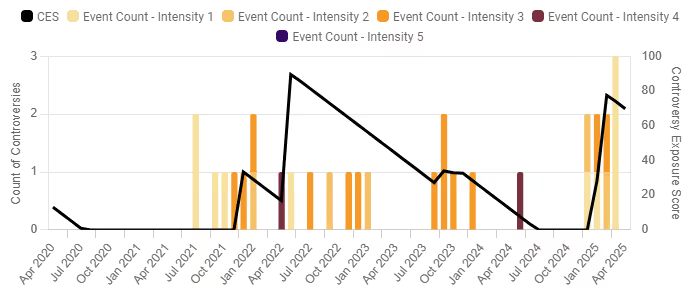
Meta, the mother company of some of the most used social platforms, Facebook, Instagram, and WhatsApp, has faced numerous ESG challenges over the years, including privacy breaches, data misuse, and content moderation issues. 2025 is off to a rocky start, with the company facing a new lawsuit over personal data usage for targeted ads. In 2024, Meta was fined €251 million for a 2018 data breach and faced fines in South Korea and Nigeria for unlawful data collection and antitrust trials regarding Instagram and WhatsApp. In 2023, it addressed issues related to minors and employee treatment. Previous years included fines over the Cambridge Analytica scandal and minors' privacy violations, highlighting ongoing governance and privacy risks amidst regulatory scrutiny.
ByteDance Ltd (TikTok): National Security Risks and Content Concerns
In recent years, TikTok has faced significant ESG risks as U.S. politicians labeled it a national security threat, leading to data privacy concerns and investigations in the EU. By 2022, it incurred major fines, including a £27 million penalty in the UK for data breaches. In 2023, child safety and harmful content lawsuits increased, prompting government bans on official devices in the U.S., UK, and EU. In 2024, TikTok lost its appeal against a U.S. ban, while countries like Canada and Albania imposed restrictions. A 2025 Supreme Court ruling heightened the risk of a complete ban, highlighting ongoing legal challenges.
Since Elon Musk's acquisition of X (formerly Twitter), the platform has faced major controversies over hate speech and misinformation. Legal issues from the $44 billion buyout and a $150 million settlement for security breaches surfaced in 2022, along with fines in Russia and India. In 2023, X received backlash for hosting anti-Semitic content, leading to advertiser losses and lawsuits. The EU initiated investigations into disinformation, and by 2024, X faced fines in Brazil and Australia, GDPR complaints, and class action lawsuits related to age discrimination and mass layoffs, raising concerns about its online impact.
Kakao has faced moderate ESG risks, notably privacy issues and market behavior controversies. In 2024, the company was fined $11.1 million due to a KakaoTalk data breach. Additionally, in 2023, Kakao faced investigations over market manipulation linked to its SM Entertainment acquisition and experienced security vulnerabilities enabling fraudulent activities. Despite these concerns, Kakao's service outages and monopolistic practice allegations have had less severe impacts compared to industry peers.
REDnote (Xiaohongshu) has fewer ESG issues compared to its peers, facing challenges primarily related to censorship, privacy, and regulatory compliance. In 2025, Texas banned its use on government devices due to security concerns. Earlier, REDnote encountered legal challenges over AI-generated art copyrights (2023), a Taiwan-imposed national security ban (2022), layoffs due to restructuring (2022), and fines by Chinese regulators for inappropriate content involving minors (2021).
The social networking industry continues to grapple with significant ESG challenges related to data privacy, harmful content, and corporate governance. Major companies such as Meta, ByteDance, X Corp, KakaoTalk, and REDnote face ongoing regulatory scrutiny, fines, and lawsuits, highlighting persistent ethical concerns. While these issues pressure platforms to improve transparency and governance practices, they also underscore the industry's substantial risks and responsibilities to users and stakeholders.
Reach out to SESAMm
TextReveal’s web data analysis of over five million public and private companies is essential for keeping tabs on ESG investment risks. To learn more about how you can analyze web data or to request a demo, reach out to one of our representatives.
In recent years, consumers have become increasingly conscious about the impact of their purchases on the environment and society. As a result, many companies have jumped on the bandwagon of sustainability and green initiatives to attract consumers who prioritize ethical and environmentally friendly products. However, not all companies are authentic in their claims and practices, leading to a phenomenon known as greenwashing. In the first article of this two-part series, we gave an in-depth analysis of reputational laundering and greenwashing. In this article, we will explore the prevalence of greenwashing across various industries. We will also study the case of a company practicing greenwashing and a genuinely sustainable company.
Reputational Laundering by Industry
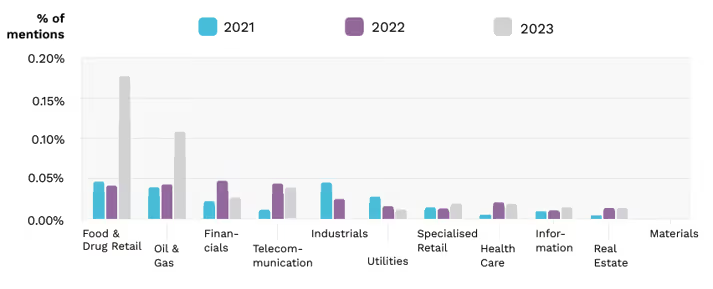
Reputational laundering is a common practice across various industries. Traditionally, the ‘Oil and Gas’ and ‘Financial’ industries have been identified as the main culprits. However, we have recently observed a substantial increase in the frequency of mentions in the ‘Food & Drug Retail’ industry, surpassing all other sectors by a significant margin. To evaluate this trend, we calculated the percentage of reputational laundering mentions in relation to the total number of mentions for each industry.
Reputational laundering over time
We looked at the last three years to find how each industry has evolved. Most industries have remained fairly static within a reasonable range. However, ‘Industrials’ have seen a significant decrease in mentions. Conversely, ‘Oil and Gas’ and ‘Food & Drug Retail’ significantly increased in 2023.
‘Food & Drug Retail’ more than tripled its mentions percentage due to a large number of mislabeled eco-friendly products (Walmart & Kohl’s) and green initiatives claims (Coca-Cola, Unilever, Amazon…).
The ‘Oil and Gas’ industry ranked second, and its recent spike can be associated mainly with greenwashing on actions such as their direct negative impact on the environment and the impact on local communities (TotalEnergies - Uganda & Tanzania). Another example is related to sportswashing with ‘Oil and Gas’ advertising heavily in sports events and even sponsoring sports clubs.
Figure 1: Reputation laundering by industry over time.
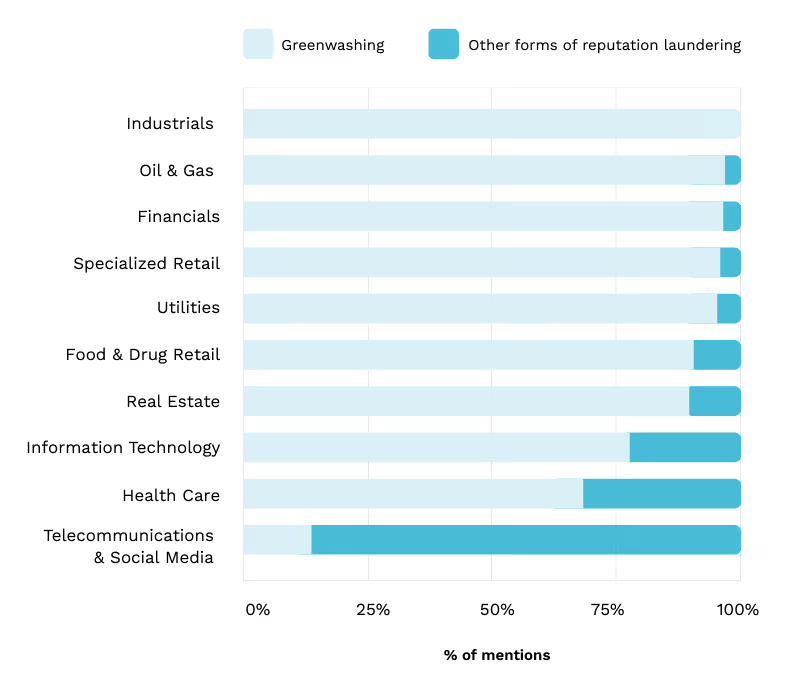
When examining the prevalence of reputational risks across sectors, greenwashing is the predominant concern in most industries. This is particularly evident in sectors like Industrials, Oil & Gas, and Financials, where greenwashing mentions are especially prominent. On the other hand, Telecommunications & Social Media stands out as an exception, with the bulk of its mentions skewing towards colorwashing, which encompasses specific practices such as blackwashing and sportswashing (Netflix accused of 'blackwashing' new docu-series Queen Cleopatra by casting black British actress).
Figure 2: Reputational laundering breakdown by industry.
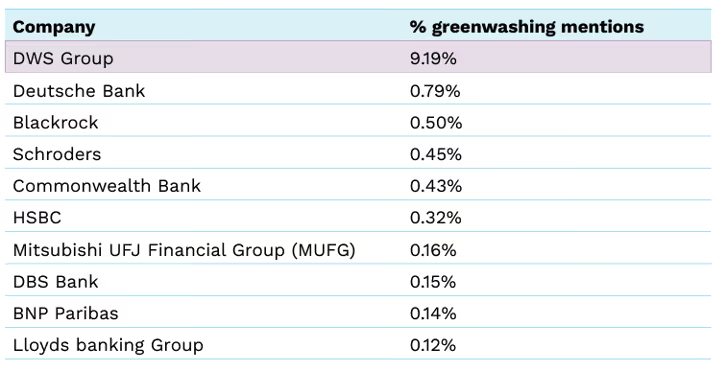
The financial industry's footprint in reputational laundering might not be the most pronounced in terms of direct mentions, but its influence stretches wide via its investment activities in other sectors. This means the ripple effect of the financial sector's actions can be substantially more impactful than those in other industries. Our investigation into this phenomenon included a rigorous examination of the frequency with which financial institutions are cited in discussions of greenwashing. Additionally, we assessed their efforts in driving positive impact initiatives. We scrutinized a group of 144 financial entities, arranging them on a scale from the greatest to the least number of greenwashing mentions in proportion to their overall volume of mentions.
Top financial firms by greenwashing claims
Below, we listed the financial firms with the highest relative volume of greenwashing mentions. Beyond the first two institutions on the list, which are related and had a big scandal in 2022, we can see many very recognizable names, such as Blackrock (investing in fossil fuels), JP Morgan (for fossil fuel investment policies), and HSBC (false advertising green claims) making our top ten list.
Case Study: DWS Group
The DWS Group, previously known as Deutsche Asset Management, found itself in the spotlight for all the wrong reasons in 2022 and 2023. The scandal landed them at the top of our list, a position highlighted by the significant number of mentions they received — a figure that is an order of magnitude higher than that of any other entity on the list.
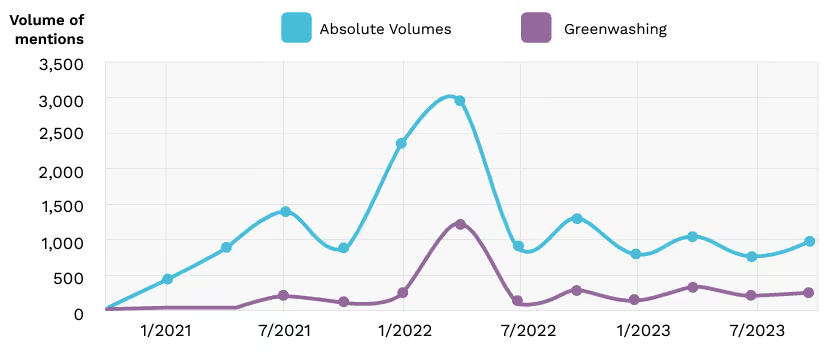
As a German asset management firm under the umbrella of Deutsche Bank, DWS was embroiled in severe greenwashing allegations. The last two years were marked by high-drama events: starting with greenwashing allegations at the end of 2021, their offices were searched in May 2022, which led to the resignation of the DWS chief in June 2022. The saga concluded with a substantial $25 million fine paid to U.S. regulators in September 2023.
The accompanying chart provides a visual representation of the timeline for these events, contrasting the number of absolute mentions with those specifically related to greenwashing. The alignment in the timing and scale of these mentions with the unfolding events is unmistakable.
Figure 3: DWS Group relative greenwashing mentions.
Best-in-class companies
In our effort to wrap up our study on an optimistic note, it's important to recognize that the heightened scrutiny of greenwashing and its associated initiatives ultimately serves a beneficial role by significantly raising our collective consciousness about crucial ESG issues.
While it's true that numerous companies have come under fire for greenwashing, it's equally important to highlight those that are genuinely advancing initiatives with positive environmental and social repercussions across the globe.
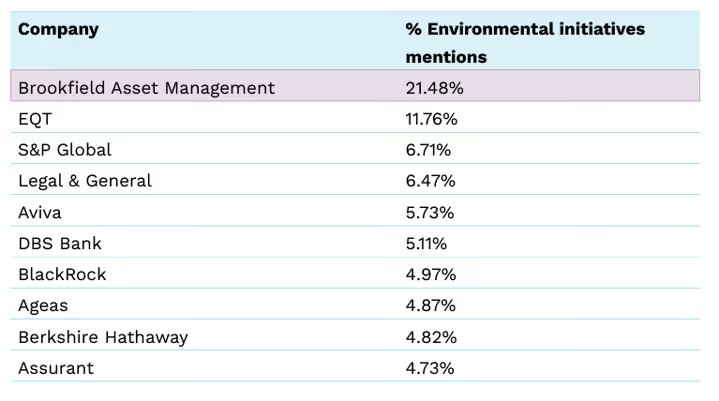
Employing the same method used to scrutinize financial firms implicated in greenwashing, we focused on the same group of 144 companies, honing in on the top 10 that stood out based on normalized mentions of their positive environmental actions.
The findings are quite encouraging: mentions of these positive initiatives dwarf those of negative impacts when viewed as a proportion of total mentions. Brookfield Asset Management (Brookfield) shines as the most notable, garnering almost double the mentions of its closest peer.
Also noteworthy is BlackRock's appearance on this list. Despite its presence on the greenwashing list, BlackRock has made strides in positive efforts, too. The company's initiatives—some counterbalancing the negative—have received more attention for their positive impact than for greenwashing, suggesting a complex but proactive ESG engagement.
Furthermore, companies like EQT, Berkshire Hathaway, and Standard & Poor's have actively engaged in initiatives that drive positive impact, earning them significant—and rightfully so—media coverage.
Figure 4: Brookfield sentiment vs environmental initiatives.
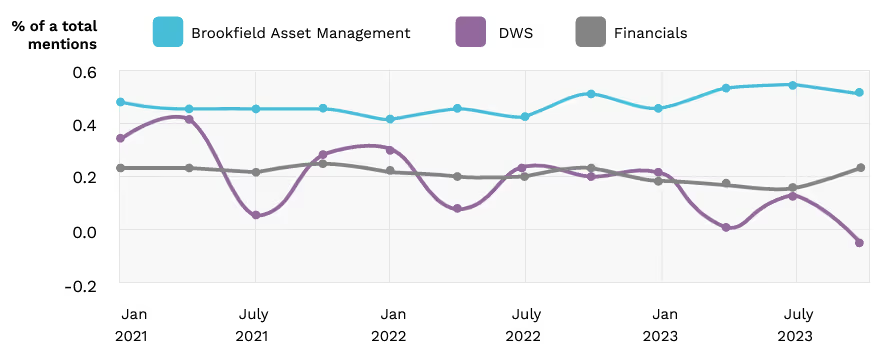
In terms of visibility, these environmental initiatives represent a significant portion of the company’s profile, surpassing 50% of total mentions in September 2022. This highlights the dominant role these actions play in the public discourse surrounding Brookfield.
The company’s polarity(1) — a measure of sentiment in mentions — shows a steady and positive trajectory beginning in late 2021. This trend points to a growing positive reputation and increased positive online discussions regarding the company.
Web Sentiment Analysis: Financial Industry vs. DWS & Brookfield
Figure 5: Sentiment over time.
When assessing the landscape of ESG engagement within the financial sector, we consider the comparative reputations of two key players: the leader in positive impact initiatives against the firm with the highest number of greenwashing mentions. How do they stack up against the broader sentiment within the financial industry?
The finance industry at large grapples with a challenging reputation shaped by various issues, including regulatory shortcomings, perceived corporate greed, opacity, and environmental impacts, among others.
Against this backdrop, we observe that:
DWS: The company's reputation trajectory is on a downward slope compared to the industry average, with the aftereffects of recent controversies culminating in a reputation low as of October 2023.
Brookfield: In contrast, Brookfield's commitment to the environment appears to buoy its reputation, maintaining a consistently positive trend that surpasses the market standard. Notably, from January 2023 onward, there is a discernible uptick in positive sentiment.
Conclusion
While the prevalence of greenwashing poses a considerable challenge within the corporate sphere, our study reveals a silver lining. The intensive scrutiny and debate surrounding environmental, social, and governance (ESG) issues have led to heightened awareness and, more importantly, action. Amidst the cacophony of claims, our analysis has found a discernible pattern of positive ESG initiatives overshadowing negative impacts, indicating a shift towards genuine sustainability efforts.
Particularly encouraging is the performance of certain frontrunners like Brookfield Asset Management, which has emerged as a beacon of positive action, outpacing its peers in driving meaningful change. This illustrates the potential for firms to lead by example and underscores the importance of rigorous analysis in distinguishing substantive ESG commitments from superficial ones.
Ultimately, this study underscores the transformative power of informed scrutiny and the pivotal role that advanced analytical tools play in propelling the ESG agenda forward. As the financial community continues to refine its approaches to evaluating ESG metrics, we can remain cautiously optimistic about the journey from mere green-tinted narratives to deeply rooted, impactful corporate practices.
(1) Polarity aggregates positive and negative sentiment (opinions, reviews) on a company. It ranges from -1 to 1. A 0 score means that positive and negative sentiment are equal. Well-regarded brands generally have polarity scores over 0.5.
At SESAMm, we used AI to study billions of articles and analyze greenwashing trends. Download this comprehensive ebook for an in-depth understanding of the evolving landscape of reputational laundering, notably greenwashing, and dive into its trends in the corporate world.
SESAMm’s AI Technology Reveals ESG Insights
Discover unparalleled insights into ESG controversies, risks, and opportunities across industries. Learn more about how SESAMm can help you analyze millions of private and public companies using AI-powered text analysis tools.
Northern Trust is the latest name on a growing list of managers losing business over the same issue. Since early 2025, several asset owners have reallocated capital away from managers that stepped back from climate coalitions:
For risk and ESG teams, the lesson isn't about picking a side in the US-Europe ESG divide. Instead, it's that a governance decision made for one audience can create material commercial exposure with another. Northern Trust's exit was a defensible response to conditions in its home market, but that still cost the firm a nine-figure mandate.
Coalition memberships and public commitments used to be treated as background credentials, not something clients actively screened for. However, asset owners are now treating a manager's stewardship posture as a live signal, and they're willing to act on it.
NZAM officially relaunched on February 25, 2026, with softer requirements (the updated commitment dropped references to the 2050 net zero investment goal) and without most large US managers. More than 250 asset managers, including Amundi, signed on. The managers who didn't rejoin are now operating with a visible, trackable gap between their public stance and what a growing subset of clients expect.
The takeaway
Climate coalition membership has become a proxy that a segment of asset owners actively screen for, and reversing course is now a reputational event with a dollar figure attached. Whether that logic holds up for managers with less European or sustainability-focused client exposure is a separate question. But for those who do, the message from this string of mandate losses is clear: walking back a public commitment doesn't just draw criticism, it costs money..
SESAMm helps ESG, risk, and secondaries teams monitor and screen for ESG and reputational risk across public and private companies, drawing on a data lake of 30+ billion documents in 100+ languages. Screening criteria, whether regulatory (SFDR, EU Taxonomy), LP-driven, or values-based, are fully customizable to a firm's own policy. Learn more about SESAMm's approach to controversial business involvement screening and secondaries exclusion diligence.
Stay ahead with the latest in ESG and AI intelligence
Join our mailing list to receive new reports, event invites, and updates from SESAMm directly to your inbox.





.avif)



.png)