The ESG Scorecard: A Deep Dive into Electric Scooter Rentals
July 30, 2025
•
5 mins read
The e-scooter and e-bike rental industry is grappling with significant ESG risks, driven by regulatory challenges, financial instability, and safety concerns.
Lime, Bird, and Voi face challenges in environmental sustainability, particularly regarding waste management and scooter lifecycles. They also deal with social risks, such as accidents and legal issues related to safety, prompting cities like Madrid and Paris to impose bans or regulations. Regulatory compliance remains difficult, as seen with Voi's license revocations in Brussels. Additionally, Bird filed for bankruptcy in 2024 amid financial struggles, reflecting broader industry issues.
To top it off, the industry is also under pressure to adopt more responsible governance practices, including addressing labor conditions, consumer rights, and transparency in operations.
What are the most pressing ESG challenges currently facing the electric scooter rental sector? Read to find out.
Lime: Confronting Safety, Legal, and Environmental Challenges
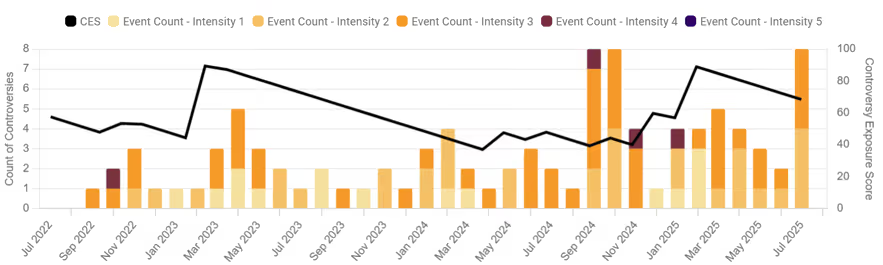
Lime has faced significant ESG risks, including scrutiny over safety and maintenance issues related to its scooters, which have resulted in lawsuits and fines from local authorities like TfL and Brent Council. Environmental concerns arise from accusations of e-bikes being dumped in rivers. The company also struggles with legal troubles, facing sanctions in Andalucía and disputes over permits in Brussels and Madrid. Financially, Lime has exited several markets and laid off 14% of its staff, highlighting its vulnerabilities in governance, environmental, and social responsibilities.
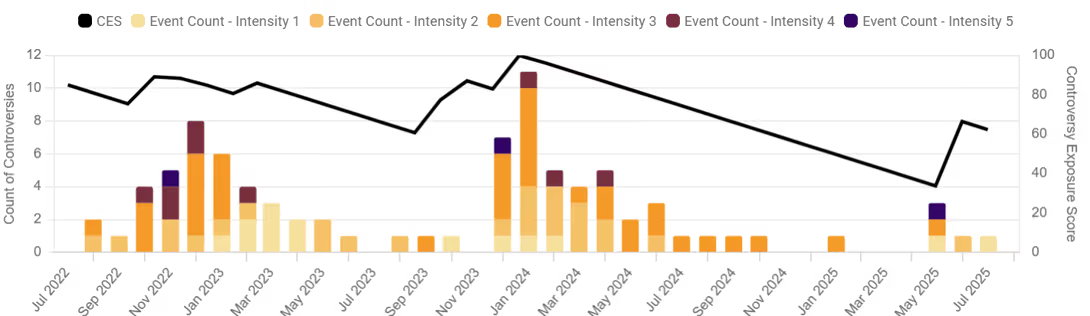
Bird has been facing significant ESG risks following its 2024 Chapter 11 bankruptcy due to severe financial issues, resulting in market exits, layoffs, and scooter scrapping. Legal challenges include lawsuits over scooter misuse in Denver and a class action in Austria over unfair liability clauses. Safety concerns in cities like Zaragoza and Málaga have led to revoked operating licenses, while maintenance issues and parking violations in Freeport and Appleton have harmed their reputation. Despite restructuring efforts, Bird’s recovery path is uncertain, exposing it to long-term governance, operational, and environmental risks.
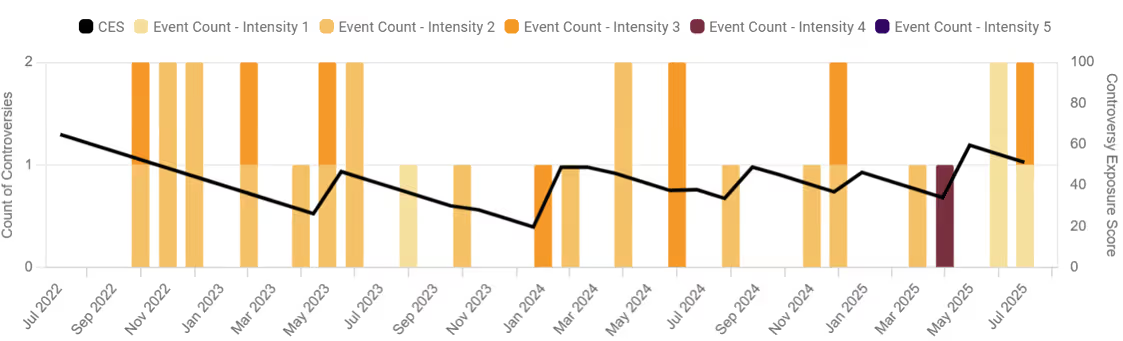
Voi Technology faces significant ESG risks linked to financial issues and regulatory challenges. In 2024, the company laid off 120 employees to improve profitability. It is disputing the termination of its scooter service in Seville and license revocations in Brussels and Bremen. Ties to sanctioned Russian oligarch Alexei Mordashov have raised scrutiny in cities like Liverpool and Bristol. Additionally, the company is facing consumer complaints about misleading advertising and safety issues, including a scooter fire in Bristol.
The electric scooter and e-bike rental industry faces significant ESG challenges that place its future sustainability and growth on shaky ground. Companies like Lime, Bird, and Voi must address regulatory compliance, safety concerns, and financial instability to regain public trust. By prioritizing responsible governance, enhancing safety measures, and demonstrating commitment to environmental stewardship, these firms can pave the way for a future where micromobility thrives as a safe and sustainable transportation option.
Reach out to SESAMm
TextReveal’s web data analysis of over five million public and private companies is essential for keeping tabs on ESG investment risks. To learn more about how you can analyze web data or to request a demo, reach out to one of our representatives.
Tokio Marine & Nichido Fire Insurance Co., Ltd. (TMNF) tapped SESAMm for a joint research venture to predict future stock price movements and discovered two key findings:
NLP data from news and social networking websites can have strong relationships with investor behavior. Thus, it’s possible to forecast investors’ rational reactions to changes in data and price movements based on those relationships.
NLP data proved to help anticipate tail events. For example, given the macroeconomic environment of the last 10 years, the stock market performed well. So in this context, investors are sensitive to negative narratives in times of uncertainty, such as the 2015 market sell-off, the U.S.-China trade war, the coronavirus pandemic, and the start of the Ukraine-Russian war, and post their concerns online.
Providing safety and security since 1879
Tokio Marine Insurance Company was first established in 1879. Over the years, it has added products and services, acquired other businesses, and merged with other companies to eventually become Tokio Marine & Nichido Fire Insurance Co., Ltd. Commonly called Tokio Marine Nichido today, the company is a property and casualty insurance subsidiary of Tokio Marine Holdings, the largest non-mutual private insurance group in Japan. Its products and services provide safety and security to its clients and partners, contributing to more fulfilling lifestyles and business development.
One of the company’s philosophies is to be a good corporate citizen and fulfill its social responsibilities, including protecting the global environment, promoting human rights, creating a responsible working environment, and contributing to society and individual local communities. Recently, the Emperor of Japan awarded Tokio Marine Holdings, Inc. the Medal with Dark Blue Ribbon for donating to the Japan Student Services Organization to support students who face financial difficulty during the COVID-19 pandemic. Individuals, corporations, or organizations are awarded the Medal with Dark Blue Ribbon for their outstanding contributions to the public.
Transforming and accepting the challenge to grow
According to TMNF, “The business environment surrounding the insurance industry is changing at a faster pace than ever due to changes in demographics, advances in technologies, such as autonomous driving and AI, and longer-term trends, such as the intensification and frequent occurrence of natural disasters, as well as further progress in digitalization due to the COVID-19 pandemic.”
“The business environment surrounding the insurance industry is changing at a faster pace than ever…”
“While these changes in the business environment pose a threat, we consider them to be excellent opportunities for transformation and the creation of new value.” So they’ve adopted the concept, “Transformation (“X”) and Challenge to Growth 2023: Aiming to be the company most chosen for quality and its passion.” Ultimately, it strives to support customers and local communities in times of need while contributing to social responsibility. Five social issues that it will prioritize are:
Global climate change and the increase in natural disasters
The increased burden of long-term care and healthcare due to the aging of society and advances in medical technology
Technological innovation and its effects on the environment
Symbiotic society and responding to the novel coronavirus
Industrial infrastructure and how it supports economic growth and innovation
Leveraging a partner with the right technology
To secure and protect its clients’ assets while elevating social issues, Tokio Marine Nichido sought out an edge in the stock market. Under these circumstances, it was fortunate that TMNF discovered SESAMm in 2020 through the Plug and Play Japan program, a platform with an event that connects Japan to markets abroad. SESAMm had presented its NLP alternative data solution, TextReveal®, to which TMNF considered the platform for access to alternative data and sought collaboration with the SESAMm team for a research project.
“SESAMm has the technology to extract text sentiment from news data with a neural network.” – Tokio Marine & Nichido Fire Insurance Co. Ltd representative
Extract relations between NLP data and the financial market
In 2021, Tokio Marine Nichido Insurance began collaborating with SESAMm to develop an AI analytics model for alternative data. It models the impact of news and social networking data on investor behavior for stock and bond markets, transforming text information into knowledge usable by TMNF. For instance, when the model detects a negative narrative raising uncertainty in the market, investors can use this signal to reduce their risk exposure.
Predicting future stock price movements from news and social media data
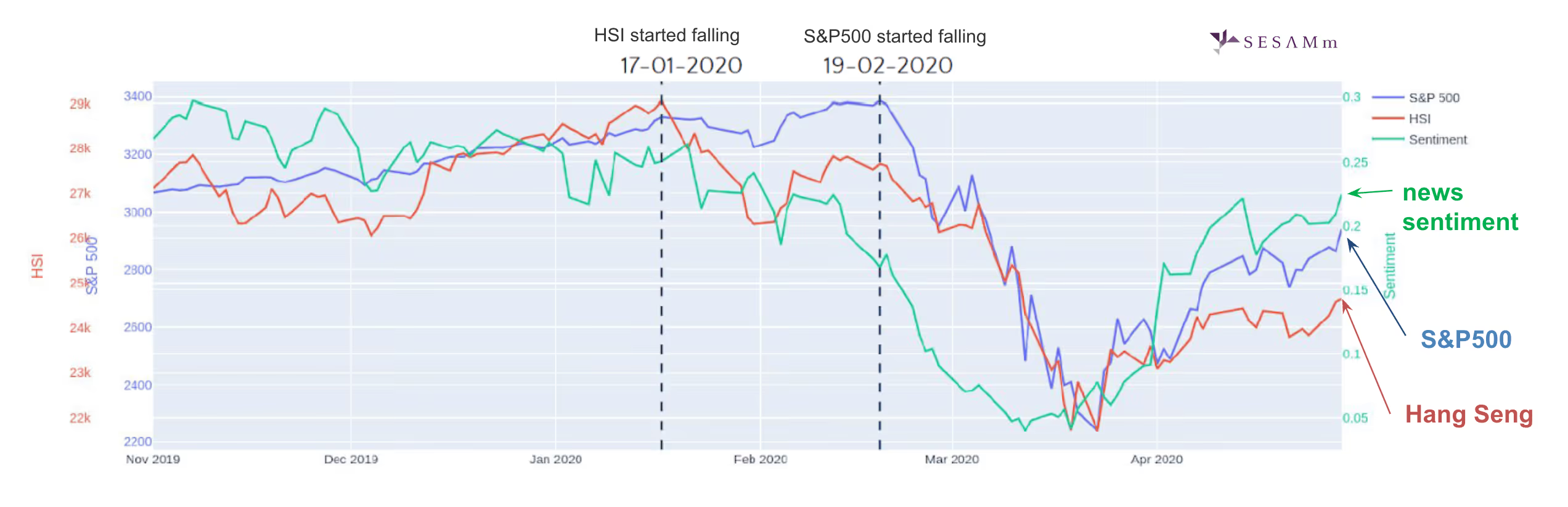
Tokio Marine Nichido and SESAMm’s joint research found that natural language data from news and social networking sites effectively predict future stock price movements. In the case involving the pandemic, for example, there was a time lag of as long as a month between the time COVID-19 became news and the time it affected the U.S. stock market (Figure 1). By using SESAMm’s technology to analyze news data during this period, the team found that US news and social networking sentiment had already deteriorated sharply before stock prices reacted. This sentiment deterioration is due to the fear of the coronavirus-spread effect on the global economy. In an all-time high S&P 500, U.S. investors did not initially consider this risk. In comparison, HSI companies were closer to the coronavirus spread risk, resulting in HSI investors reacting ahead of those in the U.S.
Figure 1: In 2020, U.S. news sentiment falls ahead of the stock market in response to COVID-19 concerns.
The model can calculate sentiment for each company by analyzing the news of individual companies. It’s also possible to create a composite to measure the sentiment related to a stock index. The sentiment data also helps management and investor relations because it provides a quantitative means of understanding the extent to which investors are concerned about certain news about their company.
Verifying the results
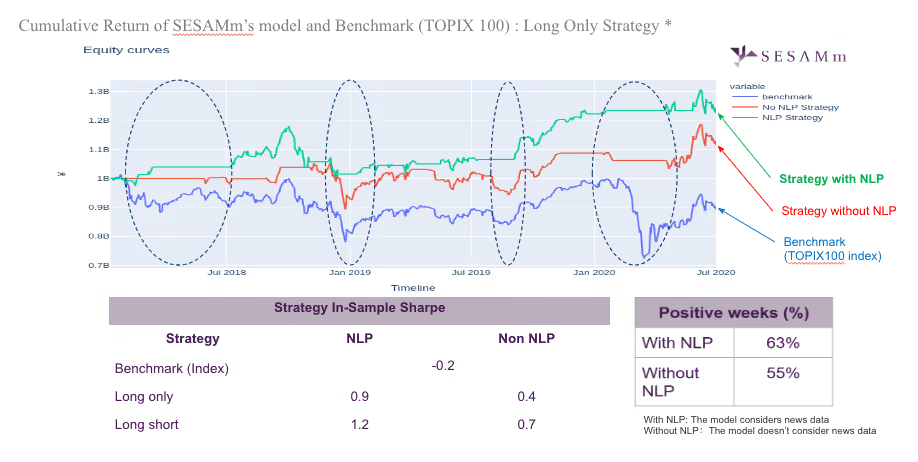
Verification using Japanese has revealed that the timing of bottoming and ceiling of text sentiment precedes those of stock prices. The collaborating team compared the performance of:
A model that uses only orthodox financial and economic data as inputs
A model that considers NLP and financial and economic data, confirming that the latter could generate higher alpha
Figure 2: Back-testing confirms that SESAMm’s equity model can predict a market downturn, capturing changes in text sentiment and reducing positions ahead of market crashes.
Since measuring sentiment is mean reversionary by nature, the TMNF team believes it provides good support for position management during rallies and crashes. It’s also valuable for avoiding forced loss-cut at the bottom when liquidity temporarily evaporates and the market crashes.
Expanding the research to other use cases
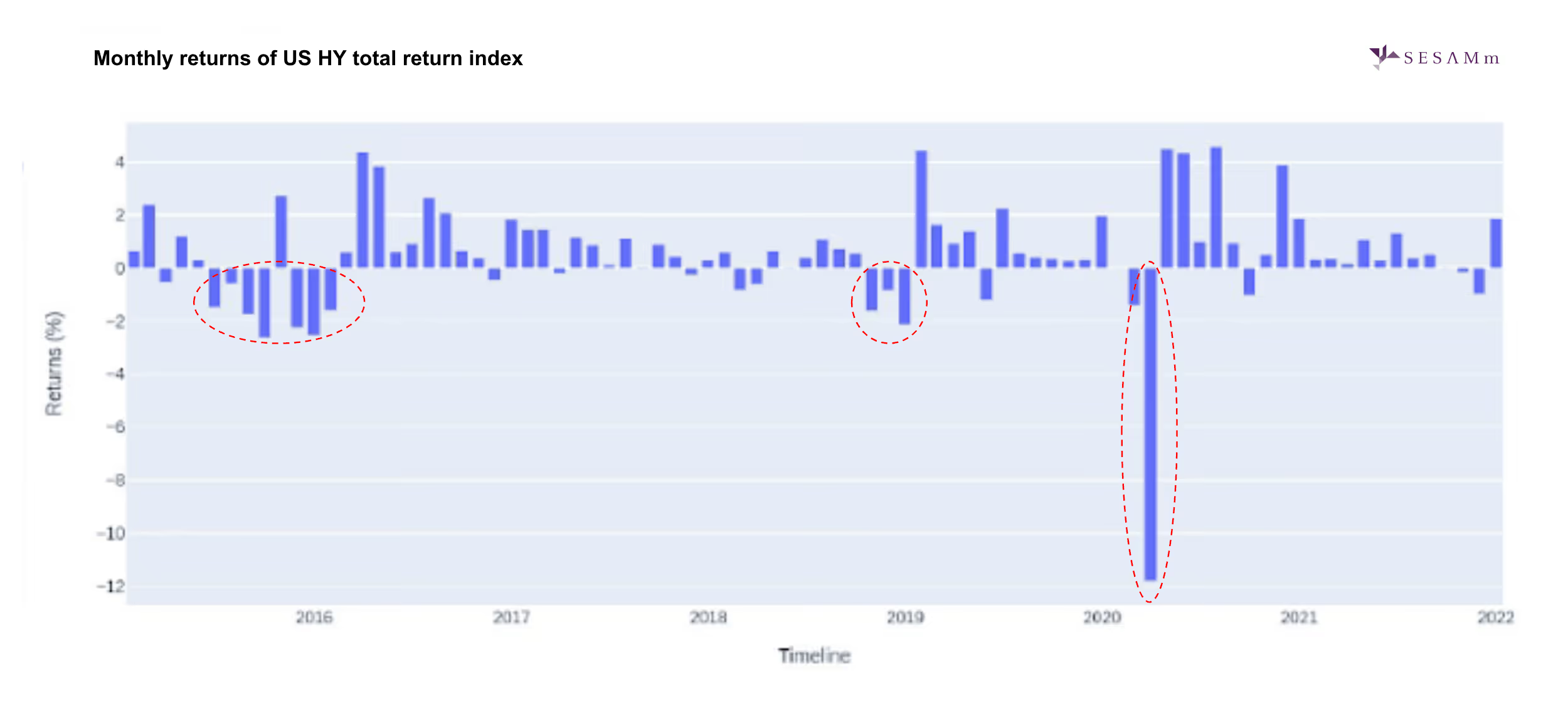
In addition to analyzing the stock market, Tokio Marine Nichido also expanded the scope of the research to include R&D on using natural language data in trading U.S. high-yield bonds. Research shows that NLP data can help provide a hedging signal for the negatively skewed high-yield market (Figure 3) by capturing deteriorating text sentiment (Figure 5). For example, these signals can inform investors to reduce positions before market reactions.
Figure 3: NLP data can help provide a hedging signal by capturing deteriorating text sentiment.
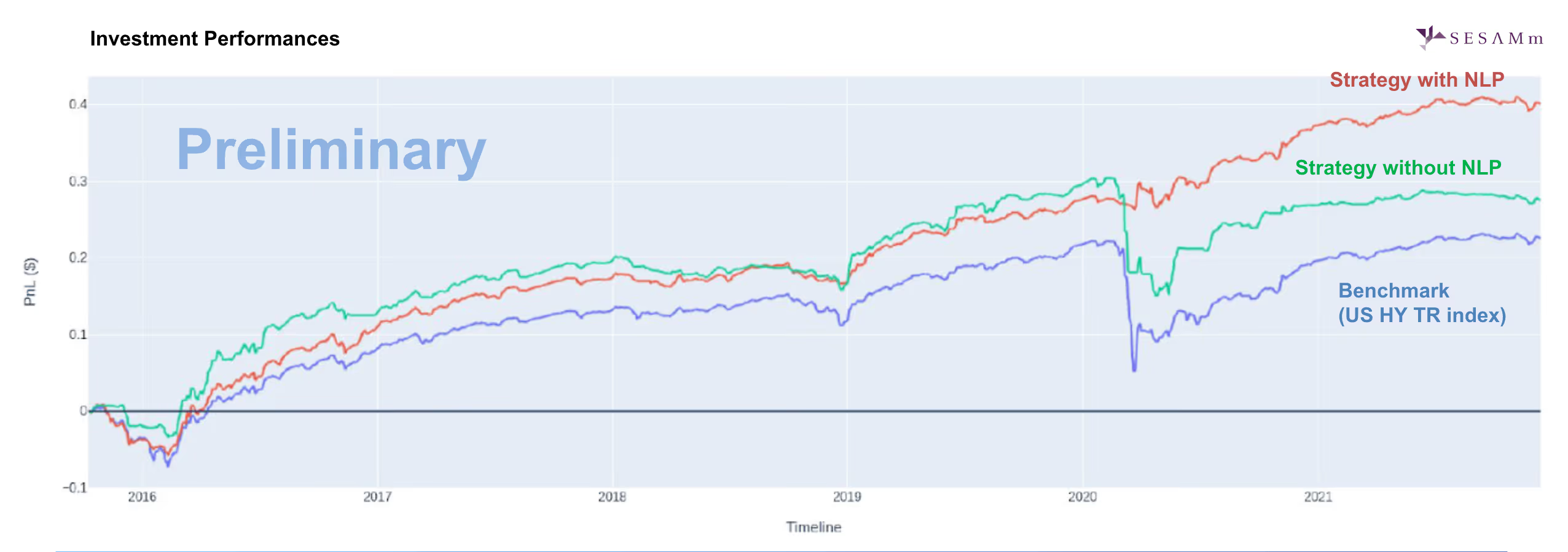
Figure 4: An NLP-informed high-yield strategy can outperform the U.S. high-yield total return index and a strategy without NLP. Same volatility level for the three back-tests.
TMNF is also applying the research to estimate the Fed’s stance—hawkish or dovish—using natural language data, too. It hypothesizes that the market will be focused on the Fed’s stance on interest rate hikes in the next few years.
“The model developed in collaboration with SESAMm is simple in structure, yet, it’s an orthodox and robust model that uses valid data as input.”
Summarizing the collaboration
In developing models, Tokio Marine Nichido believes it is essential to consider “what data to consider” and to keep it simple. And TMNF achieved these tenets. The model developed in collaboration with SESAMm is simple in structure, yet, it’s an orthodox and robust model that uses valid data as input which is preferable to a risky over-fitting by increasing complexity.
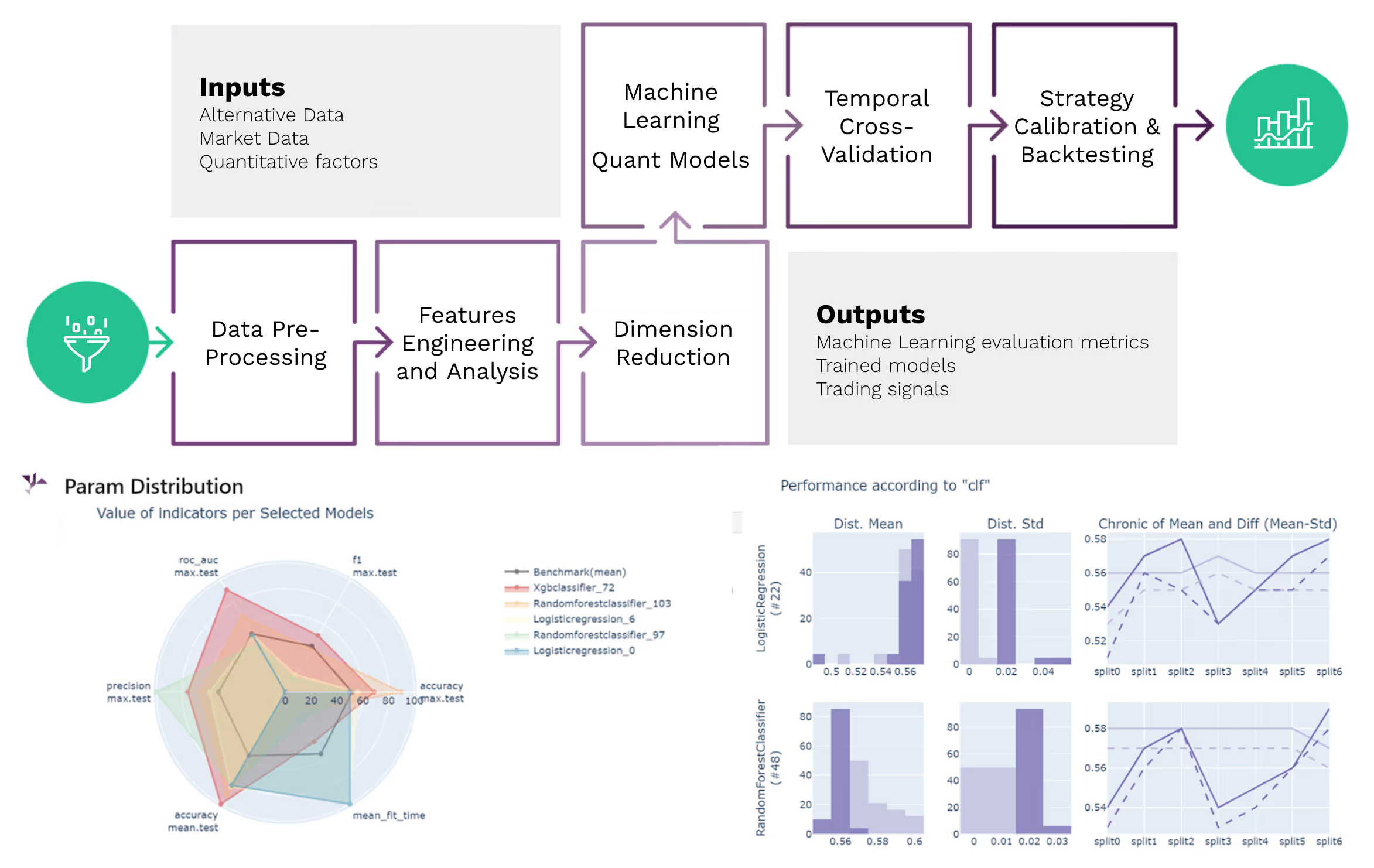
Figure 6: The joint Tokio Marine Nichido and SESAMm NLP alternative data model: Simple yet robust.
Get in touch with SESAMm
To learn more about Tokio Marine Nichido’s case study or to request a TextReveal demo, reach out to us here:
The European Union stands at the forefront of global efforts to promote environmental, social, and governance (ESG) accountability. As the world becomes increasingly ESG-aware, the EU has developed a comprehensive regulatory framework designed to ensure transparency and accountability across all sectors.
These regulations represent the EU's commitment to sustainable development and responsible business practices. However, the regulatory landscape is evolving, with the February 2025 EU Omnibus Proposal introducing potential modifications aimed at reducing the regulatory burden on businesses. However, these proposals come at the risk of substantially undercutting the impact of the regulations.
This article recaps the current ESG regulatory framework in the EU, explores the changes proposed by the Omnibus, analyzes the potential impacts of these modifications, and discusses how financial institutions can navigate this evolving landscape while maintaining compliance.
The ESG Regulatory Landscape in the EU
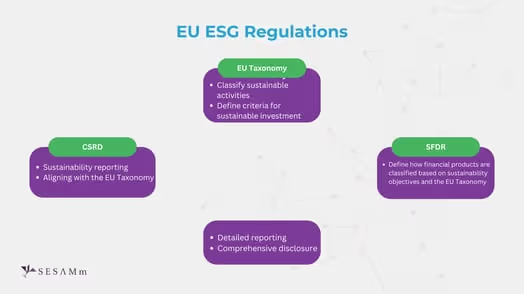
The EU is advancing sustainability through a framework of regulations that enhance corporate accountability and reporting on ESG impacts. These measures aim to promote genuine sustainable practices and address international trade and emissions challenges. Though comprehensive, these regulations are also, at times, confusing in the way they overlap and impact each other. To get started, let’s examine the EU Taxonomy, SFDR, and CSRD—a triad of interconnected regulations designed to streamline and strengthen sustainable investing practices.
EU Taxonomy
The EU Taxonomy provides a classification system for environmentally sustainable economic activities, offering clear criteria to determine whether an economic activity can be considered "green."
Key Aspects of the EU Taxonomy
Defines criteria for environmentally sustainable economic activities
Requires companies subject to CSRD to report on Taxonomy alignment
The Taxonomy helps channel investment toward genuinely sustainable projects and businesses by creating a common language for sustainable activities.
Status
The EU Taxonomy has been operational since January 2022 with phased implementation. As of March 2025, companies subject to CSRD must disclose their taxonomy alignment percentages.
Sustainable Finance Disclosure Regulation (SFDR)
The SFDR focuses specifically on the financial sector, requiring financial market participants to disclose how they integrate ESG risks into their investment decisions and the sustainability impact of their financial products.
Key Aspects of SFDR
Requires disclosure of ESG risks in investment processes
Classifies financial products based on their sustainability characteristics
Aligns with EU Taxonomy criteria for sustainable investments
Aims to prevent greenwashing in financial products
The SFDR plays a crucial role in bringing transparency to the rapidly growing sustainable investment market.
Status
Fully implemented since March 2021, with enhanced Level 2 requirements since January 2023. All EU financial market participants must classify products under Articles 6, 8, or 9. Current market data shows that 28% of EU funds are compliant with Article 8 and 5% with Article 9, with a significant trend of reclassification from Article 9 to 8 due to stricter interpretations.
The CSRD stands as a cornerstone of the EU's ESG regulatory framework, requiring companies to report comprehensively on their environmental, social, and governance impacts. This directive mandates alignment with the EU Taxonomy, ensuring standardized reporting of sustainability metrics.
Key Aspects of CSRD
Requires detailed reporting on ESG impacts
Aligns with EU Taxonomy criteria for sustainability
Currently applies to companies with 250+ employees
Enhances corporate transparency on sustainability issues
The CSRD represents a significant step forward in standardizing sustainability reporting across the EU, providing investors, consumers, and regulators with comparable information on corporate sustainability performance.
Status
The CSRD, adopted in November 2022, replaces the Non-Financial Reporting Directive (NFRD). The transition to CSRD reporting was originally slated to begin in 2025 and would expand the number of companies subject to reporting requirements to 49,000 (vs 11,700 under NFRD). However, as we’ll see later, the Omnibus may push back the timing of CSRD.
Outside of the EU Taxonomy, SFDR, and CSRD, the Omnibus Proposal highlights two other key ESG regulations: CSDDD and CBAM. These regulations relate to corporate accountability for supply chains and to limiting carbon leakage.
Corporate Sustainability Due Diligence Directive (CSDDD)
The CSDDD focuses on corporate accountability throughout global supply chains, requiring companies to identify, prevent, and mitigate human rights and environmental risks associated with their operations.
Key Aspects of CSDDD
Requires companies to identify and mitigate human rights and environmental risks
Applies to full supply chains, ensuring comprehensive oversight
Applies to EU companies with 1,000+ employees and €450 million+ global turnover and non-EU companies with over €450 million EU turnover
Mandates regular monitoring and reporting on due diligence efforts
Strengthens corporate accountability for sustainability across operations
This directive acknowledges that a company's sustainability impact extends beyond its direct operations, encompassing its entire value chain.
Status
CSDDD was adopted in April 2024. Its phased implementation is slated to start in June 2026 and be completed by June 2028. The timing and scope of CSDDD is subject to change following the Omnibus Proposal.
Carbon Border Adjustment Mechanism (CBAM)
The CBAM is an innovative approach to preventing carbon leakage. It levies a carbon tax on imports to ensure that the EU's ambitious climate policies do not simply shift carbon-intensive production outside its borders.
Key Aspects of CBAM
Imposes a carbon tax on imported goods
Requires importers to report emissions data
Ensures payment for embedded carbon costs in imported products
Aims to prevent carbon leakage to regions with weaker climate policies
This mechanism aims to create a level playing field for EU producers subject to carbon pricing while encouraging global partners to implement similar carbon pricing mechanisms.
Status
The transitional phase for CBAM began in October 2023, with full implementation scheduled for January 2026. It currently covers cement, iron and steel, aluminum, fertilizers, electricity, and hydrogen. The certificate requirements will phase in gradually from 30% in 2026 to 100% by 2034. It’s expected to apply to 1.8 million EU importers and generate €5-14 billion in annual revenue when fully implemented.
The February 2025 EU Omnibus Proposal
Purpose and Goals
The EU Omnibus Proposal represents a significant recalibration of the EU's regulatory approach, seeking to balance sustainability ambitions with business competitiveness concerns.
The primary objectives of the Omnibus focus on alleviating regulatory burdens faced by businesses, simplifying compliance requirements, and streamlining reporting obligations. These efforts aim to enhance business competitiveness while addressing regulatory complexity concerns. By minimizing these challenges, the goal is to create a more favorable environment for businesses to thrive. However, this push for simplification could come at the expense of transparency and accountability, especially in sectors where regulation plays a protective role.
Impact Analysis: How the Omnibus Changes ESG Compliance
Below, we’ll take a closer look at each regulation and the changes proposed by the Omnibus Proposal.
EU Taxonomy Modifications and Implications
The Omnibus Proposal suggests a Level 2 modification to the application of the EU Taxonomy, reducing the number of companies required to report taxonomy alignment.
Key Changes:
Taxonomy alignment reporting is limited to companies subject to CSDDD
Voluntary reporting option for companies not required to comply
Possible Implications:
Reduced availability of standardized sustainability data
Increased difficulty in verifying "green" business claims
Higher risk of greenwashing in financial markets
Less reliable information for sustainable investors
These modifications would potentially undermine the Taxonomy's role in creating a common language for sustainable activities.
CSRD Modifications and Implications
The Omnibus Proposal significantly narrows the scope of the CSRD, reducing the number of companies required to report on ESG impacts.
Key Changes:
Threshold increase from 250+ to 1,000+ employees
Optional reporting for SMEs
A two-year delay in reporting obligations for some companies
Possible Implications:
80% reduction in companies required to report
Decreased transparency in corporate sustainability performance
Fewer sustainability data available to investors and regulators
Potential challenges in tracking sustainability progress
These modifications would substantially reduce the regulatory burden on smaller companies but raise concerns about the availability of comprehensive sustainability data.
CSDDD Modifications and Implications
The Omnibus includes significant modifications to CSDDD, with a narrowed scope and reduced monitoring requirements.
Key Changes:
Due diligence is limited to direct suppliers with over 500 employees, not full supply chains
Monitoring frequency reduced from annual to every 5 years
Delayed enforcement for one year for the first batch (Companies with 1.5 billion in turnover and 5000 employees)
Possible Implications:
Weakened corporate accountability for supply chain sustainability
Increased risk of undetected human rights and environmental violations
Reduced monitoring of global supply chain impacts
Extended timeline before full implementation
These changes would significantly reduce companies' compliance burdens but come at the risk of removing the essence of the directive, which is eliminating child labor, forced labor, etc.
SFDR Modifications and Implications
While not directly modified, changes to other regulations, particularly the EU Taxonomy, indirectly affect the SFDR.
Indirect Impacts:
Reduced availability of reliable ESG data
Challenges in differentiating truly sustainable investments
Potential increase in greenwashing risk
These indirect effects could undermine the SFDR's effectiveness in bringing transparency to sustainable investment products.
CBAM Modifications and Implications
The Omnibus Proposal simplifies CBAM compliance, particularly for smaller importers.
Key Changes:
Small importers (under 50 metric tons/year) are exempted
Reduced reporting burden for over 182,000 businesses
Possible Implications:
Simplified compliance for small businesses
Potential loophole risk if companies split shipments to stay under the threshold
Maintained coverage of 99% of emissions despite exemptions
These modifications would maintain the CBAM's effectiveness while reducing the administrative burden on smaller importers.
The Debate: Perspectives on the Omnibus Proposal
Arguments in Favor
Proponents of the Omnibus Proposal emphasize its benefits for business competitiveness and regulatory efficiency. They highlight the reduced administrative burden, especially for small and medium-sized enterprises (SMEs), which often struggle with complex regulations. Additionally, the changes aim to simplify compliance requirements, making it easier for businesses to adhere to regulations. By aligning with global standards, the proposal helps maintain the EU's economic competitiveness while promoting a more efficient allocation of resources across industries. Together, these factors create a more streamlined and supportive environment for businesses to thrive.
As BusinessEurope Director General Markus J. Beyrer stated: "Doing better with fewer and clearer norms is what European companies of all sizes are asking for. By reducing unnecessary reporting and regulatory burdens, the first Omnibus will allow companies to contribute more effectively to the EU's sustainability objectives while also preserving the EU economy's competitiveness."
European Commission President Ursula von der Leyen also expressed support for the proposal, stating: "EU companies will benefit from streamlined rules. This will make life easier for our businesses while ensuring we stay firmly on course toward our decarbonization goals."
Criticisms and Concerns
Critics raise significant concerns about the potential undermining of the EU's sustainability ambitions. They argue that the Omnibus Proposal may lead to unintended consequences, including reduced transparency in corporate sustainability performance, weakened supply chain accountability, and regulatory uncertainty during transition periods. Additionally, it could undermine sustainability objectives and increase the risk of greenwashing. As Mariana Ferreira from WWF European Policy Office commented:
"The Commission's sudden urge to destroy laws that are crucial for the achievement of the EU Green Deal is a perilous approach that is forcing Europe into a time of regulatory uncertainty. Under the guise of 'simplification,' the Commission put forward a proposal that will hinder economic and business success."
"The Omnibus proposal erodes EU's corporate accountability commitments and slashes human rights and environmental protections."
While the European Parliament debates the Omnibus Proposal, the fact remains that even if the regulations are delayed or loosened, the need for risk management remains unchanged. Investors require transparency, and companies must manage supplier risk effectively.
Navigating ESG Risks with SESAMm
SESAMm’s cutting-edge AI solutions empower investors, financial institutions, and corporations to navigate the complexities of ESG compliance with confidence. Leveraging an industry-leading data lake and state-of-the-art AI, SESAMm uncovers hidden risks in supply chains and target companies, providing real-time insights that drive proactive decision-making. By transforming regulatory challenges into opportunities for responsible and sustainable growth, SESAMm helps businesses stay ahead of evolving ESG requirements while mitigating risk and enhancing transparency.
SESAMm’s AI Technology Reveals ESG Insights
Discover unparalleled insights into ESG controversies, risks, and opportunities across industries. Learn more about how SESAMm can help you analyze millions of private and public companies using AI-powered text analysis tools.
With all the buzz around Generative AI, it’s easy to forget that artificial intelligence (AI) has been driving innovation across industries for years. Environmental, Social, and Governance (ESG) and risk management are no different. However, at the rate AI is advancing and as the amount of raw data available for analysis continues to expand, the need to understand AI is more pressing than ever.
AI is transforming ESG, turning complex data into predictive insights and reshaping our approach to risk. But what does this mean for the industry, and how can professionals leverage this technology to maintain a competitive edge? The future of AI in ESG and risk management is not just a matter of technological advancement but a narrative of how we evolve with it.
This ebook dives into how AI works when applied to ESG, shares a few practical examples of what it looks like in real life, and offers a few predictions for what comes next.
Dive deeper into the mechanics of how AI works in ESG and equip your organization with the insights needed to enhance your ESG practices. Fill out the form below to access your copy.
Stay ahead with the latest in ESG and AI intelligence
Join our mailing list to receive new reports, event invites, and updates from SESAMm directly to your inbox.







.png)