
Insights & Updates

Blog thumbnail

Hydropower's ESG Paradox: Why the "Green" Asset Class Tops the Controversy Charts

August 20, 2026
5 mins read
Hydropower tops ESG controversy volume across 250,000+ projects, outranking coal. Why the greenest label in energy hides the heaviest social risk.

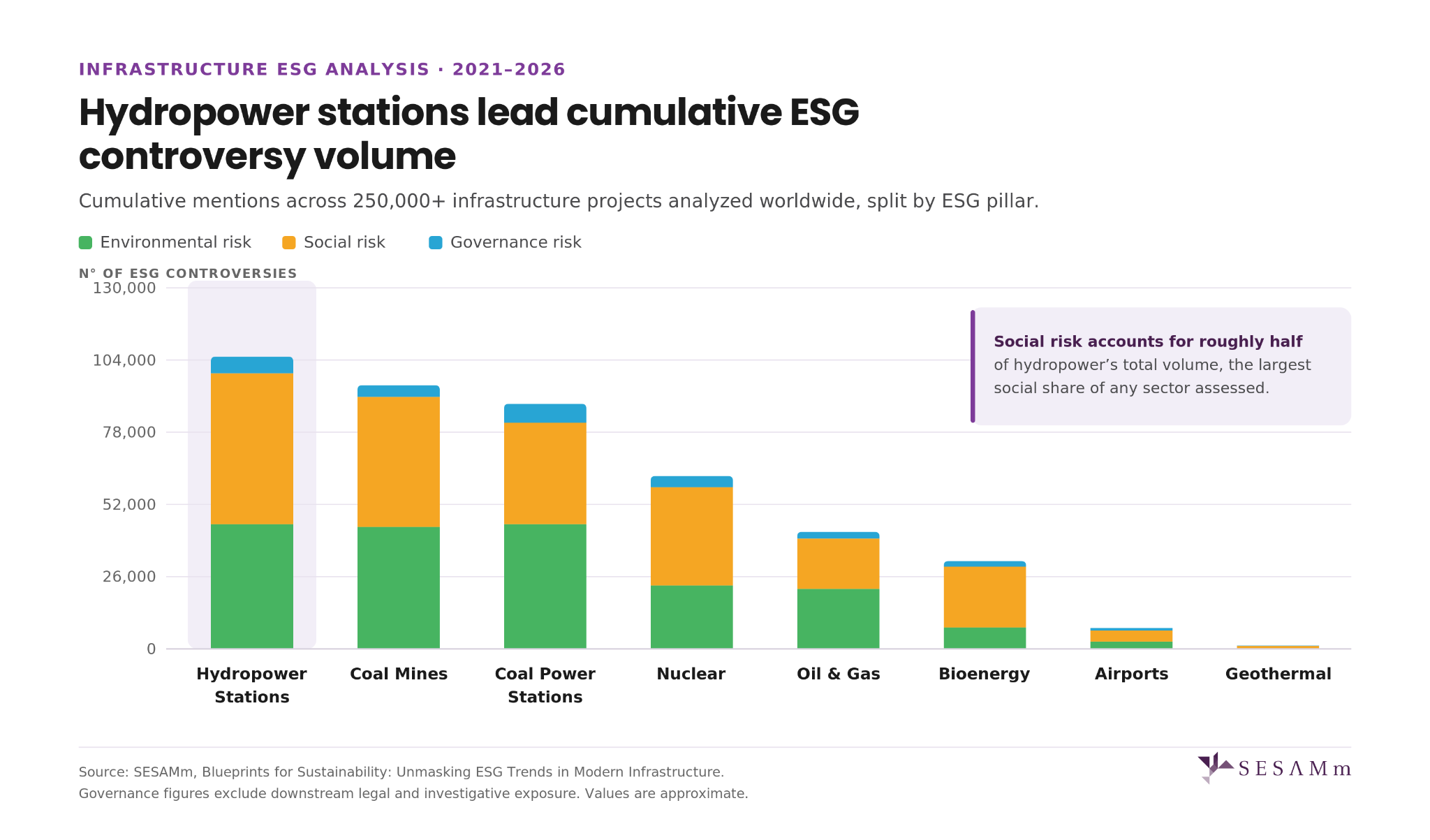
An analysis of over 250,000 infrastructure projects reveals that the sector most often filed under "clean energy" carries the heaviest environmental and social controversy footprint of any asset type assessed.

In the taxonomy of energy infrastructure, hydropower occupies a comfortable position. It is renewable, dispatchable, and long-lived, and it enters transition frameworks, green bond eligibility criteria, and net-zero roadmaps with minimal friction. Where coal is a legacy liability to be managed down and nuclear invites a specialized debate, hydropower is largely treated as settled. What these projects have actually done does not support that treatment.
Belo Monte, an 11,233 MW complex on the Xingu River in Pará, Brazil, is the sharpest test of the point, because it was built to answer this exact objection. Approved after decades of opposition to a far larger design, it was engineered as a run-of-river plant to minimize flooding, and its reservoirs cover 478 km², of which 274 km² was already river channel at high water, a 61% reduction compared with the 1980s proposal, according to the operator's own regulatory filing. The mitigation was designed from the start, and everything that follows happened regardless.

Biodiversity: the cost of a physical footprint

Environmental controversy across infrastructure concentrates on industrial accidents, water pollution, and biodiversity, and hydropower leads the third, outright, because dams require the permanent conversion of river systems and the land around them. Mexico's Federal Electricity Commission won environmental approval in September 2014 for the Las Cruces dam on the San Pedro Mezquital, upstream of Marismas Nacionales, a Ramsar-protected wetland, even though the project's own impact statement conceded that the damage to Indigenous ceremonial sites could not be mitigated. Along the Mekong River, river health and fish populations fell as dam construction spread through the basin. In Brazil, the Doce River carried a mass release of toxic material after an upstream failure. Elsewhere, the record includes violations of the Endangered Species Act and documented disruption to rainfall patterns.

At Belo Monte, the consequences have been measured rather than projected. The plant diverts water into a canal that bypasses a 130-kilometer stretch of the Xingu known as the Volta Grande, which has received less than 30% of its natural annual discharge since 2019, and some 86% of the stretch's seasonally flooded vegetation, 30,748 of 35,600 hectares, can no longer be inundated at all. The gap lies in the regulator's own file: IBAMA's technical staff called for 10,900 cubic meters per second in February, the historic peak month, compared with the 1,600 that the operating regime actually releases. Seven years of underwater video survey data published in Scientific Reports recorded total fish species richness falling from 62 to a post-operation average of 51, with the steepest losses near the dam and in the rocky rapids, which hold roughly 2.6 times as many species as sandy reaches. The zebra pleco, whose entire known range lies inside the dewatered stretch, now sits on Brazil's national list of threatened species as critically endangered.

None of this is an accident or a failure of operation. It is a structural consequence of the asset. A well-run dam still floods a valley, and a dam engineered specifically not to flood one still dewater the river below it.

When engineering fails: hydropower's physical risk profile

Coal mining leads infrastructure on industrial accidents, where the record is dominated by human tragedy and safety negligence: explosions, collapses, fires, and repeated, incremental failures. Hydropower ranks second, but its accidents take a different form, because in this sector, industrial failure means catastrophic engineering failure at scale. The record includes pipe ruptures causing severe land erosion, oil leaks, and dam collapses that killed and displaced people across whole regions, while PG&E's settlement over damages to the Middle Fork American River Hydroelectric Project and the litigation still running in Brazil after dam collapses give a sense of the exposure a single event can generate. For anyone underwriting these assets, the distinction is financial as much as physical: a coal mine's safety record is a rising cost curve, while a dam's structural integrity is a low-probability, near-unbounded loss.

At Belo Monte, that exposure has so far been financial. The project was budgeted at R$28.9 billion when Brazil's development bank approved a then-record R$22.5 billion loan in November 2012, and by late 2017, actual investment had reached R$38.6 billion, roughly 34% over. The operator owed R$28.3 billion to lenders and debenture holders at the end of 2024. Aliança Norte Energia Participações, the Vale and Cemig vehicle holding a stake in the project, discloses a possible loss of R$3.05 billion from a single construction-delay claim and describes the operator's liquidity as its principal point of attention and a source of investor alert. Neoenergia wrote off its own 10% holding by R$482 million in the fourth quarter of 2021.

The physical risk has been closer than the absence of a collapse suggests. In October 2019, the operator wrote to the national water regulator declaring an emergency, because reservoir levels had fallen far enough to expose an unprotected section of the Pimental dam's earthfill base to wind-driven wave erosion and, in the company's own words, structural damage. It cut outflow below the level agreed with the environmental regulator to protect the structure, and the letter surfaced only through investigative reporting.

Beyond the environment: displacement, water, and chronic corruption

Right to property

Hydropower ranks first among infrastructure sectors for property disputes, a direct function of the footprint a dam and reservoir require. The record shows land seizures, forced displacement, compensation that arrives short or not at all, communities never consulted before ground was broken, and blasting that cracked the foundations of nearby homes. Those affected are frequently the least equipped to hold an operator to account.

Fifteen years after Belo Monte broke ground there is still no audited count of who lost their homes. Estimates run from 20,000 to 40,000 depending on the definition used, against the operator's account of rehousing some 6,000 urban families. Landowners say expropriations are priced at unadjusted 2013 values while the project's own construction boom inflated the market, and as of 2025 none of the land required for the riverine resettlement program had been bought. A petition filed with the Inter-American Commission in 2011 still has no ruling.

Community health and safety

Hydropower sits alongside coal and nuclear as a leading source of community health disputes, but it arrives by a different route. Coal delivers PM2.5, nuclear delivers radioactive anxiety, and hydropower delivers water mismanagement: overconsumption that strips farmers of a livelihood, contaminated water reaching local crops. The grievance is agricultural rather than industrial, which widens the affected population considerably.

On the Volta Grande, catch per fisher fell from 11.1 kilograms a day between 2001 and 2008 to 4.53 kilograms between 2020 and 2023. A randomized household survey found 38.5% of residents in Belo Monte's resettlement neighborhoods living with moderate or severe food insecurity, against 28.3% across the surrounding city. In June 2026, federal prosecutors sought as interim relief for 635 families along the reduced-flow stretch the emergency delivery of three and a half to five liters of drinking water per person per day.

Corruption and bribery

Corruption and bribery accounts for close to 30% of governance controversy across infrastructure. What separates hydropower is the pattern. In airports, nuclear, and coal, corruption surfaces as discrete scandals: a probe opens, executives are charged, attention fades. In hydropower it keeps returning, tied repeatedly to falsified records and payments to local officials to secure land and water rights. Isolated scandals point to isolated actors. A pattern that recurs points to how these projects get permitted.

Brazilian prosecutors alleged that Belo Monte's construction contracts carried bribes worth 1% of their value, and three contractors admitted cartel conduct and kickbacks under leniency agreements that carried immunity. Everything after that was procedural closure rather than a finding of liability: the principal defendants were acquitted and the acquittal upheld on appeal in 2024, the competition authority archived its bid-rigging case in 2025, and no individual has been convicted in connection with the project. An investor screening for enforcement outcomes would have found a closed file. The costs landed elsewhere, in permitting delay, financing conditions, and a minority stake that has been for sale since 2022 without a buyer.

Hydropower's risk concentration: what this means

Hydropower's classification as clean energy is accurate on the metric it was designed to measure, because generation is low-carbon. But carbon intensity is one dimension of sustainability, and it is not the dimension that produces operational friction, legal exposure, or the loss of a social license.

What drew sustained opposition to these projects was water rights, displaced communities, cracked foundations, converted wetlands, and permits secured through local payments. None of it appears in a carbon accounting framework.

For investors, insurers, and lenders seeking transition-aligned infrastructure exposure, that is a material blind spot: an asset class that screens well on the primary criterion while carrying the heaviest social burden in the dataset, and carrying it on behalf of people who have no employment relationship with it. Belo Monte was engineered to avoid precisely that outcome and produced it regardless, which suggests the exposure is not a function of how a dam is built but of what a dam is.

The label is not wrong. It is simply measuring something other than risk.

Read More

If I told you that I had a crystal ball and could predict the future, you’d probably laugh in my face. But what if I told you that this crystal ball could give you seemingly invisible data indicating what the future is likely to be, helping you make better investment decisions? Did your ears perk up? I bet they did.

Alternative data, specifically natural language processing (NLP)-generated alternative data, is like a crystal ball. It can help portfolio managers, analysts, and public equity investment managers make better decisions by identifying controversies about a company or potential investment before mainstream data providers and ESG rating firms can. That means you can take data-informed actions before a possible change in your investment value occurs.

That was a lot, so before we go further, let’s cover a quick basic as a refresher.

What is alternative data?

Alternative data is non-traditional information extracted from non-traditional data sources, such as internet social media communities and deeper-level article data. This subset of big data is often nonfinancial and unstructured.

Why use alternative data for finance?

In financial services, alternative data sets give investors insight into the investment process and guide their investment strategies. For example, quant hedge fund managers, asset managers, and private equity firms use alternative data to augment conventional data like those that come from quarterly financial statements and SEC filings. This unconventional data can reveal insights such as metrics on environmental, social, and corporate governance (ESG) information, sentiment analysis, and consumer behavior.

Where does alternative data come from?

Firms, such as data vendors or alternative data providers, find raw data from various sources, depending on the details you need. For instance, they can pull data from transaction data, like credit card transactions, text data from social media platforms and obscure media publishers. They can also extract information from technologies like satellite imagery and geolocation data, IoT sensors, web traffic, app usage, and new data sources yet to exist. All to say, alternative-data sources are found anywhere unconventional, valuable data live.

How does NLP-generated alternative data differ?

NLP-generated alternative data is more than raw data collection and presentation. Instead, it reveals the hard-to-see data and interprets it so you can make better decisions. At SESAMm, for example, we generate alternative data from text using NLP algorithms on a massive, ready-to-use data lake to identify noteworthy trends. Our developers and data scientists then use their machine learning technology to analyze these trends and build investment strategies for our clients.

How can alternative data identify controversies before mainstream providers and ESG rating firms?

There are two main ways alternative data identifies controversies before mainstream providers and ESG rating firms:

First, NLP-generated alternative data’s inherent quality is that it can reveal trends that mainstream providers and ESG firms can’t. And because of this quality—the ability to identify and analyze trends—you can use it to see warnings before a major controversy hits the mainstream.

Second, rating providers can be inconsistent and inaccurate, according to Andrew McLaughlin, a contributor to The Globe and Mail. He states that many ESG rating providers, for instance, are “popping up like dandelions,” and “each uses its own methodologies to rank and score publicly traded companies based on their purported environmental, social and governance risk and performance.” Further, “[their] reports produced are at times rife with inaccuracies,” McLaughlin says. While we at SESAMm might not agree with McLaughlin completely, we believe that alternative data helps bridge the gap between possible shortcomings and a more comprehensive view of an investment’s risks and opportunities.

2 NLP-generated alternative data use cases as examples:

Ericsson (ERIC) analysis

Event: On February 16, 2022, Ericsson investigates an in-house bribery scandal tied to ISIS. According to FIERCE Wireless, “investors reacted to reports that Ericsson may have made payments to the ISIS terror organization to gain access to certain transport routes in Iraq.”

Results: Ericsson’s share value dropped by at least 15% that day as news broke and investors reacted. “It was its biggest share drop in a day since July 2017,” per FIERCE Wireless.

What did NLP-generated alternative data see?

In Ericsson’s case, we analyzed three areas from January 2016 to the event on February 16, 2022:

  • Name-mention volume
  • Sentiment polarity
  • ESG Initiatives Score
ericsson-volume-over-time-chart
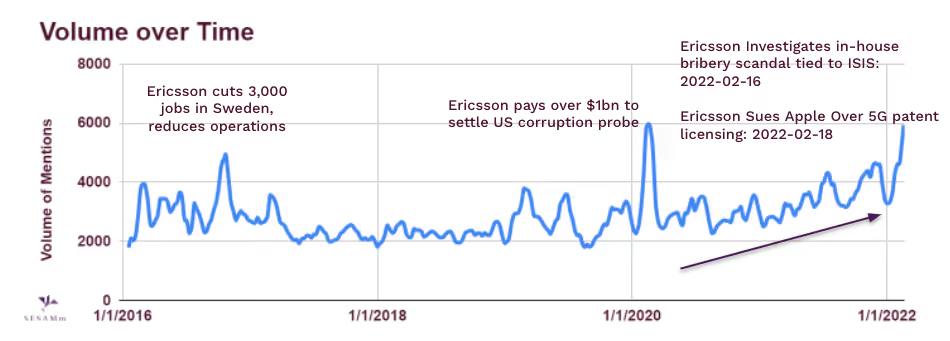
Figure 1: Volume over time chart for Ericsson

In Figure 1, we chart our analysis of data volumes, indicating spikes to help detect significant positive or negative events. For instance, the payment scandal similarly affected mention volume as a controversy in 2020. Mentions related to the more recent events continue to increase, making it potentially Ericsson’s most controversial issue so far.

ericsson-polarity-over-time-chart
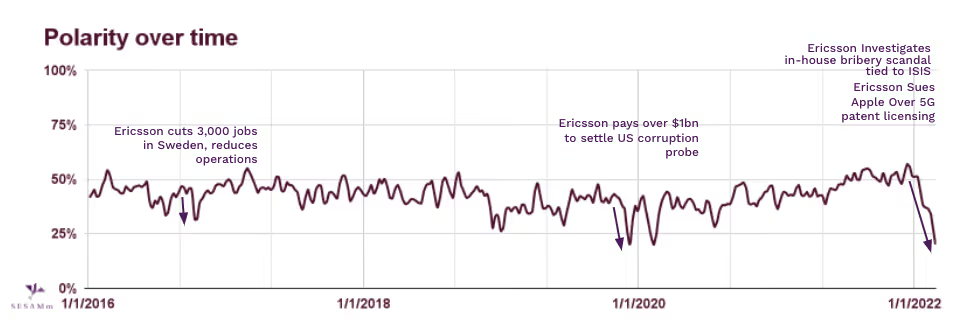
Figure 2: Polarity over time chart for Ericsson

In Figure 2, we analyze Ericsson’s polarity over time. Polarity represents the aggregate of positive and negative sentiment (opinions, reviews) on a company. It can range from -1 to 1. A 0 score means that as much positive as negative sentiment is expressed. High e-reputation brands can have polarity scores over 0.7, based on SESAMm’s research and findings.

Ericsson’s overall polarity sits in the average range for the most part. However, we found that Ericsson’s sentiment suffered significant negative drops caused by controversial news. In other words, the company’s reputation has been affected several times over the years, with the most recent controversies going viral and perceived as very negative.

ericsson-esg-initiatives-score-chart
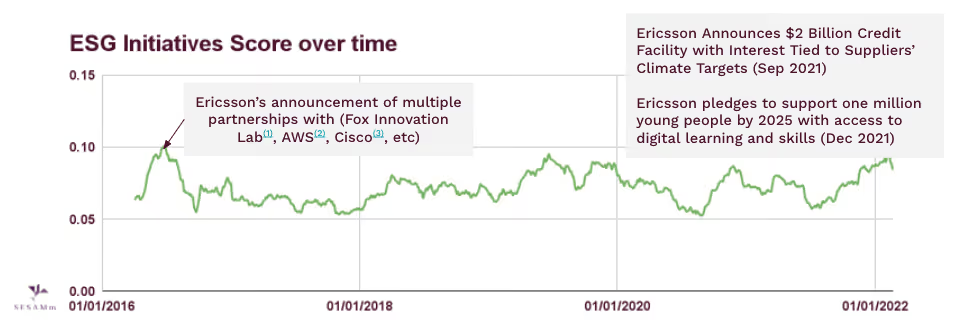
Figure 3: ESG Score over time for Ericsson

In Figure 3, SESAMm used the analyzed areas and comparisons to compute an ESG Score based on proprietary ESG initiatives data. The scale ranges from 0 to 1, with zero indicating a low and undesirable value and one having a higher and desirable value. We score Ericsson in the 0.05–0.10 range, which we think is relatively low for this company. Despite Ericsson increasing its ESG initiatives over the past year, recent controversies have affected its score negatively.

ericsson-esg-risks-overtime-vs-stock-price-charts
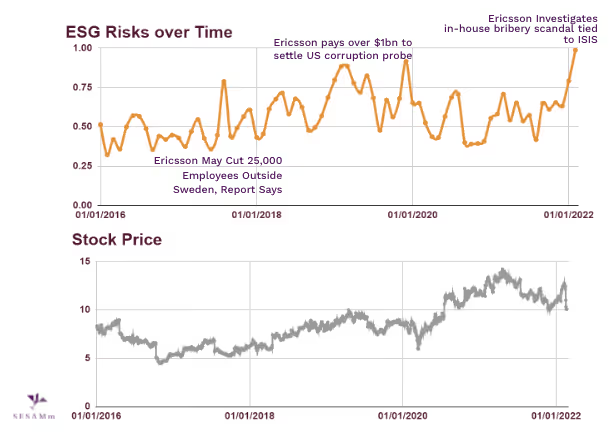
Figure 4: Ericsson’s ESG risks over time compared to its stock price

Figure 4 charts Ericsson’s ESG risk, which is based on SESAMm’s web data. The range varies from 0 to 1, zero indicating the lowest risk and one as the highest. Ericsson’s score from its latest scandal is a 1. Compared to Ericsson’s stock prices, several spikes in ESG risk anticipated market movements.

Orpea SA (ORP:FP) analysis

Event: On January 24, 2022, Le Monde published an article about the book “Les Fossoyeurs”. According to Le Monde, the book concentrates most of its attacks on Orpéa, a top nursing homes and clinics company, employing “65,000 employees in 1,100 establishments across the planet; 220 nursing homes in France alone.” The book’s author attacks the “Orpea system” and reveals reported elderly abuse and deaths possibly caused by it or negligence.

orpea-esg-rating-news-clips

The media begins to question the limits of ESG rating because of Orpea’s scandal.

Results: Two things occurred after the news broke. One, Orpea’s stock price sustained a 44-point drop. Two, the media begins to question the limits of ESG rating, given Orpea’s rating at the time.

What did NLP-generated alternative data see?

In Orpea’s case, we analyzed three areas from January 2016 to the event on February 16, 2022:

  • Name-mention volume
  • Sentiment polarity
  • ESG Initiatives Score
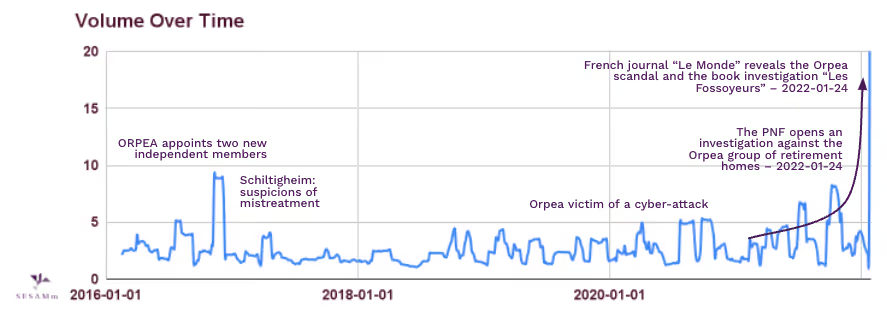
orpea-volume-over-time-chart
Figure 5: Volume over time chart for Orpea

In Figure 5, we analyzed volumes of data and compared them with significant events detected. Volume spikes detect clear, negative events in Orpea’s case. For instance, on January 24, 2022, the breaking news had the highest effect since 2016. It’s worthy to note that an upward mention trend becomes visible before the scandal emerges, with volumes reaching levels higher than average.

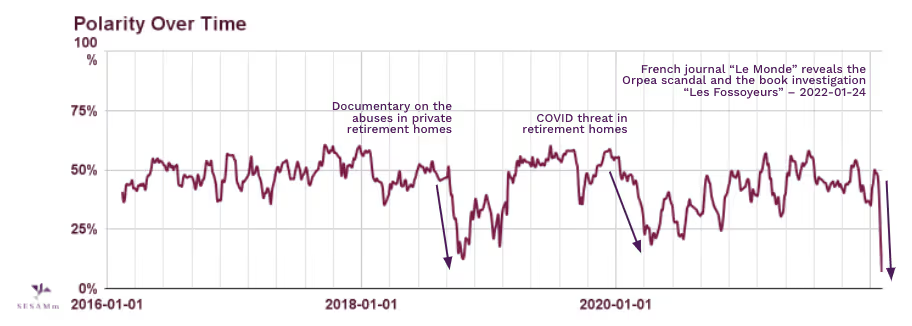
orpea-polarity-over-time-chart
Figure 6: Polarity over time chart for Orpea

Orpea’s polarity is average, but it shows significant negative sentiment linked to scandals. One of those drops in opinion dates back to 2018 when a documentary highlighted abuses in private retirement homes.

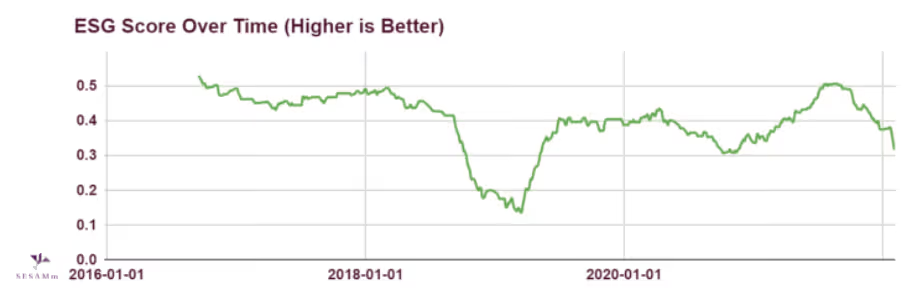
orpea-esg-score-over-time-chart
Figure 7: ESG Score over time for Orpea

ESG scores, which range from 0 to 1, are relatively low for Orpea on average. Its controversies have strongly affected its scores in 2018 and 2022 in particular. But the trend to see in the chart is that Orpea’s ESG score had been trending downward for several months before Le Monde’s breaking story.

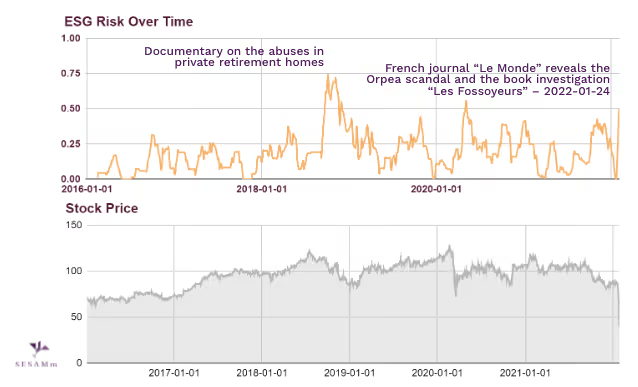
esg-risk-over-time-vs-stock-price-charts
Figure 8:Orpea’s ESG risks over time compared to its stock price

Figure 8 charts Orpea’s ESG risk, which is based on SESAMm’s web data. The range varies from 0 to 1, zero indicating the lowest risk and one as the highest. Ericsson’s score from its latest scandal is a 1. Compared to Orpea’s stock prices, several spikes in ESG risk anticipated market movements. The current controversy, while very viral, represents a risk equivalent to the 2018 revelations.

Summarizing SESAMm’s Ericsson and Orpea findings

NLP-generated alternative data was able to see trends and events that mainstream ESG rating firms didn’t in the Ericsson and Orpea cases. In both cases, SESAMm would’ve flagged controversies in at least three key areas, name-mention volume, sentiment polarity, and ESG Initiatives Score. And these three areas, with additional proprietary analysis from SESAMm, would’ve provided much-needed insight to investors before their respective market-moving events had occurred.

How SESAMm’s NLP-generated alternative data can help you

Whether for fundamental, quantitative, or quantamental investment use cases, to monitor your corporate risks, or to conduct advanced due diligence on private companies for investment opportunities, explore limitless possibilities using SESAMm’s industry-leading data lake. Our data lake consists of nearly 20 billion articles today, and it’s growing by 20% every year.
And if our data lake is our crystal ball, then TextReveal® is what fuels its magic. The data, in conjunction with TextReveal’s NLP algorithms, can reveal alternative data, such as emotion and sentiment data and ESG and risk metrics, on more than 70 million entities like:

  • Assets
  • Brands
  • Product reviews
  • C-level people
  • And more

And you can easily access valuable alerts and predictive insights—from live daily or historical data—through dashboards, APIs, or flat files delivered in usable formats.
Are you ready to uncover the invisible data about your investments? Request a demo today.

Retrospect

Open SESAMm: Our 8th Anniversary

April 28, 2022
5 mins read

Sésame, ouvre-toi, or in English, open sesame, is the famous magical phrase that inspired us to name SESAMm 8 years ago today. And true to its name, since its inception, SESAMm has been opening doors to a new world of advanced analytics powered by natural language processing.

TRIVIA QUESTION: Why the unusual spelling of SESAMm? (Read until the end for the answer.)

Our heritage

Unlike the phrase’s magical nature in the “Ali Baba and the Forty Thieves” story, SESAMm relies on technology to open doors and uncover hidden treasures. And that has been our goal since we started the company in April 2014. Pierre Rinaldi, Florian Aubry, and I saw the vast amount of textual information available on the web, from news websites to NGO reports and social media. We set out to find a way to translate all that information into powerful, digestible, and actionable insights. In eight years, we’ve created the most extensive data lake in the industry that relies not only on social media but also on forums, review sites, and premium data. Today, the data lake comprises nearly 20 billion articles and grows by 20% year over year.

As we alluded to earlier, the real key to the treasure trove is the technology that uncovers and synthesizes all that data: artificial intelligence, particularly natural language processing (NLP). Our highly-talented technical team developed advanced algorithms to accurately “read” web articles and distill them into only the most relevant data for our users, received as signals and alerts.

SESAMm-Co-founders
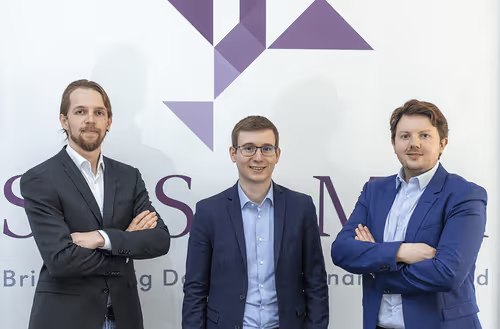
From left to right: Co-founders, CTO Florian Aubry, CEO Sylvain Forté, and COO Pierre Rinaldi pictured.

In these eight years, we’ve been able to serve and work with some of the brightest minds in the industry who have trusted us with multiple challenges. Asset managers, private equity firms, and corporations leverage SESAMm’s products for investment strategies, deal sourcing, due diligence, portfolio monitoring, and ESG and positive impact indicators.

In particular, we’re using our technology to transform the ESG industry. For example, we help track controversies and monitor the positive impact for companies that no one else covers in the entire world.

Our team and values

As we proudly surpass the 100-employees mark soon, this is a good moment for us to pause and reflect on where we are and where we want to go. Our mission, to become the world’s reference for textual web data analysis, hasn’t changed. We’re more convinced than ever that we are on the right path to achieving that goal.

Our team collaborates between six different sites in 5 countries, many offices, and various cultures. As a deep-tech company, 70% of the group comprises PhDs, engineers, and developers. Moreover, they’re an amazing team that follows horizontal management and servant-leadership approaches, part of the culture we value and insist on.

To close SESAMm's first eight years on a high note, Forbes included me on their 30 under 30 list only a few weeks ago. In my eyes, that is a big recognition of the company and the work the team has done over the years.

Our future

More ESG. As we mentioned before, we want to transform the ESG industry. Currently, we cover a total of close to five million public and private firms. We aim to bring more transparency to the market and align with new regulatory frameworks in a fast-moving environment. By better analyzing companies, we believe we can help investors push for change. For example, to help monitor for positive impact and align with UN sustainable development goals (SDG), we’re launching a new product to systematically generate these types of alerts.

Of course, we want to bring these technologies to new clients, like:

  • Private equity firms
  • Quantitative asset managers
  • High-yield portfolio managers
  • Corporations to fuel their CSR strategy

From CSR teams looking to evaluate their clients and suppliers from an ESG perspective to central data and analytics teams wishing to generate custom NLP analytics at scale, SESAMm aims to become a central solution.

More importantly, we want to democratize NLP web data. This battle for good technology is our ultimate goal because every large company will need to address this topic at one point or another. So when it’s your turn, we want to be there to make it easier for you to achieve tangible results.

And last but not least, as a fintech company, we set our goals and ambitions on higher grounds whenever we complete a funding round. Our Series B with major private equity firm The Carlyle Group (CG) and New Alpha, a Paris-based fintech VC, was a significant step up. And the more we scale, the bigger we see the potential to apply our tools within existing or new fields, industries, use cases, and countries. This step-up naturally inspires us to plan for new ways to grow, whether with new services or reflecting on the potential of an upcoming funding round.

Our appreciation

Thank you. Without you, we wouldn’t be here. Special thanks to the SESAMm team. To our investors, The Carlyle Group, New Alpha, Havenrock, Caisse d’Epargne, AngelSquare, and more. To our partners and all who have supported us along this journey. And most of all, thank you, our clients. Because of you all, we have grown from a small-city-of-Metz team into an international company.

Cheers to you, us, and our future. Happy 8th anniversary, SESAMm!🥂

Oh, right! The trivia question! Here’s the answer.
SESAMm is an acronym for:

  • Stock
  • Exchange
  • Statistical
  • Analysis
  • Mechanism

The “Mm” in SESAMm hints at the French pronunciation of sésame. But mostly, we used the small m from the word Mechanism instead of an e to guarantee that the URL would be available.

AI | Risk Alerts | Risk Management

How Organizations Are Using AI To Detect Greenwashing

March 31, 2022
5 mins read

Over the past decade, many organizations have improved their carbon footprints, from recyclable and biodegradable packaging and single-use plastic to planting trees and reducing their greenhouse gas emissions. However, some businesses and companies looking to boost their eco-friendly image without committing to serious changes and addressing environmental issues have been associated with false green marketing. We call this "Greenwashing."

What is Greenwashing?

Greenpeace and the Environmental Protection Agency define greenwashing as making false and misleading claims about a product's environmental benefits or practices, services, technology, or company practices. Greenwashing typically involves companies spending more money on advertising and marketing than on implementing sustainable business practices that minimize environmental impact. These false green claims can deceive consumers into believing that a product or company is more environmentally friendly than it is, leading to increased sales and profits. As a result, false advertising, misleading initiatives, and groundless claims have increased green investors' exposure to risks emerging from potential lawsuits from activist groups, image deterioration, and some heavy loss in assets invested.

Why is Spotting Greenwashing Important?

Greenwashing is a growing concern for investors as they look to make sustainable and responsible investments. Therefore, spotting greenwashing practices is important for these firms. Here's why.

The deceptive practices used by greenwashers can have significant implications for the integrity of investments made in what investors believe to be sustainably operated companies or sustainable funds. In other words, greenwashing makes it difficult for investors to distinguish between genuinely committed to sustainability companies and those merely making false claims about their environmental practices. As a result, investors may unknowingly invest in companies that are not as sustainable as they claim to be, which can harm their financial returns and the environment. Therefore, it's essential for investors to be aware of greenwashing tactics and to carefully research companies before investing in them to ensure that their investments align with their values and contribute to a more sustainable future.

What Are the Challenges to Detecting Greenwashing?

It's challenging to produce an accurate assessment of environmental, social, and governance (ESG) factors, which gives companies the opportunity to cover or hide ineffective and fake green initiatives.
According to Regtank, some of the main challenges to detecting greenwashing practices are the following:

  • Lack of reporting standards: some investors believe that we haven’t universally agreed upon a set of standards to determine whether a product is ESG compliant.
  • Lack of transparency: greenwashing companies don’t disclose the specificities of their “green campaigns,” which makes it difficult for investors and consumers to fact-check and evaluate their sustainability claims.
  • Limited consumer awareness: false marketing strategies could be based on a combination of the consumer’s eco-consciousness and brand loyalty. As a result, consumers become less aware of the misleading strategies greenwashing companies use to sell their products.

Ultimately, these factors may contribute to the inaccuracy and limitations of ESG data and scores, which makes it easier for greenwashers to get away with their false marketing campaigns. Consequently, detecting greenwashing requires scrutiny of environmental claims made by companies and an understanding of the complex supply chains and manufacturing processes involved in producing products and services.

To learn more about greenwashing and have access to real-life case studies, download this comprehensive report:

How Does Artificial Intelligence Detect Greenwashing?

As greenwashing practices increase, activist investors, experts, journalists, and even the general public are spreading awareness of the issue using social media, news outlets, forums, and blogs, among other means.
Recently, artificial intelligence (AI), particularly natural language processing (NLP), has proven to be effective in the early detection of greenwashing by analyzing vast amounts of qualitative data publicly available on the web. At SESAMm, for example, we apply our NLP capabilities to identify companies likely to engage in greenwashing practices by analyzing text in billions of web-based articles. Our data lake contains over 25 billion web–sourced articles, sourced from four million news, blogs, social media, and forum discussions on five million public and private companies in more than 100 languages. We run these articles through our AI platform tool, TextReveal®, and systematically craft reliable, timely, and comprehensive insights to detect greenwashing, generate ESG alerts, and identify related risks.

The Rise of Greenwashing

Greenwashing, the deceptive practice where companies claim to be more environmentally friendly than they actually are, has become a growing concern in recent years. By analyzing the frequency of web mentions of greenwashing over time, we can observe important trends and understand the factors contributing to this phenomenon.

Recent analyses indicate a significant increase in greenwashing mentions since late 2019. This rise aligns with a growing public awareness of the climate emergency and the increase in media outlets and social media accounts dedicated to exposing greenwashing. The number of mentions escalated from fewer than 200 to over 23,000 in the last quarter of 2023, highlighting the increasing scrutiny of corporate environmental claims.

A noteworthy pattern is the regular occurrence of spikes in greenwashing mentions during the third quarter over the past three years. This timing corresponds with the "pre-COP" periods, leading to critical international climate change management conferences. These periods see heightened discussions around sustainability, with increased attention on companies' environmental practices.

greenwashing mentions over time
Figure 1: Greenwashing mentions over time.

Greenwashing in the Energy Sector

The energy sector, particularly the oil industry, has faced significant scrutiny regarding greenwashing. In this context, companies like Shell and ENI have been prominent due to the frequency of greenwashing mentions associated with them.

examples of greenwashing mentions in the energy sector
Figure 2: Examples of greenwashing mentions in the energy sector over time.

For Shell and ENI, the volume of greenwashing mentions has fluctuated, with notable increases in specific quarters. For example, Shell saw spikes in mentions during the second quarter of both 2021 and 2022 while experiencing a drop in the third quarter of 2022. ENI has faced similar fluctuations, often linked to legal actions and publicized environmental issues.

Shell's Greenwashing Mentions, ESG Risks, and Initiatives

Shell, a British multinational and prominent player in this sector, has faced considerable scrutiny for such practices. The company has experienced notable spikes in greenwashing mentions and has been involved in several ESG-related risks.

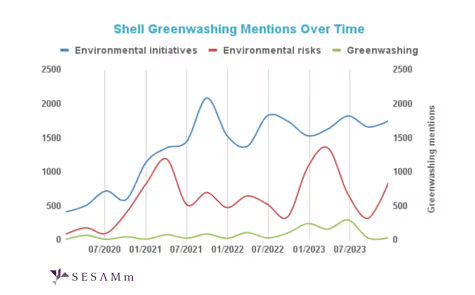
shell greenwashing mentions over time-1
Figure 3: Shell greenwashing and ESG mentions over time.

Greenwashing Mentions

We can see an increase in greenwashing mentions in the first half of 2023. Around that period, Shell faced allegations and lawsuits concerning its environmental claims. The company was criticized for misleading U.S. authorities and investors about its energy transition efforts. Additionally, Shell faced public backlash for labeling fossil gas as 'renewable' while reporting record profits. A notable incident involved a shareholder suing Shell's executives over climate risks.

ESG Risks

Shell has faced several ESG-related risks, including legal challenges and pollution issues. In 2021, the company was sued by New York City over climate change-related advertising and filed an arbitration claim against Nigeria concerning a spill dispute. In March 2023, Shell faced another oil spill, this time in another region in Nigeria,  Rivers State, and also saw institutional investors backing a lawsuit against its board over climate risks. The mid-2023 period saw Shell agreeing to pay $10 million for air pollution violations at a Pennsylvania petrochemical plant. Despite its net-zero pledge, the company announced plans to increase fossil fuel production.

ESG Initiatives

Despite its challenges, Shell has also engaged in various sustainability initiatives. In late 2021, the company announced plans to purchase power from the world's largest offshore wind farm. Mid-2022 saw a leadership change with the company's CEO stepping down as Shell aimed to align with its climate goals. The company also planned to deploy 10,000 EV chargers across India as part of its global strategy. In mid-2023, Shell committed to investing $10–15 billion in developing low-carbon energy solutions. Although the company abandoned its lower oil production target, it maintained its commitment to reducing emissions.

Shell's journey underscores the challenges of aligning environmental claims with real actions, emphasizing the importance of transparency and genuine sustainability efforts.

ENI's Greenwashing Mentions, ESG Risks, and Initiatives

ENI, an Italian multinational oil and gas company, has faced scrutiny for such practices. The company has experienced fluctuations in greenwashing mentions and has been involved in a number of ESG-related risks.

eni greenwashing mentions over time
Figure 4: ENI greenwashing and ESG mentions over time.

Greenwashing Mentions

ENI's greenwashing mentions are fairly low. However, the company has been featured in discussions about greenwashing, especially with recent developments. In early 2022, the company faced criticism for inconsistencies in emissions data and greenwashing activities, as highlighted by the Sereno Regis Study Center. Greenpeace also criticized ENI for using the Sanremo Music Festival as a platform for greenwashing. In May 2023, ENI faced a lawsuit for allegedly lobbying and greenwashing to promote fossil fuels despite being aware of their environmental risks. Greenpeace sued the company, accusing it of knowingly contributing to climate change.

ESG Risks

Over the past 4 years, the oil giant's ESG risks have been few but not inexistent. ENI has encountered several risks, including legal challenges and pollution issues. In 2022, ENI's environmental strategy was deemed a failure, and concerns arose about a pipeline spill into the East Irish Sea. The company also faced legal actions in 2021, including an appeal against a court ruling in an illegal waste case and warnings from the Legality Network to reduce greenhouse gas emissions or face prosecution.

The company faced a lawsuit in early 2023 for allegedly having prior knowledge of the climate crisis. In another incident, a report found that ENI and Shell were responsible for significant pollution in Bayelsa, requiring a $12 billion cleanup.

ESG Initiatives

Despite facing ESG risks, it is visible that ENI has also pursued various sustainability initiatives. In early 2022, ENI and British Petroleum finalized an agreement to create a new independent joint venture in Angola, which will support the energy needs of Angola's growing economy and its decarbonization path and strengthen its role as a global LNG player. In late 2023, the company received Gold Standard recognition from the United Nations for its commitment to reducing methane emissions. ENI also partnered with Luiss University to launch an international network focused on African energy transition and collaborated with RINA to accelerate maritime decarbonization.
ENI has shown interest in renewable energy, as demonstrated by its wave energy project in Pantelleria and its plans for fusion energy in collaboration with Commonwealth Fusion Systems. The company also focuses on sustainable mobility, developing diesel from 100% renewable materials, and promoting clean energy through partnerships.

Shell and ENI both face the challenge of balancing economic interests with environmental responsibility. Despite allegations of greenwashing and environmental risks, both companies have taken steps towards sustainability, such as investing in low-carbon solutions and renewable energy projects. Their experiences highlight the importance of transparency, genuine commitment to environmental responsibility, and the role of public scrutiny in holding companies accountable.

Greenwashing and ESG Investing

In sum, certain companies advertise their sustainability and green initiatives, while in reality, they are making false claims and practicing greenwashing, as evidenced by our analysis using SESAMm's AI and ESG reports. We use AI through TextReveal to generate alternative data for use cases, such as ESG and SDG, sentiment, private equity due diligence, corporate studies, and more. Our technologies can reliably ensure the credibility of ecological initiatives and serve global investment firms, corporations, and investors, such as private equity firms, hedge funds, and other asset management firms, to enhance their investment strategies.

Conclusion

In conclusion, the issue of greenwashing represents a substantial obstacle in the journey towards genuine environmental sustainability, misleading consumers and investors and diluting the efforts of genuine sustainable enterprises. Nevertheless, the emergence of advanced technologies such as Artificial Intelligence (AI) and Natural Language Processing (NLP) indicated a new era of accountability. Innovators like SESAMm are at the forefront, deploying these technologies to effectively unravel and counteract greenwashing practices. This empowers investors, asset, and portfolio managers to discern and align their resources with legitimately sustainable entities. The call to action is clear: a collective demand for transparency and responsibility is crucial.

Reach out to SESAMm

TextReveal’s web data analysis of over five million public and private companies is essential for keeping tabs on ESG investment risks. To learn more about how you can analyze web data or to request a demo, reach out to one of our representatives.

NLP | Alternative Data | AI

Alternative Data Trends – How Reddit Helped Fuel The Great Resignation

February 11, 2022
5 mins read

People are leaving traditional jobs in droves according to the latest figures from the U.S Bureau of Labor Statistics, which showed a record breaking 4.5 Million resignations as of Nov 2021.

The trend has originated a movement on Reddit similar to r/wallstreetbets called r/antiwork where more than 1.7 Million active members share resignation stories, discuss unfair work practices, criticize their bosses, and advocate for employee rights and better work conditions.

We applied SESAMm’s AI and Natural Language Processing (NLP) engine TextReveal® to analyze r/antiwork subreddit thread posts, as well as other related content, from a context and sentiment analysis perspective.

The full report, entitled “The Big Quit”, is one of our series of Alternative Data Trends, which leverages web data and AI to provide regular analytics on key industries and subjects. They typically contain alternative data based insights and analyses, including numerous detailed charts and graphs as well as supporting data which can be reprocessed by client teams.

Here are some of The Big Quit report’s highlights:

  • Mentions of the Anti-Work movement exploded by 215% in June 2021 coinciding with the start of the ‘Great Resignation’.
  • Leisure & Hospitality, Healthcare and Retail are the three most mentioned sectors.
  • McDonalds and Starbucks are the two companies with the highest number of mentions.
  • The three brands displaying the most negative sentiment are Wendy’s, Chipotle Mexican Grill and McDonald’s.
  • The three most talked about topics are compensation benefits, and workload.
  • The Debtstrike movement, seeking debt relief for the less fortunate in society as well as banning unfair debt practices, saw mentions shoot up 497% in September 2021.

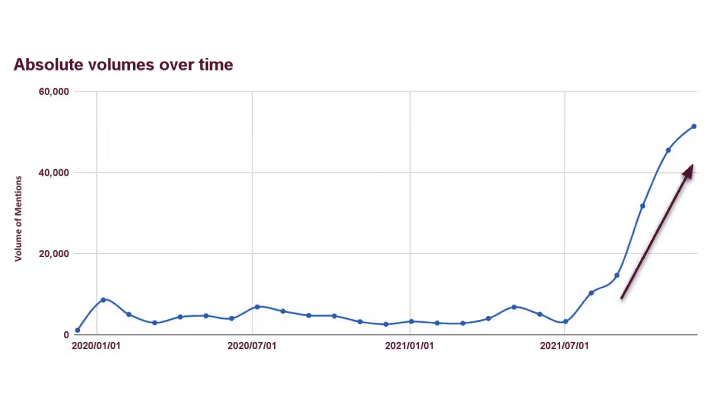
Volume of Mentions of “Anti-work” as a predictive Indicator of The Big Quit

Absolute volumes over time

The graph above shows that prior to August 2021, anti-work mentions on Reddit have been fairly stable before this topic went viral with a 215% increase, this growth of mentions appears to be a leading indicator to the 4.5 million resignations in November 2021.

SESAMm’s TextReveal® platform can be used in a wide variety of use cases and projects. Request a copy of the full Alternative Data Trends report “The Big Quit” report here, or if you have any other questions regarding our data, or would like a demo, please contact info@sesamm.com.

The world of private equity has been fertile ground for the adoption of alternative data, including AI-driven insights from firms like SESAMm, an expert in Natural Language Processing (NLP).

Could SESAMm’s technology provide Carlyle with the tools to identify a better class of investment opportunity?

When SESAMm’s CEO Sylvain Forté met the man in charge of data at The Carlyle Group, at an industry conference, the opportunity arose to put SESAMm’s data to the test.

“I remember the first day I met Sylvain and he said, I can tell you if your company is trending positively or negatively on the internet,” recounts Matt Anderson, Chief Data Officer of Carlyle, at a recent PE Insights webinar, in which EQT and Apollo were also speaking. Sensing potential in the data, he decided to give it a go.

SESAMm’s NLP platform generates quantitative and qualitative analytics on a wide array of entities – from public and private companies, to brands, products and individuals, by running cutting edge algorithms across billions of web-based articles.

Their data lake is not limited to news stories from the New York Times or Wall Street Journal, but spans a whole variety of global sources – social media, blog posts, professional forums, customer reviews and more, in over 100 languages.

Using this ability to interpret unstructured text from a huge slice of the internet, SESAMm’s team created insights designed to help Matt’s deal teams evaluate target companies.

The challenge was getting investment professionals to buy into the value of alternative data for private companies, so SESAMm condensed everything into easily-digestible reports. They included time-series and charts measuring companies on a variety of key metrics versus their peers, including ESG risk, e-reputation, competitive positioning, sentiment, positive and negative themes and other critical KPIs.

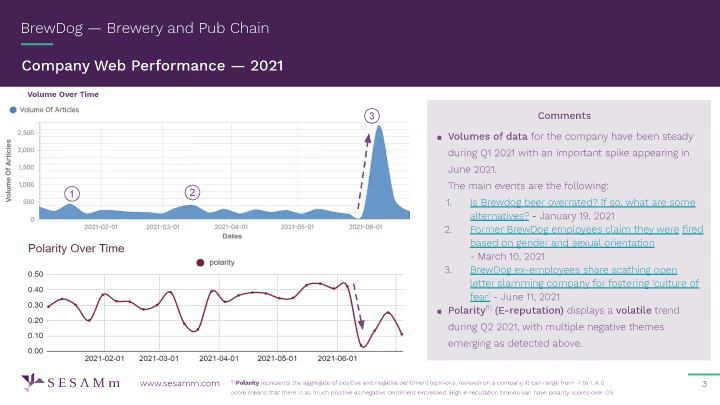
Company web performance
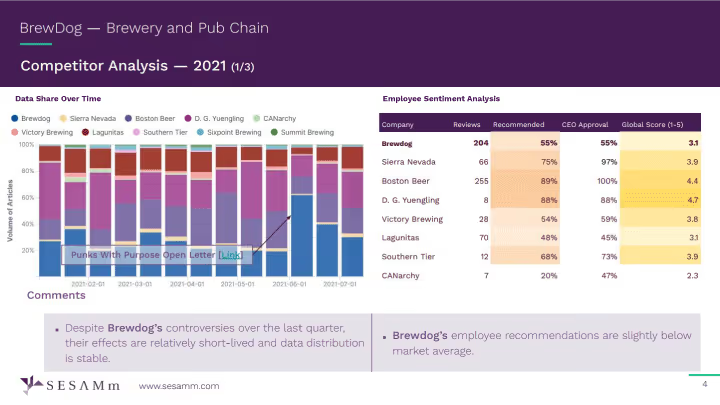
Fig 1. An Example of one of SESAMm’s deal slides, in this case for brewery Brewdog (Not a Carlyle portfolio company).

By regularly presenting SESAMm’s analytics reports to investment committees, Sylvain and Matt hoped to gradually convince deal teams that alternative data could have a positive impact on the investment process.

“It was about sharing the data in the form of slides directly with deal teams in a way that was automated on our side but easily consumable as part of the pre-deal decision process”, said Forté.

“We saw the need to convince people and show, time after time, that it really works, that this data is really valuable and can give an edge”, added Forté.

Brewdog Competitor Analysis
Fig 2. A deal slide showing competitor analysis.

“In some instances it helped us to not make investments or avoid allocating resources to things that were marginal or moving in the wrong direction, and that was really valuable”, said Anderson.

To further prove the value of the data, Matt asked Sylvain to create analytics reports on a selection of Carlyle’s historical target companies. The idea was to see if SESAMm’s scores and analytics were predictive of the deal outcome, whether positive or negative.

“If we put a number on how positive SESAMm feels about some of these deals between one and ten, with one being, ‘avoid at all costs’ , and ten, ‘go for it’, what would it have told us?”, said Anderson.

After running the back test, the results showed a clear correlation between SESAMm’s analysis, and the deals that performed well and those that fell through.

“Looking at the results, I think that people would have really paused an investment committee around some of the conclusions”, commented Anderson.

“Having a view of the themes being surfaced, the plateaus in certain trends, and the sentiment charts heading in a negative direction was eye-opening for our leaders and deal teams – because they had to actually live through those deals. So seeing that kind of data, and what it can help you avoid was really insightful.” Says Anderson.

Ultimately, the integration of SESAMm’s analytics reports into Carlyle’s investment process was so successful that they were rolled out across all global investment teams. The two companies have developed a strong partnership based on the proven value of alternative data in the private equity investment process.

To find out how SESAMm can support your investment decision-making, to request a demo or for any other questions regarding our data do not hesitate to contact info@sesamm.com.

ESG | NLP | Alternative Data

Predict financial movements with web data

February 12, 2020
5 mins read

Discover our whitepaper highlighting the power of web data on predictive analytics for the financial industry: how alternative data strengthen the market, the challenges of collecting web data and case studies presenting different approaches, such as ESG, showcasing TextReveal features and capacities for investment purposes.

In complement, please find here our Recorded WebinarPredict financial movements with web data”.

Introduction

In the past, investment management institutions relied mostly on traditional data to gain an edge in investing. Traditional data ranges from SEC filings to earnings reports and pricing information any type of data produced by the company itself. The rise of the digital age, however, has opened up new sources of data for investors beyond the scope of traditional data. The seemingly infinite scope of alternative data includes data produced from credit cards, satellites, social media and perhaps most importantly the web.

With the additional integration of alternative data, investment management institutions and hedge funds in particular that once relied only on traditional data now have an edge in predicting the rise and fall of the markets. As increasing numbers of financial institutions jump on the bandwagon of alternative data, spending on alternative data by trading and asset management firms is set to exceed $7 billion by 2020.[1]

What was only a few years ago a question of when institutions should start using data has shifted to the question of how they can organize and structure these mostly unstructured datasets. And with 4 billion webpages and 1.2 million terabytes of data on the internet estimated to be generated globally by 2025, there is no shortage of web data to sort through. As increasing numbers of investment management institutions incorporate alternative web data into their predictive algorithms, it will change the face of investment as we know it.

This white paper is intended to be a guide for investment management (IMs) institutions to better understand how alternative web data is quickly becoming an essential component for generating alpha and mitigating investment risk. In addition, it explores different models of web data crawlers and what IMs need to look for as they incorporate alternative web data into their predictive analytics models.

Section 1: Beating the Market with Alternative Web Data

“Your company’s biggest database isn’t your transaction, CRM, ERP or other internal database. Rather it’s the Web itself…Treat the Internet itself as your organization’s largest data source.”
Gartner

As previously mentioned, alternative data includes any type of data that is beyond the scope of traditional data: satellite imagery, social media data, and web data (which includes news sites, blogs, discussions and forums) along with credit card data. Alternative web data, which falls under the broader category of big data, is typically unstructured and demands a process for structuring it in order to deliver insights.

[1] Alternative data for investment decisions: Today’s innovation could be tomorrow’s requirement. Deloitte Center for Financial Services. 2017.

Access the full whitepaper

Retrospect

Year 2018 in retrospect and next steps for 2019

January 25, 2019
5 mins read

All our best wishes for this new year 2019!

2018 proved to be an eventful year for SESAMm with multiple renowned customers acquired, our A series fundraising campaign, numerous prizes won and milestones reached. Here is a look back at our rewarding year 2018 followed by our next steps for 2019.

Successful market entry in the US and around the world

The rapid growth of the alternative data industry and of SESAMm

As a Fintech company specialized in alternative data for Asset Management, 2018 represented a thrilling year in our industry and 2019 already promises to be even more exciting.

During 2018, after our very first business trip in the United States, our international sales development beyond Europe began accelerating. In just one year, we already signed contracts with multiple clients. These include major hedge funds in the US and a major global trading company managing $100 billion in financial assets and part of the Top 10 in its market. The US market represents a powerful strategic growth driver and we are already preparing to open an office there soon!

SESAMm signed its first contract with a client in Africa: Ipro Investment, renown asset manager established for 25 years specialized in emerging markets. Finally, we also signed a contract with our first Japanese client, Nikko Global Wrap, one of the subsidiaries of Sumitomo Mitsui Asset Management which is a major asset manager in Japan managing JPY 1.7 trillion.

Strengthening and developing our position in Europe

At the European level, SESAMm has also extended its customer portfolio:

  • Groupama AM: new major clients and leading French Asset Management players managing €103 billion Asset under Management (AuM);
  • Société Générale: leading French bank present all over the world;
  • Raiffeisen Bank International: one of the leading banks in Europe with more than 50,000 employees servicing over 16.5 million customers and possessing around 2,400 business outlets;
  • GT Patrimoine : the largest consulting and private management firm in the Lorraine area and based in France for 12 years.

In addition, after our 1st successful collaboration, a new contract was signed with Candriam, leading Asset Management firm and members of the New York Life Group, managing more than $112 billion AuM worldwide.

We are very proud to see how much traction we gained in just a year. The growing use and interest in alternative data for the Asset Management industry, both for quantitative and fundamental funds and asset managers, lead us to prepare for new opportunities of growth & business development.

Cutting edge solutions to respond to market needs

Big Data & AI for Cryptocurrencies

Our first cryptocurrency project began in early 2018. Initially, we started tracking the evolution of the most popular cryptocurrencies, such as Bitcoin (BTC) and Ethereum (ETH) and we analyzed their social data to produce social sentiment & emotions indicators. These indicators have since been integrated into our visualization platform of market sentiment, L’Humeur des Marchés.

This led us to establish a unique partnership based on L’Humeur des Marchés with NapoleonX, a major player as the leading French cryptocurrency manager: the first sentiment and emotion cryptocurrencies analysis destined for the general public. Since then, ETH and BTC sentiment, emotions & opinion value from SESAMm has been available to individual investors and the general public on NapoleonX platform.

The evolution of L’Humeur des Marchés

Our platform L’Humeur des Marchés is an essential tool to guide companies in their investments. During 2018, multiple improvements were added into L’Humeur des Marchés to further enhance its insights & analytics. For example, users have now the possibility to build automated strategies which can generate daily trading signals. Multiple new features were also added such as a strategic backtesting system, daily alerts with 3 years of history and day+1 signal to forecast market movements giving asset managers an edge over competitors.

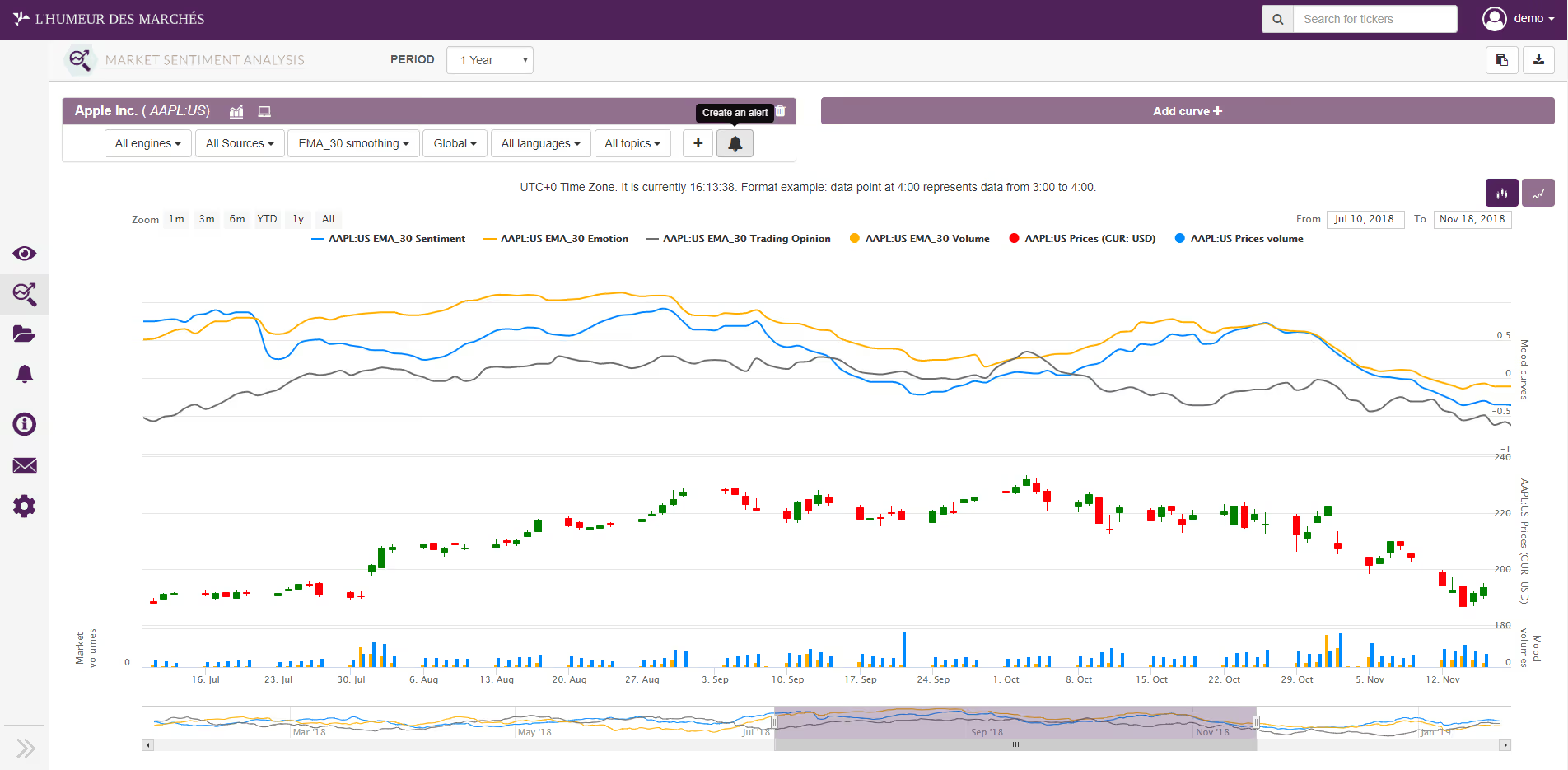
Lhumeur des marchés is SESAMms data visualization

"L'humeur des marchés" is SESAMm's data visualization platform to analyze market sentiment & emotion for asset management

L’Humeur des Marchés, our data visualization platform

Finally, additional filters have been added to better study & analyze market sentiment: there are now 6 different filters for data sources (sort by sources from web & press, news, blogs, discussions, social trading or all of them) and 9 languages covered (sort by English, French, Spanish, Chinese, Japanese, Portuguese, Italian, German or all of them). These new filters allow for a wider and more accurate coverage of assets, leading to improved tools & insights for investment decision.

Global recognition & awards for SESAMm

To accomplish our worldwide ambitions, we have started being more and more present abroad, especially at international events. They represent great occasions to promote SESAMm, demonstrate the unique benefits and advantages brought by our technologies & solutions and finally create business opportunities.

This year, we participated in many international events in the US and in Japan, including New York and Hong Kong for Eagle Alpha’s Alternative Data event, Canada, Africa and even London at the French Fintech Tour.

Having been selected for unique international awards reinforces our confidence in the benefits of our solutions for the Asset Management industry, for example with “Talk data to me” by Neudata, Elevator Lab Competition, and Groupama’s award “Créateur de confiance” (Trust Creator) among others.

SESAMm won the pitch

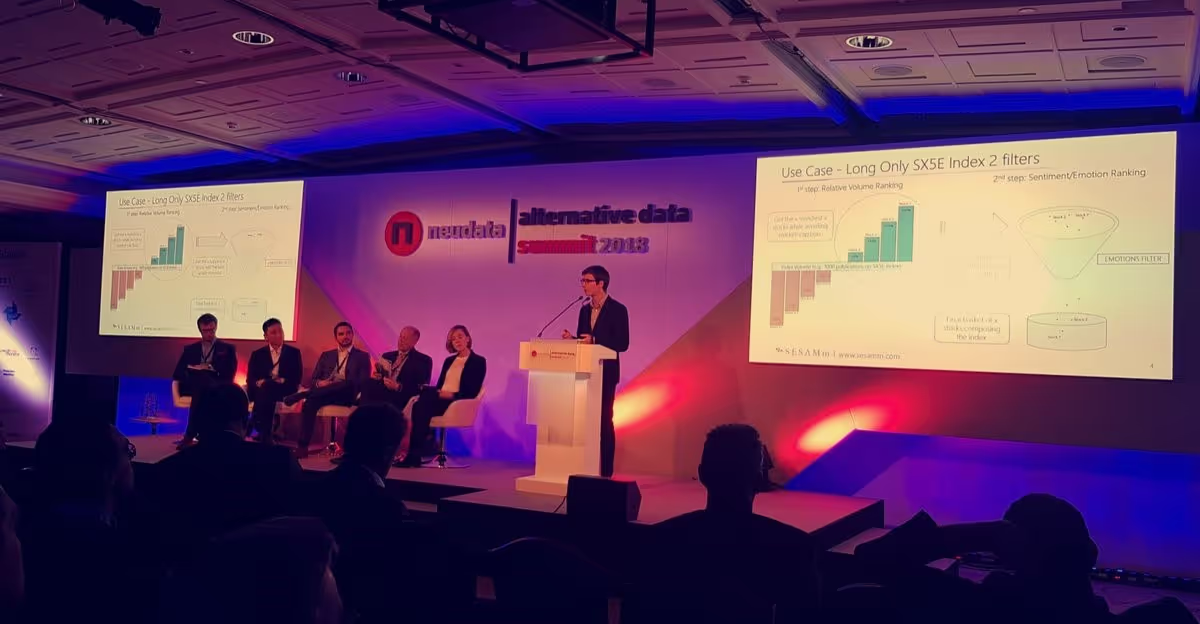
SESAMm won the pitch "Talk data to Me" of Alternative Data Summit event by Neudata

SESAMm pitch “Talk Data to Me” winner during Alternative Data Summit by Neudata

Moreover, SESAMm has competed in several acceleration programs, in which we were selected in the following ones:

  • Fintech Business Camp Tokyo, the Tokyo Metropolitan Government accelerator program by Invest Tokyo and powered by Accenture;
  • Elevator Lab, Acceleration program of Raiffeisen Bank International where SESAMm competed and was selected;
  • French Tech Tour America, IMPACT USA’s program to prepare and discover North America’s markets & opportunities;  
  • Pass French Tech, La French Tech’s highly selective program for hyper-growth startups & companies.

SESAMm’s Demo Day Presentation during Fintech Business Camp Tokyo

SESAMm’s plans for 2019: recruitment, development and growth

This year, we are very proud to see our team grow so much in so little time: we had 16 collaborators at the beginning of January 2018 and we are now a team of 28 members! Talented profiles have joined SESAMm team with NLP, AI & Quant engineers & experts from world-renowned schools. New collaborators will join SESAMm in the first quarter of 2019 and we are still recruiting in various fields such as Data Science, Quantitative Analysis, IT and Natural Language Processing among others. You can find all our offers on our dedicated page SESAMm Career!

Following our international success, especially in the US and in Japan, we are now preparing to open an office in the US in the following months and are already considering this option for Japan. Next month’s promise to be exciting and we will be participating in multiple events such as AI & Data Science for trading in New York in March, Machine Learning in Quant Finance by GFMI in April, and many events & conferences on alternative data, data science, Artificial Intelligence and Big Data for Asset Management around the world.

As you can see, 2018 represented SESAMm an exceptional year for its growth with new customers, including global companies, technological improvements for our solutions & services and a bigger and even more motivated team! Our major event in 2018 was the accomplishment of a €2.6 million Series A fundraising campaign, which enabled us to continue our international development, mainly in America and Asia, and the recruitment of many profiles. 2019 will represent another step for SESAMm to become a leading company in the alternative data solutions in the world. Stay tuned: SESAMm news will arrive soon!

Partnerships | Events

2018 beginning for SESAMm

January 25, 2018
5 mins read

Happy new year! 2018 already holds many exciting news with various projects and clients already onboard. We begin the year with 2 recently signed contracts with top-ranked hedge funds, additional features and cryptocurrencies added to L’Humeur des Marchés and published plentiful of internships and job opportunities. Moreover, following our partnership with Eagle Alpha and the event in New York last month, we will be organizing a roadshow in London to meet high-ranked hedge funds on February 7th and 8th.

Collaboration with new major clients

Recently, we have signed 2 major contracts with top-ranked hedge funds.

The first contract is with Nikko Global Wrap (one of the subsidiaries of Sumitomo Mitsui Asset Management, a major asset manager in Japan) managing JPY 1.7 trillion.

Second contract has been signed with La Française Investment Solutions, a subsidiary of La Française Group, a top 10 French asset manager with more than €64bn assets under management.

This great news proves our technology is trusted by major financial institutions and gives us more confidence to continue looking for collaboration opportunities worldwide.

Future contracts and new distributor

We are currently in negotiation talks with another major French asset manager, a bank, two insurers and a US hedge fund. We hope to keep up at the same pace for the whole year and sign new contracts in the weeks ahead.

Also, we have recently started a new partnership with Neudata, a major UK alternative data distributor. We have signed an agreement, so they could support us and promote our solutions & services.

After New York, London

Last month, SESAMm made its very 1st trip to the USA for the BIG Alternative Data Showcase week organized by our partner Eagle Alpha. It proved to be a valuable experience from which multiple business opportunities arose and we launched many product trials with significant US funds.

Next month, we are planning a roadshow in London with Eagle Alpha. We already arranged multiple meetings with hedge funds and, thanks to Eagle Alpha’s support, we are given a unique opportunity to present and show our solutions to asset managers and C-level decision makers.

New additions to L’Humeur des Marchés

Concerning our platform L’Humeur des Marchés, we are glad to announce that we will soon be providing historical data concerning the assets. This update is planned to happen during next month and will give users more flexibility and options related to their investment and strategies.

In addition, an alert module is under development and we have begun to include cryptocurrencies into the platform. Most of the top-ranked cryptocurrencies are currently covered – such as Bitcoin, Ethereum or Ripple, among others as shown below.

Developments are planned to further extend our coverage of alt-coins with the objective to include every single major capitalization into L’Humeur des Marchés.

New job opportunities

Last but not least, we will be scaling our team during 2018. Multiple internships and job offers are currently available to further support SESAMm’s growth and ambition. We are looking for candidates in the fields of IT, finance and Data science but, most of all, highly motivated individuals seeking challenges! You can find all our offers by following this link. We would be very excited to receive your applications or recommendations for profiles seeking to work with us!

Thank you for your support and best wishes to you for 2018!

Stay ahead with the latest in ESG and AI intelligence

Join our mailing list to receive new reports, event invites, and updates from SESAMm directly to your inbox.