
Insights & Updates

Blog thumbnail

Packers Sanitation Services Inc. : When the Warning Signs Were There All Along

April 9, 2026
5 mins read
Forced labor is often assumed to be a problem of distant supply chains. The case of Packers Sanitation Services Inc. (PSSI) dismantles that assumption entirely.

Forced labor is often assumed to be a problem of distant supply chains. The case of Packers Sanitation Services Inc. (PSSI) dismantles that assumption entirely.

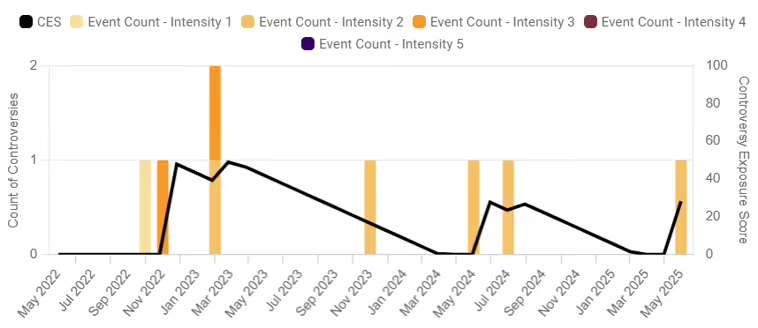
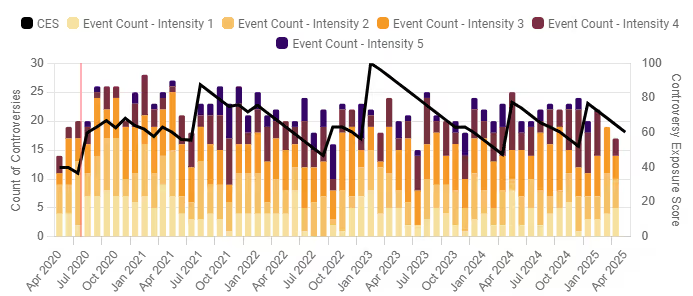
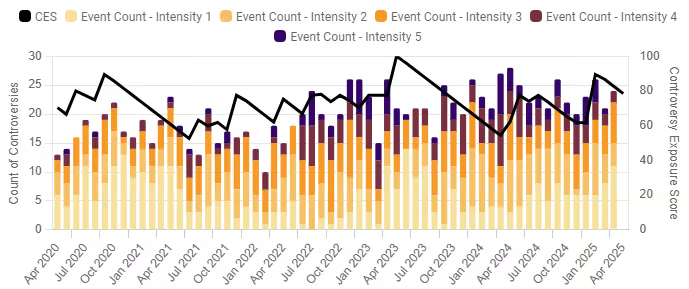
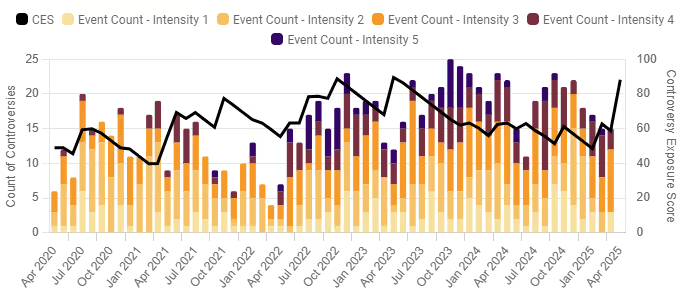
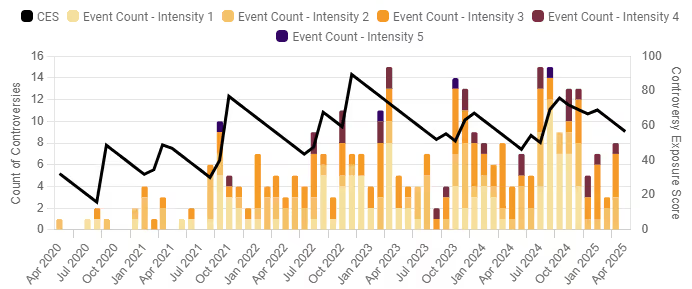
PSSI was a leading U.S. industrial cleaning contractor, servicing major meatpacking plants and backed by a top-tier private equity firm. Yet between 2022 and 2024, it became the center of one of the most significant child labor scandals in the U.S., one that had been quietly signaling its risks for years. SESAMm's controversy monitoring platform captured those early signals long before regulators intervened.

The Scandal

In November 2022, the U.S. Department of Labor discovered that PSSI had employed minors as young as 13 in hazardous overnight roles across 13 locations in 8 states. A federal investigation confirmed 102 children had been illegally employed, many handling dangerous chemicals and machinery. Three years earlier, in 2019, PSSI had already been sued for wage violations. The signal was there. It went unheeded.

The Fallout

The consequences were swift. A $1.5 million DOL fine. Contract terminations by Cargill and JBS. A DHS trafficking investigation. A replaced CEO. By late 2024, PSSI had shut its corporate office entirely. Even the private equity owner, Blackstone, faced direct scrutiny from pension funds, a reminder that labor violations travel up the ownership chain.

The Lesson

Every warning sign in this case was publicly visible before the crisis broke out. Wage lawsuits, labor complaints, and media coverage are all available in the public domain. Real-time controversy monitoring can surface these signals early, giving companies and investors the chance to act before exposure becomes unavoidable.

Forced labor is not only a humanitarian crisis. It is a material risk that demands better data, earlier detection, and stronger accountability.

Download the full case study infographic to see the complete timeline of events and key takeaways

Read More
News

2024: A Year of Progress and a Vision for the Future

December 18, 2024
5 mins read

As 2024 comes to a close, I’m proud to reflect on SESAMm’s achievements and energized by the opportunities that lie ahead. This year has been a milestone for our growth, partnerships, and technological advancements, setting a strong foundation to tackle the challenges and embrace the possibilities of 2025.

Looking Back on 2024: Key Achievements

Strengthening Client Partnerships and Expanding Our Reach

This year, SESAMm welcomed an impressive roster of new clients, in particular working more closely with LPs such as Swen Capital, banks, and asset managers such as Natixis, alongside numerous mid-market asset managers and private equity funds. These organizations are turning to SESAMm for more control over their ESG data and access to granular controversy insights, reaffirming our role as a trusted partner in sustainable finance. We also launched impactful partnerships with Ramboll, ARX, FinGreen, and CybelAngel, among others, broadening our reach and capabilities.

Building a Stronger Team and Advancing Our Technology

Internally, we strengthened our team with strategic hires, including our first team member in Canada, to better support our clients locally. On the technology front, we achieved significant milestones: introducing new platform features, launching a comprehensive product documentation help page, and reaching the capacity to process nearly 30 billion documents—our largest scale yet.

Adapting to a Dynamic ESG Landscape

Globally, the ESG landscape was marked by notable developments. Europe focused heavily on CSRD compliance, while Asia advanced new ESG mandates and regulations in South Korea, Japan, and Singapore. Despite regulatory shifts in the U.S., SESAMm experienced strong growth in North America, demonstrating our ability to adapt and thrive globally.

Innovating with Generative AI

This year also saw the integration of generative AI into our solutions, reshaping how we deliver value to clients. Risk Reveal, for example, enables automated controversy report generation and real-time insights.

Looking Ahead to 2025: Rising to ESG Challenges

Embracing ESG Challenges

As we close out 2024, the momentum in ESG shows no signs of slowing down. With new regulations like CS3D and evolving global frameworks, companies face mounting demands to monitor not only their investments but also their supply chains while improving transparency across the board. SESAMm remains committed to enhancing its tools to meet these challenges, delivering faster, more actionable insights to corporate and investment clients alike.

Harnessing the Potential of AI

The evolution of AI presents a major opportunity. Advances in generative models will enable us to further increase the scale and quality of our data processing. Our focus will remain on refining interpretation and reporting capabilities, empowering clients to make smarter, data-driven decisions on millions of companies with minimal friction.


The year ahead will undoubtedly bring its share of challenges, but it also holds incredible potential for progress. SESAMm is committed to remaining at the forefront of ESG and AI innovation, helping businesses not only adapt to change but lead it.
None of this progress would be possible without the trust and collaboration of our clients, partners, and team members. Thank you for making this year a success. Together, we are shaping the future of finance and sustainability. Here’s to another year of growth, innovation, and positive impact in 2025!

Reach out to SESAMm

TextReveal’s web data analysis of over five million public and private companies is essential for keeping tabs on ESG investment risks. To learn more about how you can analyze web data or to request a demo, reach out to one of our representatives.

News

2024: A Year of Progress and a Vision for the Future

December 18, 2024
5 mins read

As 2024 comes to a close, I’m proud to reflect on SESAMm’s achievements and energized by the opportunities that lie ahead. This year has been a milestone for our growth, partnerships, and technological advancements, setting a strong foundation to tackle the challenges and embrace the possibilities of 2025.

Looking Back on 2024: Key Achievements

Strengthening Client Partnerships and Expanding Our Reach

This year, SESAMm welcomed an impressive roster of new clients, in particular working more closely with LPs such as Swen Capital, banks, and asset managers such as Natixis, alongside numerous mid-market asset managers and private equity funds. These organizations are turning to SESAMm for more control over their ESG data and access to granular controversy insights, reaffirming our role as a trusted partner in sustainable finance. We also launched impactful partnerships with Ramboll, ARX, FinGreen, and CybelAngel, among others, broadening our reach and capabilities.

Building a Stronger Team and Advancing Our Technology

Internally, we strengthened our team with strategic hires, including our first team member in Canada, to better support our clients locally. On the technology front, we achieved significant milestones: introducing new platform features, launching a comprehensive product documentation help page, and reaching the capacity to process nearly 30 billion documents—our largest scale yet.

Adapting to a Dynamic ESG Landscape

Globally, the ESG landscape was marked by notable developments. Europe focused heavily on CSRD compliance, while Asia advanced new ESG mandates and regulations in South Korea, Japan, and Singapore. Despite regulatory shifts in the U.S., SESAMm experienced strong growth in North America, demonstrating our ability to adapt and thrive globally.

Innovating with Generative AI

This year also saw the integration of generative AI into our solutions, reshaping how we deliver value to clients. Risk Reveal, for example, enables automated controversy report generation and real-time insights.

Looking Ahead to 2025: Rising to ESG Challenges

Embracing ESG Challenges

As we close out 2024, the momentum in ESG shows no signs of slowing down. With new regulations like CS3D and evolving global frameworks, companies face mounting demands to monitor not only their investments but also their supply chains while improving transparency across the board. SESAMm remains committed to enhancing its tools to meet these challenges, delivering faster, more actionable insights to corporate and investment clients alike.

Harnessing the Potential of AI

The evolution of AI presents a major opportunity. Advances in generative models will enable us to further increase the scale and quality of our data processing. Our focus will remain on refining interpretation and reporting capabilities, empowering clients to make smarter, data-driven decisions on millions of companies with minimal friction.


The year ahead will undoubtedly bring its share of challenges, but it also holds incredible potential for progress. SESAMm is committed to remaining at the forefront of ESG and AI innovation, helping businesses not only adapt to change but lead it.
None of this progress would be possible without the trust and collaboration of our clients, partners, and team members. Thank you for making this year a success. Together, we are shaping the future of finance and sustainability. Here’s to another year of growth, innovation, and positive impact in 2025!

Reach out to SESAMm

TextReveal’s web data analysis of over five million public and private companies is essential for keeping tabs on ESG investment risks. To learn more about how you can analyze web data or to request a demo, reach out to one of our representatives.

The direct-to-consumer (DTC) genetic testing industry has transformed personal health and ancestry exploration, offering consumers remarkable insights from their DNA. Yet rising ESG concerns around data privacy, ethical use, and regulatory compliance are reshaping this landscape, pushing companies to prioritize consumer trust. Once a leader, 23andMe now faces steep challenges with data security, public confidence, and corporate stability. Recent breaches, including a leak impacting 6.9 million users, have led to lawsuits, a $30 million settlement, and boardroom upheaval, casting uncertainty on the company's future. Meanwhile, competitors like Ancestry and MyHeritage, though contending with similar issues, have remained comparatively stable.
How does 23andMe compare to its competitors when it comes to ESG concerns? Read on to find out.

23andMe: From Market Leader to Data Breach Fallout

23andMe initially led the DTC genetic testing market but has faced a series of challenges, mainly around data privacy. A major data breach in 2023 compromised 6.9 million users’ information, resulting in a $30 million settlement and reputational damage. Board resignations followed, highlighting corporate governance issues. These events underscore the need for strong data security and governance in sustaining consumer trust.

Key Controversies:

Ancestry: Customer Loyalty Tested by Rising Controversies

Ancestry has also faced privacy-related challenges, especially since its acquisition by Blackstone. Lawsuits claim the company misused consumer data without consent, violating privacy laws. Public backlash, such as from a controversial advertisement, has further affected Ancestry’s image. Yet, its solid user base has helped it remain stable compared to some competitors​.

Key Controversies:

MyHeritage: Navigating Privacy Compliance Across Borders

MyHeritage, while facing fewer controversies than its peers, still encounters significant privacy scrutiny. Investigations in Norway and Denmark have raised questions about its compliance with data laws. Although MyHeritage’s controversies are less severe, maintaining regulatory compliance remains essential for its international operations.

Key Controversies:

Conclusion

The future of the DTC genetic testing industry depends on how effectively companies manage ESG risks. Companies like 23andMe, Ancestry, and MyHeritage can better protect consumer trust and build a foundation for sustainable growth in this scrutinized sector by prioritizing data security, strong governance, and compliance.

Reach out to SESAMm

TextReveal’s web data analysis of over five million public and private companies is essential for keeping tabs on ESG investment risks. To learn more about how you can analyze web data or to request a demo, reach out to one of our representatives.

The aerospace and defense industry is essential to global technology and transportation, playing a crucial role in maintaining international security and connectivity. However, this sector faces intense scrutiny due to its significant impact on ESG factors. Amidst challenges like safety lapses and whistleblower revelations, stakeholders are increasingly relying on advanced AI technologies to gain insights into potential controversies. Such technologies have enabled a deeper understanding of the complex ESG issues that permeate the industry, revealing not only the specific challenges faced by companies like Boeing but also providing a broader view of the sector's commitment to corporate responsibility and sustainability.

This article explores the aerospace industry and its ESG challenges, backed up by a case study of industry giant Boeing. It also explains how we used SESAMm’s AI-powered tools to detect these controversies beforehand.

Aerospace and Defense Market Mentions

figure 1 aerospace and defense market mentions

The top market players in the aerospace and defense industry command 8.3% of the overall market's online mentions. This sector is increasingly scrutinized for its ESG practices amidst technological advancements and global policy shifts.

Media Sentiment in the Aerospace Industry

figure 2 competitive data share

In this study, we ran our AI tools through our data lake to extract the major market players: Northrop Grumman, Lockheed Martin, General Dynamics, Airbus, and Boeing, with the time frame starting from 2015 to date. The data reveals a notable peak in online mentions of the market trend, mainly following Boeing’s plane crash controversies. Post-2018, we noticed a general upward trend for Airbus and Boeing, indicating their increasing dominance or recovery in the market. This trend demonstrates the shifting landscape of the aerospace industry, where competition is intense, and the share of mentions can reflect broader market movements and company-specific developments.

figure 3 sentiment analysis over time

(*): Polarity or sentiment polarity represents a company's aggregate of positive and negative sentiment (opinions, reviews), ranging from -1 to 1. A zero score means that there is as much positive as negative sentiment. High e-reputation brands can have polarity scores of more than 0.5.

The sentiment across the aerospace market reflects the industry’s highs and lows. On one hand, there are moments of significant achievements like new contracts and technological breakthroughs that drive companies like Lockheed Martin to positive media highlights. Between 2016 and 2018, Lockheed Martin experienced a surge in positive mentions due to key contract wins and proactive company initiatives, which have contributed to maintaining its reputation and market value.

Conversely, the industry faces intense scrutiny over various controversies, notably those surrounding Boeing. The company, a dominant figure in the market, has been at the center of numerous negative headlines, giving it the lowest sentiment polarity among its peers. Issues range from serious safety lapses, such as the tragic 737 MAX crashes throughout the years, to ongoing legal challenges and whistleblower claims that overshadow its governance practices. These incidents have not only affected Boeing’s sentiment negatively but have also influenced the overall perception of the aerospace and defense sector, highlighting the industry's susceptibility to reputational risks.

Macro Themes

figure 4 macro themes across players (normalized)

The aerospace sector, while essential for global connectivity, has not been without its controversies, especially concerning safety and compliance issues. Among the major players, Boeing's significant share of media mentions is primarily driven by a series of high-profile accidents, including the 737 MAX crashes in 2019, killing all passengers and another serious incident in South China in 2022. These accidents triggered a cascade of lawsuits and fines, severely impacting Boeing’s public perception and operational standing. The aftermath of these incidents also precipitated broader discussions around leadership changes, management practices, safety protocols, and accountability measures within the company.

Similarly, Airbus has faced its own challenges, with notable accidents in 2015 in France and 2016 in the Mediterranean Sea, followed by another in 2020, resulting in 97 fatalities. These incidents underline the persistent safety risks inherent in aerospace operations and the critical need for stringent oversight.
Accusations of ethical and legal violations also loom large across the industry. Boeing, for example, has been embroiled in numerous investigations and lawsuits related to various accusations. Meanwhile, other industry giants like Northrop Grumman and Lockheed Martin have faced legal actions over environmental and contracting practices, such as Northrop’s involvement in residential chemical contamination and Lockheed’s settlement over accusations of overcharging the Navy. General Dynamics has also encountered legal scrutiny over employment practices and allegations of human rights and privacy violations.

These controversies highlight a complex landscape of operational, legal, and ethical challenges in the aerospace industry. Each incident not only affects the involved company but also catalyzes shifts in regulatory practices and leadership strategies, underscoring the need for robust governance and proactive risk management to uphold safety and integrity in aerospace operations.

ESG Analysis

figure 5 esg risks by company (normalized)

The influence of ESG factors on public perception and internal company policies within the aerospace industry is profound. Governance issues, in particular, continue to be a critical focus as aerospace companies confront challenges related to compliance, ethical practices, and transparency. Social factors are also prominent, with labor practices and safety standards critically influencing operational and strategic decision-making. Environmental considerations are escalating in importance as the industry progresses towards more sustainable practices, driven by increasing concerns over climate change and environmental sustainability.

Northrop Grumman illustrates an aspect of ESG concerns with specific environmental risks linked to its operations. Accusations have surfaced against Northrop Grumman for its role in environmental degradation, such as pollution from manufacturing plants and involvement in contamination incidents at residential sites. These issues not only affect the company’s environmental track record but also impact its social standing and governance integrity. The company also displays some governance risks related to its total mentions volume driven by accusations of fueling false ‘Revenge Porn’ allegations against CIA whistleblower John Kiriakou as well as legal investigations driven by Northrop Grumman investors over its claims to recover their losses and class action lawsuits over claims of a breach of fiduciary duty.

The aerospace sector’s engagement with these ESG factors indicates a shift towards addressing the critical issues facing the industry. Boeing ranks first in terms of risks, with social risks having the highest share, followed by Airbus, with risks coming from social issues such as customer relations, fundamental human rights, and governance risks mainly related to its fraud, bribery, and corruption charges. This shift is not just about mitigating risks but also about harnessing opportunities to enhance corporate responsibility and ensure long-term sustainability.

Deep Dive into Boeing: ESG Risks and Public Perception

The aerospace industry has faced increasing scrutiny over its ESG practices. Among the key players, the American aerospace company Boeing has been prominently featured in media discussions, not only due to its market distinction but also because of its ESG challenges that have sparked significant controversy.

Boeing Word Cloud

This word cloud visually represents the main online topics surrounding Boeing, particularly focusing on the issues and controversies related to the 737 Max aircraft. Key terms like "737 Max," "Boeing," "safety," "death," and "FAA" are prominently displayed, indicating these as central themes in the discussion. The size of each word in the cloud signifies its frequency and importance in related discussions, with larger words being more prevalent. This visualization encapsulates a range of associated topics such as "lawsuit," "Senate hearing," and "missed inspections," highlighting the broad spectrum of regulatory, safety, and ethical issues that have dominated public and media discourse regarding Boeing.

Boeing ESG Analysis

figure 6 boeing esg risks over time

According to TextReveal’s findings, since 2019, Boeing's ESG risks have intensified, particularly in social and governance, leading to a substantial impact on its public image and stock performance. The company's struggles with governance issues are well-documented, encompassing major safety lapses that resulted in the tragic crashes of the 737 MAX aircraft in the span of six months in Indonesia and Ethiopia. These events have not only led to a loss of life but also raised serious questions about the company's commitment to safety protocols and ethical standards.

Social risks at Boeing are also prominent, with multiple incidents involving customer relations and human capital management. Notably, the company has faced significant scrutiny regarding its response to the 737 MAX crashes, highlighting deficiencies in transparency and accountability in dealing with the fallout. The handling of these incidents resulted in widespread public distrust, significantly damaging Boeing's relationships with airlines, regulatory bodies, and the flying public. Issues such as delays in disclosing software malfunctions and the initial reluctance to ground the fleet have led to accusations of prioritizing profit over passenger safety. Furthermore, Boeing's labor practices have also come under fire. There have been multiple instances of tension with labor unions over contract negotiations, job cuts, and factory conditions, which exacerbate the social risks by affecting employee morale and productivity. These labor disputes and the perceived erosion of safety standards contribute to a challenging environment, complicating Boeing's efforts to rebuild trust and ensure operational stability.

Early Signs: Whistleblowers

We used TextReveal's analytics capabilities to track the prevalence of whistleblower mentions within the aerospace industry, with data pointing back as far as 2019. This tool has effectively highlighted ongoing concerns and patterns related to corporate governance and safety issues.

figure 7 boeing whistleblowers mentions

Boeing has also been facing whistleblower retaliation. High-profile cases involving whistleblowers like John Barnett, who was found dead under mysterious circumstances, and Sam Salehpour, who reported safety shortcuts and received physical threats, illustrate the perilous environment for those who challenge the status quo. These whistleblowers' stories, while distressing, shed light on a culture that may prioritize expediency over thoroughness and safety.

One of the most significant cases involved John Barnett, a former quality manager at Boeing, who raised alarms about critical safety lapses in the production of the 787 Dreamliner. Barnett claimed that faulty parts were knowingly installed on planes, potentially endangering passengers. His revelations were met with hostility and retaliation, resulting in his tragic and suspicious death, which was officially ruled as a suicide. This case has fueled widespread media coverage and public outcry, questioning the integrity of Boeing’s internal safety practices and the treatment of employees who report such critical issues.

Another well-known whistleblower, Ed Pierson, reported concerns about the 737 MAX's manufacturing process, specifically pointing to the rushed production schedules that he believed compromised safety. His testimony before congressional hearings helped to expose a "profit over safety" mentality that appeared to saturate Boeing’s management practices. Pierson’s allegations were particularly damaging as they were directly linked to the two fatal crashes of the 737 MAX, which tragically resulted in 346 deaths.

Sam Salehpour, a Boeing engineer, also came forward with allegations of manufacturing shortcuts that compromised the structural integrity and safety of Boeing aircraft. Like others, Salehpour faced significant backlash from superiors and was reportedly blackballed within the industry for his outspokenness, highlighting the severe personal and professional risks faced by whistleblowers within the air travel giant.

The cumulative effect of these whistleblower cases has led to significant scrutiny from regulatory bodies, the media, and the public. The Federal Aviation Administration (FAA) has stepped up its oversight of Boeing, leading to fines, increased regulations, and a temporary grounding of the 737 MAX fleet. These incidents have sparked broader discussions about the need for systemic reforms within the aerospace industry to ensure that safety and ethical standards are not only upheld but prioritized over financial incentives.

How does SESAMm Detect ESG

Navigating the vast amounts of data available is a significant challenge when conducting this type of analysis. At SESAMm, our experts begin with a comprehensive sentiment analysis of the industry and its key players. By examining trends, particularly spikes in data volume or shifts in sentiment—both positive and negative—they can pinpoint the issues and controversies driving these changes. Following this, our team conducts a thematic deep dive into the topics most relevant to the industry, providing a nuanced understanding of the issues that are particularly sensitive for stakeholders. With these insights in hand, our team then moves to company-specific analyses and benchmarking to assess how individual companies perform relative to their peers.

SESAMm's TextReveal® platform plays a significant role in identifying and understanding the complex web of controversies within industries such as aerospace. Through its algorithms, the platform sifts through vast amounts of data from diverse sources like news outlets, social media, and corporate disclosures to detect subtle cues and patterns that might indicate emerging ESG controversies. This robust data collection and analysis enable SESAMm to pinpoint issues related to whistleblower activities, safety violations, and governance lapses well before they gain widespread attention. By integrating this intelligence, SESAMm facilitates a deeper understanding of the underlying factors contributing to these controversies, aiding stakeholders in navigating the intricate dynamics of corporate accountability and regulatory compliance.

SESAMm's TextReveal® platform provides a comprehensive suite of ESG analytics tools that leverage extensive data collection from news outlets, social media, corporate disclosures, and NGO reports, ensuring thorough coverage of emerging and underreported ESG issues. Utilizing advanced artificial intelligence, the platform analyzes sentiments and contextual nuances within this data to identify positive and negative ESG indicators, helps stakeholders measure public sentiment before issues escalate, and makes accurate business decisions. Additionally, its capability to identify and map relationships between entities such as companies, individuals, and products to various ESG issues is crucial for assessing how internal dynamics influence a company’s overall ESG profile.

TextReveal® also employs predictive analytics to foresee potentil ESG controversies, enabling proactive risk management and strategic planning. Moreover, it offers detailed ESG reporting and scoring, providing quantifiable insights into a company’s ESG performance, which is invaluable for investors and analysts. Lastly, the platform’s analysis of the influence of key individuals on ESG practices offers deeper insights into leadership effectiveness and ethical compliance, making SESAMm's tools essential for integrating ESG considerations into comprehensive corporate strategy and maintaining competitive advantage in a socially conscious market environment.

Conclusion

Navigating the complexities of ESG risk management requires a shift from traditional methods to more advanced, AI-driven approaches. AI's ability to analyze vast amounts of unstructured data enables early detection of hidden risks, as demonstrated in our case study on Boeing. Using AI, we identified emerging controversies around Boeing's safety practices, quality control, and governance issues before they escalated, showcasing the technology's potential for proactive risk management.

Incorporating AI into ESG assessments allows private equity firms and other stakeholders to move beyond reactive strategies. By detecting potential risks early, firms can safeguard their investments, protect their reputations, and align with a growing emphasis on responsible investing. Embracing AI-driven tools is not just about keeping pace with market demands—it's about ensuring a more secure, transparent, and sustainable approach to investment in an ESG-focused world.

Reach out to SESAMm

TextReveal’s web data analysis of over five million public and private companies is essential for keeping tabs on ESG investment risks. To learn more about how you can analyze web data or to request a demo, reach out to one of our representatives.

Identifying environmental, social, and governance (ESG) controversies is a complex challenge. The large amount of data that is added to the web daily makes it difficult to analyze, leaving important insights hidden among irrelevant information. Traditional risk identification methods struggle with this, making it difficult to uncover critical issues that could impact investments.

This article explores the intricacies of ESG data trends. As businesses worldwide strive to adopt more sustainable and ethical practices, the importance of ESG metrics has risen to the forefront of strategic planning and public discourse.

Identifying Controversies with AI

Traditional controversy detection methods often need help uncovering hidden risks buried within unstructured sources like social media, local news, and niche industry reports. This section explores the advantages of using AI tools—such as natural language processing and machine learning—to detect these risks more accurately and efficiently. By leveraging AI, firms can gain deeper insights and respond proactively to emerging ESG issues, ensuring more robust risk management and informed investment decisions.

Key Challenges in Identifying ESG Controversies

In the finance world, especially when dealing with small companies, sometimes private, identifying ESG controversies presents significant challenges. These companies often lack extensive public records, and the data that is available can be sparse, fragmented, or hidden within vast amounts of irrelevant information. Traditional methods of risk identification struggle to navigate this sea of digital noise, making it difficult for private equity firms to uncover critical issues that could impact their investments.

One of the primary hurdles is the lack of valuable, structured data on smaller firms. Unlike large corporations, which are often required to disclose detailed financial and operational information, small private companies might operate with minimal public visibility. This opacity complicates the identification of potential ESG risks, as relevant data is often buried in unstructured sources like social media, local news, or niche industry reports. The challenge is not just about finding information but also about extracting meaningful insights from a diverse array of sources that may not adhere to standardized reporting practices.

Additionally, the diversity in language and terminology used by smaller firms further complicates the identification of ESG controversies. Risks are often discussed in context-specific ways, using industry jargon or localized expressions that do not easily translate into a standard risk assessment framework. This linguistic variation can lead to misunderstandings or even the complete overlooking of critical ESG issues. Therefore, private equity firms require advanced tools capable of interpreting and standardizing this information to ensure comprehensive risk identification.

Artificial Intelligence vs. Traditional Methods

Artificial Intelligence (AI) has emerged as a game-changing tool for identifying ESG controversies, offering significant advantages over traditional methods. While conventional approaches rely heavily on structured data from formal reports and disclosures, AI technologies, such as natural language processing (NLP) and machine learning, can analyze vast amounts of unstructured data from diverse sources. This capability is particularly crucial for private equity firms focused on small companies, where relevant information may be scattered across social media posts, obscure local news articles, and other non-traditional outlets.

Traditional methods often fall short in dealing with the unstructured and fragmented nature of data related to smaller firms. These methods might miss emerging controversies discussed informally in niche blogs or industry-specific forums. In contrast, AI-powered tools can continuously monitor these sources in real time, identifying potential ESG risks before they escalate. This proactive approach allows firms to address issues early, providing a more comprehensive and nuanced understanding of the risks associated with their investments.

Moreover, AI's ability to process and analyze diverse languages and terminology offers a significant edge. By decoding industry-specific jargon and translating localized expressions into a standardized risk framework, AI helps private equity firms overcome the linguistic barriers that traditional methods struggle with. This capability ensures that no critical ESG controversy is overlooked due to language differences, thereby enhancing the accuracy and effectiveness of risk assessments.

To sum it up, while traditional methods have their place, AI technologies provide a more robust, dynamic, and precise approach to identifying ESG controversies. By leveraging AI, private equity firms can better navigate the complexities of data sourcing, interpretation, and risk management, ultimately leading to more secure and informed investment decisions.

Streamlining ESG Controversy Detection with AI

Detecting ESG controversies with AI involves several crucial steps, each contributing to the precise identification of potential risks. The attached diagram illustrates a generalized AI-driven approach to detecting ESG controversies.

Step 1: Data Collection

The first step in this AI process is collecting vast amounts of web-based information to create a comprehensive data lake. This data lake acts as a repository, storing raw data in its original format. AI systems thrive on large datasets to enhance accuracy, and the data lake ensures that this requirement is met by allowing real-time data ingestion. By preserving historical information, the system can perform trend analyses that are crucial for identifying emerging controversies.

Step 2: Organizing & Cleaning the Data

Once collected, the data undergoes an essential organization and cleaning process. This step involves standardizing and categorizing the data to make it more accessible for analysis. By filtering out irrelevant information and tagging essential data points, the system can quickly and efficiently process large datasets. This organization allows for faster analysis and ensures that only the most relevant information is considered, eliminating the noise that can obscure critical insights.

Step 3: Connecting the Dots

With the data organized, the AI system creates a Knowledge Graph (KG) that maps the relationships between key entities, topics, and themes. This step is crucial for understanding how different companies, products, and brands are interconnected. The Knowledge Graph is continuously updated to reflect new data, ensuring that the system remains accurate and relevant in its analysis.

Step 4: Adding Contextual Understanding

The AI system then moves on to interpret the text, employing various techniques such as Named Entity Recognition (NER) and lemmatization. These tools help the system identify and classify key elements within the data, allowing it to grasp the context and main points of the information. This step is vital for accurately understanding the specific topics and issues related to each company, enabling the system to group related articles and monitor the evolution of controversies.

Step 5: Analyzing with Algorithms

In this step, the AI applies sophisticated algorithms to the organized and contextualized data. These algorithms focus on uncovering insights such as sentiment analysis, ESG controversies, and impacts of Sustainable Development Goals (SDGs). The system continuously refines these algorithms to maintain high levels of accuracy and performance, ensuring that the analysis remains relevant as new data becomes available.

Step 6: Turning Analysis into Actionable Insights

Finally, the AI system transforms the analysis into actionable insights. By delivering these insights in a fast and easy-to-understand format, the system empowers users to make informed decisions quickly. For example, a controversy intensity score might be used to prioritize which issues require immediate attention, allowing users to focus on the most significant risks in their portfolios.

This AI-driven process, depicted in the attached diagram, showcases the streamlined approach to detecting ESG controversies, providing private equity firms with the tools they need to manage risks effectively and maintain a competitive edge in the market.
For more detailed information on how SESAMm identifies insights with AI, please efer to this document.

Conclusion

To sum up, identifying ESG controversies, particularly in smaller, less visible companies, presents significant challenges for traditional risk assessment methods. However, integrating artificial intelligence offers a transformative solution. AI tools can effectively analyze vast amounts of unstructured data, revealing hidden risks and enabling informed investment decisions. As the demand for sustainable and ethical practices grows, leveraging AI will enhance risk management and foster responsible investment approaches, allowing firms to navigate the complexities of ESG data more effectively.


Reach out to SESAMm

TextReveal’s web data analysis of over five million public and private companies is essential for keeping tabs on ESG investment risks. To learn more about how you can analyze web data or to request a demo, reach out to one of our representatives.

Recently, SESAMm sat down with ClimateAction to discuss the evoloving ESG regularlatory landscape and its impact on businesses and investors alike. Below we’ve gathered key takeawyas from that discussion.

Addressing ESG Challenges

Organizations are facing the challenge of managing a broad range of ESG-related risks while adapting to new legal requirements. These include tracking greenhouse gas emissions, monitoring labor practices, and ensuring board diversity, all while meeting the expectations of multiple stakeholders, including shareholders, employees, governments, and communities.

Frameworks like the Organisation for Economic Co-operation and Development (OECD) guidelines, the UN Global Compact, and the International Labour Organization conventions provide a foundation for best practices in these areas. However, implementing these standards effectively requires companies to go beyond compliance and actively engage with stakeholder feedback.

The Role of ESG Data and Stakeholder Insights

Companies and investors are increasingly shifting to robust data sources to craft effective ESG strategies. ESG data collection now includes not only internal metrics, such as workplace safety statistics and environmental performance indicators but also external stakeholder perspectives. These insights, drawn from media coverage, social media sentiment, and reports from non-governmental organizations, provide a more comprehensive understanding of a company's impact and reputation.
For investors, this information is necessary for assessing risks and opportunities in their portfolios. By integrating external feedback into their analyses, investors can better align their strategies with regulatory demands and societal expectations.

Leveraging Advanced Technologies in ESG Monitoring

Artificial intelligence (AI) and natural language processing (NLP) technologies have emerged as effective tools for ESG monitoring and reporting. These technologies can analyze vast amounts of data from diverse sources, including news articles, social media posts, and corporate reports, to identify potential ESG controversies and risks.

The benefits of AI-driven ESG analysis are particularly evident in sectors with limited traditional data, such as private equity. By expanding coverage to include smaller or less transparent companies, AI enables investors to gain deeper insights into their portfolios.

Furthermore, advances in AI, particularly large language models, have enhanced the ability to detect and analyze a wider range of events that might impact a company's ESG performance. This capability helps address one of the primary limitations of ESG reporting—reliance on self-reported data, which may not fully capture a company's real-world impact.

Preparing for the Future

As ESG regulations become more stringent and stakeholder expectations rise, businesses and investors must adopt proactive strategies. By leveraging advanced technologies and comprehensive data sources, they can better manage ESG risks and align with regulatory requirements. This approach not only ensures compliance but also enhances reputation and long-term sustainability, positioning organizations to thrive in an increasingly ESG-focused world.

The integration of stakeholder feedback into ESG assessments represents a significant shift in how organizations view their responsibilities. By combining traditional metrics with innovative technologies, companies, and investors can build strategies that reflect both regulatory priorities and societal values. This holistic approach is essential for navigating the complex and rapidly changing ESG landscape.

Access the full interview here.

Reach out to SESAMm

TextReveal’s web data analysis of over five million public and private companies is essential for keeping tabs on ESG investment risks. To learn more about how you can analyze web data or to request a demo, reach out to one of our representatives.

In the digital age, data proliferates at an astonishing rate. From news articles to social media posts, the information explosion presents unique challenges in processing and understanding content accurately. One significant challenge is distinguishing between entities with similar or identical names in different contexts. named entity disambiguation (NED) is a sophisticated technology within natural language processing (NLP) aimed at tackling this issue. This technology ensures that when you search for "Orange," the results accurately reflect whether you meant the color, the fruit, or the multinational corporation. This article explores the concept of NED, underscores its importance, and elaborates on how SESAMm employs this technology to stand out from other companies in the artificial intelligence (AI) landscape.

What Is Named Entity Disambiguation?

Named Entities: Defining the Basics

In data science and text processing, a named entity is defined as any real-world object that can be denoted with a proper name. This includes people like "Elon Musk," companies like "Google," and landmarks like "Mount Everest." These entities are distinct because they refer to unique individuals, organizations, or locations, unlike common nouns such as "manager" or "river," which are non-specific and can refer to many different entities globally.

Named Entities: Defining the Basics

Named Entity Disambiguation, also known as entity linking, involves identifying which specific entity is referred to in an unstructured text when there are multiple candidates with similar names. This process utilizes a blend of machine learning, knowledge graphs, and other sophisticated NLP algorithms to analyze the text and determine which entity type is relevant in the given context. This determination is important because it affects the interpretation and subsequent processing of the information.

The Importance of Named Entity Disambiguation

The role of NED in text analysis and information processing cannot be overstated, particularly when dealing with large and complex datasets. It enables:

  • Refined text analytics: For tasks like sentiment analysis, precise entity recognition ensures that emotions or sentiments are accurately associated with the right entities. This is crucial for businesses to understand public perceptions of their products or services accurately.
  • Efficient construction of knowledge graphs: Knowledge graphs that organize and link real-world information rely heavily on NED to accurately populate and update their data. This accuracy is essential for applications like digital assistants, which use these graphs to provide informed responses to user inquiries.

The Importance of Named Entity Disambiguation

NED is a complex process that involves multiple steps and methodologies to accurately identify and link named entities in a given text to their correct real-world counterparts.

1. Identifying Named Entities

Before disambiguation can occur, named entities must first be identified within a text. This is typically done using named entity recognition (NER), a preliminary step that involves scanning text data to locate and classify entities into predefined categories such as person names, organizations, locations, dates, and other specific information.

Techniques Used in NER

  • Rule-based systems: These utilize patterns and linguistic rules, such as capitalization or context indicators (e.g., titles like Mr. or corporate designators like Inc.), to identify entities.
  • Statistical methods: Techniques like Hidden Markov Models (HMMs) or Conditional Random Fields (CRFs) learn from large datasets of annotated text to recognize entities based on probabilistic models.
  • Deep learning approaches: More recently, models based on neural networks, particularly those using architectures like LSTM (Long Short-Term Memory) or transformers, have become prevalent. These models benefit from large amounts of training data and have shown superior ability to capture context for more accurate entity recognition.

2. Categorizing Named Entities

Once entities are identified, they need to be categorized accurately. This involves classifying each entity according to its type, which helps in narrowing down the possible meanings in the subsequent disambiguation step.

Methods for categorization

  • Fine-grained classification: Beyond basic categories, entities can be classified into more specific classes, such as distinguishing between types of organizations (e.g., non-profit vs. corporate) or public figures (e.g., politician vs. artist).
  • Contextual classification: It involves analyzing the surrounding text to understand an entity's role and relevance, using both the immediate context and broader discourse.

3. Disambiguating Named Entities

The core of NED lies in its ability to distinguish between entities that share the same name. This step is critical because it determines the accuracy of information extraction, search engines, knowledge graph construction, and other NLP applications.

Core Techniques in Disambiguation

  • Rule-based disambiguation: Applies heuristic rules based on linguistic cues and patterns, such as geographical proximity or typical associations (e.g., Apple might be linked to "technology" if the context involves words like "iPhone" or "MacBook").
  • Machine learning models: Supervised learning models are trained on datasets where each entity is annotated with its correct reference. These models learn to predict the correct entity based on features extracted from the context.
  • Unsupervised and semi-supervised methods: These involve clustering similar entities and using algorithms to predict the most likely meaning based on the densities of clusters and the contextual similarity.
  • Knowledge-based approaches: Utilize large external databases or knowledge graphs that contain information about entities and their relationships. By querying these resources, NED systems can pull contextual information and metadata to resolve ambiguities. For example, linking to a specific Wikipedia page can clarify whether "Jordan" refers to the country, the river, or the basketball player, based on the context.

4. Linking Entities to External Databases or Knowledge Graphs

The final step in NED is often linking the disambiguated entity to a unique identifier in an external database or a node in a knowledge graph. This linkage not only confirms the entity’s identity but also enriches the text with semantic information that can be used for further processing and analysis.

Linkage methods

  • URI Assignment: Each entity is assigned a unique resource identifier (URI) that points to a specific location in a database or a knowledge graph.
  • Semantic tagging: Entities are tagged with semantic labels that provide additional metadata, enhancing the richness of the data for subsequent analytical tasks.

The combination of these techniques ensures that NED systems can operate with high accuracy and efficiency, making them indispensable in the field of NLP. By understanding and implementing these processes, SESAMm enhances its analytical capabilities, offering precise and context-aware solutions that stand out in the competitive AI landscape.

SESAMm's Innovative Approach to NED

SESAMm has carved a niche in the NLP field by incorporating advanced, proprietary technologies that refine and enhance the NED process:

  • Cutting-edge algorithms: SESAMm develops and deploys state-of-the-art machine learning approaches and deep learning algorithms designed to increase the precision and reliability of entity disambiguation.
  • Scalable data processing: SESAMm's platforms are engineered to handle extensive data volumes, making them well-suited for large-scale industrial applications that require robust data analysis capabilities.
  • Customizable APIs: SESAMm offers adaptable APIs that clients can tailor to fit specific project requirements, whether for financial analysis, marketing research, or other specialized areas.
  • Seamless knowledge graph integration: By integrating its NED processes with dynamic knowledge graphs, SESAMm enhances its semantic analysis capabilities, enabling deeper insights and more accurate data interpretations.

Conclusion

Named Entity Disambiguation is a fundamental component of modern NLP applications, essential for interpreting the enormous volumes of data generated daily. By accurately identifying and categorizing named entities, NED not only deepens the understanding of text but also improves the efficiency of information processing. SESAMm's approach to NED sets it apart in the AI analytics field, pushing the boundaries of what's possible with smart, context-aware technology solutions. To learn more about SESAMm’s innovative technology and how it is used to identify ESG controversies, request a demo.

Reach out to SESAMm

TextReveal’s web data analysis of over five million public and private companies is essential for keeping tabs on ESG investment risks. To learn more about how you can analyze web data or to request a demo, reach out to one of our representatives.

Globally, ethics and sustainability are important, but the retail industry faces intense scrutiny over supply chain integrity. This spotlight shines on SHEIN and TEMU, two giants in the fast fashion and e-commerce sectors, known for their vast reach yet marred by controversies around labor practices and environmental impacts. This article explores their supply chain strategies, examining how current and emerging legislation, like the CSDDD initiative, aims to tackle the ethical dilemmas plaguing global retail. Through a comparison of SHEIN and TEMU, we assess the effectiveness of regulatory frameworks in addressing these critical issues.
By analyzing their ESG controversies and comparing their responses, we assess how well current and future legislation, particularly the CSDDD initiative, addresses ethical issues in global supply chains.

Specialized Retail: The Case of SHEIN and TEMU

SHEIN and TEMU are compelling use cases due to their past controversies and the focus on their supply chain practices. Both companies have come under scrutiny for their labor practices, environmental impacts, and ethical issues, making them ideal subjects for analysis. By studying their supply chain challenges, we aim to assess the effectiveness of current legislation and predict the potential impact of future regulatory frameworks, particularly in the context of the CSDDD initiative.

While both companies operate with a similar business model, SHEIN is an established player entangled in numerous supply chain controversies. On the other hand, TEMU, a newcomer since 2022, faces similar issues. Comparing them helps us evaluate the effectiveness of existing supply chain legislation and determine whether increased regulatory scrutiny has improved compliance or merely raised awareness of these controversies within the industry.

Note:

Size bias mitigation:

We normalized the data for both companies to ensure an equal basis of comparison, accommodating the difference in operational history—SHEIN since 2008 and TEMU since 2022— to eliminate discrepancies in web attention.

Risk analysis:

It’s worth noting that the figures presented here specifically relate to supply chain risks, as that is the primary focus of our analysis.

Examining Supply Chain Controversies

supply chain risks mentions

We analyzed ESG risks in the supply chains of SHEIN and TEMU over the past four years, adjusting data volumes for comparative analysis. SHEIN's supply chain risks have significantly increased since 2021, peaking in 2022 and continuing to rise in 2023, reflecting a growing online focus on its issues. Meanwhile, TEMU, despite only being established in 2022, has quickly come under intense scrutiny. The company faces frequent criticism for its supply chain practices, including condemnations for inaction and ongoing human rights violations.

Examining Social Sub-risks

social risks ( normalized)

In our analysis of social risks within the supply chains of TEMU and SHEIN, we discovered that fundamental human rights and labor rights are the most and second most prevalent issues, respectively. Notably, despite TEMU's more recent establishment compared to SHEIN, its supply chain has a relatively higher proportion of human rights controversies.

Both companies have faced serious allegations related to their supply chain practices. TEMU and SHEIN are scrutinized for using Chinese cotton potentially linked to slave labor, with insufficient efforts to mitigate forced labor risks. Allegations include child slavery, privacy issues related to sharing user data, and environmental neglect, including the use of carcinogens in products. Despite their efforts to boost their public image through aggressive marketing and influencer engagements, both companies have been criticized for their approach to environmental responsibility and labor practices.

Political calls for investigations into the use of Uyghur slave labor in both companies underscore their ethical challenges. Neither company has shown rigorous compliance with anti-forced labor laws, lacking stringent programs to audit supplier compliance. This highlights significant gaps in their corporate responsibility efforts.

SHEIN has faced accusations of stealing artists' work and failing to comply with modern slavery reporting regulations, adding to the ethical concerns. Consumers have also been alarmed by hidden clothing tag messages indicating threats. Both companies are heavily investing in lobbying efforts amid regulatory scrutiny as they struggle to balance rapid growth with sustainable and ethical business practices.

Examining Environmental Sub-risks

environmental risks (normalized)

It's evident that social risks, particularly human rights breaches and labor rights controversies, have received significantly more attention than environmental risks. Despite the severity of environmental events, they represent a lower percentage in comparison. This highlights the prioritization of addressing social issues within these companies' operations.

SHEIN experiences extensive scrutiny, leading to a wealth of data on its practices. Conversely, TEMU, despite facing environmental controversies, has been less transparent about its environmental footprint, with Greenpeace reports highlighting this lack of clarity. This disparity underscores that SHEIN’s environmental impacts are more thoroughly documented than TEMU’s.

For SHEIN, concerns include lead contamination in products, resulting in recalls by Health Canada of toxic children's jackets. Greenpeace's analysis has also revealed hazardous chemical levels surpassing EU regulations. Additionally, SHEIN’s operations are criticized for their contribution to climate change through promoting overconsumption that leads to high carbon dioxide emissions, severe water pollution from textile dyeing, and substantial textile waste.

These environmental and health issues gained attention during SHEIN’s attempts to launch IPOs in the US and UK, spotlighting the company's ethical and environmental practices. Despite SHEIN's pledges to donate towards solving textile waste problems, critics label these actions as greenwashing, calling for significant alterations to its business model to address the underlying issues effectively.

Supply Chain Dynamics: SHEIN vs TEMU

While TEMU doesn't have its own brand like SHEIN, it operates under a comparable business model. It acts as an intermediary, managing shipments for products it doesn't manufacture. Despite their distinct approaches, both companies frequently engage in disputes, drawing attention to their supply chains. Additionally, policymakers often group them with similar firms, subjecting their fast fashion practices to heightened scrutiny.

Recent reports and incidents shed light on TEMU's practices, including its engagement with suppliers previously rejected by SHEIN for substandard practices and allegations of evading responsibility for forced labor. We also detect TEMU's legal battles with SHEIN, involving disputes over supply chain arrangements and copyright violations, and a separate lawsuit filed by TEMU against SHEIN accusing it of coercive tactics against suppliers and allegedly intimidating its third-party suppliers and taking retaliatory actions against them for conducting business with TEMU.

These events highlight the growing scrutiny surrounding the supply chain practices of both SHEIN and TEMU. Senator Rubio's call for an investigation into allegations of Uyghur slave labor usage by both companies, additionally, mentions of Congressional attention has also focused on these companies, with reports exposing violations of U.S. tariff laws and evasion of human rights reviews on imports, shedding light on systemic issues within their operations.

Increasing Sustainability Awareness

We studied the mentions of both ESG initiatives associated with the brands and detected that over the analyzed time frame, SHEIN has been associated with significantly more initiatives than TEMU.

temu vs shein initiatives (normalized)

We analyzed the sustainability initiatives of these companies, finding that SHEIN's efforts outpace TEMU's significantly.

SHEIN focused on circular economy practices, exemplified by partnerships like that with Queen of Raw to reuse excess industry inventory and launches such as EvoluSHEIN and SHEIN Exchange, also boosting Product safety mentions, which promote recycled materials and resale of used products, respectively.

In contrast, initiatives related to atmospheric emissions are mainly concerned with reducing supply chain emissions by 25% by 2030, while climate change efforts include innovations with water-saving technologies and collaborations to avoid sourcing from forests and promote low-carbon, recycled textiles.

Social initiatives, though less frequent than environmental efforts, include a $70 million Supplier Community Empowerment Program and compliance monitoring, a community empowerment fund, and clothing drives supporting nonprofits.

Risks versus Initiatives: Focus on SHEIN

Focus in SHEIN risks vs initiatives
SHEIN comentions with supply chain regulations

Throughout our analysis period, we noted that 2022 was a turning point for SHEIN's sustainability efforts, sparked by several mentions of breaches related to the Modern Slavery Act and child labor allegations in the previous year, which subsequently increased the company’s sustainability-related mentions.
By 2023, as SHEIN prepared for potential IPOs in the US and UK and with the release of a controversial documentary, the company faced heightened scrutiny, with more allegations surfacing in its supply chain concerning various acts and legislations, such as the Modern Slavery Act, Uyghur Forced Labor Prevention Act, and others.
Despite these challenges, mentions of SHEIN’s ESG initiatives also rose, although they remained less prominent than risk-related mentions due to controversies typically gaining more attention online. However, from 2024 to the present, we have observed more initiatives than risks, suggesting that, despite some acts and legislations being non-binding or not directly applicable to SHEIN, the potential reputational impacts drive the company toward positive change.

E sub-risks (normalizedà

It's worth noting that we've observed discussions linking SHEIN with the recent EU Corporate Sustainability Due Diligence Directive, also referred to as CSDDD or CS3D. These discussions underscore the view that governments should refrain from incentivizing fast fashion companies like SHEIN.
As the CSDDD is expected to bring about significant changes, forcing businesses to identify, prevent, or mitigate adverse impacts of their operations on human rights and the environment. Notably broader in scope compared to previous legislation, this directive will apply to all EU companies surpassing a certain revenue threshold. Consequently, fast-fashion retailers like SHEIN will face increased requirements to take action and ensure compliance.

The absence of enforceable regulations allows companies like TEMU to continue operating, but SHEIN's actions, particularly as it moves towards an IPO, raise questions about whether its efforts to improve practices are driven by the scrutiny associated with preparing for a public offering or by a sincere commitment to compliance with laws and regulations.

To conclude, our analysis underscores the dynamic landscape of supply chain regulations, ESG risks, and sustainability initiatives within the specialized retail sector, particularly in the fast-fashion industry. A focus on SHEIN and TEMU reveals a rise in both ESG initiatives and identified breaches. SHEIN's proactive initiatives suggest a response to regulatory pressures.
Additionally, our findings suggest that even without binding legal requirements, companies may still choose to comply to enhance their reputation or respond to heightened scrutiny.

Reach out to SESAMm

TextReveal’s web data analysis of over five million public and private companies is essential for keeping tabs on ESG investment risks. To learn more about how you can analyze web data or to request a demo, reach out to one of our representatives.

The aerospace and defense industry frequently faces ESG controversies, as these companies contend with high-exposure incidents that draw significant public and regulatory attention. In our recent webinar and ebook, we examined how AI-driven ESG evaluations enable early risk detection in these industries. Now, we want to explore what SESAMm's new Controversy Exposure Score (CES) can tell us about these same companies, including Boeing, SpaceX, Blue Origin, Raytheon, Lockheed Martin, and Airbus.

To learn more about the CES score, click here: SESAMm Launches Controversy Exposure Score.

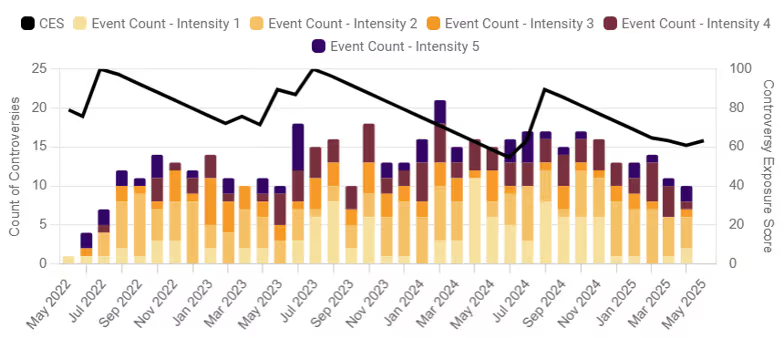
The aerospace and defense industry’s controversies mainly revolve around safety, labor issues, and regulatory concerns, which cause the CES scores to fluctuate considerably over time, influenced by both the volume and intensity of the events.

Boeing Analysis

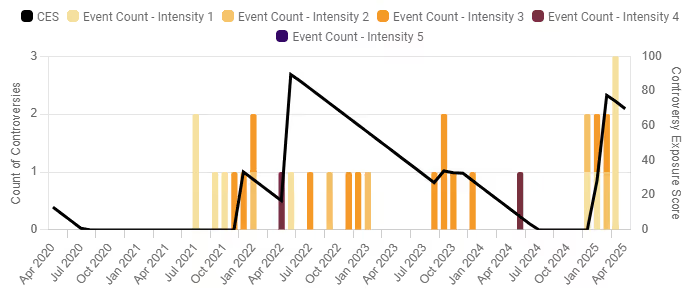
Boeing has been consistently at the forefront of ESG controversies, experiencing fluctuating intensities that directly impact its CES score. These fluctuations are often tied to specific high-profile events. The company's high-intensity controversies, particularly related to deadly crashes and fraud allegations over safety concerns, have driven notable spikes in its CES score during the past few years.

Significant crash incidents and safety issues have recurred throughout the years. This has resulted in increased FAA scrutiny of Boeing in early 2021 following Boeing 787 inspections, followed by continuous inspections into the 2018 — 2019 crash scandals, which are reflected in the two CES spikes during 2021. In 2022, the CES score rose again as the company was sentenced to pay $2.5 billion for criminal charges and $200 million in settlements for SEC charges for misleading investors, both over the 737 Max scandal.
In 2023, Boeing was ordered to appear in court for criminal settlements, an event classified as a high-intensity controversy, paired with significant media exposure reflected in the number of articles shared. This led to a surge in the CES spike despite the lower overall number of events during that period.
In 2024, the U.S. urged Boeing to plead guilty to fraud charges related to the fatal crashes, further intensified by a whistleblower's release of additional safety concerns, resulting in further CES spikes. The most recent surge in the CES was triggered by a widespread employee strike over a contract offer, representing yet another setback for Boeing, whose reputation and finances have already been strained by manufacturing issues and federal investigations this year.
Ultimately, both high-volume and high-intensity events related to Boeing’s controversies have contributed to the high CES score reflecting the company’s risks.

SpaceX Analysis

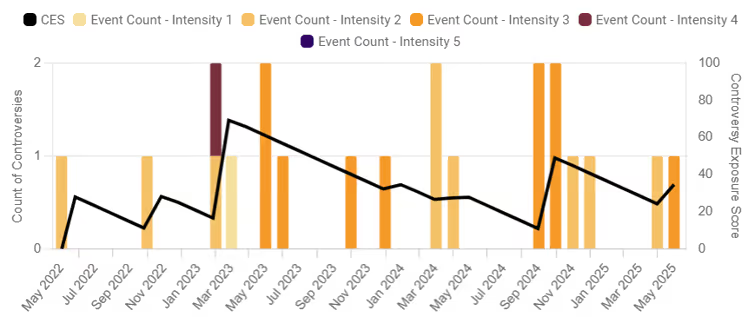
While SpaceX initially had relatively low controversy volumes and intensities in 2020, its CES score has steadily increased as well, aligning with the growth in controversies.

Notable peaks occurred in 2021, linked to controversies such as hiring discrimination concerns, an FAA investigation into test launches, and approval withholding for the Starship launch tower. Mid–2022 saw additional challenges, including CEO sexual harassment charges. Into 2023 and 2024, SpaceX’s scrutiny increased due to workplace environment-related lawsuits over hiring policy against refugees and sexual harassment and discrimination against women.
Despite these events, SpaceX's controversies are less intense than Boeing's, so SpaceX has relatively lower CES scores.

Blue Origin Analysis

Blue Origin’s controversies have shown an increase over time. This surge was attributed to its conflict with NASA and SpaceX over the “Moon-landing” project. In 2022, Blue Origin faced FAA scrutiny over a flight anomaly and a workplace discrimination lawsuit. In 2023, further setbacks came from an espionage case, an engine explosion, and lawsuits involving discriminatory practices. The company experienced another wave of controversies in 2024, driven by an FAA investigation into parachute deployment failures and fresh allegations of workplace discrimination.
Although Blue Origin’s controversies are relatively low in volume, occasional spikes have caused notable increases in its CES score.

Raytheon Analysis

Raytheon's CES score has remained moderate, with periodic surges between 2020 and 2021. These spikes were triggered by ESG risk events such as investor class action, violations of domestic preference laws, and the company’s involvement in Yemen's civil war. In 2022, the company faced another surge of controversies driven by an antitrust action lawsuit and further protests related to the situation in Yemen. In 2023, the CES score rose again amid backlash against the war in Gaza, the ongoing 2021 investors class action, environmental lawsuit, and FAA safety concerns for the company’s subsidiaries Pratt & Whitney, which also faced penalties for violating antiboycott regulations.
Despite the diversity of ESG controversies, Raytheon’s overall CES score remains moderate compared to Boeing, thanks to the lower intensity of events it has encountered.

Lockheed Martin Analysis

Lockheed Martin's CES score has been relatively low and stable over time, with some fluctuations and few spikes. Mid–2021, the company had to pay a $10.28 million settlement for overcharging allegations; another notable surge occurred in 2022, triggered by FTC antitrust concerns over its Aerojet deal and an investor class action. The company’s involvement in war crimes in Yemen and Palestine during 2023 and 2024 has further fueled its controversies exposure hence the CES spikes.
Though low in volume, Lockheed Martin’s controversies were marked by high-intensity events and media exposure, which contributed to significant spikes in its CES score.

Airbus Analysis

Airbus controversies events are relatively stable, with a slight decline overall and few spikes over time, as reflected in their CES score.

In early 2020, Airbus faced fraud and non-compliance allegations, along with a securities class action claim. By mid–2020, the company became embroiled in a bribery scandal. Toward the end of 2020 and into 2021, the long-standing Boeing-Airbus subsidy dispute resurfaced. In 2022, the bribery case remained unresolved, leading to Airbus agreeing to a $4 billion fine while also facing a $339 million class action lawsuit. The bribery allegations were still unfolding in 2023, accompanied by corruption claims in 2024.
Compared to Boeing, Airbus has experienced fewer controversies in terms of volume and less severe high–intensity events. As a result, its CES score has remained relatively stable over time, with only minor fluctuations, primarily driven by legal investigations.

Conclusion

In the aerospace and defense industry, ESG controversies continue to shape the reputational and operational risks of leading companies. Boeing, SpaceX, Blue Origin, Raytheon, Lockheed Martin, and Airbus each face unique challenges that are reflected in their CES scores. While Boeing and Airbus have seen higher volumes and intensities of events, others like SpaceX and Blue Origin have witnessed moderate to low exposure but still face periodic scrutiny due to high–impact incidents. As these companies navigate evolving regulatory landscapes, labor concerns, and public perception, their CES scores will remain a critical indicator of their ESG performance.
Download the ebook “The Boeing Scandal: Can AI Predict Controversies Before Traditional Tools?” to learn more about the Boeing scandal.

Reach out to SESAMm

TextReveal’s web data analysis of over five million public and private companies is essential for keeping tabs on ESG investment risks. To learn more about how you can analyze web data or to request a demo, reach out to one of our representatives.

Stay ahead with the latest in ESG and AI intelligence

Join our mailing list to receive new reports, event invites, and updates from SESAMm directly to your inbox.