

Forced labor is often assumed to be a problem of distant supply chains. The case of Packers Sanitation Services Inc. (PSSI) dismantles that assumption entirely.
PSSI was a leading U.S. industrial cleaning contractor, servicing major meatpacking plants and backed by a top-tier private equity firm. Yet between 2022 and 2024, it became the center of one of the most significant child labor scandals in the U.S., one that had been quietly signaling its risks for years. SESAMm's controversy monitoring platform captured those early signals long before regulators intervened.
The Scandal
In November 2022, the U.S. Department of Labor discovered that PSSI had employed minors as young as 13 in hazardous overnight roles across 13 locations in 8 states. A federal investigation confirmed 102 children had been illegally employed, many handling dangerous chemicals and machinery. Three years earlier, in 2019, PSSI had already been sued for wage violations. The signal was there. It went unheeded.
The Fallout
The consequences were swift. A $1.5 million DOL fine. Contract terminations by Cargill and JBS. A DHS trafficking investigation. A replaced CEO. By late 2024, PSSI had shut its corporate office entirely. Even the private equity owner, Blackstone, faced direct scrutiny from pension funds, a reminder that labor violations travel up the ownership chain.
The Lesson
Every warning sign in this case was publicly visible before the crisis broke out. Wage lawsuits, labor complaints, and media coverage are all available in the public domain. Real-time controversy monitoring can surface these signals early, giving companies and investors the chance to act before exposure becomes unavoidable.
Forced labor is not only a humanitarian crisis. It is a material risk that demands better data, earlier detection, and stronger accountability.
Download the full case study infographic to see the complete timeline of events and key takeaways
As we mark Earth Day 2025, it’s clear we’re at a defining moment. Despite decades of activism and innovation, the ecological crisis continues to accelerate, driven by climate change, biodiversity loss, and unsustainable resource use. But alongside this growing threat is a growing opportunity: the ability to harness artificial intelligence (AI) and data to drive more responsible business practices and environmental stewardship.
The warning signs are everywhere. By early 2025, Earth’s average surface temperature reached 13.0°C (55.4°F)—pushing us closer to climate tipping points. The first three months of this year were among the hottest on record, with unprecedented temperature anomalies in both the Arctic and Antarctic regions.
Global greenhouse gas emissions reached 37.8 billion metric tons in 2024, driven largely by fossil fuel use, agriculture, and industrial output. Meanwhile, biodiversity is in sharp decline, with over 46,000 species threatened with extinction due to climate-related stressors like habitat loss, pollution, and extreme weather.
Plastic waste continues to acidify oceans, while urban sprawl and overconsumption accelerate deforestation. From fast fashion to factory farming, human activity is pushing planetary boundaries—and the consequences are becoming harder to ignore.
The Human Toll: Environmental Anxiety on the Rise
This crisis isn’t just environmental—it’s deeply personal. Younger generations are increasingly affected by eco-anxiety, a psychological response to fears of environmental collapse. Studies warn that by 2050, billions could face water scarcity, food system disruption, and mass migration from climate-affected regions. Overheated ecosystems, wildfires, and resource scarcity are not abstract threats—they’re the lived reality of millions.
The Role of AI and ESG in the Fight for a Livable Planet
Fortunately, powerful tools are emerging. Artificial intelligence is transforming how we track and respond to environmental, social, and governance (ESG) risks. Natural language processing (NLP) can detect greenwashing, monitor corporate behavior, and surface early warning signals of environmental harm. AI is also helping companies reduce emissions, optimize energy use, and act on regulatory and reputational risks in real time.
By integrating ESG strategy with AI-powered insights, businesses are no longer passive observers but active players in shaping a sustainable future.
Hope for Change
Despite the scale of the crisis, momentum is building. From robotic wildlife conservation to AI-enabled recycling innovations, new technologies offer hope. Companies are aligning with the UN Sustainable Development Goals (SDGs), and governments are responding with new ESG regulations and global climate pledges. But regulation and innovation are not enough—collective action is still key.
Conclusion
There’s no better time than Earth Day to commit to change. Whether it’s supporting environmental nonprofits, reducing your consumption, investing in sustainable products, or advocating for better policies, every action counts. Our window to act is narrowing, but it’s still open.
Environmental, Social, and Governance (ESG) factors have moved from the periphery to the core of investment and risk management discussions. While positive ESG actions are often linked to better financial stability, new research from the Norwegian University of Science and Technology reveals the flip side: ESG controversies significantly increase a company’s exposure to systemic risk.
The researchers analyzed 463 non-financial companies listed in the STOXX Europe 600 index between 2016 and 2022. Their objective was to assess whether ESG controversies, such as environmental violations, social misconduct, or governance failures, impact a company’s systematic risk, measured by its beta coefficient (a key risk indicator in finance).
Importantly, the study leveraged a Random Forest machine learning model combined with Explainable AI (XAI) methods to predict and interpret firm-level risk.
The study's core conclusion is clear: ESG controversies significantly raise a firm’s systematic risk. In other words, when a company is embroiled in environmental scandals, social misconduct, or governance failures, investors perceive it as riskier, leading to greater stock volatility and sensitivity to market shocks.
Sondre Myge, head of ESG at Skagen Funds, said that while it’s still early, his “first impression is that it complicates comparability. Investors are now drowning in a mix of voluntary and legal disclosures requiring them to make assessments through a kaleidoscope of standards and methodologies. Sifting critically through hundreds of pages of text just for one company is a huge undertaking. While first movers will provide glossy reports that convey a convincing impression, it is important to remember that disclosures are not necessarily representative.”
Jan Kaeraa Rasmussen, head of ESG and sustainability at PensionDanmark, agreed, stating that initial disclosures tend to be “more narrative than quantitative. This limits our ability to draw robust, forward-looking insights from the information provided.”
What’s Next: Simplification or More Complexity?
Interestingly, the study found that the relationship between ESG controversies and risk is non-linear:
Firms experiencing their first ESG controversy ("first-timers") see a pronounced jump in risk.
For firms regularly facing controversies ("regulars"), the effect on risk remains high but stabilizes.
Small controversies matter most for firms with otherwise clean records. For already controversial
firms, additional issues have less incremental impact.
This pattern aligns with investor behavior: markets tend to overreact to initial controversies while becoming desensitized to repeated issues.
Machine Learning: A Powerful Risk Prediction Tool
The researchers used Random Forest regression, a machine learning technique that captures complex, non-linear relationships in data, to predict systematic risk.
Compared to traditional models, the Random Forest approach reduced the prediction error by nearly 30%. The model achieved a mean absolute error of 0.25 for 2022 risk predictions, outperforming a naïve benchmark model that assigned every company the same average risk.
This reinforces the value of machine learning in financial risk management — particularly when assessing non-traditional factors like ESG controversies.
Industry Matters: Some Sectors Are More Vulnerable
The study also highlights that the impact of ESG controversies on risk is highly sector-specific.
Industries with Highest Sensitivity to ESG Controversies:
Machinery
Oil, Gas & Consumable Fuels
Chemicals
Metals & Mining
Professional Services
These industries tend to face greater investor scrutiny due to their environmental footprint or governance challenges.
Industries with Lowest Sensitivity:
Real Estate
Food Products
Electric Utilities
The lower sensitivity in these sectors may reflect stronger sustainability practices, regulatory protections, or reduced operational exposure to ESG risks.
Geographic Differences in Risk
In addition to industry effects, the research found that firms in certain countries face higher systematic risk linked to ESG controversies.
Countries with the highest predicted systematic risk included:
Finland
Portugal
Poland
Netherlands
Sweden
Meanwhile, firms in Italy and Germany showed lower ESG-related risk exposure.
Implications for Investors, Risk Managers, and Companies
This study provides clear takeaways for finance professionals and ESG practitioners:
ESG Controversy Monitoring Is Critical Investors need advanced ESG monitoring tools to detect early signs of controversy, particularly for first-time incidents, which have the highest risk impact.
Tailor Risk Management to Industry Risk managers should take into account industry-specific vulnerabilities.
Machine Learning Enhances Risk Prediction Traditional risk models may overlook non-linear ESG effects. Machine learning offers a powerful, data-driven approach to anticipate market reactions to ESG incidents.
Proactive ESG Management Reduces Risk Companies should address ESG risks early before they escalate into high-profile controversies that damage reputation and investor trust.
Conclusion
This groundbreaking research bridges ESG and AI, demonstrating that ESG controversies are not just a reputational issue; they are a quantifiable financial risk. Machine learning models provide finance professionals with more accurate tools to assess and mitigate this risk.
About SESAMm
Discover SESAMm provides AI-powered solutions to help investors and companies identify ESG controversies and risks before they escalate. Using state-of-the-art AI, SESAMm analyzes millions of sources in near real-time, detecting ESG controversies across public and private companies worldwide. Whether for due diligence, portfolio monitoring, or supplier risk management, SESAMm enables financial professionals to stay ahead of emerging risks and make more informed decisions. Learn more at www.sesamm.com.
SESAMm’s AI Technology Reveals ESG Insights
Discover unparalleled insights into ESG controversies, risks, and opportunities across industries. Learn more about how SESAMm can help you analyze millions of private and public companies using AI-powered text analysis tools.
The EU’s Corporate Sustainability Reporting Directive (CSRD) promised a new era of transparency and comparability in sustainability reporting. But as the first wave of CSRD-aligned reports emerges in 2025, the reality is proving more complex. Some companies are racing ahead with detailed disclosures, while others are taking a minimalist approach. Investors? Many are struggling to make sense of it all.
We’re only at the beginning of the CSRD journey, but the early lessons are already clear: The gap between reporting ambition and data quality is widening. And the path forward may be shaped as much by simplification as by regulation.
Early CSRD Reporting: A Diverse Landscape Takes Shape
Since early 2025, over 250 companies have published sustainability reports aligned with CSRD — with report lengths ranging from 30 pages to over 300. One striking takeaway: The number of sustainability-related Impacts, Risks, and Opportunities (IROs) disclosed varies dramatically. Some companies report on fewer than 15 IROs. Others disclose more than 80. This variation highlights not only the complexity of CSRD implementation but also differences in how companies interpret their reporting obligations — and their readiness to meet them.
A PwC analysis shows that 90% of the first 100 CSRD reports came from just five European countries, including Germany, Spain, and the Netherlands, none of which have yet transposed CSRD into national law. Why report early? The answer is clear: mounting pressure from investors, regulators, and other stakeholders demanding greater transparency on sustainability performance.
But just as the first reports hit the market, uncertainty looms. The European Commission’s February Omnibus package could remove up to 80% of companies from the directive’s scope — a move that may significantly reshape the reporting landscape.
Data Quality: The New Focus Area for Reporting and Investors
At the heart of CSRD reporting lies the double materiality assessment, a process that requires companies to disclose sustainability matters that affect both enterprise value and broader environmental and social impacts. But execution varies widely.
According to PwC, while nearly all companies engage with internal stakeholders during the materiality process, few provide detailed information about engagement with external stakeholders.
The most commonly reported topics include:
Climate Change (mitigation, adaptation, energy use)
Business Conduct (ethics, anti-corruption measures)
As PwC notes, the goal is to help companies and stakeholders “understand more clearly the interplay between sustainability and value creation.” But when reporting approaches differ so dramatically, comparison becomes difficult, leaving investors to navigate a patchwork of methodologies and disclosures.
Sondre Myge, head of ESG at Skagen Funds, said that while it’s still early, his “first impression is that it complicates comparability. Investors are now drowning in a mix of voluntary and legal disclosures requiring them to make assessments through a kaleidoscope of standards and methodologies. Sifting critically through hundreds of pages of text just for one company is a huge undertaking. While first movers will provide glossy reports that convey a convincing impression, it is important to remember that disclosures are not necessarily representative.”
Jan Kaeraa Rasmussen, head of ESG and sustainability at PensionDanmark, agreed, stating that initial disclosures tend to be “more narrative than quantitative. This limits our ability to draw robust, forward-looking insights from the information provided.”
What’s Next: Simplification or More Complexity?
Despite these challenges, the direction of travel is clear: sustainability reporting in the EU is becoming more structured, more transparent, and more data-driven. But we are still in a period of transition.
Companies are building internal systems and capabilities to support CSRD compliance. Best practices are only now emerging. And regulatory changes, like the proposed Omnibus package, could dramatically alter the scope of reporting obligations.
For investors and stakeholders, the challenge will be to sift through early reports critically, distinguishing between narrative-heavy disclosures and data-rich insights that can drive better decision-making.
How SESAMm Helps Investors Navigate ESG Data Complexity
As sustainability reporting evolves, so too does the need for faster, more scalable ways to uncover ESG and reputational risks. At SESAMm, we help investors and companies cut through the noise.
Using advanced Generative AI, we automate ESG monitoring and due diligence on public and private assets — providing real-time coverage of over 5 million companies globally. Leading firms like Carlyle, Warburg, Natixis, RBI, Fitch, and Oddo trust SESAMm to uncover risks in seconds, not weeks.
Discover unparalleled insights into ESG controversies, risks, and opportunities across industries. Learn more about how SESAMm can help you analyze millions of private and public companies using AI-powered text analysis tools.
ESG reporting is no longer just a compliance requirement; it is now essential for structuring and managing ESG data to anticipate risks and adjust strategies. ESG platforms go beyond generating reports—they must provide actionable data to inform decision-making, much like financial tools. The emergence of regulatory frameworks such as CSRD is accelerating this transformation. With a rapidly expanding market, how do you choose the most suitable solution for your organization?
What is ESG Software and What is its Purpose?
An ESG software solution is designed to help companies structure, analyze, and improve their non-financial performance. It centralizes ESG data collection, automates analysis, and ensures compliance with current regulations. As legal requirements become more complex and data quality remains a significant challenge, these tools play a key role in ensuring reliability, traceability, and transparency. Advanced features, often powered by artificial intelligence (AI), facilitate data extraction, consolidation, and interpretation, enabling companies to manage their sustainability strategies efficiently.
Key uses of ESG Software include:
Carbon footprint calculation and tracking of greenhouse gas emissions
Biodiversity impact analysis and other environmental dimensions
Evaluation of ESG maturity of suppliers and partners
Regulatory compliance (CSRD, SFDR, EU Taxonomy, etc.)
Double materiality analysis and ESG risk management
Automated dashboards and non-financial reports
Tracking action plans and ESG progress reporting
By integrating these functionalities, ESG software ensures compliance and supports a proactive approach to managing risks and opportunities related to sustainability.
Top ESG Software Solutions
Here are some leading ESG software solutions and their features:
A top-tier solution for financial institutions, investors, and large firms. It integrates AI-powered tools for data collection, analysis, and compliance verification.
Ideal for: Investors and enterprises with >1,000 employees
A comprehensive ESG and decarbonization solution with a climate and CSRD module, launched in 2024. It combines software, consulting support, and training.
Ideal for: SMEs / mid-sized enterprises
Key focus: Carbon footprint, life cycle analysis, CSRD compliance
Strengths:
Advanced visualization of double materiality
Smart data collection interface
Integrated climate and CSRD module
AI-assisted narrative generation
Novisto
A SaaS platform that optimizes ESG data collection, analysis, and communication.
Ideal for: Investors and large enterprises (CAC 40)
Key focus: ESG reporting, compliance
Strengths:
AI-powered ESG ratings and insights
Sectoral benchmarking
Auditable platform and data
Live support, webinars, and consulting services
Greenomy
Specialized in regulatory reporting, built around the EU Taxonomy and CSRD requirements.
Ideal for: Mid-sized and large enterprises (CAC 40)
Key focus: ESG reporting, compliance
Strengths:
AI-generated ESG narratives and streamlined ESRS compliance
Established taxonomy tool in 2022
ESG data library and automated imports/exports
Continuous regulatory updates
Sweep
A modular ESG platform suited for industries like retail, consumer goods, and manufacturing. It offers four modules: Climate, Finance, Supply Chain, ESG-CSRD.
Ideal for: SMEs, mid-sized firms, and large enterprises (CAC 40)
IBM’s ESG software suite covers ESG data management, carbon footprint tracking, and CSRD reporting.
Ideal for: Investors and companies of all sizes
Key focus: Carbon footprint, ESG reporting
Strengths:
Compatible with 500+ data formats (ERP, finance, etc.)
Integration with IBM Maximo, Tririga and Turbonomic
Pre-configured CSRD templates with risk scoring
Automated workflows and supplier data collection
Tennaxia
A historic ESG and HSE (Health, Safety, Environment) solutions provider with 20+ years of experience. Acquired Traace in 2024 to strengthen carbon footprint and CSRD compliance capabilities.
Ideal for: SMEs, mid-sized firms, and large enterprises (CAC 40)
Key focus: Carbon footprint, ESG reporting, HSE
Strengths:
ESG and HSE expertise with an internal consulting team
Materiality module for risk/opportunity visualization
AI-powered data entry assistance and compliance management
Continuous regulatory updates
Apiday
A hybrid solution that combines an ESG platform with consulting partners for double materiality analysis.
A flexible ESG platform that unifies all market frameworks. Its modular approach (Evaluate, Manage, Align) simplifies compliance and performance enhancement.
Ideal for: SMEs, mid-sized firms, and large enterprises (CAC 40)
A SaaS platform designed for private equity investors and portfolio companies. It centralizes ESG data collection and analysis with advanced scoring and benchmarking tools.
A presence in North America and global compliance standards
What Are the Benefits of ESG Software?
ESG software solutions provide major benefits in compliance and strategic management. They improve data processing, ensure reliable reporting, and enhance decision-making with consolidated ESG performance insights.
Key Advantages
Automation and time savings: Reduces administrative workload with real-time data collection and analysis.
Data reliability and quality: Eliminates manual errors and ensures complete data traceability.
Regulatory compliance: Keeps up with evolving legal frameworks (CSRD, SFDR, Taxonomy).
Investor attractiveness: Strong ESG reporting boosts transparency and credibility. 56% of investors have backed out of deals due to ESG concerns.
Strategic ESG management: Provides a consolidated ESG performance overview and risk anticipation.
Impact analysis: Advanced analytics tools help drive sustainable decision-making.
ESG software can no longer be limited to a simple reporting tool; it must be fully integrated into your strategy. To make the right choice, it's essential to define your project in advance: What functional, organizational, and geographic scope should the solution cover? Do your needs relate to compliance, strategy, impact improvement, risk analysis, or value chain data collection? Do you have clear governance in place to deal with sustainability issues?
In addition to functionalities, we need to assess the full range of customer services that accompany the solution. Does the provider offer a robust support team integrated into the license? Does it have partners capable of facilitating deployment, enriching your data, or providing strategic support? Integration with your information systems is also a key criterion, and security should not be overlooked. Check that the vendor applies high standards of data protection and service continuity.
Clearly defining your needs and objectives and evaluating these criteria will enable you to choose an ESG solution that is truly adapted to your organization.
SESAMm’s AI Technology Reveals ESG Insights
Discover unparalleled insights into ESG controversies, risks, and opportunities across industries. Learn more about how SESAMm can help you analyze millions of private and public companies using AI-powered text analysis tools.
The rapid growth of social media companies has created significant ESG challenges, particularly in the areas of data privacy, content moderation, and corporate governance.
Meta and ByteDance, in particular, have been hit with lawsuits and fines related to data breaches, privacy violations, harmful content affecting minors, labor practices, and antitrust, with regulatory bodies across the US, EU, and Asia increasing scrutiny of their data collection practices.
Let’s dive into some of the key ESG challenges facing the social networking industry.
Meta Platforms Inc.: Privacy Breaches and Regulatory Scrutiny
Meta, the mother company of some of the most used social platforms, Facebook, Instagram, and WhatsApp, has faced numerous ESG challenges over the years, including privacy breaches, data misuse, and content moderation issues. 2025 is off to a rocky start, with the company facing a new lawsuit over personal data usage for targeted ads. In 2024, Meta was fined €251 million for a 2018 data breach and faced fines in South Korea and Nigeria for unlawful data collection and antitrust trials regarding Instagram and WhatsApp. In 2023, it addressed issues related to minors and employee treatment. Previous years included fines over the Cambridge Analytica scandal and minors' privacy violations, highlighting ongoing governance and privacy risks amidst regulatory scrutiny.
ByteDance Ltd (TikTok): National Security Risks and Content Concerns
In recent years, TikTok has faced significant ESG risks as U.S. politicians labeled it a national security threat, leading to data privacy concerns and investigations in the EU. By 2022, it incurred major fines, including a £27 million penalty in the UK for data breaches. In 2023, child safety and harmful content lawsuits increased, prompting government bans on official devices in the U.S., UK, and EU. In 2024, TikTok lost its appeal against a U.S. ban, while countries like Canada and Albania imposed restrictions. A 2025 Supreme Court ruling heightened the risk of a complete ban, highlighting ongoing legal challenges.
Since Elon Musk's acquisition of X (formerly Twitter), the platform has faced major controversies over hate speech and misinformation. Legal issues from the $44 billion buyout and a $150 million settlement for security breaches surfaced in 2022, along with fines in Russia and India. In 2023, X received backlash for hosting anti-Semitic content, leading to advertiser losses and lawsuits. The EU initiated investigations into disinformation, and by 2024, X faced fines in Brazil and Australia, GDPR complaints, and class action lawsuits related to age discrimination and mass layoffs, raising concerns about its online impact.
Kakao has faced moderate ESG risks, notably privacy issues and market behavior controversies. In 2024, the company was fined $11.1 million due to a KakaoTalk data breach. Additionally, in 2023, Kakao faced investigations over market manipulation linked to its SM Entertainment acquisition and experienced security vulnerabilities enabling fraudulent activities. Despite these concerns, Kakao's service outages and monopolistic practice allegations have had less severe impacts compared to industry peers.
REDnote (Xiaohongshu) has fewer ESG issues compared to its peers, facing challenges primarily related to censorship, privacy, and regulatory compliance. In 2025, Texas banned its use on government devices due to security concerns. Earlier, REDnote encountered legal challenges over AI-generated art copyrights (2023), a Taiwan-imposed national security ban (2022), layoffs due to restructuring (2022), and fines by Chinese regulators for inappropriate content involving minors (2021).
The social networking industry continues to grapple with significant ESG challenges related to data privacy, harmful content, and corporate governance. Major companies such as Meta, ByteDance, X Corp, KakaoTalk, and REDnote face ongoing regulatory scrutiny, fines, and lawsuits, highlighting persistent ethical concerns. While these issues pressure platforms to improve transparency and governance practices, they also underscore the industry's substantial risks and responsibilities to users and stakeholders.
Reach out to SESAMm
TextReveal’s web data analysis of over five million public and private companies is essential for keeping tabs on ESG investment risks. To learn more about how you can analyze web data or to request a demo, reach out to one of our representatives.
The European Union stands at the forefront of global efforts to promote environmental, social, and governance (ESG) accountability. As the world becomes increasingly ESG-aware, the EU has developed a comprehensive regulatory framework designed to ensure transparency and accountability across all sectors.
These regulations represent the EU's commitment to sustainable development and responsible business practices. However, the regulatory landscape is evolving, with the February 2025 EU Omnibus Proposal introducing potential modifications aimed at reducing the regulatory burden on businesses. However, these proposals come at the risk of substantially undercutting the impact of the regulations.
This article recaps the current ESG regulatory framework in the EU, explores the changes proposed by the Omnibus, analyzes the potential impacts of these modifications, and discusses how financial institutions can navigate this evolving landscape while maintaining compliance.
The ESG Regulatory Landscape in the EU
The EU is advancing sustainability through a framework of regulations that enhance corporate accountability and reporting on ESG impacts. These measures aim to promote genuine sustainable practices and address international trade and emissions challenges. Though comprehensive, these regulations are also, at times, confusing in the way they overlap and impact each other. To get started, let’s examine the EU Taxonomy, SFDR, and CSRD—a triad of interconnected regulations designed to streamline and strengthen sustainable investing practices.
EU Taxonomy
The EU Taxonomy provides a classification system for environmentally sustainable economic activities, offering clear criteria to determine whether an economic activity can be considered "green."
Key Aspects of the EU Taxonomy
Defines criteria for environmentally sustainable economic activities
Requires companies subject to CSRD to report on Taxonomy alignment
The Taxonomy helps channel investment toward genuinely sustainable projects and businesses by creating a common language for sustainable activities.
Status
The EU Taxonomy has been operational since January 2022 with phased implementation. As of March 2025, companies subject to CSRD must disclose their taxonomy alignment percentages.
Sustainable Finance Disclosure Regulation (SFDR)
The SFDR focuses specifically on the financial sector, requiring financial market participants to disclose how they integrate ESG risks into their investment decisions and the sustainability impact of their financial products.
Key Aspects of SFDR
Requires disclosure of ESG risks in investment processes
Classifies financial products based on their sustainability characteristics
Aligns with EU Taxonomy criteria for sustainable investments
Aims to prevent greenwashing in financial products
The SFDR plays a crucial role in bringing transparency to the rapidly growing sustainable investment market.
Status
Fully implemented since March 2021, with enhanced Level 2 requirements since January 2023. All EU financial market participants must classify products under Articles 6, 8, or 9. Current market data shows that 28% of EU funds are compliant with Article 8 and 5% with Article 9, with a significant trend of reclassification from Article 9 to 8 due to stricter interpretations.
The CSRD stands as a cornerstone of the EU's ESG regulatory framework, requiring companies to report comprehensively on their environmental, social, and governance impacts. This directive mandates alignment with the EU Taxonomy, ensuring standardized reporting of sustainability metrics.
Key Aspects of CSRD
Requires detailed reporting on ESG impacts
Aligns with EU Taxonomy criteria for sustainability
Currently applies to companies with 250+ employees
Enhances corporate transparency on sustainability issues
The CSRD represents a significant step forward in standardizing sustainability reporting across the EU, providing investors, consumers, and regulators with comparable information on corporate sustainability performance.
Status
The CSRD, adopted in November 2022, replaces the Non-Financial Reporting Directive (NFRD). The transition to CSRD reporting was originally slated to begin in 2025 and would expand the number of companies subject to reporting requirements to 49,000 (vs 11,700 under NFRD). However, as we’ll see later, the Omnibus may push back the timing of CSRD.
Outside of the EU Taxonomy, SFDR, and CSRD, the Omnibus Proposal highlights two other key ESG regulations: CSDDD and CBAM. These regulations relate to corporate accountability for supply chains and to limiting carbon leakage.
Corporate Sustainability Due Diligence Directive (CSDDD)
The CSDDD focuses on corporate accountability throughout global supply chains, requiring companies to identify, prevent, and mitigate human rights and environmental risks associated with their operations.
Key Aspects of CSDDD
Requires companies to identify and mitigate human rights and environmental risks
Applies to full supply chains, ensuring comprehensive oversight
Applies to EU companies with 1,000+ employees and €450 million+ global turnover and non-EU companies with over €450 million EU turnover
Mandates regular monitoring and reporting on due diligence efforts
Strengthens corporate accountability for sustainability across operations
This directive acknowledges that a company's sustainability impact extends beyond its direct operations, encompassing its entire value chain.
Status
CSDDD was adopted in April 2024. Its phased implementation is slated to start in June 2026 and be completed by June 2028. The timing and scope of CSDDD is subject to change following the Omnibus Proposal.
Carbon Border Adjustment Mechanism (CBAM)
The CBAM is an innovative approach to preventing carbon leakage. It levies a carbon tax on imports to ensure that the EU's ambitious climate policies do not simply shift carbon-intensive production outside its borders.
Key Aspects of CBAM
Imposes a carbon tax on imported goods
Requires importers to report emissions data
Ensures payment for embedded carbon costs in imported products
Aims to prevent carbon leakage to regions with weaker climate policies
This mechanism aims to create a level playing field for EU producers subject to carbon pricing while encouraging global partners to implement similar carbon pricing mechanisms.
Status
The transitional phase for CBAM began in October 2023, with full implementation scheduled for January 2026. It currently covers cement, iron and steel, aluminum, fertilizers, electricity, and hydrogen. The certificate requirements will phase in gradually from 30% in 2026 to 100% by 2034. It’s expected to apply to 1.8 million EU importers and generate €5-14 billion in annual revenue when fully implemented.
The February 2025 EU Omnibus Proposal
Purpose and Goals
The EU Omnibus Proposal represents a significant recalibration of the EU's regulatory approach, seeking to balance sustainability ambitions with business competitiveness concerns.
The primary objectives of the Omnibus focus on alleviating regulatory burdens faced by businesses, simplifying compliance requirements, and streamlining reporting obligations. These efforts aim to enhance business competitiveness while addressing regulatory complexity concerns. By minimizing these challenges, the goal is to create a more favorable environment for businesses to thrive. However, this push for simplification could come at the expense of transparency and accountability, especially in sectors where regulation plays a protective role.
Impact Analysis: How the Omnibus Changes ESG Compliance
Below, we’ll take a closer look at each regulation and the changes proposed by the Omnibus Proposal.
EU Taxonomy Modifications and Implications
The Omnibus Proposal suggests a Level 2 modification to the application of the EU Taxonomy, reducing the number of companies required to report taxonomy alignment.
Key Changes:
Taxonomy alignment reporting is limited to companies subject to CSDDD
Voluntary reporting option for companies not required to comply
Possible Implications:
Reduced availability of standardized sustainability data
Increased difficulty in verifying "green" business claims
Higher risk of greenwashing in financial markets
Less reliable information for sustainable investors
These modifications would potentially undermine the Taxonomy's role in creating a common language for sustainable activities.
CSRD Modifications and Implications
The Omnibus Proposal significantly narrows the scope of the CSRD, reducing the number of companies required to report on ESG impacts.
Key Changes:
Threshold increase from 250+ to 1,000+ employees
Optional reporting for SMEs
A two-year delay in reporting obligations for some companies
Possible Implications:
80% reduction in companies required to report
Decreased transparency in corporate sustainability performance
Fewer sustainability data available to investors and regulators
Potential challenges in tracking sustainability progress
These modifications would substantially reduce the regulatory burden on smaller companies but raise concerns about the availability of comprehensive sustainability data.
CSDDD Modifications and Implications
The Omnibus includes significant modifications to CSDDD, with a narrowed scope and reduced monitoring requirements.
Key Changes:
Due diligence is limited to direct suppliers with over 500 employees, not full supply chains
Monitoring frequency reduced from annual to every 5 years
Delayed enforcement for one year for the first batch (Companies with 1.5 billion in turnover and 5000 employees)
Possible Implications:
Weakened corporate accountability for supply chain sustainability
Increased risk of undetected human rights and environmental violations
Reduced monitoring of global supply chain impacts
Extended timeline before full implementation
These changes would significantly reduce companies' compliance burdens but come at the risk of removing the essence of the directive, which is eliminating child labor, forced labor, etc.
SFDR Modifications and Implications
While not directly modified, changes to other regulations, particularly the EU Taxonomy, indirectly affect the SFDR.
Indirect Impacts:
Reduced availability of reliable ESG data
Challenges in differentiating truly sustainable investments
Potential increase in greenwashing risk
These indirect effects could undermine the SFDR's effectiveness in bringing transparency to sustainable investment products.
CBAM Modifications and Implications
The Omnibus Proposal simplifies CBAM compliance, particularly for smaller importers.
Key Changes:
Small importers (under 50 metric tons/year) are exempted
Reduced reporting burden for over 182,000 businesses
Possible Implications:
Simplified compliance for small businesses
Potential loophole risk if companies split shipments to stay under the threshold
Maintained coverage of 99% of emissions despite exemptions
These modifications would maintain the CBAM's effectiveness while reducing the administrative burden on smaller importers.
The Debate: Perspectives on the Omnibus Proposal
Arguments in Favor
Proponents of the Omnibus Proposal emphasize its benefits for business competitiveness and regulatory efficiency. They highlight the reduced administrative burden, especially for small and medium-sized enterprises (SMEs), which often struggle with complex regulations. Additionally, the changes aim to simplify compliance requirements, making it easier for businesses to adhere to regulations. By aligning with global standards, the proposal helps maintain the EU's economic competitiveness while promoting a more efficient allocation of resources across industries. Together, these factors create a more streamlined and supportive environment for businesses to thrive.
As BusinessEurope Director General Markus J. Beyrer stated: "Doing better with fewer and clearer norms is what European companies of all sizes are asking for. By reducing unnecessary reporting and regulatory burdens, the first Omnibus will allow companies to contribute more effectively to the EU's sustainability objectives while also preserving the EU economy's competitiveness."
European Commission President Ursula von der Leyen also expressed support for the proposal, stating: "EU companies will benefit from streamlined rules. This will make life easier for our businesses while ensuring we stay firmly on course toward our decarbonization goals."
Criticisms and Concerns
Critics raise significant concerns about the potential undermining of the EU's sustainability ambitions. They argue that the Omnibus Proposal may lead to unintended consequences, including reduced transparency in corporate sustainability performance, weakened supply chain accountability, and regulatory uncertainty during transition periods. Additionally, it could undermine sustainability objectives and increase the risk of greenwashing. As Mariana Ferreira from WWF European Policy Office commented:
"The Commission's sudden urge to destroy laws that are crucial for the achievement of the EU Green Deal is a perilous approach that is forcing Europe into a time of regulatory uncertainty. Under the guise of 'simplification,' the Commission put forward a proposal that will hinder economic and business success."
"The Omnibus proposal erodes EU's corporate accountability commitments and slashes human rights and environmental protections."
While the European Parliament debates the Omnibus Proposal, the fact remains that even if the regulations are delayed or loosened, the need for risk management remains unchanged. Investors require transparency, and companies must manage supplier risk effectively.
Navigating ESG Risks with SESAMm
SESAMm’s cutting-edge AI solutions empower investors, financial institutions, and corporations to navigate the complexities of ESG compliance with confidence. Leveraging an industry-leading data lake and state-of-the-art AI, SESAMm uncovers hidden risks in supply chains and target companies, providing real-time insights that drive proactive decision-making. By transforming regulatory challenges into opportunities for responsible and sustainable growth, SESAMm helps businesses stay ahead of evolving ESG requirements while mitigating risk and enhancing transparency.
SESAMm’s AI Technology Reveals ESG Insights
Discover unparalleled insights into ESG controversies, risks, and opportunities across industries. Learn more about how SESAMm can help you analyze millions of private and public companies using AI-powered text analysis tools.
Generative Artificial Intelligence has burst onto the scene, bringing with it significant ESG challenges, particularly around data privacy, labor practices, and corporate governance.
A major issue is the source of AI training data, with lawsuits against OpenAI, Anthropic, and Google DeepMind over alleged copyright violations. Global regulatory bodies are also investigating AI companies for anti-competitive behavior and privacy breaches.
Concerns over transparency in AI and the spread of misinformation continue to grow, with AI models accused of generating false or biased content. Additionally, worries about cybersecurity vulnerabilities, such as data leaks and hacking risks, have further fueled scrutiny. Labor and working conditions also remain a concern in the industry, with reports of low wages and weak protections, while whistleblowers call for better safeguards and highlight governance instability.
What does the GenAI landscape look like for ESG issues? Read on to find out.
OpenAI: Navigating Copyright Infringement and Regulatory Scrutiny
As a leader in Gen AI, OpenAI has faced increasing scrutiny over ESG issues, particularly copyright infringement. It has been sued by major news outlets, publishers, and music labels for allegedly using copyrighted content without permission to train its AI models. Beyond copyright concerns, OpenAI has been fined for privacy violations and is under regulatory scrutiny, including antitrust investigations in the U.S. and Europe. Data security risks, working conditions for AI data workers, and internal governance challenges—such as whistleblower concerns and executive upheaval—have also drawn criticism.
Anthropic: Balancing Ethical AI Practices with Data Privacy Challenges
Despite lower volumes of ESG controversies, Anthropic still faces scrutiny over data privacy, ethical AI, and corporate governance. The company has been sued for allegedly using copyrighted material in AI training and accused of bypassing anti-scraping rules. Security concerns grew after vulnerabilities in its Claude AI model and a confirmed data leak. Its ethical AI stance has also been questioned over reported military ties. Meanwhile, former employees have called for stronger whistleblower protections, highlighting transparency and accountability concerns.
Microsoft AI: Facing Antitrust and Intellectual Property Controversies
Microsoft's AI controversies have grown into serious legal challenges from 2023 to 2025. The company faces lawsuits over its Copilot chatbot, raising intellectual property concerns. Ongoing antitrust inquiries are examining Microsoft’s AI partnerships, while publishers have filed copyright claims against the company. With investigations by U.S. regulators, the EU, and UK watchdogs, scrutiny has intensified globally. Microsoft’s hiring practices have also come under fire, particularly its recruitment of key talent from AI startups, raising concerns over potential anti-competitive behavior.
DeepSeek: Data Privacy and Ethical Use in AI-Powered Discovery
Although relatively new, DeepSeek has been the center of attention for the past few months. It has been involved in anti-competitive practices scandals over its disruption of OpenAI and issues linked to data privacy and cybersecurity. Countries like Australia, South Korea, France, and India have criticized and, in some instances, banned the AI platform. Additionally, DeepSeek has been questioned about its supply chain and forced labor practices.
Mistral AI: Open-Source Development and Accountability in AI Systems
Mistral AI, a French AI startup, has been hit with data privacy and cybersecurity controversies, anti-competitive practices, and senior management issues.
The rise of Gen AI has come with significant ESG challenges. Its major players, like OpenAI, Anthropic, and Microsoft, face issues such as copyright infringements, privacy violations, labor practices, and environmental impacts. As regulators step up their investigations, these firms will have to focus on transparency, ethical practices, and sustainability or risk additional controversies.
Reach out to SESAMm
TextReveal’s web data analysis of over five million public and private companies is essential for keeping tabs on ESG investment risks. To learn more about how you can analyze web data or to request a demo, reach out to one of our representatives.
As 2025 kicks off, we stopped to take a look at the significant environmental, social, and governance (ESG) controversies of 2024, as we do every year. In this article, we dive into the three public companies with the most controversies for each pillar: environmental, social, and governance, analyzing the companies and the wider impact of the controversies themselves. Join us as we analyze these key moments that have not only influenced public opinion but also shaped the future of responsible business practices.
ESG Risks: Focus 2024
Starting with environmental risks, biodiversity and ecosystems, climate change, waste management, and atmospheric pollution emerged as the most scrutinized sub-risks in 2024. These issues were primarily tied to greenwashing, such as the Mercer Super case and energy companies' expansions at the expense of climate change.
Meanwhile, for social controversies, working conditions and fundamental human rights took center stage. Notably, some companies were linked to forced labor, while coffee supply chains were linked to child labor. Boycotts over the war on Gaza have also been a major highlight of 2024.
Environmental Controversies: Top 3 Public Companies
Shell
In 2024, Shell faced a host of environmental controversies, particularly through its Nigerian subsidiary, Nigeria Delta, which was implicated in serious water pollution due to oil spills. The company dealt with several other notable controversies, including a €15 million compensation related to the spills, a New York City lawsuit over climate change, and a landmark emissions ruling from a Dutch court. Additionally, the company faced condemnation from U.S. lawmakers for alleged greenwashing practices, a carbon credit scandal, and a water contamination lawsuit resolved with a $230 million settlement.
ExxonMobil
2024 was a challenging year for ExxonMobil. First, its Hammerhead project was hit by an FDA-required Environmental Impact Assessment to evaluate the potential ecological risks. Then, conflicts with Venezuela arose over environmental concerns, followed by several U.S. lawsuits. California, Kansas, and Puerto Rico all sued the company for issues ranging from global plastic pollution and greenwashing to trade law violations. Additionally, ExxonMobil was targeted in a climate lawsuit and faced ongoing fallout from the 1989 oil spill. Protests from groups like CalPERS and student activists highlighted dissatisfaction with ExxonMobil’s environmental practices, emphasizing the company's broad regulatory and public relations challenges.
TotalEnergies
Coming in at number three, TotalEnergies dealt with several environmental controversies, notbably protests related to its East African crude oil pipeline project in Tanzania and Uganda. The company has also been accused of greenwashing and misleading sustainability claims while struggling with oil leaks at its Donges refinery and Egina field. On top of these environmental controversies, TotalEngeries faced key governance and social controversies, including a $48 million fine by the U.S. Commodity Futures Trading Commission (CFTC) for attempting to manipulate the European gasoline market in March 2018. There are also ongoing investigations into an attack in Mozambique.
Social Controversies: Top 3 Public Companies
Boeing
In 2024, Boeing faced significant challenges due to safety concerns and production controversies, which have fueled employee unrest and public skepticism. Recent incidents, including a missing door plug attachment on a Boeing 737 Max and investigations into quality control lapses at Boeing and its supplier Spirit AeroSystems, have eroded trust among small businesses reliant on the manufacturer. Whistleblower testimonies and increasing scrutiny from Congress and the FAA highlight systemic safety failures. These developments suggest a difficult path ahead for Boeing as it works to regain credibility amid ongoing struggles.
Pfizer
In 2024, Pfizer faced scrutiny after EU documents revealed over 4.9 million adverse events and 3,280 deaths linked to its COVID-19 vaccine, especially among women and individuals aged 31-50. Critics allege Pfizer continued distribution despite knowing the risks, questioning the EMA's approval. Additionally, DNA contaminants, including carcinogenic SV40 sequences, have been reported in the vaccines. A whistleblower disclosed that Pfizer employees were offered a "separate" COVID vaccine, raising concerns about access inequality. Kansas has filed a lawsuit accusing Pfizer of misleading the public about vaccine safety; meanwhile, the company faces fines in the UK for excessive pricing of an anti-epileptic drug.
Meta
In 2024, Meta faced intense scrutiny and legal challenges due to multiple controversies, including a significant data breach, allegations of failing to protect children, and privacy concerns. The company settled a $1.4 billion lawsuit related to facial recognition practices and was fined $220 million by Nigeria for violating data laws. Additional lawsuits from school districts and the Consumer Protection Association highlighted issues related to social media addiction and mental health impacts on teenagers.
Governance Controversies: Top 3 Public Companies
Alphabet
2024 was a legally challenging year for Alphabet, facing numerous antitrust issues globally. For instance, Allegro sued Alphabet for $568 million over anti-competitive practices, and the U.S. Justice Department accused Google of monopolies in the search engine and Android app markets. It has also faced an antitrust ruling, which it plans to appeal. In Europe, Google was scrutinized under the Digital Markets Act and fined 71 million euros in Turkey for anti-competitive behavior. Additionally, France imposed a $271 million fine on Google for using news content without publisher consent, and India began investigating Google's gaming app policies. These incidents highlight Alphabet’s ongoing regulatory battles across multiple continents.
In conclusion, the controversies surrounding environmental, social, and governance issues in 2024 have underscored the urgent need for accountability and transparency within corporations. As these companies grapple with significant backlash and legal challenges, it is clear that stakeholder expectations are evolving. The demand for responsible practices is louder than ever, and the consequences of neglecting these issues can be severe, impacting not just public perception but also financial stability and sustainability.
SESAMm’s AI Technology Reveals ESG Insights
Discover unparalleled insights into ESG controversies, risks, and opportunities across industries. Learn more about how SESAMm can help you analyze millions of private and public companies using AI-powered text analysis tools.
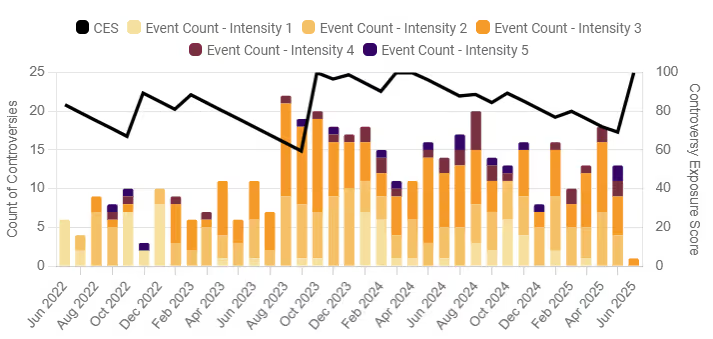
Over the past years, the Nordic banking sector has faced significant challenges related to governance, compliance, and ethical practices, highlighted by ongoing ESG controversies. These issues vary in severity among the banks, impacting their operational stability and public trust.
The largest Nordic bank, Nordea Bank, headquartered in Finland, has been affected by money laundering scandals, leading to substantial fines and criticism for its investment practices.
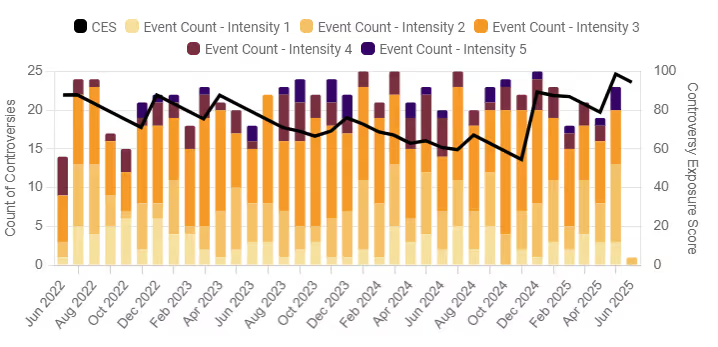
However, the Finnish bank isn’t the only one under scrutiny. Its competitors, Danske Bank and Svenska Handelsbanken, have also been entangled in scandals linked to Estonian money laundering, fossil fuel funding, and more. These controversies have resulted in branch closures, record fines, and criminal investigations.
How does Nordea Bank compare to its competitors when it comes to ESG concerns? Read on to find out.
Nordea Bank: Navigating Troubled Waters
Nordea Bank, the largest financial services group in the Nordic region, has found itself involved in a series of major scandals. Notably, it faced a $35 million fine for compliance failures linked to the Panama Papers, highlighting significant gaps in its anti-money laundering (AML) efforts. Other key controversies include the bank's decision to invest in controversial sectors, cyberattacks that revealed security issues, scrutiny of its tax fraud handling, and debt collection investigations.
Danske Bank has been linked to a significant money laundering scandal at its Estonian branch, involving around 29.4 billion kroner. This scandal led to an FBI investigation, high-profile resignations, and hefty fines, including a $2.1 billion settlement. The bank was also implicated in other unethical practices, including investments linked to fossil fuels and military regimes, adding layers of governance and ethical challenges. The ongoing legal and compliance issues have necessitated operational cutbacks and layoffs, deeply affecting the bank's structure and market performance.
Svenska Handelsbanken: Operational and Ethical Challenges
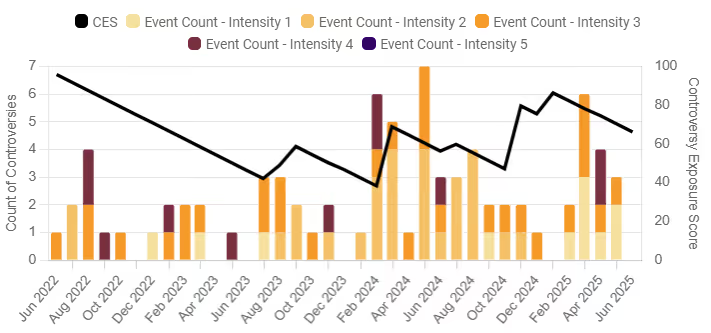
While Svenska Handelsbanken has faced fewer controversies compared to Nordea and Danske Bank, it is not without its own issues. The bank's decision to close 180 branches has increased employee workload and led to customer service challenges. Regulatory demands for better customer oversight and penalties for misleading trading practices highlight ongoing governance challenges. Furthermore, the bank's decision to terminate its partnership with Safello has sparked questions about its transparency and ethical practices.
The ongoing controversies involving major Nordic banks like Nordea, Danske Bank, and Svenska Handelsbanken highlight significant issues in compliance, governance, and ethics. These challenges have not only affected their reputations but also have broader implications for the industry's stability and trust. Moving forward, these banks must prioritize enhancing their compliance measures and ethical practices to rebuild trust and secure their positions in the competitive financial market.
Reach out to SESAMm
TextReveal’s web data analysis of over five million public and private companies is essential for keeping tabs on ESG investment risks. To learn more about how you can analyze web data or to request a demo, reach out to one of our representatives.