

Forced labor is often assumed to be a problem of distant supply chains. The case of Packers Sanitation Services Inc. (PSSI) dismantles that assumption entirely.
PSSI was a leading U.S. industrial cleaning contractor, servicing major meatpacking plants and backed by a top-tier private equity firm. Yet between 2022 and 2024, it became the center of one of the most significant child labor scandals in the U.S., one that had been quietly signaling its risks for years. SESAMm's controversy monitoring platform captured those early signals long before regulators intervened.
The Scandal
In November 2022, the U.S. Department of Labor discovered that PSSI had employed minors as young as 13 in hazardous overnight roles across 13 locations in 8 states. A federal investigation confirmed 102 children had been illegally employed, many handling dangerous chemicals and machinery. Three years earlier, in 2019, PSSI had already been sued for wage violations. The signal was there. It went unheeded.
The Fallout
The consequences were swift. A $1.5 million DOL fine. Contract terminations by Cargill and JBS. A DHS trafficking investigation. A replaced CEO. By late 2024, PSSI had shut its corporate office entirely. Even the private equity owner, Blackstone, faced direct scrutiny from pension funds, a reminder that labor violations travel up the ownership chain.
The Lesson
Every warning sign in this case was publicly visible before the crisis broke out. Wage lawsuits, labor complaints, and media coverage are all available in the public domain. Real-time controversy monitoring can surface these signals early, giving companies and investors the chance to act before exposure becomes unavoidable.
Forced labor is not only a humanitarian crisis. It is a material risk that demands better data, earlier detection, and stronger accountability.
Download the full case study infographic to see the complete timeline of events and key takeaways
With summer here, travelers are turning to vacation rental platforms more than ever to plan their getaways. As these platforms grow, it’s important to understand the ESG controversies they face, impacting users, hosts, and local communities worldwide.
Vacation rental platforms like Airbnb, Booking.com, Expedia, and Tripadvisor have faced several ESG challenges recently, including regulatory issues, safety and privacy concerns, and social controversies related to housing affordability and community displacement. Different companies face varied risks: Airbnb deals with global restrictions and legal issues, Booking.com faces antitrust fines and tax disputes, Expedia contends with operational challenges, and Tripadvisor grapples with reputational concerns. All, however, must balance growth with ethical practices.
What are the most pressing ESG challenges currently facing the vacation rental sector? Read to find out.
Booking.com: Legal Storms and Mounting Fines
Booking.com has encountered various ESG risks due to regulatory scrutiny and legal issues. The company faced a €413 million fine in Spain for abusing market dominance with price parity clauses and a €94 million tax settlement in Italy for VAT compliance. Additionally, Russia penalized it for antitrust violations, while hotel operators in Japan filed lawsuits over unpaid fees. Legal scrutiny also surrounds its listings in the occupied West Bank, with investigations by Dutch prosecutors. In the U.S., a court ruled that Booking.com illegally scraped Ryanair’s website. Finally, a significant data breach exposed millions of guests’ sensitive information, raising cybersecurity concerns, and planned workforce reductions highlight ongoing operational risks for stakeholders globally.
Airbnb is facing significant regulatory and legal challenges globally, including Spain's order to remove over 65,000 listings, Italy's €576 million tax settlement, and stricter rental rules in Greece and France. In the US, cities like New York have imposed tight short-term rental limits, while Airbnb is dealing with class-action lawsuits in Canada and pricing accusations in Australia. Safety and privacy issues also plague the platform, including lawsuits related to guest deaths. Furthermore, Airbnb has been criticized for its listings on occupied Palestinian land and its impact on housing affordability. In 2023, the company cut 1,900 jobs, or about 25% of its workforce, increasing its ESG risks amidst evolving pressures.
Expedia Group faces several ESG risks, though generally less severe than its larger peers. Key challenges include a $33 million penalty in Australia for misleading hotel rates, 1,500 job cuts, antitrust investigations in Europe, and a $29.8 million payment under the Helms-Burton Act. Legal issues also involve unpaid commissions, tax avoidance claims, and COVID-19 flight refund disputes. Governance problems include executive departures and a reverse racism lawsuit, along with data breaches affecting millions. Overall, these risks are significant but less severe than those of competitors.
In conclusion, the vacation rentals sector faces significant ESG challenges that threaten its growth and credibility. Major players like Booking.com, Airbnb, and Expedia must address regulatory scrutiny, safety concerns, and social issues to meet the evolving expectations of travelers. By prioritizing transparency, community engagement, and compliance, these platforms can rebuild trust and promote responsible tourism. Embracing these changes not only mitigates risks but also positions them to lead in sustainable travel and reshape the future of vacation rentals.
Reach out to SESAMm
TextReveal’s web data analysis of over five million public and private companies is essential for keeping tabs on ESG investment risks. To learn more about how you can analyze web data or to request a demo, reach out to one of our representatives.
Over the past decade, many organizations have improved their carbon footprints, from recyclable and biodegradable packaging and single-use plastic to planting trees and reducing their greenhouse gas emissions. However, some businesses and companies looking to boost their eco-friendly image without committing to serious changes and addressing environmental issues have been associated with false green marketing. We call this "Greenwashing."
Defining Concepts
What is Greenwashing?
Greenwashing is a practice used by businesses to represent themselves as more sustainable than they truly are. Greenpeace and the Environmental Protection Agency define greenwashing as making false and misleading claims about a product's environmental benefits or practices, services, technology, or company practices. Greenwashing typically involves companies spending more money on advertising and marketing than on implementing sustainable business practices that minimize environmental impact. These false green claims can deceive consumers into believing that a product or company is more environmentally friendly than it is, leading to increased sales and profits. As a result, false advertising, misleading initiatives, and groundless claims have increased green investors' exposure to risks emerging from potential lawsuits from activist groups, image deterioration, and heavy losses in assets invested.
Greenwashing Mentions Over Time
In recent years, new concepts have emerged alongside greenwashing:
Greenwashing, Greenhushing, and Greenwishing Mentions Over Time
Greenhushing refers to a company’s refusal to publicize ESG information. The company may fear pushback from stakeholders who would find its sustainability efforts lacking or from investors who believe ESG undermines returns.
Greenwishing, or unintentional greenwashing, describes a practice where a company hopes to meet certain sustainability commitments but simply does not have the means to do so.
High-Profile Greenwashing Case Studies
When talking about greenwashing, the usual suspects are the oil and gas industry, the food and beverage sector, and other environmentally impactful industries. However, the financial industry has also been embroiled in its own greenwashing controversies.
It’s challenging to produce an accurate assessment of environmental, social, and governance (ESG) factors, which creates opportunities for companies to hide ineffective and fake green initiatives. According to Regtank, the main challenges to detecting greenwashing include:
Lack of reporting standards – There’s no universal set of standards for ESG compliance.
Lack of transparency – Companies often don’t disclose the specifics of their “green campaigns,” making it hard for investors and consumers to verify their claims.
Limited consumer awareness – Misleading marketing can exploit consumers’ eco-consciousness and brand loyalty, reducing scrutiny of false green claims.
These gaps lead to inaccurate ESG data and scores, allowing greenwashers to avoid accountability. Ultimately, detecting greenwashing requires careful scrutiny of company claims and a deep understanding of their supply chains and operations.
How Artificial Intelligence Detects Greenwashing
As greenwashing practices become more common, activist investors, journalists, and the general public are using social media, news outlets, and blogs to highlight false claims. Artificial intelligence (AI) has become an invaluable tool in the early detection of greenwashing by analyzing vast amounts of public data.
At SESAMm, we use generative AI and LLMs to identify greenwashing risks across billions of web-based articles. Our data lake covers over 25 billion articles in more than 100 languages from four million news sources, blogs, social media platforms, and forums, analyzing data on five million public and private companies. Through our AI platform, we generate reliable, timely, and comprehensive insights to detect greenwashing, monitor ESG controversies, and identify related risks.
The CSRD significantly strengthens the requirements for companies to substantiate their sustainability commitments. Mandating standardized and detailed ESG disclosures directly addresses the practice of greenwashing, where companies exaggerate their environmental credentials in marketing without meaningful follow-through. Under the CSRD, companies can no longer rely on vague or selectively presented data—any gaps or inconsistencies in their sustainability claims will be exposed in public filings, making greenwashing much riskier. This means an end to cherry-picked data and a shift toward more comprehensive, comparable, and verifiable ESG performance for investors and stakeholders.
The CSDDD (if it stands) further reinforces these efforts by obligating companies to go beyond marketing statements and prove they’re actively managing environmental and human rights impacts throughout their supply chains. This directive closes loopholes that greenwashing often exploits, such as highlighting only direct operations while ignoring supplier practices. By requiring due diligence on environmental impacts across the value chain, the CSDDD aims to turn sustainability from a branding exercise into a legal and operational priority. If real supply chain actions don’t support a company’s green claims, it could face legal action and reputational damage.
Looking Ahead
Looking ahead, greenwashing will continue to face intense scrutiny from regulators, investors, and the public. With evolving regulatory frameworks like CSRD and CSDDD, the pressure is on for companies to ensure genuine environmental responsibility—not just green advertising. At SESAMm, we believe that the combination of regulatory rigor and advanced AI technologies will play a critical role in uncovering false green claims and supporting investors in navigating ESG risks with greater transparency and accountability.
SESAMm’s AI Technology Reveals ESG Insights
Discover unparalleled insights into ESG controversies, risks, and opportunities across industries. Learn more about how SESAMm can help you analyze millions of private and public companies using AI-powered text analysis tools.
As the debate around ESG investing continues to evolve, some institutions and policymakers have grown increasingly vocal in their skepticism. Questions about greenwashing, the effectiveness of ESG strategies, and even outright regulatory rollbacks have cast a shadow over the sustainability movement. However, amidst the noise and uncertainty, there are clear signs of resilience and commitment from major financial players determined to keep sustainability front and center.
Two recent initiatives by European financial leaders—Snam and La Banque Postale—demonstrate that even as some institutions step back from ESG, others are doubling down and forging ahead with ambitious plans to integrate sustainability at the heart of their financial strategies.
This move is particularly significant when SLB issuance has generally slowed due to concerns over the credibility of targets. Snam’s SLB, however, was met with overwhelming demand, being five times oversubscribed with an order book of nearly $10 billion. Such enthusiasm from the market underscores a growing appetite for credible and ambitious sustainability-linked investments. Moreover, by setting clear milestones—like a 25% reduction in Scope 1 and 2 emissions by 2027 and a 90% reduction across Scopes 1, 2, and 3 by 2050—Snam is making a public, measurable commitment to climate action.
La Banque Postale: Transforming Savings with ESG Tiers
The bank’s strategy is built around three distinct ESG tiers. The first excludes companies that conflict with environmental and social goals, while the second prioritizes firms with the best ESG practices. The third and most ambitious tier channels savings into impact-driven solutions—investments directly contributing to environmental and social progress. By creating these accessible, transparent pathways, La Banque Postale empowers individuals to align their savings with their values and participate in the ecological and social transition.
Positive Momentum for ESG
These two examples send a powerful message: while ESG may face headwinds in some circles, forward-thinking institutions remain firmly committed to integrating sustainability into their financial practices. This momentum is important, especially as public trust and regulatory scrutiny around greenwashing intensify.
ltimately, these initiatives remind us that sustainable finance is not about pleasing every critic. It’s about taking concrete steps to create long-term value for investors, communities, and the planet.
SESAMm’s AI Technology Reveals ESG Insights
Discover unparalleled insights into ESG controversies, risks, and opportunities across industries. Learn more about how SESAMm can help you analyze millions of private and public companies using AI-powered text analysis tools.
The European Union faces a significant internal rift as its largest economies take opposing stances on the bloc's Corporate Sustainability Reporting Directive (CSRD) and CSDDD (Corporate Sustainability Due Diligence Directive), highlighting the delicate balance between environmental ambition and economic competitiveness in today's regulatory landscape.
A Continental Divide
According to recent reports, Germany and France—two of the EU's economic powerhouses—are pushing for a two-year delay to the CSRD implementation. This stance contrasts sharply with Spain and Italy, who advocate for maintaining the current timeline while potentially offering concessions to smaller businesses.
On one hand, at the Choose France summit on May 19, 2025, French President Emmanuel Macron called for the European Union to abandon the CSDDD, citing concerns over its potential impact on European competitiveness. Macron's stance aligns with German Chancellor Friedrich Merz, who also advocates for the law's repeal, arguing that it imposes excessive burdens on businesses, especially amid global competition from the U.S. and China. While some EU member states and industry leaders support revising or delaying the directive, others, including left-wing politicians and NGOs, defend it as essential for upholding European values and sustainability goals.
Spanish Environment Minister Sara Aagesen and Economy Minister Carlos Cuerpo, on the other hand, emphasized in a letter to the European Commission that sustainability reporting "supports the values and the priorities of the EU even beyond our borders, setting an example of leadership." Meanwhile, Italy's finance minister Giancarlo Giorgetti specifically urged against delaying CSRD for the tens of thousands of companies already preparing to report this year.
Why France and Germany Are Pushing Back: The Competitive Concerns
The Franco-German resistance to the current CSRD and CSDDD timeline stems from several key economic and practical concerns:
France's pushback comes amid broader economic concerns. The French government described the CSRD rules as "hell for companies," reflecting anxiety about imposing additional costs during a period of economic vulnerability. Both countries fear that excessive regulatory requirements could further weaken their competitive position against less-regulated economies, particularly the United States under the Trump administration, which has shown hostility toward environmental regulations.
Overlapping Regulatory Frameworks
German officials have pointed to the problem of multiple, uncoordinated sustainability reporting regimes. Kukies noted that "every CFO could tell absurd stories about how the same data has to be reported multiple times," arguing for a more streamlined approach where "each data point only has to be reported once."
Specific Reform Proposals
The German government has proposed significant changes, including:
This regulatory uncertainty creates significant challenges for businesses operating across the EU. Companies face difficult strategic decisions about whether to proceed with sustainability reporting preparations or wait for potential rule changes.
For investors, this division introduces several critical considerations:
Reporting Inconsistency: Different implementation timelines across EU countries could create a patchwork of disclosure standards, complicating investment analysis.
Competitive Impacts: Companies in countries maintaining stricter timelines may face higher short-term compliance costs than competitors in countries securing delays.
ESG Data Reliability: Delays could affect the quality and comparability of ESG data, potentially undermining investor confidence in sustainability metrics.
Strategic Positioning: Forward-thinking companies that continue sustainability reporting preparations regardless of potential delays may gain competitive advantages in attracting ESG-focused investment.
Looking Ahead
The European Commission plans to publish an "omnibus" proposal to simplify green rules for businesses, aiming to enhance competitiveness while responding to global regulatory pressures, including potential deregulation under a second Trump administration in the U.S.
This internal EU debate reflects a broader global tension between advancing sustainability standards and addressing immediate economic pressures. Navigating this evolving regulatory landscape will require flexibility, foresight, and a balanced approach to ESG integration for businesses and investors alike.
As this situation develops, stakeholders should closely monitor European Commission decisions and prepare for multiple regulatory scenarios across the EU's diverse economic landscape.
SESAMm’s AI Technology Reveals ESG Insights
Discover unparalleled insights into ESG controversies, risks, and opportunities across industries. Learn more about how SESAMm can help you analyze millions of private and public companies using AI-powered text analysis tools.
The Net Zero Banking Alliance (NZBA), a flagship initiative under the Glasgow Financial Alliance for Net Zero (GFANZ), is facing a credibility crisis. Initially launched with the bold goal of aligning the banking sector with the 1.5°C target of the Paris Agreement, the alliance has recently relaxed its ambition, now aiming merely to keep global temperature rise "well below 2°C." This move comes amid high-profile exits from major U.S. banks and growing political pressures, raising concerns about the financial sector’s true commitment to climate action.
Major Bank Withdrawals Signal Recalibration
In early 2025, five major U.S. banks, including JPMorgan Chase, Bank of America, Goldman Sachs, Citigroup, and Morgan Stanley, quietly withdrew from the NZBA. Together, their departure slashed the alliance's total assets by 22%, casting doubt on its collective impact. These institutions cited operational and regional complexities, saying a uniform global strategy was increasingly unworkable. However, critics view the withdrawals as part of a broader retreat from climate leadership, particularly as political winds shift in the U.S.
Ethical Banks Push Back
Not all members are backing away. Dutch ethical lender Triodos Bank exited the NZBA not because it opposed the ambitious goals, but because the alliance was no longer ambitious enough. The bank reaffirmed its science-based commitment to cutting emissions by 42% by 2030 and condemned the revised targets as a watering down of climate action. Triodos' stance reflects the frustration of smaller, sustainability-focused institutions that fear losing ground in the face of regulatory and political compromises.
Political Pressures and Regulatory Gaps
This shift in banking commitments comes against a backdrop of increased political scrutiny. In the U.S., Democratic lawmakers have openly criticized the banks' decisions to leave the NZBA. They have requested greater transparency regarding these exits and demanded disclosure of any correspondence with the Trump campaign, suggesting fears that ESG rollbacks may be politically motivated. Without regulatory consistency, banks face a fragmented landscape that makes sustained climate progress difficult.
The Case for Stronger Oversight
While some institutions like Standard Chartered remain committed and continue to develop detailed transition plans, the broader trend points to a gap between voluntary climate commitments and actionable progress. Experts warn that relying solely on market incentives is insufficient. A lack of standardized frameworks and enforcement mechanisms risks undermining years of ESG progress. As global climate targets grow more urgent, financial regulators may need to step in to hold institutions accountable.
Conclusion: A Critical Juncture for Financial Climate Leadership
The evolving posture of the NZBA is emblematic of a larger challenge: balancing climate ambition with operational and political realities. While flexibility may be necessary, it must not come at the expense of credibility. The next phase of climate finance will depend on whether banks can remain both profitable and purposeful, or whether regulation will need to compel them to do so.
SESAMm’s AI Technology Reveals ESG Insights
Discover unparalleled insights into ESG controversies, risks, and opportunities across industries. Learn more about how SESAMm can help you analyze millions of private and public companies using AI-powered text analysis tools.
As global scrutiny of sustainability claims intensifies, the European Securities and Markets Authority (ESMA) is stepping up its regulatory game to combat greenwashing and strengthen investor trust. In a decisive move, ESMA is tightening rules around ESG fund labeling and expanding its oversight to include ESG ratings providers—ushering in a new era of accountability and transparency across the sustainable finance landscape.
Strengthening ESG Fund Labeling
In May 2024, the European Securities and Markets Authority (ESMA) introduced final guidelines regulating the use of ESG and sustainability-related terms in fund names. These rules respond to concerns that many investment products were using “green” or “sustainable” labels without sufficient alignment to actual portfolio practices—raising risks of greenwashing.
Following the publication of official translations in August 2024, the guidelines became effective on November 21, 2024. New funds must comply immediately, while existing funds have until May 21, 2025, to align. The rules require funds using ESG-related terms to ensure that at least 80% of their assets reflect stated environmental or social characteristics. Those using terms like “sustainable” or “impact” must also apply stricter exclusions, based on EU benchmarks.
The objective is to restore trust in sustainable investing by ensuring fund marketing reflects substance, not just strategy. These guidelines mark a move from self-declared ESG ambition to measurable regulatory alignment.
The regulations faced swift opposition from industry trade groups and Republican state attorneys general, who argued the SEC had overstepped its authority. The legal challenge quickly gained momentum, and with the change in SEC leadership, the agency opted not to continue defending the rules. Caroline Crenshaw, the lone Democratic commissioner, sharply criticized the move. She described it as an attempt to “unlawfully undo valid regulations” and accused her colleagues of “watching the rule’s demise while eating popcorn on the sidelines.”
New Rules for ESG Ratings Providers
In May 2025, ESMA extended its oversight by publishing a draft set of Regulatory Technical Standards (RTS) to regulate ESG ratings providers under the EU’s new ESG Ratings Regulation, adopted in late 2024. These rules are now under public consultation until June 20, 2025.
The draft RTS introduces key requirements: ESG ratings providers operating in the EU must be authorized and supervised by ESMA. They must also publicly disclose their methodologies, data sources, and underlying assumptions—addressing long-standing concerns over opacity and inconsistency in the ESG ratings industry.
Additionally, the proposed framework imposes safeguards to prevent conflicts of interest, particularly where firms offer ratings and related services such as consulting or data sales. The goal is to raise the independence, reliability, and comparability standards across the ESG data ecosystem.
A Unified Push Against Greenwashing
These regulatory initiatives reflect ESMA’s growing focus on creating a more credible, harmonized ESG landscape. From product labeling to third-party assessments, the authority is closing loopholes that have allowed inconsistencies and misrepresentations to persist.
The message for asset managers and ratings firms is clear: ESG marketing is no longer a grey area. Regulators expect proof of substance behind sustainability claims. Whether naming a fund or issuing a rating, firms must demonstrate transparency, governance, and alignment with new EU standards.
ESMA’s efforts also solidify Europe’s leadership in ESG regulation. While other jurisdictions still debate voluntary disclosures, the EU is moving ahead with enforceable rules that are reshaping expectations for financial products and ESG analytics. As the consultation period closes and final rules are adopted, firms operating in the EU—or servicing EU clients—will need to prepare for closer scrutiny.
SESAMm’s AI Technology Reveals ESG Insights
Discover unparalleled insights into ESG controversies, risks, and opportunities across industries. Learn more about how SESAMm can help you analyze millions of private and public companies using AI-powered text analysis tools.
The Securities and Exchange Commission (SEC) has voted to cease defending its climate disclosure regulations in court, marking a significant shift in U.S. corporate sustainability reporting requirements. This decision, announced on March 27, 2025, under Acting Chairman Mark Uyeda's leadership, has substantial implications for the ESG landscape.
The Decision
The SEC’s withdrawal from defending its climate disclosure rules comes amidst ongoing litigation before the U.S. Court of Appeals for the Eighth Circuit. Originally adopted in 2024, the rules were intended to provide investors with standardized information about companies' climate-related risks, emissions, and the financial impact of those risks. Uyeda justified the withdrawal by stating, “The goal of today’s Commission action is to cease the Commission’s involvement in the defense of the costly and unnecessarily intrusive climate change disclosure rules.” The regulations faced swift opposition from industry trade groups and Republican state attorneys general, who argued the SEC had overstepped its authority. The legal challenge quickly gained momentum, and with the change in SEC leadership, the agency opted not to continue defending the rules. Caroline Crenshaw, the lone Democratic commissioner, sharply criticized the move. She described it as an attempt to “unlawfully undo valid regulations” and accused her colleagues of “watching the rule’s demise while eating popcorn on the sidelines.”
Market Implications
The decision reintroduces regulatory uncertainty for companies. Many had already begun preparing internal systems and compliance structures based on the 2024 rules. Now, in the absence of a federal standard, they may be forced to rely on voluntary reporting frameworks or navigate a fragmented set of expectations from investors, states, and international markets. This lack of uniformity is likely to lead to inconsistent reporting practices and difficulties in cross-company comparisons. Investors, meanwhile, will face greater challenges in accessing reliable and comparable data on climate-related risks. Without SEC-mandated disclosures, much of the burden of transparency shifts to individual companies and third-party ESG data providers. Investors will likely need to increase due diligence efforts, adopt varied methodologies, and potentially absorb higher costs to obtain the data needed to manage climate risk effectively.
The Broader Context
This decision does not exist in isolation—it aligns with a broader trend of regulatory rollback on climate issues in the U.S. and signals a widening divergence between American and international disclosure approaches.
The divergence creates complexity for multinational corporations that must now navigate different expectations in different jurisdictions. This fragmentation may also create competitive disadvantages for U.S.-listed firms, especially those competing for capital in more disclosure-forward markets.
SEC Leaves the ISSB
In a related move that further isolates the U.S. from international sustainability efforts, the SEC recently withdrew from two key ISSB governance groups: the IFRS Sustainability Jurisdictional Working Group and the Sustainability Standards Advisory Forum. These groups are central to building alignment on global ESG disclosure standards.
The SEC’s exit from these forums signals a significant retreat from coordinated climate disclosure initiatives and weakens the U.S. role in shaping global ESG norms.
Market Response
Despite the rollback, some companies may continue voluntary climate-related disclosures. Those that have already invested in reporting infrastructure may opt to maintain transparency to meet investor expectations, mitigate reputational risk, and support long-term sustainability goals.
Simultaneously, ESG data providers and rating agencies are expected to play a more prominent role in filling the information gap. Financial institutions may also develop their own internal frameworks to evaluate climate risks, further privatizing what was once a public regulatory function.
Looking Forward
The path ahead remains uncertain. State-level legislation may introduce a patchwork of new rules. Global investors—particularly those with mandates in the EU or UK—may continue demanding robust disclosures from U.S. firms. And future federal administrations could choose to reintroduce or reshape mandatory disclosure regimes. In the interim, companies and investors will need to adapt by maintaining flexible reporting systems, monitoring evolving voluntary frameworks, and diversifying their sources of ESG data. While federal requirements may have receded, the underlying investor interest in climate-related financial risk is not going away. Climate disclosure, in one form or another, remains firmly on the radar.
SESAMm’s AI Technology Reveals ESG Insights
Discover unparalleled insights into ESG controversies, risks, and opportunities across industries. Learn more about how SESAMm can help you analyze millions of private and public companies using AI-powered text analysis tools.
The educational technology (EdTech) sector, including companies like Udemy, Coursera, and Byju's, has grown rapidly but faces major social and governance challenges. Key issues include costly legal battles over privacy violations and deceptive practices, which raise investor concerns. Financial instability is also prevalent, with layoffs and bankruptcies highlighting doubts about workforce rights and sustainable business models. While some companies manage ESG issues better, operational inefficiencies remain a concern for long-term stability. What are the most pressing ESG challenges currently facing the EdTech sector? Read to find out.
BYJU’S: Treading Turbulent Waters Amidst Financial and Regulatory Challenges
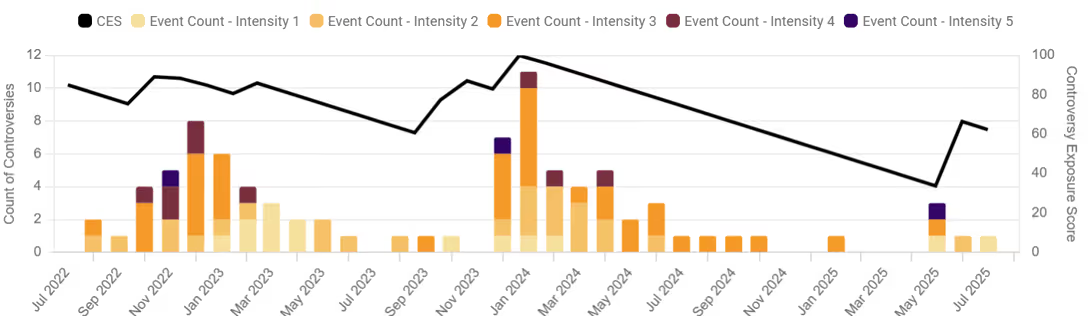
Byju’s, an EdTech startup in India, has faced significant challenges since 2022. The company has dealt with controversies, including data breaches, financial mismanagement, and regulatory investigations. Key issues include the shutdown of its Kerala office, mass layoffs, allegations of Goods and Services Tax evasion, and defaults on loan payments. In 2023 and 2024, Byju's continued to struggle with layoffs, money laundering investigations, and the resignation of executives. As of 2024, the company is at risk of insolvency, with ongoing bankruptcy proceedings and regulatory action against its leadership, highlighting its financial instability after years of rapid growth.
Udemy: Battling Legal and Ethical Challenges in the E-Learning Landscape
Udemy, a leading e-learning platform, has encountered increasing legal, financial, and operational challenges. These include a settlement over deceptive pricing practices, antitrust issues leading to a board member's resignation, and multiple lawsuits related to Facebook data sharing and video privacy violations. The company has also restructured its workforce to streamline operations and faced concerns over its generative AI policy regarding consent and transparency among instructors. These controversies highlight the complexities faced by EdTech companies in navigating legal and ethical challenges.
Coursera: Navigating Challenges in Security, Ethics, and Workforce Dynamics
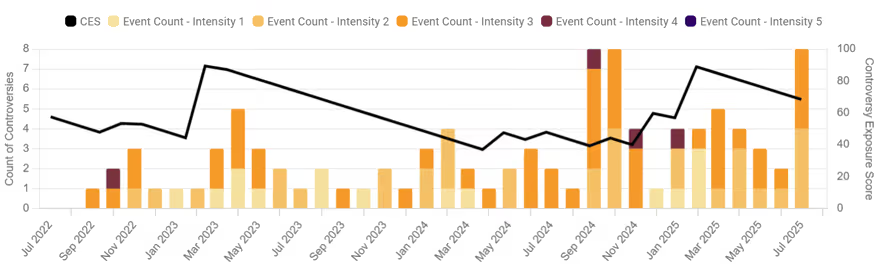
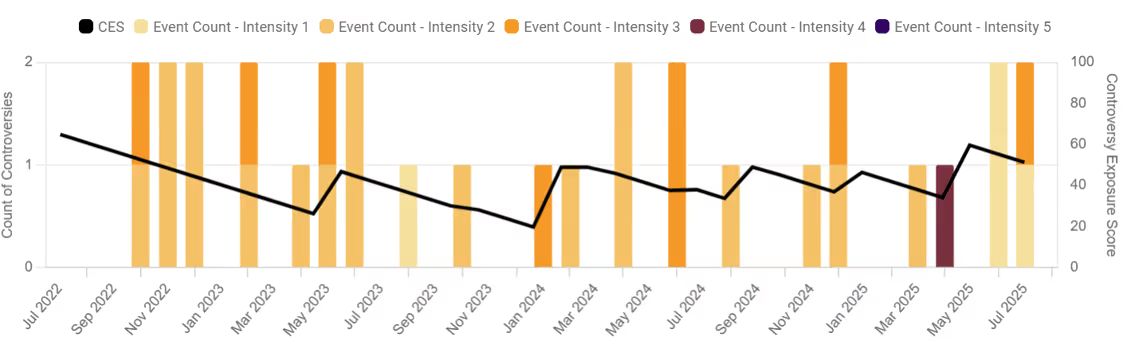
Coursera, another widely used online learning platform, has faced relatively few controversies as reflected by its Controversy Exposure Score. However, a few noteworthy challenges include security vulnerabilities, AI use, an investigation into misleading financial statements, and workforce reductions due to declining growth. The company is dealing with a class action lawsuit over subscription renewals and a data privacy lawsuit for sharing customer viewing history with Meta. Coursera also faces controversies related to AI, in this case on AI-powered tools for grading, providing feedback, and course-building, promising greater efficiency but raising questions about transparency and ethics. Finally, as part of restructuring, Coursera plans to cut its global workforce.
Each of these companies illustrates the growing ESG challenges in the EdTech sector. From maintaining data privacy and ethical AI use to ensuring sound governance, financial sustainability, and fair treatment of employees and customers, Udemy, Coursera, and BYJU’S all face heightened scrutiny. Recent controversies and operational troubles highlight the need for robust risk management as education technology firms mature on the global stage. The ESG risks – whether legal, social, or governance-related – not only threaten their reputations but also have material impacts on their long-term viability. By addressing these issues transparently and proactively, EdTech companies can work toward a more sustainable and responsible growth trajectory in the years ahead.
Reach out to SESAMm
TextReveal’s web data analysis of over five million public and private companies is essential for keeping tabs on ESG investment risks. To learn more about how you can analyze web data or to request a demo, reach out to one of our representatives.
This Labor Day, we take a moment to celebrate the contributions of workers worldwide and reflect on the critical labor issues and milestones that have shaped the past year. From corporate controversies to strides in workplace wellbeing, 2024–2025 underscored the ongoing importance of protecting fair, dignified work across industries.
Key Trends Shaping Labor Risks
Data from the past year shows that labor-related risks remain a significant and rising concern within the broader landscape of social risks affecting businesses and the global workforce.
Working conditions overwhelmingly dominate the labor risk landscape, reflecting widespread worker actions, negotiations, and demands for higher standards.
Workplace diversity and inclusion continues to be a significant area of focus, as organizations navigate evolving expectations around equity, representation, and belonging.
Although smaller in proportion, forced labor and child labor risks remain critical concerns, attracting heightened regulatory scrutiny and public attention.
Real-world examples from the past year illustrate how companies have confronted—and, in some cases, exacerbated—these challenges.
Labor Controversies: A Year of Struggle and Advocacy
Several major companies faced notable labor controversies over the past year, revealing systemic issues and prompting calls for change:
Volkswagen AG grappled with deep unrest, both at home and abroad. Mass strikes erupted over layoffs and wage cuts in Germany following the company’s decision to scrap its historic no-layoffs policy. Internationally, Volkswagen’s sale of its Xinjiang plant, under scrutiny for alleged human rights violations, highlighted the persistent pressure to address ethical concerns in global supply chains.
Other companies also faced investigations over child and forced labor violations. To mention a few, HelloFresh faced an investigation in the U.S. regarding allegations of migrant child labor at its Illinois facility, which has led to lawsuits from shareholders. Similarly, JBS USA reached a $4 million settlement related to child labor violations identified in its meatpacking plants. Additionally, Temu, managed by PDD Holdings, is being investigated in both the U.S. and Europe for purported connections to forced labor in China, highlighting ethical issues in global e-commerce supply chains.
Despite these challenges, 2024–2025 also featured companies making meaningful strides in promoting employee well-being and ethical labor practices.
The steady engagement around Sustainable Development Goal 8—promoting decent work and sustained economic growth—remains a bright spot. While progress is ongoing, consistent attention to this goal underscores its critical role in shaping future business and social outcomes. Several companies stood out for their positive contributions:
Alight Solutions was recognized by Newsweek as one of America’s Greatest Workplaces for Mental Wellbeing 2025. Initiatives like Mindful Mondays, peer mentoring, and partnerships with organizations such as NAMI-NYC demonstrate Alight’s commitment to fostering a thriving, mentally healthy workforce.
KnowBe4, a cybersecurity training leader, was named one of the Best Workplaces in Technology for the GCC region. Its culture of transparency, ownership, and continuous professional growth has positioned it as an exemplary employer. Cushman & Wakefield earned dual accolades: inclusion in the 2025 Global Outsourcing 100 by IAOP and a perfect score on the Human Rights Campaign Foundation’s Corporate Equality Index. These honors reflect the firm’s dedication to operational excellence and workplace inclusivity.
Looking Ahead: Progress and Persistence
As we mark Labor Day 2025, one truth stands out: while important progress has been made, much work remains. Workers continue to push for safer conditions, fair treatment, and respect across industries, prompting organizations to adapt and evolve.