
Forced labor is often assumed to be a problem of distant supply chains. The case of Packers Sanitation Services Inc. (PSSI) dismantles that assumption entirely.
PSSI was a leading U.S. industrial cleaning contractor, servicing major meatpacking plants and backed by a top-tier private equity firm. Yet between 2022 and 2024, it became the center of one of the most significant child labor scandals in the U.S., one that had been quietly signaling its risks for years. SESAMm's controversy monitoring platform captured those early signals long before regulators intervened.
The Scandal
In November 2022, the U.S. Department of Labor discovered that PSSI had employed minors as young as 13 in hazardous overnight roles across 13 locations in 8 states. A federal investigation confirmed 102 children had been illegally employed, many handling dangerous chemicals and machinery. Three years earlier, in 2019, PSSI had already been sued for wage violations. The signal was there. It went unheeded.
The Fallout
The consequences were swift. A $1.5 million DOL fine. Contract terminations by Cargill and JBS. A DHS trafficking investigation. A replaced CEO. By late 2024, PSSI had shut its corporate office entirely. Even the private equity owner, Blackstone, faced direct scrutiny from pension funds, a reminder that labor violations travel up the ownership chain.
The Lesson
Every warning sign in this case was publicly visible before the crisis broke out. Wage lawsuits, labor complaints, and media coverage are all available in the public domain. Real-time controversy monitoring can surface these signals early, giving companies and investors the chance to act before exposure becomes unavoidable.
Forced labor is not only a humanitarian crisis. It is a material risk that demands better data, earlier detection, and stronger accountability.
Download the full case study infographic to see the complete timeline of events and key takeaways
SESAMm’s Dashboards Provide Deep Insights into Real Estate, Energy, Mining, and More
Informed decisions require the right data. SESAMm offers ESG professionals the flexibility to analyze not only the smallest of private companies but also to drill down to the project level.
What do we mean by projects? Investable capital projects and infrastructure assets, such as real estate, energy, infrastructure funds, and mining projects. For this article, we’ve set up our Event Monitoring dashboards to track mining projects.
Our Event Monitoring Dashboards automatically track, evaluate, and categorize ESG controversies using 90 ESG risk categories. The controversies are given an Intensity Score, a proprietary metric that evaluates the severity of a controversy using a scale of 1-5 (with 5 being the most severe).
In the Portfolio Monitoring view, the projects are ranked by the number of unique controversies and their intensity under each of the three ESG pillars. Using this view, users quickly identify the most at-risk project.
Each project also has a dedicated ESG controversy monitoring page providing insight into the controversy trends over time, access to the articles driving the alerts, and heatmaps showing the controversy distribution and intensity by subrisk. Altogether, it gives users clear visibility into the ESG risks related to the project.
Controversies Over Time: Samarco Mine
Controversies Heatmp: Samarco Mine
While this example has tackled mining projects, there are few limits to what TextReveal can do. SESAMm has the largest data lake in the industry, boasting over 15 years of data and 25 billion documents. This data lake, combined with our advanced AI capabilities, allows us to track millions of companies and their subsidiaries, individual dual-listed entities, projects, countries, and more.
Request a demo to see TextReveal in action and discover how you can use it to track and monitor projects for ESG controversies and risks.
Reach out to SESAMm
TextReveal’s web data analysis of over five million public and private companies is essential for keeping tabs on ESG investment risks. To learn more about how you can analyze web data or to request a demo, reach out to one of our representatives.
ESG frameworks and regulations have developed due to rising awareness of sustainability and supply chain risks. They aim to enhance transparency, accountability, and ethics, encouraging environmental preservation, social improvement, and better governance. While fostering innovation and financial benefits, aligning with sustainable development goals, these measures might increase costs for businesses, especially smaller ones. Differences across regions and a focus on compliance could inhibit real change, promoting a superficial 'tick-box' approach rather than significant enhancements.
This article takes an in-depth view of some of the most relevant recent regulations and analyzes how effective they seem to be.
Unraveling Supply Chain Regulations: From Past to Present
We traced the evolution of supply chain regulations from non-binding guidelines to binding laws, examining their impact on corporate sustainability. Along the way, we explored the challenges businesses face as they strive to comply with these constantly evolving standards.
Note: The list of regulations and frameworks mentioned is a high-level list of the most mentioned acts.
Global and Non-binding
When analyzing global and non-binding regulations, although they provide crucial frameworks for promoting corporate accountability by offering guidelines for responsible business conduct, they also have limitations. For instance, they lack legal enforceability due to their non-binding nature, potentially hindering compliance. Given the broad scope of the guidelines, implementation challenges arise, particularly in regions with weak governance.
Here are a few examples of recent sustainability regulations:
By Region and Binding
Binding legislation requires companies to meet specific standards in sustainability, environmental protection, and social responsibility. Non-compliance risks legal penalties and reputational damage. However, weak enforcement, insufficient penalties, and legal ambiguities often lead to criticism. Additionally, logistical and resource constraints, especially across borders, limit the effectiveness of regulatory bodies in monitoring and enforcing compliance. Furthermore, the penalties imposed are often disproportionately low. Moreover, these bodies depend on companies’ self-reporting without independent verification, leading to underreporting.
By Country/State and Binding
State or country legislation on supply chains encounters several challenges. These include jurisdictional limitations, enforcement difficulties due to resource constraints, and compliance burdens, especially for smaller businesses. Additionally, fragmented regulations across states or countries can complicate compliance for companies operating nationally. This underscores the importance of coordinated efforts between states and the federal government to address supply chain issues effectively. In addition, regulatory bodies contend with logistical and resource limitations, mainly when operating across borders, which can hinder their effectiveness in monitoring and enforcing compliance.
Unveiling Vulnerabilities Sector Screening for Supply Chain Controversies
In this section, we explore the evolving landscape of supply chain regulatory frameworks and ESG risks in supply chain management. We also dive into how future regulations will affect global trade, corporate responsibility, and sustainability efforts.
Supply Chain Controversies Over Time
We analyzed supply chain-related controversies from 2019 onwards and found a consistent increase each year, peaking in 2023. Concurrently, mentions of various frameworks, laws, and legislations [mentioned in Part I] related to these issues have also risen. Our analysis reveals a strong and positive correlation between the two trends (r=0.99), indicating a significant relationship. While the apparent increase in supply chain issues, breaches, and controversies may be concerning, it's largely caused by implementing more frameworks that increase visibility and accountability. Even without binding regulations, companies' reputations are affected. Thus, the proliferation of laws and frameworks contributes to the heightened online attention to these breaches.
Supply Chain Controversies: An ESG Analysis
For this analysis, we primarily focused on environmental and social issues within the supply chain, as legislation often targets these areas due to their significant external impacts. Issues like environmental damage and labor violations are most likely to occur in the supply chain and can profoundly affect communities and ecosystems. Governance issues, on the other hand, are more internal and directly pertain to a company's operations and management practices. Therefore, we analyzed a sample of 31,011 entities across industries with frequent mentions of ESG-related supply chain risks, focusing on social and environmental risks.
Specialized Retail has the highest incidence of social and environmental controversies, followed by Technology Software and Automobile & Components, respectively. As shown in the graph above, many of the issues highlighted in the Social ESG supply chain pillar are driven by human and labor rights breaches, which significantly contribute to the ESG risks mentioned.
Social Risks in the Supply Chain
In specialized retail, many brands face scrutiny for alleged forced labor; some examples include Amazon, Hugo Boss, Diesel, and Costco. Additionally, Amazon garnered widespread attention when the company settled a $1.9 million human rights abuse claim. Consumer groups sued Starbucks over deceptive ethical sourcing claims linked to human rights issues. Walmart and Centric were also investigated for human rights violations. Moreover, reports tie Amazon and IKEA suppliers to forced labor. These controversies dominate ESG supply chain discussions in retail.
Regarding the other industries, we also see that technology hardware displays a significant proportion of mentions stemming from mentions of forced labor for Lenovo, Cisco, and Intel, and numerous controversies regarding Apple, among many other allegations.
Similarly, Companies from the food and beverage manufacturers industry were also linked with human rights violations and infringements on labor rights, with companies like Tyson Foods, McDonald's, Hershey, Pepsi, and Nestle having multiple supplier issues connected with child labor, discrimination, and exploitative work. While Technology Software companies mentions were primarily related to contractors and content moderators’ health & safety issues and labor rights infringements from companies like Meta, Microsoft, and Google.
In sum, the evolving supply chain regulations reflect a global commitment to sustainability and ethical business practices. Navigating these regulations presents challenges and opportunities for businesses to lead in corporate responsibility and advance principles of environmental stewardship and social equity. Embracing these regulations as a compass rather than a constraint can help chart a course toward a sustainable future.
Reach out to SESAMm
TextReveal’s web data analysis of over five million public and private companies is essential for keeping tabs on ESG investment risks. To learn more about how you can analyze web data or to request a demo, reach out to one of our representatives.
As the summer draws to a close, it's the perfect time to reflect on the exciting developments we've had at SESAMm over the past few months. From insightful webinars and ebooks to new product features and industry recognitions, we've been busy making strides in the world of ESG and AI. Before we transition into the busier months ahead, take a moment to catch up on our latest updates and explore the resources we've curated for you. Whether you're lounging by the pool or gearing up for the fall, we've got something that will pique your interest.
This ebook provides an in-depth look at the EU's Corporate Sustainability Due Diligence Directive, offering practical insights for businesses to align with new regulatory expectations on sustainability.
Explore how ESG controversies differ between public and private companies. This study highlights key areas where private firms lag in transparency and governance compared to their public counterparts.
This webinar dives deeper into the findings from our comparative study, featuring expert opinions on addressing ESG challenges in different sectors.
Product Features
Heatmap: ESG Controversy Risk Exposure
Introducing our new ESG Controversy Risk Exposure Heatmap, which provides an easy, visual way to assess an entity’s reputational risk profile. With a comprehensive overview of ESG risks, you can quickly zero in on areas of concern and prioritize your next steps. Test it out for yourself with a free trial.
Text Summarization: Efficiently Identify ESG Risks
Our new Text Summary feature allows you to quickly get to the heart of the matter by creating on-the-fly summaries of news articles and documents with just the click of a button. Ideal for those needing to swiftly assess ESG-related risks.
This article highlights real-world applications of AI in detecting greenwashing, showcasing how companies are leveraging technology to maintain credibility.
Join us as we examine AI's capabilities compared to traditional risk management tools. Our webinar on September 25 will highlight how AI more efficiently detects and predicts ESG controversies. We will also showcase a detailed case study on the Boeing scandal, providing invaluable insights into AI's predictive prowess within the aerospace industry.
Events in September Here are some events we’ll be attending in September. Here is a chance for us to catch up and meet in person. Check them out, and let’s meet soon. Click here for more details.
Reach out to SESAMm
TextReveal’s web data analysis of over five million public and private companies is essential for keeping tabs on ESG investment risks. To learn more about how you can analyze web data or to request a demo, reach out to one of our representatives.
The aerospace and defense industry is essential to global technology and transportation, playing a crucial role in maintaining international security and connectivity. However, this sector faces intense scrutiny due to its significant impact on environmental, social, and governance (ESG) factors. Amidst challenges like safety lapses and whistleblower revelations, stakeholders are increasingly relying on advanced AI technologies to gain insights into potential controversies. Such technologies have enabled a deeper understanding of the complex ESG issues that permeate the industry, revealing not only the specific challenges faced by companies like Boeing but also providing a broader view of the sector's commitment to corporate responsibility and sustainability. This article explores the aerospace industry and its ESG challenges, backed up by a case study of industry giant Boeing. It also explains how we used SESAMm’s AI-powered tools to detect these controversies beforehand.
This article is a preview of the webinar entitled "The Boeing Scandal: Can AI Predict Controversies Before Traditional Tools?" based on SESAMm's proprietary research. Sylvain Forté, CEO and Cofounder, and Emna Abid, Research and Analytics Team Lead at SESAMm, will lead the webinar and will share SESAMm's findings in detail on the Boeing case and the use of AI to detect these types of controversies ahead of time.
Aerospace and Defense Market Mentions
The top market players in the aerospace and defense industry command 8.3% of the overall market's online mentions. This sector is increasingly scrutinized for its ESG practices amidst technological advancements and global policy shifts.
Overview
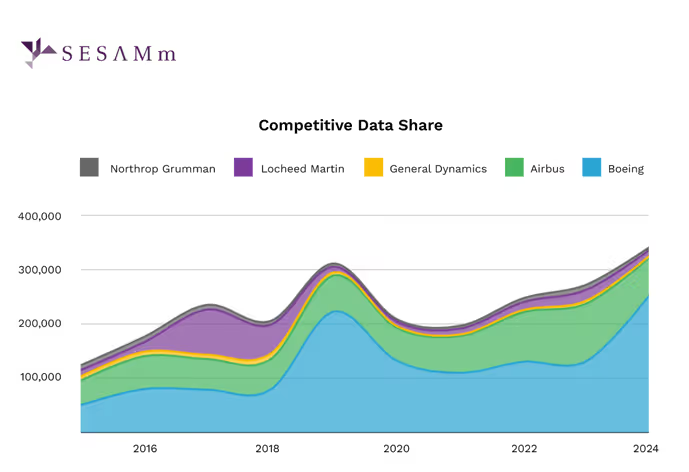
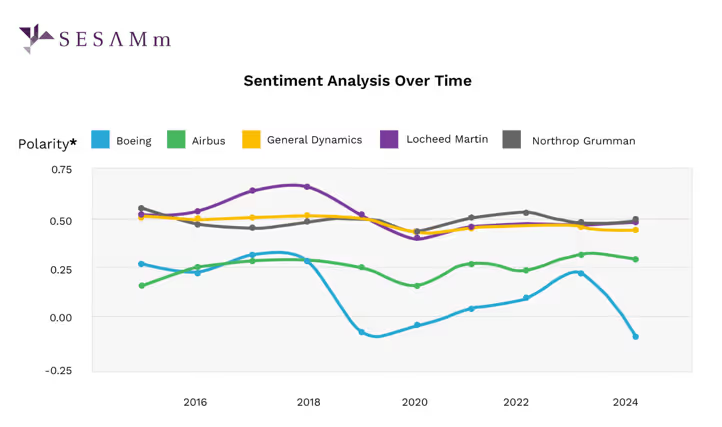
Our study processed our large data lake to identify key aerospace players: Northrop Grumman, Lockheed Martin, General Dynamics, Airbus, and Boeing, from 2015 onwards. It found a surge in online mentions, especially after Boeing's plane crashes post-2018. Both Airbus and Boeing saw increased attention, highlighting the competitive and evolving aerospace industry, where online presence correlates with market position shifts and significant events.
Polarity, indicating a company's mix of positive and negative opinions, ranges from -1 to 1. A zero score shows equal positive and negative sentiment. Brands with high e-reputation often score above 0.5. The aerospace market experiences significant highs and lows. Lockheed Martin has seen a positive impact from new contracts and technological advancements, particularly between 2016 and 2018, boosting its reputation and value. In contrast, Boeing faces significant challenges due to safety lapses, including 737 MAX crashes, legal issues, and whistleblower claims, negatively affecting its perception and highlighting the industry's vulnerability to reputational risks.
Deep Dive: Boeing
The aerospace industry has faced increasing scrutiny over its ESG practices. Among the key players, the American aerospace company Boeing has been prominently featured in media discussions, not only due to its market distinction but also because of its ESG challenges that have sparked significant controversy.
Boeing Word Cloud
The word cloud displays key topics about Boeing, particularly the 737 Max controversies, including safety issues and FAA oversight. "737 Max," "Boeing," "safety," "death," and "FAA" are the main terms that show their prominence in discussions. The visualization also touches on "lawsuits," "Senate hearings," and "missed inspections," indicating the wide range of concerns surrounding Boeing's regulatory, safety, and ethical challenges.
Conclusion
These incidents underscore the aerospace industry's urgent need for reforms to prioritize safety and ethics over profit. SESAMm's TextReveal® platform plays a key role in detecting such ESG controversies early by analyzing vast amounts of data and helping stakeholders understand and address the intricacies of corporate accountability and regulatory compliance.
Reach out to SESAMm
TextReveal’s web data analysis of over five million public and private companies is essential for keeping tabs on ESG investment risks. To learn more about how you can analyze web data or to request a demo, reach out to one of our representatives.
The name of a fund is often the first and sometimes the only point of contact before investing. Individual investors frequently lack the patience to read through the extensive legal documents that fund managers must produce to ensure transparency. However, fund naming has so far been minimally regulated.
The urgency of climate issues and the growing interest in sustainable and responsible investment have increased the supply of ESG investment funds. Many funds now use terms such as "ESG," "Sustainable," "Transition," and "Net Zero" in their names. Yet, not all of these funds have adopted a sustainable finance label (e.g., French SRI Label, Towards Sustainability, FNG Siegel), which somewhat guarantees alignment with their marketed features. A common and ambitious label is still missing from the sustainable finance directives adopted in the “Green Deal” package.
How can we ensure the integrity of fund names for investors? A recent example is the German manager DWS, fined $19 million for exaggerating the ESG characteristics of its investment funds. To prevent such issues, the European Securities and Markets Authority (ESMA) published its final report on the names of ESG funds in May 2024, incorporating feedback from stakeholders. Key points include:
Each category must comply with minimum standards to use these keywords based on European legislative guidelines. The main criteria are:
80% of investments must meet social or environmental characteristics (based on the European taxonomy and indicators in Annex II and III of the SFDR directive).
Exclusions from the Paris Aligned Benchmark (PAB) directive:
Controversial weapons
Tobacco production
Violation of UNCG or OECD guidelines
Coal extraction (1%)
Oil extraction (10%)
Gas extraction (50%)
Carbon-intensive electricity production (+100gCO2/kWh)
Exclusions from the Climate Transition Benchmark (CTB), equivalent to points a, b, and c above, also known as "minimum safeguards."
Generalist funds, “S” funds, and “G” funds must apply only the minimum safeguards. "Transition" and "Impact" funds, in addition to the minimum safeguards, must meet the 80% investment threshold with social or environmental characteristics. "Transition" funds must demonstrate a clear and measurable social/environmental trajectory, while "Impact" funds must show that their investments generate a measurable positive impact alongside financial returns.
Funds with an environmental emphasis, including terms like ESG and SRI, must meet all these criteria simultaneously and exclude fossil fuels.
In conclusion, these guidelines will provide investors, especially individual ones, with certain guarantees to select more sustainable investments. Managing controversies will be a crucial challenge for any fund manager offering a range of ESG funds.
Reach out to SESAMm
TextReveal’s web data analysis of over five million public and private companies is essential for keeping tabs on ESG investment risks. To learn more about how you can analyze web data or to request a demo, reach out to one of our representatives.
The first and second parts of this series discussed the differences between public and private companies from the Environmental, Social, and Governance (ESG) and the United Nations Sustainable Development Goals (UNSDG) perspectives. In this part, we’re using IKEA as a prime example; we can explore how its private ownership impacts its sustainability practices and governance. This analysis aims to reveal how IKEA's strategies align with broader ESG goals, shedding light on the implications of private versus public company frameworks.
We chose IKEA as an example for this use case for two main reasons. Firstly, as a private company, it provides a suitable basis for comparison with other private companies in the same industry. Secondly, IKEA is known for promoting sustainable practices, such as using renewable energy, responsibly sourced materials, and minimizing waste. However, despite the company's claims about the eco-friendliness of its products, our goal is to investigate whether these claims and products are perceived as environmentally friendly. We also aim to identify any issues affecting any of its stakeholders beyond the environment.
ESG Industry Benchmark
In our study, we focused on a detailed comparative analysis of IKEA's Environmental, Social, and Governance (ESG) risk mentions over the past three years, particularly in the context of the consumer discretionary sector. Our findings indicate a lower prevalence of environmental controversies both for IKEA and the sector overall. However, regarding governance risks, the consumer discretionary sector appears to encounter these issues more frequently than IKEA does.
Figure 1: ESG risks in IKEA and Consumer Discretionary.
On the other hand, IKEA stands out with a more significant presence of social risks than the sector average. This includes a notable number of product safety concerns, exemplified by instances of product recalls due to choking hazards, laceration risks, and even products infested with bugs. The analysis also brought to light several instances of human rights breaches at IKEA, particularly concerning privacy issues, such as data leaks and illegal filming incidents involving staff and customers. Labor rights violations are another area of concern, with instances ranging from union-busting activities to allegations of religious and gender discrimination within the company. Additionally, human capital risks are conspicuous, with mentions of strikes driven by dissatisfaction over wages and layoffs, as well as health and safety issues. Risks in customer relations have also been documented, including incidents of overcharging customers and discriminatory practices against certain customer groups.
Detecting ESG Risks Through the Industry SDG Lens
In our comparative analysis of IKEA's controversies against the average adverse behaviors in its sector concerning the Sustainable Development Goals (SDGs), we noticed both similarities and distinctions. A key finding is that Goal 1, "End poverty," features prominently for both IKEA and the sector, highlighting a common vulnerability to controversies under this goal.
These breaches predominantly pertain to issues around labor rights and human capital, aligning with the findings from our ESG controversy analysis. Additionally, a smaller yet significant portion of controversies is linked to internal control deficiencies within the company. This pattern suggests that both IKEA and its sector face similar challenges in addressing labor rights and human capital issues, contributing to breaches of Goal 1. In examining the differences, Goal 3, "Health and well-being," stands out for IKEA, exceeding the sector norm. This is largely attributed to numerous product recalls, alongside health and safety concerns related to IKEA's workforce. Moreover, in Goals 11 ("Sustainable Cities") and 12 ("Responsible Production and Consumption"), IKEA shows a higher-than-average proportion of controversies, mainly due to issues in human capital and customer relations. This highlights a specific focus on product safety and human capital challenges at IKEA, pointing to areas of heightened risk or difficulty compared to industry peers. Additionally, our study reveals distinct variations in Goals 9 ("Industry, Innovation, and Infrastructure") and 16 ("Peace, Justice, & Strong Institutions"), where IKEA shows a lower proportion of issues compared to the sector average. This suggests that, unlike its industry counterparts, IKEA has been more effective in mitigating risks in these areas.
Detecting ESG Risks Through the Industry SDG Lens
Our methodology analyzes the controversies detected for IKEA and maps them to identify which ones constitute breaches of the United Nations Global Compact (UNGC) principles.
Figure 2: UNGC principles in IKEA and Consumer Discretionary.
Consistent with the identified ESG risks, human rights breaches at IKEA are notably more prominent than the sector average. This is primarily due to multiple instances of privacy, security, and dignity violations, as well as issues in diversity & inclusion. Additionally, labor rights issues at IKEA, while exceeding the industry average, are not markedly higher. Our study also reveals that IKEA has a slightly higher proportion of breaches in the environmental pillar compared to its sector. These include incidents like gas leaks, allegations of greenwashing, and cases of illegal logging.
Conclusion
ESG controversies and breaches of SDG goals vary notably between public and private sectors. Public companies frequently encounter more visible and consistent ESG risks, while private companies, although subject to less scrutiny, experience significant impacts when controversies do occur. The case study of IKEA particularly sheds light on the unique challenges faced in product safety and human capital. This highlights the critical need for rigorous and proactive risk management strategies to maintain sustainable corporate practices tailored to the specific nature and scale of the entity in question.
Download the full report to discover how different sectors navigate regulatory pressures and sustainability challenges with real-world examples to guide your strategy.
Reach out to SESAMm
TextReveal’s web data analysis of over five million public and private companies is essential for keeping tabs on ESG investment risks. To learn more about how you can analyze web data or to request a demo, reach out to one of our representatives.
With sustainability being imperative, it's essential to examine how public and private companies align with the Sustainable Development Goals (SDGs). This article, leveraging insights from SESAMm's TextReveal, dives into the behaviors of both sectors across industries, exploring their impact on achieving a sustainable future. Join us as we unravel the complexities of corporate contributions to the SDGs, highlighting key differences and challenges public and private entities face in their journey toward sustainability.
What are the 17 Sustainable Development Goals?
The 17 UN SDG objectives, introduced in 2015 with the target of achievement by 2030, are geared towards building a sustainable society. Initially designed for governments, certain companies can contribute significantly to these goals through their products or conduct. However, our focus here will center on identifying behaviors that counter these 17 objectives.
The analysis of Sustainable Development Goal (SDG) adverse behaviors, as identified by SESAMm's TextReveal, offers a comprehensive comparison between public and private companies within various industries. The focus is to discern disparities in SDG behaviors within the same sector and pinpoint the predominant SDG goal breaches in these industries.
Excluding Goal 2 ("End hunger") due to its alignment with state-related initiatives, the analysis concentrates on corporate-impactful goals.
Public and private sectors face challenges in meeting SDGs, particularly Goals 1 ("End poverty") and 16 ("Peace & justice and strong institutions"), with issues in labor rights and governance. However, public companies are more aligned with Goal 8 ("Decent work and economic growth") across industries, facing a range of controversies from biodiversity to management issues. In contrast, private companies focus on Goal 11 ("Sustainable cities"), dealing with climate change and customer relations risks.
Goal 16 ("Peace & justice and strong institutions") is significant in both sectors but particularly in the Financials and Information Technology for public companies and in Financials, Fossil Fuels, and Health Care for private companies. This goal involves human rights, labor rights, human capital, and governance-related controversies.
These findings highlight the profound impact of SDG-related risks on economic growth and stability across various sectors. Industries like Information Technology, Industrials, and Consumer Discretionary exhibit heightened susceptibility to SDG adverse behaviors, underscoring the necessity for vigilant risk management to ensure economic prosperity and security.
Industrial UNGC Use Case
What is the UN Global Compact?
The United Nations Global Compact (UNGC), established in 2000, outlines ten principles across four main pillars: human rights, labor standards, and anti-corruption. These principles are critical in guiding companies toward ethical and responsible behaviors.
Figure 1: UNGC for public companies.
Figure 2: UNGC for private companies.
The analysis reveals distinct patterns in breaches of UNGC principles. Private companies in the industrials and fossil fuel sectors show a notable correlation with anti-corruption breaches, emphasizing the importance of due diligence in these areas. In the fossil fuel industry, public companies primarily breach environmental principles, while private companies show more breaches related to anti-corruption along with environmental concerns.
Private industrial companies also display a significant number of anti-corruption breaches involving various legal challenges. In the consumer staples sector, public companies primarily face human rights breaches, including forced labor and privacy violations. The private consumer discretionary sector also shows a high number of human rights breaches, particularly related to privacy and diversity and inclusion.
Overall, public companies across various sectors tend to have more frequent or severe UNGC breaches compared to private companies. This highlights the different challenges faced by public and private entities in adhering to the UNGC principles.
Conclusion
Significant variations in sustainability strategies emerge when looking at public and private companies through their SDG performances. Public companies prioritize economic growth and grapple with environmental and governance concerns, while private companies focus on creating sustainable cities, addressing climate change, and fulfilling social responsibilities. Both sectors encounter obstacles in eradicating poverty and ensuring justice, highlighting their crucial roles in promoting global sustainability objectives. This analysis underscores the essential proactive approach needed from both public and private entities to tackle sustainability challenges effectively.
Download the full report to discover how different sectors navigate regulatory pressures and sustainability challenges with real-world examples to guide your strategy.
Reach out to SESAMm
TextReveal’s web data analysis of over five million public and private companies is essential for keeping tabs on ESG investment risks. To learn more about how you can analyze web data or to request a demo, reach out to one of our representatives.
Public companies, due to their large market presence and mandatory financial disclosures, often receive a lot of attention on the Internet. Their operations and regulatory obligations put them under a media spotlight, which amplifies any ESG controversies they face in public and online discussions. In contrast, private companies operate with a higher degree of discretion and are generally less exposed to intense external scrutiny.
Although private companies are less visible to the public, there is still an underlying interest and, more importantly, a need to understand the nature of ESG controversies they face. Are these controversies different in any way, such as being less significant or having unique characteristics? This raises questions about whether certain types of risks are more susceptible to controversies in the private sector. When comparing prominent public companies with their private counterparts, do controversies differ within the same industry?
ESG Overview
In exploring the ESG landscape, a compelling comparison emerges between private and public companies. Public companies predominantly grapple with environmental and social risks. On the other hand, private companies, especially in the financial sector, are more frequently embroiled in governance-related controversies. This section highlights the ESG challenges each sector faces and the varying degrees of visibility and scrutiny these issues receive in the public and private domains.
Within the fossil fuel industry, a distinct difference emerges: public companies are predominantly associated with environmental and social risks, while private companies face more governance-related issues.
This disparity is partly due to the more visible and significant environmental impacts often linked to public companies, such as BP's gasoline spill cleanup in Washington state and the devastating impacts of Shell's oil spills in Nigeria. Public companies also tend to experience more social issues, like employee strikes, protests, and human rights infringements.
In contrast, private companies, particularly in the financial sector, show a higher frequency of governance risks. Examples include controversies surrounding FTX and Binance, highlighting issues like corruption, substantial fines, and money laundering allegations. This trend mirrors the earlier observation in the fossil fuel sector, where private companies, despite fewer controversies, experience more pronounced impacts when significant ESG issues arise.
It's noteworthy that private sector controversies, due to their relatively lower level of scrutiny, can gain significant traction and visibility when they do surface. This differs from the public sector, where the constant exposure to ESG risks leads to more frequent detection but not necessarily the same level of virality for each event. Public companies regularly encounter ESG risks, but the prevalence of such issues in their operations means that individual events may not always attain widespread attention.
ESG Deep-dive
Environmental risks deep-dive
Looking at environmental risks, public companies often face significant issues like emissions, climate change, and water pollution, while private firms encounter these challenges on a smaller scale and with different focuses, such as animal cruelty and environmental strategy.
In the Consumer Discretionary sector, both types of companies encounter environmental risks, but the nature of these risks differs. Public companies, particularly in the automotive industry, are often involved in incidents like fires and lawsuits related to harmful emissions. Private companies, while also dealing with fires and automotive issues, face additional problems like animal cruelty allegations in retail.
The Fossil Fuel sector shows a clear distinction in ESG issues. Public companies frequently face controversies related to climate change and atmospheric pollution, often involved in significant incidents like legal actions and fines. Private companies, on the other hand, are more focused on general environmental strategy, though their controversies tend to be of a smaller scale.
In Utilities, public companies are more involved in water pollution controversies, with significant incidents like fines for unlawful water extraction making headlines. Private companies, while also dealing with water pollution, do so less frequently and on a smaller scale.
The Healthcare sector, particularly in public companies, shows a focus on biodiversity-related controversies. Issues like animal cruelty in biotechnology are prominent.
Overall, public companies tend to be at the center of more significant and high-profile environmental controversies, particularly in sectors like fossil fuels, utilities, and financials. Private companies, while also facing environmental and ethical challenges, often do so on a different scale, indicating different approaches and impacts in their management.
Social risks deep-dive
Public companies across sectors like Consumer Discretionary, IT, Financials, and Fossil Fuels frequently confront a broad spectrum of social risks, including human rights breaches and human capital concerns. Private companies, while also facing these issues, tend to have a more focused approach, with specific concerns in areas like telecommunications, social media, and health & safety. This indicates differing strategies and impacts on their social management.
Public companies in the Consumer Discretionary sector struggle with a substantial volume of data related to human rights breaches and human capital issues. These challenges are widespread across various industries, with incidents in telecommunications, social media, and the automobile industry being particularly noteworthy. In contrast, private companies in this sector primarily confront human rights breaches, with a significant focus on issues within telecommunications and social media. This contrast indicates a more specialized concern for private companies in this sector.
Both public and private companies in the Information Technology sector experience significant risks related to fundamental human rights breaches and human capital concerns. However, public companies, particularly those in software and hardware, are more frequently linked to these issues. Private companies, while also implicated, tend to have a different focus within the same concerns.
In the Financial world, public companies exhibit a pronounced focus on human capital issues, surpassing their private counterparts. This focus spans the banking and insurance industries with notable instances of discriminatory dismissals and wage disputes. Additionally, public companies in this sector also navigate complexities related to human rights and customer relations, including racial discrimination lawsuits and data breaches. Conversely, private financial companies face significant customer relations issues, especially highlighted in financial services, and human rights concerns, such as charges against Binance for child pornography and terrorism financing.
Private companies in the Consumer Staples sector lead in mentions related to health and safety, particularly in the Food/Beverage and tobacco manufacturing industry. These references often involve serious incidents like industrial accidents and lapses in COVID protocols. Additionally, customer relations issues are slightly more pronounced in private companies compared to their public counterparts. Public companies, meanwhile, have a slightly higher proportion of mentions related to human rights risks, including labor law violations and privacy concerns.
Public companies in the Fossil Fuel sector are notable for their focus on human capital issues, with references to industry-wide strikes and layoffs. In contrast, private companies in this sector demonstrate a significant focus on human rights issues, as exemplified by the case of the ex-Citgo CEO.
A divergence is seen in the Basic Materials sector, where private companies face more prevalent human capital issues, particularly in mining & metals and the chemical industry. Public companies, on the other hand, encounter a higher proportion of human rights breaches, including harassment lawsuits and violations of indigenous rights.
In summary, public companies across these sectors tend to face a wider range of social controversies, encompassing both human rights and human capital issues, often on a larger and more varied scale. Private companies, while also dealing with similar challenges, tend to do so with a more specific focus, suggesting different approaches and impacts in their social management strategies.
Governance risks deep-dive
In scrutinizing governance, we found that public firms face risks in management and governance, while private entities encounter issues like anti-competitive practices and corruption. Financial and Industrial sectors see public companies dealing with strategy and compliance challenges, whereas private firms face tax strategy risks. Overall, public companies are more involved in high-profile governance controversies, while private companies focus on specific areas like tax and anti-competitive behavior.
In the Consumer Discretionary sector, governance issues vary notably between public and private entities. Public companies, particularly in telecommunications and Social Media, encounter significant risks in senior management and governance structures, evidenced by legal actions and allegations against companies like Verizon and Ericsson. Conversely, private companies in Media & Entertainment are more embroiled in anti-competitive practices, as highlighted by Epic Games' antitrust trial against Google.
Information Technology presents a clear distinction. Private companies are frequently linked to substantial corruption issues, with the FTX scandal serving as a prime example. Public companies, on the other hand, are more inclined towards engaging in anti-competitive practices, as seen in the cases of technology giants like Google and Microsoft facing antitrust lawsuits and scrutiny for monopolistic behavior.
In the Financials sector, governance risks are predominantly tied to senior management and corporate structure. Public companies face challenges primarily in their influence on strategy and communication, with notable instances including BlackRock's lawsuit over an alleged misleading ESG strategy. Meanwhile, prominent financial services companies like PayPal have faced regulatory scrutiny, further illustrating the sector's vulnerabilities.
The Industrials sector shows similar trends among public and private companies but with a specific emphasis on tax strategy risks in private firms. This is exemplified by the PwC tax leaks scandal, indicating the deep impact of governance issues in private entities.
In the Fossil Fuels sector, corruption issues are more pronounced, especially among privately-held companies. Incidents such as the lawsuit against Citgo and the Amec bribery case settlement underscore the sector's susceptibility to governance-related controversies.
Lastly, the Utilities sector shows a higher prevalence of corruption among public companies, as demonstrated by the investigation into FirstEnergy's public corruption scandal and subsequent legal actions.
Overall, governance risks manifest differently in public and private companies across various sectors. Public companies are often at the forefront of high-profile governance controversies, dealing with issues related to management, strategy, and regulatory compliance. Private companies, while also grappling with governance challenges, tend to face issues like anti-competitive practices and tax strategy risks, reflecting a variance in operational focus and impact on governance risk management.
Conclusion
By diving into the complexities of ESG, both public and private sectors have a unique opportunity not only to enhance their financial performance but also to drive positive societal and environmental impacts. As we further examine corporate controversies and gain a deeper understanding of the nuances within the ESG landscape, it becomes increasingly clear that a commitment to these principles is essential for long-term success and global well-being. Our journey highlights the tremendous potential for positive change when corporations embrace the pressing demands of today's ESG landscape, paving the way for a more sustainable, equitable, and governance-focused world.
Download the full report to discover how different sectors navigate regulatory pressures and sustainability challenges with real-world examples to guide your strategy.
Reach out to SESAMm
TextReveal’s web data analysis of over five million public and private companies is essential for keeping tabs on ESG investment risks. To learn more about how you can analyze web data or to request a demo, reach out to one of our representatives.
As SESAMm commemorates its 10th anniversary, we take a moment to reflect on a decade marked by significant achievements and invaluable lessons. This journey from a nascent startup to a leader in AI-powered ESG analytics has been both challenging and exhilarating. Through this walkthrough, I aim to share the pivotal milestones that have defined our path, the wisdom we have accrued, and the exciting prospects that lie ahead. These reflections not only encapsulate our past and present but also pave the way for the innovative strides we are poised to make in the future.
A Decade of Innovation and Growth: SESAMm’s 10 Key Milestones
As we celebrate SESAMm's 10th anniversary, I find it humbling and inspiring to reflect on our incredible journey. From our earliest days to our success, each milestone has shaped who we are today. Here’s a personal reflection on the ten key milestones defining our journey.
The Beginning - Winning the SEMIA Prize (2013): Everything started when we received the SEMIA entrepreneurship prize, supported by Société Générale with €10,000. This funding was crucial—it transformed our project from an academic idea into a viable business venture, marking our first serious step towards entrepreneurship.
Forming the Company (April 2014): The decision to officially form SESAMm as a company and my transition to CEO brought both excitement and a profound sense of responsibility. It was a commitment not just to our ideas but to leading a team towards realizing them. There’s a funny anecdote that happened during this period. I was still at school but had to do an internship to finish my studies, so I did it at SESAMm while being the CEO. So I was the CEO and an intern at the same time!
Securing Our First Client (Late 2015): Convincing a London trading firm to start using our products for actual trading activities was our first major market validation. This not only helped us fund our initial operations but also boosted our confidence in the potential of our technology. It helped us onboard other clients in the months thereafter.
Moving and Expanding (November 2015): This period was marked by significant changes, including a successful fundraising effort and relocating our headquarters to Metz. These moves were essential for scaling our operations and preparing for future growth.
Expanding Our Team (Early 2016): Hiring our first dedicated researchers in AI and finance was a key development that enhanced our capabilities dramatically. This expansion allowed us to accelerate our technology development and better serve our clients. It also helped us open our first office in Paris, which allowed us to bring the right talent to continue our development.
Seed Funding Round (2017): Raising €2.6 million in seed funding was a milestone that endorsed our market presence and bolstered our financial stability. We got the opportunity to work with major European asset managers and banks, allowing us to pursue broader objectives and refine our technological offerings.
International Expansion (2019): The expansion into New York and Tunisia was not just a geographical growth but also a strategic pivot focusing on the US, an ambitious plan to tackle the biggest market in the world. We also saw an opportunity to help more firms by incorporating ESG indicators into our services, reflecting our commitment to sustainability.
Establishing in Tokyo (2021): Opening an office in Tokyo was a strategic move to capture opportunities in the Asian markets and broaden our international footprint, which has been instrumental in our global strategy.
Series A Round (2021): The €7.5 million raised from entities like Carlyle and New Alpha was key in scaling our operations and enhancing our credibility in the fintech space globally. Although the fundraising part was critical, it also came with our first major private equity client in the US, Carlyle. That was a big validation in the market which increased our credibility with other firms in the space, leading us to work with the top 7 private equity companies.
A New Phase of Growth (2023): Closing a €35 million funding round was a testament to our growth and the trust investors have in our vision. This milestone coincided with another big one, hiring our 100th employee. The company cemented its position as a leader in ESG AI-powered insights.
“These last ten years have given us the opportunity to grow from a small team to a community ready to tackle any challenge. We learned together the importance of building a product that addresses market needs and prioritizes companies' responsibility for a better future.”
Florian Aubry, CTO & cofounder.
Top Ten Lessons Learned in Ten Years
Here's a reflection on the key insights that have guided our growth and innovation.
Be Ambitious: The journey of SESAMm taught us the power of ambition, and not the voracious kind, but a realistic yet big and aspirational one. Inspired by Sam Altman's advice, "Ask for what you want," we learned early on that setting high goals helps achieve them. Whether it was funding rounds or product development, a clear vision and bold aspirations were crucial.
Be Nice: Contrary to traditional aggressive management styles, we embraced kindness as a core value. This approach has not only improved our internal culture but also helped us build lasting relationships with partners and clients.
Stay Focused: Our focus has matured from developing a technology platform to progressively gaining the necessary laser focus on product market fit. This singular focus has been instrumental in navigating the complexities of the tech and financial markets, with a focus on enhancing our ESG insights that assist our clients in making the right decisions.
Trust People: At SESAMm, we believe in trusting our team by default. This trust has empowered our employees, fostered innovation, and driven our company forward. It’s about giving people ownership and believing in their capacity to succeed.
Client-Centric Approach: We prioritize exceptional customer service and cherish every client relationship. Our goal is to solve real problems and ensure that clients speak highly of us, even if our paths diverge.
Preserve Co-Founder Relationships: We've seen how disputes among founders can derail startups. At SESAMm, we make decisions collectively, emphasizing harmony and shared goals over individual agendas. 10 years later, our founding team is as strong and tight as ever.
Respect Your Investors: Our investors are not just funders; they are partners in our journey. Acknowledging their role and integrating their insights into our decision-making process has been vital for our growth.
Play the Long Game: Success in the startup world is not overnight. It takes perseverance and a long-term perspective to build a lasting enterprise. We emphasize sustainable growth and well-being over quick gains.
Enjoy the Journey: Amidst the hustle, it’s important to enjoy the process. At SESAMm, we aim to cherish every moment - whether it’s a breakthrough in a project or a casual team outing. These experiences enrich our work and lives.
Understand the Technology: As a tech-driven company, maintaining a deep understanding of our technology as founders - particularly AI - is fundamental. This ensures we can innovate effectively and make informed decisions.
Reflecting on these lessons as we look forward to the next decade, we are reminded of how far we've come and how these principles will continue to guide us.
“With a blend of humility and passion, we have boldly pursued our vision, guided by our hearts and intuition. By refining our initial business model, we have achieved remarkable success while remaining true to our core values.”
Pierre Rinaldi, COO & co-founder.
Charting the Future: SESAMm’s Strategic Vision for Advancing AI and ESG Innovation
As we move forward at SESAMm, I am personally very excited about the innovative strides we are making across multiple fronts. We are poised to roll out new generative AI features, including a dynamic AI assistant designed to streamline and enhance our offerings. We're also updating our ESG taxonomy to include the latest regulatory changes, ensuring that our products stay relevant and compliant.
Improving the accuracy and scope of our data remains a priority, and we are expanding our ESG indicators to provide a more comprehensive view of potential impacts. This enhancement will allow us to offer nuanced insights that go beyond traditional metrics.
Our index business is set for expansion with promising new applications leveraging ESG data and the potential for fruitful partnerships, leveraging our cutting-edge technology to explore new markets.
From a client engagement perspective, we are focused on making it easier for potential clients to understand why SESAMm is the superior choice. This involves clarifying our value proposition, which is built on unmatched service quality, extensive coverage, and a competitive edge that sets us apart from our rivals.
Geographically, we are significantly ramping up our efforts in North America, where demand for ESG-oriented solutions is growing rapidly. To support this expansion, we are investing in our team, ensuring we have the right people in place to drive our success in these new markets.
Through these focused efforts, we at SESAMm are not just aiming to maintain our leadership position in AI and financial analytics but are also setting new benchmarks for excellence and innovation in the sector.
Reflecting on the past decade, SESAMm is a testament to the power of innovation, teamwork, and perseverance. The milestones we have celebrated and the lessons we have learned form the bedrock of our enterprise, guiding us as we navigate the future. As we look ahead, our focus remains steadfast on enhancing our technological capabilities, expanding our global footprint, and delivering exceptional value to our clients. Moreover, we are deeply committed to advancing our ESG and sustainability efforts, which are integral to our business philosophy and strategic planning. With a dedicated team, a clear vision, and a robust approach to integrating ESG principles across all our operations, SESAMm is well-positioned to continue its journey of growth and innovation. Here's to the next decade of transforming challenges into opportunities and setting new standards in the financial technology landscape while promoting sustainable and responsible business practices.
SESAMm’s AI Technology Reveals ESG Insights
Discover unparalleled insights into ESG controversies, risks, and opportunities across industries. Learn more about how SESAMm can help you analyze millions of private and public companies using AI-powered text analysis tools.