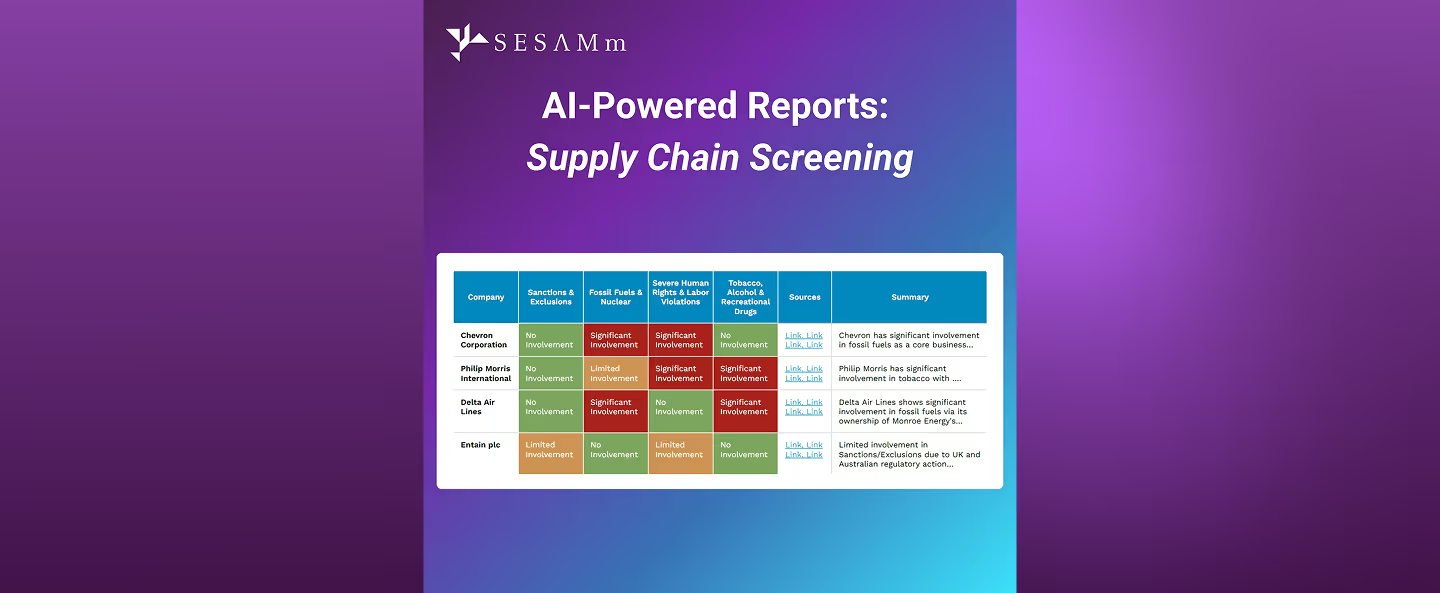
This report is designed specifically for procurement teams, compliance officers, and risk managers who need a fast, scalable way to screen suppliers against exclusion lists, whether for onboarding, third-party due diligence, or ongoing monitoring.
With just a list of company names, the report flags potential involvement in restricted or high-risk business activities, helping you identify potential exposure to sensitive sectors such as:
Fossil Fuels & Nuclear
Weapons & Military Equipment
Predatory Lending
Gambling & Betting
Adult & Violent Content
Severe Human Rights & Labor Violations
Tobacco, Alcohol & Recreational Drugs
Each result is backed by cited sources and a clear explanation of why the company was flagged, bringing transparency to your decision-making process. Delivered in a structured, easy-to-share format, the report helps teams move beyond static exclusion lists and legacy classifications to surface material and reputational risks across their supplier network.
Supply chain complexity is growing - and so is scrutiny from regulators, customers, and investors. With SESAMm’s Supply Chain Screening Report, you can meet this challenge head-on.
As AI continues to reshape how risk and compliance teams operate, we’re expanding our report offerings to cover even more use cases and industries. Stay tuned for what’s next.
Want to see the report in action?
Contact us to learn more or request a sample tailored to your needs.
The European Union is trying to tackle a big problem: imported goods that drive deforestation. A new Deforestation Law, planned to take effect at the end of 2025, would require companies to prove that products like cocoa, coffee, soy, and timber are not linked to forest loss. It’s an ambitious effort to make supply chains more sustainable and to hold global companies accountable. But not everyone is on board.
Why the Law Matters
The law is rooted in a clear goal. Agriculture and forestry are responsible for the vast majority of global deforestation, and many of the products linked to this destruction end up in European markets. The EU hopes to slow forest loss, protect biodiversity, and reduce climate impact by tightening import standards. The regulation also reflects growing demand from consumers and investors who want more responsible sourcing and transparency.
Who’s Pushing Back and Why
Over the past few weeks, opposition has gained steam from both industry leaders and EU governments.
On the corporate side, food companies like Mondelez, Mars, and Hershey are asking the EU to delay the rollout. They argue that the regulation could raise costs, cause supply disruptions, and hurt competitiveness. With cocoa prices already hitting record highs, many producers say they lack the tools and infrastructure to meet the new requirements.
This growing pushback highlights a real tension. On one hand, the EU wants to lead on environmental issues and use its market power to drive global change. On the other hand, companies and governments are warning that good intentions could come with serious trade-offs.
The next few months will be key. If the EU weakens the law too much, it could undermine its climate credibility. But if it presses ahead without flexibility, it risks creating economic strain and cutting off small producers from the European market.
SESAMm’s AI Technology Reveals ESG Insights
Discover unparalleled insights into ESG controversies, risks, and opportunities across industries. Learn more about how SESAMm can help you analyze millions of private and public companies using AI-powered text analysis tools.
2018 proved to be an eventful year for SESAMm with multiple renowned customers acquired, our A series fundraising campaign, numerous prizes won and milestones reached. Here is a look back at our rewarding year 2018 followed by our next steps for 2019.
Successful market entry in the US and around the world
The rapid growth of the alternative data industry and of SESAMm
As a Fintech company specialized in alternative data for Asset Management, 2018 represented a thrilling year in our industry and 2019 already promises to be even more exciting.
During 2018, after our very first business trip in the United States, our international sales development beyond Europe began accelerating. In just one year, we already signed contracts with multiple clients. These include major hedge funds in the US and a major global trading company managing $100 billion in financial assets and part of the Top 10 in its market. The US market represents a powerful strategic growth driver and we are already preparing to open an office there soon!
SESAMm signed its first contract with a client in Africa: Ipro Investment, renown asset manager established for 25 years specialized in emerging markets. Finally, we also signed a contract with our first Japanese client, Nikko Global Wrap, one of the subsidiaries of Sumitomo Mitsui Asset Management which is a major asset manager in Japan managing JPY 1.7 trillion.
Strengthening and developing our position in Europe
At the European level, SESAMm has also extended its customer portfolio:
Groupama AM: new major clients and leading French Asset Management players managing €103 billion Asset under Management (AuM);
Société Générale: leading French bank present all over the world;
Raiffeisen Bank International: one of the leading banks in Europe with more than 50,000 employees servicing over 16.5 million customers and possessing around 2,400 business outlets;
GT Patrimoine : the largest consulting and private management firm in the Lorraine area and based in France for 12 years.
In addition, after our 1st successful collaboration, a new contract was signed with Candriam, leading Asset Management firm and members of the New York Life Group, managing more than $112 billion AuM worldwide.
We are very proud to see how much traction we gained in just a year. The growing use and interest in alternative data for the Asset Management industry, both for quantitative and fundamental funds and asset managers, lead us to prepare for new opportunities of growth & business development.
Cutting edge solutions to respond to market needs
Big Data & AI for Cryptocurrencies
Our first cryptocurrency project began in early 2018. Initially, we started tracking the evolution of the most popular cryptocurrencies, such as Bitcoin (BTC) and Ethereum (ETH) and we analyzed their social data to produce social sentiment & emotions indicators. These indicators have since been integrated into our visualization platform of market sentiment, L’Humeur des Marchés.
This led us to establish a unique partnership based on L’Humeur des Marchés with NapoleonX, a major player as the leading French cryptocurrency manager: the first sentiment and emotion cryptocurrencies analysis destined for the general public. Since then, ETH and BTC sentiment, emotions & opinion value from SESAMm has been available to individual investors and the general public on NapoleonX platform.
The evolution of L’Humeur des Marchés
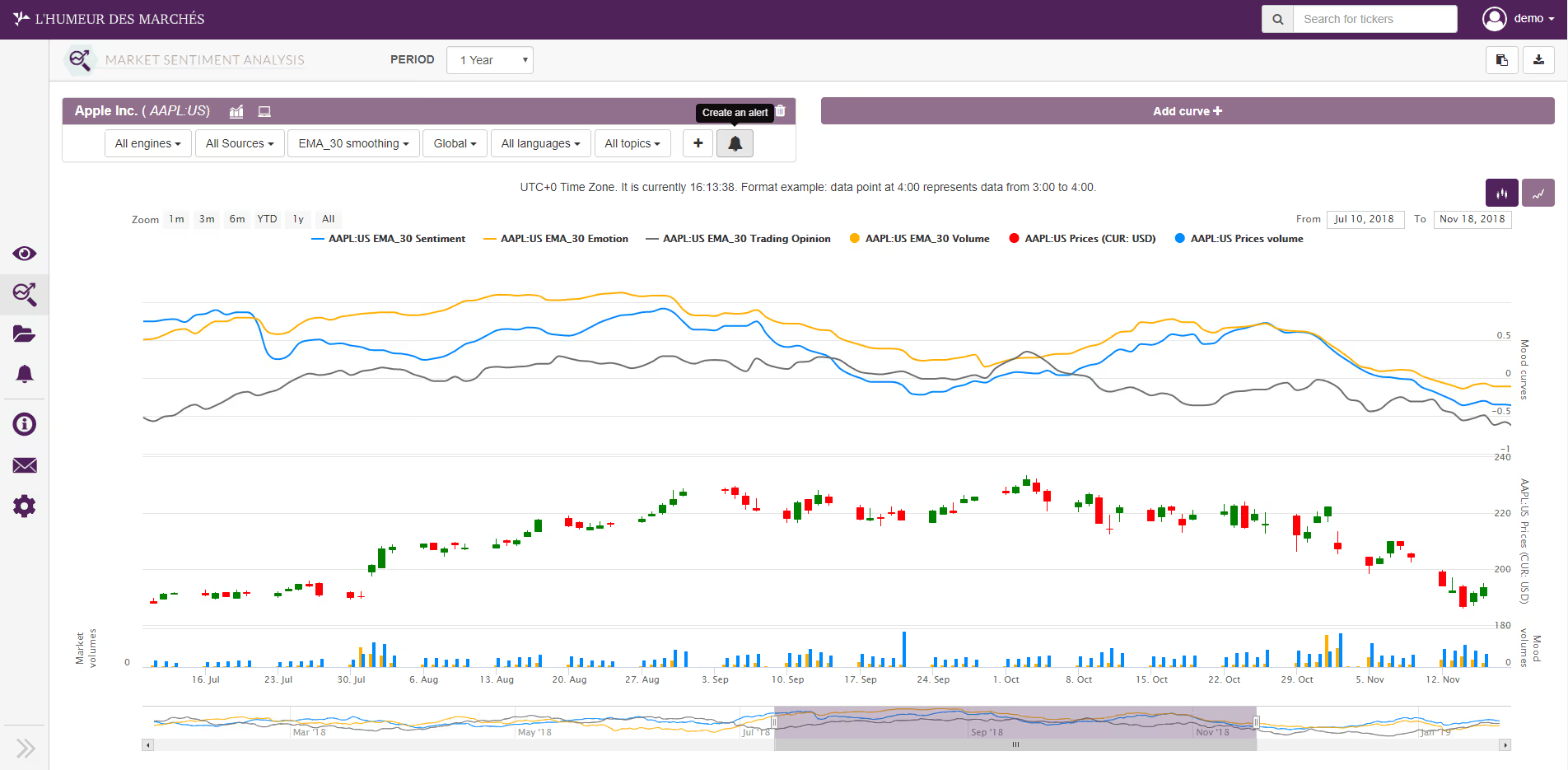
Our platform L’Humeur des Marchés is an essential tool to guide companies in their investments. During 2018, multiple improvements were added into L’Humeur des Marchés to further enhance its insights & analytics. For example, users have now the possibility to build automated strategies which can generate daily trading signals. Multiple new features were also added such as a strategic backtesting system, daily alerts with 3 years of history and day+1 signal to forecast market movements giving asset managers an edge over competitors.
"L'humeur des marchés" is SESAMm's data visualization platform to analyze market sentiment & emotion for asset management
L’Humeur des Marchés, our data visualization platform
Finally, additional filters have been added to better study & analyze market sentiment: there are now 6 different filters for data sources (sort by sources from web & press, news, blogs, discussions, social trading or all of them) and 9 languages covered (sort by English, French, Spanish, Chinese, Japanese, Portuguese, Italian, German or all of them). These new filters allow for a wider and more accurate coverage of assets, leading to improved tools & insights for investment decision.
Global recognition & awards for SESAMm
To accomplish our worldwide ambitions, we have started being more and more present abroad, especially at international events. They represent great occasions to promote SESAMm, demonstrate the unique benefits and advantages brought by our technologies & solutions and finally create business opportunities.
This year, we participated in many international events in the US and in Japan, including New York and Hong Kong for Eagle Alpha’s Alternative Data event, Canada, Africa and even London at the French Fintech Tour.
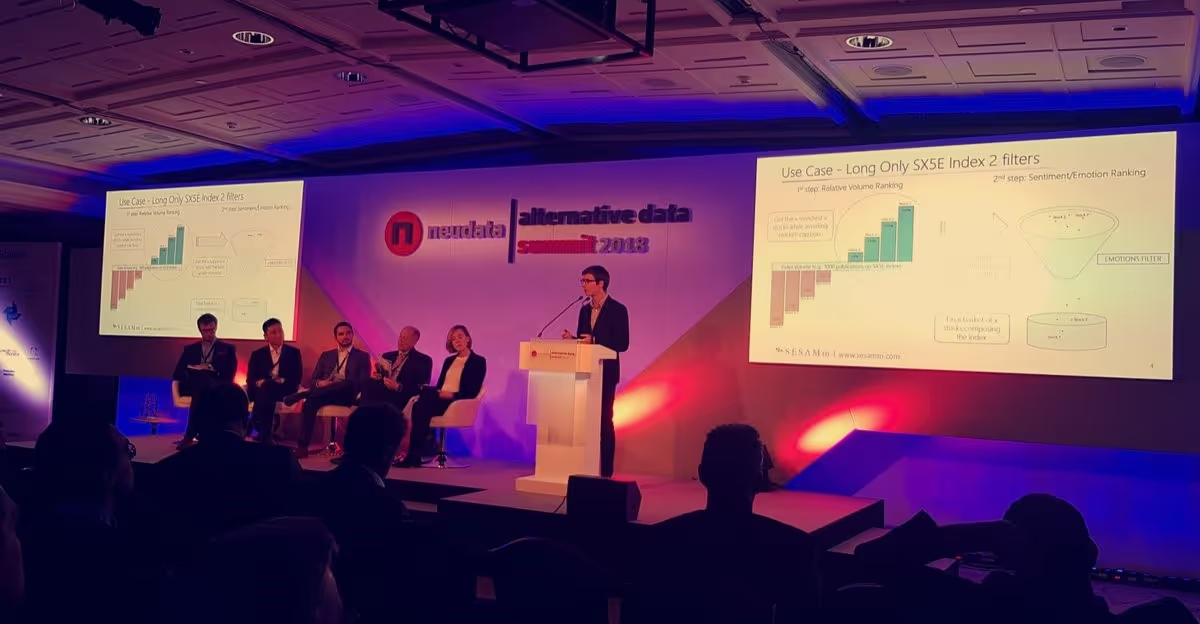
Having been selected for unique international awards reinforces our confidence in the benefits of our solutions for the Asset Management industry, for example with “Talk data to me” by Neudata, Elevator Lab Competition, and Groupama’s award “Créateur de confiance” (Trust Creator) among others.
SESAMm won the pitch "Talk data to Me" of Alternative Data Summit event by Neudata
SESAMm pitch “Talk Data to Me” winner during Alternative Data Summit by Neudata
Moreover, SESAMm has competed in several acceleration programs, in which we were selected in the following ones:
Fintech Business Camp Tokyo, the Tokyo Metropolitan Government accelerator program by Invest Tokyo and powered by Accenture;
Elevator Lab, Acceleration program of Raiffeisen Bank International where SESAMm competed and was selected;
French Tech Tour America, IMPACT USA’s program to prepare and discover North America’s markets & opportunities;
Pass French Tech, La French Tech’s highly selective program for hyper-growth startups & companies.
SESAMm’s Demo Day Presentation during Fintech Business Camp Tokyo
SESAMm’s plans for 2019: recruitment, development and growth
This year, we are very proud to see our team grow so much in so little time: we had 16 collaborators at the beginning of January 2018 and we are now a team of 28 members! Talented profiles have joined SESAMm team with NLP, AI & Quant engineers & experts from world-renowned schools. New collaborators will join SESAMm in the first quarter of 2019 and we are still recruiting in various fields such as Data Science, Quantitative Analysis, IT and Natural Language Processing among others. You can find all our offers on our dedicated page SESAMm Career!
Following our international success, especially in the US and in Japan, we are now preparing to open an office in the US in the following months and are already considering this option for Japan. Next month’s promise to be exciting and we will be participating in multiple events such as AI & Data Science for trading in New York in March, Machine Learning in Quant Finance by GFMI in April, and many events & conferences on alternative data, data science, Artificial Intelligence and Big Data for Asset Management around the world.
As you can see, 2018 represented SESAMm an exceptional year for its growth with new customers, including global companies, technological improvements for our solutions & services and a bigger and even more motivated team! Our major event in 2018 was the accomplishment of a €2.6 million Series A fundraising campaign, which enabled us to continue our international development, mainly in America and Asia, and the recruitment of many profiles. 2019 will represent another step for SESAMm to become a leading company in the alternative data solutions in the world. Stay tuned: SESAMm news will arrive soon!
SESAMm is delighted to announce the addition of Emmanuel de La Ville, a renowned ESG expert, to our advisory board. Emmanuel’s extensive experience in ESG research and sustainable finance will undoubtedly bring invaluable insights and strategic direction to SESAMm as we continue to innovate and expand our AI-powered text analysis tools.
Background
Emmanuel de La Ville has dedicated the past two decades to advancing ESG (Environmental, Social, and Governance) standards in the finance industry. As the founder, ex-CEO, and senior advisor of EthiFinance, Emmanuel spearheaded the creation and development of an independent ESG rating agency in Paris, known for its specialization in the small and midcap segment. Under his leadership, EthiFinance became a well-respected European organization, conducting over 2,000 assessments annually.
Founding EthiFinance
In 2004, driven by a vision to transform the finance industry, Emmanuel founded EthiFinance. The agency focuses on evaluating companies based on their Corporate Sustainability performance. Beyond his track record in promoting ESG accountability towards listed companies Emmanuel’s innovative approach included developing a robust ESG research methodology and conducting due diligence for companies owned by private equity firms.
Views on SESAMm and the Applications of AI to ESG
In a recent interview, Emmanuel expressed his enthusiasm for joining SESAMm and highlighted the company’s commitment to leveraging AI technology to enhance ESG insights and drive responsible investment. Emmanuel believes that SESAMm’s innovative text analysis tools can play a crucial role in identifying and mitigating ESG risks, thereby promoting more sustainable business practices.
"SESAMm’s AI-powered tools are essential for analyzing vast amounts of data and uncovering hidden ESG risks and opportunities," Emmanuel stated. "This technology allows a more comprehensive understanding of a company’s performance beyond traditional financial metrics. It’s about creating value not just for shareholders but for all stakeholders."
Purpose-Driven Career in ESG and Ethical Practices
A deep sense of purpose has driven Emmanuel’s dedication to ethical practices and sustainability throughout his career. His journey from traditional finance to founding EthiFinance was motivated by a desire to align business practices with ethical values. Emmanuel’s belief in transparency, fairness, and the long-term well-being of all stakeholders has been a guiding principle in his work.
"Ethical behavior and sustainable practices have always been at the heart of my career," Emmanuel remarked. "I left the corporate world because I couldn’t see the sense in contributing to short-term profit maximization at the expense of broader societal and environmental well-being. Founding EthiFinance was about creating an approach to measure and promote responsible business practices."
The Future of ESG
Looking ahead, Emmanuel is optimistic about the future of ESG and the role of AI in shaping it. He foresees a growing demand for transparency and accountability in corporate behavior, driven by regulatory pressures and investor expectations. Emmanuel is particularly excited about the potential of AI to enhance ESG data quality and accessibility, enabling more informed decision-making.
Emmanuel de La Ville’s addition to SESAMm’s advisory board marks a significant milestone in our journey towards integrating AI with ESG analysis. His expertise and passion for ethical business practices will undoubtedly strengthen our mission to provide cutting-edge solutions for responsible investing. We are thrilled to welcome Emmanuel and look forward to the invaluable contributions he will bring to SESAMm.
"We are thrilled to welcome Emmanuel de La Ville to our advisory board. His profound expertise in ESG and unwavering commitment to ethical practices align perfectly with SESAMm's mission to provide advanced, responsible AI-driven solutions. Emmanuel's insights will be instrumental in guiding our efforts to enhance ESG analysis and promote sustainable investment practices." said Sylvain Forté, SESAMm's CEO & Co-founder
For more information about SESAMm’s AI-powered ESG insights and our latest developments, please visit our website.
Reach out to SESAMm
TextReveal’s web data analysis of over five million public and private companies is essential for keeping tabs on ESG investment risks. To learn more about how you can analyze web data or to request a demo, reach out to one of our representatives.
Stay ahead with the latest in ESG and AI intelligence
Join our mailing list to receive new reports, event invites, and updates from SESAMm directly to your inbox.






.png)