ESG frameworks are multiplying faster than organizations can comply with them. Supply chain visibility remains the weakest link, supplier self-disclosures are incomplete, ESG data is inconsistent, and regulatory requirements conflict across jurisdictions. Yet controversy events move fast. A reputational crisis, a forced labor allegation, or an environmental violation at a tier-two supplier can cascade through your entire supply chain in hours. Organizations that win today are those using AI to detect hidden ESG risk before the news breaks, turning fragmented data into actionable intelligence that protects brand, license to operate, and investor confidence.
Key Takeaways
Timely Response to ESG Controversy EventsCritical for maintaining corporate responsibility programs amid regulatory fluctuations.
AI-Powered Risk DetectionProactively detect and mitigate hidden ESG risk across supply chains.
Real-World Case StudiesUncover ESG risk that supplier questionnaires and internal data cannot expose.
Watch the Replay
Beyond ESG Compliance: AI-Powered Strategies for De-Risking Supply Chains
Geopolitical events can quickly create ripple effects across global trade routes, supply chains, and corporate operations. For investors, commercial banks, insurers, and other organizations, identifying which portfolio companies or counterparties are exposed to these developments is a real challenge, especially when monitoring large universes of public and private companies.
SESAMm's thematic keyword search enables analysts to quickly discover controversies related to specific topics or emerging events across thousands of companies. This functionality allows them to filter results by theme without having to manually review large volumes of news and event data.
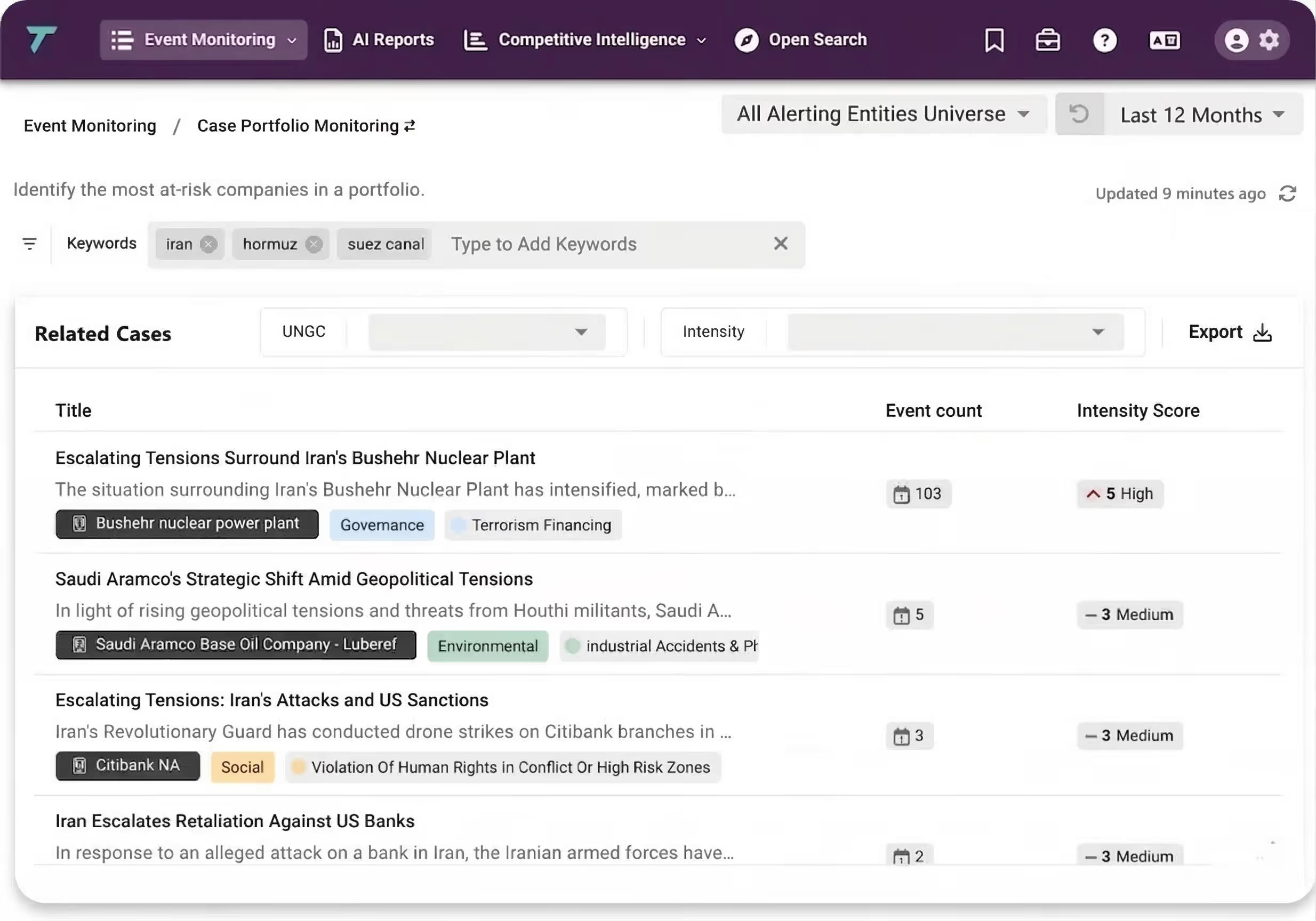
This functionality is particularly valuable when monitoring rapidly evolving geopolitical situations. To assess exposure related to the current conflict involving Iran, for example, users can run a thematic search across a broad company universe using keywords such as: Iran, Hormuz, and Suez Canal.
These keywords capture references to critical geopolitical locations and maritime chokepoints that may affect global shipping routes, energy markets, cybersecurity risks, and broader operational disruptions. Keywords can be tailored to any geopolitical scenario. Users can start broad and refine as the situation develops, or combine location-based terms with event-specific language to narrow results to the most relevant controversies.
When applied across a large company universe, the dashboard surfaces a range of related controversies ranked by severity. From high-intensity cases like escalating tensions around Iran's Bushehr Nuclear Plant, to medium-intensity signals such as retaliatory actions targeting US banks, offering clear visibility into which companies may face the highest risks.
Zooming In on Company-Level Exposure: The Example of Amazon
Alternatively, analysts can also use the same keyword approach to filter controversies associated with a specific company. This helps determine whether a particular portfolio holding, borrower, or insured entity may be affected by the same geopolitical developments.
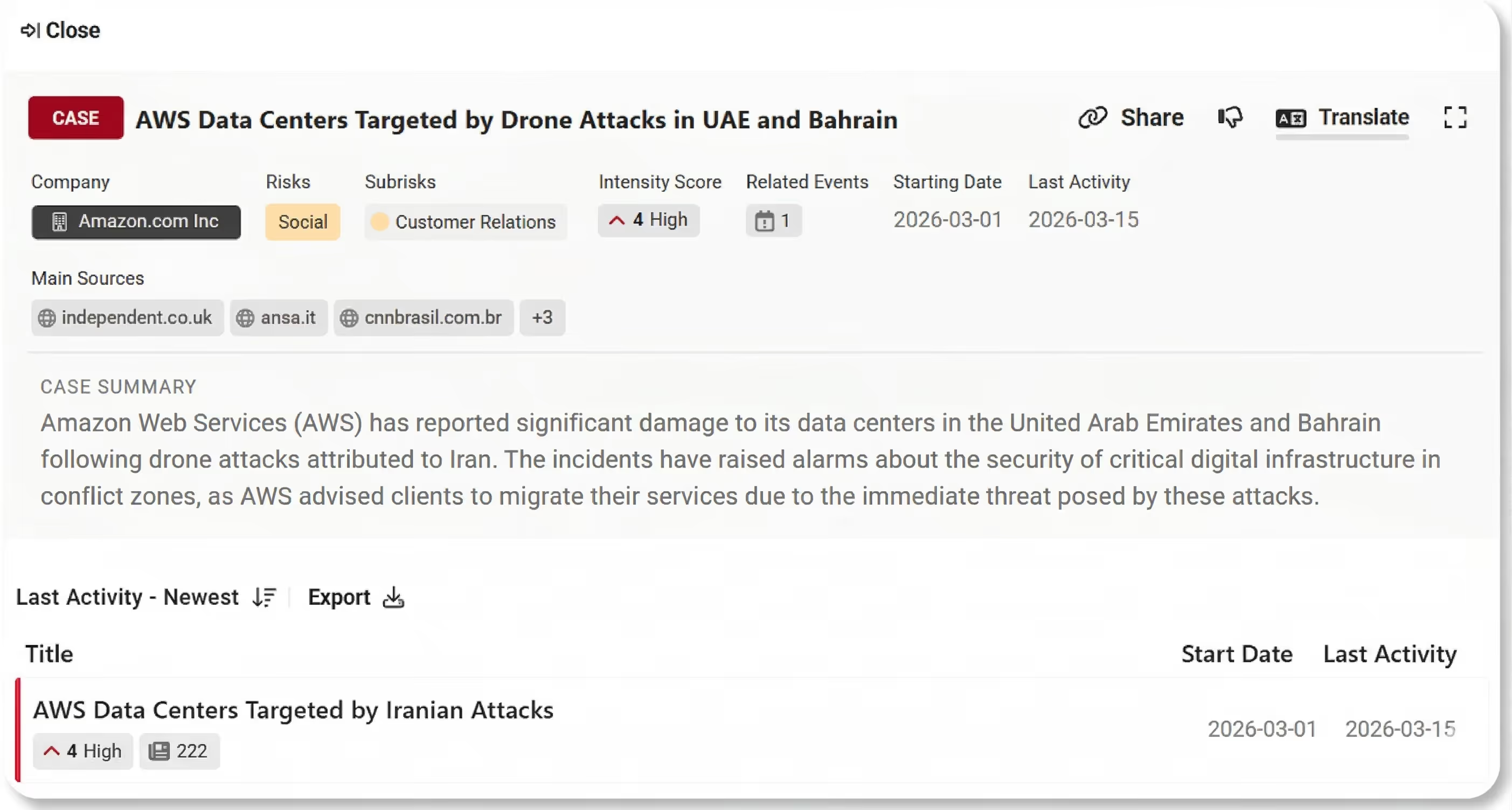
Applying this search to Amazon, for instance, surfaces a high-intensity case titled "AWS Data Centers Targeted by Drone Attacks in UAE and Bahrain." The case, rated 4/5 in severity and drawing on over 200 related news events, describes significant damage to AWS infrastructure in the UAE and Bahrain following attacks attributed to Iran, prompting AWS to advise clients to migrate services.
This kind of signal carries real weight for financial institutions. For investors, it highlights operational and geopolitical risks affecting a major technology provider. For banks and insurers, it may point to infrastructure vulnerabilities, operational disruption risks, or broader geopolitical tensions affecting clients' critical systems.
From Geopolitical Events to Portfolio Risk Signals
Geopolitical events rarely affect just one company. For financial institutions monitoring thousands of entities, they create complex, evolving risk exposures across entire portfolios, lending books, and insurance coverage.
Thematic keyword searches help bridge this gap, connecting macro-level developments to company-level controversies quickly and systematically. By combining automated controversy detection with flexible search capabilities, analysts can rapidly identify relevant signals, investigate affected companies, and prioritize follow-up work.
In practice, this means moving faster from emerging geopolitical events to actionable risk insights. Whether the trigger is a conflict in the Middle East, sanctions on a major economy, or rising tensions around a critical shipping lane, the same approach applies, giving investors, banks, and insurers a systematic way to stay ahead of geopolitical risk across their entire portfolio.
Secondaries investors evaluate large, diversified portfolios under compressed timelines, with the level of detail and underlying company visibility differing by transaction type.
In this context, screening is embedded in the underwriting workflow, not a one-off exercise: it helps apply investment guidelines, support LP opt-outs, prioritize follow-up diligence, and enable ongoing monitoring over the life of the investment.
Watch this webinar replay to hear Jessica Huang, Private Equity and Secondaries ESG Lead at Ares Management, and Sylvain Forté, CEO at SESAMm, discuss:
The operational and data challenges secondaries teams face
How screening is applied in secondaries investing in practice
How AI helps teams scale screening and support ongoing monitoring workflows
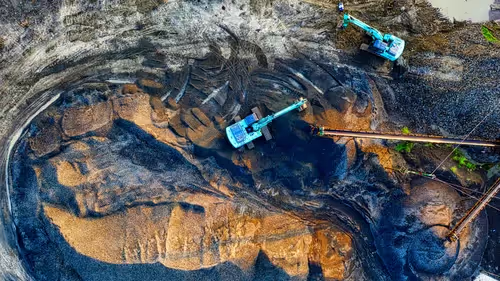
Mining projects around the world often promise development and economic growth, yet their legacies reveal a far more complicated story. Sites like Cerrejón in Colombia, Córrego do Feijão and Samarco in Brazil show how environmental, social, and human rights risks can ripple through communities for decades. Rivers are poisoned, soils contaminated, and ecosystems devastated, while thousands of residents face health crises, displacement, and loss of livelihoods. Legal actions, class lawsuits, and ongoing remediation efforts illustrate that the consequences of these operations do not end when production stops. Communities continue to grapple with the aftermath, from toxic waste and tailings spills to the psychological scars of displacement and conflict.
What are the most pressing ESG challenges currently facing the mining sector? Read on to find out.
Córrego do Feijão Mine: ESG Challenges and Ongoing Controversies
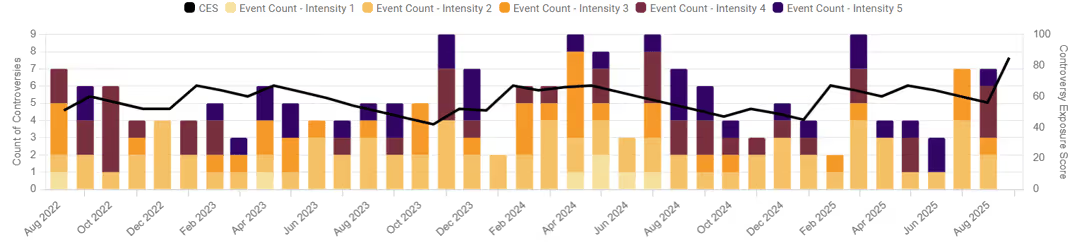
The Córrego do Feijão Mine is facing serious ESG controversies following a dam collapse that resulted in 270 fatalities and contamination of the Paraopeba River. Indigenous villagers still lack safe land and access to clean water and food. The operating company, Vale, is dealing with ongoing legal challenges, including fines and criminal charges for negligence and bribery. Environmental and social impacts persist, with continued monitoring of water quality and safety risks from existing dams. Governance issues remain significant, highlighted by employee arrests and scrutiny over manipulated audits, prompting calls from local and international NGOs for improved remediation efforts and oversight of the mine’s operations.
Cerrejon Mine: Human Rights, Health, and Environmental Impacts
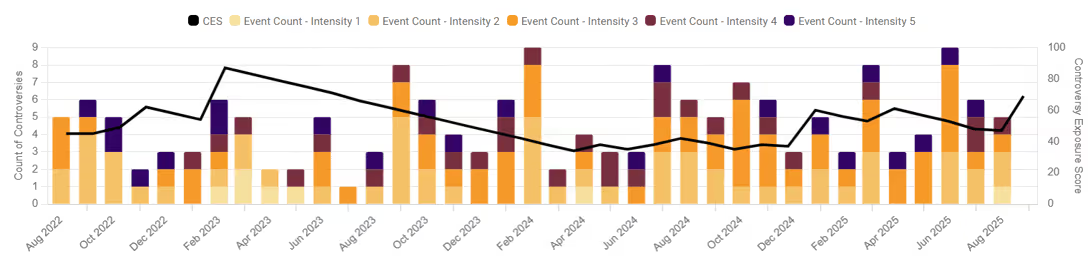
Cerrejón Mine faces significant ESG issues, particularly in environmental and social areas. Its expansion has displaced over 20,000 indigenous people, especially from the Wayúu community, leading to severe health problems and the deaths of 5,000 children. Environmental concerns include the diversion of the Bruno Stream, excessive water use during droughts, and significant air and water pollution. Labor unrest persists, with over 4,600 unionized workers striking over job cuts and unsafe conditions. The mine continues to face international criticism for violating local community rights and harming regional ecosystems.
Samarco Mine: Escalating ESG Challenges and Corporate Accountability
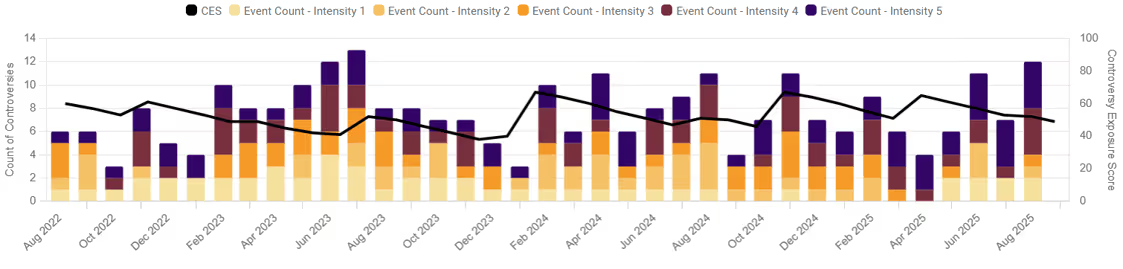
Samarco Mine faces intense ESG scrutiny nearly a decade after the 2015 Fundão dam collapse, with over 700,000 claimants in a $44 billion lawsuit for contaminated water and pollution. The operator risks bankruptcy due to environmental liabilities and failed debt restructuring, exacerbating financial instability. Ongoing issues include heavy metal contamination in wildlife and dust pollution exceeding health standards, prompting NGOs to demand the operator's removal from the UN Global Compact. Governance concerns have risen with employee arrests linked to safety protocol violations and falsified audits, raising questions about corporate accountability.
The ongoing ESG challenges in the mining sector highlight significant environmental, social, and governance failures that profoundly impact affected communities. The cases of Córrego do Feijão, Cerrejón, and Samarco reveal the dire consequences of prioritizing profit over sustainability. Mining companies must embrace accountability, transparency, and community engagement to rebuild trust and ensure a positive impact.
Reach out to SESAMm
TextReveal’s web data analysis of over five million public and private companies is essential for keeping tabs on ESG investment risks. To learn more about how you can analyze web data or to request a demo, reach out to one of our representatives.
Stay ahead with the latest in ESG and AI intelligence
Join our mailing list to receive new reports, event invites, and updates from SESAMm directly to your inbox.






.png)