
Research & Reports

Blog thumbnail

Ebook: Controversial Business Activities

January 13, 2026
5 mins read
As exclusion policies expand and regulations tighten, screening for controversial business involvement is growing more complex.

Controversial business involvement is no longer a niche ESG issue. From fossil fuels and weapons to gambling, sanctions, and human rights abuses, exclusion policies are expanding and scrutiny is intensifying, especially across private markets.

As SFDR and the EU Taxonomy raise the bar, investors must prove that controversial exposures are identified, documented, and consistently screened, even when disclosures are limited.

In this ebook, SESAMm explores:

  • How exclusion rules are evolving under SFDR, the EU Taxonomy, and investor mandates
  • Why controversial involvement is harder to detect in private markets and secondaries
  • Real-world case studies revealing hidden exposure and compliance risk
  • How AI enables faster, auditable screening across public and private assets

Download the ebook to learn how investors can apply consistent, defensible exclusion screening at scale.

Read More

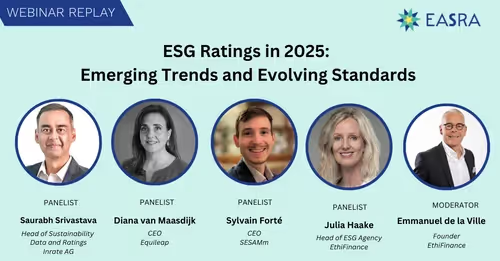
In our latest webinar, "How AI is Transforming ESG Ratings Amid Regulatory Challenges," SESAMm’s CEO and Co-founder Sylvain Forté and Julia Haake, Head of ESG Rating Agency at EthiFinance explored how artificial intelligence is reshaping the way ESG ratings are developed in the face of increasing regulatory pressures. The session focused on AI's transformative role in improving the accuracy, transparency, and efficiency of ESG ratings while navigating the complex regulatory environment in the EU and UK.

Key Takeaways

  • Upcoming ESG Regulations: New EU and UK rules emphasize transparency in ESG rating methodologies and conflict of interest management, impacting how rating providers operate.
  • AI’s Role in ESG Ratings: AI is transforming ESG ratings by analyzing vast amounts of unstructured data, improving coverage, and enhancing accuracy for small and mid-sized companies.
  • Addressing ESG Data Gaps: AI enables more comprehensive data collection and helps fill gaps, especially in regions and industries with limited reporting.
  • CSRD and ISSB Frameworks: These new standards are driving data standardization in Europe, with AI helping organizations adapt to evolving regulatory requirements.

Access the full replay now!

In our recent webinar, "The Boeing Scandal: Can AI Predict ESG Controversies?" Sylvain Forté, SESAMm’s CEO and Co-founder, along with Emna Abid, Research and Analytics Team Lead, focused on the important role AI plays in detecting and predicting ESG controversies. They explored how AI provides early warning signals for potential crises, using Boeing’s well-known 737 Max scandal as a central example.

The webinar addressed the challenges businesses face when relying on traditional tools to monitor ESG risks. Traditional methods often struggle to capture early signals, particularly when dealing with unstructured data from local news, NGO reports, or social media. SESAMm’s AI solution overcomes this issue by continuously analyzing vast amounts of data in real time to identify red flags that may not be visible through conventional ESG tools.

Using Boeing’s 737 Max crisis as a case study, the webinar demonstrated how SESAMm's AI Solutions detected early warnings before the controversy escalated. The AI system flagged crucial information from whistleblower reports and localized sources well before the issues became major public scandals.

"ESG factors are no longer just secondary concerns. They are at the forefront of how this industry is perceived by the public, investors, and regulators." Emna Abid - Research & Analytics Team Lead, SESAMm

The webinar also touched on the broader aerospace industry, which has faced heightened scrutiny for its environmental and governance issues. The analysis revealed how AI can help companies in high-risk sectors stay ahead of controversies by providing real-time insights and helping them navigate the complex landscape of ESG compliance and public perception.

To sum up, AI is revolutionizing ESG risk detection, providing companies with the ability to identify early warning signs of potential controversies before they escalate into major crises. By analyzing vast amounts of unstructured data in real time, SESAMm’s AI platform helps organizations navigate complex ESG landscapes, particularly in high-risk industries like aerospace. This proactive approach enables businesses to protect their reputation, make more informed decisions, and ensure compliance with evolving ESG standards.

To explore these insights further, be sure to watch the full webinar replay.

Download the complimentary report for more insights.

Effectively managing environmental, social, and governance (ESG) risks is important, especially for private equity firms focusing on small or private companies. These firms often lack the detailed public data available for larger corporations, making it challenging to identify hidden ESG controversies that could impact investments. Traditional methods, heavily reliant on structured data and formal disclosures, often fall short when dealing with unstructured and fragmented information found in diverse sources like social media, local news, and niche industry reports. This is where Artificial Intelligence (AI) comes into play.

Our ebook, "The Boeing Scandal: Can AI Predict Controversies Before Traditional Tools?," explores the transformative role AI can play in enhancing ESG risk assessment processes. It explores the limitations of conventional methods and demonstrates how AI technologies, such as natural language processing (NLP) and machine learning, offer a more effective solution for identifying ESG risks. By analyzing vast amounts of unstructured data from various sources, AI gives firms access to the early detection of potential controversies, providing a more comprehensive and proactive approach to risk management.

A key highlight of the ebook is a detailed case study on Boeing, a major player in the aerospace industry. Through AI-driven analysis, we identified early signs of emerging controversies surrounding Boeing's safety practices and governance issues. The case study illustrates how AI can sift through complex data, uncover hidden patterns, and provide early warnings that allow stakeholders to act before these issues escalate into major crises.

The ebook outlines a step-by-step AI-driven process for ESG risk detection, from data collection and filtering to advanced sentiment analysis and actionable insights. This comprehensive guide empowers private equity firms to move beyond reactive strategies and adopt a proactive stance in ESG risk management.

Reach out to SESAMm

TextReveal’s web data analysis of over five million public and private companies is essential for keeping tabs on ESG investment risks. To learn more about how you can analyze web data or to request a demo, reach out to one of our representatives.

With all the buzz around Generative AI, it’s easy to forget that artificial intelligence (AI) has been driving innovation across industries for years. Environmental, Social, and Governance (ESG) and risk management are no different. However, at the rate AI is advancing and as the amount of raw data available for analysis continues to expand, the need to understand AI is more pressing than ever.

AI is transforming ESG, turning complex data into predictive insights and reshaping our approach to risk. But what does this mean for the industry, and how can professionals leverage this technology to maintain a competitive edge? The future of AI in ESG and risk management is not just a matter of technological advancement but a narrative of how we evolve with it.

This ebook dives into how AI works when applied to ESG, shares a few practical examples of what it looks like in real life, and offers a few predictions for what comes next.

Dive deeper into the mechanics of how AI works in ESG and equip your organization with the insights needed to enhance your ESG practices. Fill out the form below to access your copy.

We recently held an insightful webinar co-hosted by Charlotte Salmon of Indefi and Alejandro Plaza of SESAMm, titled "AI in ESG Due Diligence: Best Practices from Indefi and SESAMm." The session explored the innovative application of artificial intelligence in the ESG risk assessment process.

During the webinar, Charlotte and Alejandro discussed how Indefi's proven strategies, when combined with SESAMm's cutting-edge AI platform, can significantly enhance ESG risk management and the selection of target companies.
One of the key highlights was a detailed case study on major delivery apps, including Glovo, Uber Eats, DoorDash, Deliveroo, Grubhub, and Just Eat. This segment covered industry and competitive analysis, sentiment analysis, and a deep dive into ESG controversies and positive SDG impacts associated with these companies.

Key Topics Covered:

  • Due diligence process for ESG risk assessment
  • AI integration in ESG risk management
  • Selection of target companies
  • Delivery apps case study: industry and competitive analysis, sentiment analysis, and deep dives into ESG controversies and SDG positive impacts

Don't miss out on this opportunity to learn from industry leaders about the future of ESG due diligence. Watch the full webinar replay:

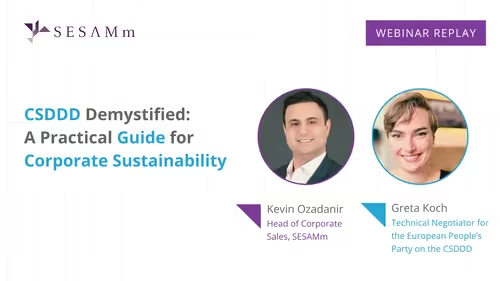
Today, it's important to understand the complexities of supply chain regulations. This was the main topic of a recent SESAMm webinar, “Understanding Supply Chain Regulations: The Future Implications of CSDDD”, which explored the implications of the Corporate Sustainability Due Diligence Directive (CSDDD) and other important regulatory frameworks that affect global supply chains.

The webinar, led by SESAMm's CEO, Sylvain Forte, and ESG analyst Maha Chihaoui, explored the evolving landscape of ESG frameworks, laws, and regulations that influence supply chain operations. As businesses strive to enhance transparency, accountability, and ethical practices, they face a multitude of challenges and opportunities. The session highlighted how these initiatives could lead to substantial benefits such as environmental conservation, improved social conditions, and strengthened governance structures.

During the webinar, Maha Chihaoui emphasized the shift from non-binding guidelines to binding laws in the regulatory spectrum, signaling a more robust approach to enforcing corporate accountability and responsibility. Sylvain Forte also discussed the importance of moving beyond mere compliance to ensure genuine adherence to ESG principles, advocating for a systematic and continuous evaluation process to ensure businesses act on their promises.

The session also touched on real-life applications and challenges in implementing these frameworks. For example, the discussion included case studies on companies like Shein and Temu, highlighting how regulatory focus on supply chain controversies has increased visibility and accountability.

As regulatory frameworks around supply chains continue to evolve, the dialogue between various stakeholders—regulators, businesses, and the public—becomes crucial. SESAMm's webinar effectively shed light on these critical issues, offering insights and fostering a deeper understanding of the dynamic relationship between ESG initiatives and supply chain management.

Watch the webinar replay now:


Unlock a deeper understanding of supply chain regulations' complexities and future implications.

Download the "Understanding Supply Chain Regulations: The Future Implications of CSDDD" ebook and equip your organization with the insights needed to enhance your ESG practices for a sustainable future. Fill out the form below to access your copy and lead the way in corporate sustainability.

"Understanding Supply Chain Regulations: The Future Implications of CSDDD" offers an in-depth exploration of global supply chain regulations, their effectiveness, and the vulnerabilities that persist within sector screening for controversies. The first part outlines the evolution from non-binding guidelines to mandatory laws, stressing these regulations' varied impacts and challenges, especially on smaller businesses facing compliance burdens.
The second part of the ebook dives into specific supply chain controversies, showing a strong correlation between the rise of regulatory frameworks and the visibility of supply chain issues. Data analysis reveals the sectors most filled with ESG-related risks, highlighting significant social and environmental controversies within industries like specialized retail, automotive, and technology.

The eBook concludes with a detailed case study on retail giants SHEIN and TEMU, focusing on their compliance with current regulations and the potential impact of forthcoming ones, particularly the CSDDD.

Fill out this form to unlock a deeper understanding of supply chain regulations' complexities and future implications.

The Corporate Sustainability Due Diligence Directive (CSDDD or CS3D) is a significant European Union initiative, shifting businesses from voluntary environmental and social practices to legally binding obligations. Companies must align with stringent standards to address issues like child labor, modern slavery, and environmental degradation. The directive's phased implementation starts in 2026 and focuses on companies with extensive operations and revenues.

CSDDD requires companies to proactively identify, prevent, and mitigate adverse impacts across their value chains. It mandates transparency and public reporting, enhancing trust with consumers and investors. The directive also imposes financial penalties for non-compliance, highlighting the importance of sustainable practices for business stability.

Fill out this form to download our ebook and explore the Corporate Sustainability Due Diligence Directive (CS3D) to ensure your business is compliant with the latest EU regulations.

In our newest research, "ESG Controversies: A Comparative Study of Public vs Private Sectors," our ESG and Research & Analytics teams present an exhaustive study on the nuances of ESG controversies across public and private sectors. We combined artificial intelligence with our extensive dataset of over 25 billion documents to extract ESG controversies in both sectors. This research highlights the increased visibility and scrutiny of public companies compared to the more discretion in private companies. A case study on IKEA uncovers challenges in product safety and human capital, underlining the importance of proactive sustainability practices. The study examines these sectors' alignment with major ESG frameworks, including the UN Global Compact and Sustainable Development Goals, offering invaluable insights for enhancing corporate ESG strategies.

Key takeaways:

  • Public companies are under constant observation, leading to higher exposure to ESG risks such as pollution, labor disputes, and governance failures. This visibility is partly due to regulatory requirements for transparency, making every aspect of their operations subject to public and investor scrutiny.
  • Private companies, while benefiting from less regulatory oversight, encounter substantial repercussions from ESG controversies. These can manifest as sudden shifts in investor confidence, challenges in securing financing, or damage to reputation, underscoring the critical need for comprehensive risk management approaches that encompass environmental, social, and governance factors.
  • The case study on IKEA provides an in-depth look at specific issues like product recalls due to safety concerns and the complexities of managing a global workforce. It highlights IKEA's efforts to implement forward-thinking sustainability initiatives and human capital management practices as key components of its corporate strategy, demonstrating the tangible benefits of such measures in mitigating ESG risks.

ESG controversies and breaches of SDG goals vary notably between public and private sectors. Public companies frequently encounter more visible and consistent ESG risks, while private companies, although subject to less scrutiny, experience significant impacts when controversies occur.

Dive deeper into ESG controversies and uncover strategies for navigating these challenges effectively. Download "ESG Controversies: A Comparative Study of Public vs Private Sectors" and equip your organization with the insights needed to enhance your ESG practices for a sustainable future. Fill out the form below to access your copy and lead the way in corporate sustainability.

Fill out the form to download the ebook.

Stay ahead with the latest in ESG and AI intelligence

Join our mailing list to receive new reports, event invites, and updates from SESAMm directly to your inbox.