
Forced labor is often assumed to be a problem of distant supply chains. The case of Packers Sanitation Services Inc. (PSSI) dismantles that assumption entirely.
PSSI was a leading U.S. industrial cleaning contractor, servicing major meatpacking plants and backed by a top-tier private equity firm. Yet between 2022 and 2024, it became the center of one of the most significant child labor scandals in the U.S., one that had been quietly signaling its risks for years. SESAMm's controversy monitoring platform captured those early signals long before regulators intervened.
The Scandal
In November 2022, the U.S. Department of Labor discovered that PSSI had employed minors as young as 13 in hazardous overnight roles across 13 locations in 8 states. A federal investigation confirmed 102 children had been illegally employed, many handling dangerous chemicals and machinery. Three years earlier, in 2019, PSSI had already been sued for wage violations. The signal was there. It went unheeded.
The Fallout
The consequences were swift. A $1.5 million DOL fine. Contract terminations by Cargill and JBS. A DHS trafficking investigation. A replaced CEO. By late 2024, PSSI had shut its corporate office entirely. Even the private equity owner, Blackstone, faced direct scrutiny from pension funds, a reminder that labor violations travel up the ownership chain.
The Lesson
Every warning sign in this case was publicly visible before the crisis broke out. Wage lawsuits, labor complaints, and media coverage are all available in the public domain. Real-time controversy monitoring can surface these signals early, giving companies and investors the chance to act before exposure becomes unavoidable.
Forced labor is not only a humanitarian crisis. It is a material risk that demands better data, earlier detection, and stronger accountability.
Download the full case study infographic to see the complete timeline of events and key takeaways
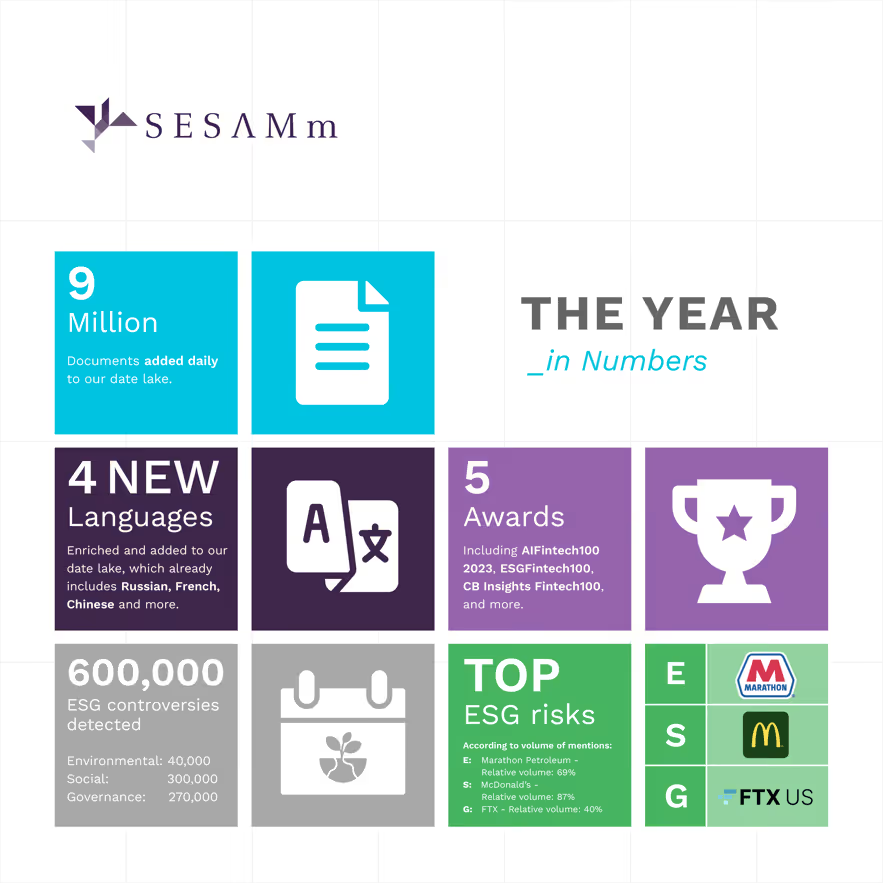
With 2023 drawing to an end, we wanted to share the most relevant ESG controversies during the year. In this article, we provide a comprehensive overview of the year's top ESG controversies, breaking them down into the three pillars of ESG: Environmental, Social, and Governance. Through our research, we will explore each of these areas in detail, shedding light on the most talked-about controversies and the companies involved.
Methodology
To gain a comprehensive understanding of the ESG risks in 2023, we conducted a thorough analysis of web mentions related to SESAMm’s ESG taxonomy across our expansive data lake with 20B+ articles. This allowed us to evaluate the overall volume of mentions related to each risk category: Environmental (E), Social (S), and Governance (G).
ESG Risks Over Time
Before diving into the details, we looked into the main trends over the last few years in ESG trends. We found a detectable increase in the volume of ESG-related web mentions, with an emphasis on social risks. Especially since the start of 2020, social risks have been on a consistent upward trajectory. Notably, there was a significant spike in mentions around mid-2020 following mass protests amid the COVID-19 lockdown, in addition to reports of cyberattacks and allegations of sexual assault. Furthermore, 2021 saw an uptick in mentions related to issues of racism (Black Lives Matter movement) and homophobia.
Figure 1: ESG risks over time.
ESG Risks: Focus 2023
We outlined the prominent risks in 2023: social risks, with layoffs and strikes gaining attention; environmental risks, marked by wildfires and oil spills; and governance risks, where tax evasion and ethical violations like bribery were in focus. Each risk category underscores the urgent issues facing society and the need for accountability and action.
Figure 2: ESG risks in 2023.
Environmental Controversies of 2023
Environmental risks may not match the sheer number of mentions that social risks receive, but their presence in discussions has steadily grown over the year, particularly in the third quarter. Let's explore the most common controversies that have emerged.
Climate Change and Policy
Climate change dominated environmental discussions in 2023. A noticeable peak in mentions arose in the latter half of the year, particularly around heatwaves and debates surrounding climate policies.
Atmospheric Emissions
September saw increased discussions about atmospheric emissions, notably due to the emissions from volcanic eruptions, hybrid cars, and the discovery of toxic metals in food products.
Impact on Biodiversity
The wildfires that spread in June sparked significant debates around their impact on biodiversity, leading to increased mentions and concerns related to environmental preservation.
Figure 3: Top environmental sub-risks in 2023.
Top 5 Environmental Controversies
These controversies are ranked by relative volume*.
Marathon Petroleum
Volume of mentions: 62
Relative volume: 69%
A significant portion of environmental risk discussions surrounding Marathon Petroleum was due to its chemical leak in Garyville. This incident led to massive fires, so large they could be observed from space. (source)
Nestlé
Volume of mentions: 30
Relative volume: 54%
Nestlé faced scrutiny in 2023, with over half of its environmental risk mentions associated with drought controversies. The company was urged to cease its water mining activities following severe droughts in France. (source)
Coca-Cola
Volume of mentions: 178
Relative volume: 53%
Coca-Cola garnered attention due to a hydrochloric acid leak in January 2023, leading to significant environmental concerns. (source)
ExxonMobil
Volume of mentions: 571
Relative volume: 31%
Exxon, along with Guyana’s environmental agency, was implicated in breaches of oil spill insurance policies. (source)
Shell
Volume of mentions: 872
Relative volume: 23%
An oil spill from a Shell pipeline adversely affected farms and a river in a region of Nigeria already grappling with pollution. (source)
Social Controversies of 2023
Social risks have taken the forefront in 2023, with notable web mentions increasing significantly. Here are the most relevant controversial topics:
Social Dialogue
Social discourse intensified at the start of the year, with news of widespread strikes in various sectors, including aviation and education, primarily driven by pay disputes. The wave of layoffs in several tech companies was the talk of the town, especially during the first quarter of the year.
Discrimination against minority groups, including the LGBTQ community and people of color, and age-based discrimination became a significant topic of discussion in 2023.
Figure 4: Top social sub-risks in 2023.
Top 5 Social Controversies
These controversies are ranked by relative volume*.
McDonald's
Volume of mentions: 8,903
Relative volume: 87%
McDonald's faced substantial social risks in 2023 due to significant layoffs of its corporate staff in April. The move led to public concern and discussions around the company's employment practices and stability. (source)
Google
Volume of mentions: 13,504
Relative volume: 43%
Google found itself in the spotlight as it faced challenges related to major layoffs in January and October of 2023. These layoffs contributed to almost half of the social risk mentions associated with the tech giant. (source)
Meta
Volume of mentions: 10,965
Relative volume: 38%
Meta, formerly known as Facebook, also faced scrutiny as 38% of the company's social risk mentions revolved around layoffs that took place in March and October 2023. (source)
Microsoft
Volume of mentions: 6,060
Relative volume: 28%
Microsoft faced challenges due to disruptions caused by cyberattacks in early June. In addition, the company had to navigate through controversies related to layoffs, contributing to its social risks. (source)
X (formerly Twitter)
Volume of mentions: 7,246
Relative volume: 8%
X/Twitter experienced a global outage, which was followed by significant layoffs. These events led to considerable public discussions and social risks for the company. (source)
Governance Controversies of 2023
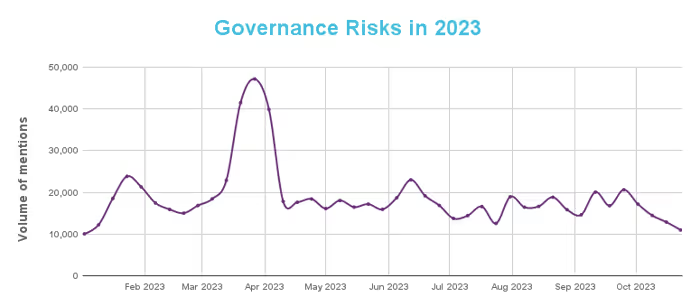
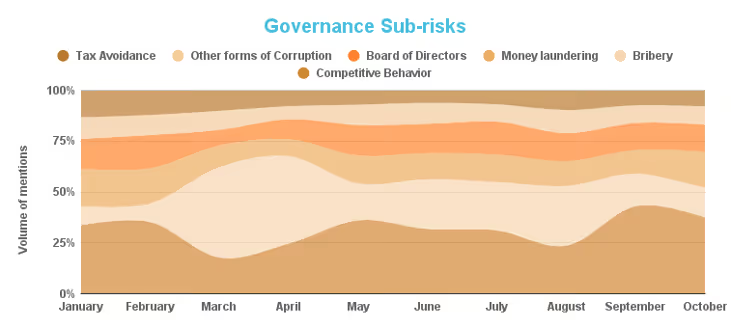
Governance risks, though often overlooked, play a pivotal role in shaping corporate responsibility and ethical conduct. In 2023, several governance controversy trends emerged:
Money Laundering
Tax evasion was a major topic of discussion in the first quarter, highlighting the need for greater transparency and accountability within corporations.
Bribery
There was a significant increase in mentions related to bribery cases, underscoring the challenges in maintaining ethical governance standards.
These controversies are ranked by relative volume*.
FTX
Volume of mentions: 8,085
Relative volume: 40%
FTX, a notable entity in the financial sector, found itself at the center of governance controversies. A significant portion of the discussions surrounding FTX's governance risks in 2023 pertained to allegations of its founder's involvement in bribery schemes. (source)
Apple
Volume of mentions: 3,162
Relative volume: 28%
Apple, a tech giant, faced scrutiny as a third of its governance risk mentions revolved around antitrust violations reported in October 2023. (source)
Microsoft
Volume of mentions: 4,429
Relative volume: 25%
Microsoft encountered legal challenges with its deal with Activision. The company had to approach the court to reject the FTC's request to halt the deal. (source)
X (formerly Twitter)
Volume of mentions: 2,251
Relative volume: 18%
X/Twitter, another major player in the tech industry, faced legal challenges when a judge dismissed a shareholder lawsuit against Elon Musk concerning a Twitter buyout. (source)
Google
Volume of mentions: 3,920
Relative volume: 13%
Google faced judicial sanctions for allegedly destroying evidence in an antitrust case, further emphasizing the critical governance challenges even major tech giants face. (source)
Conclusion
In conclusion, the year 2023 proved to be eventful in the ESG landscape. From environmental concerns sparked by significant events like chemical leaks and wildfires to social challenges such as widespread layoffs and discrimination and governance risks underscored by bribery and antitrust violations, the year offered a comprehensive view of the myriad challenges companies face in the modern era.
Understanding these controversies and the companies involved provides invaluable insights for stakeholders, especially in the private equity and asset management sectors. AI-driven ESG insights, like those provided by SESAMm, can be pivotal in navigating the ever-evolving ESG landscape, ensuring informed decision-making and proactive risk management.
Relative volume*: Relative to the total volume of E, S, or G risks for the company during the same period.
SESAMm’s AI Technology Reveals ESG Insights
Discover unparalleled insights into ESG controversies, risks, and opportunities across industries. Learn more about how SESAMm can help you analyze millions of private and public companies using AI-powered text analysis tools.
As generative AI has grown from a fledgling concept to a force disrupting most industries, its broader implications have come under scrutiny. Public perception of generative AI has also evolved significantly due to its association with various Environmental, Social, and Governance (ESG) factors. In this article, we’ll offer an extensive ESG analysis of generative AI, focusing on how different industries react to it, the ESG risks it potentially fuels, and the ESG positive impact events it has given rise to.
Generative AI: Public Perception Since Launch
Generative AI was initially met with widespread enthusiasm as the next evolutionary step in artificial intelligence. OpenAI's ChatGPT garnered significant attention quickly upon its release in 2022, as it amassed 100 million monthly active users in just two months post-launch. However, as its capabilities have become more powerful and universal, many ESG controversies have emerged, impacting the public sentiment towards the technology. A notable drop in sentiment polarity was observed from October to December of ‘22, going from 0.4 to 0.22. The decline in polarity was attributed to some critical topics, notably the environmental toll of its energy consumption and the ethical difficulties posed by its potential to disseminate false information.
* Polarity, a proprietary metric developed by SESAMm, ranging from -1 to 1, represents the aggregate of positive and negative sentiment.
Generative AI and its Implications on ESG
In What Industries Is Generative AI Mentioned More Often?
As expected, the IT industry was initially the most mentioned, along with Generative AI. However, as the technology became more widespread, other sectors have garnered more attention among web publications and social media. In particular, the communication and finance sectors are capturing a substantial share of the attention. In particular, data privacy in finance and communications are the main concerns, and fraud for finance is also being widely discussed on the web.
ESG Controversies Fueled by Generative AI
When we looked at ESG controversies and risks in detail, we found that most of the attention and mentions are related to social risks, particularly Human Rights (right to privacy), labor rights, and customer relations (customer privacy). Governance has also gotten its fair share of ESG controversies, primarily focused on anticompetitive practices (copyright infringement). On the environmental side, controversies are concentrated on water consumption (by Gen AI tools) and climate change, specifically energy consumption. However, the number of mentions and controversies has decreased considerably.
Data Breaches: The Focal Point
By far, the lion's share of ESG controversies and mentions gravitate towards social risks, specifically data breaches. From Italy banning Chat GPT in April to Samsung’s alleged data leak in August, controversies around data privacy have been among the most concerning topics surrounding Chat GPT ESG risks. In just five months, mentions of data breaches went from virtually 0% to over 10% of total mentions.
Digging deeper into data breaches at companies, we found that the number of breaches did increase significantly after generative AI tools became available. In particular, we see that the number of internal (employees) vs. external (non-company affiliated) data breaches increased by almost 50% when using generative AI tools from 14% to 21%.
The Silver Lining: ESG Initiatives Generated by Generative AI
Despite all the risks and controversies emerging, generative AI is also an enabler of positive ESG initiatives. Interestingly, on the positive impact side, we see a similar volume of mentions of initiatives on the three ESG dimensions.
Generative AI has shown promise in optimizing energy use, reducing waste, and even modeling and mitigating the impacts of climate change. On the environmental side, we see a rapid increase in mentions related to its applications in efficiency and productivity, asset reliability, operational safety, lower energy consumption, and reduced environmental impact.
The technology also has the potential to revolutionize healthcare by enabling more accurate and early diagnosis, thereby contributing to social well-being. Generative AI could also transform web surfing and make it easier for users to navigate the internet and find or generate information.
Conclusion
As our analysis shows, generative AI is bringing unprecedented capabilities and complex ESG risks and controversies. We expect to see it evolving, with public sentiment shifting and industries grappling with its ESG implications. But we are still in the very early stages of this new trend and will continue monitoring its evolution.
SESAMm’s AI Technology Reveals ESG Insights
Discover unparalleled insights into ESG controversies, risks, and opportunities across industries. Learn more about how SESAMm can help you analyze millions of private and public companies using AI-powered text analysis tools.
One of the biggest challenges in risk monitoring is sifting through mountains of irrelevant data. Whether you're using search engines, financial news platforms, or even specialized in-house analytics, you end up with too much noise. Scrolling through to page 12 of Google is not only time-consuming, but leaves you with the nagging feeling that you could still be missing something.
Artificial Intelligence (AI) is a hot topic, with new breakthroughs and possible applications popping up every day. The question is no longer simply “can AI help me with that?” but rather “how can I use AI to help with that?” For Environmental, Social, and Governance (ESG) controversy and risk monitoring, AI is used to sift through enormous data sets at unparalleled speeds, bringing critical insights to the forefront faster and more efficiently than humanly possible.
When there are hundreds of companies to monitor, for example in a large investment portfolio or a group of suppliers, the advantages of AI are obvious. But what about smaller portfolios? How do you know it’s time to start using AI? Based on our experience working with private equity firms, asset managers and commercial banks, we’ve pulled together five signs that it’s time to consider AI.
1. Overwhelmed by Data: There's Too Much Noise
An AI-powered tool filters out the noise, even in situations where seemingly only humans would be able to do it, giving you the peace of mind that there’s no controversy lurking in the dark corners of the web. All of the key information is gathered in one place, ready for you to evaluate and decide the best course of action.
2. Difficulty Finding Critical Information: The Black Hole of Private Companies
On the flip side - sometimes instead of finding too much data, you can’t find any data at all. For private companies, information can be scarce, especially for smaller companies based overseas, where the only news coverage is local and in the local language. In this case, ESG ratings agencies often aren’t able to fill the gap either. There are millions of firms worldwide and less than 50,000 of them are covered by rating agencies (source).
AI, on the other hand, enables systematic coverage and statistically relevant results without human intervention, analyzing millions of websites and providing coverage on millions of public & private companies. If you are struggling to find information on a company, AI might be the answer.
3. Can't Accurately Analyze an Event: The Context is Missing
Beyond the actual controversy or event itself, understanding the context and history around it is essential for risk assessment. Is this a one-off concern or part of a recurring pattern? To get the full picture, you need to take a closer look not only at the company in question, but the key players, i.e. key executives, and the industry as a whole to understand if this is within the norms.
AI has an important role to play here also. By simply expanding the search, AI can provide you with a full picture of the controversy, including a quick summary and a benchmark against competitors in just a matter of minutes.
4. Missed Critical Window for Action: The Cost of Inefficiency
Markets can change quickly - and it’s only getting worse as information is spreading faster and more widely. The more time it takes you to gather and analyze information, the less time you have to react. This can be a challenge whether you are monitoring 30 companies or 100’s. If you find yourself trapped in a cycle of reacting to news rather than acting proactively, AI can help. Because AI scans and analyzes information in seconds, the alerts to potential controversies are in near real-time, allowing you as much time as possible to take action.
5. Missing ESG Expertise: The Knowledge Gap
To top it all off, ESG is complex and constantly evolving. Understanding what data is relevant and how to evaluate it requires real expertise. ESG rating agencies provide some guidance, but they typically leverage self-reported data - which is naturally biased. Take greenwashing for example where a company misleads its stakeholders, investors, and consumers about its environmental practices by communicating positive environmental performance contrary to its actual, less positive execution. It’s difficult to identify greenwashing using self-reported data.
Because AI relies on external stakeholders, such as online forums or news sources, it offers an unbiased take on a company’s ESG performance. Additionally, by choosing an AI with ESG expertise built-in, you benefit from an expert analysis without increasing the burden on your team.
As the speed and amount of information available continues to grow, AI offers a scalable way to monitor your partners, suppliers and portfolio. To learn more and find out if AI is a good fit for your company, contact our experts at SESAMm.
Welcome to the latest article in our ESG Data Trends series. Today, we're turning our attention to the growing bike industry, specifically spotlighting Italy's Pinarello. Our aim is to illustrate how health-conscious and ecological trends, increased by the pandemic, have steered the world towards bicycles for both commuting and exercise. Pinarello, as well as many of its competitors, are private companies, which poses a particular challenge to analyze them in depth as the amount of data available is particularly sparse and harder to find. However, with the help of AI tools, this task becomes not only possible but also highly automated.
Bike Industry Trends: A General Overview
Long–term Momentum: Online mentions related to the bicycle market have exhibited a consistent upward trend since 2015, peaking in the last three years in the wake of COVID-19.
Figure 1: Bike market volume of mentions over time.
Government Initiatives: Notably, a spike in government investment in cycling infrastructure has paralleled the pandemic-induced behavioral changes.
Figure 2: Bike commuting VS. government focus on cycling infrastructure over time.
Type-specific Popularity: Among the various segments, E-bikes dominate online mentions, followed by mountain bikes and road bikes.
Figure 3: Bike market breakdown by type over time.
Digital Ecosystem: The digital facet of the trend reveals that sports data apps, especially those focusing on performance tracking, have gained considerable traction.
Figure 4: Sports data apps and their use mentions over time.
E-bikes: Riding the High Wave
E-bikes have captivated attention across the board. They are now deemed a convenient solution to commuting, more so after the pandemic. Geographically, Europe outperforms the US in E-bike mentions, with France leading the charge on urban bikes. Italy, on the other hand, showcases a stronger inclination towards road bikes.
Figure 5: Bike type regional breakdown.
The Pandemic Effect on Road Bikes
The road bike segment witnessed an unprecedented surge in mid-2020, corresponding with pandemic lockdowns. Major players like Specialized, Trek, and Canyon lead in online mentions, but Pinarello holds its ground with a stable and slightly growing competitive share.
Figure 6: Road bike market data share by competitor over time.
Consumer Preferences: Performance and quality emerge as the dominant positive attributes, whereas cost remains the primary consumer concern.
Attribute Sentiment: When analyzed based on sentiment, customization, and performance, score the highest, whereas cost ranks the lowest due to consumer complaints.
Figure 7: Road bike market attributes sentiment.
Case Study: Pinarello
Online Reputation Insights
The volume of online mentions for Pinarello has seen a steady climb, particularly after 2021. Quality and performance have risen as positive attributes, while cost remains a predominant negative sentiment, inflamed further by recent discussions about the brand's pricing strategy.
Figure 8: Pinarello attributes sentiment.
ESG Analysis of Pinarello and the Bike Industry
Low-risk ESG Profile: In general, the bike industry fares well in ESG evaluations. The risks usually center around social and governance aspects.
Social Risks: These primarily relate to product safety, with several recalls from various companies, including Specialized and Trek.
Governance Risks: Pinarello has faced patent infringement claims, while other brands like Giant have been accused of fraudulent behavior.
ESG Positive Impact Initiatives
The industry, by and large, is aligned with environmental sustainability goals. Trek stands out for its environmental initiatives and social opportunities, while Canyon demonstrates advances mainly in the environmental management of the supply chain.
As for Pinarello, the brand has undertaken ESG-positive initiatives, notably in environmental and social spheres. Product innovations like the Nytro E e-bike and high-performance 3D printed bikes signify their commitment to sustainable technology. Moreover, their partnerships and sponsorships aim to uplift local communities.
Navigating ESG Goals in the Bike Market
The bike market, led by brands like Pinarello, demonstrates significant strides in alignment with ESG goals. For private equity firms and asset managers, the value lies not just in financial returns but also in understanding ESG risks and opportunities that could influence long-term sustainability and risk mitigation.
How can SESAMm help you track ESG performance using AI?
We combined natural language processing with billions of textual web data related to the bike market to produce this analysis. Using NLP-powered models gives us an edge as we can extract ESG, SDG, and financial insights that aren’t necessarily obvious or easy to detect. These insights help investors make better investment decisions. SESAMm leverages AI and machine learning technologies to help you decipher and understand timely sentiment, trends, and ESG metrics on public and private companies to assist organizations in risk mitigation and profit generation strategies.
Reach out to SESAMm
TextReveal's web data analysis of over five million public and private companies is essential for keeping tabs on ESG investment risks. To learn more about how you can analyze web data or request a demo, contact one of our representatives.
In this final part of our series on AI in finance, we look at how new technological advancements will change the finance world. Over the next ten years, using data and AI for financial decisions will become common practice.
What is Generative AI and Why It Matters in Finance
New AI technologies, such as GPT-3.5 and GPT-4, are becoming part of everyday business tools. Although we're just scratching the surface of what they can do, these technologies will soon help us with tasks like writing emails, creating presentations, and making financial reports.
Take ESG (Environmental, Social, and Governance) indicators, for example. Right now, analysts often manually collect this data from financial reports. But soon, advanced AI models will handle this work, leading to more interactive and intelligent business tools.
What's Next for AI Technology
The following versions of these AI models will be even better than the ones we have today. Given that current models perform some tasks better than humans, it's exciting to think about their future capabilities. We expect these new models to excel in many different tasks. In the future, we'll see machines handle most tasks, which could be good for the world if we use this technology wisely in our everyday work.
How Generative AI Will Change Finance
Just like the internet and smartphones did, generative AI will change how businesses operate. Companies that adapt will do well, while others might struggle. One significant change will be in jobs, especially for analysts. As data becomes easier to collect and understand, analysts will shift to roles where they guide and interact with AI-based business systems.
How SESAMm Uses Generative AI
At SESAMm, AI is already making our work more efficient. It's changing both our internal processes and the features we offer our clients. For example, we use advanced AI models to automate data annotation for ESG and SDG (Sustainable Development Goals) alerts. This has saved our analysts 30% of their time. We're also creating a client-friendly interactive tool that will be a part of our dashboard. Our aim is to start with a demo and then fully automate the extraction and summary of key ESG and SDG events.
SESAMm’s Future with AI
In the long term, AI will play a big role in improving our services. We plan to use AI to automatically create reports, including detailed ESG or competitive analyses for private equity firms. AI is central to our innovation plans. We see it as a way to speed up our growth and establish SESAMm as a key player in the industry.
Our Long-term Objectives with AI
Our main goal is to make it easy for users to find accurate and timely data and ESG insights. The power of AI comes from its ability to quickly sort through a lot of information and pull out what’s important.
Another key aim is to help direct investments toward truly beneficial companies by improving our ESG measurement capabilities.
Staying Competitive in an AI World
To stay ahead, we are committed to raising internal awareness about AI and encouraging its active use across all teams. We also understand that a culture of innovation and transparency is crucial for success, particularly in ESG matters.
Final Thoughts
AI will change the way we work, but it's not just a tool—it's a vital part of our business strategy. It will help us improve our processes, services, and client relationships. Ultimately, AI is about much more than efficiency. It’s about unlocking new opportunities, empowering our team, and driving sector-wide innovation.
In case you missed it, please check out the previous parts of the series:
TextReveal's web data analysis of over five million public and private companies is essential for keeping tabs on ESG investment risks. To learn more about how you can analyze web data or request a demo, contact one of our representatives.
A few months ago, SESAMm undertook a CSR audit conducted by Early Metrics as part of its fundraising round. This audit allowed us to identify our strengths and weaknesses in these matters; while the results were very positive for the company, they highlighted a few aspects that require focused attention.
Environment: A green commitment
Limitation of transportation impact
By promoting remote work, SESAMm has mitigated the carbon footprint caused by daily commuting. This initiative has a dual benefit – a positive impact on the environment and potentially enhancing employee work-life balance.
Technology and renewable energy
The approach to leasing refurbished IT equipment and choosing server providers relying on renewable energy is a step toward a sustainable technology ecosystem.
Ethical and environmental awareness
Implementing an Ethic charter and introducing Climate Fresk workshops within the organization speak to SESAMm's commitment to building an environmentally conscious culture.
Social: Human–Centric Approach
Well–being and work-life balance
By prioritizing employees' health and well-being, SESAMm has fortified its internal culture. These initiatives pave the way for a balanced work-life ecosystem, from gym memberships to remote work arrangements.
Gender equality
With women representing a commendable percentage of overall staff, the company has made strides toward gender equality. Yet, recognizing the need for further improvement reflects a candid and evolving approach to inclusivity.
Talent management
Cultivating talent through mentoring, professional training, and internal education illustrates SESAMm's dedication to professional growth and development.
Governance: Transparent and Ethical
Policy implementation and oversight
With robust policies such as an IT charter, an anti-corruption guide, and an ethics charter, SESAMm has laid a strong foundation for transparent governance.
Diversity and inclusion
The celebration of diversity, represented by team members from 10 different nationalities, adds to the richness of the organizational culture.
Executive transparency
Open communication channels like Ask Me Anything meetings foster a transparent relationship between the executive committee and the employees, enhancing trust and alignment with the company's strategy.
The Road Ahead: Focused Priorities
SESAMm's recognition of areas requiring further development marks a responsible and forward-thinking approach. Conducting a carbon footprint assessment, finalizing career paths, and implementing a transparent salary policy is a testament to the company’s commitment to continual improvement.
Conclusion
SESAMm's CSR audit achievements reflect a commitment to sustainable business practices and a vision for continual growth and improvement. The intricate blend of environmental stewardship, social responsibility, and governance paints a portrait of a company that recognizes its corporate citizenship. The internal CSR committee's establishment assures that this is a momentary success and a sustained journey toward excellence.
Reach out to SESAMm
TextReveal's web data analysis of over five million public and private companies is essential for keeping tabs on ESG investment risks. To learn more about how you can analyze web data or request a demo, contact one of our representatives.
In the early 2020s, sustainable investing was booming. Trillions of dollars were flowing into funds labeled "green," "sustainable," or "ESG-focused." But behind the marketing, a troubling reality emerged: many of these products weren't as sustainable as they claimed. Some funds marketed as environmentally friendly held stakes in fossil fuel companies. Others promoting social responsibility had questionable labor practices in their portfolios. Investors were confused, regulators were concerned, and the term "greenwashing" became unavoidable.
In response, the European Union introduced the Sustainable Finance Disclosure Regulation (SFDR) in March 2021. This wasn't just another piece of bureaucratic paperwork; it was the EU's ambitious attempt to bring order to the Wild West of sustainable investing. The regulation aimed to create a common language, establish clear standards, and ultimately answer a simple question that had become surprisingly complicated: "Is this investment actually sustainable?"
Today, SFDR has become one of the most influential regulations in global finance, reshaping how asset managers operate and how investors evaluate their options. But what exactly does it require, and how does it work?
What Is SFDR and Why Does It Matter
SFDR was introduced as part of the European Commission’s Action Plan on Sustainable Finance, together with the EU Taxonomy Regulation and the Low Carbon Benchmarks Regulation. As a result, the regulation became a central pillar of the EU sustainable finance framework and was designed to improve transparency in financial markets and reduce greenwashing. Adopted in 2019 and applicable since March 2021, SFDR became fully operational in January 2023 when the European Commission’s Regulatory Technical Standards came into force. These technical standards outline the requirements for reporting sustainability information, the indicators that must be disclosed, and the presentation of sustainability data.
To understand its importance, it is essential to recall the problem it sought to solve. There was no consistent or comparable way to verify sustainability claims. ESG-labeled funds had multiplied across Europe, but marketing materials often lacked meaningful evidence. This inconsistency created a significant gap in investor protection. The SFDR addressed this by introducing structured disclosure requirements that compel financial institutions to substantiate their sustainability statements with documentation, metrics, and details of their investment strategy.
Because of its broad scope, SFDR applies not only to asset managers but also to insurers, pension funds, private equity firms, investment firms, and financial advisors operating in the EU or selling investment products to EU investors. The intention is not to dictate investment choices but to give investors the information needed to make informed decisions.
How SFDR Works in Practice
To achieve this transparency, SFDR uses a classification system that groups financial products into three categories reflecting different levels of sustainability ambition. Article 6 applies to products that do not promote environmental or social characteristics. These products must still describe how sustainability risks may affect financial returns. Article 8 applies to products that promote environmental or social attributes as part of their investment strategy. These funds may integrate ESG factors, apply exclusions, or prioritise companies with strong sustainability practices. Article 8 has become the most widely used category, although the range of practices within it varies significantly. Article 9 applies to products with a specific sustainable investment objective. These funds must demonstrate how their investments contribute to environmental or social goals such as climate change mitigation, biodiversity protection, or social equity. Because expectations for Article 9 are demanding, many funds originally classified in this category were reclassified once firms better understood the requirements.
Beyond labeling, SFDR requires disclosures at both the entity and product level.
At the entity level, organizations must describe how they integrate sustainability risks into investment decisions, how they assess adverse impacts of their investments, and how remuneration structures support sustainability objectives. These disclosures help investors understand the firm's overall sustainability approach.
At the product level, SFDR requires more detailed information about each investment offering, including the sustainability characteristics promoted by the product, the investment strategy used to pursue these characteristics, the data sources and methodologies used to evaluate performance, and the limitations of the approach.
These disclosures appear in pre-contractual documents as well as in periodic reports that allow investors to monitor progress over time.
As a further layer of transparency, Principal Adverse Impact (PAI) reporting is one of the most complex elements of SFDR. PAI indicators measure the negative environmental and social impacts of investment decisions. They cover areas such as greenhouse gas emissions, biodiversity loss, water use, waste generation, labor standards, gender pay gaps, and exposure to controversial sectors. Firms with more than 500 employees must publish a PAI statement each year. Smaller firms may choose not to report, but must explain why. This represents a shift from highlighting only positive sustainability contributions to addressing potential harm as well.
Impact of SFDR on the Investment Industry
Because of its ambition, SFDR has had significant effects on European financial markets. The most visible impact was a wave of fund reclassifications in late 2022 when many asset managers downgraded Article 9 products to Article 8 after reassessing their ability to meet the requirements. This raised questions about whether some funds had overstated their sustainability ambitions.
Alongside this reassessment, the regulation increased demand for reliable ESG data, analytics, and reporting infrastructure. Asset managers expanded sustainability teams and adopted new tools to meet SFDR disclosure requirements. Private equity firms also incorporated SFDR into their due diligence processes to assess sustainability risks in portfolio companies. The influence of SFDR has extended beyond Europe, as non-EU managers serving European clients have adopted the framework, effectively exporting EU sustainability standards internationally.
Ongoing Challenges and Criticisms
Despite its progress, SFDR remains difficult to implement. Data availability is a major obstacle. Many companies, particularly those outside Europe or in private markets, do not publish the information required to calculate PAI indicators. This forces asset managers to rely on estimates or incomplete datasets.
A related challenge is the ambiguity of key terms. Concepts such as promoting environmental characteristics or defining sustainable investment are not fully standardised and have led to inconsistent interpretations. Smaller firms face disproportionate costs because the systems needed for SFDR compliance are resource-intensive. Some managers have responded by engaging in greenhushing, choosing to classify products more conservatively to avoid regulatory scrutiny. This behaviour goes against SFDR’s core objective of transparency.
There is also debate about whether SFDR measures real sustainability impact or only the quality of disclosures. Because SFDR does not require funds to achieve specific environmental or social outcomes, a fund can meet the disclosure requirements without delivering significant sustainability results. This question remains central to ongoing discussions about the future of sustainable finance regulation.
Looking Ahead: The Future of SFDR and Sustainable Finance
Looking forward, SFDR marks an important shift toward measurable and transparent sustainable finance. It encourages financial institutions to support sustainability claims with data rather than marketing language. As companies improve their ESG reporting and as data quality increases, SFDR is expected to become more effective at identifying genuine sustainable investments and reducing greenwashing.
The framework is already influencing new regulatory developments, including the United Kingdom’s Sustainability Disclosure Requirements and initiatives across Asia. As a result, SFDR may ultimately serve as a global reference point for sustainability disclosures.
For investors, the Article 6, 8, and 9 structure provides a clearer way to assess the sustainability ambition of investment products. While the system is not perfect, it offers a foundation for better comparisons. As methodologies evolve and guidance becomes clearer, SFDR will continue to shape how sustainability is evaluated and communicated across financial markets. Ultimately, SFDR has laid the groundwork for a more transparent and accountable investment ecosystem. Its evolution will continue to influence investment strategies, due diligence processes, and the role of finance in supporting the transition to a more sustainable economy.
SESAMm’s AI Technology Reveals ESG Insights
Discover unparalleled insights into ESG controversies, risks, and opportunities across industries. Learn more about how SESAMm can help you analyze millions of private and public companies using AI-powered text analysis tools.
In an era where information increases at an unprecedented pace, the necessity for intelligent and efficient methods to filter and analyze large datasets is more critical than ever. This need is particularly emphasized in the finance industry, where private equity firms and asset managers require real-time, AI-powered ESG monitoring to make informed investment decisions.
Harnessing the power of AI for ESG monitoring
As Tyler Cowan noted, even if one could read an article in a second, it would take a lifetime to consume the volume of data available. At SESAMm, we analyze over 20 billion records, representing 250 terabytes of dense information. The challenge is, how can professionals navigate this ocean of data in a reasonable timeframe to make critical decisions? Natural language processing and AI-powered techniques provide the solution. These technologies enable us to comprehend and navigate a multitude of documents, from newspapers to niche blogs, in mere seconds.
The need for AI-powered ESG monitoring
For private equity firms and asset managers, AI-powered ESG monitoring is not just a trendy concept but a necessity. Identifying potential ESG controversies and understanding the impact of various ESG factors on investment portfolios is crucial for risk management and investment strategies. At SESAMm, our approach is similar to a "machete, then sandpaper" method. We first eliminate the unnecessary information and then gradually refine the data. We construct a knowledge graph that includes a broad range of entities, from companies and executives to brands and products. By employing custom indices and advanced algorithms, we focus on the most relevant data points. And in the last year, generative AI has been helping us to refine this process even further, achieving a high level of accuracy in our results.
Leveraging AI for ESG insights
Using AI and algorithms like DistilBERT and the Universal Sentence Encoder allows us to process vast amounts of information swiftly. By utilizing a hybrid model that combines on-premises servers with cloud-based solutions, we ensure speed without compromising cost-efficiency. Our specific workflows for identifying ESG controversies leverage this technological prowess. We understand the importance of not sending our clients on wild goose chases with false positives. Our AI-powered ESG monitoring system is designed to identify only the most relevant and likely material risks. This approach saves time and ensures our clients have the insights they need without being overwhelmed.
From vast data to actionable insights
Our journey begins with over 20 billion records, but the destination is concise, actionable insights tailored to your industry and needs. We focus on what truly matters, employing AI, NLP, and strategic data processing techniques to transform a deluge of information into a manageable stream. For private equity and asset managers, our AI-powered ESG monitoring provides the critical insights needed to make informed decisions. By prioritizing precision and reducing noise, we ensure that the information we present is not just accurate but also relevant.
SESAMm's approach
The age of information has called for intelligent, systematic detection of ESG controversies. Through AI-powered ESG monitoring and careful consideration of unique requirements, SESAMm delivers unparalleled insights tailored to the world of finance. If your firm is engaged in private equity or asset management and is keen on leveraging data to identify potential ESG risks and controversies, SESAMm's offerings are designed to meet your exact needs.
Reach out to SESAMm
TextReveal's web data analysis of over five million public and private companies is essential for keeping tabs on ESG investment risks. To learn more about how you can analyze web data or request a demo, contact one of our representatives.
The chemicals industry, often perceived as the backbone of modern economies, is undergoing a notable shift. With the world's focus now fixed on environmental, social, and governance (ESG) initiatives, this sector finds itself at the crossroads of risk and opportunity. In this “ESG Data Trends,” we dive deeper into the chemicals’ market ESG performance, studying the example of Ineos.
The chemicals industry: riding the ESG wave
Post-2020, the chemical market has seen an increase in web mentions. Several factors—from gas shortages rattling this energy-intensive market to escalating environmental concerns—have ushered in a new era of sustainability discussions. But which chemicals are stealing the limelight? Chlorine, Ammonia, and Base Chemicals like Ethylene and Propylene account for over half of the chemical web mentions. And it's not just about their volume. The narrative is changing too. The industry is leaning towards eco-conscious production, championing innovations like recycled propylene, Renewable-Benzene, and Green ammonia.
Figure 1: Chemical market volume of mentions.
What's interesting about this is the emphasis on ESG initiatives over ESG risks. It's a clear signal that the industry is taking action toward sustainability and is making tangible strides. When looking at the industry’s ESG risks mentions, we found that Arkema has the highest percentage of ESG Risks driven mainly by environmental incidents and impact on biodiversity due to a chemical plant explosion in 2017, followed by UOP LLC, which displays the highest proportion of Social related risks as a consequence of layoffs.
Figure 2: ESG risks by company.
Conversely, across the industry, the volume of ESG initiatives indicates a significant commitment to sustainable related practices. Environmental-related practices are the most mentioned initiatives in the chemicals industry; precisely, two pillars stand out in ESG initiatives: climate change reduction and circular economy strategies. LyondellBasell displays the highest percentage of ESG initiatives mentions due to its climate change reduction and circular economy strategies, where the company is working towards greenhouse gas reductions and advancing plastic waste recycling. Despite having the highest environmental risk mentions, Arkema has the highest social-related initiatives with corporate social responsibility.
Figure 3: ESG initiatives by company.
Case study: Ineos
The TextReveal Dashboard detected another chemicals company with an increasing number of mentions, the British multinational Ineos. After the announcement of Ineos Grenadier's off-roader in 2020, the number of mentions more than doubled, increasing Ineos' overall volume. Later on, the company’s mentions have been relatively increasing after cooling down from the announcement, with a significant increase in 2022 following M&A and collaboration announcements, sustainability actions, and controversies around its CEO, Jim Ratcliffe.
Figure 4: Ineos volume of mentions and relative volumes.
We also detected a geographical shift in mentions. Once dominant in the US, Ineos mentions dropped from 65% in 2015 to roughly 30% in 2022. Europe, on the other hand, has seen a spike from 25% to over 65%. Sentiment analysis offers another layer of insight.
Figure 5: Geographical distribution over time.
While the sentiment has largely remained steady, there have been dips, especially during periods associated with fracking controversies and environmental incidents, including a toxic chemical spill. Digging deeper into Ineos’ ESG risks, there has been a decrease over the recent years; nonetheless, before 2019, we captured a relatively higher number of risks, mainly environmental–related controversies, coming from mentions about overexploitation of resources, namely fracking. Social-related risks display a significant proportion of data driven by social dialogue controversies as we capture multiple mentions of protests, particularly in 2017.
Figure 6: Ineos ESG risks over time.
While Ineos ESG risks mentions represent 2.46% of its overall data share, its ESG initiatives mentions represent 5.91% of its web presence, signaling a more positive outlook for the firm, at least from a perception point of view. Furthermore, we detected that environmental–related initiatives are the main focus for Ineos, particularly climate change, while social initiatives arise, particularly in 2018, due to product safety mentions.
Figure 7: Ineos ESG initiatives over time.
Data sources
To produce this analysis, we combined natural language processing with billions of textual web data related to the chemicals market. Using NLP-powered models gives us an edge as we can extract ESG, SDG, and financial insights that aren’t necessarily obvious or easy to detect. These insights help investors make better investment decisions. SESAMm leverages artificial intelligence and machine learning technologies to help you decipher and understand timely sentiment, trends, and ESG metrics on a wide range of public and private companies.
Reach out to SESAMm
TextReveal's web data analysis of over five million public and private companies is essential for keeping tabs on ESG investment risks. To learn more about how you can analyze web data or request a demo, contact one of our representatives.