
Insights & Updates

Blog thumbnail

Packers Sanitation Services Inc. : When the Warning Signs Were There All Along

April 9, 2026
5 mins read
Forced labor is often assumed to be a problem of distant supply chains. The case of Packers Sanitation Services Inc. (PSSI) dismantles that assumption entirely.

Forced labor is often assumed to be a problem of distant supply chains. The case of Packers Sanitation Services Inc. (PSSI) dismantles that assumption entirely.

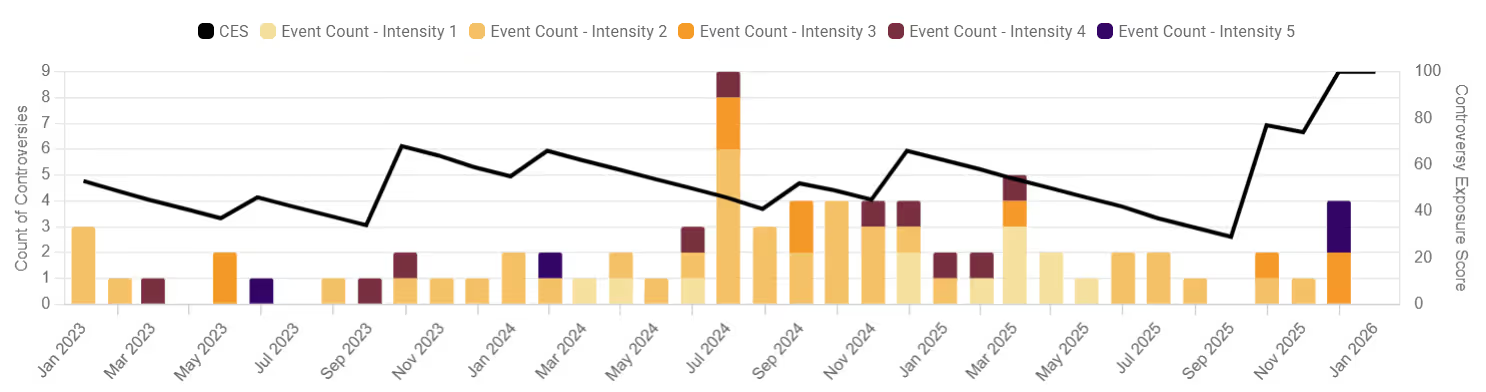
PSSI was a leading U.S. industrial cleaning contractor, servicing major meatpacking plants and backed by a top-tier private equity firm. Yet between 2022 and 2024, it became the center of one of the most significant child labor scandals in the U.S., one that had been quietly signaling its risks for years. SESAMm's controversy monitoring platform captured those early signals long before regulators intervened.

The Scandal

In November 2022, the U.S. Department of Labor discovered that PSSI had employed minors as young as 13 in hazardous overnight roles across 13 locations in 8 states. A federal investigation confirmed 102 children had been illegally employed, many handling dangerous chemicals and machinery. Three years earlier, in 2019, PSSI had already been sued for wage violations. The signal was there. It went unheeded.

The Fallout

The consequences were swift. A $1.5 million DOL fine. Contract terminations by Cargill and JBS. A DHS trafficking investigation. A replaced CEO. By late 2024, PSSI had shut its corporate office entirely. Even the private equity owner, Blackstone, faced direct scrutiny from pension funds, a reminder that labor violations travel up the ownership chain.

The Lesson

Every warning sign in this case was publicly visible before the crisis broke out. Wage lawsuits, labor complaints, and media coverage are all available in the public domain. Real-time controversy monitoring can surface these signals early, giving companies and investors the chance to act before exposure becomes unavoidable.

Forced labor is not only a humanitarian crisis. It is a material risk that demands better data, earlier detection, and stronger accountability.

Download the full case study infographic to see the complete timeline of events and key takeaways

Read More

In a recent interview, CEO Sylvain Forté spoke with Fintech Global about how the SESAMm has evolved, the role of AI in transforming ESG risk detection, and what's next for the industry.

Can you tell us about SESAMm's origins and how the company has evolved since 2014?

SESAMm started with a focus on analyzing sentiment and reputational signals on social media to understand how narratives influenced financial performance. We began by working with asset managers and quickly realized that reputational risks were not only impacting public equities but were becoming critical in other asset classes.

As we evolved, we discovered a much broader blind spot in private markets. ESG and reputational data simply didn't exist for private companies, infrastructure projects, or suppliers, yet these made up a significant share of global exposure. This expansion was supported by Carlyle, a leading private equity firm and a SESAMm investor, which helped us deepen our expertise in private markets. Since then, we've expanded to supply chain and procurement use cases as well.

The name SESAMm stands for "open sesame." We were designed to unlock this missing layer of insight, opening access to critical ESG risks across public, private, and supply chain assets.

How is AI transforming the way financial institutions detect and understand ESG risks?

AI is a fundamental enabler of SESAMm's platform. We cover over 5 million companies, public and private, across more than 4 million sources, making it the largest private asset ESG coverage in the industry. This would be impossible to maintain with traditional manual workflows.

But our AI enables not just massive scale; it delivers quality. We aggregate documents, match events over multiple years, classify and score controversies properly, and do all of this in real time. There is no lag between detection and delivery.

We've gone further than data delivery. With AI agents, we've moved from surfacing insights to solving real problems. For example, for an insurance company, our AI agents don't just provide controversy data; they fully complete underwriting risk questionnaires. This is not just enhanced ESG; it's a workflow transformation.

Can you share an example where SESAMm caught an ESG signal that others missed?

One example is Loro Piana, an LVMH company, where we were able to surface early signals from regional news and filings before they became broadly visible.

For private markets, some of our clients, including major US private equity firms, have used our insights to stop due diligence processes early, saving millions of dollars by identifying major ESG risks at the pre-deal stage. These events were buried in local reports or niche sources and would have gone undetected using traditional tools. This is where SESAMm's multilingual, real-time coverage delivers immediate and material value.

How does SESAMm's global, multilingual scope lead to better ESG insights?

SESAMm's reach is a key differentiator. We process content from over 100 languages and 4 million data sources, including local news, NGO reports, legal documents, blogs, and more. For global private investment firms, this makes it possible to monitor hundreds of portfolio companies and thousands of credit lines every single day, without human intervention.

Due diligence becomes instant. Customers can type a company name into the platform and get immediate access to source data, scores, and an auto-generated report. This level of coverage and automation is only achievable with AI. Without multilingual processing, most of these risks would remain hidden in local languages and never surface in English datasets.

What role does Generative AI play in turning complex data into actionable intelligence?

GenAI allows us to go beyond raw data or filtered alerts. SESAMm now delivers fully automated ESG due diligence reports in under 30 minutes, complete with citations, severity levels, and multi-language source integration. These are dynamically built with real insights. The same applies to legal reports, private equity and M&A deal screening, secondary and credit due diligence, and more.

Teams no longer need to sift through events, tag them, write memos, or manually structure reports. We also accelerate regulatory workflows by automatically flagging potential significant harm, governance issues, and controversial activities, enabling clients to meet disclosure requirements more quickly and focus their time on high-impact actions.

SESAMm has announced partnerships with Clarity AI and Sayari. How do these enhance your offering?

These partnerships are both strategic and complementary. SESAMm offers comprehensive data coverage, particularly for private firms and complex events, which many partners utilize to enhance their own offerings. Sayari enhances the mapping of supply chains and tier-N suppliers. Clarity AI provides a full ESG analytics platform. SESAMm plugs into each of them, either as a source of controversy intelligence or to enrich end-user offerings.

In return, they help our clients go further, from data to action, whether through real-world audits, regulatory support, or deeper portfolio insights. The goal is to offer an ecosystem of ESG solutions that go beyond alerts and into implementation.

Why are financial institutions now treating ESG and reputational risk as strategic intelligence rather than just compliance?

The stakes are higher than regulation. Of course, frameworks like SFDR and PAI 10 are important, but firms come to us because they need actionable insight. Corporates monitor their suppliers and group entities. Investors track portfolio companies, screen for risk during deal flow, and respond to reputational events.

ESG controversies now have direct financial implications, influencing deal approvals, investment decisions, and valuations. This is especially true in private markets. We work with both LPs and GPs to integrate controversy detection into due diligence and ongoing monitoring. In many cases, ESG insights are the trigger for early engagement or the reason to walk away from a deal.

What do you see as the next frontier for AI in ESG and reputational risk?

The next frontier is clearly AI agents. SESAMm is already building and deploying agents that automate entire workflows, from detection and classification to full reporting. This includes ESG due diligence in 30 minutes, secondary screening, good governance screening, controversial activity screening, legal risk reports, and more.

For secondary funds, this means being able to screen hundreds of underlying assets in hours, not days. For compliance teams, it means automated risk reports with source evidence and scoring. For ESG professionals, this means saving time to focus on engagement, strategy, and impact, rather than data wrangling.

We believe AI agents will power the next generation of ESG intelligence, providing seamless, embedded, and action-ready solutions.

Click here to access the full ESGFintech100 2025 report.

Reach out to SESAMm

TextReveal’s web data analysis of over five million public and private companies is essential for keeping tabs on ESG investment risks. To learn more about how you can analyze web data or to request a demo, reach out to one of our representatives.

Could AI Have Helped Investors Anticipate the 2023 U.S. Regional Banking Crisis?

By Magnus Billing, SESAMm advisor, with insights from Sylvain Forté, CEO of SESAMm

Investors have faced so-called “black swan” events throughout history: unexpected crises with severe consequences, often rationalized only in hindsight. Yet in an era defined by generative AI and vast, real-time data lakes, the question arises: could such events be understood and acted upon before they unfold?

The 2023 U.S. regional banking crisis offers a striking case study. The rapid collapses of Silicon Valley Bank and Signature Bank revealed how quickly stress can spread and how difficult it remains to connect early warning signs across sources.

While traditional financial analysis focuses on fundamentals such as capital ratios, liquidity positions, governance, and earnings, a new class of tools is expanding the lens. AI-driven controversy data aggregates and analyzes millions of public sources, from regulatory statements to media and industry discussions, to detect emerging issues as they surface. It does not replace quantitative and fundamental analysis; it complements it by tracking the visibility of risk as it enters public conversation.

This combination of approaches may offer investors a fuller picture: the structural risks visible in balance sheets, and the narrative risks revealed through public dialogue. To test this idea, we revisited the 2023 crisis through both perspectives, starting with what traditional analysis could have shown and what it missed.

Traditional Analysis and Its Blind Spots

In hindsight, the vulnerabilities of regional banks such as Silicon Valley Bank and Signature Bank were visible before the start of 2023. Unrealized losses on long-term securities, heavy reliance on uninsured deposits, and exposure to interest-rate risk pointed to potential liquidity stress. Yet these indicators were neither fully recognized nor connected in the market.

Traditional analysis has a tendency to evaluate banks based on their specific niches: Silicon Valley Bank focused on technology and venture financing, while Signature Bank served commercial real estate and digital asset clients. However, this approach risks overlooking the common and shared structural factors: concentrated depositor bases, high sensitivity to interest rate changes, rapid growth, and weaknesses in governance. Few, if any, observers recognized how rapidly these vulnerabilities could interact and escalate in a modern, digitalized banking environment.

While financial reports contained the data, there was little discussion connecting these risks in the public domain. But what about controversy data? Would it have caught the impending crisis? To find out, I asked Sylvain Forté, CEO of SESAMm, to provide an AI perspective.

What the Data Showed: Signature Bank

Signature Bank

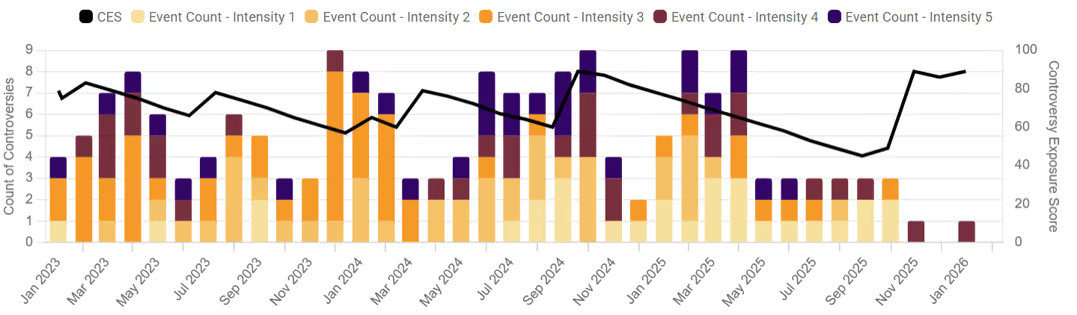
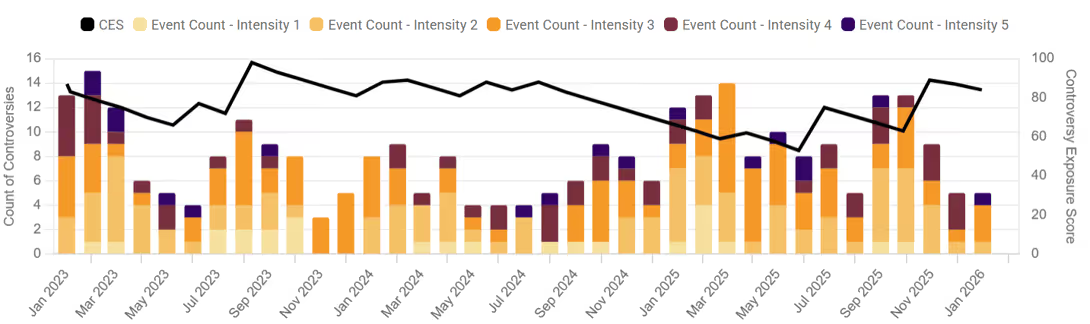
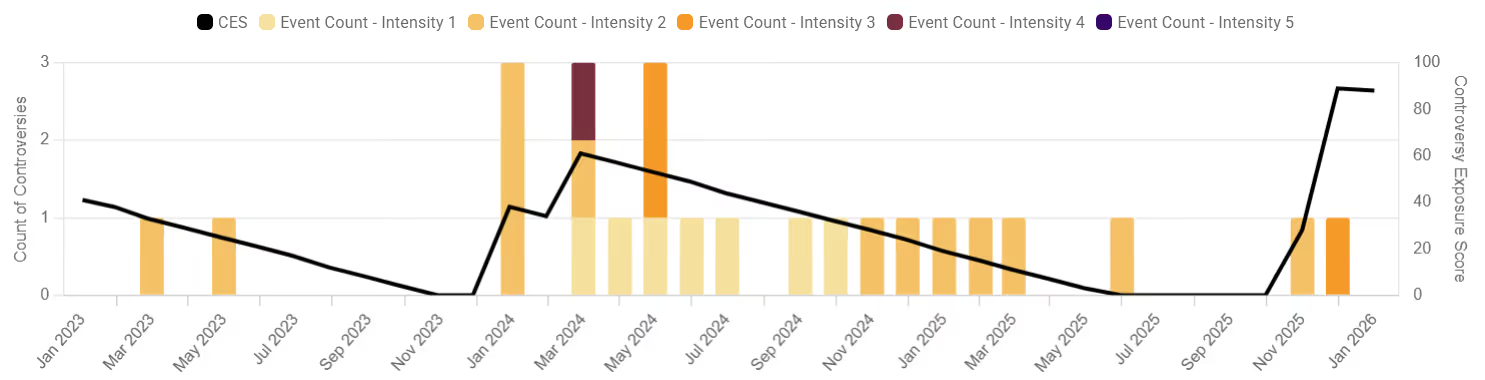
Signature Bank displayed a gradual pattern of emerging risk visible through public discussion. From mid-2022 onward, controversy data showed a rise in coverage related to governance practices, management oversight, and deposit concentration risks, often in the context of its ties to the digital-asset industry.

Importantly, it was not the crypto exposure itself that led to the bank’s collapse. The bank even announced in December 2022 that it would reduce its crypto-related business. Instead, the FDIC’s Supervision of Signature Bank report concluded that, “the root cause of SBNY’s failure was poor management. SBNY’s board of directors and management pursued rapid, unrestrained growth without developing and maintaining adequate risk management practices and controls.”

From a controversy perspective, those signals were publicly visible but fragmented. As shown in the chart above, AI-powered monitoring could have aggregated them into a clear view of a sustained drift in governance-related discussions, offering an early indication that oversight and internal controls were under pressure and risk was increasing.

What the Data Missed: Silicon Valley Bank

SVB

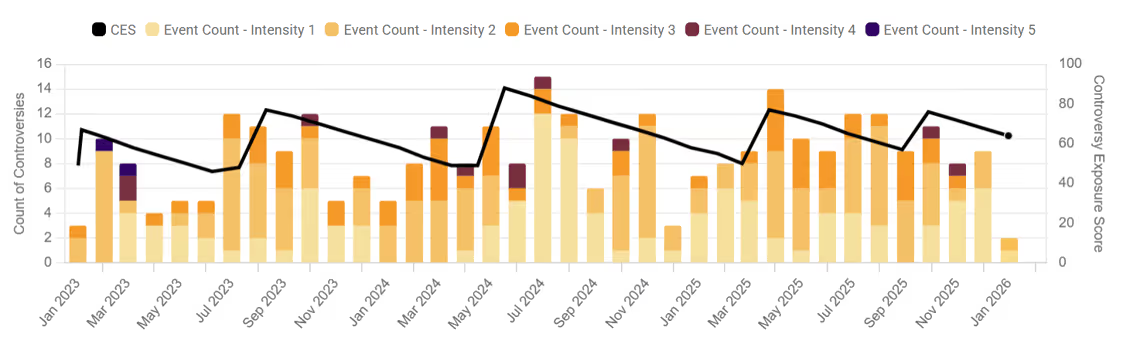
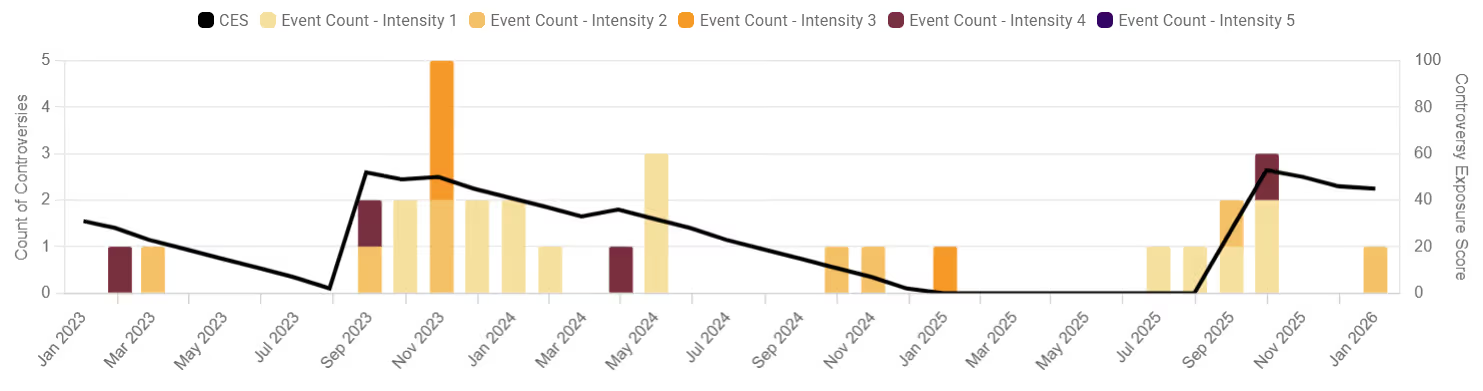
In contrast, Silicon Valley Bank presented a markedly different pattern. While controversy data registered some activity in late 2022,  including investor reactions to financial forecasts and coverage of routine business operations, these signals were fundamentally different in character from Signature Bank's governance-related warnings.

The September 2022 increase reflected market disappointment with financial guidance rather than operational or governance concerns. The subsequent activity captured normal business news, such as arranging syndicated loans. Critically, there was minimal public discussion of the bank's balance-sheet structure, unrealized losses, or depositor concentration risk until the crisis was already unfolding in March 2023.

This example underscores a key distinction: AI controversy monitoring excels at capturing reputational, governance, and operational risks as they enter public dialogue, but may not surface structural financial risks that remain confined to regulatory filings and analyst reports.

Lessons from Both Cases

The contrast between these two banks illustrates the complementary roles of quantitative and fundamental financial analysis vs AI-driven controversy monitoring.

In Signature Bank’s case, controversy data captured a steady accumulation of governance-related warnings, a slow build-up of risk visible through public discussion.

In Silicon Valley Bank’s case, the risks were structural but not yet discussed, leaving little for AI-powered controversy data to detect.

As Sylvain explains, “AI controversy monitoring helps investors understand how and when risks start to emerge in public dialogue. It does not replace fundamental analysis. It complements it by showing when the conversation begins to shift.”

Conclusion

Black swan events are often rationalized only in hindsight, but the 2023 regional banking crisis suggests a more nuanced reality. Some signals existed. What remained difficult was connecting them across sources before stress became contagion.

AI-driven controversy monitoring proved effective at surfacing governance and operational risks as they entered public dialogue, as Signature Bank demonstrated. Yet structural financial vulnerabilities like those at Silicon Valley Bank may not generate discussion until crisis forces the conversation, underscoring that no single lens captures all risk.

The advantage lies not in prediction, but in preparation: combining the structural risks visible in balance sheets with the narrative risks revealed through public discourse. In an era of real-time data and generative AI, the question is no longer whether information exists, but whether investors can connect it before it becomes consensus.


Magnus and Sylvain bios

By Magnus Billing, SESAMm advisor, with insights from Sylvain Forté, CEO of SESAMm

Investors have faced so-called “black swan” events throughout history: unexpected crises with severe consequences, often rationalized only in hindsight. Yet in an era defined by generative AI and vast, real-time data lakes, the question arises: could such events be understood and acted upon before they unfold?

The 2023 U.S. regional banking crisis offers a striking case study. The rapid collapses of Silicon Valley Bank and Signature Bank revealed how quickly stress can spread and how difficult it remains to connect early warning signs across sources.

While traditional financial analysis focuses on fundamentals such as capital ratios, liquidity positions, governance, and earnings, a new class of tools is expanding the lens. AI-driven controversy data aggregates and analyzes millions of public sources, from regulatory statements to media and industry discussions, to detect emerging issues as they surface. It does not replace quantitative and fundamental analysis; it complements it by tracking the visibility of risk as it enters public conversation.

This combination of approaches may offer investors a fuller picture: the structural risks visible in balance sheets, and the narrative risks revealed through public dialogue. To test this idea, we revisited the 2023 crisis through both perspectives, starting with what traditional analysis could have shown and what it missed.

Traditional Analysis and Its Blind Spots

In hindsight, the vulnerabilities of regional banks such as Silicon Valley Bank and Signature Bank were visible before the start of 2023. Unrealized losses on long-term securities, heavy reliance on uninsured deposits, and exposure to interest-rate risk pointed to potential liquidity stress. Yet these indicators were neither fully recognized nor connected in the market.

Traditional analysis has a tendency to evaluate banks based on their specific niches: Silicon Valley Bank focused on technology and venture financing, while Signature Bank served commercial real estate and digital asset clients. However, this approach risks overlooking the common and shared structural factors: concentrated depositor bases, high sensitivity to interest rate changes, rapid growth, and weaknesses in governance. Few, if any, observers recognized how rapidly these vulnerabilities could interact and escalate in a modern, digitalized banking environment.

While financial reports contained the data, there was little discussion connecting these risks in the public domain. But what about controversy data? Would it have caught the impending crisis? To find out, I asked Sylvain Forté, CEO of SESAMm, to provide an AI perspective.

What the Data Showed: Signature Bank

Signature Bank displayed a gradual pattern of emerging risk visible through public discussion. From mid-2022 onward, controversy data showed a rise in coverage related to governance practices, management oversight, and deposit concentration risks, often in the context of its ties to the digital-asset industry.

Importantly, it was not the crypto exposure itself that led to the bank’s collapse. The bank even announced in December 2022 that it would reduce its crypto-related business. Instead, the FDIC’s Supervision of Signature Bank report concluded that, “the root cause of SBNY’s failure was poor management. SBNY’s board of directors and management pursued rapid, unrestrained growth without developing and maintaining adequate risk management practices and controls.”

From a controversy perspective, those signals were publicly visible but fragmented. As shown in the chart above, AI-powered monitoring could have aggregated them into a clear view of a sustained drift in governance-related discussions, offering an early indication that oversight and internal controls were under pressure and risk was increasing.

What the Data Missed: Silicon Valley Bank

In contrast, Silicon Valley Bank presented a markedly different pattern. While controversy data registered some activity in late 2022,  including investor reactions to financial forecasts and coverage of routine business operations, these signals were fundamentally different in character from Signature Bank's governance-related warnings.

The September 2022 increase reflected market disappointment with financial guidance rather than operational or governance concerns. The subsequent activity captured normal business news, such as arranging syndicated loans. Critically, there was minimal public discussion of the bank's balance-sheet structure, unrealized losses, or depositor concentration risk until the crisis was already unfolding in March 2023.

This example underscores a key distinction: AI controversy monitoring excels at capturing reputational, governance, and operational risks as they enter public dialogue, but may not surface structural financial risks that remain confined to regulatory filings and analyst reports.

Lessons from Both Cases

The contrast between these two banks illustrates the complementary roles of quantitative and fundamental financial analysis vs AI-driven controversy monitoring.

In Signature Bank’s case, controversy data captured a steady accumulation of governance-related warnings, a slow build-up of risk visible through public discussion.

In Silicon Valley Bank’s case, the risks were structural but not yet discussed, leaving little for AI-powered controversy data to detect.

As Sylvain explains, “AI controversy monitoring helps investors understand how and when risks start to emerge in public dialogue. It does not replace fundamental analysis. It complements it by showing when the conversation begins to shift.”

Conclusion

Black swan events are often rationalized only in hindsight, but the 2023 regional banking crisis suggests a more nuanced reality. Some signals existed. What remained difficult was connecting them across sources before stress became contagion.

AI-driven controversy monitoring proved effective at surfacing governance and operational risks as they entered public dialogue, as Signature Bank demonstrated. Yet structural financial vulnerabilities like those at Silicon Valley Bank may not generate discussion until crisis forces the conversation, underscoring that no single lens captures all risk.

The advantage lies not in prediction, but in preparation: combining the structural risks visible in balance sheets with the narrative risks revealed through public discourse. In an era of real-time data and generative AI, the question is no longer whether information exists, but whether investors can connect it before it becomes consensus.

Reach out to SESAMm

TextReveal’s web data analysis of over five million public and private companies is essential for keeping tabs on ESG investment risks. To learn more about how you can analyze web data or to request a demo, reach out to one of our representatives.

COP30 has just begun in Belém, Brazil. Every year, the Conference of the Parties (COP) serves as the world’s central stage for climate diplomacy, where governments, scientists, and civil society gather to decide how to respond to the global climate emergency. Over the decades, these meetings have shaped major milestones, from the Kyoto Protocol to the Paris Agreement. Yet behind the speeches and pledges, questions persist: how much progress is being made on the ground, and how inclusive are these negotiations in practice?

As countries meet again to assess their collective efforts, looking back at the most recent COPs offers a perspective on how politics, accountability, and competing interests continue to influence the global climate agenda.

What Is the COP?

The Conference of the Parties (COP) is the annual United Nations summit that brings together the 198 signatories to the 1992 UN Framework Convention on Climate Change (UNFCCC). Its purpose is to coordinate international action on climate change through negotiation, progress assessment, and new commitments to reduce greenhouse gas emissions.

COPs are usually held in November or December and last about two weeks. The first took place in 1995 in Berlin, and the tradition has continued ever since. COP27 was hosted by Egypt in 2022, COP28 by the United Arab Emirates in 2023, and COP29 by Azerbaijan in 2024. This year, COP30 marks Brazil’s turn to host the event in the Amazonian city of Belém.

Over the years, COPs have produced landmark outcomes, from the Kyoto Protocol (1997) to the Paris Agreement (2015). More recent debates have focused on climate finance, adaptation, and the global transition away from fossil fuels. Yet, as recent conferences show, progress often comes with friction, delays, and controversy.

The COP Controversies Over the Years

COP27 (2022) - Egypt

Held in Sharm el-Sheikh, COP27 centered on the question of climate justice. Developing nations demanded compensation for loss and damage caused by climate impacts that they did little to create. Therefore, the creation of a Loss and Damage Fund was a landmark step, though details on financing and governance were deferred.

Egypt’s hosting of the summit drew criticism over restrictions on civil society. Amnesty International reported hundreds of arrests before the event, including activists detained for online content. Tight surveillance and limited protest spaces highlighted how political control intersected with the climate agenda.

Meanwhile, energy security concerns following the war in Ukraine exposed inconsistencies in global climate policy. Some European nations resumed coal use or sought new gas projects in Africa, while methane leaks from natural gas infrastructure were found to be worse than estimated. These developments raised questions about whether short-term energy strategies were undermining long-term climate goals.

COP28 (2023) - United Arab Emirates

The 2023 summit in Dubai was among the most debated in COP history. The appointment of Sultan Al Jaber, CEO of the Abu Dhabi National Oil Company, as COP president drew immediate criticism over conflicts of interest. Al Jaber’s comments, suggesting there was “no science” supporting a fossil fuel phase-out, only deepened the controversy.

Leaked letters from OPEC revealed coordinated lobbying to block references to phasing out fossil fuels in the final text. Despite this, over 100 countries advocated for clear language on ending fossil fuel use. The resulting “UAE Consensus” included the phrase “transitioning away from fossil fuels,” the first such mention in COP history. However, critics noted that the wording allowed broad interpretation and loopholes for continued production through “abatement” and carbon capture.

The summit also drew scrutiny for restrictions on activism. Human Rights Watch documented limits on protests, surveillance of delegates, and constraints on speech. Still, COP28 produced incremental steps on renewable energy commitments and adaptation finance, even as it highlighted the influence of the fossil fuel industry on global negotiations.

COP29 (2024)  - Azerbaijan

In Baku, COP29 took place under similar scrutiny. Azerbaijan’s record on press freedom and civil rights was a major concern, with several journalists and activists arrested in the months before the event. Human rights advocate Anar Mammadli and economist Gubad Ibadoghlu were among those detained on politically motivated charges.

The conference also saw diplomatic tensions flare when President Ilham Aliyev criticized Western countries in his opening speech, prompting France to boycott the event. Regional issues, including the aftermath of the Nagorno-Karabakh conflict, added to the complex political backdrop.

The negotiations were dominated by debates over climate finance. Wealthy countries announced a target of $300 billion annually by 2035, largely relying on private capital and multilateral banks. Developing nations argued that the proposal lacked direct grant funding and risked increasing debt burdens. Observers reported confusion and frustration over the agreement’s final approval, with some delegations absent when it was gaveled through.

COP29 concluded with calls for greater transparency, inclusivity, and consistency in how future summits are hosted and managed.

Patterns and Lessons

Across COP27, COP28, and COP29, several common threads emerge. Each conference underscored both the urgency of global climate action and the difficulties of collective decision-making. The creation of new financial mechanisms and the first explicit reference to moving away from fossil fuels were significant steps. Still, they came alongside persistent divisions over fairness, responsibility, and implementation.

A recurring criticism has been greenwashing: the gap between rhetoric and reality. Host countries often present themselves as champions of sustainability while remaining heavily dependent on fossil fuels. At the same time, the presence of record numbers of industry lobbyists, particularly from oil and gas companies, has raised concerns about the balance of influence in climate negotiations.

These issues point to a broader tension: how to ensure that the COP process remains a platform for genuine progress rather than symbolic gestures. Many observers argue that transparency, stronger accountability mechanisms, and better inclusion of civil society are essential to rebuilding trust in the process.

Conclusion

As COP30 unfolds in Brazil, the focus is again on implementation and credibility. The last three conferences demonstrated how progress can coexist with controversy, and how global ambition must be matched by local action and political will.

While the COP framework remains the cornerstone of international climate cooperation, its effectiveness depends on whether commitments are translated into tangible outcomes. The coming days in Belém will show whether lessons from past conferences can help turn dialogue into decisive progress.

Reach out to SESAMm

TextReveal’s web data analysis of over five million public and private companies is essential for keeping tabs on ESG investment risks. To learn more about how you can analyze web data or to request a demo, reach out to one of our representatives.

As regulatory scrutiny intensifies across industries, several major corporations faced significant legal challenges related to anti-competitive behavior in October 2025. Using SESAMm's AI-powered controversy data, we analyzed corporate activity to identify the companies most involved in anti-competitive practices during the month. The results reveal a pattern of regulatory action spanning tech giants, financial services, and food production sectors.

#1: Alphabet: Mounting Regulatory Pressure

Alphabet

Alphabet continues to face unprecedented legal challenges across multiple jurisdictions. The company is facing a substantial $8.3 billion lawsuit from Klarna, alleging anti-competitive practices in the Android market. The situation intensified when the U.S. Supreme Court denied Google's request to delay mandated changes that would open Google Play to rival app stores.

Adding to these concerns, a federal judge is now examining whether Google can legally bundle its Gemini AI app with other services, a move that could significantly extend its market power into emerging AI markets. Perhaps most significantly, the Court of Justice of the European Union upheld a €2.4 billion fine against Google for self-preferencing in Google Shopping, reinforcing the legal framework against such anti-competitive behaviors and establishing stronger regulatory precedent for digital platforms.

#2: Visa: Financial Services Under Fire

Visa

Visa continues to face legal and regulatory pressures across multiple jurisdictions. In the United States, the long-running merchant fee antitrust litigation (MDL 1720) remains active, with ongoing appeals and challenges to proposed settlements. Several merchant groups that opted out of earlier agreements have been permitted by the courts to continue pursuing their claims, extending Visa’s legal exposure.

The company's $5.3 billion acquisition of Plaid has drawn intense scrutiny from the U.S. Department of Justice, reflecting growing concern about consolidation in the fintech sector. Meanwhile, across the Atlantic, the UK Competition Appeal Tribunal delivered a landmark ruling against both Visa and Mastercard, determining that their Multilateral Interchange Fees violate competition laws; a significant victory for European merchants and a potential precedent for future cases.

#3: Tyson Foods: Settling Price-Fixing Allegations

Tyson Foods

The meat processing industry's legal troubles continued in October, with Tyson Foods at the center of multiple settlements. The company, along with Cargill, agreed to settle a beef price-fixing lawsuit for $55 million and $32.5 million, respectively. These settlements contribute to a broader $208 million resolution in related consumer cases, although litigation against JBS and National Beef continues.

Beyond beef, Tyson reached an even larger $85 million settlement in a separate antitrust case concerning pork price inflation, the largest settlement to date in ongoing litigation against major U.S. meat producers.

Conclusion

The findings from October 2025 underscore a critical moment in corporate regulation, as authorities worldwide demonstrate an increased willingness to challenge anti-competitive practices in sectors ranging from technology and finance to food production. The substantial fines, denied appeals, and ongoing investigations signal a regulatory environment that is actively reshaping market dynamics.

For investors and market observers, these cases highlight the material financial and operational risks associated with anti-competitive behavior. As enforcement mechanisms strengthen and legal precedents solidify, companies across all sectors should anticipate heightened scrutiny of market practices, particularly those involving platform dominance, merger activities, and pricing coordination.

Reach out to SESAMm

TextReveal’s web data analysis of over five million public and private companies is essential for keeping tabs on ESG investment risks. To learn more about how you can analyze web data or to request a demo, reach out to one of our representatives.

Industry News

UK to Regulate ESG Ratings Providers: Why It Matters

November 4, 2025
5 mins read

In a landmark move for sustainable finance, the UK government has announced plans to regulate ESG (Environmental, Social, and Governance) ratings providers. The Financial Conduct Authority (FCA) will soon be tasked with overseeing these firms, marking a major shift from the current hands-off approach. This development comes amid growing concerns about the inconsistency, opacity, and influence of ESG ratings on investment decisions.

Why Regulate ESG Ratings Providers?

The regulatory gap in ESG ratings is clear when compared to traditional credit ratings. Credit rating agencies (like S&P, Moody’s, and Fitch) operate under strict regulatory oversight and well-defined methodologies, which is one reason their assessments tend to be closely aligned. In fact, one study found the top credit agencies’ ratings are 99% correlated, whereas ESG ratings from different providers showed only about 60% correlation. In practice, that means two ESG raters might disagree as wildly as “AAA” vs “BBB” for the same firm in the same period. By contrast, it’s rare to see such divergence in credit ratings because that industry has long been supervised and standardized.

Absent regulation, ESG ratings have been opaque and inconsistent. Regulators and market watchdogs have likened the ESG ratings arena to a “Wild West” in need of a sheriff. An environment “unregulated and opaque” where even companies with poor environmental track records can sometimes score surprisingly well. The lack of transparency in how ratings are determined makes it hard for investors to trust what an ESG score truly reflects. This opacity not only fuels skepticism but also raises the risk of greenwashing, where unsustainable companies might hide behind inflated ESG scores.

New oversight aims to bring transparency, consistency, and trust to ESG ratings. Authorities around the world are now stepping in. For instance, the UK government has introduced legislation to bring ESG rating providers under the Financial Conduct Authority’s remit. Similarly, European regulators (ESMA in the EU) and others in Japan and India are moving toward tighter standards. The consensus is that ESG ratings need basic guardrails, much like credit ratings, to ensure they are rigorous, reliable, and free of conflicts of interest. As one analysis noted, if a credit rating agency were to suddenly downgrade scores at the scale we’ve seen with ESG re-ratings, regulators would have intervened immediately. Treating ESG ratings “similarly” to credit ratings in terms of oversight is increasingly seen as necessary to prevent nasty surprises (read: unexpected discrepancies) and to maintain market stability.

Regulation can address several issues: it can mandate clearer methodological transparency, require disclosure of rating drivers, and enforce governance standards (for example, to manage conflicts of interest if a rater also offers paid consulting). All of these steps would help investors and companies finally peek behind an ESG rating. In other words, examine the underlying factors, rather than taking scores at face value. Ultimately, effective regulation should turn ESG ratings from a black box into a more consistent, credible tool for decision-making.

What the UK Plans to Do

Under the new legislation, any ESG ratings provider serving UK clients will be required to obtain authorization from the FCA. These firms will need to disclose their methodologies, manage conflicts of interest, and maintain proper governance controls. The regulation is designed to align with international recommendations, such as those from IOSCO, and mirrors similar efforts already underway in the EU.

The goal is to bring greater transparency, comparability, and accountability to a market expected to grow significantly in the years ahead. The FCA plans to consult on specific rules later this year, with implementation expected to phase in over time.

Why This Matters

Bringing ESG ratings under regulatory oversight could be a turning point for sustainable investing. With consistent standards and greater clarity on how scores are determined, investors can better understand the rationale behind ratings and compare them more effectively. It could also reduce the risk of greenwashing by forcing providers to show their work.

Of course, some concerns remain. Smaller ESG ratings firms may struggle with the cost of compliance. Others worry that regulation could stifle innovation or lead to market consolidation. But broadly, the move has been welcomed by investors and industry groups as a necessary step toward improving trust in ESG data.

As global regulators push for greater alignment, the UK's framework could help shape a more transparent and robust ESG ratings ecosystem - one that better serves both capital markets and long-term sustainability goals.

SESAMm’s AI Technology Reveals ESG Insights

Discover unparalleled insights into ESG controversies, risks, and opportunities across industries. Learn more about how SESAMm can help you analyze millions of private and public companies using AI-powered text analysis tools.

The insurance sector continues to face mounting ESG scrutiny amid rising climate losses, digital vulnerabilities, and complex regulatory environments. Over the past three years, leading firms such as UnitedHealth Group, Prudential Financial, and AIG have faced increasing challenges related to governance oversight, social accountability, and environmental exposure. Climate-related issues have driven significant financial impacts, while increased regulatory intervention, particularly in healthcare and claims management, has underscored the cost of weak internal controls. Data breaches, legal disputes, and reputational controversies have further intensified the spotlight on insurers’ operational resilience and ethical standards. Collectively, these developments illustrate how ESG risks in the insurance industry are shifting from mere concerns to central strategic priorities.

What are the most pressing ESG challenges currently facing the insurance sector? Read on to find out.

UnitedHealth Group (UNH): Governance and Regulatory Scrutiny

UnitedHealth’s ESG risks have intensified amid ongoing investigations and governance controversies. Its $3.3 billion acquisition of Amedisys has led to an antitrust lawsuit, while its Medicare Advantage business is under investigation for federal fraud. Social controversies include reports that UnitedHealth used algorithms to shorten patient rehabilitation care and paid nursing home bonuses to limit hospital transfers, prompting inquiries from U.S. senators. With its stock declining nearly 30% amid these challenges, the insurer’s case highlights the growing regulatory and ethical scrutiny of healthcare-linked financial services.

unitedhealth

Key Controversies:

Prudential Financial Inc.: Compliance, Cybersecurity, and Consumer Protection Risks

Prudential’s ESG controversies over the past three years reflect systemic issues in data governance, workforce management, and regulatory oversight. The company announced layoffs in different regions, as well as a data breach affecting over 25 million individuals, for which a $4.75 million settlement is available to cover claims. Additionally, the U.S. Department of Labor found that Prudential had illegally denied over 200 life insurance claims, which has impacted investor confidence. These events highlight the company's vulnerabilities in compliance, cybersecurity, and consumer protection.

prudential

Key Controversies:

American International Group (AIG): Climate Risks and Reputational Challenges

Over the past three years, AIG has faced increased ESG scrutiny regarding climate risks and fossil fuel underwriting, reporting a 39% decline in profit and over $600 million in losses from Hurricane Ian. Activists pressure AIG to withdraw coverage for the East African Crude Oil Pipeline due to environmental concerns. On the social side, AIG has been struggling with reputational fallout from protests marking the 15th anniversary of its bailout and allegations of sexual assault involving a senior executive. On governance, AIG has been dealing with legal battles ranging from disputes over firearm-related claims and post-M&A settlements to trade secret litigation, underscoring persistent operational and compliance risks across its global portfolio.

aig

Key Controversies:

Conclusion

The recent controversies across major insurers reinforce a broader trend: the convergence of financial performance, regulatory compliance, and ESG integrity. For AIG, physical climate risk and fossil fuel exposure remain defining challenges; for Prudential, consumer data protection and fair claims practices are under scrutiny; and for UnitedHealth, governance lapses tied to healthcare operations threaten long-term trust. As the sector evolves under increasing public and regulatory pressure, insurers that strengthen transparency, ethical oversight, and risk governance will be best positioned to sustain credibility and competitiveness in an ESG-driven market.

Reach out to SESAMm

TextReveal’s web data analysis of over five million public and private companies is essential for keeping tabs on ESG investment risks. To learn more about how you can analyze web data or to request a demo, reach out to one of our representatives.

Despite its promises, the clean energy sector, featuring companies like NextEra Energy, First Solar, and Siemens Energy, faces significant challenges across ESG fronts. Governance issues include lawsuits over misleading financial practices and greenwashing accusations. Environmentally, the sector struggles with defective technology and product performance failures, eroding trust in renewable energy solutions. Social and labor challenges are also prevalent, including discrimination lawsuits, unsafe working conditions, and customer dissatisfaction stemming from product failures and poor service. Furthermore, the growing threat of cybersecurity vulnerabilities within clean energy infrastructure poses risks to both operational systems and consumer data.

What are the most pressing ESG challenges currently facing the clean energy sector? Read on to find out.

NextEra Energy: ESG Challenges and Legal Disputes

NextEra Energy faces several ESG controversies despite being less exposed than its peers. Governance issues include a $1.2 billion impairment related to the Mountain Valley Pipeline and a $350 million antitrust lawsuit for allegedly obstructing a competitor’s clean energy project. It has also faced legal challenges, notably investigations into its political donations connected to its bid for Jacksonville’s public utility. Environmental concerns involve growing opposition to its solar and battery projects and lobbying against rooftop solar policies, along with protests over its wind and drilling operations in Florida, which are subject to a class-action lawsuit for environmental risks. Additionally, the company is investigating wind turbine collapses and is engaged in legal disputes regarding employee rights, including a retaliation lawsuit and a $500,000 settlement over debt collection practices.

NextEra Energy

Key Controversies:

First Solar: Legal and Regulatory Risks

First Solar has been dealing with a mix of ESG challenges. The solar manufacturer is locked in patent litigation with JinkoSolar while struggling with broader industry headwinds like polysilicon oversupply, hurting bookings, and creating manufacturing problems. CEO Mark Widmar has pointed to policy uncertainty as a major roadblock, saying failed climate legislation is hampering domestic solar production. The company is also cleaning house with its Malaysian contractors over unethical labor practices. Despite proposed subsidy cuts dragging down the stock, RBC analysts still see nearly 40% upside potential as First Solar works through these operational and regulatory pressures.

First Solar

Key Controversies:

Siemens Energy: ESG Controversies and Operational Challenges

Siemens Energy is facing multiple ESG controversies, including criticism for its reliance on fossil fuels and accusations of greenwashing. Its Siemens Gamesa unit struggles with turbine quality issues, resulting in financial losses, employee layoffs, and legal disputes, including a blocked asset sale in India and corruption allegations. The company is also under legal scrutiny for delays in the Akkuyu nuclear project and past sanctions violations. Additionally, Siemens Energy has been criticized for a data breach involving MOVEit software and vulnerabilities in its products. Socially, it has faced backlash for abolishing its women’s quota in the U.S. and labor unrest at Siemens Gamesa facilities, including strikes over working conditions.

Siemens Energy

Key Controversies:

Conclusion

In conclusion, the clean energy sector faces critical ESG challenges that threaten its potential for sustainable growth. Companies like Tesla, Siemens Energy, and NextEra Energy must prioritize transparency, improve governance, and address environmental and social issues to regain stakeholder trust. By proactively tackling these concerns, the sector can strengthen its credibility and better contribute to global sustainability efforts. The path forward is challenging, but addressing these challenges is essential for the clean energy industry's success in combating climate change.

Reach out to SESAMm

TextReveal’s web data analysis of over five million public and private companies is essential for keeping tabs on ESG investment risks. To learn more about how you can analyze web data or to request a demo, reach out to one of our representatives.

In an era where sustainability is no longer optional, investors demand more from the financial system. In France, the ISR (Investissement Socialement Responsable) label serves as an official stamp of approval for funds that align investment strategies with environmental, social, and governance (ESG) principles. It promotes financial performance, sustainable development, corporate social responsibility, and long-term societal value.

But what does the ISR label mean beyond the acronym, and how can companies and investors align with its standards?
This guide explains the origins, framework, and impact of the ISR label and how SESAMm supports investors and companies on the path to responsible and ethical investment.

What Is the ISR Label?

Established by the French Ministry of Economy and Finance in 2016, the ISR label (SRI in English) certifies investment funds that apply rigorous ESG criteria in their investment decisions. It was created to clarify a market overwhelmed by inconsistent ESG claims and to help investors identify funds with genuine sustainable and ethical impact.

The label is awarded following an independent audit by one of three COFRAC-accredited certification bodies: EY France, Deloitte, or Afnor Certification. The oversight is managed by the Direction Générale du Trésor (General Directorate of the Treasury), a department within the French Ministry of Economy and Finance. The label applies to multiple asset classes, including equities, bonds, and, since July 2020, real estate funds, signaling that a fund meets high standards of ESG integration, active ownership, and transparency.

At its core, the ISR label promotes impact investing by ensuring that capital is directed toward organizations contributing positively to society and the environment.

A Shift in Investment Philosophy

The ISR label reflects a broader transformation in investment philosophy. Historically, ESG considerations were considered secondary and useful for public relations but not essential to financial analysis. Today, they are widely recognized as material drivers of long-term value creation.

Environmental risks like climate change, resource scarcity, and biodiversity loss can lead to stranded assets and supply chain disruptions. Social risks, including labor exploitation and human rights violations, can damage a company's reputation and operations. Weak corporate governance can lead to legal troubles, regulatory penalties, and the erosion of investor confidence.

By integrating these factors into financial analysis, ISR-labeled funds embody a new approach: one that aligns capital with companies that are not only profitable but also responsible, forward-looking, and aligned with principles of sustainable development and corporate ethics.

Inside the ISR Framework: Six Pillars of Certification

To qualify for the ISR label, investment funds must meet strict criteria across six core pillars, ensuring their ESG practices are not symbolic but systemic, measurable, and impactful.

Rigorous ESG Integration

Funds must embed a structured ESG methodology throughout their entire investment process. They can demonstrate this rigor through two approaches: either by excluding at least 30% of their investment universe based on ESG exclusions and ratings, or by comprehensively integrating ESG analysis into company selection, valuation, and portfolio construction. Environmental impact, social performance, and corporate governance structures must all be assessed consistently according to their chosen methodology.

Active Shareholder Engagement

Ethical investment requires participation, not passivity. ISR-labeled funds are expected to engage with the companies they invest in, using their influence to promote better practices, whether pressing for improved governance policies, stronger climate targets, or the protection of human rights in global supply chains.

Transparency and Reporting

Accountability is essential. Funds must report on their ESG methodologies, portfolio composition, engagement efforts, and overall ESG performance. This transparency helps investors understand not just how their money is invested but also its impact.

ESG Risk Management

A robust ESG framework must also identify and manage risks. This includes environmental liabilities and reputational exposure from social controversies or governance failures. For instance, links to forced labor or poor human rights records can pose serious financial and ethical concerns.

Continuous Improvement

Sustainable finance is constantly evolving. ISR-labeled funds must demonstrate ongoing enhancement of their ESG processes in response to emerging data, changing standards, and new sustainability challenges. This ensures that the funds stay aligned with best practices and real-world impact.

Sector-Specific Applications of the Label

The ISR label is designed to be flexible and applicable across sectors, acknowledging that ESG challenges and opportunities vary widely by industry.

In the energy sector, attention is focused on fossil fuel exposure, carbon transition plans, and renewable energy innovation. Notably, since March 2024, companies developing new hydrocarbon projects are excluded from ISR-labeled funds, reflecting evolving standards on climate commitments.

In financial services, ISR encourages banks and asset managers to adopt policies that support sustainable development and responsible lending.

In real estate, eligibility criteria introduced in 2020 assess energy efficiency, sustainable construction, tenant well-being, and neighborhood impact, important components of both ESG and urban resilience.

In the technology industry, corporate governance, digital inclusion, and data privacy are key ESG factors, especially as AI and automation reshape society.

In healthcare, ethical investment principles are applied to assess affordability, access, and the social impact of medical innovation.
This sectoral lens ensures that ISR-labeled funds are not only compliant but contextually relevant, evaluating ESG performance in ways that reflect the specific responsibilities and risks within each field.

The Importance of Measuring Impact

Real impact, not greenwashing, is what gives the ISR label meaning. Funds must go beyond exclusions or ESG scores to demonstrate how their investments contribute to social good, environmental stewardship, and long-term value.

This may include metrics like carbon emissions avoided, gender diversity improvements, or the strengthening of corporate governance frameworks. Social impacts could reflect expanded access to essential services or better protection of human rights across operations and supply chains.

By measuring these results and reporting them publicly, ISR-labeled funds reinforce trust, accountability, and the core principles of impact investing.

France's ISR Label in a Global Context

France's ISR label is part of a wider global movement toward responsible finance, but it stands out for its public oversight and methodological rigor. While the EU's SFDR and taxonomy regulations set broad sustainability reporting frameworks, the ISR label provides fund-level certification with clear, sector-specific standards.

Unlike markets that rely primarily on voluntary ESG disclosures, France's model adds structure and credibility. It combines government support with investor responsibility and raises the bar for what qualifies as sustainable or ethical investment.

This positions the ISR label as a benchmark not only within Europe but globally, especially for investors seeking measurable, transparent contributions to sustainable development.

How SESAMm Supports ISR-Aligned Funds and Companies

Achieving and maintaining an ISR certification requires high-quality ESG intelligence. That's where SESAMm's AI-powered technology becomes essential.

Real-Time ESG Risk Detection

SESAMm continuously scans billions of online sources, news, regulatory updates, NGO reports, and legal filings to detect ESG risks as they emerge. This includes issues like environmental violations, governance failures, or allegations of human rights abuses. The platform enables funds to identify controversies early and monitor risk across their portfolios in real time, supporting the ISR label's fifth pillar on risk management.

Supporting Engagement and Accountability

By highlighting material ESG events and stakeholder concerns, SESAMm enables asset managers to engage meaningfully with companies, whether raising questions about labor practices or initiating conversations about improving corporate social responsibility. These insights feed directly into shareholder engagement strategies and voting decisions.

Enabling Continuous Improvement

SESAMm's Controversy Exposure Score tracks a company's ESG risk over time, making it easier for fund managers to demonstrate improvement, fulfill transparency requirements, and deliver on their impact investing objectives.

Helping Companies Stay Investable

SESAMm acts as an early warning system. By revealing how they are portrayed externally, companies can anticipate risks and proactively address ESG weaknesses, whether related to supply chain ethics, social impact, or corporate governance practices. This helps them remain eligible for ISR-labeled funds and strengthens long-term stakeholder trust.

Final Thoughts: Toward a More Responsible Financial System

The ISR label represents more than a certification; it's a commitment to align capital with ethical values, sound corporate governance, and sustainable development goals. It holds fund managers accountable for both financial and social outcomes and challenges companies to do better for shareholders, stakeholders, and society at large.

In a world where ESG is no longer a niche, tools like the ISR label help ensure that sustainable finance delivers real-world outcomes. And with SESAMm as a partner, investors and companies gain the intelligence they need to act with integrity, speed, and impact.
Whether you're building an ethical investment strategy or working to enhance your ESG profile, understanding and aligning with the ISR label is a vital step toward a more sustainable future.

SESAMm’s AI Technology Reveals ESG Insights

Discover unparalleled insights into ESG controversies, risks, and opportunities across industries. Learn more about how SESAMm can help you analyze millions of private and public companies using AI-powered text analysis tools.

Stay ahead with the latest in ESG and AI intelligence

Join our mailing list to receive new reports, event invites, and updates from SESAMm directly to your inbox.